Stanbic Bank
Stanbic Bank
24.7 C
Kampala
Stanbic Bank
Stanbic Bank
Home Blog Page 567

Tokyo to host 2025 World Athletics Championships

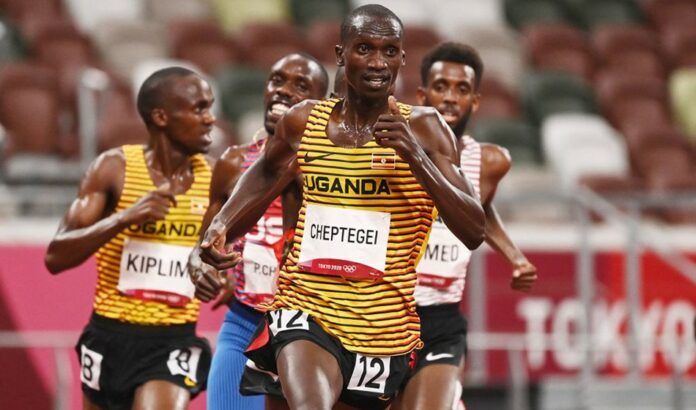
Joshua Cheptegei in the 5000m Olympics race

The World Athletics Council has selected Tokyo, Japan, to host the 2025 World Athletics Championships.

On the second day of the 228th World Athletics Council Meeting in Oregon, USA, the Council also announced that the 2024 World Athletics Cross Country Championships will be held in Medulin and Pula in Croatia and the 2026 World Athletics Cross Country Championships will be held in Tallahassee, Florida.

The 2025 World Athletics Championships will see the sport’s biggest stars return to Tokyo’s Olympic Stadium, venue for last year’s Olympic Games, in the year that the Japanese Association of Athletics Federations (JAAF) celebrates its centenary year.

In 2025, Tokyo will have the opportunity to fill its Olympic stadium with athletics fans who were denied the opportunity to attend the Tokyo 2020 Olympic Games due to pandemic restrictions.

The other candidates for the event were Nairobi, Silesia and Singapore, all of which were deemed strong enough and experienced enough to host the event. Tokyo scored the highest of the four candidates in the bid evaluation across the four focused areas: the potential for a powerful narrative; revenue generating opportunities for World Athletics; a destination that will enhance the international profile of the sport; and appropriate climate.

As one of the largest athletics stadiums in the world, the main stadium facilities in Tokyo are best in class and likely to present the best opportunity for athlete success at the 2025 World Athletics Championships. One of the most populated cities in the world with 43.8 million people in the Greater Tokyo area, Tokyo is an advanced market for athletics and associated growth opportunities.

World Athletics President Sebastian Coe thanked all the cities who took the time and effort to prepare bids, showing their commitment to athletics. He reinforced the Council’s wish that all of them continue to discuss future opportunities to host World Athletics events.

“Within an extremely strong field of candidates to host the World Athletics Championships 2025, Tokyo offered a compelling bid,” Coe said. “I hope this will be a shining light for Japan as they celebrate 100 years of the Japanese Association of Athletics Federations (JAAF) in 2025, by bringing world-class athletics back to the people in Tokyo.”

JAAF President Mitsugi Ogata responded: “We are immensely proud that World Athletics has demonstrated its confidence and trust in Japan to host the 2025 World Athletics Championships. Together with World Athletics as one team, we will capitalise on this opportunity to showcase the best possible global event for growing our sport to a higher level. 

“History has shown that we have the ability and energy to host the world’s top athletes and to inspire international audiences. We promise that the Olympic Stadium in Tokyo will be full of fans to become an unforgettable experience for the athletes and everyone involved.”

The 18th edition of the World Athletics Championships begins in Oregon on Friday 15 July 2022, while Budapest in Hungary will host the 2023 event.

Stories Continues after ad

CAF president encourages Uganda to submit bid to co-host Afcon 2027

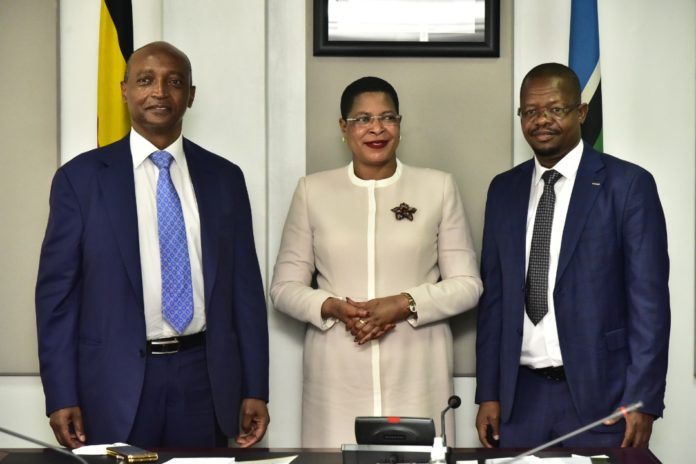
CAF President Patrice Motsepe (left) with Speaker Anita Among and FUFA President Moses Magogo

The Speaker of Parliament Anita Among and the Deputy Speaker Thomas Tayebwa today hosted a delegation from the Confederation of African Football (CAF) led by CAF President Patrice Motsepe where they discussed football in Uganda and Africa.

Suring the meeting, Motsepe backed Uganda and Tanzania’s bid to co-host the Africa Cup of Nations (AFCON) in 2027. “I was told yesterday that Uganda and Tanzania are keen to host the 2027 Africa Cup of Nations (AFCON) in these two beautiful countries,” he said.

“As the president of CAF I must say that I would personally not just welcome but encourage a joint hosting between these two countries because it will make a huge contribution to football development in Uganda and Tanzania.”

Motsepe said that between eight to nine countries have expressed interest in hosting AFCON 2027 but it would be important for this part of the region to host the continental showpiece for the first time.

“On the issue of co-hosting the 2027 AFCON, we had a discussion with the President and we are ready and willing to do the co-hosting with Tanzania, we have got clearance from our President, and we will be able to do that,” Anitah Among said in a meeting with Motsepe.

Among said that Uganda has so many talented sportsmen and women whose talent remain un-tapped. She said that there are so many heroes like Denis Onyango who can be identified in the grassroots.

“One of your most exciting players Onyango is a hero in South Africa and my principle is that where Onyango comes from, there are hundreds of other heroes,” Motsepe said.

The CAF President will later today meet with President Museveni as he concludes his two-day visit.

The minimum requirement for hosting Afcon according to CAF is that the host country should have six stadiums to cater to the 24 teams that take part in the tournament. In addition, the federation notes that there should be two 40,000 capacity stadiums, two 20,000-seater stadiums, and two with a capacity of 15,000.

Stories Continues after ad

CNOOC hands over 56 resettlement housing units for project affected persons

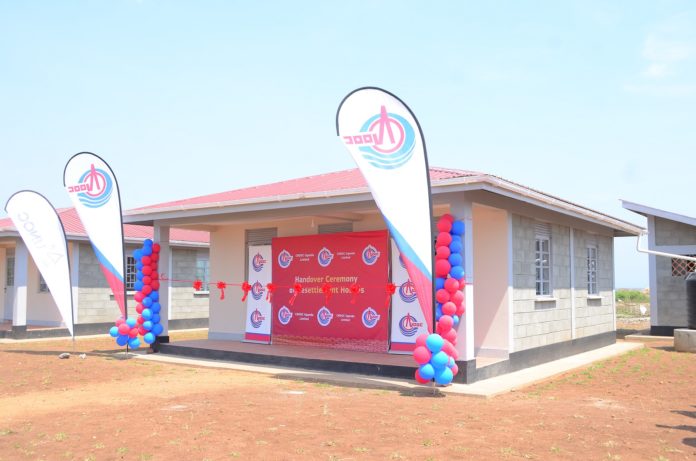
Newly constructed resettlement houses

China National Offshore Oil Corporation-CNOOC Uganda Limited has handed over 56 newly constructed resettlement houses for project affected persons.

The Project affected persons who received houses were people whose households were affected during project land acquisition that was required for the project development ahead of the construction schedule for project infrastructure such as the Central Processing Facility, drilling camp, well pads, infield flow lines, spoil areas, access roads, safety buffers around project facilities and the Feeder pipeline.

The project has implemented four Resettlement Action Plans (RAPs) which include; Legacy RAP – 61 PAPs for the Escarpment Road, RAP I – 31 PAPs for the CPF, Well pads, RAP II 680 PAPs for the Feeder Pipeline, Infield lines, access roads and RAP III -16 PAPs for buffer zones for the CPF and well pads.  These particular resettlement houses being handed over are part RAP II and RAP III.

The project was able to identify physically displaced PAPs based on the eligibility and entitlements matrix as designed in the Resettlement Action Plan and in-kind compensation was provided to households that were primary residences through construction of replacement houses comprising three bedrooms, living room, one outdoor kitchen and one VIP latrine, rain water harvesting equipment and solar power for lighting and other light energy needs.

A total of 56 resettlement units spread across  three Sub counties Kyangwali, Kabwoya, Buseruka and of five parishes of Buhuka, Kyangwali, Butoole, Kaseeta and Kabaale in Hoima and Kikuube districts were officially handed over today.

In an effort to mitigate the impacts to the households affected by the project, CNOOC Uganda Limited carried out various livelihood restoration programs to skill the PAPs as well as improving  their earning potential thus improving livelihoods.

The projects include the vocational skilling of children from the households of the PAPs. This is being carried out in phases with the first two phases already completed where 50 students completed and 100 students receiving training in welding, motorcycle basic mechanics, motor vehicle basic mechanics, building construction, tailoring, catering, hair dressing among others.

Other projects include; Financial Literacy Training and Business Development Support targeted 1800 beneficiaries (PAPs and their spouses) for Legacy RAP, RAP1 & RAP2 for PAPs along the feeder pipe line in the five Parishes; Livestock and crop development livelihood program implemented in Kyangwali Sub county for Legacy RAP, RAP1 & RAP2 PAPs in Kybagwali Sub-county which targeted 407 PAP households at Buhuka and along the Feeder line whereby livestock inputs such as boran bulls, boer goats and poultry and crop inputs (maize, cassava and beans) were delivered; Sensitization on communicable and non-communicable diseases was conducted in the five parishes of Buhuka, Kyangwali, Butoole, Kaseeta and Kabaale for PAPs along the feeder line.

A representative of the project affected persons; Robinson Oketcha said they were given options of compensation for all their property that was affected. Robinson said that for those whose houses were affected, they were given options of cash compensation or getting a replacement house.

 He chose a replacement house and he is very happy to receive his house. He described the new house as being a very big upgrade from his old mud house. And finally thanked CNOOC Uganda Limited for fulfilling their duties as a company.

Leaders from Kikuube and Hoima districts including the LC3 chairman, LCV and MP Kazini Francis commended CNOOC Uganda Limited for ensuring that delivery of good quality housing is done in a timely manner and also urged CNOOC to continue working together with the communities and leaders in order remain good neighbors in the area and districts of operation.

Mr. Ma Peixin, Vice President, CNOOC Uganda Limited applauded the Ministry of Energy and Mineral Development and Petroleum Authority of Uganda for the great support rendered towards CNOOC Uganda Limited during the implementation of the project and called for continued support as project activities increase.

He further echoed CNOOC Uganda Limited’s commitment to being a good neighbor and always striving to create Win-Win relationships with the local community.

“I thanked the PAPs for the trust they put in CNOOC Uganda Limited. This was a testament to the commitment CNOOC Uganda Limited has to fulfill its obligations and continued operation according to national and international best practices and guidelines especially the if standards,” he said.

He said CNOOC Uganda Limited is committed to the efficient and effective development of the Kingfisher Development Area in a healthy, safe, environmentally friendly and sustainable manner.

Peter Lokeris, the Minister of State for Mineral Development commended CNOOC Uganda Limited for the job well done on delivering the resettlement houses and ensuring that the land acquisition was done in compliance with the relevant legal requirements of the Government of Uganda and International Best Practice.

 “The handover of the resettlement houses is a big milestone regarding the oil and gas Projects as it signifies that the EPC Contractors can access the Project acquired lands without encumbrances giving assurances of meeting the schedule for First Oil in 2025,” he said.

Stories Continues after ad

Makerere postpones guild elections following student’s death

Batungura Bewotti

The Chairperson of Makerere University Council Ms. Lorna Magara has issued a directive to suspend Makerere University Students Guild and the ongoing guild elections following the death of a student during last night’s guild Presidential open campaigns.

Batungura Bewotti, 27, a second year student of law at Uganda Christian University-Kampala Campus was stabbed to death during a scuffle between supporters. He had gone to campaign for his friend and OB from Mbarara High School. Police said it is alleged that the fight was between the NUP and FDC Political factions.

The university council chairperson, Ms. Lorna Magara in a Thursday evening letter addressed to the Vice Chancellor, Prof Barnabas Nawangwe and copied to the Speaker of Parliament Anita Among, her deputy Thomas Tayebwa and other key stakeholders, said the elections for the 88th Makerere university students’ guild leadership were suspended indefinitely due to the violent events that had reportedly characterized the electoral campaigns.

“Makerere university council is appalled by the violent events that have characterized the electoral campaigns for the 88th Students Guild leadership, which resulted in the loss of the life of one of the young people participating in the campaign activities.”

“The University Management and Council have repeatedly raised concerns about the persistent cases of indiscipline and violent altercations among members of the Students Guild and the Students Senior Common Room, which often resulted in damage to University property and injury to University Students and staff. Management and the Council have repeatedly engaged the Student leaders at the Guild and SCR levels to address the violent behaviour, but the engagements have not yielded any improvements,” Ms Magara said.

“The ongoing elections for the 88th Makerere University Students Guild leadership are suspended indefinitely,” she directed.

According to the directive, the suspension includes the guild care taker government and the students’ common room.

“The Makerere University Students Guild is suspended with immediate effect. This suspension includes the Guild Care Taker Government and the Students Common Room.”

“Management shall investigate all cases of violence in the electoral campaigns for the 88th Students Guild leadership and report to the Council for appropriate action,” she said before adding that the Council will convene in an emergency meeting on Friday, July 15, 2022 to consider further actions to address student indiscipline and violence at the University.

Stories Continues after ad

MP, two others arrested over student’s death at Makerere guild campaigns

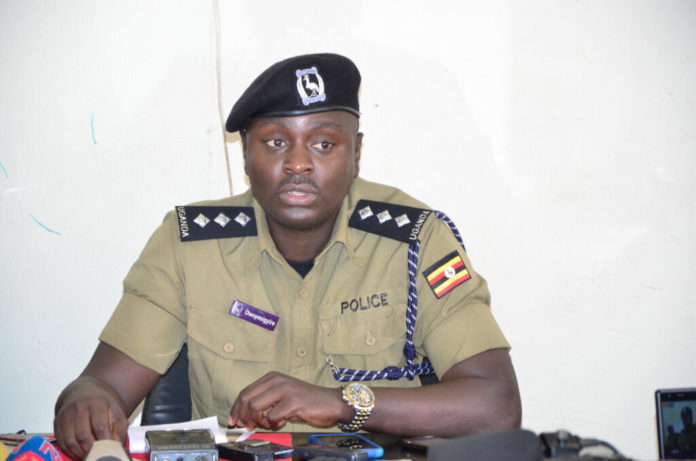
Luke Owoyesigyire, KMP Deputy police publicist.

Three people including a Member of Parliament have been arrested in connection with the death of a student during the last evening’s guild election campaigns at Makerere University.

Kampala metropolitan deputy Police spokesperson Luke Owoyesigyire says Kassanda South MP Frank Kabuye is among those held at the Central Police Station as investigations continue.

Batungura Bewotti, 27, a student of law at Uganda Christian University Kampala Campus and resident of Kikoni Zone B, Makerere 3 Parish Kawempe Division was murdered on the night of 14th July during the last guild Presidential open campaigns at rugby grounds Makerere University.

“It is alleged that during the campaigns a scuffle ensued between two Political party supporters that resulted in the stabbing of the deceased by students who were allegedly led by Hon. Kabuye Frank among others,” Owoyesigyire said.

“We have arrested three people whom we believe were part of the chaos. These are; Hon. Kabuye Frank who is detained at CPS Kampala, Ssekidde Allan currently detained at Wandegeya police station and Kabuurwa Muzafaru who is detained at old Kampala police station.”

The Police were informed and upon reaching the scene, they found blood stains believed to be for the deceased inside Nsibirwa Hall where he hid there after the scuffle that led to his stabbing.

Owoyesigyire added that efforts are underway to have other suspects traced. “Meanwhile, it is also alleged that the fight was between the NUP and FDC Political factions. The NUP team led by Kabuye Frank turned violent after a disagreement, leading to the stabbing.”

The body of the deceased was conveyed to city mortuary Mulago for Postmortem from Makerere hospital where he succumbed.

Police has cordoned off the area as statements are still being recorded and “CCTV footages will be retrieved to aid in the ongoing investigations.”

Meanwhile, the elections for the 88th Makerere University Students Guild leadership have been suspended indefinitely.

Stories Continues after ad

Gov’t turns to partners over Karamoja hunger

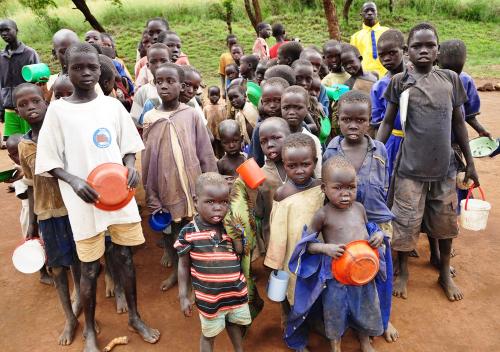
Kids in Karamoja stand in anticipation of aid food during a past famine that hit the region.

Prime Minister Robinah Nabbanja has requested the support of donors and development partners to respond to the prevailing food insecurity in the Karamoja sub-region.

According to statistics from government, presented by Hon. Esther Anyakun, the Minister for State for Relief, Disaster Preparedness and Refugees, 517,000 people in Karamoja have been at risk of food insecurity from March to July 2022 with the worst hit areas being Kotido, Napak and Kaabong districts.

Anyakun presented a statement on the status of disasters in the country and government intervention before Parliament on Thursday, 14 July 2022.

She said 1,590 metric tonnes of maize flour and 795 metric tonnes of beans have so far been delivered to Karamoja.  Anyakun also says that government is seeking support to salvage the situation.

“An appeal by the Rt Hon. Prime Minister was made to donors and development partners to respond to food insecurity in Karamoja sub-region that is highly affected,” Anyakun said.

On the long-term strategy to mitigate and prevent disasters, Anyakun said a Disaster Risk Management Plan was developed following the directive of the President and was very recently presented to Cabinet and approved.

On flooding in Kasese district due to overflowing of rivers Nyamwamba, Rubiriha and Nyamugasani relief was delivered, and government is desilting River Nyamwamba.

MPs who contributed to the hunger debate asked government to intervene in the whole country and not only Karamoja.

Hon. Peter Lokii, the Jie County MP says government needs to bring an end to the challenge of food insecurity, as people cannot rely on the unpredictable rain patterns.

“There is no hope, the weather pattern has changed and rain has not come at a point when people are supposed to be harvesting. It is important that our ministries, departments and agencies sit down and come up with the best option,” Lokii said.

Hon. Gilbert Olanya, the Kilak South MP says that in Acholi, most of the crops that have been planted have dried out. He says government needs to plan in advance for an emergency and also have a nationwide plan against hunger.

Kabula County MP, Hon. Enos Asiimwe, says that the army worm destroyed crops in his constituency and people are restless and worried for the future since they did not return a good harvest.

Hon. Sowedi Kitanywa, the MP Busongora North MP in responding to the minister’s statement said that focus should not be in only desilting River Nyamwamba, but all the other rivers in the Rwenzori region.

Stories Continues after ad

UWA Gives Back 3.4bn to Communities AroundBwindi & Mgahinga Conservation Area

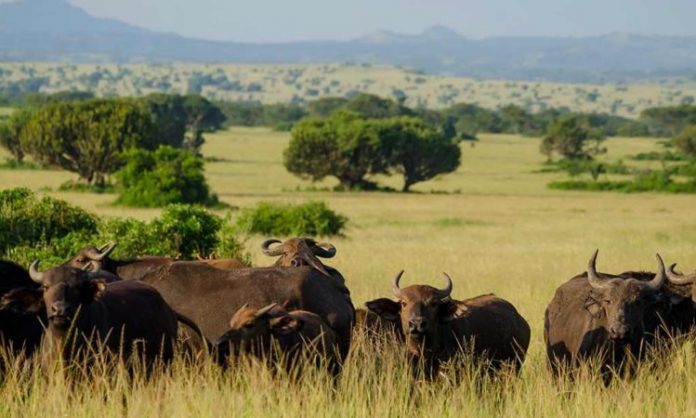
Buffalo at Queen Elizabeth National Park.

On June 13 2022, the Uganda Wildlife Authority gave UGX 3,388,186,504 in the Tourism Revenue Sharing (TRS) program to local communities adjacent to Bwindi and Mgahinga Conservation Area in southwestern Uganda.

In a handover ceremony, the Minister of Tourism, Wildlife and Antiquities Rtd. Col. Tom Butime handed over revenue cheques to leaders of Kisoro, Kanungu and Rubanda districts. 

The ceremony was also attended by UWA board of trustees’ members who were led by Dr. Panta Kasoma, the chairperson of the board. UWA was also represented by Ag. ED John Makombo, a senior staff at the agency.

Hon. Butime explained that local communities living next to the protected areas do not only keep guard of the resources but also suffer most from the cost of conservation. Therefore, the government gives back to the communities to make the communities appreciate their role in protecting these resources.

The UWA Board of Trustees Chairperson Dr. PantaKasoma said that UWA revised the Tourism Revenue Sharing Guidelines in order to make communities benefit more from the program. He said that the funds given out to the local communities adjacent to Bwindi Impenetrable National Park and Mgahinga Gorilla National Park, will be put into good uses that the locals realize economic values.

On behalf of the district leaders, District Chairperson Rubanda Kasyaba Stephen thanked UWA for the great partnership and collaborating well with communities that surround Bwindi Mgahinga Conservation Area. He pledged to continue with cooperating strongly with the institution to ensure communities protect the wildlife but also feel the benefits that accrue from its protection.

The function was attended by among others, Chairpersons, Resident District Commissioners, Chief Administrative Officers and other technical officers from the six districts that neighbor Bwindi Mgahinga Conservation Area in Kanungu, Kisoro and Rubanda.

How the 3.38 Billion will be spent 

The 5% of the 3.38 billion Uganda shillings will be sharedamong the parishes and districts that share borders with either Mgahinga national park or Bwindi impenetrable Forest. This is to carry out supervision on the projects approved to receive money through the revenue sharing initiative.

95% of the 3.38 billion Uganda shillings will be distributed into two; funding household projects and funding community projects. 

The household projects are mainly fund agriculture activities for the community residents ranging from tree growing, tea growing, irish growing among several other agricultural activities. 

The community projects often range from putting up accessible water sources, schools, health centers among several other community empowerment initiatives. 

What people are saying about UWA Revenue sharing

The Uganda Wildlife Authority has successfully given back to communities around Uganda National Parks since 1995 but according to some of the tour operators and other stakeholders in the tourism industry of Uganda feel there is more that needs to be done to ensure that there is a real impact felt through the revenue sharing initiative.

According to Mr. Makonzi Kiwanuka of Go Gorilla Trekking, the main challenge in most of the communities has been access to water, health care, education, roads and employment. If all the money that is shared among the different conservation areas per year was simply given to one conservation area in a year; a tangible outcome would be felt. 

Constraints to UWA Revenue sharing 

The biggest challenge in UWA’s revenue sharing initiative is accountability. A couple of years ago, Uganda Wildlife Authority had halted the Queen Elizabeth conservation area revenue sharing initiative demanding accountability for the money that had already been given.

In other instances, the projects that had received funding failed to kick off thus had to be terminated by UWA. 

In conclusion, there are some success stories for the UWA’s Tourism Revenue Sharing initiative. Over 250 projects have been successfully funded since the inception of the initiative. However more efforts are needed to ensure that the impact is felt on a larger scale. 

Stories Continues after ad

Standard Chartered Bank unveils Straight2Bank Nextgen corporate platform

Photo moment during the reveal event

Standard Chartered Bank Uganda held a thought leadership event to discuss business immersion in Sustainable Trade Finance for over 100 corporate and SME business leaders at Sheraton Hotel.

The Sustainable Trade Finance Event and the Straight2Ban Next Gen platform launch were presided over by Hon. David Bahati, the Minister of State for Trade, Industry and Co-operatives and Hon. Joyce Nabbosa Ssebugwawo the State Minister for ICT and National Guidance, respectively.

The Standard Chartered Bank Business immersion on Sustainable Trade Finance event flagged off the evening by drawing the attention of all stakeholders to the urgency to flatten the curve of greenhouse gas emissions and bring them down to Net zero to avert a climate pandemic.

The Minister of State for Trade, Industry and Co-operatives David Bahati said every individual should play a part to combat the effects of climate change through change of our habits and lifestyle to reduce our personal carbon footprint.

 “The banking, finance and investment communities play a critical role in facilitating investments in renewable energy solutions and carbon neutral technologies. We are happy to see Standard Chartered Bank taking the lead on the journey towards Net zero emissions through business awareness symposiums such as this and extending robust sustainable Trade Finance solutions to the Business community in Uganda. Through sustainable Trade Financing solutions, we should see growth in the supply and demand for green investments,” he said.

Patrick Makau, the Executive Principal, the Standard Chartered Head of Trade and Working Capital Kenya and East Africa said they have taken the responsibility for the progress in our communities and that is why they are advocating for sustainable finance.

He said the bank has a proven track record of innovation across Trade Finance and Sustainable Finance with several global awards to reinforce our role in financing major energy, telecoms, mining and infrastructure projects to growing businesses and building communities.

“With consumers, investors and governments increasingly focusing on Environmental, Social and Governance (ESG) metrics, there is a growing impact on global supply chain activities. We understand that Sustainability is increasingly at the forefront of your respective business strategies so by deploying our sustainable financing solutions, you can now complement your sustainable procurement and your own sustainable agenda with our tailor-made sustainable trade finance offering. As a leader in trade and sustainable finance, we are here to help you achieve your sustainability goals,” he said.

Joyce Nabbosa Ssebugwawo, the State Minister for ICT and National Guidance then led the participants on a Networking tour of the experiential booths that demonstrated the Straight2Bank NextGen platform capabilities before settling down for the unveiling cocktail event.

At the Straight2Bank NextGen launch event, the Standard Chartered Bank Uganda Board Chairperson – Mrs. Maria Kiwanuka said one of the Bank’s STANDs of Lifting Participation aims to improve the lives of one billion people and their communities globally, by unleashing the full potential of women and lifting participation of Small Businesses in our core markets by providing access to finance, networks, training young people, driving accessible banking at scale and connecting affluent clients to opportunities for making a societal impact.

“The Straight2Bank Next Gen solution we are unveiling today will enable women and youth led SME’s access the best digital business banking solutions to grow their businesses in a fast, smart and easier way,” she said.

She said the bank aims at supporting 500,000 companies globally to improve working and environmental standards and giving everyone the chance to participate in the world economy, so growth becomes fairer and more balanced.

Sanjay Rughani the Chief Executive Officer, Standard Chartered Bank Uganda has kept on innovating after taking into account itss clients’ feedback which informed an upgrade to Straight2Bank Corporate platform to the newly unveiled Straight2Bank NextGen platform which mainly focuses on security, convenience and digitizing of Trade Finance and Payments.

The Next Gen platform boasts of superior capabilities and efficiencies that make it; Simpler, faster, offering a better customer experience, Improved convenience, Customizable features, Improved efficiency and Improved TAT for system capability among others.

“We have a three-pronged innovation approach to differentiate, disrupt growth and transform the Bank to achieve our goals and these include transforming our core via digitisation, leveraging partnerships to drive scale and extend reach as we build new business models to create value.”

Earlier Ssebugwawo said Banks are one of the biggest drivers and consumers of IT as they become increasingly reliant on heavily skilled technologists to instruct IT systems and invest in systems. Such usage and investments are inevitably driving improvements in banks’ digital systems and as banks continue to invest smartly in digitization, they are reaping massive rewards.

“I therefore call upon Standard Chartered Bank to continue investing in up-skilling their workforce to keep up with new trends and ably support clients navigate the various challenges they face as they adapt to using these platforms. We need you to be a leader in sharing best practice, reduce the cost of doing business for clients and undertake continuous financial literacy to help the entire sector catch up. One of the other critical digitization challenges is around security. There is a need to combine convenience with rigor in the customer verification procedures,” she said.

Stories Continues after ad

Police to provide security as Internal Medicine Virginia develops Nakawa-Naguru land

Nakawa-Naguru land

Police has been directed to provide security to Internal Medicine of Virginia Limited as they develop the Nakawa-Naguru land.

A 12th July letter from the Lands Minister Judith Nabakooba to the Inspector General of Police, directs him to provide security for the company in order to enable them to develop land in Naguru.

“I received a telephone communication on 7th July 2022 from H.E the President directing that you provide security to Ms. Internal Medicine of Virginia Ltd to enable them take possession and develop the land leased to the Company by Uganda Land Commission with immediate effect,” the letter reads in part.

The land is compromised in Plot 25-50 Naguru road, Kampala.

“By copy of this letter all relevant Government agencies are requested to provide the investor the necessary support and cooperation,” the letter adds.

The Presidential directive to give land to Internal Medicine of Virginia PC was made on 20 October 2019 when President Yoweri Museveni wrote to then Lands Housing and Urban Development Minister, Hon Betty Amongi.

“Sometime back I met our Ugandans of Arab origin who used to own Bismillahi Restaurant in Mbarara in the 1960s. Their children are specialised medical doctors who run several medical facilities in America. I convinced them to come to Uganda and establish a specialised hospital and nursing home, which they agreed to. They requested for part of the Nakawa-Naguru land to set up the facility,” Museveni wrote.

“Given the urgent need to stop medical tourism and enable access to affordable specialised treatment by Ugandans, I hereby, direct that you allocate 15 acres of the said land to Internal Medicine of Virginia P.C,” he directed.

The land commission revised allocations of land at Nakawa-Naguru and distributed 15 of the 82 acres to Internal Medicine of Virginia.

Stories Continues after ad

Africa facing a growing risk of outbreaks caused by zoonotic pathogens

Health workers

Africa is facing a growing risk of outbreaks caused by zoonotic pathogens, such as the monkeypox virus which originated in animals and then switched species and infected humans. There has been a 63% increase in the number of zoonotic outbreaks in the region in the decade from 2012-2022 compared to 2001-2011, according to World Health Organization (WHO) analysis.

The analysis finds that between 2001-2022 there were 1843 substantiated public health events recorded in the WHO African region. Thirty percent of these events were zoonotic disease outbreaks. While these numbers have increased over the past two decades, there was a particular spike in 2019 and 2020 when zoonotic pathogens represented around 50% of public health events. Ebola Virus Disease and other viral hemorrhagic fevers constitute nearly 70% of these outbreaks; with dengue fever, anthrax, plague, monkeypox and a range of other diseases making up the remaining 30%.

The latest data on monkeypox finds a significant increase in cases since April 2022, compared to the same period in 2021. The increase is mainly observed in the Democratic Republic of the Congo and Nigeria, and could partly be attributed to enhanced monkeypox surveillance and laboratory testing capacity in the countries, though detailed investigations are underway. However, this upward trend is still lower than in 2020 when the region reported its highest monthly cases of monkeypox. Overall, cases of monkeypox have been rising since 2017, except in 2021 where there was a sudden drop. From 1 January to 8 July 2022 there have been 2087 cumulative monkeypox cases, of which only 203 were confirmed. The overall case fatality rate for the 203 confirmed cases is 2.4%. Of the 175 confirmed cases for which there is case specific data, 53% were male and the median age was 17 years.

The increase in zoonotic cases may be due to several reasons. Africa has the world’s fastest growing population and there is a growing demand for food derived from animals including meat, poultry, eggs, and milk. The population growth is also leading to rising urbanization and encroachment on the habitats of wildlife. Road, rail, boat and air links are also improving across Africa increasing the risk of zoonotic disease outbreaks spreading from remote areas where there are few inhabitants to large urban areas.  As we have seen with the West African Ebola outbreaks, there can be a devastating number of deaths and cases, when zoonotic diseases arrive in cities.

 “Infections originating in animals and then jumping to humans have been happening for centuries, but the risk of mass infections and deaths had been relatively limited in Africa. Poor transport infrastructure acted as a natural barrier,” said Dr Matshidiso Moeti WHO Regional Director for Africa. “However, with improved transportation in Africa, there is an increased threat of zoonotic pathogens travelling to large urban centres. We must act now to contain zoonotic diseases before they can cause widespread infections and stop Africa from becoming a hotspot for emerging infectious diseases.”

Stemming the rise in zoonotic diseases in Africa is complex and WHO recommends a one-health approach which requires multiple sectors, disciplines, and communities to work in collaboration. This includes a wide range of experts, including those working in human, animal and environmental health.  Routine disease surveillance information and response activities—for both animal and human health—should be shared among epidemiologists and other public health experts.

More research is also needed, to identify environmental, socioeconomic, and cultural factors that boost the emergence and transmission of epidemic-prone diseases, as well as to better understand the factors that affect the impact and spread of epidemics, including the immune status, nutrition, genetic and antimicrobial resistance.

 “We need all hands on deck to prevent and control zoonotic diseases such as Ebola, monkeypox and even other corona viruses,” said Dr Moeti. “Zoonotic diseases are caused by spillover events from animals to humans. Only when we break down the walls between disciplines can we tackle all aspects of the response.”

Since, 2008 WHO has strengthened its regional collaboration with the Food and Agriculture Organization of the United Nations and the World Organization for Animal Health to support efforts to address zoonotic outbreaks across Africa. Recently, the three agencies worked together in the 14th Ebola outbreak, which just ended in the Democratic Republic of the Congo.

Stories Continues after ad