Stanbic Bank
Stanbic Bank
18.5 C
Kampala
Stanbic Bank
Stanbic Bank
Home Blog Page 574

Experts weigh in on financial literacy in Uganda

Experts weigh in on financial literacy in Uganda

Many people are likely to recover from financial illness as more insurance firms and commercial banks continuously pass on key-turning financial knowledge of saving and investing in highly-rewarding ventures. 

Samuel Matekha, the Head of Communications at Diamond Trust Bank, says many Ugandans are suffering financially because of not utilizing resources around them that can fetch additional incomes to their pockets.

“Think about it. A girl is earning 100,000 shillings and spends it on clothes and shoes, having no plan of investing this money and turning it into better value.How about if you got an insurance policy? How about opening a digital savings account in a bank?” wondered Matekha.

The ultimate goal is to up skill and see Ugandans making informed decisions about investing in ventures they fully understand, according to John Walugembe, the Executive Director of the Federation of SMEs Uganda.

Jacqueline Kalembe, the Communications Officer of UAP Old Mutual Life Assurance Uganda, says the fact that nearly 80 percent of NSSF savings beneficiaries blow away their money in their first year of receiving, indicates low financial literacy levels in Uganda.

A financial capability report from the Bank of Uganda, reveals that only 25% save for investment and it also shows that a quarter of adults save, but for only consumption.

Kalembe observes the need to educate the masses on financial concepts that will enable them to prepare, save, and invest in lucrative ventures, among other financial knowledge aspects. 

Jane Amuge Okello, Operations Director at Uhuru Institute for Social Development notes that opportunities are got by the ready innovative humans who have embraced practical knowledge. 

“There is a variety of things that can be invested in, like the Agribusiness sector, products in insurance, small-scale businesses, among others. Let’s work and reduce income generation and transit to wealth creation,” says Amuge.

Matekha advises Ugandans to position themselves in opportune platforms having skilled entrepreneurs and investors that can help in building and executing innovative ideas. He encourages planning for time accordingly.

“Don’t wait for the job to pay you, build your finances and with a positive mindset, invest them once you earn,” says Matekha. 

Walugembe concludes that fundamentally, people should understand that they must have an income to save.

“Grow income and minimize expenditure, save and invest. The challenge is that Ugandans want to invest in immediate physical assets. Be patient and earn in abundance,” says Walugembe.

Agume further urges stakeholders in the finance space to work together and package the insurance message and financial education in an easy language because economics language makes low-income earners think such packages are for high-end workers.

“People have shunned insurance and banking because they think it’s for high-end workers,” Agume said.

Stories Continues after ad

Marketers tipped on how to use research and data to make brands more relevant to consumers

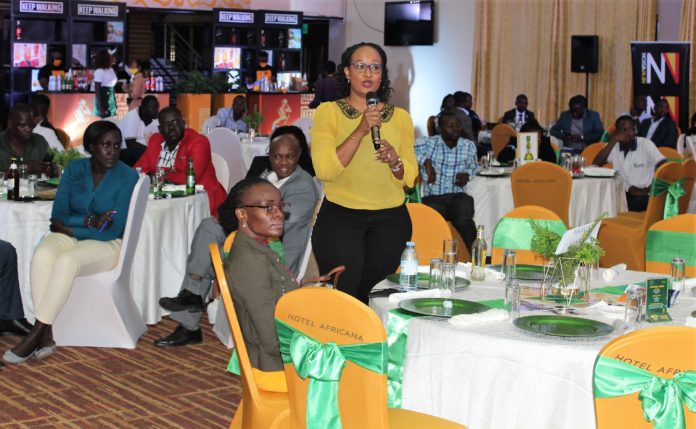
Yannick Lefany, The Founder & CEO of Kasi Insights

Marketing professionals in Uganda have been challenged to use research and data to address the real needs of consumers because this is the only way that brands can continue to be relevant to customers while keeping ahead of competition.   

Yannick Lefany, The Founder & CEO of Kasi Insights, a consumer research organization advised marketers to think about the well-being of people consuming their products beyond selling to them.

Lefang was speaking during the Marketer’s Night out on July 1st, at Hotel Africana in Kampala where marketers discussed at length about the relevance their newest products in both local and international markets. 

The occasion was headline by Safaricom’s Mpesa International an innovative platform that won global acclaim for financial inclusion in underserved markets.  

Lefand emphasized that professional marketers  ought to be innovative and must use data to get a better understanding of their consumers and their preferences because this would also help them come up with new and relevant products.    

“There is tremendous innovation being applied to understand people and their lifestyles and serious brands that focus on sustainability are increasingly using these innovations. If you want to increase your market share, you have to do better than the competition by offering what is not offered on the market and also having a deeper understanding of what the consumers need. You cannot manage what you can’t measure,” said Lefang.

Tipping marketers on brand reputation, Babra Arimi, Head of Marketing and Communications at the National Social Security Fund- NSSF said marketing professional are expected to show the value of businesses by showcasing the impact of their work the organization’s profitability and impact on society.

“Brand equity is about the perception held in the mind of consumers and the general public. This is measured by conducting a survey that tells you about consumer loyalty. 

When you combine all these things, the data from the survey will help you come up with an index, which is a measure that is synthesized by research firms to help brands become more relevant to their consumers,” said Arimi.

The Kampala Marketers Night Out is hosted by Marketing Africa Limited which conducts similar event in Nairobi and Dar es Salaam. The event has been reintroduced in Kampala after a break of about 10 years! This year’s event was sponsored by Mpesa International, Tusker Malt, Johnnie Walker. The New Vision, KASI International, Power Workshops, Kalsa Consults and Media Age among others. 

Stories Continues after ad

DGF to resume operations following one year suspension

DGF logo

The development partners Austria, Denmark, the European Union, Ireland, the Netherlands, Norway and Sweden have welcomed the lifting of the suspension on the Democratic Governance Facility (DGF).

Established in 2011, the facility was suspended by the Government of Uganda in February 2021. The suspension halted DGF-funded activities of over 80 state and non-state implementing partners; and significantly impacted individuals, communities and institutions including at local level, that were beneficiaries of these engagements.

While meeting Danish Minister for Development Cooperation, Flemming Møller Mortensen on 22 June 2022, President Yoweri Kaguta Museveni announced the lifting of Suspension on DGF.

According to a statement released by development partners, the DGF provides financial and technical support to both state and non-state partners that work to strengthen democracy, protect human rights, improve access to justice, and enhance accountability in Uganda.

“We appreciate the patience and resilience of partners during the suspension. The current phase of the DGF was set to run from January 2018 to December 2022, and this timeline remains in place. During the months that remain, we look forward to welcoming Government of Uganda representatives to the Board and Steering Committee of the DGF,” reads in part of the statement.

DGF development partners pledged to continue supporting good governance, human rights, and access to justice, addressing corruption, and strengthening civil society. In the coming months, we will establish the best means of continuing our engagement with both state and non-state partners working in these areas.

“We look forward to working with the Government of Uganda and civil society to advance Uganda’s national priorities and commitments, including as stated in the Constitution of the Republic of Uganda, Vision 2040 and the Third National Development Plan (NDP III), as well as the national commitments to implement the 2030 Agenda for Sustainable Development in Uganda,” they said.

Stories Continues after ad

Kiswahili to be made compulsory in primary and secondary schools

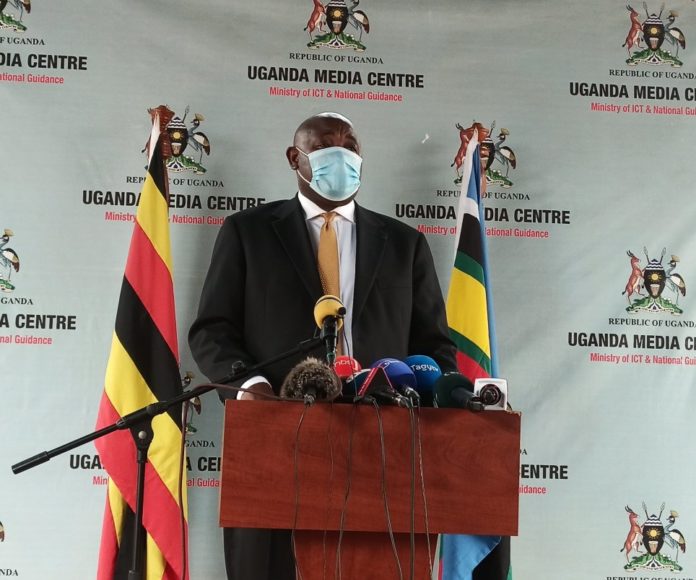
Chris Baryomunsi - Minister of Information, Communications Technology and National Guidance

Government has approved the implementation of the 21st East African Community (EAC) summit directive in Uganda for Kiswahili to be the official language of the community.

This was among the decisions taken by the Cabinet of Uganda on July 4, 2022 under the chair of President Museveni at State House, Entebbe.

Cabinet recommended that the teaching of Kiswahili in primary and secondary should be made compulsory with training programs for Parliament, cabinet and the media be initiated.

“Approved the implementation of the 21′ EAC Summit directive in Uganda to adopt Kiswahili as an official language of the community. Cabinet recommended that the teaching of Kiswahili language in primary and secondary schools should be made compulsory and examinable. It was further agreed that training programs for Parliament, cabinet and the media be initiated.”

Among other decisions taken were; Cabinet directed the Minister of Gender, Labour and Social Development to present a comprehensive paper on externalisation of labour in Uganda.

This was after taking note of the reports that some Ugandans who work outside the country especially as domestic servants undergo untold suffering.

Cabinet also approved the proposal to amend the Microfinance deposit taking institutions Act, 2003.

The amendments will address the following; Allow for the use of the words “Microfinance bank” by Microfinance deposit taking institution, Provide for Islamic banking, agent banking and bancassurance in the microfinance industry, To allow special access to the credit reference bureau by other accredited credit providers and service providers, and To synchroinise and harmosnie the MDI Act with other laws and financial sector integration processes.

Cabinet also noted that the World Population Day will be commemorated on July 11, 2022 at Kumi Boma grounds, Kumi district. The theme will be mindset change for Wealth Creation; Ending child marriage and teenage pregnancy.

Stories Continues after ad

Vipers confirm defender Isa Mubiru as first signing

Isa Mubiru

Vipers Sports Club have signed defender Isa Mubiru from Uganda People’s Defence Force (UPDF) Football Club for an undisclosed fee, the left back agreeing a three-year deal until 2025.

Mubiru, 25, becomes the Venoms’ first signing of the 2022/23 football season having impressed with his former club in recent years.

Speaking to Vipers media team after signing for the Venoms, Mubiru said: ” Moving to Vipers SC is a big and important step in my life.”

“I am delighted to be joining Vipers SC at this very exciting time for the club. I’m looking forward to being a part of this experienced, dynamic squad as we challenge for honours next season.”

Mubiru is one of the established and promising full-backs in the Uganda Premier League who likes to attack from left-back, contributing with assists and the occasional goal. He is equally adept at the defensive side of the game and has been a key figure in UPDF FC’s increasingly resilient rearguard in recent years.

He has also played for Tooro United FC and MS Soccer Academy, Namasuba.

Stories Continues after ad

Asian properties: COSASE dealt another blow as gov’t is ordered to pay costs of the application

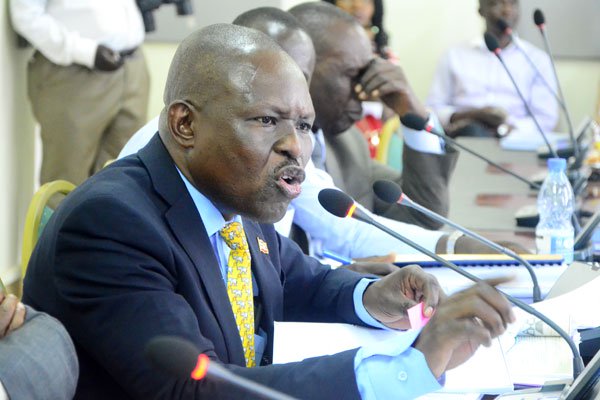
DAPCB Executive Director George William Bizibu

Parliament’s committee on Sub-Committee on Commissions, Statutory Authorities and State Enterprises (COSASE)  have been dealt a blow after court ruled that its subcommittee did its work illegally as it tried to act as court in investigating properties under the Departed Asians Property Custodian Board (DAPCB).

Mohamed Allibhai, the applicant had dragged the Attorney General to court seeking court to review the acts of the COSASE subcommittee in investigating properties already handled by court and other processes, confirming rightful ownership.

Remember the Attorney General Kiryowa Kiwanuka had already distanced himself from the committee’s report recommending the cancellation of repossession certificates held by owners of the properties, stating that it could result in law suits.

In a ruling by Justice Boniface Wamala dated June 4, 2022, Court agreed with Allibhai that COSASE’ work was illegal, and awarded him costs of the application against the Attorney General (government).That means COSASE has cost taxpayers money due to recklessness.

The judge stated that COSASE Sub-Committee acted ultra vires, and thus illegally, when it investigated properties that were subject of concluded court decisions or on-going court processes.

The jusge agreed that COSASE Sub-Committee acted ultra vires, and thus illegally, when it made recommendations that purport to overturn court decisions.

“The COSASE Sub-Committee exceeded its mandate and acted without jurisdiction, and thus illegally, when it purported to investigate properties already dealt with under the Expropriated Properties Act and in respect of which certificates of repossession had long been issued.”

Adding that: “The COSASE Sub-Committee acted ultra vires and without jurisdiction, thus illegally, when it made recommendations for cancellation of repossession certificates in respect of properties that had already been dealt with in accordance with the Expropriated Properties Act.”

He also agreed that COSASE Sub-Committee acted with bias and in abuse of the principles of natural justice, thus with procedural impropriety and unfairness, when it issued a warrant of arrest against the Applicant.

He also ruled an order quashing and expunging from the Hansards of Parliament those parts of the COSASE Sub-Committee report that relate to the Applicant and are affected by the illegalities, procedural impropriety and unfairness contained in the declarations.

Additionally, he quashed and expunged from all official records the warrant of arrest issued against the Applicant.

Justice Wamala also has ordered the prohibition and barred the Respondent [Attorney General COSASE], their servants, agents or any other body or persons from enforcing the recommendations of the COSASE Sub-Committee in as far as they relate to the Applicant or the affected properties.

The application was brought by Notice of Motion under Articles 28, 42, 44 (c) and 50 of the Constitution; Sections 36 and 38 of the Judicature Act Cap 13; and Rules 3, 6, 7 and 8 of the Judicature (Judicial Reviews) Rules, S.I. No. 11 of 2009 as amended.

Background

COSASE sub-committee about a year tabled a report to parliament with recommendations over the repossessed departed Asians’ properties. However their implantation was immediately rejected by the Attorney General and now court has followed the same, raising questions about the credibility of COSASE’s work.

Chaired by the then Makindye East MP Ibrahim Kasozi, the COSASE sub-committee investigated the alleged in DAPCB for over a year in the wake of the findings of the Auditor General’s report of 2016, had recommended the cancellation of the repossession of properties whose original proprietors did not return to the country physically.

During the probe, the sub-committee had observed that most of the expropriated properties were being managed by agents most of them now real estate moguls in Uganda, on behalf of the Asians who never returned by 1993, about two decades after their 1972 expulsion by former president, Iddi Amin.

“All repossessions whose former owners didn’t return physically to manage the properties as required by law should be cancelled or revoked for being null and void. The minister should invoke his/her powers under section 9(1) of the Expropriated Properties Act (EPA) to make an order to either retain such properties as government or the same be disposed of in a manner prescribed by regulation 11 of the Expropriated Properties (Repossession and Disposal) Regulations,” reads part of the recommendations in the COSASE report.

Parliament further adopted the recommendations that called for revocation of transfers of ownership of properties that had been done on basis of letters of repossession and called for prosecution of individuals who perpetrated the repossessions because it was fraudulent. Such properties it was recommended would revert to the government of Uganda.

But the AG advised the finance minister Matia Kasaija who is the supervisor of DAPCB that in response to recent debates with in the government any action on some of the recommendations of the COSASE sub-committee will increase lawsuits. Allibhai could take advantage of the Attorney General’s advice about the lawsuits to come and indeed he has won.

“Although the COSASE sub-committee investigations elicited findings similar to those of the Auditor General’s report, the recommendations of the COSASE sub-committee that the departed Asians board initiates the process of cancellation of certain repossession certificates and any substitute title is legally untenable,” Kiryowa stated.

He based his opinion on the provisions of section 9(1)(d) of the Expropriated Properties Act Capt 87 and case law, saying if the government loses such cases that may arise from actions that are legally untenable, there could be huge financial losses in costs awarded by courts of law.

Kiryowa opined that once the certificate of repossession have been issued in respect of expropriates properties, then the DAPCB has no mandate whatsoever to deal with such property because its  divestiture committee does not have powers to repossess, manage or allocate any property that has been dealt with by the Minister of Finance.

“Once the minister of finance has dealt with an expropriated property by issuing a repossession certificate, a certificate of purchase or certificate of receipt, he or she has no powers under the act to cancel the certificate issued even if there was an error on the part of the government,” he guided.

The COSASE sub-committee caused tremor over the ownership or management of several properties in Kampala and countrywide as it looked to open wounds of past fights over expropriated properties.

However, Kampala tycoon Sudhir Ruparelia successfully argued before the sub-committee regarding the ownership of plot 24, Kampala road after DAPCB had testified that the prime property was never repossessed and ought to be in hands of the government.

In its report, the COSASE sub-committee listed Sudhir as the rightful owner of the property having floored DAPCB in court in 2012.

Sudhir’s case is one of the 13 cases that DAPCB had lost by the time of the probe. The DAPCB had so far won 10 cases, whereas 99 cases remained unconcluded.

Stories Continues after ad

Katikkiro Charles Peter Mayiga commends dfcu for supporting Kabaka birthday run

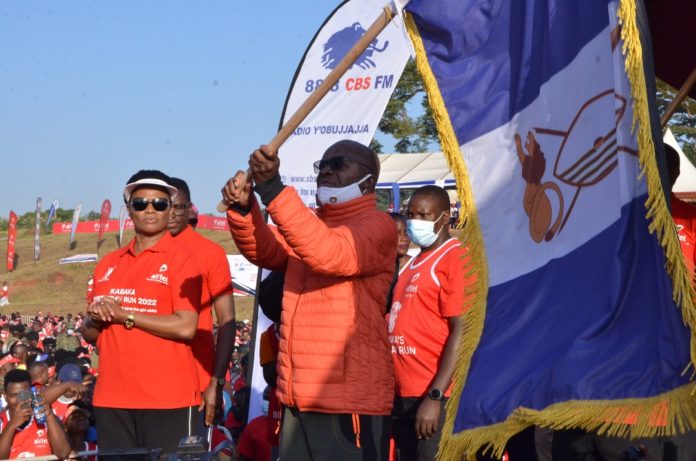
Kabaka flagging off the birthday run that took place on Sunday 3rd July 2022.

The Katikkiro Charles Peter Mayiga has commended dfcu Bank for its continued support and commitment to ridding Uganda of the scourge of HIV/AIDS by supporting the annual Kabaka Birthday run.

Held over the weekend, the 2022 Kabaka birthday run attracted over 80,000 runners at Mengo with thousands more participating in different regions across the country. It was held under the theme “Men against AIDS to Save the Girl Child”, to encourage men to spearhead the fight against HIV/AIDS through regular testing, commitment to treatment, and actively preventing new infections.

The run was flagged off by the Kabaka of Buganda, His Majesty, Ronald Mwenda Mutebi II, who is also the UNAIDS-appointed Africa Goodwill Ambassador.

“We are very grateful to dfcu Bank for continuing to support the Kabaka Birthday run. We have had you as a partner every year since 2019 and we hope to continue these collaborative efforts to stop the spread of HIV/AIDS,” remarked Owek. Mayiga during his tour of the dfcu Bank hospitality tent.

In 2019, dfcu Bank signed a partnership agreement with the Buganda Kingdom to sponsor the annual Kabaka Birthday run event for three-years.

According to dfcu Bank CEO Mathias Katamba, the Kabaka Birthday Run activity is in line with the bank’s Corporate Social Investment intervention area of maternal and child health, in the context of HIV/AIDs.

“We are honoured to sponsor such a prestigious activity with a cause so dear to Ugandans in their different communities across the country. The long-term wellbeing and uplifting of communities through testing and treatment of HIV/AIDs patients to ensure that no more contractions happen is a key priority for dfcu Bank. While there has been significant progress in the reduction of new infections, we commit our support to ensure that we eliminate HIV/AIDS,” he noted.

Stories Continues after ad
DRC declares 14th Ebola outbreak over

Health workers

The Democratic Republic of Congo today declared the end of the Ebola outbreak that erupted less than three months ago in Mbandaka, the capital of Equateur Province in the northwest. It was the third outbreak in the province since 2018 and the country’s 14th overall.

With greater experience in Ebola control, national emergency teams, with the support from World Health Organization (WHO) and partners, mounted a swift response soon after the outbreak was declared on 23 April, rolling out key counter measures including testing, contact tracing, infection prevention and control, treatment and community engagement. Vaccination – a crucial protective measure  was launched just four days after the outbreak was declared.

In all, there were four confirmed cases and one probable case – all of whom died. In the previous outbreak in Equateur Province that lasted from June to November 2020, there were 130 confirmed cases and 55 deaths.

 “Thanks to the robust response by the national authorities, this outbreak has been brought to an end swiftly with limited transmission of the virus,” said Dr Matshidiso Moeti, WHO Regional Director for Africa. “Crucial lessons have been learned from past outbreaks and they have been applied to devise and deploy an ever more effective Ebola response.”

The just ended outbreak saw a total of 2104 people vaccinated, including 302 contacts and 1307 frontline workers. To facilitate the vaccination rollout, an ultra-cold chain freezer was installed in Mbandaka which allowed for vaccine doses to be stored locally and safely and be delivered effectively.

The Democratic Republic of the Congo has now recorded 14 Ebola outbreaks since 1976, six of which have occurred since 2018.

 “Africa is seeing an increase in Ebola and other infectious diseases that jump from animals to humans impacting large urban areas,” said Dr Moeti. “We need to be ever more vigilant to ensure we catch cases quickly. This outbreak response shows that by bolstering preparedness, disease surveillance and swift detection, we can stay a step ahead.”

WHO supported the Democratic Republic of the Congo in implementing a strong national strategy developed early to guide response coordination; decentralizing operations to the lowest level to work closely with communities; basing the response on evidence; and regularly analysing the epidemiological risk to rapidly adjust the response.

Although the outbreak in Mbandaka has been declared over, health authorities are maintaining surveillance and are ready to respond quickly to any flare-ups. It is not unusual for sporadic cases to occur following an outbreak.

The disease, which affects humans and other primates, is severe and often fatal. Case fatality rates have varied from 25% to 90% in past outbreaks. However, with the currently available effective treatment, patients have a significantly higher chance of survival if they are treated early and given supportive care.

Stories Continues after ad
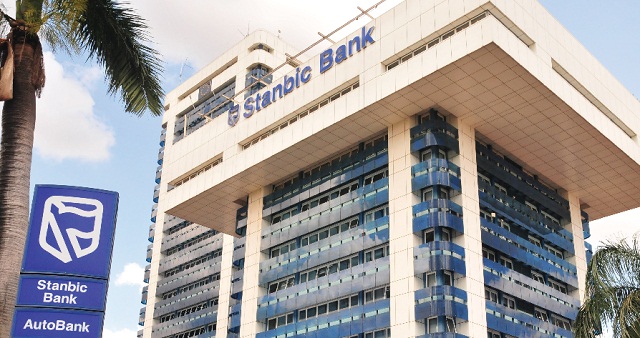
Stanbic PMI: No jobs as input costs soared in June

Stanbic Bank

The Stanbic Headline Purchasing Managers’ Index (PMI) dropped to 50.9 in June, from 51.5 in May on account of further deterioration of business conditions in the Ugandan private sector.

Readings above 50.0 signal an improvement in business conditions on the previous month, while readings below 50.0 show a deterioration.

David Kamugisha, the Head of Trading, Global Markets at Stanbic Bank said, “The end of the second quarter saw a further improvement in business conditions in the Ugandan private sector, with output, new orders and purchasing all continuing to rise.

However, employment decreased, while ongoing inflationary pressures featured prominently in the latest survey.”

Respondents to the June survey mentioned that price pressures had led new business to wane. In both cases, construction bucked the wider trend and posted declines.

Ferishka Bharuth, Economist – Africa Regions said, “firms responded to higher new orders by raising purchasing activity, with inventories also up. On the other hand, employment decreased, thereby ending a five-month sequence of job creation.”

Meanwhile, suppliers continued to speed up deliveries, with lead times shortening for the eleventh month running in June. The survey also noted a persistent increase in input costs with higher prices for electricity, fuel, and water all widely mentioned by respondents.

Purchase costs were driven higher by rises in price for a range of items such as cement, food products and stationery, while firms also increased staff  pay in response to higher living costs with input prices up, companies also increased their selling prices. Charges were up across all five broad sectors covered.

Looking ahead, around 72% of respondents expressed optimism about the second half of the year on account of expected increases in customer numbers and improving demand.

The PMI is a composite index, calculated as a weighted average of five individual sub-components including; New Orders (30%), Output (25%), Employment (20%), Suppliers’ Delivery Times (15%) and Stocks of Purchases (10%).

PMI, which is sponsored by Stanbic Bank and produced by S&P Global, has been conducted since June 2016 and covers the agriculture, industry, construction, wholesale and  retail and service sectors.

Stories Continues after ad
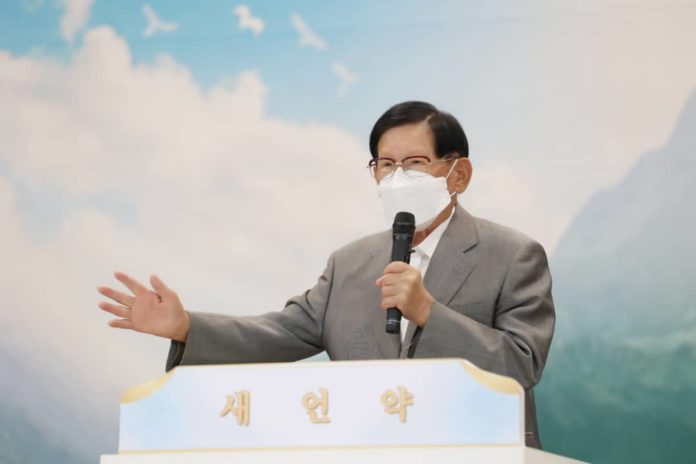
Shincheonji Chairman, “Let us Check the Revealed Actual Realities, Believe and Become One.”

Chairman Lee Man-hee held an online seminar as a lecturer on the 4th of July; starting with the lesson of the Book of Revelation, the Shincheonji Church of Jesus, the temple of the tabernacle of the testimony (hereinafter referred to as Shincheonji Church of Jesus) completed the disclosure of the words of Introductory, intermediate, and advance courses in the period of nine months.

The seminar, which was held under the theme of Testifying to the 66 Books of the Bible’s Secrets of the Kingdom of Heaven and the New Covenant, the Revelation to World Pastors, Believers, and Journalists, has the meaning of finalizing the disclosure of the words of the Introductory, intermediate, and advance courses, which ended on June 27.

At the seminar, which was broadcast around the world through the official YouTube channel of the Shincheonji Church of Jesus, Chairman Lee began his lecture by saying, “If you have found any mistakes or errors in the lectures that the 12 tribe leaders and head instructors did, please always tell us.”

Starting with the history of God, who created everything with Words, Chairman Lee explained the creation and path of the world of Adam, Noah, and Abraham, and revealed that Jesus fulfilled the prophecy that God promised through the Old Testament prophet after Solomon’s betrayal.

As Jeremiah chapter 31 prophesized, Jesus came, sowed two seeds in Matthew chapter 13 for the creation of a new work, and explained that he made the New Covenant in Luke chapter 22. He also mentioned, “This New Covenant is that Jesus, who made the Old Testament, promised that he would come back as his second coming.” Chairman Lee went on to prove that what Jesus wants to fulfill in the New Covenant is the book of Revelation, and Jesus received the revealed book from God and fulfilled today.

Chairman Lee who emphasized “One must stand on their faith firmly as checking the promises of Jesus – when, where, and by what have been fulfilled, rather than believing Jesus without any prove”, asked them “shouldn’t you believe when you listened to testimony of all chapters of the book of Revelation and the Old and New Testaments testimony by chapters revealed by Shincheonji and they are correct?

Chairman Lee asked again, “If there is the word of life somewhere in the world now, wouldn’t it be right that one need to get it and attain eternal life?” and emphasized “one must come to the place where God and Jesus are and the word of eternal life comes from there.”

“When someone proclaimed the book of Revelation that no one has known on earth and heaven, how do you think he had known it unless God let him know?” said the chairman, and cried out “Didn’t you hear the fact that Shincheonji testified the Word to the whole world as recording it? Let us become one all together in the Word and come before God if you think the Word is correct.

Chairman Lee finalized his speech saying, “Just as the Old Testament was done, the New Covenant has been done. We have told all the important contents of the Revelation and the New and Old Testaments. Record them somewhere and watch it again and again to become one with the Word.”

Meanwhile, the online seminar of Introductory, intermediate, and advance courses at the Shincheonji Zion Christian Mission Center, which has been held since October last year, was successfully completed with 21 million views. In addition, the Shincheonji Church of Jesus said it is expected to produce 100,000 graduates at the Zion Christian Mission Center this year. Chairman Lee Man-hee’s seminar “Testifying to the 66 Books of the Bible’s Secrets of the Kingdom of Heaven and the New Covenant, the Revelation” can be watched on

Stories Continues after ad