Stanbic Bank
Stanbic Bank
21.2 C
Kampala
Stanbic Bank
Stanbic Bank
Home Blog Page 576

Rising with hope from devastation

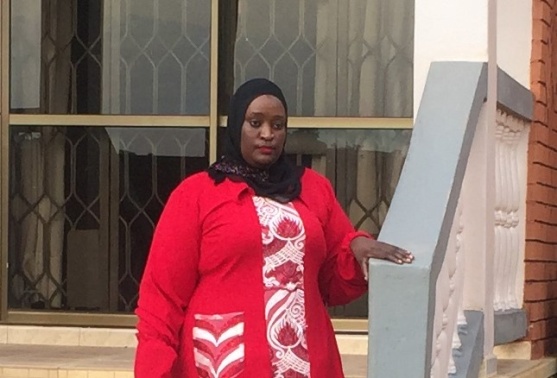
Kuruthum Muzaata in at her home in Kawempe.

The story of the late Nuhu Muzaata’s widow 

By Wesibade Halima

Kuruthum Nabunya Muzaata says that losing her husband is one of the worst nightmares she has encountered in life.

She was only 30 years old when she was met with the sudden loss of her husband, Sheik Nuhu Muzaata in 2020 due to the coronavirus. Soon after her husband’s death, she was confronted with a myriad of misfortunes.

“First, my husband’s relatives didn’t believe that he died of #Covid-19,” she said, “just like the narratives I had heard before in the community, they accused me of having a hand in his death.”

Nabunya narrates that these accusations spiked a lot of chaos in her life, to a point that she and her child were chased away by her husband’s relatives from her home.

Picture of the home Kuruthum almost lost.

“I had seen this happening in many homes but I never understood their pain until it happened to me. It was very painful to see my son go through such trauma,” she said.

Narrating how she struggled to be back on her feet after the loss of her husband and property, Nabunya expressed that she took up the initiative of promoting a feeling of togetherness among widows.

“Losing a husband isn’t easy. We lack access to emotional and psychological help and constantly fall into hands of predators who take advantage of our vulnerability,” she said, “I thought about my experience of losing my husband and decided to fill a void in people’s lives.”

During the Ramadan of 2021, Nabunya and her family felt compelled to donate food to the widows within her home region of Bwaise and Kawempe.

“I could see delight in the hearts of the widows, this simple food donation scenario pushed me into starting the Nuhu Muzaata foundation that is in memory of my late husband and caters for the needs of widows and orphans,” she said.

Being a teacher by profession who holds a doctorate in Education and management, Nabunya also constructed a private school that generates income, which is essential in providing scholarships to over one hundred underprivileged children primarily from the slums of Kawempe and Bwaise to date.

Explaining that she attends to the widows through referrals, Nabunya notes that she caters for about 100 widows and orphans, who are very appreciative.

“Widows and orphans battle with inequality and under representation everywhere. We have been excluded in many socio-economic activities,” said Nabunya, “Through our togetherness in the foundation, a little glimmer of hope is seen and I hope we can come up with a long term solution that cares for the widows.” Nabunya however thinks that men should empower their wives such that in case the husband dies then the family is able to go on without any setbacks.

Janet Namutebi is a beneficiary of Nabunya’s charity services. She notes that the foundation has been very instrumental in supporting her as a widow who is HIV positive. “I got to know about the Foundation at the hospital where I get my Antiretrovirals from. My fellow women introduced me to this foundation and requested that I be part of it,” she said.

One of the widows benefiting from the Muzaata Foundation.

“I did not think twice about joining the foundation because of my struggles to get school fees and food for my children.”

According to Namutebi, ever since she joined Nuhu Muzaata foundation, she has been receiving food donations twice a month.

She said, “this has helped me a lot. Before I could even fail to take my treatment due to a lack of food.”

13-year-old  Edonyu Jeremiah from Bukasa studies at Anwar primary school on full bursary. Ebonyu lost his parents in a car accident and he narrated that life without his parents is very difficult because people consider him a burden. When I see other children with their parents I put my hands up and pray to God to protect them,” Edonyu said.

Edonyu Jeremiah

“I used to fear going to school due to lack of school fees, but I have been greatly favored by the foundation and now, I dream of being a pilot,” he said.

Besides giving bursaries in her school Nabunya also sources half bursaries for girls in high school using her connections in the education sector.

A glimpse into culture

Augustin Kizito Mutumba, the Kobe clan leader in Buganda kingdom stated that a lot of things have gone off the rails as far as humanity and personality are concerned; people forging titles deeds on people’s land, a vice which has not spared the widows and orphans.

“Opportunists take advantage of the vacuum left by the deceased, they hide behind culture to grab property,” he said. 

Augustine Kizito Mutumba the convener of clan heads in Buganda Kingdom.

And when asked about the factors fueling property grabbing, Mutumba responded, “all these things happen due to absence of a will. People fear drafting them but every household head male or female must have one as it is beneficial in preventing family feuds and tarnishing the image of a deceased person, most importantly it guides distribution of estates.”   

Reports by the International Justice Mission show that for many women in Uganda property grabbing is a common experience following the loss of a husband, where nearly 40% of widows faced an attempt or experienced property grabbing. Then a poor woman is left to contend against the challenges of eking out a living in harsh conditions also with the threat of abuse against her children if she attempts to stand up for her rights.

Kuruthum says that you do not need to have a lot of fortune to help people. “Even with the little you have, you can put a smile on someone’s face, for those chasing women out of their homes please try to wear the shoes of a widow and orphan because tomorrow  it could be you my you dying and your wife might surfer the same.”

Anwar Baby School.

With hope of changing society’s perspective of widows and orphans Nabunya in her means continues to empower them through education.

This publication was produced with the financial support of the European Union. Its contents are the sole responsibility of Wesibade Halima and do not necessarily reflect the views of the European Union.

Stories Continues after ad

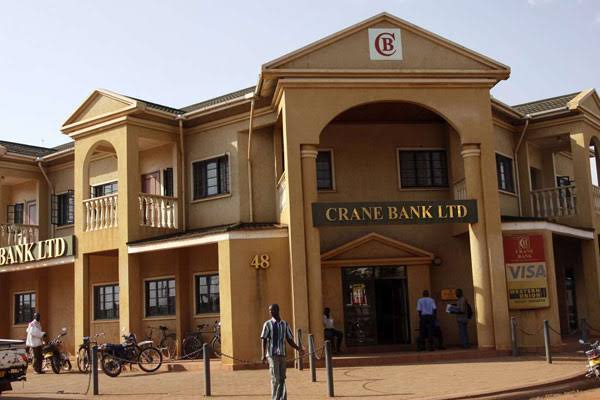
Return Crane Bank & properties to Sudhir – Supreme Court orders BoU

Meera Investment Limited properties that Dfcu had illegally acquired through bogus transaction.

The Bank of Uganda (BoU) has been dealt a blow in the Supreme Court following the ruling On July 1, 2022. The ruling delivered by Justice Prof. Lillian Tibatemwa-Ekirikubinza stops BoU from being a manager or receiver of Crane Bank Limited (CBL) after receivership ended on January 20, 2018.

That ruling means management of CBL now reverts to its shareholders, even though BoU/Crane Bank in Receivership, had argued that under part IX of the Financial Institutions Act, BoU could still control CBL.

The judge stated: “The Appellant’s argument that even after receivership ended, amagement cannot revert to shareholders on the basis that part IX of the Financial Institutions Act still applies to the company, is to presume that the Appellant is still operating as a financial institution. And yet, the consequences of the Bank of Uganda placing Crane Bank under receivership and closing it, was that the company ceased operating as a financial institution. It lost its licence.

She added that: It is only when, and if, the Appellant Company commences operations as a financial institution that the supervisory role of the Central Bank would resume, with the consequences that Part IX can be applicable. And it is not lost on court that under Section 4(1) of the Financial Institutions ACT: A person shall not transact any deposit-taking or financial institution business in Uganda without a valid licence granted for that purpose under this Act.”

The ruling also meant that once a company is placed under receivership, it doesnt lose its legal existence.

The end of receivership means that the Assets and Liabilities of the Crane Bank reverted to its shareholders.

Management of Crane Bank reverted to its shareholders upon the end of receivership.

 “The Decree in Civil Appeal No. 7 of 2020 is to be certified with a prayer that:

Receivership of Crane Bank ended on 20th January 2018 and consequently, the management of Crane Bank reverted to its shareholders.”

The degree means Bank of Uganda will pay the costs in terms found by the Court of Appeal, finally confirming that: “The Appellant’s receivership ended on 20th January 2018 and consequently its management reverted to the shareholders.”

The latest rulling, maintaining an earlier ruling by the Court of Appeal, is bad news to dfcu Bank that bought CBL in January 2017 for a paltry Shs200 billion paid in installments. It by half of 2027 earn huge profits out of the assets and liabilities of CBL, causing the public to wonder why BoU shut down CBL. Interestingly DFCU is now struggling to make profits and it performed poorly in the 2020/21 year.

It should be remembered that dfcu was illegally given other assets of shareholders of CBL. Now it has been confirmed they will have to forego them since they were decived by former BoU officials who handled the transaction-Justine Bagyende (executive director for supervision and Dr Louise Kasekende, the former Deputy Governor-BoU. Dfcu were given about 48 properties that CBL using as branches.

Remember also that BoU Crane Bank in Receivership tried to get Shs 397 billion from CBL shareholders on allegations of embezzlement of funds of CBL, but court dismissed the prayer on grounds that Crane Bank in Receivership had no locus operandi, and therefore it could not sue or be sued.

In the same vein the Auditor General John Muwanga in his audit report on the sale of commercial banks by BoU established that BoU failed to follow procedures and guidelines and that Shs 478 billion BoU claimed to have sunk in CBL In Receivership could not be explained in entirety as some of it went missing without documentation.

COSASE of the 10th parliament also faulted BoU on close of CBL which only needed about Shs 150bln to stay afloat. MPs on COSASE then said it would be a thing of corruption and unfairness for BoU to demand Shs 397 billion from CBL shareholders when it is BoU that was the Receiver who handled the money.

Stories Continues after ad

Chapter Four Uganda resumes operations after nine-month suspension

Nicholas Opiyo, the executive director of Chapter Four

Chapter Four Uganda has resumed its operations following a nine months suspension.

In August 2021, the National Bureau of Non Government Organisations (NGO Bureau) suspended the activities of Chapter Four, Citizens’ Coalition for Electoral Democracy in Uganda (CCEDU) and 52 others for failure to file annual returns and audited books of accounts.

According to the Executive Director of the National Bureau for Non-Governmental Organizations (NGO Bureau) Okello Stephen, 23 NGOs were operating with expired permits contrary to section 31(1) and 32(1) of the NGO Act 2016.

Chapter Four Uganda however challenged the NGO Bureau’s decision in Court. Justice Musa Ssekaana ruled that the NGO Bureau must hear Chapter Four Uganda within one month and this pathed the way for the new permit and the reopening.

“On June 8, 2022, Chapter Four Uganda received its new permit of operations issued by the National Bureau for Non-Governmental Organizations (NGO Bureau). We are delighted to officially announce to our clients, partners and the people of Uganda that the office is now open, we have resumed operations and all staff have returned to work,” remarked Dr Zahara Nampewo, Board Chair, Chapter Four Uganda as she welcomed staff back to the office.

 “We renew our commitment to defend legal rights and reclaim respect for civic spaces and freedoms in Uganda.  All services are fully operational, including emails and social media accounts. We thank all partners and stakeholders for their kind support and solidarity during the suspension period and throughout the five month court process,” she said.

She said Chapter Four Uganda resumes its vital work of promoting human rights and protecting victims of violations and abuse in Uganda. “We remain deeply concerned about the increasingly hostile and unsafe environment for civil society organisations, non-governmental organisations and human rights defenders in Uganda.”

As a principled defender of rights, the organization vowed to continue its work to pursue compliance with human rights law as guaranteed under the Constitution of Uganda and the applicable international and regional human rights instruments.

Stories Continues after ad

Besigye, Mukaku released on bail

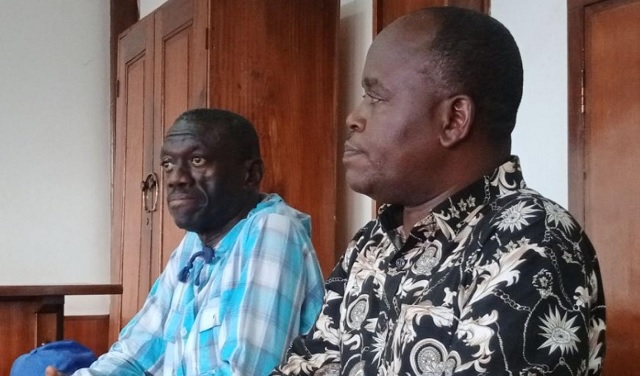
Dr Kizza Besigye and Samuel Walter Lubega Mukaku

Former presidential Candidates Dr Kizza Besigye and Samuel Walter Lubega Mukaku have been granted bail. The two have been released today by Buganda Road Court Chief Magistrate Douglas Singiza.

Besigye and Lubega Mukaku have been granted a cash bail of Shs 2.5 million each and Shs 500,000 non-cash to the sureties.

Yesterday, the High Court in Kampala dismissed Besigye and Mukaku’s bail application despite spending two weeks in Luzira prison.

Last week, the suspects’ lawyers led by Lord Mayor Erias Lukwago petitioned the High Court challenging the lower court’s decision denying them bail. The petitioners’ argued that they have never been convicted nor served any sentence and therefore are not guilty.

In his ruling, Justice Tadeo Asiimwe said the petition was prematurely brought to High Court without exhausting other avenues where the applicants would be released on bail.

The two were arrested on 14 June 2022 following their protests over the skyrocketing prices of commodities in the country. They were detained at Central Police Station (CPS) and later transferred to Naggalama Police Station.

They were on June 15, 2022 produced before Buganda road Grade One Magistrate Asuman Muhumuza and charged them with inciting violence. Through their lawyers led by the Lord Mayor Erias Lukwa go, the two applied for bail. Court however turned down their application on grounds that it was too late.

Court however adjourned to June 17, 2022 to deliberate on their bail application. On June 17, Magistrate Muhumuza turned down their bail application and further remanded them to Luzira prison till July 1, 2022.

The Magistrate argued that the two were last week granted bail on similar charges and there is no guarantee that they will be arrested again.

Stories Continues after ad

Sylvia Wairimu Mulinge named MTN Uganda CEO

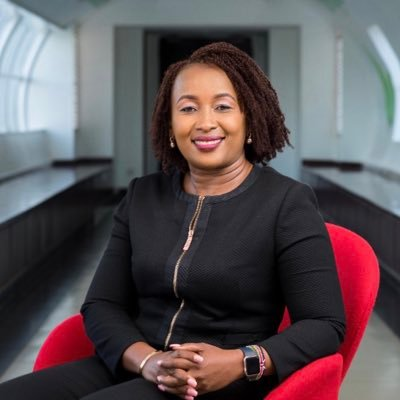
Sylvia Wairimu Mulinge

Ms. Sylvia Wairimu Mulinge has been appointed as Chief Executive Officer of MTN Uganda effective October 1, 2022.

Ms. Mulinge who replaces Wim Vanhelleputte, joins MTN from Safaricom Plc where she currently is Chief Consumer Business Officer. In this role, she is responsible for driving the consumer telecoms business, managing the overall brand, and leading the transformation of Safaricom to become a digital lifestyle enabler of consumers’ lives.

Ms. Mulinge joined Safaricom in 2007 and has occupied various senior roles over the years, including Head of Retail, Head of Sales, and Director of Consumer Business. She is a graduate of the University of Nairobi, Kenya, where she received a Bachelor of Science degree (first-class honours).

“I would like to welcome Sylvia Mulinge to MTN Uganda. I believe that her experience will be beneficial to MTN, particularly given her alignment to our strategic intent of leading digital solutions for Africa’s progress. The Board is confident that Ms. Mulinge will continue the work of growing the Company as a leading provider of telecommunications and digital solutions.”Mbire said.

Mr. Wim Vanhelleputte will cease to be the Chief Executive Officer of the Company effective July 31, 2022, following the end of his tenure.

During his six years of service, Mr. Vanhelleputte successfully delivered the renewal of MTN’s NTO License, the separation of the mobile financial services business from the telco business and the initial public offer and listing of the Company on the Uganda Securities Exchange.

Mr. Vanhelleputte has been promoted to a regional role as Operating Executive for the WECA Markets of Liberia, Guinea-Conakry, Guinea-Bissau, and Congo-Brazzaville within the MTN Group effective August 1, 2022. Chairman of the Board of Directors Mr. Charles Mbire in a statement said “The Board is grateful to Mr. Vanhelleputte for his outstanding service over the years and contribution to the Company’s growth during that period. We wish him the best in his new role.”

In the interim, the current Chief Financial Officer, Mr. Andrew Bugembe, has been appointed as Acting Chief Executive Officer effective August 1, 2022, until September 30, 2022.

Stories Continues after ad

First list of nominees for CAF Awards 2022 revealed

CAF

CAF has released the first list of nominees for the CAF Awards 2022 which will be held on 21 July 2022 in Rabat, Morocco.

The revealed nominees are mainly for the Men’s categories namely Player of the Year, Interclub Player of the Year, Young Player of the Year, National Team of the Year and Club of the Year. The nominees for the Women’s categories will be announced in due course.

A stakeholder panel made up of Technical Experts, CAF Legends and Journalists decided on the list for the various categories taking into the consideration the performance of the nominee from September 2021 till June 2022 at all levels.

The winners of each category will be decided by a voting panel made up of CAF Technical Committee, media professionals, Head Coaches & Captains of Member Associations and clubs involved at the group stage of the Interclub competitions.

The CAF Awards 2022 will be held ahead of the final of Africa’s flagship women’s competitions, TotalEnergies Women’s Africa Cup of Nations Morocco 2022 scheduled to take place between 02 July – 23 July 2022. The event will also coincide with the two-year anniversary of the launch of the CAF Women’s Football Strategy.

Full List of Nominees

Player of the Year (Men)

  • Riyad Mahrez (Algeria & Manchester City)
  • Bertrand Traore (Burkina Faso & Aston Villa)
  • Blati Toure (Burkina Faso & Pyramids)
  • Edmund Tapsoba (Burkina Faso & Bayer Leverkusen)
  • Andre-Frank Zambo Anguissa (Cameroon & Napoli)
  • Karl Toko Ekambi (Cameroon & Lyon)
  • Vincent Aboubacar (Cameroon & Al Nassr)
  • Youssouf M’Changama (Comoros & Guingamp)
  • Franck Kessie (Cote d’Ivoire & AC Milan)
  • Sebastien Haller (Cote d’Ivoire & Ajax)
  • Mohamed Abdelmonem (Egypt & Al Ahly)
  • Mohamed ElNeny (Egypt & Arsenal)
  • Mohamed Salah (Egypt & Liverpool)
  • Mohamed Shenawy (Egypt & Al Ahly)
  • Musa Barrow (Gambia & Bologna)
  • Naby Keita (Guinea & Liverpool)
  • Aliou Dieng (Mali & Al Ahly)
  • Hamari Traore (Mali & Rennes)
  • Yves Bissouma (Mali & Tottenham Hotspur)
  • Achraf Hakimi (Morocco & Paris Saint-Germain)
  • Sofiane Boufal (Morocco & Angers)
  • Yahya Jabrane (Morocco & Wydad Athletic Club)
  • Yassine Bounou (Morocco & Sevilla)
  • Moses Simon (Nigeria & Nantes)
  • Edouard Mendy (Senegal & Chelsea)
  • Kalidou Koulibaly (Senegal & Napoli)
  • Nampalys Mendy (Senegal & Leicester City)
  • Sadio Mane (Senegal & Bayern Munich)
  • Saliou Ciss (Senegal & Nancy)
  • Ali Maaloul (Tunisia & Al Ahly)

Interclub Player of the Year (Men)

  • Riad Benayad (ES Setif)
  • Tiago Azulao (Petro Atletico)
  • Karim Konate (ASEC Mimomas)
  • Ali Maaloul (Al Ahly)
  • Aliou Dieng (Al Ahly)
  • Mohamed Shenawy (Al Ahly)
  • Mohamed Sherif (Al Ahly)
  • Percy Tau (Al Ahly)
  • Morlaye Sylla (Horoya)
  • Achraf Dari (Wydad Athletic Club)
  • Yahya Jabrane (Wydad Athletic Club)
  • Zouhair El Moutaraji (Wydad Athletic Club)
  • Mouhcine Moutouali (Raja Club Athletic)
  • Issoufou Dayo (RS Berkane)
  • Youssou El Fahli (RS Berkane)
  • Victorien Adebayor (Niger & Union Sportive Gendarmerie Nationale)
  • Peter Shalulile (Mamelodi Sundowns)
  • Bandile Shandu (Orlando Pirates)
  • Thembinkosi Lorch (Orlando Pirates)
  • Mohamed Ali Ben Romdhane (Esperance Sportive de Tunis)

Young Player of the Year (Men)

  • Dango Ouattara (Burkina Faso & Lorient)
  • Karim Konate (Cote d’Ivoire & ASEC/RB Salzburg)
  • Jesus Owono (Equatorial Guinea & Alaves)
  • James Gomez (The Gambia & AC Horsens)
  • Kamaldeen Sulemana (Ghana & Rennes)
  • Ilaix Moriba Kourouma (Guinea & Valencia)
  • El Bilal Toure (Mali & Reims)
  • Akinkunmi Amoo (Nigeria & FC Copenhagen)
  • Pape Matar Sarr (Senegal & Metz)
  • Hannibal Mejbri (Tunisia & Manchester United)

Coach of the Year (Men)

  • Kamou Malo (Burkina Faso)
  • Amir Abdou (Comoros)
  • Carlos Quieroz (Egypt)
  • Pitso Mosimane (Al Ahly)
  • Tom Saintfiet (The Gambia)
  • Florent Ibenge (RS Berkane)
  • Vahid Halilhodzic (Morocco)
  • Walid Regragui (Wydad Athletic Club)
  • Aliou Cisse (Senegal)
  • Mandla Ncikazi (Orlando Pirates)

National Team of the Year (Men)

  • Burkina Faso
  • Cameroon
  • Comoros
  • Egypt
  • Equatorial Guinea
  • The Gambia
  • Mali
  • Morocco
  • Senegal
  • Tunisia

Club of the Year (Men)

  • ES Setif (Algeria)
  • Petro Atletico (Angola)
  • TP Mazembe (DR Congo)
  • Al Ahly (Egypt)
  • Ahli Tripoli (Libya)
  • Al Ittihad (Libya)
  • Raja Club Athletic (Morocco)
  • RS Berkane (Morocco)
  • Wydad Athletic Club (Morocco)
  • Orlando Pirates (South Africa)
Stories Continues after ad

Tanzanian President appoints new Chief of Defence Forces

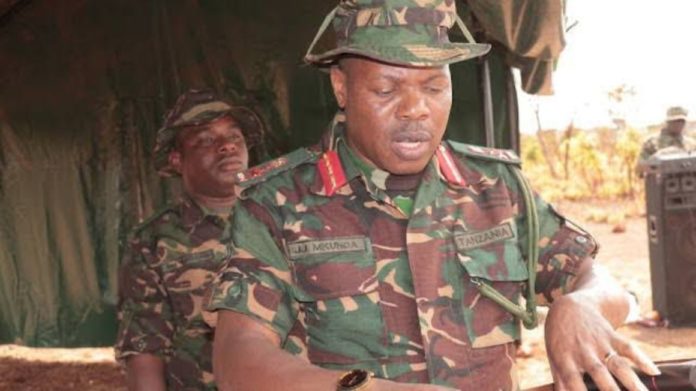
General Jacob John Mkunda - new Chief of Defence Forces (CDF) Tanzania.

Tanzania’s Commander-In-Chief of Armed Forces, President Samia Suluhu Hassan on Wednesday, June 29, appointed General Jacob John Mkunda as new Chief of Defence Forces (CDF).

A statement issued by the Directorate of Presidential Communication at State House in Dar es Salaam said General Mkunda replaces outgoing CDF General Venance Mabeyo.

Prior to the new appointment Mkunda was the Chief of Operations and Training.

Mkunda replaced Mabeyo after the latter has reached his statutory retirement age.

At the same time, President Samia promoted Major General Salum Haji Othman to Lieutenant General and appointed him as new Chief of Staff of the Tanzania People’s Defence Forces (TPDF).

Prior to the appointment, Othman was Commissioner for Research and Military Development at the ministry of the defence and national services.

Also, the head of the state appointed Lieutenant General Mathew Edward Mkingule as ambassador. Before he was the chief of staffs of TPDF.

All the new appointees will be sworn in on June 30, 2022 at State House Dar es Salaam.

Stories Continues after ad

South Ankole Diocese gets Shs259m for coffee project

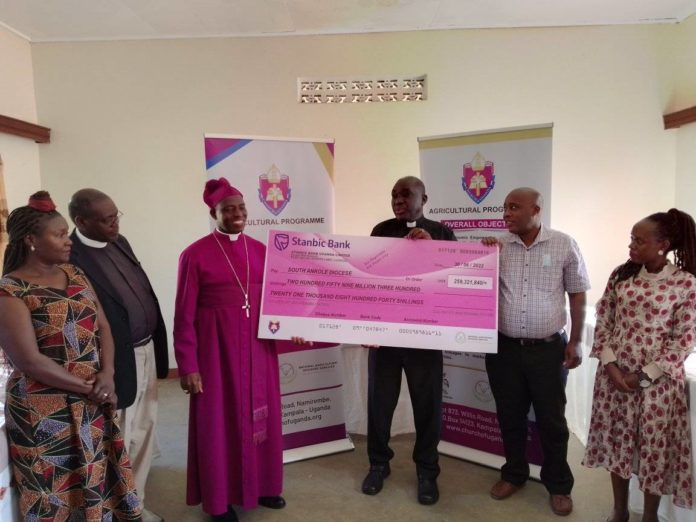
South Ankole Diocese gets Shs259m from NAADS

South Ankole Diocese has received Shs259,321,840 from the government of Uganda through National Agriculture Advisory Services (NAADS) to procure a coffee huller to support them in their agriculture production and value addition agenda for their coffee project.

This is part of the social economic transformation project being implemented by Church of Uganda with support from NAADS to improve the wellbeing of religious leaders, congregations and the Communities.

Last year, the Archbishop of the Church of Uganda, His Grace Dr Stephen Kazimba Mugalu commissioned multiple Agrobusiness projects under South Ankole Diocese in Ntungamo district. The agrobusiness projects commissioned included a 273-acre coffee plantation, 17 acres’ of bananas, a fish project, a hatchery, a fully facilitated Health Center III and a newly constructed Dean’s House.

While receiving the dummy Cheque at the Diocesan Secretariat in Kyamate, Ntungamo District today, the Diocesan Bishop, Rt Rev Nathan Ahimbisibwe reiterated his commitment to transform the Diocese through agriculture.

“The Diocese is growing seriously in agriculture production which is the backbone of our nation. We are heading for value addition and establishing a learning centre for many to benchmark, and we are working hard in chasing poverty on household and national levels,” Bishop Ahimbisibwe said.

The Bishop noted that the Diocese has in the recent past established several successful projects and commended the President of Uganda and his government for supporting their development agenda.

“We have the South Ankole Diocese Community Mission Health Centre III and Bishop Bamunoba Health Center in Kitunga Archdeaconry, a Diocesan SACCO, a Mothers’ Union Resource Centre, cows in the Diocesan farm and we are planning to establish a retreat and resource center with a beach and campsite at Lake Nyabihoko,” Bishop Ahimbisibwe said.

He added, “In the water dam dug by Ministry of Water and Environment for irrigation water at the Diocese to conserve water for irrigation, we have 4000 fish and 3000 catfish fingerings put in and not yet harvested. This will yield extra income to our Diocese.”

Bishop Ahimbisibwe further said that from their hatchery project, they have so far sold 10,000 chicks worth Shs50m from April 2021 to October and are now planning for the next brooding season.

Rev Canon William Ongeng the Provincial Secretary of Church of Uganda who handed over the dummy Cheque to Bishop Ahimbisibwe called for transparency and proper accountability in the project and work hard to accumulate wealth to support the work of mission and outreach.

“The Diocese in the near future will hold the economy. We must work hard to accumulate wealth so that the gospel is preached. The Diocese will have the capacity to send out missionaries to preach the gospel,” Canon Ongeng noted.

Mr. Balaam Muheebwa the Provincial Treasurer lauded Bishop Ahimbisibwe for his passion towards household and Community transformation, a key factor that motivated the awarding team to consider South Ankole among the selected 5 pilot Dioceses for the project.

He reiterated the Archbishop’s call for transformation of livelihoods at household level especially on mindset change of congregations towards work.

According to Ms. Irene Anena the Acting Director of Household and Community Transformation in Church of Uganda, the Diocese has been taken through training and implementation guidelines.

“The Diocese has already been given a comprehensive sensitization on what the project is expected to achieve, modalities of implementation and the need to ensure transparency and accountability while empowering households in South Ankole Diocese and other parts of the country where similar intervention is being implemented with support from the government of Uganda through NAADS,” Ms. Anena said.

Stories Continues after ad

High Court dismisses Besigye, Mukaku’s bail application

Dr Kizza Besigye and Samuel Walter Lubega Mukaku

The High Court in Kampala has dismissed the former presidential Candidates Dr Kizza Besigye and Samuel Walter Lubega Mukaku’s bail application despite spending two weeks in Luzira prison.

Last week, the suspects’ lawyers led by Lord Mayor Erias Lukwago petitioned the High Court challenging the lower court’s decision denying them bail. The petitioners’ argued that they have never been convicted nor served any sentence and therefore are not guilty.

In his ruling, Justice Tadeo Asiimwe said the petition was prematurely brought to High Court without exhausting other avenues where the applicants would be released on bail.

“The petitions are therefore dismissed however the applicants can apply for bail in a grade one magistrate court or before the magistrate handling this matter,” he ruled.

Earlier Besigye had presented his wife, Dr. Winnie Byanyima, former Rukungiri Municipality MP Kaginda Roland Mugume and Deputy Lord Mayor Doreen Nyanjura as sureties.

Besigye and Mukaku were arrested on 14th June 2022 following their protests over the skyrocketing prices of commodities in the country. They were detained at Central Police Station (CPS) and later transferred to Naggalama Police Station.

“Stand out, they can’t imprison all of us and when they take up to prisons, they will release us but we can’t allow this to continue,” He said adding that, “Museveni advises us to eat cassava yet he is doing the opposite,” Besigye said before being arrested.

They were on June 15, 2022 produced before Buganda road Grade One Magistrate Asuman Muhumuza and charged them with inciting violence. Through their lawyers led by the Lord Mayor Erias Lukwa go, the two applied for bail. Court however turned down their application on grounds that it was too late.

Court however adjourned to June 17, 2022 to deliberate on their bail application. On June 17, Magistrate Muhumuza turned down their bail application and further remanded them to Luzira prison till July 1, 2022.

The Magistrate argued that the two were last week granted bail on similar charges and there is no guarantee that they will be arrested again.

Stories Continues after ad

WHO, African countries partner to bolster monkeypox laboratory testing in Africa

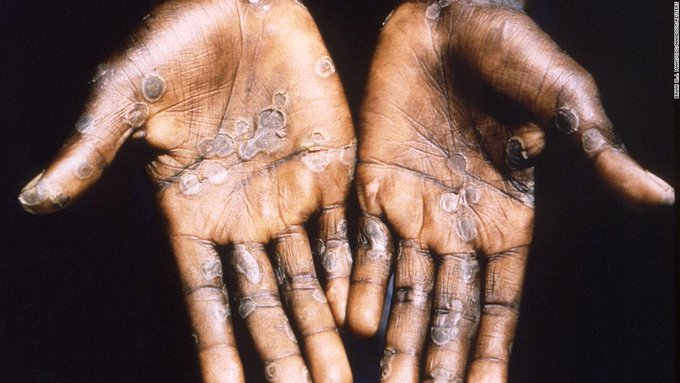
MonkeyPox

With three African countries with no previous history of human monkeypox transmission reporting cases, World Health Organization (WHO) is working with national health authorities in the region to bolster surveillance and laboratory diagnosis to detect cases and deter a silent spread of the virus.

The continent has, as of 28 June, reported 1821 cases in 13 countries of which 109 are laboratory confirmed in nine countries. The number of confirmed cases accounts for 2% of the more than 4500 confirmed cases globally. However, there are a large number of suspected cases in the region, 81% of which are in the Democratic Republic of the Congo, underlining the need for increased diagnostic capacity.

While all African countries have the polymerase chain reaction machines needed to test for monkeypox thanks to reinforced laboratory capacity in the wake of COVID-19, many lack reagents and in some cases training in specimen collection, handling and testing. WHO is working to secure 60 000 tests for Africa, with around 2000 tests and reagents to be shipped to high-risk countries and 1000 to those facing lower risk.

Over the past month five more African countries have received donations of reagents from partners, bringing to 12 the number of countries in the region with enhanced monkeypox diagnostic capacity. Another group of countries in West Africa will receive reagents after participating in a training.

Outside the six countries in Africa with a history of human transmission, monkeypox has also been reported in three countries which have not previously had any human cases. These include Ghana, Morocco and South Africa, which has confirmed the disease in two patients with no travel history, suggesting there is a high possibility of local transmission.

 “The geographic spread of monkeypox to parts of Africa where cases have never been detected before is a worrying sign,” said Dr Matshidiso Moeti, WHO Regional Director for Africa. “It is critical that we support national efforts to boost surveillance and laboratory diagnosis, which are the cornerstones of disease control.”

To deepen analysis of monkeypox transmission patterns, WHO is supporting countries to capitalize on the improved genomic sequencing capacity built during the COVID-19 pandemic. Currently seven countries can sequence the monkeypox virus. WHO has reports from South Africa and Nigeria which show the two countries have sequenced 300 samples since January 2022 – these include samples from other countries. This is more than double all the samples sequenced in previous years. Most samples sequenced were from the West African clade. The sequencing done so far shows that there is no recent linkage between what is circulating in Europe and Africa.

Many years of research have led to the development of new and safer (second- and third-generation) vaccines for smallpox, some of which may be useful for monkeypox and one of which (MVA-BN) has been approved for prevention of monkeypox. However, supplies are limited.

 “What happened in the early days of the COVID-19 vaccine rollout when Africa watched on the side-lines as other countries snapped up limited supplies must not be allowed to recur. There are some signs that this is already happening,” said Dr Moeti. “The current global spotlight on monkeypox should be a catalyst to beat this disease once and for all in Africa. For this, we know vaccines are a critical tool.”

WHO is working closely with Member States and partners to define what type of coordination mechanism could be put in place to ensure fair access to vaccines. There are many regulatory, legal, operational, technical, and other issues to clarify before an allocation mechanism is fully operational.

With limited vaccines and antivirals, WHO does not recommend mass vaccination for monkeypox but rather targeted vaccination for people who have been exposed or at high risk including health workers, laboratory personnel and outbreak team responders.

Stories Continues after ad