Stanbic Bank
Stanbic Bank
17.4 C
Kampala
Stanbic Bank
Stanbic Bank
Home Blog Page 587

Uganda to face Burundi in CECAFA Senior Women’s Championship final

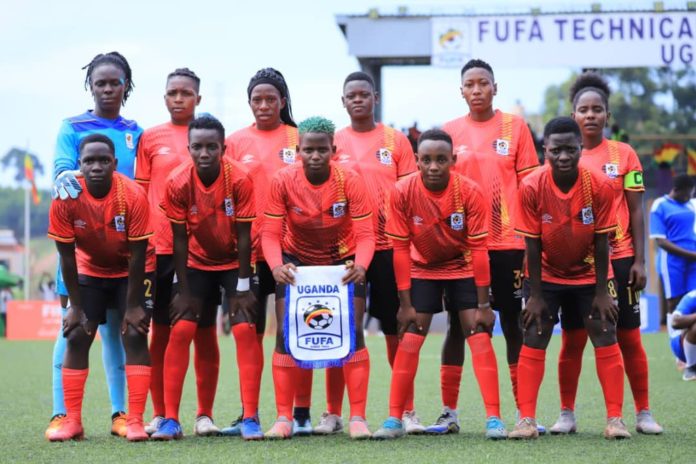
Crested Cranes team

The Crested Cranes overpowered Ethiopia to storm the final of the CECAFA Senior Women’s Championship 2022 on Thursday.

Fazila Ikwaput was the heroine for Uganda as she scored the decisive goal of the game in extra time (115th minute) in a closely contested semi-final encounter played at the FUFA Technical Centre, Njeru.

Despite getting numerous scoring opportunities Uganda failed to take away any during normal time with Ethiopia equally having chances on the other hand.

With five minutes to the end of extra time, Uganda got a corner that was delivered by skipper Hasifah Nassuna. Her good deliverance was perfectly met by Ikwpaut in the area who scored on the volley to send the fans into wild celebrations.

Uganda will therefore meet Burundi in the final after the latter came from behind to win 2-1. Opa Clement gave Tanzania the lead in the first minute but goals from captain Aisha Djafari and Sandra Niyonkuru guided to Burundi to their first final. The two will face off on Saturday 11th June.

It should be noted that Burundi and Uganda faced off in the Group stages with the Crested Cranes winning 4-1.

Both Uganda and Burundi are using the Championship to prepare ahead of the TotalEnergies Women’s Africa Cup of Nations 2022 taking place next month in Morocco.

Semi-finals

Uganda 1-0 Ethiopia (After Extra Time)

Burundi 2-1 Tanzania

Stories Continues after ad

Fred Enanga, Lt Col Deo Akiiki, 80 others get Heroes’ Day medals

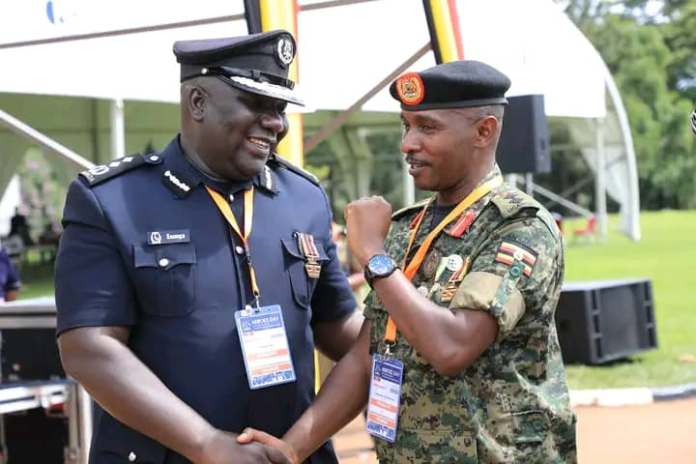
Fred Enanga with Lt Col Deo Akiiki

Uganda Police spokesperson Fred Enanga and the former deputy spokesperson of the Uganda People’s Defence Forces (UPDF) Lt. Col. Deo Akiiki have been given Heroes’ Day medals.

Under the theme: ‘An opportunity to consolidate our efforts in securing Uganda’, the two were awarded along with 80 UPDF, Police officers and civilians. The 82 were awarded in various categories which included Damu medal, Nalubaale medal, golden jubilee medal and others.

Speaking at Kololo ceremonial grounds, the Prime Minister Prime Minister Robinah Nabbanja who represented President Museveni applauded Eldard Medard Lutamaguzi and other individuals who contributed to the liberation war.

“By the time NRM captured power in 1986; Uganda had been thrown into turmoil by bankrupt leaders. Uganda endured quack leaders from 1962 to 1986. As a result, we ended up in a weak state. It wasn’t easy to build an army etc,” he said.

The president urged Ugandans to embrace the Parish Development Model (PDM) where Shs17 million has been allocated for every parish in the ending 2021/2022 financial year and Shs100m has been put in the budget for the year 2022/23.

“It is because of the determination of National Resistance Movement (NRM) to fight poverty and increase household income that we have now embarked on PDM, a new game-changer that will increase productivity to put money in the pockets of our people.”

Below are some of the awardees

Golden jubilee medal; It is awarded in recognition for their outstanding service and loyalty to the country.

DR. Justus Mwanje

Aduka Ochan Achan Mary

Adok Julie

Jemba Michael

Hajji Karungi Ali Salongo

Ms. Grace Tumubwine

Col. Gracious Akiiki Asiimwe

Col. John Bosco Asinguza

Kizza Birungi

Lt. Col. Bireju Asiga

Lt. Col. Benon Salaam Besigye

Capt. Oliver Mpono

Asawan Bin Matete

Sgt. Kabug Serena

Sgt. Nabadda Shamirah

Sgt. Agile Joveline

CP. Fred Enanga

Asp. Nyondo Paul

Asp. (Rtd) Lofonso Francis

Asp. (Rtd) Nimanya Godson

Nabajja Charles

Walusimbi Elie

Kimono Judith

Sgt. Moses Ssentalo

Aggrey Aturwanirire

Charles Ziraba

SSP. Ronald Kalaine

Anita Karungi

Ogwal Geoffrey

Nalubale Medal; Medal awarded to all civilian activists who have contributed towards the political development of Uganda either through armed struggle or civil disobedience and otherwise right from colonial times to date.

Lokodi Luse

Namwanje Dezirate

Ndigire Arnest (RiP)

Nsubuga Nakintu

George William

Nakiwala Anita

Yuda Katundu

Olalobo Tom

Hamidu Daphne

Balambi Ruth Seguya

John Kirabo

Muihwa John

Kawooya Francis

Damu Medal; Medal awarded to any member of the Defence Forces who was wounded in action against the enemy and to all officers’ men and women killed in action during the liberation struggles.

Capt. Kafuma Alophonso

Capt. Dorcus Okule

ASSP. Lubega Samuel Nsamba

Corp. Anwa Francis

Luwero Triangle Medal

Namusisi Rehema

Hon. Bwanika John Ddungu

Lt. Col. Mwoye Sekurima

Christopher Kisakye Sekabembe

Charles Nyakana

Jango Tabu

Samuel Nyakabale

Lt. Isaac Kweyagala

John Bahebwa

Patrick Kabubaka

Baryatuha Ramathan

Mirimo Augustine

Ssekitoleko Sulaiman

Rwasande Enock

Gold medal;  awarded to police officers who have served for more than 30 years.

Okurut Jacob Omoding

Taka Mary

Ouma James

Owal Damalie

Silver Police Medals. The medal is awarded to the police officers who have served in police for 20years.

Lumbeya Miriam

Amos Regina

Honorary Service medal

Salongo Bulera

Mulumba Deogratius

Stories Continues after ad

African Ambassadors to Israel discuss cooperation and development across the continent

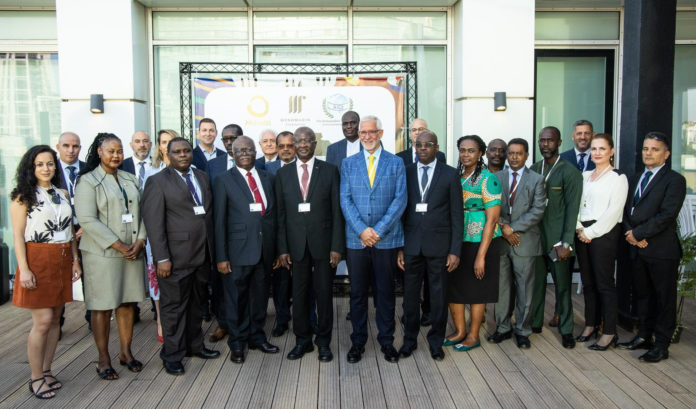
Haim Taib, Founder and President of the Mitrelli Group, together with the African ambassadors to Israel and the President and Founder of the Ambassadors' Club of Israel, Yitzhak Eldan

The 18 African ambassadors, alongside the Ambassadors’ Club to Israel who attended the event have discussed the potential benefits of the ever-expanding bond between Israel and Africa, and the ability to connect Israeli technological innovation in education, health and food security to the human capital, culture and resources of Africa.

The Mitrelli Group has been operating in Africa for decades, with 2,500 employees across the continent who are connected to local needs and lead vital projects in education, infrastructure, energy, water, construction, health, food, agriculture and more. 

Mitrelli Groupfounder and president, Haim Taib, shared with the attendees the unique models that Mitrelli has developed over the years through its work in African countries, relying on home-grown Israeli technology, funding capabilities from international financial institutions, work with the public sector alongside local teams and impact investments that help strengthen and develop state-level communities.

Taib discussed the agricultural communities that Mitrelli has established throughout Angola, that are inspired by Israeli models of community residence. These projects have created an independent and sustainable local economy.

He commented, “The relationship between Israel and Africa is strategic with the potential for mutual growth. I have been committed to Africa for 30 years, the world has yet to recognize the continent’s potential as a global growth engine. Africa is the future. Cooperation in energy, the environment and food security can bring about the solutions the world needs today.”

President and founder of the Ambassadors’ Club of Israel, Yitzhak Eldanalso noted, “This gathering is very exciting. Israel should be a bridge to Africa. The small state of Israel has managed to bring progress in many diverse fields and this connection will be able to bring other successful projects to Africa.

Mitrelli introduced not only technology from Israel, but also community models that formed the basis for Zionism and the founding of the state; the Moshavim, Kibbutzim and youth villages.”

Haim Taib thanked those who attended the gathering and said, “Africa is the future of the world and I am committed to working with everyone here to establish strong and independent communities. We have everything we need in order to succeed together and we have a great love for Africa and those who live there.”

Stories Continues after ad

Uganda suffers $265.5m deficit in April 2022

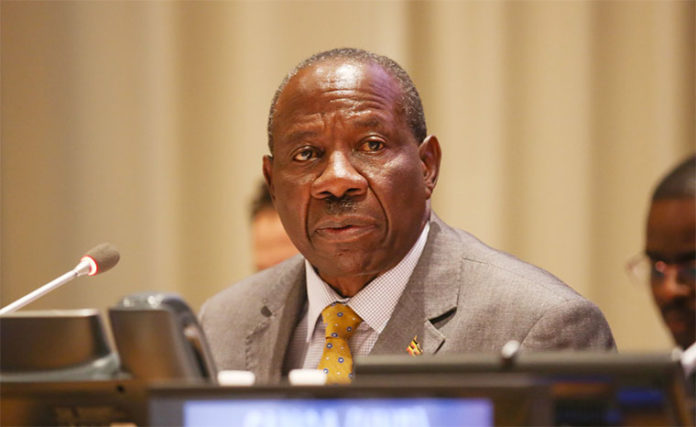
Finance Minister, Matia Kasaija

During the month of March 2022, Uganda’s trade with the rest of the world resulted in a deficit of $265.6 million, higher than $249.9 million recorded the month earlier, according to the latest April 2022 Performance of the Economy Report, published by the Ministry of Finance.

This was on account of a bigger increase in the import bill by $49.6 million which more than offset the increase in the export receipts by 33.9 million over the same period

The report says Uganda’s merchandise export receipts amounted to $369.39 million in March 2022, a 10 percent increase when compared to $335.49 million recorded in February 2022. This was majorly on account of increases for both coffee and non-coffee formal exports.

It says coffee export receipts benefited from increases in international coffee prices since October 2021, as well as higher coffee export volumes. Non-coffee formal exports rose by 11.5 percent, mainly on account of increases registered for base metals & products, plastic products, tobacco, oil re-exports, cotton and maize.

According to the report, similar to the previous month, the East African Community [EAC] was the largest destination of Uganda’s exports during March 2022, accounting for 39.2 percent of total exports. The other notable export destinations were the Rest of Africa (29.8 percent) and European Union (19.3 percent) in the second and third positions respectively.

Imports

In March 2022, the report says, Uganda imported merchandise worth USD 634.98 million. This represents an 8.5 percent increase when compared to US$ 585.43 million in February 2022, on account of both higher oil and non-oil formal private sector imports. The commodities that posted major increases were; petroleum products- mostly because of higher international crude oil prices; vegetable products, animal, beverages and fats and oils; and base metals and their products.

In March 2022, Asia remained the largest source of Uganda’s imports, accounting for $253.30 million or 42.8 percent of Uganda’s total imports. It was followed by the Middle East at 21.9 percent, EAC at 13.6 percent and then the European Union at 6.8 percent. Within Asia, the imports were mainly sourced from China (US$ 109.38 million or 40.3 percent) followed by India at $83.69 million or 30.8 percent.

Trade balance by region indicates that during March 2022, Uganda traded at surpluses with the EAC, Rest of Africa and European Union while deficits were registered with Asia, Middle East, and Rest of Europe.

The biggest surplus was registered with the Rest of Africa (US$ 77.38 million) while the biggest deficit was recorded with Asia ($247.68 million). The surplus of $28.0 million recorded with the European Union represents an improvement when compared to the deficits of $25.49 million and $12.22 million in March 2021 and February 2022, respectively.

Revenues

According to the report, revenue and grants in April 2022 amounted to Shs 1,824.31 billion, representing a 109.7 percent performance against the Shs 1,662.99 billion target for the month. Project support grants received during the month amounted to Shs 32.71 billion, a 39.9 percent performance against the planned Shs82.03 billion for the month.

Domestic revenue collections for April 2022 amounted to Shs1,791.60 billion, hence posting a surplus of Shs210.64 billion or 113.3 percent performance against the Shs1,580.96 billion target for the month. Of the total amount collected, Shs 1,671.52 billion were tax collections while Shs120.08 billion were non-tax collections.

Tax collections posted a surplus of Shs195.97 billion against the Shs1,475.55 billion planned for the month. This was mainly on account of higher than planned collections for income taxes especially PAYE from the private sector as employment continues to pick up; and taxes on international trade and transactions mainly on account of higher collections for petroleum duty, import duty and VAT on imports during the month.

Stories Continues after ad

African countries urged to prioritise infrastructure development to promote intra-continental trade

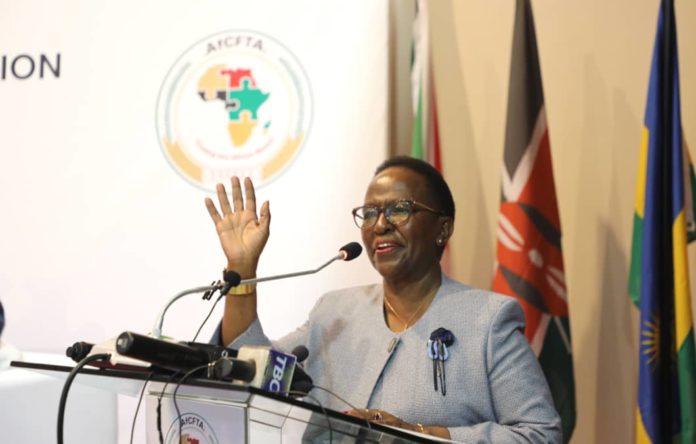
Tanzania minister Liberata Mulamula

African countries have been called upon to prioritise infrastructure development even as they advocate free intra-continental trade through African Continental Free Trade Agreement (AfCFTA) framework.

Tanzania’s Minister for Foreign Affairs and East African Cooperation, Amb. Liberata Mulamula said that interconnectivity across Africa was crucial if the continent was to exploit its vast potential for industrialisation, trade and investment.

Amb. Mulalmula observed that air tickets across the continent were not cheap due to lack of adequate competition among existing national and private airlines, adding that it was far much cheaper to travel to destinations outside Africa than those within the continent.

On efforts to create wealth through increased trade and investment, Mulamula said that initiatives to create wealth under the AfCTFA should also be focused on fair distribution and sharing of the wealth to reduce the widening gap between the rich and the poor.

The Minister noted with appreciation AfCFTA negotiations had now ented Phase Two, which covers investments, intellectual property rights, women and youth in trade competition policy and digital trade.

“We are very optimistic that phase two of the negotiations will enhance the trade environment through enhancing the market economies function well by improving efficiency and healthy competition among businesses,” said Mulamula.

Mulamula was speaking at the EAC Headquarters when she officially opened the 2nd Coordination Meeting of the Heads of Regional Economic Communities (REC’s) at the EAC Headquarters in Arusha, Tanzania.

The overall objective of the four day meeting that started on 4th June, 2022 is to enable the RECs to build consensus around common positions critical to the continent’s success at creating an African Economic Community.

On his part, Secretary-General of the AfCFTA Secretariat, Wamkele Mene said that the implementation of the AfCFTA Agreement is by necessity, a complex and highly collaborative undertaking, drawing on the expertise and experience of all key stakeholders including RECs.

Hon. Wamkele said that the private sector should take the lead in the implementation of the AfCFTA, noting that while AfCFTA and the RECs were supposed to facilitate across Africa, trade must be driven by the private sector.

The AfCFTA SG said that Africa must prioritise industrialisation and investment promotion so as to make her products competitive on the global market and increasing her share of global trade.

Hon. Wamkele said that it was unfortunate that 55 African countries currently contribute just 2 percent of global trade output and 3 percent of to the global GDP while Singapore, a city-state that is 600 square miles in geographical area, has 6.2 percent share of global trade.

The AfCFTA SG attributed this sad state of affairs to lack of industrial development and human resource gaps.

Hon. Wamkele advocated for self-sufficiency and industrialisation in the continent, noting that Africa should as a matter of urgency develop capacity to process its mineral and agricultural wealth is it is to benefit from its vast natural resources.

He underscored the importance of effective collaboration between the RECs and the AfCFTA Secretariat in ensuring that the AfCFTA outcomes are consistent with regional advancements in trade integration made thus far and the projections for the future.

Hon. Wamkele disclosed that the AU Assembly of Heads of State and Government directive that mandated the AfCFTA Secretariat, the African Union Commission, and the RECs to develop a Framework of Collaboration to enhance complementarity, synergies, and alignment of programmes and activities to facilitate the effective implementation of the AfCFTA.

Speaking at the event, EAC Secretary General Dr. Peter Mathuki said that with a market of around 1.3 billion consumers and a GDP of $3.4 trillion, AFCFTA has opportunities to unlock trade in the continent and redesign the architectural framework of its economic systems.

The Secretary General said that with the implementation of AfCFTA, trade facilitation measures will cut red tape, reduce tariffs, simplify customs procedures, boost intra-African trade, and build a foundation for long-term sustainable development in Africa

Dr. Mathuki disclosed that Africa is one of the world’s fastest-growing economies; however, trade in goods and services accounts for an estimated 3 percent of global exports and imports on average.

“The share of Intra African trade remains low: on average, 13 percent for intra-imports and 20 percent for intra exports, while Extra African trade accounts for more than 80 percent of the total trade. Africa’s exports to the rest of the world consist of raw materials, such as oil, gas, minerals, and agricultural commodities, with little to no value addition” he added

The Secretary General singled out factors why intra-Africa trade is low including differences in trade regimes, inadequacies of trade-related infrastructure (poor intermodal connectivity), trade finance and trade information.

Other constraints according to Mathuki were customs, administrative and technical barriers, limited productive capacity, lack of factors of market integration, and inadequate focus on internal market issues.

He noted that the efforts to address binding constraints are currently underway through the AfCFTA and AU’s Boosting Intra-African Trade (BIAT) action plan.

“If well-resourced and fast-tracked, these two initiatives will drive economic growth, industrialisation and development across Africa,” added Mathuki.

Stories Continues after ad

Uganda is broke, period!

Ivan Munguongeyo

By Ivan Munguongeyo

The recent admission by ex-Vision Group CEO Robert Kabushenga that “we can’t afford life; we are broke” is evidence that Uganda is broke. Uganda’s financial situation is concerning!

For example, according to Uganda’s central bank data, the country’s public debts stood at 66.1 trillion shillings (18.9 billion USD) at the end of April 2021, up 15.1 percent from June 2020, and the country intends to borrow again from the World Bank.

The Bank of Uganda attributed the increase to a 33.6 percent increase in domestic debts in its June 2021 state of the economy report. Public external debt increased by 13.0 percent, owing primarily to loan disbursements from multilateral and bilateral creditors.

Uganda, with a projected Gross Domestic Product of 35.17 billion USD by the end of 2019, and a population of 45.74 million people, has a disgraceful per capita income of $897. Ugandans, who live in Africa’s richest country, are among the poorest.

The normally honest Uganda Bureau of Statistics has taken the trouble to inform the world that, contrary to the 21.6 percent previously announced by ActionAid, 28 percent of Ugandans are poor.

Poverty is defined by economists as the lack of comfort and an insufficient supply of basic necessities of life. It is sometimes defined as the point at which deprivation makes bodily and physical efficiency impossible to maintain. In numerate terms, it has been variously put at living below $1.50, $2, or $2.50, per day.

The reason Uganda, a relatively rich country, has poor citizens is that state actors continuously design flawed macroeconomic, fiscal, and monetary policies that result in an inefficient economy.

That explains why the government would prefer to import petroleum products rather than effectively run local refineries or increase private sector participation in the refinery sub-sector of the downstream oil sector. It explains policy execution flaws in Uganda’s food production and security architecture.

This is accompanied by the nonsense envelope budgeting process, which arbitrarily allocates funds to expense heads based on the history of what was allocated in the previous budget period. The envelope budget is the opposite of zero-based budgeting procedure which requires verifiable rationale for budget allocations.

For example, macroeconomic policies fail to deliver the necessary physical infrastructure, but instead channel planning funds to support Big Government, which only ministers to the needs of state actors. Uganda is bankrupt only because there is no cash flow to support the enormous and excessive cost of governance.

Unfortunately, Uganda’s policymakers prioritize high bureaucratic employment over increases in capital assets that can boost GDP and thus increase public revenue through taxation.

The loss of productive power, a consequence of the dysfunctional infrastructure and heavy taxes on infant firms and businesses, has greatly reduced the rank of the middle class, who should have been a source of personal income tax revenue for government. If this continues, Uganda may remain forever broke!

Email: ivanmungu12@gmail.com

Stories Continues after ad

Escalation of tensions between DRC and Rwanda exposes EAC weaknesses, hypocrisy among leaders

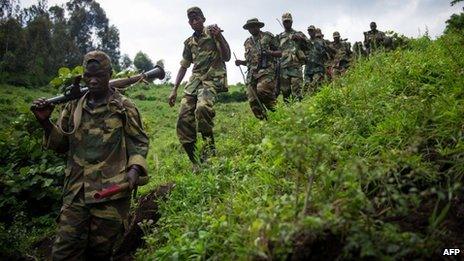
M23 rebels

The ongoing political tensions between the DR Congo and its smaller neighbour Rwanda has been condemned worldwide as DR Congo accuses President Paul Kagame’s Rwanda of supporting M23 rebels who are destabilizing the Kinshasa government through uncoordinated attacks that have seen civilians raped, injured, killed and properties destroyed.

On the other hand, Rwanda, a country that went through a genocide in 1994 where about a million people were killed, has denied the accusations by DR Congo and instead says rebels who want to topple the Kagame government in Kigali operate within the DR Congo, but Rwanda does not say DR Congo supports such rebels like the Democratic Forces for the Liberation of Rwanda (FDLR).

Relatedly Uganda, signed an agreement with DR Congo for an ongoing military operation, “Operation Shujja” aimed at attacking the Allied Democratic Forcecs [ADF], a Ugandan outfit that has on several occasions attacked western Uganda and considered as a terrorist group, much as the rebels claim they have a political agenda to take over power in Uganda.

In a statement Monday, Rwandan Foreign Minister Vicent Biruta encouraged its neighbor to de-escalate its rhetoric. He said collaboration could restore security and bring lasting stability to the region.

On his Twitter account, African Union (AU) chairperson Senegalese President Macky Sall said he is concerned about the tensions between the DRC and Rwanda.

Researcher and political analyst Ntanyoma Rukumbuzi said the tension between the countries and the unrest in the DRC are likely to continue.

But minister Biruta said M23 was Congo’s internal problem and should be resolved among Congolese themselves. M23 insists it is fighting ethnic Hutu groups to protect the minority Tutsi living along the border between Congo and Rwanda.

Why EAC must help DR Congo attain peace

A concerned resident of the East African Community (EAC) would refer to minister Biruta’s statement that DR Congo handles the M23 as an internal matter, as anti-EAC aspirations of having a peaceful regional area where citizens live without fear of being killed.

Only a few months ago, DR Congo joined the EAC to become the seventh member of the bloc. DR Congo, envied worldwide for its mineral wealth, joined Kenya, Tanzania, Uganda, Rwanda Burundi, and South Sudan, and with it, DR Congo came with many investment opportunities, but at the same time DR Congo wanted its new EAC Partners to help it address some of the political tensions back home. That means Biruta’s statement is disgusting to the peace lovers in the EAC.

Kenya’s President Uhuru Muigai Kenyatta, the current Chairman of the Summit of the EAC Heads of State recently tried to broker peace negotiations between the DR Congo government and the various rebels. Kenyatta must be commended, after all his country has never witnessed take over power by use of a gun, like it has happened in Rwanda and Uganda.  

As DR Congo accuses Rwanda of politically aiding M23 rebels in the latest diplomatic row, we should never remember that Rwanda and Uganda in 2001 fought in the DRC. The two countries led by military leaders, and once rebels in the bush, should be at the forefront of helping the DR Congo to enjoy peace, given that the mineral-rich country at least has had peaceful transfer of power from one president to the next. This has never happened in Uganda or Rwanda, at least in recent times.

That aside, EAC countries must come together to help DR Congo have some peace for development. The EAC must, copying from the Economic Community for West African (ECOWAS), have an army that can be sent to partner states when rebels try to distabilise a democratically elected government.

Days ago, DR Congo fully opened its borders to businesses in the EAC, Ugandan executives recently were in Kinshasa and Goma in a trade fair, aimed at connecting investors on both sides to forge partnerships that enhance business. But that can only be done when DR Congo is peaceful.

That means any country that tries to distabilise a member of EAC, is dangerous and must be told to stop and shamed. DR Congo deserves peace to develop its mineral, forests and farming potential.

DR Congo is home to some 5.6 million internally displaced people, more than any other country in Africa. Such statistics should make EAC leaders act. Instability in DR Congo is instability in the EAC. President Félix Tshisekedi is right to cry out for help.

Stories Continues after ad
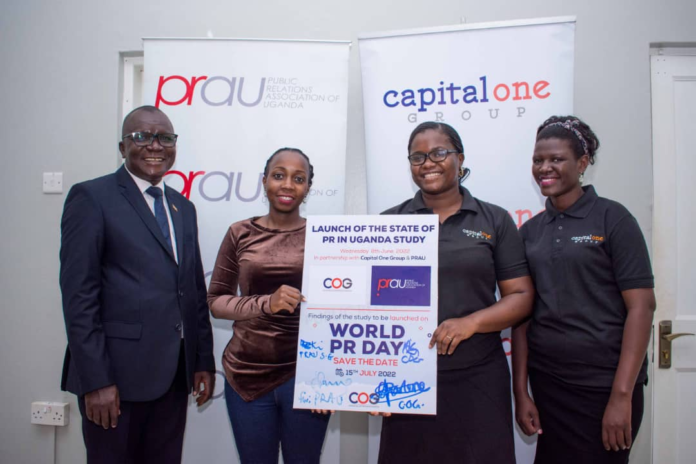
PRAU, Capital One Group partner to launch survey on state of public relations in Uganda

Public Relations Association of Uganda (PRAU) in partnership with the Capital One Group (COG), have today launched the first-ever survey on the state of public relations in the country.

The survey is meant  to offer an excellent opportunity to public relations  practitioners in the private and public sectors, members of the academia, journalists and other stakeholders to provide their views on how public relations is currently understood, the challenges the industry faces, how they are connecting with journalists, allocating budgets, measuring success, and using technology and tools in 2022.

The findings of the survey will be launched on July 15, 2022 as part of the commemorative events for the International World public relations day, a day dedicated to recognize and celebrate the public relations and communications industry, and build a unified global agenda towards making the world understand and utilize PR better.

The findings will also assist PRAU create a strategic roadmap towards addressing the issues raised from the survey as the industry seeks statutory recognition from the government.

“We are convinced that the findings of this survey will set a clear path of where the industry needs to improve while contributing to the strategic growth of public relations in Uganda,” said Charlene Mugalula, the Public Relations Manager at Capital One Group.

The PRAU president Stephen Mwanga said that they committed to ensure this activity is executed in one month. And as usual, they call upon professional public relations practitioners to fully participate in the survey, whose findings will greatly contribute to the growth of the PR industry.

“As the governing council of the Public Relations Association of Uganda, we are honoured to partner with Capital One Group to launch this project that we strongly believe will greatly contribute to the association’s effort to streamline PR practice in the country. This is part of the GCs strategy to institutionalize the public relations industry in Uganda,” Mwanga said.

The survey will target PR practitioners or specialists as respondents from both the public and private sectors and members of professional associations such as the Public Relations Association of Uganda (PRAU), the Government Communicators Forum (GCOF), Members of Chartered Institute of Public Relations, Uganda Marketer Society (UMS), Uganda Journalists Union (UJU), the Uganda Journalists Association (UJA) and members of the academia among others.

Stories Continues after ad

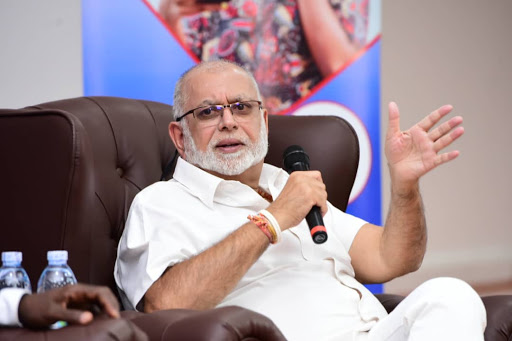
Sudhir lauds Museveni for signing Landlord and Tenants Bill into law

Group chairman, Ruparelia group of companies. Sudhir Ruparelia. One of the sponsors of the Expo

Property mogul Sudhir Ruparelia has lauded President Yoweri Museveni for signing the Landlord and Tenant Bill into law.

It was revealed by the Speaker of Parliament Anita Among, that President Museveni assented to the Landlord and Tenants Bill 2021 after a meeting at State House in Entebbe yesterday morning.

The Bill passed regulates the relationship between landlords and tenants, reforms and consolidates the law relating to letting of premises, provides for the responsibilities of landlords and tenants in respect to the letting of premises.

The landlords welcomed the new law saying it will streamline their relationship with tenants with each party aware of its responsibility.

Sudhir lauded President Museveni for signing the bill into law saying “it will finally bring sanity into the sector.”

“It will check landlords who were not respecting the law and their tenants. Most landlords do not give tenants agreements. We could be the only ones who have consistently given all our tenants agreements for more than 10 years,” Sudhir said.

“The law protects both tenants and landlords. The tenants will now know their rights. It will reduce the court cases between the two parties.”

The new law will also see a restriction of increment on rent being put to not more than 10 per cent annually.

Although the landlords are happy with the provision of increasing rent by 10 per cent annually, they expressed concern over the provision that bars them from forcibly evicting tenants who fail to pay rent.

Parliament also passed a provision that the currency of transaction between landlord and tenant shall be in Uganda Shillings.

The new law will also see penalties for landlords who are found liable of unlawfully evicting their tenants. This conditions the landlord to compensate a tenant three months equivalent of rent dues.

Furthermore, the law proposes that a notice for increment of rent should be issued 60 days before its implementation.

Stories Continues after ad

Land Commission officials face corruption allegations

Land Commission officials face corruption allegations

Officials at the Uganda Land Commission (ULC) have been accused of asking for bribes in order to pay out compensation for land.

Geoffrey Mugisa one of the registered proprietors and claimants of the Shs10.6 billion supplementary budget allocated to facilitate the land owners who sold their land to the government through the Uganda Land Commission (ULC) said in order to process his payments, officials from ULC asked him for a bribe.

Mugisa on Wednesday, 08 June 2022 appeared before the Committee on Commissions, Statutory Authorities and State Enterprises (COSASE) chaired by Hon Joel Ssenyonyi.

The committee is investigating the irregular payment of Shs10.6 billion to six land owners. The landowners are Stephen Nagenda, Twaha Lwakaana, Kosia Rwabukurukuru, Namuli Natalia, Julius Busulwa and owners of the Ndeeba Church and Lusanja land.

When he was tasked by the committee to explain how he got compensated and how he got his land of 208 hectares, Mugisa said that the process was tedious and frustrating and marred with calls for bribes.

Mugisa said that the Land Commission demanded 50 per cent of the Shs1.544 billion he was supposed to get from the sale of his land.

For the land valued at Shs1.544billion, Mugisa got an advance payment of Shs50 million in 2016 and the outstanding balance of over Shs1.4 billion in 2021 for his 208 hectares of land.

“Someone called Michael Obongomin called me and said I would not get my money just like that. At first, he asked for 20 per cent and then later 50 per cent of the total amount I was supposed to receive for my land,” Mugisa said.

Mugisa said he didn’t bow to pressure but his compensation took long.

Hon. Joel Ssenyonyi tasked Mugisa to provide evidence of the phone number and details of the agent seeking the bribe, his account number where the money was paid and his phone number.

The committee also tasked Mugisa to return with a written consent from his family who gave him the land and copy of the title among others.

Mugisa also claimed that his land was occupied by squatters and not the tenants by occupancy according to the report made by ULC before acquisition of the land.

The committee put Mugisa under oath as he failed to present documentation on how he got the land title, alongside the inconsistencies in his defence statements.

He, for instance, told the committee that the land was given to him as a young boy but the committee was shocked to find out that with nine other brothers, Mugisa inherited half of the family’s 500 hectares.

Tororo North county MP, Hon. Geoffrey Ekanya questioned the credibility of acquisition of the land.

“How sure are you that no one will come to claim the land as there is no direct evidence to show the real ownership of the land,” Ekanya asked.

Ssenyonyi has given Mugisa till Friday to present the necessary documentation.

The committee is also in the hunt for former ULC secretary and accountant for her role in the irregularities at the commission.

According to Ssenyonyi, Imaryo fled the country as soon as the investigations begun.

Ssenyonyi said that Imaryo had paid some monies before verification.

“She was being guarded by the military and she left through Nairobi. The Interpol has however, been involved and she will be gotten soon,” Ssenyonyi said.

Stories Continues after ad