Stanbic Bank
Stanbic Bank
19.2 C
Kampala
Stanbic Bank
Stanbic Bank
Home Blog Page 603

Museveni’s full address on the current economic situation in Uganda

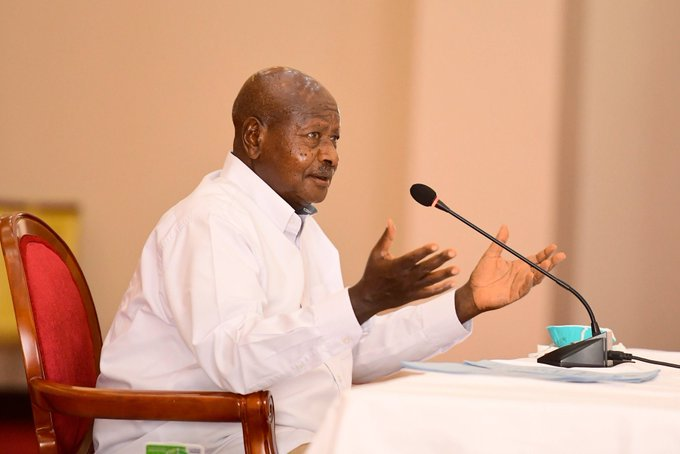
President Yoweri Museveni

Countrymen and Countrywomen

Greetings. I am here today to remind you of the challenges we have been able to face and successfully handle, together, in the last three and a half years. The following have been the challenges:

1. Locusts (enzigye);

2. the rising waters of the Lakes;

3. the landslides;

4. the floating islands that were threatening to destroy the power dams;

5. the Armyworms (kanyanaanga);

6. the Covid-19 pandemic;

7. the terrorist attacks in Kampala and the bijambiya (machete) killers in Masaka;

8. the resurgence of cattle-rustling in Karamoja and the surrounding areas;

9. and, recently, the rising costs of commodities on account of the globe recovering from the Covid-19 pandemic and the War in Ukraine.

As usual, those who do not believe in God and in themselves, started panicking and predicting doom. However, we, the NRM fraternity, whom God has enabled to handle even bigger problems in the past, such as the wars emanating from the unconstitutionalism in Uganda between 1966 and 1986, were sure that each and everyone of these challenges could be rationally, not irrationally, handled. As we speak today, many of these challenges have been handled. Indeed, many Ugandans may have even forgotten about these problems. Where are the locusts? Where are the floating islands, etc.? Of all these problems, the Covid-19 pandemic, was the most challenging. Why? It was because, after a quick but careful analysis, we saw that the pandemic could, indeed, be handled but with massive lockdowns, starting with the unprecedented sending home, prematurely, of our 15 million grandchildren (the learners – pupils, students) in the Primary Schools, the Secondary Schools, the tertiary Institutions and Universities and keeping them there for one and a half years. I do not think that this figure included the pre-primary pupils. No sooner had the 3 pandemic confronted us, than the “struggle between the two lines”, to use Mao Tse Tung’s words, started. This is the struggle between the correct line of the revolutionaries (the change-makers) and the line of the reactionaries (Wapinga maendeleo); the struggle between the “narrow path that leads to heaven and the broad road (Omuhanda Rugyeendwa) that leads to Gehena (hell), as it says in the Book of Matthew Chapter 7 Verses13-14. In the Book of Genesis, Chapter 1 Verses 26-28, it talks of Man “establishing dominion over nature”. As I normally like to quote, it goes as follows:

“ 26 Then God said, “Let us make mankind in our image, in our likeness, so that they may rule over the fish in the sea and the birds in the sky, over the livestock and all the wild animals,[a] and over all the creatures that move along the ground.” 27 So God created mankind in his own image, in the image of God he created them; male and female he created them. 28 God blessed them and said to them, “Be fruitful and increase in number; fill the earth and subdue it. Rule over the fish in the sea and the birds in the sky and over every living creature that moves on the ground.”

Right from the beginning, God empowered man to use his superior brain to find solutions to the problems that confronted him. 4 The struggle between the two lines, therefore, was as follows: the revolutionary side (our side) pointed out that what was primary was to avoid death (massive death – ekyorezo), all other problems notwithstanding. The reactionary line was to emphasize the loss of jobs, loss of businesses, loss of school time, pregnancies of young girls, etc. Our line was that ebizibu (problems) are not equal (comparable) to death (okufa). Death is irreversible, while problems are reversible at the appropriate time. “Ekitatta Muhima, tekimumalako ente”, we say in Luganda (if a Muhima does not die, even if he loses cows, he will, in time, recover them).

What were the results of the struggle between the two lines? The extreme example of the line of ebizibu (problems) are equal to death (okufa), was the European Country of Sweden. Up to now, they have a total of 18,941 people dead from the small population of 10.2.million people. Other countries were oscillating between the two lines and the losses, up to today, are as follows:

USA – 993,691,

UK – 177,890,

France – 144,449,

Germany – 138,204,

Italy – 165,738, Spain – 105,642,

India – 524,323,

South Africa – 100,898,

Argentina – 128,776,

Brazil – 665,319.

In Uganda, the death toll up to now is 3,600, out of a total of 164,153 that were infected. Our total population is now 43million people. Those are the results of the recent struggle between two lines. Our deaths from corona up to March 2021, were only 335 persons. It was the indiscipline of the opposition during the elections that pushed the figures to the present 3,600. On account of the strictness, taking the Biblical narrow-path, Uganda, up to now, has had two waves of the corona pandemic, while other countries have had 3 and even 4 waves.

In Luganda, we say: “Akutwaala ekilo, omusiima bukedde” (the one who successfully guides you in the night, you thank him in the morning for the good work). Now that we are emerging from the consecutive nights of problems (Locusts, rising waters of the Lakes, terrorism, cattle-rustling, covid-19, etc.), it is time to both thank the NRM and reconfirm its credentials as a no-nonsense, problem solver. 6 As the other problems were being solved or waning in severity, in comes the problem of high costs for commodities. Of course, the problem of high commodity prices is much easier to deal with and it is not new. At the beginning of the NRM Administration in 1986 and for the period 1972- 1986, following the expulsion of the UgandanIndian entrepreneurs by Idi Amin, Uganda experienced continuous high inflation, severe shortages of commodities (so called “essential commodities”), very high prices, forex black market (Kibaanda), smuggling of goods out and into Uganda (magendo) and speculation (kusamula). All these were solved by the NRM and, indeed, the recent problem of ekyengera (omweeru – surplus) of sugar, soap, maize, milk, bananas, cement, mitayimbwa (steel bars) etc., is a result of that success. This is why we have been engaging with neighbours (eg. Tanzania, Kenya, etc.) to help us solve the problem of ekyengera (surpluses – omweeru). How did the NRM solve the problem of ebula ry’ebintu (eibura, shortages) of between 1972-1986? We shall see how in this document. However, this history is clear. Therefore, the recent phenomenon of high commodity prices, is, indeed, a problem but it is easier to solve than, for instance, Covid-19 was. Covid-19 needed severe restrictions and new 7 science (eg. Vaccines). This one will be solved with existing knowledge but rightly applied.

The high commodities prices are from the following factors:

1. The end of covid-19 pandemic, meant that sectors of the economy that had been closed, such as hotels, suddenly opened when the production of, for instance, palm oil for soap manufacture had also declined because there had been no demand for two years. The resumed production levels cannot yet match the demand.

2. I also hear, that some of the producers decided to turn their palm oil into petrol, just like we were about to turn our surplus sugar into petrol as a way of solving the problem of kyengera (surplus).

3. The war in Ukraine and Western sanctions on Russia, have also caused shortages of wheat for the bread-eaters that do not include me because I am a muhogo-karo-banana eater and milk drinker, fertilizers, petrol, gas, etc.

Again, here, we confront the struggle between the two lines: the revolutionary, patriotic line of the truth and seriousness on the one hand and the reactionary line of populism, cheap popularity and lack of realism of: prices-control by Government, subsidies, tax cuts on the other hand. Although this is not as serious as covid-19, the choices here, are also with serious implications. It is a choice between okubandama (collapse) of the economy on the one hand or survival (kwetaasa, kuhonoka). The real medicine for high prices and shortages, is increased production. Produce more, if you can.

In 1986, as we were beginning to deal with the catastrophic situation of shortages that had characterized Uganda for 14 years, starting with the 1972 mistake of Idi Amin expelling our Asian business people, there was talk by some of price and rent control. In one Cabinet meeting, we were informed of an Indian known as Gandesha that owned many buildings in Kampala and was charging exorbitant rents. Some were saying that we should invoke the Rent Control Act and the Government should set the rent levels itself. After careful analysis, we rejected that logic. The solution we adopted, was letting rent-levels remaining high for that time. This would attract many people to invest in housing. It is that flooding into housing, that would solve the problem of high rents by making rentable buildings many. That is how the huge growth of buildings in the Kampala – Entebbe – Wakiso – Mukono area, was triggered. Within a year or two, I started hearing of there being so many houses for rent, that many of them had no People to rent them.

Shaku shaku: Shambagira (riddle). Nyabweengye, n’obweengyebwe (Each wise person has got his own smart solutions to problems). What is the answer to the riddle? N’enkoko, kuchuutsya, etaine mabeere. It is the hen bringing up its chicks, when it has no breasts to feed them.

Now, coming to the issue of high commodity prices of: petrol, diesel, sugar, salt, bar soap, powder soap, cooking oil etc., we have to remember the nature of the challenge: Kubandama (collapse) or survive (kuhonoka). As already pointed out above, the problem of high commodity prices is not as dangerous as covid-19. However, if it is not handled correctly, it can lead to collapse. Yet, with patience and correct response, it will turn out to be an advantage for the country.

Straight away, a serious problem solver, would cluster the commodities with high prices into two clusters: the imported ones on the one hand and the locally produced ones on the other hand. Some of the ideas people think about when confronted with high commodity prices, are the idea of subsidy (Government okutu kwatirako) or removal of taxes by Government from those commodities. With imported commodities, this is a recipe for disaster. It will lead to collapse. Why? Let us take the example of petrol. A litre of petrol before the rise of prices in November 2021, was Ugx. 4,590 which meant USD 1.3 at that time. A litre of petrol is now Ugx. 5,500 which means USD 1.48. This is all with the tax. The more expensive litre of petrol (ey’obuseere), is doing two bad things: emptying the pockets of the consumers, but also emptying our national dollar reserves. We now have USD 4.5 billions in our Reserves. These are enough to support imports for 4.2 months. If we subsidize or even just remove the taxes on imported commodities, the level of consumption will either remain the same, but this time each litre taking more dollars, or actually increase. The dollar drain will now increase per litre and also, worse, people may buy more of this expensive commodity. With the Great Lakes area, there is another problem – smuggling (magendo). When an item is cheaper in one country, eg. Uganda, there is a powerful incentive for smugglers to buy cheap in Uganda and sell expensively in the neighbouring country. Therefore, cheaper petrol in Uganda, would be cheaper for the Region. It would seriously encroach on our reserves. Moreover, the removal of taxes on some of the commodities, would mean tax loss to Government of: Ugx. 1.53 trillion for petroleum, Ugx. 1.15 trillion for diesel, Ugx. 520 billion for wheat. How, then, do we fund our budget for – roads, electricity, schools, medicine, security, etc.? There are items we do not tax – eg. Medicine, raw materials, etc. It is, therefore, not true that we tax everything. The very crucial items, are not taxed. Therefore, removing taxes or subsidizing many of the imports is suicidal and a blunder.

In my head, I had sympathy for removing taxes on locally produced goods such as sugar, milk, cement, etc. because, if People buy more of them, it will be good – they would be buying more local goods. This was until I looked at the taxes to be lost. On sugar, we would lose Ugx.193 billion, on cement, Ugx.200 billion, mitayimbwa Ugx.120 billion. We could see that the route to tax cuts and subsidies, even for the locally produced goods, was not a wise one. What, then, is the wise way? The wise ways are, therefore, the following:

1. To use frugally these imported items (kukekereza, kwereembareemba) or kubyesonyiwa (get alternatives);

2. To use our own raw-materials – such as sunflower oil and castor oil (enshoga-shoga) for soap as we wait for the expanded palm oil production which takes longer – sunflower takes only 4 months; for bread, we can use our banana and cassava flour for bread-making apart from eating the traditional foods; for many years now, I do not eat wheat bread nor rice; I eat our richer indigenous foods of akaro (millet), muhogo (cassava), empogora (bananas cooked in their skin), ebinyobwa (G-nuts), obushaza (peas), enyamay’ente (beef), etc.

Nearing 78 years of age in September, I am doing very well. I have no hesitation bearing testimony for our much better indigenous food. Millet is the only cereal in nature that has got protein, carbohydrates and iron. I had also read something comparable for sorghum. However, for the indigenous sorghum, there was the problem of some bitterness. However, with bio-technology by our researchers, the bitterness can be removed. We, the Ntungamoists, the only advantage we found in bread was convenience in storing and transporting. This is what Dr. Muranga in Nyaruziinga, in Bushenyi, is going to solve with the banana flour and cassava flour which is much healthier than wheat flour that has got the problem of dry glutin which is 9.9% and, therefore, is not good for the human body. The ministry of agriculture is going to guide you as to how our farmers can up-scale the production of sun-flower and castor oil seeds for vegetable oil for soap making as well as bananas and cassava for flour for bread. Sun-flower takes just 4 months and castor oil seeds (enshoga-shoga), take between 140 – 180 days to produce pods. With Palm oil, I hear that Indonesia and Malaysia have banned the export of that item and, therefore, removing the tax will not change anything.

This leaves the problem of petrol and diesel, products for which we do not have an easy local replacement until our own oil comes on stream in, 2025 with first production and the refinery expected in 2026 and we refine some of it for the final products. Even before the War in Ukraine, the price of fuel was going up, on account of the worry by the fossil fuels producers of the global movement for clean energy (solar, wind, nuclear, geo-thermal, hydro-power, hydrogen, etc.). On account of that fear, the petroleum companies were, apparently, no longer exploring for new reserves. Yet, the new clean energies, would take time to be available. The Russian-Ukrainian war, has made it worse. Just before the Ukrainian war, the price of crude was USD 80 per barrel. It is now USD 114 per barrel. Therefore, the Ukrainian war, has added another USD 34 per barrel. Of course, this is an artificial addition caused by the countries of the Global North (the Bazungu) mishandling their bilateral relations and also mishandling global affairs as well. We are quietly engaging these actors to see how these actors can remove this artificial burden from the World. Nevertheless, this artificial distortion, should not divert us from our long-distance journey of achieving social-economic transformation because that is the only way of not only increasing our affluence but also immunizing ourselves against the mistakes of others.

Inspite of being obstructed by some elements within Uganda that many times delay our programmes, the way we have been able to transcend the recent challenges of locusts, rising Lake Waters, Covid-19, etc., shows that we are moving towards that state of immunity from the mistakes of others. Even with the high commodity prices, we are still doing much better than many countries in the World. Our inflation has risen from 2.7% before the artificial crisis to 4.9% now. Compare this with other countries: UK 9%, USA 8.3%, France 4.8%, Germany 7.4%, Italy 6%, Spain 8.3%, Russia 17.8%, China 2.1%, Kenya 6.47%, Tanzania 3.8%, Rwanda 10.5% and Ghana 23.6%.

If it was not for the endless obstructions to our programmes, eg. The Palm Oil project in Buvuma, Sango Bay – we would even be much better off. With our coming Oil, Uganda will be immune to the external disruptions. Working with our African brothers, Uganda and Africa will be prosperous irrespective of the actions of the mistake makers, short of using nuclear weapons among themselves which may affect the whole World. Let us, therefore, not be diverted. We are self-sufficient in food (maize, bananas, cassava, milk, beef, Irish potatoes, beans, peas, fruits, etc.). This is one of the most important factors for survival in times of peril like these. We have good infrastructure, we have a strong Army for guaranteeing peace and we are beginning to pay our scientists well. Nothing can stop us from growing if we work with our African brothers and sisters and other people of good will.

Actually, in my opinion, the only, really serious, vulnerabilities for Uganda, are two: continuing to depend so much on rain-fed agriculture and the damage to our incomparably good environment by encroaching on the wetlands (ebisharara, ebitoogo), Lake Shores (emyegyeego), river banks (enkuungu), forests and steep gradient mountain cliffs (ensa). I have agreed with both the Ministries of Agriculture on enhanced irrigation and with the Ministry of Environment on restoring our wetlands by promoting fish-farming on the edges (emiiga) instead of drying them with swamp rice growing, restoring the forests, etc. We should even agree with the Coastal Countries (Kenya and Tanzania) on, possibly, using nuclear energy to desalinate seawater as an insurance in the face of the erraticness of the rain caused by the sabotage by the mistakes of global mistake-makers.

In conclusion, I repeat that the only, really, serious dangers to our future are: reliance on only rain-fed agriculture; damage to our environment; and a nuclear-war among the mistake-makers.

During the State of the Nation Address on the 7th of June, 2022, I will touch on the issue of the so called “coffee deal” that was being discussed in Parliament that other day. I could see fundamental disorientation in the position of some of the speakers that were speaking in Parliament. Uganda, indeed Africa, being in a slave-relationship with external actors, is not comparable to any other factors. To recapitulate (summarize), we need to know and do the following:

1. Subsidies for and removing taxes from imported products is definite suicide because it will deplete both the family savings and the National Reserves, leading to inability to pay for imports because foreigners beyond East Africa do not accept the Uganda shilling as a unit of exchange. They insist on the dollar, gold, etc.

2. The correct action is to kukekereza (being frugal) – kwereembareemba or kubyesonyiwa (get alternatives for the non-oil items).

3. With the internally produced commodities, I was tempted to look at removing taxes because, with these, increased consumption would favour Uganda. However, the tax loss of Ugx. 193 billion for sugar, Ugx. 200 billion for cement, Ugx. 120 billion for mitayimbwa, would cripple our budget and the planned developments. Some of these challenges are temporary. We have been having the phenomenon of low commodity prices eg. for maize, etc. It is the continued development of the economy that will get us to the stability of a more integrated economy. Only a few months ago, I opened a new factory of industrial sugar in Kinyara. This is the sugar, that is used in Coca Cola as refined sugar, different from the raw-sugar for tea. It is also used for medicines like children’s syrups. Its opening, was helping us to tackle the issue of surplus sugar. There are plans to get petrol out of sugar. With that phenomenon of a more integrated economy, the instability of ekyengera with low prices today and, then, ebula with high prices tomorrow, will be tamed.

4. With petrol, diesel and paraffin, the artificial crisis of the Bazungu has added another $34 dollars. We are engaging the involved actors on this. When we succeed here, we shall remain with original reason of the fossil fuels being worried about the clean energy sources. That will be much better than where we are now. It is important for Ugandans to know that even when we get our own petroleum, we cannot sell it below the World prices minus transport costs.

I thank you everybody for listening.

Stories Continues after ad

Uganda and South Korea Connect Under Shincheonji Church of Jesus, to Save Lives Through Blood

‘Save Lives With Shincheonji Church’ With Love of Jesus’ Shincheonji Church of Jesus, Uganda, conducted a group blood donation in Nansana on May 22, 2022 to save lives with a theme, “Save Life with Shincheonji”. This blood donation event was held with 1743 congregation members as participants and they tested to donate their blood.

In order to solve the national blood shortage in South Korea, the Shincheonji Church of Jesus, the Temple of the Tabernacle of the Testimony (Chairman Man-hee Lee, hereafter referred to as Shincheonji Church of Jesus), which conducted a group blood donation for two weeks from the 18th of April to the 1st of May. The expected participants were 6,000 but 18,478 congregation members completed the blood donation out of 27,026 those who participated in the group blood donation.

This is in line with the fact that a total of 6,000 people participated in the donation of plasma for the development of a treatment for COVID-19 over three times at the request of the Korea Centers for Disease Control and Prevention at the time of the initial COVID-19, when there was no vaccine or treatment in 2020. Even at that time, while suffering the aftereffects of Corona 19 and mental difficulties, all the members of the church took steps to overcome the national crisis and received attention not only at home but also abroad.

Following this, blood donation services are being held at the Shincheonji Church of Jesus around the world, and blood donation events were held in Uganda for all congregations and Nansana neighbors.

Uganda, which is on the rise in population, is in increasing demand for blood, including pregnant women, red blood cell patients, and malaria children, but it is pointed out that blood is insufficient due to negative perception of blood donation. In this situation, the group blood donation service of the Uganda Shincheonji Church of Jesus is esteemed to be an essential activity for Uganda.

As a special guest, Mr Mpaulo Francis, Representative of Regional internal security officer Kampala metropolitan North attended the event during the ceremony of donating blood. He said this is a good activity done by Shincheonji Church of Jesus members and other churches should copy from them, they showed a good heart to our nation and community.

Mr. Samuel from Uganda blood transfusion, an official from the blood center, said this is very good work done by Shincheonji Church of Jesus because in hospitals there have been lack of blood and people are not willing to donate , but the good heart the members of Shincheonji have done, its really good, people in the community should admire them alot.

Welfare Officer Mrs.Nakacwa Christine from Shincheonji Jesus Church Uganda said, ‘Just as Jesus saved many people through the shedding of blood 2000 years ago, just as the Prophet and Deacon Stephen shed blood and shed blood for martyrdom to preach the gospel to the world and practice goodness, Shincheonji Church is taking the lead in helping the world by donating blood during this difficult time of disaster around the world starting in Korea to the world world including Uganda.’

The Shincheonji Church of Jesus said, “It is more meaningful because it was a blood donation that all congregations participated in with one heart. I would like to express my gratitude to the congregation members who came running to the news that they are suffering from a blood supply shortage nationwide, and we will diligently serve as light and salt and give glory to God,”

Stories Continues after ad

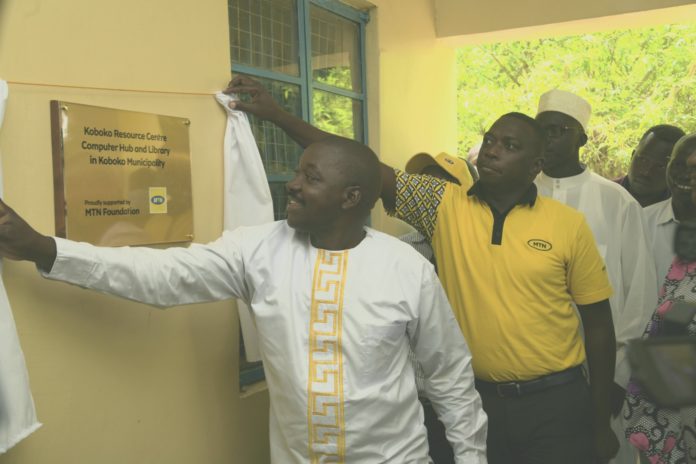
MTN Foundation renovates, transforms Koboko Resource Centre with ICT equipment to boost digitization in the region

Residents of Koboko district and surrounding areas are set to benefit from Koboko Resource Center in the West Nile region of Uganda following the renovation of the physical structure and installation of ICT equipment by MTN Foundation Uganda today.


Founded in 1999, Koboko Resource Center is the only public library in Koboko District which was created to meet the critical educational needs of the youth in Koboko, Maracha and Yumbe.

According to Peterlee Guma, the manager Koboko Resource Center, the establishment had for years struggled with dilapidated structures and received various concerns from the public about the lack of computers for advanced education research.

“People used to complain about why we lacked computers especially when they wanted to look for information on the internet beyond the hardcopy books we had at the facility. We received numerous demands from students from surrounding Universities for computers and internet services in vain,” he narrated.

Following the distress call from the resource center, MTN Uganda through MTN Foundation has invested UGX85million in restoration of Koboko resource center which includes refurbishment of the physical structures and set up a 10-computer laboratory facilitated with high speed internet connectivity for 1 year.

The computers are connected to a power stabilizer and 2 batteries to ensure uninterrupted power supply.
Speaking during the handover of the resource center in Koboko today, Samuel Gitta, the MTN Uganda General Manager Risk and Compliance said that MTN responded to the challenges faced by the resource center with the aim of transforming the lives of the people of West Nile.

“MTN’s decision to enhance the operations of Koboko Resource Center is anchored on our belief that everyone deserves to enjoy the benefits of a modern connected life. It has also become apparent that ICT is a critical aspect embedded in our lives today, as the world transitions to digital, accelerated even more by the emergence of covid-19 two years ago. Therefore it is paramount that we all have the ability to employ ICT skills in our day to day lives to ensure we are not left behind,” Gitta noted.

While representing the Resident District Commissioner Koboko District, his deputy Vincent Mugenyi lauded MTN Foundation for supporting government’s mandate of driving digital transformation across the country, urging the residents of Koboko to embrace technology.

“ICT presents a huge potential to improve national productivity through job creation for the youth and facilitating the creation of solutions to challenges in society. Therefore, this move by MTN draws the country closer to realization of our ICT goals as highlighted in the National Development Plan 3 and Uganda’s Vision 2040 which identifies ICT as an opportunity to spur Uganda’s transformation into a modern and prosperous country,” Mukiibi said.

Mukiibi also implored the people of Koboko to treasure and safeguard the resources to ensure sustained impact.

MTN Foundation is the vehicle through which MTN Uganda conducts its corporate social responsibility which over the years has left an impact in several districts spread across the country.
Similar to Koboko Resource Center, MTN Foundation has also carried out interventions in the sub-region including installing computer labs in Amelo Technical institute in Adjumani and Muni National Teachers College in Arua.

In the health sector, the Foundation renovated and equipped maternity wards of Aroi Health Centre III, Oriajin Health Centre III in Arua with a total of 30 hospital beds, mattresses, blankets, and mosquito nets, donated blood storage equipment at Arua Regional Blood Bank.

The foundation also constructed and furnished a new maternity ward at Ibakwe HCII Obongi district and supported the refurbishment and equipping of the maternity ward of Packwach HCIV.

Stories Continues after ad

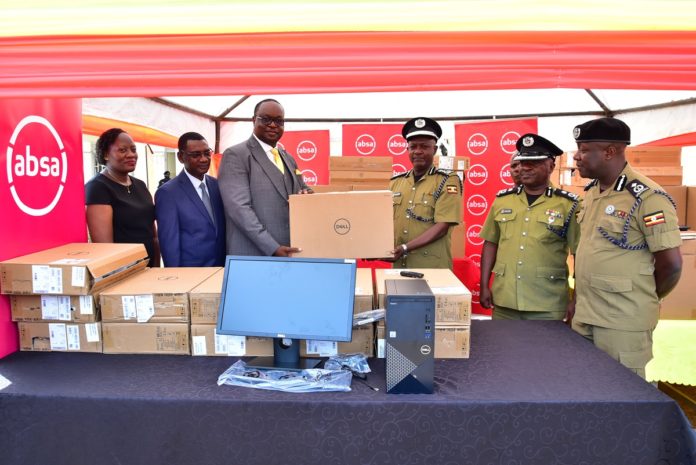
Absa Bank Uganda donates IT equipment to Kabalye Police Training School

Absa Bank Uganda has today committed to donate IT equipment worth Shs131 million to the Uganda Police Training School at Kabalye, Masindi.

The donation will include 10 laptops, 60 desktops, a projector and internet connection for the school’s resource center.

The announcement was made by the bank’s senior leadership during a ceremony attended by senior members of the Uganda Police Force. In this first phase, the bank has handed over 23 computers worth Shs 54 million shillings.

Speaking during the ceremony, Mumba Kalifungwa, Absa Bank Uganda’s Managing Director, said, “The world is moving towards a deepening digital ecosystem, which has made it critical for every aspect of our society to adapt to this growing trend. Thus, in pursuit of our purpose to be a force for good, the bank is committed to facilitate education and skills development as well as promoting a just society by supporting efforts to increase the efficiency of public institutions, such as the Uganda Police Force.”

The donation comes at a time when the Force has accelerated efforts to integrate ICT into fighting crime, which has been done primarily through the first phase of over 3,000 cameras being stationed around Kampala Metropolitan and Wakiso District and a second phase being extended to cities across the country.

Speaking during the release of the 2020 Annual Crime Report, the Inspector General of Police, John Martins Okoth Ochola, said that as the country evolves and grows in science and technology, the Force needs to take on roles that reflect these changing values and expectations, which requires constant training and equipping of police personnel with advanced knowledge and the tools to fight crime.

While receiving the donation from Absa, the Deputy Inspector General of Police, Major General Kasigazi Tumusiime said,” The Uganda Police is committed to prioritising professionalism as we pursue our duty of ensuring safety and security of Ugandans. We will continue to harness the use of technology and increase the capacity of our human resources to integrate ICT in the execution of their duties, and I appreciate Absa Bank Uganda for joining us on this journey.”

Absa’s Kalifungwa added that this donation further spreads the bank’s ethos of becoming digitally-forward.

“Absa Bank Uganda leverages its digitally forward ambition by investing in technology platforms that support the improved delivery of social services. Supporting the Uganda Police Training School ensures that new recruits in the force are adequately trained and ready to serve the nation. This is one of the many ways through which we are creating value and play a shaping role in Uganda’s growth and sustainability,” he concluded.

Stories Continues after ad

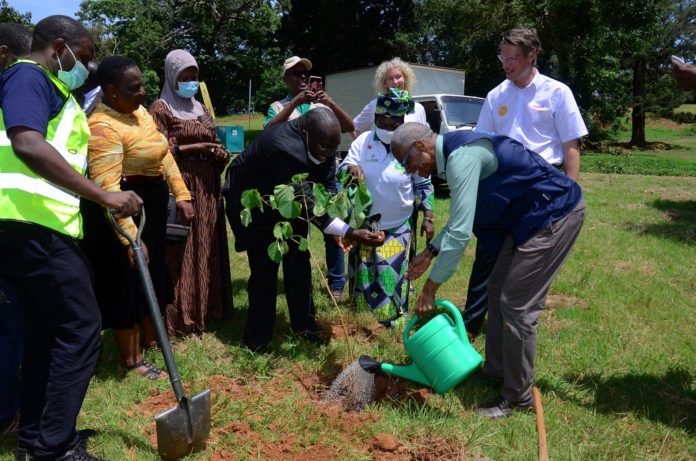
Roots Campaign: Gov’t, private sector players to plant 1m trees in one day

The Ministry of Water and Environment in partnership with private sector stakeholders including; Uganda Breweries Limited, Stanbic Bank Uganda, TotalEnergies EP Uganda, ATC Uganda, among others; the Development Partners, and the civil society partners have embarked on an initiative to plant One Million Trees across the country in one day, as a show of firm commitment towards the Running out of Trees (ROOTs) Campaign whose ambition is to plant 40 Million Trees per year until 2026 for the first phase of the programme.

Now in its third year, with over 25 million Trees grown to date since 2020, the ROOTs campaign brings together the public Sector, civil society and the Private Sector in concerted efforts to address a looming challenge of deforestation in the country that threatens to render Uganda more vulnerable to climate related disasters and unable to meet its wood needs by 2030, if nothing drastic is done to reverse the declining forest cover.

According to an inventory done by the National Forestry Authority in 2019, Uganda has lost half its forestry cover in the past 30 years alone, from 4.9 million Hectares to 2.5 million Hectares. For Context, the Population of Uganda in 1990 was estimated to be about 17.5 million by the World Bank and currently stands at over 48 million, projected to be at 74 million in 2040 according to a World Bank Economic Update of 2020.

This statistic gives us a glimpse into what the future could hold considering that 65% of forest degradation takes place on private land as land owners choose land use change from forestry to agriculture, industry or settlement over biodiversity conservation.

Forestry contributes six percent of the GDP of Uganda and more than 90 percent of the population depend directly on forest for their energy needs i.e. firewood & Charcoal.

This peak event in which 1 million Trees are expected to be planted in one day across the country with the national celebration at the National Plant Genetic Resources, Botanical Gardens in Entebbe, a venue, symbolic in its own right for being a treasure trove of indigenous and other tree species right on the shores of Lake Victoria.

Over 700 trees of indigenous endangered species will be planted by heads of government Ministries, Departments and Agencies, Heads of Diplomatic Missions and Intergovernmental organizations, private sector CEOs, Civil Society, cultural and religious institutions. Some of the indigenous species to be planted include; Khaya species or mahogany, Melicia species/Muvule, Afzelia, Prunus Africana, sheanut tree, Canarium species, among others. Since the event is national in character similar celebrations will be replicated across the country coordinated by the Ministry of Water and Environment regional offices, Mbale for Eastern Uganda, Kwania for Northern Uganda, Mbarara for Western Uganda while additional planting will be continued at district level by institutions and individual planters, the cumulative sum of which is expected to surpass 1 million trees mark.

Speaking at the tree planting occasion that was officiated by H.E Jessica Alupo, the Vice President who represented President Yoweri Museveni, the Permanent Secretary for Ministry of Water and Environment Mr. Alfred Okot Okidi said that whereas rate of the loss of forestry cover in the country is dire, the Ministry’s every intention is to work with the private sector, the public and other willing partners to ensure that a timely intervention like the ROOTs campaign is executed efficiently.

“The government of Uganda committed to the Bonn Challenge that confronted governments with the task of halting, reversing the worrying trend of forest loss. Here, we committed to restoring 2.5 hectares of degraded forest landscapes by 2030. Our task is great, but this mission is achievable, through strategic partnerships with the private sector whose resources sometimes give us the means and help us spread the message wider.”

The Uganda Breweries Managing Director, Mr. Andrew Kilonzo underscored the importance of the private sector coming together to address the deforestation challenge that does not only threaten Uganda, but the global ecosystem itself, saying that investing in tree growing may not be seen in the short term as good business, but it is good for business.

“We understand how crucial partnerships are in increasing the scale and impact of tree growing programmes. We were very glad to team up with the government and rally our fellow private sector organisations to join hands to generate an integrated solution to improve tree cover in Uganda. Our commitment to ROOTs started in 2019, so far we have contributed over UGX. 500 million, and our commitment remains unwavering,” he said in a statement.

Government efforts are often bolstered by deep private sector pockets and many companies have heeded the call this year to take part, some in kind by contributing tree seedlings and taking part in the actual tree planting, like the Mount Elgon Tree Planting Enterprise that has so far contributed over 3 million seedlings to the campaign.

Other key partners like Stanbic Bank Uganda have given cash contributions two years running, and this year, Stanbic has contributed 100 million shillings toward Running Out of Trees.

The Stanbic Bank’s Head of Sustainability, Cathy Adengo said that the bank’s goal is to inspire the rest of the private sector to be part of this initiative.

“Once you have a private sector that is active, involved, and engaged on a social economic issue of this scale, this will lead to greater impact on furthering the conversation and seeking solutions to a threat that not only affects individuals but businesses as well. As trees disappear, soil productivity deteriorates, affecting companies whose production processes need agricultural produce, this also affects access to clean water, clean water, and with time we will experience extreme weather events like we have already witnessed in Kasese and Bududa in the past year alone. As the private sector, we have a critical role to play in preserving and protecting our environment.”

TotalEnergies EP Uganda’s Business Development & Corporate Affairs Director, Jean GAVALDA said, “Our activity in Uganda found its roots around 3 pillars: Energies, Social and Biodiversity. For biodiversity and environment, we, together with our partners, will conserve and leave it better than we found it. We are already engaging to preserve 10000ha of primary forest and restore 1000ha forest. With our annual campaign “Grow A Tree Everywhere” (GATE), 100,000 trees will be growing in the Tilenga project areas of Nwoya and Buliisa districts. We are proud to participate and support the ROOTs campaign for a sustainable future. Today I planted another tree on earth.”

Transparency for trees grown is crucial to the ROOTs campaign. Tree growing organizations have for long relied upon manual methods and tools for tree data collection such as excel sheets and paper-based field reports that provide aggregate totals of trees grown. These methods are insufficient, because they lack immutable evidence or data on each tree actually grown. Tree Adoption Uganda (TAU), a local youth centric NGO integrates digital tree data collection for tree growing initiatives.

Dr. Charles Batte the Executive Director at Tree Adoption Uganda remarked that; “Digital data on each tree grown enhances transparency and efficiency in reporting, which improves confidence of investors, funders and the public – thus enhancing participation. Currently, we use the Tree Adoption App to collect data on each individual tree grown including; image of the tree, GPS location, date of planting, tree species, and name of the planter. Geolocation data for these trees is used for follow up and monitoring, enabling us to demonstrate impact over time”

Other private sector companies and institutions that have onboarded the campaign this year include; Bunyoro Kitara Kingdom, Buganda Kingdom, National Agricultural Research Organisation, National Water and Sewerage Corporation, NEMA, KCCA, Uganda National Farmers Federation, UNHCR, FAO, ECOTRUST, ATC Uganda among others. Tree Adoption Uganda is the tree mapping partner, whose main objective is to track the lifecycle of the tree from when it goes into the ground, and to monitor its growth through the years.

The ROOT Campaign was launched in January 2020 as a 5-year project geared towards Soliciting commitment from the Private sector to support Government’s initiative to restore forest cover to reverse the human impact on decline of forest cover. Over 25 million Trees have been grown in the years following the launch, even with the disruption that Covid-19 presented the campaign.

The campaign also seeks to elicit commitment from the Government of Uganda to gazette a National Tree Planting Day to encourage the general public to join efforts with the government and private sector in committing to restoring, protecting and replenishing forests.

Stories Continues after ad

Kigo land is mine, fraudster Buganda Land Board want using media character assassination – Ham

City businessman Hamis Kiggundu popularly known as Ham.

Kiham Enterprises Uganda Limited, a company owned by city businessman Ham Kiggundu has insisted that it still legally owns the 140-acre Kigo land that has been under contention between Buganda Kingdom and the company.

The land that is beefing up the Buganda Land Board (BLB) and Ham Kiggundu is located in Kyadondo Block 273 plots FRV WAK 6104/25, Plots 23974, 23976, 23975, 23977, and Kyadondo Block 273 plots 87, 99, 110 and others situate at Kigo.

According to the report made by RSU Kizito Bashir Juma, it is claimed that the freehold of the kiham Enterprises (U) Limited was illegally created over the Mailo land titles.

Muwema and Company Advocates, lawyers of Ham Kiggundu were tasked to ascertain whether or not the freehold certificates of titles owned by Kiham Enterprises were erroneously and illegally created to overlap the Mailo land comprised in Kyadondo Block and also to check the accuracy of the survey report made by Kizito Bashir Juma.

The lawyers addressed the issue of the survey by understanding the entire Kyadondo Block 237 through extracting cadastral sheets or maps from the Department of Surveys in Entebbe and various areas schedules were obtained from Wakiso Ministerial Zonal offices- Kyadondo Branch.

“The extracted cadastral sheets were digitized to convert them from analogue maps into UTM coordinate system and or into computer system processed data,” Lawyers stated.

The lawyers further alerted that the land where their client’s freehold titles are situate are part and parcel of the total lake and constitutes former public land vested in government pursuant article 244 (1) (a) of the constitution.  The Wakiso Land Board has the power to hold and allocate land under the said provision.

“It should be noted that the Serena Kigo land lease was created earlier than our client’s freehold titles. So by the time our client obtained the titles, the size on the ground had been distorted,” lawyers said.

Based on their submission, the lawyers contend that the client’s freehold titles are not liable to be cancelled because they were lawfully issued to it by the Wakiso Land Board and they do not overlap with the Mailo land.

In March, Buganda Land Board (BLB) petitioned police seeking its intervention to stop construction of a road and drainage channel through Plot 273, 38, 87, 99,110 and others allegedly belonging to Buganda Kingdom.

The kingdom averred that Kiggundu illegally created official kingdom Milo land, free hold title composed of WAK 6104, FOLIO 25, Block 273, Plot 23977 and the same are under cancellation proceeding at the Ministry of Lands.

According to Kiggundu, the said land is a Freehold land granted by Wakiso District Land Board and the Freehold Land Titles were issued in November 2019 by Wakiso District Land Office. The subject land falls under ‘Public Land’ formerly Plot 20 and referred to as, ‘Total Lake Area’, originally measuring approximately 289.34 Acres.

Kiham Enterprises Uganda Limited is in advanced stages of building an Integrated Sports Complex called Ham Sports Club.

It accommodates three state of the art football playgrounds (including two training grounds), two Olympic size swimming pools, World Class Gym, four basketball  courts, four tennis courts, four netball courts, all indoor games,  accommodation facilities and a grade four medical health facility.

The boundary opening is aimed seeking clarifications and ascertaining the true location of both properties and as a way of confirmation that truly, the two properties are separate, do not overlap into one another, one is a Private Mailo land whereas the other is Public land, and that the only common identifier of the two properties is the shared Plot Boundaries and the fact that they all fall in the same Block and County. 

Stories Continues after ad

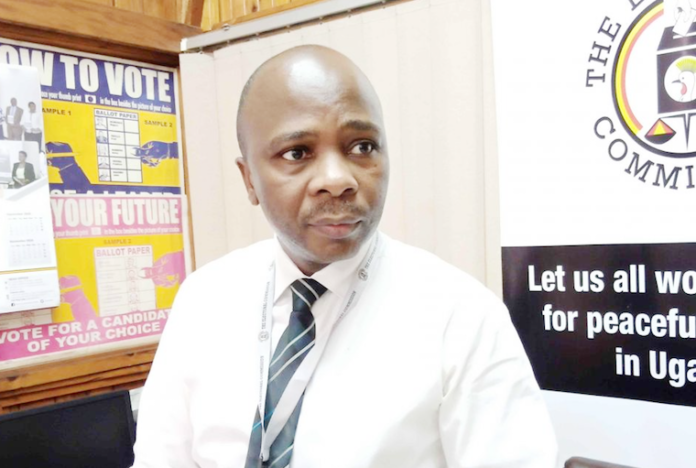
Omoro by-election: EC upholds all candidates

Mr. Paul Bukenya - EC Spokesperson

The Electoral Commission has cleared all the six candidates in the Omoro County by-election race to appear on the ballot.

This was after several of their nominations were contested in connection to academic qualifications and the names on their National IDs.

“In exercise of its powers as provided for under Article 61(1)(f) of the Constitution and Section 15 of the Electoral Commission Act CAP 140, the Electoral Commission has finalised hearing of complaints that were raised in respect of ineligibility of candidates Tolit Simon (NUP); Odong Justine (FDC); Kizza Oscar (ANT); Onen Jimmy Walter (IND); Odonga Terence (IND) and Andrew Ojok Oulanyah (NRM) to contest for Member of Parliament, Omoro County Constituency, Omoro District,” the electoral body said in a statement.

“The Commission has found that the above candidates complied with the requirements for nomination, and has accordingly upheld the decision of the Returning Officer to nominate them. They remain candidates in the by-election whose polling will take place on 26th May 2022,” it added.

The by-election will take place at the designated polling stations in Omoro constituency, Omoro District.

The seat fell vacant following the death of Speaker of Parliament Jacob L’Okori Oulanyah. Oulanyah died on 20th March 2022 in Seattle, USA barely two months after he was admitted in February this year and was laid to rest on Apr 8.

Stories Continues after ad

Parliament approves Shs48.1 trillion budget for 2022/23

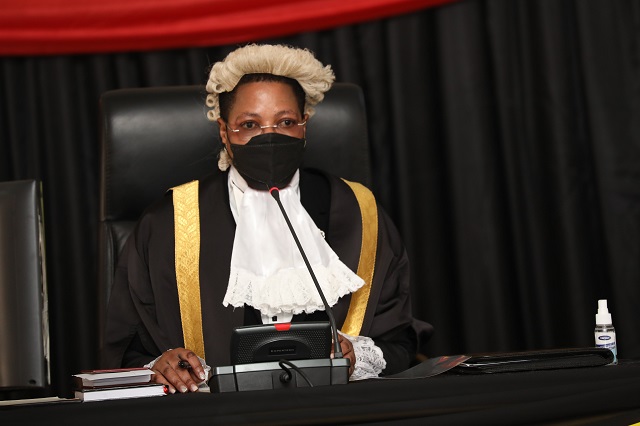
Speaker Anita Among

Parliament has passed the Shs48.1 trillion budget for financial year 2022/23 with post #Covid-19 economic recovery high on the agenda.

Under the theme “Industrialization for Inclusive growth, Employment and Wealth Creation,” projected revenue base is Shs48.1 trillion to finance the budget.

On recurrent expenditure, Ministry of Finance, Planning and Economic Development takes Shs2.3 trillion, Ministry of Defense and Veteran Affairs has been allocated Shs1.2 trillion, while Lands, Housing and Urban Development will take Shs503 billion.

On development expenditure, Defence takes Shs2.3 trillion, Ministry of Health Shs1.4 trillion, while Energy gets Shs1.4 trillion.

Uganda National Roads Authority has been given Shs2.5 trillion in development expenditure, signaling the significance of infrastructure in the post-Covid-19 recovery.

The Finance State Minister, Mr. Henry Musasizi, who shepherded the Budget on behalf of President Museveni said there is need to heal the economy from the ravages of #Covid-19.

“This budget of financial year 2022/23 will mark the recovery for this economy; our economy has been affected by shocks such as the #Covid-19 pandemic, the regional geo-political conflicts, climate change…these developments affected government’s financial position through the reduction in government revenue,” said Musasizi. 

The economy, said Budget Committee Chairperson, Mr. Patrick Opolot Isiagi, has grown by 3.8 per cent in the ending financial year, as against the projected 3.3 per cent.

The difference, he said, is attributed to the vaccination efforts that led to full re-opening of the economy and a surge in demand especially in areas of construction.

MP Opolot said the committee foresees a growth of six per cent of Gross Domestic Product (GDP) in financial year 2022/23.

“In the medium term, growth is expected to pick-up, supported by gains from the containment of the pandemic through vaccination, recovery in global demand and a rebound in foreign direct investment inflows majorly stemming from the oil pipeline construction,” he said.

Unemployment, noted Opolot has shot up to 64 per cent among the youth (18-30 years), a spike he said is explained by the lockdown due to #Covid-19.

“Prior to the outbreak of #Covid-19, there were 1.72 million unemployed youth including 0.362 million graduates in the country (2020 UBOS Statistical Abstract). According to the Uganda Bureau of Statistics, the share of unemployed youth   persons in the country is about 64 per cents,” he said.

Alarm has also been sounded on the rising public debt, which increased by a whopping 15 per cent from 2020 to December 2021, to the last recorded Shs73.5 trillion.

Debt is expected to continue rising, with projections it will get to over 52 per cent of GDP.

“Public debt is on the rise and projected to reach 52.9 per cent of GDP in 2022/23 and the country’s debt sustainability metrics are characterized with slow export growth and increasing debt service,” said Opolot.

With government hopes for recovery and improvement of household income staked on the Parish Development Model, the Budget Committee was unhappy with the homogenic allocation of a flat rate of Shs100 million per parish, which they said is not alive to the dynamics of every parish in Uganda.

“Each parish has indicatively been allocated Shs100 million under the Parish Revolving Fund; this homogeneous allocation does not take into account varying socio-economic, geographical and population dynamics,” reads the Committee report in part.

On public investment, the committee recommended a withdrawal of proposed allocation of Shs319.5 billion to the stalled Lubowa Hospital, which it advised should instead be applied to address other critical needs of the sector.

Shs900 billion has been recommended for withdrawal from Treasury Operations, which the MPs said is an over-allocation which should be provided to other sectors.

Muwanga  Kivumbi opposed allocations to construct roads in the Democratic Republic of Congo, arguing that instead the money should be moved to procure road equipment for domestic use.

“Shs80 billion should be reallocated from construction of DRC roads for financing road maintenance across the country; additionally, as a best practice, all infrastructure projects should always reallocated of least 20 per cent for operations and maintenance within any given financial year,” he said.

Speaker Anita Among asked MPs to monitor the budget as passed by Parliament, looking at the output and its impact on the lives of citizens.

“What we have to do is to ensure we do oversight role; we are passing the money, we are doing our core role as Members of Parliament…what remains is oversight, you need to monitor this money, the Shs48 trillion, where it is going and how it is going to be used and the output we are to get out of this money,” she said.

Stories Continues after ad

Abyei: South Sudan activist welcomes Entebbe peace deal

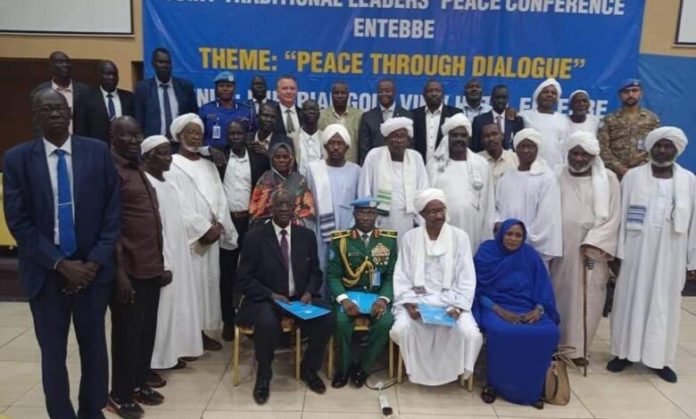
Peace Conference

A renowned South Sudanese activist has welcomed the peace accord signed by Misseriya and Ngok Dinka traditional leaders, saying it is essential the both communities to live in peace and harmony.

On Friday, Misseriya and Ngok Dinka traditional leaders inked a peace deal reiterating their commitment to achieving lasting peace in Abyei area.

A communique was signed by the Ngok Dinka Paramount Chief, Bulabek Deng Kuol and the Misseriya delegation leader, El Sadig Hireka Izzral Din at the end of a three-day joint peace conference held in Entebbe, Uganda.

The leaders, the United Nations peacekeeping force in Abyei (UNISFA) said they are committed to advocating for inter-community dialogue to promote the protection of women and children as well as livestock and property.

They further pledged to be the tool for fostering peace between the two communities and agreed to meet regularly in the quest for peace in Abyei.

“Community Empowerment for Progress Organization [CEPO] welcomes and congratulates the Ngok Dinka and Misseriya communities for reaching a peace deal. Differences is best resolved using non-violent ways,” CEPO’s Executive Director said in a statement issued on Friday.

He urged the Ngok Dinka and Misseriya communities to live in peace.  

According to Yakani, the issue of Abyei status should not be a factor triggering violence between the Ngok Dinka and Misseriya communities.

“The agreed upon political and legal frameworks on the status of Abyei as per the provisions of the Comprehensive Peace Agreement [CPA] should be the guidelines for settling the issues on the status of Abyei,” he stressed.

The activist urged Juba and Khartoum leaders to respect the peace deal reached between the Ngok Dinka and Misseriya in Entebbe, Uganda.

“The leadership of UNISFA should help fund the dissemination of the peace deal reached in Uganda on May 19, 2022. CEPO will effectively engage in observing the implementation of the peace deal provisions,” he noted.

In recent months, violence has intensified in the contested oil-producing region, despite the presence of the UN peacekeeping force in the area.

According to authorities in the area, some of the attacks were carried out by the Sudanese Misseriya tribe with the most recent one happening last month, whereby more than 40 civilians including women and children were killed by suspected Messeriya tribesmen in separate incidents in the area.

The Abyei Area, a territory of 10,546 km² on the border between Sudan and South Sudan, was accorded “special administrative status” by the 2004 Protocol on the Resolution of the Abyei Conflict in the Comprehensive Peace Agreement (CPA) that ended the second Sudanese civil war.

In 2011, the UN Security Council deployed its peacekeeping force in the disputed area after deadly clashes displaced thousands of the population.

Stories Continues after ad

Uganda woos Algerian investors

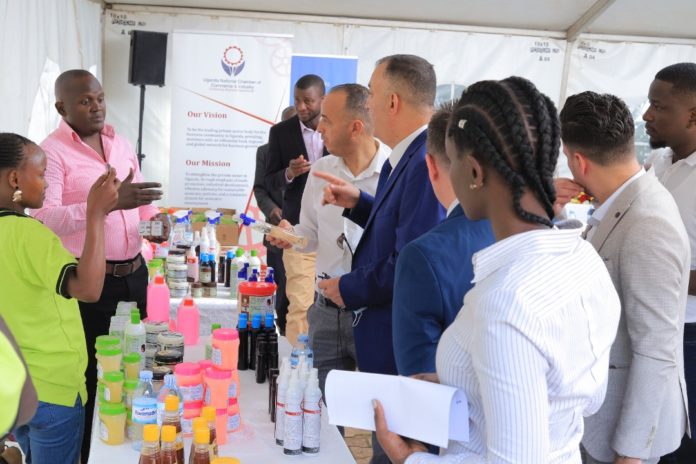
Chief Oualid, Ambassador of Algeria, engaging with one of the local business owner at the National Chamber of Commerce. Courtsey photo

The Uganda National Chamber of Commerce and Industry-UNCCI has pledged to strengthen and grow trade with Algeria.

This will include harnessing investment and trade opportunities between the two countries, and exchange of ideas, and information between local businesses and Algerian counterparts.

These commitments were made during the visit of the Algerian business delegation to the Uganda National Chamber of Commerce in Mulago on Thursday, May 19, 2022, where they engaged with the private sector.

Samuel Musoke Majwega, the Vice president, of UNCCI, affirmed the commitment to work together with the Algerian Chamber of Commerce and stakeholders encouraging joint projects and associations to strengthen relations between both countries.

“We have received at least twenty business people from the Algerian business community. Some of them are from sectors like ICT, tourism, value addition, and industrialization among others. They are looking for whom to partner with within Africa,” said Majwega.

Speaking at the business council, the Commissioner of Finance and Planning at the Ministry of Energy and Mineral Development, Paul Okitoi, said this was a chance for government entities to showcase business opportunities to the business community from Algeria

Okitoi noted that the Ministry has enormous opportunities ranging from the petroleum subsector, energy subsector, and the mineral subsector. For the mineral subsector, there is the enormous potential for natural resources, and materials distributed across the country.

“For example, [there are] 300 metric tons of iron ore deposits in Kabale and this can be used for turning around the iron and steel industry in the country. We have over two billion deposits of iron ore and Marble in Karamoja and this can be used for developing the construction industry, and the cement industry.

Through this value addition, the government will be able to generate a string of jobs across different value chains, generate incomes, and taxes, and increase exports hence reducing the balance of payment deficits in the country,” said Okitoi.

On his part, Deus Muhwezi, from the Ministry of Agriculture, indicated plans of processing powdered milk to penetrate the Algerian market.

With an agrarian economy, Uganda’s major sector is agriculture as a source of income and investment. The export revenues are up to 53% for over 10 years and there are over 4.2 million smallholder farmers

Currently, Uganda is producing 3billion liters of milk annually in the dairy subsector. The dairy has grown getting close to South Africa but penetrating markets with Uganda’s milk is still a challenge, according to Muhwezi.

He said currently the ministry is into plans of processing and package the milk into powdered milk and high-end milk products like ghee to be able to penetrate the market in Algeria and South Africa.

“We would like to see strong partnerships with Algeria in value addition to Ugandan milk in the Dairy Sector,” he said.

The fisheries subsector is a potential agricultural opportunity as well, with export revenue up to USD 143 Million. Aquaculture development such as cage farming, fish feed manufacturing; fish breeding, and so on can be done since Uganda has 20% of its surface area like water.

This is a prime investment opportunity for Algeria for they will be earning, as well as providing employment opportunities for both Ugandans and Algerians. With high market value, the fish exported from Uganda is in high demand within the region and worldwide. Therefore, the investment in fish growing and exportation is substantial.

Cherif Oualid, Ambassador of the Republic of Algeria said Ugandans can also go and invest in Algeria.

“There was a rule of a 49 percent for shares for foreign investors however this rule is changing now. The government is doing its best to help this one-stop center facilitate investors. Right now there is a meeting brainstorming about it to improve on the incentives of the beat of investment. This will be soon passed into law,” Oualid said.

Both Representatives from the National Chambers of Commerce of Uganda and Algeria signed a Memorandum of Understanding of business trade that could spur trade and investments Last year in June 2021.

Uganda has managed to export a number of items to Algeria including milk, coffee, beef, poultry, and other agricultural products but the exports are still low yet the demand curve is gradually moving upward.

The export earnings from Algeria are still low, standing at $2M according to the Bank of Uganda’s report 2020.

Stories Continues after ad