Stanbic Bank
Stanbic Bank
27.3 C
Kampala
Stanbic Bank
Stanbic Bank
Home Blog Page 604

Two pastors, 3 bar owners remanded by Court over noise pollution

Mukisa Edward and Ssebunje Herman were arrested for running, Nkumba Miracle Centre

The National Environment Management Authority (NEMA) has intensified operations to deal with rampant noise pollution in the country. In the latest exercise that commenced on Friday June 24, 2022 six people were arrested and taken to court for prosecution on Tuesday June 28, 2022.

Two suspects Mukisa Edward and Ssebunje Herman were arrested for running, Nkumba Miracle Centre, that is notorious for noise pollution in spite of several warnings from NEMA to control the noise from their premises and continuous complaints from the community in Bendegere LC1, Katabi sub-county, Wakiso district.

The two have been charged with failure to undertake an environmental and social impact assessment; engaging in activities that result in or aggravate pollution; discharging & emitting pollutants into the environment; failure to implement regulatory measures, orders, notices and environmental easements as required by the National Environment Act No. 5 of 2019.

They have been remanded until July 12, 2022 when their bail application will be heard.

In a separate case, the proprietors of Hide Out Bar and Lounge in Kololo, Sisay Beruke, Tigsti Melkamu and Ssetumba Steven, have also been remanded for two weeks over noise pollution.

In another incident Yasin Abdallah was arrested for operating an illegal metal fabrication workshop, infamous for inconveniencing the community at Kazo-Lugoba Parish, Nansana Municipality; and failure to comply with a stop order. He pleaded guilty to the charges in court and was remanded until June 30, 2022 when the matter shall come up for hearing and bail application.

Pollution of the environment (noise or otherwise) is a criminal offence as stipulated in Section 163 of the National Environment Act, No.5 of 2019. A person who commits a pollution related offence is liable, on conviction, to a fine not exceeding fifty thousand currency points or imprisonment not exceeding fifteen years, or both.

The law requires that establishments such as places of worship, recreational and production activities either submit project briefs or undertake environmental and social impact assessment to enable relevant authorities to guide their operations. This is in an effort to ensure that aspects of the environment, including noise, air and water pollution are not compromised.

NEMA urged the public to remain vigilant and report all cases of noise pollution. “We further urge local governments to only issue operational licenses to entities that have the structures, ability and technology to contain the sound emitted from their respective premises.”

Stories Continues after ad

Will a Nile Canal Project dry up Africa’s largest wetland?

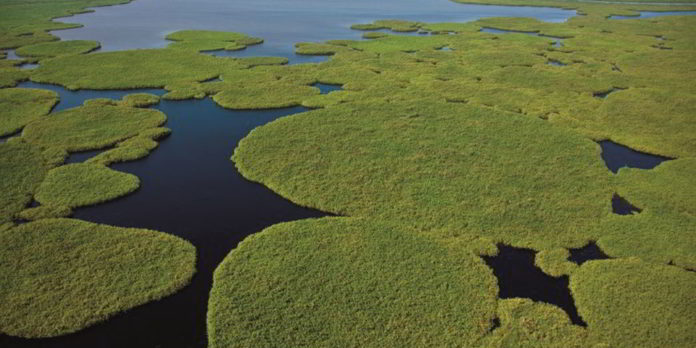
Sudd swamp

By Fred Pearce

Seen from space, the Sudd swamp is a giant green smudge where the White Nile, one of the great river’s two main branches, spreads out across flat arid land, forming myriad back channels that are often covered in floating vegetation. Africa’s largest freshwater wetland permanently occupies roughly 3,500 square miles in an otherwise dry region of South Sudan and floods up to 10 times more in the wet season.

But now the Sudd is under threat of being turned to desert by the revival of a half-completed engineering megaproject that would divert the Nile River away from the wetland and shorten its route north to the Mediterranean Sea.

Egypt, which sponsored the original ill-fated Jonglei Canal project 40 years ago, is set to fund the scheme, which would reduce evaporation from the swamp, and so deliver water downstream to its reservoirs. Ministers in the South Sudan government hope the canal will also reduce flooding around the swamp, which forced hundreds of thousands of people to flee their homes last year.

But South Sudan’s environment ministry is fighting a rearguard action against the canal. It announced this month that it “will not approve the resumption or completion of the canal because of the ecosystem services that Sudd provides to our nation, the region and the world.”

The Sudd swamp sustains one of the world’s largest mammal migrations, with 1.3 million antelope moving across the grasslands.

Conservationists say even a partial loss of the Sudd would be an ecological disaster, desiccating the world’s second largest swamp and ending seasonal flooding of the surrounding grasslands, which comprise Africa’s largest intact area of savannah.

The Sudd is home to thousands of crocodiles, hippos, elephants, and zebras, as well as the majority of the world’s shoebill storks. It also sustains one of the world’s largest mammal migrations, in which around 1.3 million antelope — comprising white-eared kob, tiang, and Mongalla gazelle — move each year from the Sudd east across hundreds of miles of open grasslands to Gambella in Ethiopia. Much of this would be lost.

Meanwhile, hydrologists say that while cutting evaporation from the swamp may deliver water to Egypt, it will reduce rainfall for farms and rainforests across South Sudan and neighboring countries.

The Nile waters take more than a year to pass through the Sudd swamp. Around half the flow, some 3.4 cubic miles annually, evaporates in the tropical sun. The canal — which was first proposed by British colonial engineers in 1904 and was two-thirds completed in the 1980s before being abandoned because of a civil war — would radically reduce this loss, providing an estimated 1.15 cubic miles more water to irrigate crops downstream in Egypt.

The abandoned site of the half-completed Jonglei Canal is one of the strangest scenes in Africa. A dry excavation, 250 feet wide and up to 25 feet deep, extends across near-desert east of the Sudd for 160 miles, ending at the Bucketwheel, a 2,300-ton laser-guided digging machine as tall as a five-story building. The machine was brought there in 1978 by a French construction company, and for six years its 12 giant rotating buckets steadily excavated the canal.

By 1984, it had dug two-thirds of the intended canal. Then, work was abruptly halted after operators were kidnapped by rebel separatists intent on protecting the Sudd and turning the remote southern region of Sudan into a new state of South Sudan.

The rebels saw the canal as a theft of water by Egypt that would deprive the Sudd’s nomadic Dinka, Nuer, and Shilluk communities of fisheries and the huge seasonally flooded pastures essential for their livestock.

A 22-year civil war followed, which the rebels eventually won. But since South Sudan gained independence, some of the new country’s ministers have changed heart and want to complete the canal. They now see the Sudd not as an ecological asset, but as a threat.

In recent times, many former nomads have adopted more sedentary lifestyles with houses built in places vulnerable to the vagaries of the Sudd. Up to half a million people were forced to leave their homes last year as high flows in the Nile engorged the swamp. There have been growing calls in the government to both tame the flooding and harness the Sudd’s water for economic development.

A private presentation by then water minister Manawa Peter Gatkuoth to the Council of Ministers in December 2021, seen by Yale Environment 360, claims that the canal could provide water to irrigate up to 7.5 million acres, an area the size of Maryland, “upgrade river transport, tourism, trade, industry, and social development,” and improve the country’s food security, while growing export crops and allowing the development of fish farms. (Gatkuoth died suddenly from a heart condition on June 19.)

In February, South Sudan’s vice president for infrastructure, Taban Deng Gai, who comes from an area hit by recent flooding, became the first minister to publicly call for the canal to be completed. “For our land not to be submerged by flood, let’s allow this water to flow to those who need it in Egypt,” he said. The expectation is that the government of Egypt, which has most to gain from the project, would foot the bill. The Egyptian government did not respond to requests for comment.

Despite the drive to push ahead with the scheme, opponents are becoming organized. A loose coalition of environmentally concerned members of the National Legislature, academics, and government and NGO officials in South Sudan has pushed back, forming a Save The Sudd campaign. Several were interviewed for this article. Most wish to remain anonymous, but one who has broken cover is the vice chancellor of the University of Juba, John Akec.

In April, Akec launched a petition aimed at gaining 100,000 signatures to be presented to the country’s president. Akec says he was among the students half a century ago who protested against the plan, which “has the potential of draining and destroying the Sudd’s ecosystem, with dire consequences on the Sudd region’s biodiversity, livelihood, culture and hydrological cycle.”

The Sudd swamp moderates floods, captures carbon, and acts as a wildlife refuge, says the coauthor of a 2016 study.

Jacob Lupai, an associate professor of food security at Akec’s university, agrees. “The canal would bring about the total disappearance of many lakes … and reduce others to seasonal lagoons with a serious loss of year-round fish,” he says. Besides its ecological impacts, the canal would dry out grasslands whose annual flooding is “an essential seasonal resource during the driest months of the year.”

“South Sudan did not fight two costly and devastating wars … just to be at the receiving end of predatory outsiders’ imposed projects and to allow its precious natural resources to be plundered,” Lupai wrote in the Sudan Post in April.

Joshua Dau Diu, a member of the Jieng Council of Elders, a group of prominent Dinka politicians, called the development projects that the water ministry says could be made possible by the canal “imaginary and fallacious.”

For the moment, the environment ministry is siding with opponents of the project. With different ministries at loggerheads, South Sudan President Salva Kiir Mayardit has invited foreign experts to a meeting in July to discuss the management of the Nile and the Sudd. “The government wanted to know exactly the impact of Nile water, particularly the clearance of the Nile, the digging of the canal, and the ecological impact to South Sudan … so that the government can give approval or deny the approval,” a presidential spokesman said.

Foreign experts expected to attend did not disclose their opinions when contacted for comment. But many other outside experts are lining up with Save The Sudd.

“The Sudd provides an incredible list of benefits,” says Hannes Lang, who, as an environmental economist at the Technical University in Munich in 2016, coauthored a study of the Sudd’s economic, cultural, and ecological value for the UN Environment Programme. It moderates floods and local climate, maintains extensive groundwaters, captures carbon, and acts as a wildlife refuge, he said.

2020 assessment for the Nile Basin Initiative, an intergovernmental partnerships of governments along the river, put the total economic value of the Sudd for natural resources, regulating the river, and cultural and biodiversity benefits at $3.3 billion.

But all that could easily be lost, according to Lang. “Once the canal exists and the Sudd marsh is partially drained, it will be impossible to return to the previous state,” he says. “The ecosystem cannot just be filled again.”

The water and irrigation ministries of Egypt and South Sudan agreed to undertake joint projects on the Nile in 2020. Earlier this summer, in what many see as a prelude to the canal, they announced plans for massive dredging operations in the Sudd to relieve flooding. This month the South Sudan ministry took delivery of several large Egyptian dredging machines to remove vegetation from 20 miles of waterways in the north of the swamp, “for the health of the river system.” The dredging would also, said the water minister on a trip to Cairo last year, increase water flow down the Nile.

But opponents say the dredging will pollute the river, destroy wetlands, forests, and grazing grounds, and damage water supplies for local communities.

The environment ministry agrees. With dredging set to start this month, it issued a statement saying that unless and until environmental and social assessments have been completed, “any dredging of the river is illegal.” And after hearing an application from a local lawyer, the East African Court of Justice, which has jurisdiction over South Sudan, granted a restraining order preventing the dredging for now, saying it was “environmentally untenable” and “will traverse protected area … with undue regard to livelihoods,” international environmental law, and human rights.

Still, the pressure on South Sudan from Egypt to carry out dredging and resume canal digging continues to grow.

A desert country of more than 100 million people, Egypt has become increasingly worried by food and water insecurity, especially since Ethiopia began building the Grand Ethiopian Renaissance Dam on the Blue Nile, the river’s second largest tributary. Egypt’s leaders reportedly see the revival of the Jonglei Canal as an opportunity to compensate by increasing flows down the Nile’s other branch.

The canal’s supporters point out that it would not entirely dry up the Sudd, merely shrink it. Yet how much is uncertain. Published estimates of the loss range from 7 percent, suggested by Mariam Allam of MIT and Cairo University, to as high as 40 percent.

Egypt is “not a credible host” for this year’s UN climate conference as long as it promotes the Jonglei Canal, a conservationist says.

But hydrologists say the central premise of the canal project — that it can save water by reducing the evaporation “loss” in the Sudd — is misguided. The evaporated water is not lost, they say. It moistens the air and creates rainfall downwind that maintains forests and crops.

A detailed hydrological modeling study published in 2010 by Ruud van der Ent of the Delft University of Technology found that at least half of local rainfall is ultimately fed by evaporation from land. The University of Juba’s Akec says the water evaporating from the swamp and carried south on the winds is responsible for maintaining a “green belt” across most of southern South Sudan and into neighboring Democratic Republic of Congo and Uganda. Shrinking the Sudd could eliminate all-year rains across this area, he says.

Drying the Sudd would also release greenhouse gases. The swamp has an estimated 6,200 square miles of peat, which holds more than 10 times as much carbon as an equivalent area of rainforest. It holds around 4 billion tons of carbon, much of which could be released if the canal is completed.

Some see Egypt’s promotion of the Jonglei Canal as ironic, since it is set to host the next UN climate conference later this year. “Egypt is not a credible host for the COP27 when it proposes this Jonglei Canal scheme, which would permanently undermine the climate resilience of the region,” says Jane Madgwick, CEO of the environment group Wetlands International, which opposes the canal. “The Sudd needs to be recognized as a massive natural asset, vital to future peace and prosperity.”

Fred Pearce is a freelance author and journalist based in the U.K. He is a contributing writer for Yale Environment 360.

Stories Continues after ad

Gogonyo MP by-election set for August

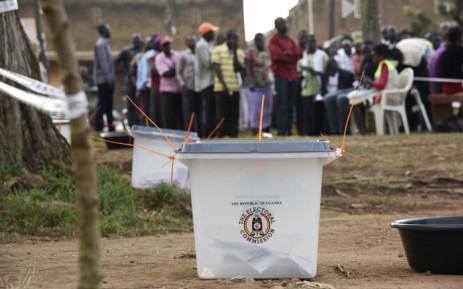
EC-Voting-ballot-box

The Electoral Commission released the programme for conducting the by-election of Member of Parliament for Gogonyo County Constituency in Pallisa District.

The by-election programme commenced with an update of the National Voters’ Register from Friday 24th June and ended Tuesday 28th June 2022 at update stations in each of the twenty-one (21) parishes in Gogonyo County.

The display of the Voters’ Register will be conducted for a period of ten (10) days, that is, from Tuesday 12th July to Thursday 21st July 2022, at all the sixty-two (62) polling stations in Gogonyo County.

The Display of Parish Tribunal Recommendations for deletion from/or inclusion on the Register will be conducted for six (6) days, that is, from Friday 22nd July to Wednesday 27th 2022 at the respective Parish Headquarters.

The nomination of candidates will be conducted on Monday 1st and Tuesday 2nd August, 2022 at the Office of the District Returning Officer, Pallisa.

Nominated candidates will conduct campaign meetings for seven (7) days, that is, from Wednesday 3rd August till Tuesday 9th August, 2022.

Polling and tallying of results for by-election of Member of Parliament will be conducted on Thursday 11th August, 2022.

The Parliamentary seat for Gogonyo County fell vacant following a court ruling that threw out Derrick Orone.

Stories Continues after ad
COSASE hands over lawyers in Shs2 billion land compensation scam to CID

Two lawyers handed over to CID in Shs2 billion compensation scam

The Criminal Investigation Department (CID) in Parliament has been tasked to investigate two lawyers for their role in the 2 billion shilling land compensation scandal.

The Committee on Commissions, Statutory Authorities, and State Enterprises (COSASE) chaired by Hon. Joel Ssenyonyi, is investigating the circumstances under which a Kampala-based law firm, Lubega & Buzibira Co. Advocates represented 79-year-old Nantalia Namuli in the sale of 516 hectares of land in Kagadi district, western Uganda.

The Shs2 billion compensation was part of the Shs10.6 billion supplementary expenditure to the Ministry of Lands, Housing and Urban Development in the Financial Year 2020/2021 meant to pay six landlords.

However, the committee on 10 June 2021 received a request from the genuine owner of the land, led by John Kalete Antwane, the representative of the grandchildren of John Kalete, the actual owner of the land stopping any further payment or compensation claiming the people being paid were illegitimate owners.

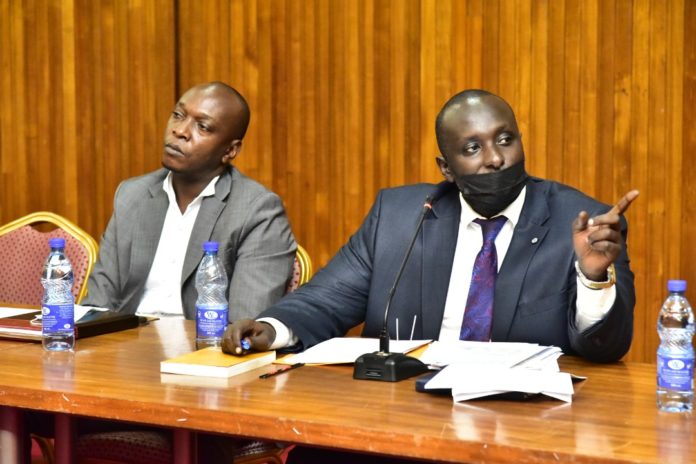
Now appearing before the Parliamentary Committee on Tuesday, 28 June 2022, the two lawyers, Kyle Lubega and Richard Buzibira, were handed over to the CID over their role in the payment.

The lawyers claimed they had paid Namuli Shs218 million cash on July 22, 2020, but Namuli and her son-in-law, Peter Amara have distanced themselves from the payment claim. The lawyers have also been faulted in the forging of documents and signatures among others to validate the claim.

While appearing before the committee, they also gave out contradictory messages regarding the money allegedly received by Namuli.

The two were put under oath so that the truth can be established by the committee.

Buzibira, however, claimed that Namuli sold her rights and claim to the land to businessman Warren Mwesigye at Shs318.87 million and the compensation was in her name although the businessman got paid.

He added that the money paid was given to Mwesigye and not to Namuli as she had sold her rights already.

“I do not find anything wrong with her decision as she had waited for Uganda Land Commission’s (ULC) compensation for over five years and she decided to get money out of it earlier,” Buzibira said.

When probed further by the committee on why he hid the information in his initial presentation, he said he did not want to reveal the businessman Warren Mwesigye to the committee.

However, Buzibira said that Namuli got the Shs318 million in a bag and left with her son-in-law, Peter Amara, who had introduced her to the law firm.

Lubega and Buzibira were held in contempt as they reportedly misinformed the committee.

Committee members including Hon. Bumaali Mpindi, the representative of Persons with Disabilities said that the lawyers had forged documents and had not told the committee the truth. They further tasked the ULC with the recovery of the land.

Stories Continues after ad
Mulago Hospital bosses grilled over failure to utilise Shs4 billion for salaries

Dr Byarugaba Baterana

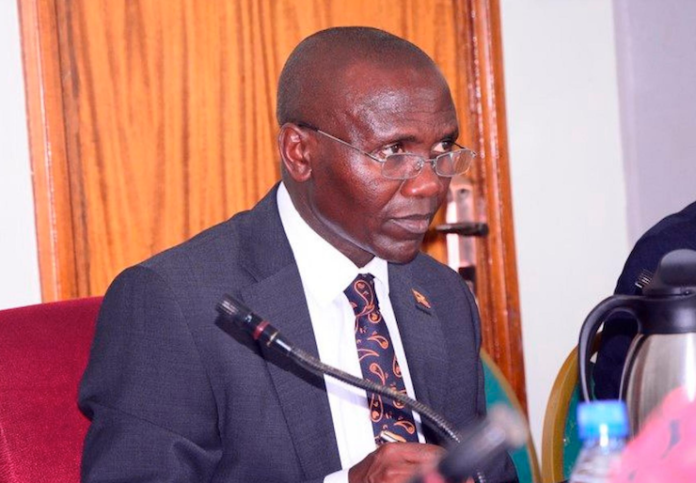
Members of Parliament who sit on the Public Accounts Committee (Central) have tasked the interdicted Mulago National Referral Hospital Executive Director, Dr Byarugaba Baterana, to explain the hospital’s failure to absorb Shs4 billion meant for salaries of new staff.

The Auditor General’s report for the Financial Year 2020/2021 shows that a total of Shs4,193,961,930 meant for salaries was sent back to the Consolidated Fund amidst an outcry of low staffing at the hospital.

Legislators said the hospital acted irresponsibly when it failed to push the recruiting bodies; the Health Service Commission and Ministry of Public Service to ensure the staff budgeted for are recruited.

“I want to know – didn’t you foresee that you have this money coming? Did you know that you needed so much staff such that you get in touch with Health Service Commission early enough to begin on the recruitment process?” asked Sarah Opendi (NRM, Tororo district Woman MP).

Opendi said there were many jobless health workers who are in need of jobs and wondered how Mulago would hoard such an amount of money only to return it to the centre.

“This Shs4 billion is not small money. There are so many people out there looking for jobs but they cannot find them, yet an institution is having money but cannot recruit,” said Opendi.

She noted that hospitals across the country are in dire need to health workers, saying she was shocked to learn of such ‘negligence’ at Mulago Hospital.

Baterana who was flanked by the hospital accountants and the Ag. Deputy Executive Director, Dr John Ssekabira, said they had made attempts at recruitment but only a few staff were hired.

“Funds that were sent back to the Consolidated Fund were ring fenced for salaries but we had not recruited staff to work and consume the salaries. But as we speak, we are in touch with the Health Service Commission and they have recruited a number of people,” revealed Baterana.

The hospital’s Principal Accountant, Abdul Kiiza, in justifying the failed recruitment said the process of recruitment in the public service was largely the reason Mulago failed to absorb money for salaries.

“At the beginning of each financial year we make recruitment plans and submit them to the Health Service Commission but we get challenges along the way, because they recruit based on attrition,” said Kiiza.

He added: “Even when we submit requests for recruitment in July, by December we will still have staff resigning, others being transferred, and by the time you go through the process of getting approvals for recruitment again, you find there is no time for absorption of money for salaries within the same year.”

Kiiza asked Parliament to review the recruitment process in the public service and make the process flexible.

Opendi, citing her previous experience with Mulago Hospital while she served as the State Minister for Health (General duties), said it was urgent for Mulago to be empowered to handle recruitments on its own if it is to function.

“For as long as Mulago remains like this, they cannot perform, you have a hospital with a board but it has to report to the Permanent Secretary of the Ministry of Public Service, then to the Health Service Commission – the bureaucracy in public service cannot allow them to function. The board needs to be empowered to perform,” said Opendi.

The committee deputy chairperson, Hon. Asuman Basalirwa, said Opendi’s proposal will be studied and included in the committee report for consideration by Parliament.

Ibanda North County MP, Hon. Xavier Kyooma said he would support the proposal to make Mulago Hospital an autonomous entity but asked for evidence to show that delayed recruitment was not Mulago’s negligence but the bureaucracy at the Health Service Commission and Ministry of Public Service.

“Our national referral hospital needs to be helped. However, the help must be initiated from your side – we need to see evidence of your struggle with the Health Service Commission in recruitment so that we use it as evidence for recommendation,” Kyooma said.

Stories Continues after ad

MTN Uganda pays out its first dividend since listing on USE

Andrew Bugembe, the MTN Uganda Chief Finance handing over a dummy cheque to Richard Byarugaba the Managing Director NSSF.

Following approval of declaration of dividends by its shareholders at the Annual General Meeting held on the 27th day of May 2022, MTN Uganda has paid out a total dividend of Shs105.4 billion to its 21,452 shareholders for the year ended 31st December 2021.

Each shareholder, registered on the books of the company by 01 June 2022, has received a dividend of Shs4.706 per share in accordance with the Uganda Securities Exchange Rules.

All dividend payments have been subjected to withholding tax in accordance with the Income Tax Act. All Ugandan individuals are subject to a 10% withholding tax while East African individuals and Companies including Ugandan companies, are subject to a 15% withholding tax.

The National Social Security Fund (NSSF), which is the second-largest institutional shareholder with a stake of 8.84%, earned a dividend of Shs9.3 billion for the year 2021.

Handing over a dummy cheque for the final dividend earnings for the period 6th to 31st December 2021 to Richard Byarugaba the Managing Director of the NSSF, Andrew Bugembe, the MTN Uganda Chief Finance Officer highlighted the company commitment to its shareholders.

“MTN Uganda is committed to returning great value to all its shareholders, and therefore today, we are delighted to be living out to this commitment to our shareholders having taken a step to invest in MTN Uganda,” Mr. Bugembe said.

Bugembe further noted that MTN Uganda’s policy is to pay dividends three times a year in June, September, and December at a minimum of 60% of profit after tax hinged on the company operational performance. The target for the year 2022 is to payout 75-80% of the profit made as dividends.

Richard Patrick Byarugaba the Managing Director of the National Social Security Fund applauded the Telecom company for it’s great performance.

“The dividend declared and paid by MTN Uganda is impressive and grows investor confidence in the company. We have also seen the company deliver impressive subscriber growth since the IPO (mobile subscribers – 10.7% to 15.7M), as well as double-digit growth in key segments (data and mobile money) which bodes well for the future performance of the company.”

In line with MTN’s Financial inclusion strategic mission, 87% of MTN shareholders have been paid through the MTN mobile money platform.

MTN Uganda was listed on the Uganda Securities on 6th December 2021.

Stories Continues after ad

Gov’t bows to pressure, calls striking teachers for a dialogue

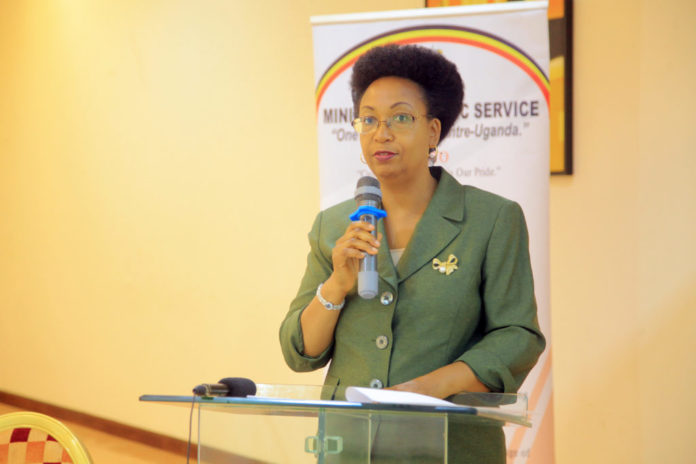
Catherine Musingwire Bitarakwate,the Permanent Secretary Ministry of Public Service

The government has bowed to pressure following a two days ultimatum given to the Arts teachers to return to their work stations.

On June 15, 2022, teachers under Uganda National Teachers Union (UNATU) staged industrial action citing discriminatory salary enhancement and government’s failure to honour collective bargaining agreement signed in 2018.

Next Financial year, the Government allocated Shs735 billion towards enhancement of Science teachers’ salaries. According to the proposed salary scale, a science teacher who holds a degree will earn Shs 4 million from Shs 1.1million. A grade five teacher will earn Shs 3 million from Shs 796,000.

Last week, Mrs. Catherine Bitarakwate Musingwiire, the permanent secretary to the ministry of public service, ordered teachers to resume their duties at their respective work station by 24th July 2022 and any teacher who doesn’t comply with this call will be regarded as having absconded from duty and resigned from public service in accordance with section A-N of the public service Standing orders 2021.

Zadock Tumuhimbise, the chairperson of UNATU has since urged teachers to go on with the strike till the enhancement of their salaries.

“We have received the intimidating letter as expected. Whatever we are doing is within the provisions of the law. We are very safe. Our legal teams are on course to make a response to the letter. Soon our official spokesperson will give us a detailed update. Otherwise; the Industrial Action is still on course. Keep consistent,” he said.

Earlier today, Bitarakwate petitioned the secretary of UNATU Filbert Baguma calling for a meeting over the staged industrial action.

“We invite you and four members of the Union executive for a meeting with the ministry of public service on Friday July 1, 2022,” Bitarakwate said.

Mr. Baguma has since denied receiving any letter from public service.

Stories Continues after ad

Prof. Balunywa to MSMEs: Government is legislating you out of business

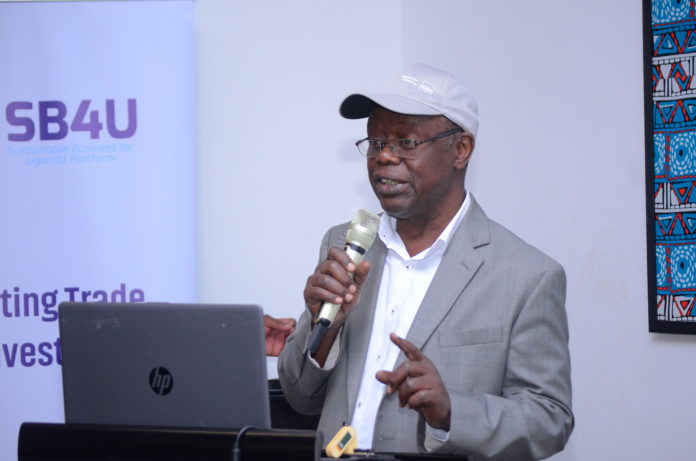
Prof. Wasswa Balunywa - Principal of Makerere University Business School (MUBS)

Many government regulations are hindering the growth of small businesses, according to Prof. Wasswa Balunywa – the Principal of Makerere University Business School (MUBS).

While speaking to SME owners at Onomo Hotel during a forum commemorating WorldMedium, Small and Micro Enterprises (MSMEs) day, which is celebrated every 27thof June, Balunywa said, “There is too much regulation by the government, and businesses don’t seem to be aware. They are legislating you out of business.”

He added that in recent years, Uganda is strengthening regulations, many of which are copied from usually developed countries and adopted here, which in turn hinder business growth.

The forum was organised by the Sustainable Business for Uganda Platform (SB4U) – a partnership between the European Union, Private Sector Foundation Uganda (PSFU) and the Government of Uganda.

While addressing attendees during the dialogue, Caroline Adriaensen, the EU Delegation’s Head of Cooperation, said, “Even though MEMEs are the drivers of the Ugandan economy – constituting over 90% of the private sector and contributing approximately 2.5 million jobs,Ugandan MSMEs often exhibit low levels of productivity, high levels of informality and face incredible challenges to survival and growth.”

The SB4U Platform was created to address three critical hurdles for private sector development, namely: inadequate workforce skills as compared to the needs of the private sector, limited access to finance for the private sector, and endemic corruption linked to economic activities.

Through the platform, the European Union funds the “Skills, Attitude, Governance and Anti-corruption” (SG+) Programmeto reduce the skills gap; tackle access to finance through the EU-Uganda portfolio on Access to Finance and identify key responses to support anti-corruption efforts in collaboration with the public and private sectors.

The forum also featured a panel discussion that had several MSME business owners share their entrepreneurial journeys and was filled with wisdom on how they overcame the challenges they have faced.

Dennis Ngabirano, CEO of Psalms Food Industries Limited who creates the Sumzsnacks advised MSMEs to develop healthy business systems to increase their chances of becoming bankable.

“When we attempted to apply for big financing from Ugandan Development Bank (UDB), the checklist had over 30 requirements. When I did some self-evaluation, I realised that I could fulfil 31 out of the 36 requirements, and these are cultures, systems and lifestyles that have to be adhered to by entrepreneurs because they can push you to another level.”

Stories Continues after ad

KCCA to launch Parish Development Model training center  

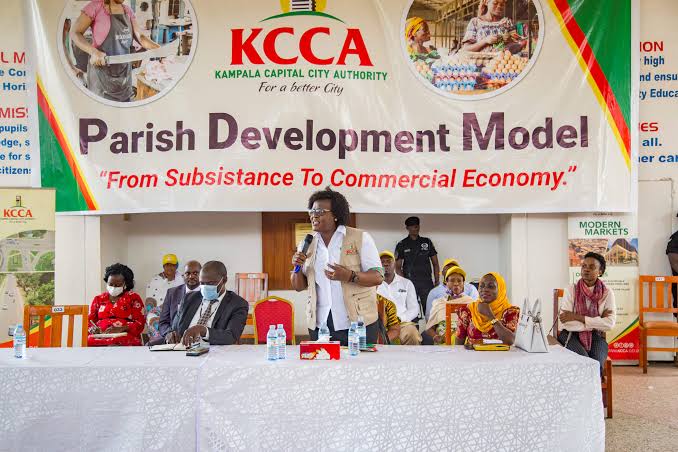
KCCA Executive Director, Dorothy Kisaka during the briefing on KCCA’s readiness

The Kampala Capital City Authority (KCCA) is to establish a Parish Development Model (PDM) ‘school’ in a bid to cause positive mindset change towards the implementation and success of the strategy.

This was revealed by the KCCA Executive Director, Dorothy Kisaka during the ministerial briefing on KCCA’s readiness on the implementation of PDM that was held at Hotel Africana on Monday.

At the ministerial briefing KCCA technical team presented a State of readiness for PDM in Kampala Capital City.

“At KCCA we have envisioned a PDM school for continuous training of our people in Kampala. We will use it to provide enough information to cause a mindset change and bring everyone on board for the success of this strategy,” Kisaka said.

She revealed that without prioritisation of community mobilisation and mindset change, the well thought out idea of PDM may not be attained.

Kisaka noted that PDM is key to the transformation of Kampala into a smart city since it is people centered.

“Under the Smart City initiative our biggest focus is people; the others are technology and infrastructure. To us PDM is an opportunity to advance the Smart City initiative which everyone needs to support,” Kisaka said.

PDM is a multi-sectoral strategy to create socio-economic transformation by moving 39% households out of the subsistence economy into the money economy.

“We continue spreading the gospel of development according to the gospel of PDM. We want everyone on board for the program to move smoothly,” Kisaka said.

KCCA views city dwellers as agents of economic growth and development, not a burden and thus encourages them to participate in the development of the city ‘

“There are 99 parishes in Kampala which will benefit from PDM. That is 99 opportunities for Kampala Smart City,” Kisaka said.

She says citizen involvement and participation in the development process will translate into country ownership.

On Tuesday, the Ministers will start the division visits starting with Central and Lubaga, then Nakawa and Makindye on Wednesday and Kawempe on Thursday.

The grand finale* will be at City Hall on Saturday July 2.

“Our aim is that all our city leaders are well briefed including all political and technical leaders,” Kisaka said.

Denis Galabuzi Ssozi, the National Coordinator for PDM welcomed the KCCA’s idea of having a school and continuous training of stakeholders about PDM.

He also called on Kampala people to be organised in off taking enterprises along the agricultural value chain.

Galabuzi said the PDM is targeting Ugandans along the agriculture value chain.

Those to benefit include those involved in roasting maize, selling chapati, fresh food, frying popcorn or in any related business along the agricultural value chain in Kampala

The state minister for Kampala City and Metropolitan Affairs, Kabuye Kyofatogabye asked city leaders to align their thinking to the realization of PDM.

“You are the people going to fail or make this program succeed. Educate people about this program and let it be a success. Our people have to be saved from poverty,” Kyofatogabye says.

During the event Anisa Nabisere, the KCCA PDM focal person gave a brief on the readiness of KCCA to successfully implement this change maker government strategy for social and economic transformation.

Nabisere said the city is on course to implement the program; a PDM secretariat is already in place, ward administrators were recruited and sensitizations are ongoing.

She also reported that enterprise registration is ongoing, data collection is ongoing and Sacco’s are being registered.

According to Nabisere at least 60% of the households have been with majority from slum areas and are mainly headed by women.

At least 97 Sacco’s have been registered, 1,200 enterprise groups, 42,000 beneficiaries registered.

The Nakawa Division Mayor Paul Mugambe urges that politicians should be equipped with enough information on PDM.

The ministerial briefing was attended by the mayors, RCCs, KCCA directors, Town Clerks, OWC officers, Parish Administrators, and community development officers among others.

Stories Continues after ad

Muni University Vice Chancellor Prof. Christine Dranzoa is dead

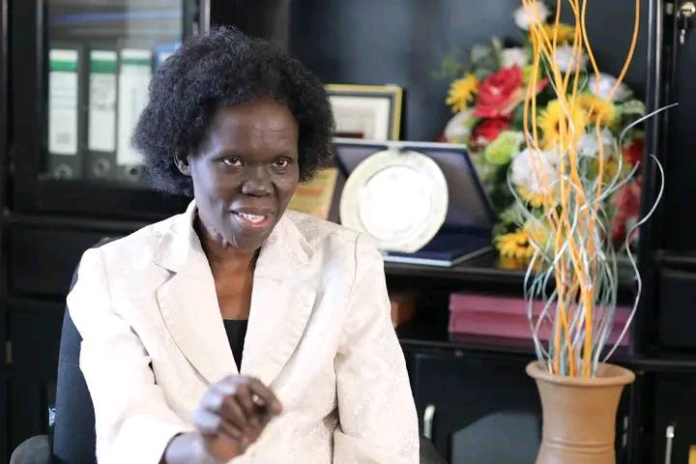
Prof. Christine Dranzoa

The Vice Chancellor of Muni University Prof. Christine Dranzoa has passed on. Her death was confirmed by the University Administration.

Prof. Dranzoa died this morning at Mulago National Referral Hospital where she was admitted over unrevealed health complications.

 “We have just received the sad news of the untimely death of our dear Vice Chancellor, Prof. Christine Dranzoa who passed on at 3:30 am this morning. An official communication will be made later in the day,” the University said on twitter.

Prof. Christine Dranzoa has also been the Chairperson Executive Committee Inter University Council for East Africa (IUCEA).

Stories Continues after ad