Stanbic Bank
Stanbic Bank
27.3 C
Kampala
Stanbic Bank
Stanbic Bank
Home Blog Page 603

WHO, African countries partner to bolster monkeypox laboratory testing in Africa

MonkeyPox

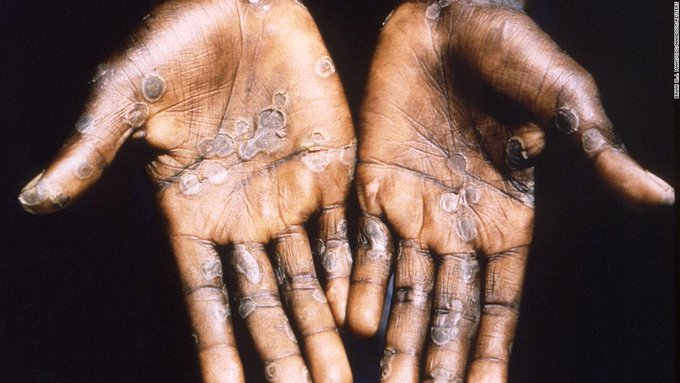
With three African countries with no previous history of human monkeypox transmission reporting cases, World Health Organization (WHO) is working with national health authorities in the region to bolster surveillance and laboratory diagnosis to detect cases and deter a silent spread of the virus.

The continent has, as of 28 June, reported 1821 cases in 13 countries of which 109 are laboratory confirmed in nine countries. The number of confirmed cases accounts for 2% of the more than 4500 confirmed cases globally. However, there are a large number of suspected cases in the region, 81% of which are in the Democratic Republic of the Congo, underlining the need for increased diagnostic capacity.

While all African countries have the polymerase chain reaction machines needed to test for monkeypox thanks to reinforced laboratory capacity in the wake of COVID-19, many lack reagents and in some cases training in specimen collection, handling and testing. WHO is working to secure 60 000 tests for Africa, with around 2000 tests and reagents to be shipped to high-risk countries and 1000 to those facing lower risk.

Over the past month five more African countries have received donations of reagents from partners, bringing to 12 the number of countries in the region with enhanced monkeypox diagnostic capacity. Another group of countries in West Africa will receive reagents after participating in a training.

Outside the six countries in Africa with a history of human transmission, monkeypox has also been reported in three countries which have not previously had any human cases. These include Ghana, Morocco and South Africa, which has confirmed the disease in two patients with no travel history, suggesting there is a high possibility of local transmission.

 “The geographic spread of monkeypox to parts of Africa where cases have never been detected before is a worrying sign,” said Dr Matshidiso Moeti, WHO Regional Director for Africa. “It is critical that we support national efforts to boost surveillance and laboratory diagnosis, which are the cornerstones of disease control.”

To deepen analysis of monkeypox transmission patterns, WHO is supporting countries to capitalize on the improved genomic sequencing capacity built during the COVID-19 pandemic. Currently seven countries can sequence the monkeypox virus. WHO has reports from South Africa and Nigeria which show the two countries have sequenced 300 samples since January 2022 – these include samples from other countries. This is more than double all the samples sequenced in previous years. Most samples sequenced were from the West African clade. The sequencing done so far shows that there is no recent linkage between what is circulating in Europe and Africa.

Many years of research have led to the development of new and safer (second- and third-generation) vaccines for smallpox, some of which may be useful for monkeypox and one of which (MVA-BN) has been approved for prevention of monkeypox. However, supplies are limited.

 “What happened in the early days of the COVID-19 vaccine rollout when Africa watched on the side-lines as other countries snapped up limited supplies must not be allowed to recur. There are some signs that this is already happening,” said Dr Moeti. “The current global spotlight on monkeypox should be a catalyst to beat this disease once and for all in Africa. For this, we know vaccines are a critical tool.”

WHO is working closely with Member States and partners to define what type of coordination mechanism could be put in place to ensure fair access to vaccines. There are many regulatory, legal, operational, technical, and other issues to clarify before an allocation mechanism is fully operational.

With limited vaccines and antivirals, WHO does not recommend mass vaccination for monkeypox but rather targeted vaccination for people who have been exposed or at high risk including health workers, laboratory personnel and outbreak team responders.

Stories Continues after ad

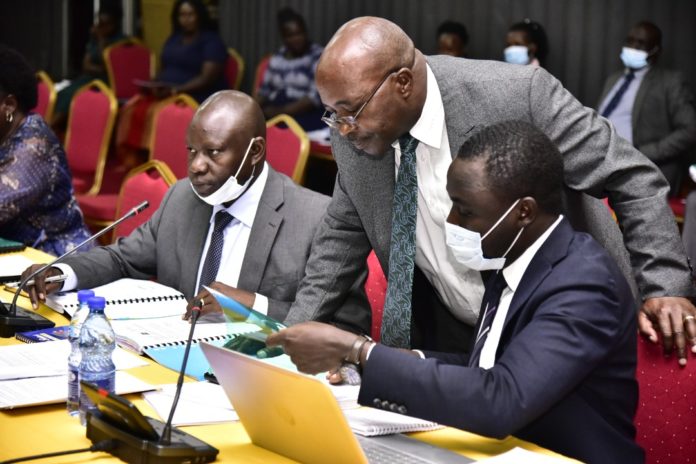
CCTV footage to be reviewed as COSASE continues probe into Shs2bn land compensation saga

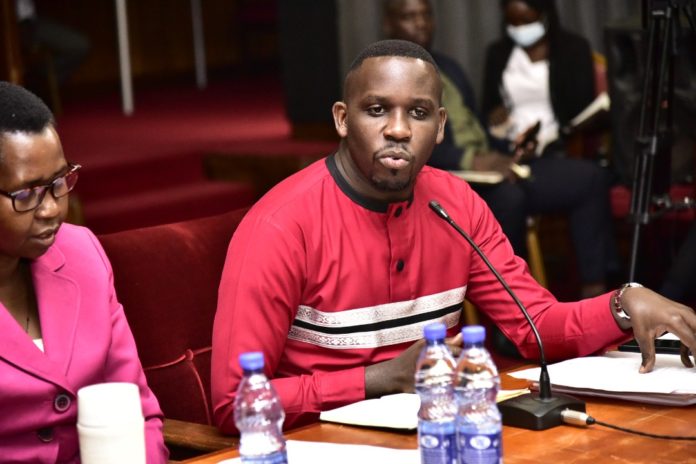
COSASE Chairperson, Joel Ssenyonyi

Members of Parliament are seeking to review CCTV footage to establish the transactions between a law firm, Lubega & Buzibira Co. Advocates and Nantalia Namuli.

The MPs on the Committee on Commissions, Statutory Authorities, and State Enterprises (COSASE) are investigating the circumstances under which a Kampala based law firm, Lubega & Buzibira Co. Advocates represented 79-year-old Nantalia Namuli in the sale of 516 hectares of land in Kagadi district in Western Uganda.

The committee is also probing how businessman, Warren Mwesigye claims to have bought land valued at Shs2.09 billion at only Shs318 million and the role of the Namuli’s son-in-law, Peter Amara in the dealing.

Although all the witnesses and persons involved in the case have all interacted with the committee, they have all given contradictory statements prompting the committee to dig deeper.

Appearing before the committee on Wednesday 29 June 2022, Warren Mwesigye told the committee that he had bought the land at shs318 million and that he handed over the money to Natalia Namuli and her son-in-law on 25 July 2020 in the lawyers’ chambers at the NSSF House in Kampala.

“I remember the transaction was made on 25 July 2020; the agreement between me and Nantalia.  She had a claim in Uganda Land Commission that had taken years, and she wanted money and wanted to sell her interest, so I paid them in Shs318 million in cash,” Mwesigye said.

Mawokota South Member of Parliament, Yusuf Nsibambi asked Mwesigye to explain if he felt that was fair and humane to the old lady.

“Legally you are covered but humanely, don’t you think this was unfair for this old woman,?” Nsibambi asked.

Lawyer Richard Buzibira also concurred with the businessman that money was handed over to the Nantalia and the son in law but the son in law and Namuli have both refuted that sums of money were handed to them.

However, Peter Amara who allegedly received the money with Nantalia said that on 25th July 2020 when the said transaction happened, he was not even in Kampala nor was Nantalia Namuli.

“I refute whatever he has said. We have never been paid and there is no way I can lie to this committee. In fact on the day he says we met, I was never in Kampala,” he said.

The Committee Chairperson, Joel Ssenyonyi directed that telephone printouts of all the parties involved be availed to help in investigations.

Ssenyonyi said that the committee will also look at all the bank accounts of all the persons involved to ascertain the transactions that happened.

“You are expected to give us your bank statements and also give us your bank accounts so that we can conduct our independent investigations,” Ssenyonyi said.

On investigating whether the old woman and the son in law were paid, the committee has directed that the management of NSSF House where the law firm is based, provide CCTV footage for that day for analysis.

The committee will work with the Police in Parliament and the security and ownership of the building to get the footage.

According to Ssenyonyi, the committee seeks to find out exactly if the meeting happened but also if the land owners reportedly walked out with a bag of shs300 million.

Ssenyonyi also said that Warren Mwesigye and the lawyers should be prepared to refund the money since they bought the interest from a ghost owner.

“Do you know that actually taxpayer’s money was wasted on a ghost, that you paid someone who doesn’t own the land,” he said.

The investigation follows a petition from the genuine owners of the land who have called for the halting of all activities related to the land.

Stories Continues after ad

Lira Hospital officials fail to produce accountability documents

Lira Hospital officials

The Public Accounts Committee (Central) was forced to send away officials from Lira Regional Referral Hospital for failing to produce documents to support their responses to the Auditor General report of the financial year 2020/2021.

The hospital officials led by the Director, Dr. John Stephen Obbo appeared before PAC (Central) on Wednesday, 29 June 2022 but failed to present the financial statements, budgets and other key documents the committee had requested in an earlier meeting.

The Vice Chairperson of the Committee, Asuman Basalirwa said that when they met in the team from Lira in May, they had five queries that needed to be considered but the responses were unsatisfactory.

 “The queries included non-submission of wage estimates to the Ministry of Public Service payment of salaries, pension and gratuity,” Basalirwa said.

Basalirwa added that the hospital failed to absorb funds to a tune of shs1.5 billion with other queries on over and under payment of salaries. “The Auditor General noted that there was underpayment of about Shs19 million and a variance in the amounts on the payroll and the amounts to individual pensioners leading to over payment of over Shs220 million,” he added.

Kashari North Member of Parliament, Basil Bataringaya was dismayed that the accounting officers from the hospital could not provide the necessary documents to support their submissions.

 “I am surprised that you did not know that financials are needed. I don’t know why he has come here; we would not need you if we didn’t need financial statements. Given that there are serious queries, we cannot assume that you are holy,” Bataringaya said.

Tororo District Woman MP, Sarah Opendi said Lira Hospital officials acted as one who goes to the garden without the proper farming tools.

 “Even when people go to the garden to dig, you know that if the place is bushy you carry a panga; you don’t just move with a hoe.  I am wondering whether it is negligence, intentional or an oversight by the officers,” she said.

MPs noted that the hospital officials were taking the committee lightly prompting Basalirwa to adjourn the meeting prematurely for the officials to produce the required documents.

“I want you to work with your accountant and have those documents and come here tomorrow at 11am,” said Basalirwa.

He further reiterated that if the Lira team fails to produce the required documents, the committee will invoke its powers and revoke the transfer of the hospital director. The committee had earlier learnt that the Dr. Obbo is up for transfer.

“Should responses be unsatisfactory again, this committee can write and defy your transfer until the concerns of this committee are addressed. The committee cannot allow you to go to another station when where you are coming from there are other issues unresolved,” Basalirwa said.

Stories Continues after ad

Emirates unveil exclusive offers for Ugandans travelling to Dubai

emirates plane

Emirates is making Dubai a cooler summer holiday destination than ever before, offering customers free entry to some of the UAE’s most popular attractions plus many more exciting offers, while the city’s marquee event – The Dubai Summer Surprises – returns with a full calendar of entertainment, culture, and family activities.

Whether returning to Dubai or visiting for the first time, Emirates’ customers can enjoy free entry to these highly popular UAE attractions which include;

The iconic Burj Khalifa at the top:  Experience breath-taking views from the world’s tallest building. Located on the 124th and 125th floors of the iconic Burj Khalifa, customers on the outdoor observation deck can marvel at the stunning views of the city from 555 metres above sea level. The complimentary tickets are for admission from 30 June to 30 September 2022.

The Dubai Fountains Boardwalk Experience: Watch a spectacular show of water, music and light from a floating platform just nine metres away from the world’s largest choreographed fountains, located at the foot of Burj Khalifa.

Louvre Abu Dhabi: Immerse in the stories attached to the hundreds of antique pieces that each date back hundreds of years and enjoy a collection of 167 artworks by internationally renowned artists at one of the UAE’s most iconic cultural attractions.

These summer specials are valid for travellers who book a return trip to Dubai In any cabin class between 27/28 June and 10/11 July 2022 for travel from 1 July 2022 to 30 September 2022. The offer is also available via participating travel agents and selected Emirates Retail shops.

Customers from Uganda can check-in one extra piece of baggage to and from Dubai as part of their allowance during this offer period, enabling them to bring back home from Dubai more shopping and souvenirs from their summer trip to Dubai. 

Experience more of Dubai

My Emirates Pass: The Emirates boarding pass also doubles up as a discount card for the summer until 30 September 2022. Emirates’ customers can simply show their boarding pass and a valid form of identification to hundreds of retail, leisure and dining outlets to enjoy fantastic discounts throughout Dubai.

Skywards partners: Members of Emirates’ award-winning loyalty programme, Skywards, can earn Miles on everyday spends at retail outlets in the UAE, and redeem these Miles for reward tickets, upgrades, as well as tickets for concerts and sports events.

The Dubai Experience: Customers can now browse, create and book their own customised itineraries including flights, hotel stay, visits to key attractions, and other dining and leisure experiences in Dubai and the UAE, through Emirates Dubai Experience platform, and enjoy even more unique benefits.

Dubai is the place to be this summer season. In addition to an exciting calendar of world-class culture, shopping and dining, The Dubai Summer Surprises, one of the city’s major shopping and entertainment events, will also be running with a packed line-up of events and family activities, exclusive shopping deals, fun competitions, and shop and win promotions. As travel restrictions ease, Emirates is now offering travellers from over 130 destinations convenient flight services to Dubai.

Travelling with Emirates

Emirates offers award-winning services to customers in all classes of travel. From check-in, to on board, travelling with family is now much more convenient with Emirates’ exceptional services including priority boarding, and over 100 channels of content for children on Emirates’ inflight entertainment system.

Keeping the health and wellbeing of its passengers as top priority, Emirates has introduced a comprehensive set of safety measures at every step of the customer journey. The airline has also been building on its contactless technology offering to provide even more convenient options to fast-track through airport formalities.

Stories Continues after ad

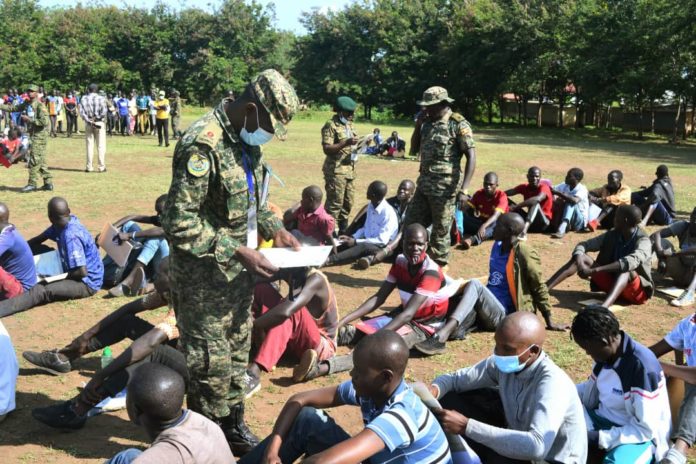
Over 1000 recruited as UPDF concludes exercise in Eastern Region

Over 1000 recruited as UPDF concludes exercise in Eastern Region

Over 1000 able bodied Local Defence Personnel (LDP) have been recruited by Uganda Peoples’ Defence Forces (UPDF) teams in greater Eastern Uganda.

The UPDF’s Chieftaincy of Training and Recruitment (CTR) organized and tasked two teams which traversed the greater Eastern region as part of the nationwide enlistment exercise for 2022.

The Mbale Resident City Commissioner (RCC) and Chairperson City Security Committee, Mr. Washaki Ahmada, confirmed that the exercise was successful.

“The people in the city are grateful to the President of the Republic of Uganda and Commander in Chief of the UPDF, HE Gen Yoweri K Museveni for ensuring that young people join the forces on a quota basis,” remarked the RCC.

The RCC noted that there was an influx of youths who wanted to join but due to the limited quota allocated to the city and district; many did not succeed, an indication that people love and have confidence in the UPDF.

Mr. Washaki stressed that the team exhibited professionalism, integrity, discipline and transparency during the whole recruitment exercise held at Mbale (Maluku) district Headquarter grounds.

Addressing the successful recruits at Kapchorwa District headquarters, the Deputy Commander of the 3 Infantry Division Brig Gen David Mugisha and team four leader congratulated the recruits.

“I congratulate and welcome you to join the UPDF. You have exhibited discipline and endurance throughout the recruitment process,” remarked Brig Gen Mugisha.

“UPDF strength is hinged on core values of discipline, good fighting spirit and professionalism. I urge you to maintain discipline and follow instructions in order to complete training, Brig Gen Mugisha told the recruits.

He also noted that the overall exercise was transparent, systematic and witnessed by leaders as bona fide youths from the respective districts were given priority and they made it to the final stage.

Brig Gen Mugisha commended district leaders and the media fraternity for their active participation in mobilizing recruits that resulted into overwhelming turn ups.

On her part, the District Chairperson Kapchorwa, Hon Chebet Everlyne Kubarika was pleased with opportunities available in the army. “I’m very grateful to the government of Uganda for giving our citizens an opportunity to serve in their nation’s forces,” she noted.

Hon Kubarika warned successful candidates to desist from desertion after training and serve their country.

The District Chairperson Kotido, Hon Komol Lotee, aka ‘kacheri boy’ noted that the exercise was free and fair. “The big turn up, leaders’ participation and well coordination gave confidence and trust in the exercise,” he observed.

Hon Komol also saluted the army leadership for being committed towards the continuous pacification of Karamoja sub-region. He said Karamoja leaders will always stand together with the joint security forces in the pursuit for peace and security.

Overall, the two teams which commenced the exercise on 18-25 June 2022, recruited 1920 adult qualified youths for Local Defence Personnel (LDP) category, 383 of whom are females.

Team four which was under the command of Brig Gen David Mugisha, traversed Karamoja and Sebei sub regions, recruiting from 12 districts in 5 centers within 8 days.

Team 5 was led by Col Benard Tuhame, 3 Division Operations and Training Officer (DOTO), conducted the exercise in two cities, 22 districts of Bukedi, Bugisu and Teso Sub regions with 6 centers.

According to the team leaders, the recruitment objective and target was attained with no major challenges encountered.

All successful recruits were transferred to Kaweweta Recruits Training School (KRTS), in Nakaseke District as they wait for the official commencement of basic training to fulfill the military requirement.

Stories Continues after ad

Businessman Shumuk in trouble over election petition costs

Shumuk

Controversial city businessman Mukesh Shukla Shumuk is in trouble over failure to pay costs arising from his election petition against National Unity Platform (NUP) spokesperson Joel Ssenyonyi.

Mukesh, who contested for the Nakawa West parliamentary seat and lost, could face jail after Joel Ssenyonyi’s lawyers, and the Electoral Commission (EC) demanded that he pays Shs570 million as Court costs resulting from the election petition he lost.

High Court Civil Division Deputy Registrar Jameson Karemani has now summoned Mukesh to show cause why he shouldn’t be jailed for failing to pay the said Court costs. He is required to appear before the court on July 12th, 2022.

Mukesh was ordered to pay the two respondents half of the costs in the Appeal case following the loss. Ssenyonyi’s lawyers of PACE Advocates demanded Shs230 million in costs for the two applications at High Court and the main petition as a whole. The lawyers claim that after taxing the Shs230m, they will remain with Shs81m.

Court agreed and endorsed their demand.

Sources reveal that both Ssenyonyi and the Electoral Commission will also file their bill of costs very soon and each is set to ask for Shs170 million.

It should be remembered that Court of Appeal presided over by Justice Geoffrey Kiryabwire, Justice Stephen Musota and Justice Christopher Gashirabake ordered Mukesh to pay the two respondents (EC and Ssenyonyi) half of their costs after losing his Appeal where he wanted Ssenyonyi’s victory canceled.

Justice Isaac Muwata of the High Court dismissed Mukesh’s petition at the High Court noting that even if he won the 8 polling stations where he claims that Ssenyonyi and the EC committed a lot of electoral offences, he wouldn’t have won the race.

Mukesh dragged Ssenyonyi to court after losing the Nakawa West Parliamentary elections on January 14th, 2021. Ssenyonyi who ran on NUP ticket won the polls with 30,847 votes. Mukesh came sixth after polling 806 votes.

Mukesh accused the respondents of committing offences of ballot stuffing by changing the electoral results and failing to sign the declaration of results forms with support from the Electoral Commission.

During the process of hearing his petition, Mukesh filed a number of applications which were also dismissed with costs.

Stories Continues after ad

Court dismisses MPs Ssegirinya and Ssewanyana’s bail appeal

MPs Ssegirinya and Ssewanyana

The Court of Appeal has dismissed the bail appeal for Kawempe North MP Muhammad Ssegirinya and Makindye West Legislator Allan Sewanyana.

Earlier this month, the legislators through their lawyers led by the Lord Mayor Erias Lukwago appealed against the High Court ruling denying them bail. They contended that they have been on remand for over Six months without trial and therefore they should be released on bail. Citing medical complications, the two said that they were mishandled before and during arrest and they want to access thorough treatment.

In their ruling, a panel of  judges led by Barishaki Cheborion, Christopher Madram and Eva Luswata  said  Court of Appeal has no jurisdiction to make a decision on a matter that has not been concluded by the lower courts as the accused are neither sentenced nor convicted of the pressed criminal charges.

“Court can only rule on the right of appeal where there is conviction or sentence. It is incumbent upon the high court to fix the trial date. We direct that the files of the accused persons are placed before the principal judge of the High Court to ensure a speedy trial,” Court ruled.

The judges further ruled the appeal is incompetent on grounds raised by state prosecution that the suspects didn’t exhaust all possible avenues for bail.

Following court ruling, the suspects’ lawyers led by Samuel Muyizi vowed to petition the Constitutional Court for interpretation.

The two MPs and four others suspects who have been on remand for over six months are accused of terrorism contrary to section 7 (1) and (2) (d) and (d) of the Anti-Terrorism Act 2002 in count one, aiding and abetting terrorism contrary to section 8 of the Anti-Terrorism Act 2002 in count two, murder contrary to sections 188 and 189 of the Penal code Act in Counts three, four, five and attempted murder contrary to section 204 (a) of the Penal code Act.

Prosecution states that the two legislators together with other suspects -some on remand and others still at large on August, 2, 2021 allegedly killed Joseph Bwanika, a resident of Kisekka Village in Kisekka Sub County in Lwengo District.

It is further alleged that on August 23 at Ssettaala Village in Masaka City, the MPs and their co-accused persons killed Francis Mugerwa Kiiza aka Nswa, Sulaiman Kakooza and Tadeo Kiyimba .

The MPs are also accused of attempting to kill Ronald Ssebyoto, a resident of the same area. They are also accused of financing the killings in the Greater Masaka region.

Stories Continues after ad

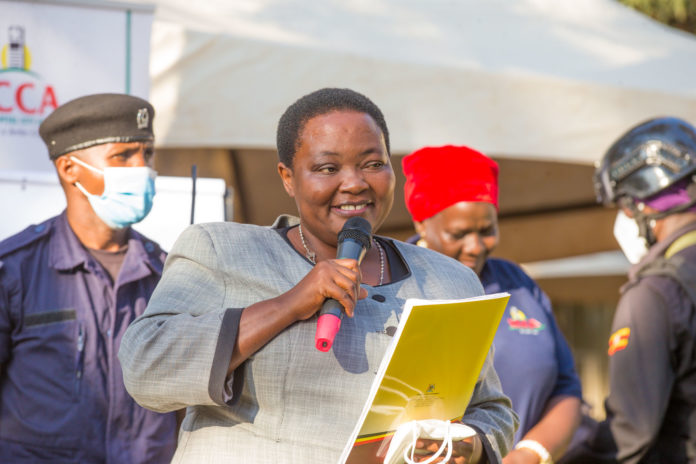
Gov’t considering special attention for Kampala under PDM

Prime Minister of Uganda, Robinah Nabbanja

The Prime Minister of Uganda, Robinah Nabbanja has affirmed to the people of Kampala that the government is considering some special affirmative action for them under the Parish Development Model (PDM) strategy.

Speaking to residents of Rubaga Division, Nabbanja said the implementation of PDM in Kampala and other urban centers would require special attention because of the unique characteristics of these areas.

“Kampala is highly populated, parishes have so many households and people are complaining that the money may not be enough for each parish. We have discussed this in the cabinet and we will get you special affirmative action. You shouldn’t fear,” Nabbanja said.

The Prime Minister said this while in Rubaga division where she was part of the ministerial tours for the popularisation of PDM in Kampala City.

“Every household will be getting Shs1 million; not less, not more. That is the amount the president ordered, let no one confuse you,” Nabbanja said.

She advised Kampala Capital City Authority (KCCA) to work with Uganda Bureau of Statistics (UBOS) to ensure there is no duplication of beneficiaries.

“We don’t want to have scenarios where people in Kampala are receiving money twice. Someone might register in Bwaise then Kasubi and benefit from all. Everyone should register with their NIN, so that we can easily access them,” Nabbanja said.

She revealed that she would make sure Kampala gets a special online dashboard to make it easy to sieve double dealers.

“Kampala has a transient population; people are always shifting but I will ask for a different dashboard for Kampala to help monitor and keep track of people who are shifting so that they don’t benefit twice or miss out,” Nabbanja said.

KCCA started the ministerial sensitization tours on Tuesday in Central and Rubaga Divisions. On Wednesday, the team will be in the Makindye and Nakawa divisions. Thursday they will be in Kawempe and the grand finale on Saturday at City Hall.

The Minister for Presidency Milly Babalanda and State Minister for Kampala Metropolitan Affairs Kabuye Kyofatogabye attended the event and gave insightful deliberations.

“The money is available but we want to first sensitise you on how best to utilize it for better returns. You remember the president used to give handouts to the people but there was no transformation. Money is now channeled through the PDM,” Babalanda said.

Kyofatogabye asked the people of Kampala to ensure their enterprises are legal, operating in gazzetted places and along the agricultural value chain.

Dorothy Kisaka the KCCA Executive Director challenged city dwellers to fully embrace PDM as a way to transform their lives and get out of poverty.

“PDM is just beginning; it is taking off; don’t stay on the side watching and say that you are not involved. This is a new government strategy and we are all learning. In Kampala, our 99 parishes are our 99 opportunities. Let us all board this moving truck called PDM,” Kisaka said.

She called on leaders to ensure the governance of PDM is working well.

Godfrey Kiwanda the NRM Vice Chairperson Central asked Politicians not to politicise the program. “This program is not for NRM alone but for every Ugandan,” Kiwanda said.

Kampala has 99 parishes that are set to benefit from PDM. The next financial year, the government has earmarked to fund each of the parishes with Sh100m, to capitalize the different enterprises, as a tool to move 39% of the population from subsistence to money economy.

Stories Continues after ad

Cryptocurrency regulation in Uganda: What you need to know

Crypto

By: Yellow Card Financial

“This is to advise that Bank of Uganda has not licensed any institution to sell cryptocurrencies or to facilitate the trade in crypto-currencies. This is in line with the official government position as communicated by the Ministry of Finance, Planning and Economic Development in October 2019,” wrote Andrew Kawere, the acting director of the national payments system in a circular dated April 29. This was written in a bid to curb the growth in popularity of crypto currencies in the country.

The stern warning was to push payment providers to stop dealing with crypto exchanges as a way to slow down adoption by the people. The claim is that these currencies have exposed people to risky investments and Ponzi schemes.

What is Crypto?

A cryptocurrency, crypto-currency, crypto, or coin is a digital currency designed to work as a medium of exchange through a computer network that is not reliant on any central authority, such as a government or bank, to uphold or maintain it. 

Cryptocurrencies instead use a decentralized system to record transactions and issue new units.

All transactions are verified and recorded on a secure digital ledger called a blockchain.

Cryptocurrencies have been around since 2009 when Bitcoin, the first and most popular one was founded. Many other cryptocurrencies have since been created with over 18,000 in existence as of March 2022.

Other popular ones include Ethereum, Litecoin and Ripple. Each currency has its strengths and weaknesses regarding use cases. Some are great because they are widely accepted and others sit on great blockchains (the ledger I mentioned earlier) that can be used for contracts, deeds, etc.

Is Crypto Safe?

A cryptocurrency is simply a medium of exchange just like any other physical currency (money), precious metals like gold and silver or even cowry shells. It is important that one first and foremost understands this.
It is, therefore, prone to the same issues the other mediums have, to varying degrees of course.

Like money, it can gain or lose value, it can be stolen, it can facilitate illegal activity, and fake ones also do exist (One coin is a great example of a fake cryptocurrency). So the same care must be taken when buying and indeed securing your cryptocurrency that you would for US dollars, Euros or Gold.

What about Crypto Scams?

There are two main ways a crypto scam can happen.

The first is one where an alleged cryptocurrency is sold to people and the sellers who are often the creators disappear. This happened with One coin. It operated more like a Ponzi scheme than an actual currency. A US warrant was filed for the arrest of the founder, Ruja Ignatova, but she is still at large and her whereabouts are unknown.

The second is a scam that is facilitated by a known and widely accepted cryptocurrency for example Bitcoin or USDT. Without the existence of crypto, these would’ve still taken place but using fiat currencies as the medium of exchange. We, therefore wouldn’t really call this a crypto scam but we added it because crypto is the medium of choice. Many Ponzi schemes today use USDT because of its stability. A recent scheme was by a company called DF Company. Yes, the “company” is in the name. Users bought USDT and sent it to DF’s wallet and were promised high returns which as is often the case, they received but only for a while. A few weeks ago, the website, social media accounts and chat groups suddenly disappeared.

So yeah, just as is the case with fiat currencies, scams will always exist. We just need to be vigilant to avoid becoming victims.

Crypto in Uganda

As is the case all over the world, Ugandans have elected not to be left behind by the crypto boom. According to Reuters, Ugandans have received cryptocurrency worth the equivalent of about $4.8 billion between March 2019 and March 2022. That’s about 13% of GDP.

This surge in crypto adoption coupled with the inevitable scams that followed caught the attention of the Ministry of Finance and the central bank. They went ahead to warn of the dangers of crypto in a public statement.

Recently, the central bank took it a notch higher by restricting the ability to buy crypto via mobile money. It stopped payment aggregators from transacting with crypto exchanges. This they hope, will throttle its adoption by Ugandans hence reducing exposure to the risks involved.

Our view is a little different. As crypto continues its inevitable rise globally, Ugandans won’t want to miss out on the opportunities it brings. This means that the uptake will continue despite the restrictions. Currently, Banks are still allowed to transact with crypto exchanges and we reckon the majority of investors will shift to them.

It is also still possible to buy cryptocurrencies via exchanges that operate in other countries. The global and decentralised nature of these currencies means that they operate globally without restrictions.

A worry of the Ugandan government as well as others around the world is the use of crypto to facilitate criminal and terrorist activity. The anonymous nature and ease of transfer globally make it a perfect way to transfer money around the world. The crackdown however will push many of its illicit users further underground. Mobile money and bank accounts present a good opportunity for some monitoring and surveillance of the movement of funds to and from crypto exchanges. From the interview we had with Abel Namureba, the country manager of Yellow Card, the crackdown on these mediums will make it much more difficult to monitor and trace funds that are moved through crypto as they will go through multiple nodes abroad before they arrive in the country.

In the end, scams will always exist regardless of the modus operandi. It is up to us to educate ourselves and keep ahead. Check out Yellow Card’s crypto academy for an in-depth understanding of Cryptocurrency, the blockchain, as well as financial literacy.    

Stories Continues after ad

Two pastors, 3 bar owners remanded by Court over noise pollution

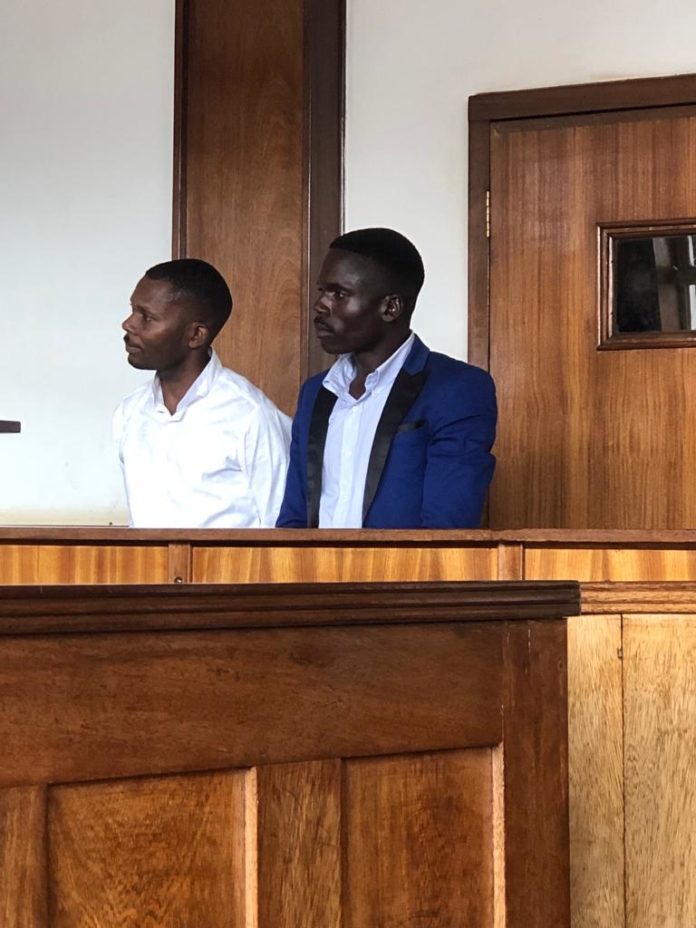
Mukisa Edward and Ssebunje Herman were arrested for running, Nkumba Miracle Centre

The National Environment Management Authority (NEMA) has intensified operations to deal with rampant noise pollution in the country. In the latest exercise that commenced on Friday June 24, 2022 six people were arrested and taken to court for prosecution on Tuesday June 28, 2022.

Two suspects Mukisa Edward and Ssebunje Herman were arrested for running, Nkumba Miracle Centre, that is notorious for noise pollution in spite of several warnings from NEMA to control the noise from their premises and continuous complaints from the community in Bendegere LC1, Katabi sub-county, Wakiso district.

The two have been charged with failure to undertake an environmental and social impact assessment; engaging in activities that result in or aggravate pollution; discharging & emitting pollutants into the environment; failure to implement regulatory measures, orders, notices and environmental easements as required by the National Environment Act No. 5 of 2019.

They have been remanded until July 12, 2022 when their bail application will be heard.

In a separate case, the proprietors of Hide Out Bar and Lounge in Kololo, Sisay Beruke, Tigsti Melkamu and Ssetumba Steven, have also been remanded for two weeks over noise pollution.

In another incident Yasin Abdallah was arrested for operating an illegal metal fabrication workshop, infamous for inconveniencing the community at Kazo-Lugoba Parish, Nansana Municipality; and failure to comply with a stop order. He pleaded guilty to the charges in court and was remanded until June 30, 2022 when the matter shall come up for hearing and bail application.

Pollution of the environment (noise or otherwise) is a criminal offence as stipulated in Section 163 of the National Environment Act, No.5 of 2019. A person who commits a pollution related offence is liable, on conviction, to a fine not exceeding fifty thousand currency points or imprisonment not exceeding fifteen years, or both.

The law requires that establishments such as places of worship, recreational and production activities either submit project briefs or undertake environmental and social impact assessment to enable relevant authorities to guide their operations. This is in an effort to ensure that aspects of the environment, including noise, air and water pollution are not compromised.

NEMA urged the public to remain vigilant and report all cases of noise pollution. “We further urge local governments to only issue operational licenses to entities that have the structures, ability and technology to contain the sound emitted from their respective premises.”

Stories Continues after ad