Stanbic Bank
Stanbic Bank
22.1 C
Kampala
Stanbic Bank
Stanbic Bank
Home Blog Page 605

Professor Denis Byarugaba discusses ‘How to prevent the next Pandemic’

Professor Denis Byarugaba

“Prevention of the next pandemic, whether a recurrence of Covid-19 or a new outbreak, will require significant investment from the Finance and Banking sector in order to minimize the negative economic and human effects,” remarked Professor Denis Byarugaba, Makerere University Professor of Microbiology and member of the Governing Council of Uganda National Academy of Sciences, during the ACI Uganda Dealers’ meeting hosted by dfcu Bank at Golden Tulip Hotel in Kampala.

ACI Uganda is a member-driven and policy-focused industry body that represents participants in Uganda’s financial markets. Currently ACI Uganda’s membership is composed of industry participants from the treasury departments of the 24 licensed commercial banks. It is affiliated to ACI Financial Markets Association (ACIFMA) and aims to promote greater cooperation between regulators and financial markets participants, build Professional networks, improve technical skills and knowledge among dealers, protect and improve the reputation of all financial markets participants, and support by giving back to communities through sustainable corporate social responsibility programmes.

Speaking on the topic ‘How to Prevent the Next Pandemic’, Professor Byarugaba noted that“We will need to scale up investment in different aspects of the health care value chain such as human capital to man surveillance centres and manage patients. We also need to invest in the Public Health Care system to ensure the availability of ambulances, supplies, protective equipment, blood, and other important requirements. These investments require partnerships between the public and the private sector and this is how you as financial market players come in.”

Asked how to overcome the hesitancy that surrounds uptake of the virus, Byarugaba noted that vaccines go through a very rigorous process to be approved for human use,even in emergency situations. Healso called upon Ugandans to utilize social media for good instead of discouraging vaccine usage.

dfcu Bank’sHead of Financial Markets, Julius Kateera highlighted some of the effects that Covid-19 has had on the population, such as increased extreme poverty and increased unemployment.

“The International Monetary Fund expects to raise its forecast that the COVID-19 pandemic will cost the global economy $12.5 trillion through 2024. We therefore felt it prudent to organize an engagement to discuss where the health and banking sectors intersect in the efforts to prevent or prepare for the next pandemic,” he said.

“History has shown us that pandemics have been a part of human existence. The only difference is the effect that they have, and the levels of preparation required to be able to survive them,” Kateera concluded.

Stories Continues after ad

NSSF supports local firms to increase their competitiveness

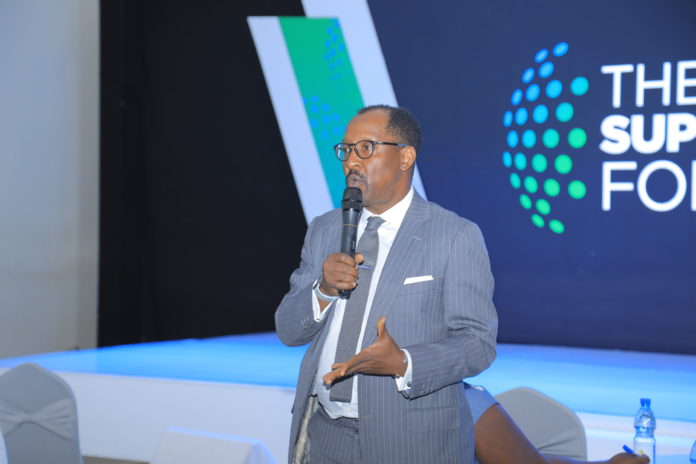
Richard Byarugaba, the NSSF Managing Director

The National Social Security Fund (NSSF) has put in place initiatives to support local firms’ capacity, growth and competitiveness for better business opportunities. The initiatives that are already in practice include, the NSSF Suppliers Forum, access to finance through advance payments for high value works, reserve of services, supplies or works to local firms in accordance with the PPDA guidelines as well as an innovation program dubbed the  Hi-innovator in partnership with Mastercard Foundation where  small and growing businesses receive entrepreneurial skills and funding of up to 30,000 USD.

Richard Byarugaba, the NSSF Managing Director, revealed this strategy at the 6th Annual NSSF Suppliers Forum, held at Mestil Hotel. The forum is a platform for NSSF’s current and prospective suppliers, procurement professionals and the business community to get the latest business opportunities from the Fund as well as best practices in procurement and supply chain management

“Our procurement report for the FY 2021/22 indicates that local firms receive 90% of business from the Fund albeit of low value while only 10 per cent goes to international firms,” Byarugaba said.

The low uptake of high value contracts by local firms was attributed to inadequate finances, low technological adoption, price fluctuations of materials and inadequate skills among others.

He advised local suppliers to develop long term business strategies that go beyond just participating in a tender, skilling workforce especially in emerging technologies and management of complex projects and establishing partnerships.

“In line with our10-year strategy, it is evident that the Fund needs more innovative solutions in growing the business, extending coverage across the country at a low cost and improving member experience. These are areas local firms should take advantage of,” Byarugaba added.

The Fund also unveiled the available business partnership opportunities for the next financial year 2022/23 where local firms could compete. These include opportunities in real estate, information technology systems, office equipment and motor vehicles.

Participants were also exposed to opportunities in the oil and gas sector.

Stories Continues after ad

Police arrest two suspects linked to Mukono supermarket robbery

The Flying Squad Unit and Mukono Police have in custody two suspects, highly linked to the aggravated robbery of Spice Supermarket, located Ku Ssatu, in Namubiru ward, Mukono Central Division in Mukono Municipality on the 25th June 2022.

The two suspects were sighted on the eve of the robbery, while drinking at Cloud 9 bar, near the supermarket. They include Mugalu William, a 24-year-old resident, of Nasuuti cell, Ntawo ward, Mukono Central and Mbogo Sam, a 23 year old, resident of Nasuuti cell, Ntawo ward, Mukono municipality. They were clearly identified by one of the witnesses who clearly saw them escaping from the scene.

Police Spokesperson Fred Enanga said: “We are now working towards the recovery of the gun and identifying other members of the gang, who appear to be an amateur group. Such groups are usually desperate, panicky more high risk and willing to use violence.”

“They shot a bullet through the computer, which injured Ssekandi Irene, through the stomach and exited from the back. We wish her quick recovery. A team of counsellors from CID Headquarters has been dispatched to offer counselling services to the victim.”

“Although attacks on supermarkets have not been so regular, we anticipate more retail crimes on supermarkets, mobile money points, retail shops, markets etc, which continue to be at risk, due to high levels of unemployment among the youth, use of drugs, change in criminal tactics, where robbers attack softer targets with lesser security, such as supermarkets and the opportunity of get-away. Other than guns, knives, machetes, screw drives and other sharp objects are used.”

“As the Joint Security Agencies, we have deployed more manpower both overt and covert in Mukono, to help dismantle the criminal gangs behind retail crimes. We also call upon the public to strengthen their neighbourhood watch programs and also boost security measures like connecting their alarms to police stations and deploying a sufficient number of private security guards.”

Stories Continues after ad

UNBS holds practical training on standards for the food & beverage sector

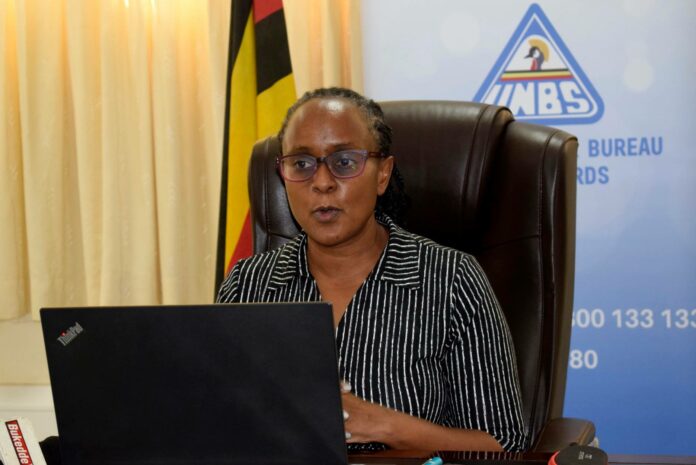
UNBS Deputy ED-Standards, Ms. Patricia Bageine Ejalu

Uganda National Bureau of Standards (UNBS) hosted the first-ever practical training on the implementation of standards.

The training, which was conducted in a factory setting at Negonja Organics Ltd, was focused on the importance of standards in the food sector, its impact on fair trade practice and consumer health protection, harmonization of food standards for import, export as well as domestic production and consumption. The hands-on session was organized to impart practical knowledge and skills by a local manufacturer who has succeeded in exporting the certified products to the US.

Speaking at the inaugural training, the Deputy Executive Director-Standards Ms. Patricia Ejalu reiterated the UNBS commitment to supporting the industry in implementing standards.

“This initiative is designed to develop and deliver specific practical skills to address the requirement for all manufacturers in the food and beverage sector to adhere to standards and there is no better way to learn than from one of your own in the same sector,” she said.

She added that manufacturers had consistently requested for similar trainings to get a better understanding of implementing standards in their processes.

The session took a closer look at the benefits of adhering to standards in the sector, as well as the journey Negonja Organics Ltd took to implement food related standards that require good manufacturing practices (GMP), good hygiene practices (GHP) and food handling processes and the right tools to deliver quality products successfully.

The proprietor of Negonja Organics, Mr. Stephen Barasa noted that standards had made his products relevant to the target market because UNBS has helped ensure that his products are of the highest quality to remain competitive.

“Certification of products is the only way to go if one wants to survive in the market. We could have had the mind-set that we were doing a job but we need the competent authority who is mandated to affirm that the quality we are claiming to produce is actually true,” Mr.Barasa said.

He further urged fellow manufacturers to make UNBS their ally in order to consistently deliver high quality products to their customers.

UNBS continues to provide capacity building for the industry to promote the relevant standards and ensure their implementation in order to boost business. 

Stories Continues after ad

Pesapal Uganda licensed by Bank of Uganda

Pursuant to the National Payments Systems Regulation, 2021, Pesapal Uganda has received a Payment System Operator license from the Bank of Uganda.

Pesapal has been at the forefront of the Digital Payments revolution in Africa for over a decade. By leveraging technology to make financial services affordable, convenient, and secure, Pesapal is empowering tens of thousands of merchants and millions of consumers in markets across Africa to thrive.

According to Pesapal Uganda Country Director Martin Barungi:  “At Pesapal, we give people and businesses better ways to pay and get paid. Now, with the Bank of Uganda’s regulatory greenlight, we will be able to hunker down in our continued effort to change the face of digital financial services in Uganda as a key stakeholder of its financial ecosystem.”

The authorization, he said, gives Pesapal a license to drive cashless transactions and related benefits, including financial inclusion and convenience, by simplifying the processing of payments and expanding how, what type and how fast businesses can get paid and access their funds.

“We are delighted to have received the license from Bank of Uganda as this development sets us on course to revolutionize the digital payment ecosystem with innovative, convenient and secure digital financial services,” Ms. Emmy Rono, Pesapal Uganda Country Manager noted.

“Consumers, in any context – shoppers, tourists, visitors, and businesses can make multi-currency transactions (UGX, USD etc.), from any scheme (Visa, Mastercard, American Express etc.) – either online, in a 3-D Secure environment, or in store, using the Pesapal POS machine, seamlessly.”

Pesapal’s vision is to Empower Africa to access affordable, convenient, and secure digital financial services that drive sustainable growth. We believe this formal foray into the Pearl of Africa, the source of the Nile, is a fitting step towards this future.

Stories Continues after ad

Wakiso Giants appoint John ‘Ayala’ Luyinda as Head Coach

John ‘Ayala’ Luyinda unveiled by Wakiso Giants

Uganda Premier League side Wakiso Giants have announced the appointment of John ‘Ayala’ Luyinda as their new Head Coach.

Luyinda signs a two year contract from next season until June 2024, with the option to extend for a further year.

Sula Kamoga, Chief Executive Officer, said: “The club has taken time to assess John Luyinda and we believe he has the necessary tools and skills that can help them prosper and excel. We continue to commit as we have always done to support him and the technical team in all ways.

“We were impressed with his commitment and vision he has for the club and despite being a young coach, he has garnered enough experience to steer the club to another level in terms of performance.”

John Luyinda said: “It’s a great honour and privilege to be appointed coach of this highly ambitious club and am ready for the huge challenge.

“In our conversation, I found that we share similar vision and the philosophy of the club especially from last season is one that I believe in as a coach and promise to work hard to develop a team that will be successful.”

Luyinda has worked with experienced Ugandan coaches like George Nsimbe, Mike Mutebi, Morley Byekwaso and Abdallah Mubiru in the capacity of assistant coach.

Stories Continues after ad

Gov’t explains why Kakwenza’s children have not been issued with passports

Simon Peter Mundeyi - Internal Affairs spokesperson

The Ministry of Internal Affairs has asked Ugandan Novelist Kakwenza Rukirabashaija’s children to pick their passports.

Last week, the human rights lawyer, Kakwenza Rukirabashaija petitioned Uganda Human Rights Commission (UHRC) claiming that his children were denied passports. Kakwenza said his children applied for passports on February 15, 2022, and did interviews on March 10.

He said there were numerous efforts to follow up on the application; however there have been no explanations for the delay by the passport office.

The three children include; Rutakirwa Mugabe Kakwenza (2 years), Siima Nyinaboona Kakwenza (4 years) and Nina Kayitesti Kakwenza (9 years).

Simon Peter Mundeyi said Kakwenza’s children are Ugandans therefore they have a right to apply for and get passports.

“They applied at the time, when we were doing a system upgrade and cut the production of passports by 60%. This process ended two to three weeks back, and we started clearing the backlog. The children’s passports are now ready for pick up in Kyambogo. We don’t involve politics in our work at the passport office. I want to make that very clear,” he said.

Kakwenza is currently in Germany where he fled while on bail. He was arrested in December 2021 after a twitter feud with supporters of UPDF Land forces commander Muhoozi Kainerugaba. Kakwenza averred that Muhoozi’s supporters were allegedly bullying him for criticizing President Yoweri Museveni.

Kakwenza is charged with two counts of offensive communication, contrary to Section 25 of the computer misuse act 2011. The Lawyer pleaded not guilty and subsequently remanded to Kitalya prison till 21st January 2022. He was on 25th January 2022 granted Shs 500,000 cash bail as his Sureties were ordered to pay 10mshs noncash. He on February 9, 2022 fled into exile.

Stories Continues after ad

Driver commits suicide after Minister Amongi withdrawing ministry car

PLEASE LEAVE NSSF ISSUES TO US: Fund board tells Minister Betty Amongi

Gerald Omiat, a driver attached to the Ministry of Gender, Labour and Social Development committed suicide after Minister Betty Amongi withdrew a car from him.

The deceased was a driver attached to Uganda Women Entrepreneurship Programme (UWEP) an initiative of the Government of Uganda that is aimed at improving access to financial services for women and equipping them with skills for enterprise growth, value addition and marketing of their products and services.

“Omiat died on June 7, 2022 after committing suicide at his home located in Kasangati along Gayaza road,” the Memo reads in part.

The deceased was laid to rest on June 9, 2022 at his ancestral home in Kokong village, Ngora district.

According to a source, the minister has written to over 200 employees under the youth and women programs terminating their contracts.

Stories Continues after ad

Uganda contributes nearly Shs37.4bn towards South-South Cooperation project

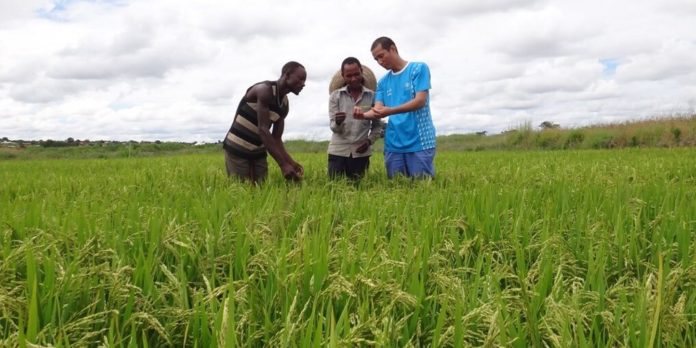
Uganda is contributing nearly $10 million (Shs37.4 billion) to the latest phase of a South-South Cooperation project focused on crop and animal production with the Food and Agriculture Organization of the United Nations (FAO) and the Chinese government after the first two phases yielded dramatic results, including a quadrupling of rice production per hectare.

In one of the most significant contributions of its kind from a beneficiary country under the initiative, the Ugandan government is putting in $9,623,703 through a Unilateral Trust Fund (UTF). This comes in addition to $2,389,138 contributed by China to Phase III of the project through the FAO-China South-South Cooperation (SSC) Programme Trust Fund.

Under an agreement signed in Kampala by FAO Representative Antonio Querido and Uganda’s Finance Minister Matia Kasaijia, the Uganda UTF will be used to support overall implementation of Phase III of the project. It will focus on four areas, namely: 1) establishment of an integrated technology transfer base; 2) development of high yielding schemes for rice and foxtail millet; 3) support for livestock improvement programmes; and 4) development of the aquaculture value chain.

“The Uganda Trust Fund contribution to Phase III of the SSC project marks a strong endorsement of the significant impact it has already had and a resounding vote of confidence in its potential for continuing improvements to the lives and livelihoods of Ugandan farmers and those who depend on them,” Querido said.

The support will directly reach a minimum of 9,600 farmers, of whom at least 30 percent will be women, as well as provide training for 200 technical officers in Uganda and China.

China’s technical assistance to Uganda under Phases I and II has already brought significant results, addressing the East African country’s longstanding issues of poor agricultural productivity.

One project area saw a fourfold increase in rice production per hectare, while in other areas, milk production increased from 2 to 7 litres per cow per day. More than 3 000 Ugandan farmers and 80 government staff have been trained, while high-quality, low-cost fish feed techniques have increased aquaculture production.

Knowledge transfer at the heart of the collaboration

Through the initial two Phases of the FAO-China SSC Programme, 47 Chinese experts and technicians were deployed in Uganda over a two-year period, where they helped to improve technologies used to produce rice, foxtail millet, maize, grapes, apples and cherry tomatoes, as well as animal reproduction including goats, pigs, sheep and in fisheries. Projects also focused on mechanization, agro-processing and value-addition.

Study tours to China for high-level Ugandan agricultural officials and technicians have helped to build capacity, and the Programme has directly targeted female agriculturists, helping increase income and improve employment, nutrition and livelihood of thousands of farmers in Uganda.

Phases I and II were carried out under a cost-sharing arrangement between the Governments of China and Uganda and FAO. The government of China provided financial and technical resources, while the government of Uganda provided in-kind contributions, including lodging, transportation, medical services and health insurance for the Chinese staff. FAO provided technical support and backstopping, as well as project supervision and monitoring.

The FAO-China SSC Programme was established in 2009 with a USD 30 million contribution from China, followed by two further USD 50 million pledges in 2014 and 2020 respectively. The Programme has seen a total of 25 national, regional, inter-regional and global projects implemented to support agricultural development and food security, reaching more than 100 000 direct beneficiaries and several hundred thousand indirect beneficiaries at grassroots level in rural areas. Chinese experts fielded in host countries have transferred practical and adaptable technologies by providing demand-driven demonstrations and training in collaboration with local counterparts.

FAO’s role in South-South and Triangular Cooperation

FAO’s successful implementation of South-South and Triangular Cooperation (SSTC) in many countries has contributed to increased food security, especially through the improvement of agricultural productivity, diversification of food crops, small animal and fish production, and rural incomes.

Over the past two decades, $435 million has been invested in SSTC projects and activities.

Stories Continues after ad

Police applauds Coca-Cola for its people centered agenda

Handover of items

Senior Superintendent of Police (SSP) Emillian Kayima has praised Coca-Cola Beverages Africa in Uganda for being a responsible corporate citizen, following the company’s donation of 71 beds and 67 mattresses to Uganda Police Force regional offices in Mukono.

As a kind gesture, the Uganda Police also donated 30 beds and 30 mattresses from their donation to a Child Care Centre in Nakisunga-Mukono District known as Heart of a Child.

“The Uganda Police Force fraternity is impressed and very grateful to Coca-Cola Beverages Uganda for this gesture of love and compassion. Thanks to the donation received today, we are also able to share with Heart of a Child, who are playing a major role in our community and taking care of children who would otherwise be helpless. The compassionate act of supporting those in need promotes peace and is a vivid expression of community involvement and awareness. This touches hearts and souls beyond the direct beneficiaries.  It speaks volumes about Coca-Cola Beverages Uganda, and the entire management team at the company,” he noted.

Kayima also applauded the company for being an active development partnerin driving community centered values and delivered the Uganda Police’s pledge to continue to serve Uganda with a sense of duty and responsibility.

“May the spirit of dedicated service, love and respect continue to shine over a wider spectrum of citizens, who in turn will gaze in admiration at the service of their sons and daughters in uniform,” he concluded.

Kirunda Magoola, the Public Affairs and Communication Director at Coca-Cola Beverages Africa reiterated the company’s commitment to “embedding our company’s ethos to refreshing Uganda every day, making our country a better place by helping to care for the people and communities we depend on to succeed.”

“We are in the business of people. Therefore when ‘our people’; employees, partners, suppliers, and community thrive, we also prosper as a business. We are always looking for ways to add value and promote inclusive development,” he noted, adding that “……One way we support communities is by empowering women and youth. Across local communities in our territories, we give back every year to help make them sustainable and more prosperous,” he concluded.

Coca-Cola Beverages Africa in Uganda has a long history of championing inclusive development across the communities in which it operates and across the country. Last month, the company donated 60 mattresses and 60 beds to St Charles Lwanga, a day care and rehabilitation center for children with severe cerebral palsy in Mukono.

Stories Continues after ad