Stanbic Bank
Stanbic Bank
26.7 C
Kampala
Stanbic Bank
Stanbic Bank
Home Blog Page 613

KCCA ED, AfDB East Africa Regional Chief discuss City roads

KCCA ED, Dorothy Kisaka hosted a delegation of the African Development Bank (AfDB), led by the Director General for the East Africa Region, Nnenna Lily Nwabufo

The Kampala Capital City Authority (KCCA) Executive Director, Dorothy Kisaka hosted a delegation of the African Development Bank (AfDB), led by the Director General for the East Africa Region, Nnenna Lily Nwabufo to discuss the Kampala City Roads Rehabilitation Project that is being funded by the bank.

In 2019, KCCA secured a loan worth $288 million from AfDB to reconstruct 69km of the city’s road network. This is expected to cover at least 15 dilapidated roads in Kampala.

During the meeting, Nwabufo assured KCCA that the bank is ready to work with the city’s leadership to address all the bottlenecks hampering the project and make sure it succeds.

“It is in our own interest to walk together with you to ensure this project succeeds. We know there are challenges but we are available to offer solutions,” Nwabufo said.

She called for the speedy implementation of the project that has delayed to take off and is currently behind schedule. The delays have been attributed to the effects of Covid19 and other challenges like land acquisition.

“These projects should not be delaying, if you are able to finish this project on time it will change the city and make it more liveable,” Nwabufo noted.

She is optimistic that by next year, the project will have taken off and some progress registered.

“We have seven months to resolve the issues delaying us so th eproject can kick off. I hope to visit some of these projects when I come back here next year,” Nwabufo stated.

The KCCA Executive Director, Kisaka appreciated the Director General for finding time to visit KCCA and offering her guidance on the project.

“I would like to express my deep sense of gratitude for the support we have received from AfDB to uplift the roads in Kampala,” Kisaka said.

She explained that the money from AfDB will enable KCCA improve the road network in the city and this will reduce travel inconveniences occasioned by potholed roads.

The road improvement project has been prepared and is ready for implementation having completed designs and tender documentation.

“There is progress being made and we promise that we shall get the required results,” Kisaka said.

Augustine Kpehe Ngafuan, the AfDB Uganda Country Director appreciated the cooperation between KCCA and the bank which he said has been excellent.

“It is good to follow up so that things are expedited. We haven’t achieved even 1% on this investment but we are hopeful it will take off,” Ngafuan said.

The Acting Director for Engineering and Technical Services at KCCA, Jacob Byamukama said the institution is ready to kickstart the project as soon as all the boxes are ticked.

“On some of the roads we secured land through consent but on others we have to get the right of way and this requires compensation. The good thing we have the budget to compensate and this is no longer a challenge,” Byamukama said.

KCCA has also made significant progress in as far as the recruitment of project staff is concerned.

“By end of this month we will be have recruited all the project staff and office space will be provided,” Byamukama said.

The news of this funding comes as a relief to city dwellers, who of recent are experiencing unprecedented increase in potholes and other defects that are mainly a result of old roads.

Some of the roads to be improved include; Kitezi, Salama, Sentema, Namuwongo, Luwafu, Lubega, Mutesa I, Kayemba, and Wamala roads.

Others are; Old Port Bell Road, Spring Road, Port Bell Road, Ssuna road, 7th Street, 8th Street, Mugema road, Masiro road.

Kyebando ring road, 5th Street and Kisasi road will also be worked on.

Stories Continues after ad

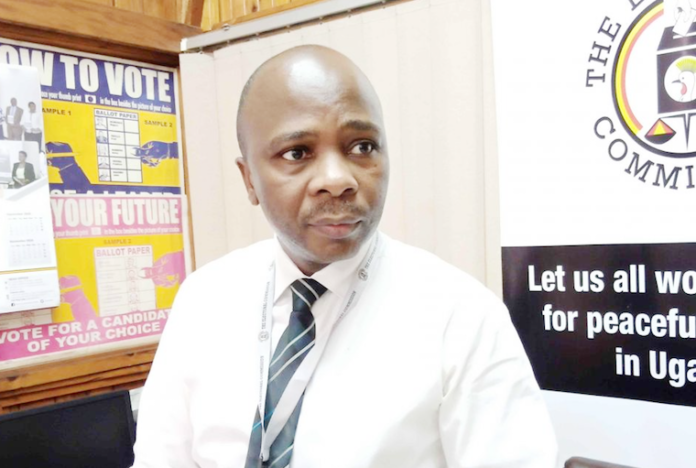
EC kicks off nomination of candidates for Omoro County by-election

Mr. Paul Bukenya - EC Spokesperson

The Electoral Commission has kicked off the two-day nomination exercise of candidates for the Omoro County parliamentary by-election.

“The Electoral Commission Uganda informs all stakeholders that Nominations of Candidates for the By-election of Member of Parliament, Omoro County are scheduled for Thursday 12th and Friday 13th May, 2022 at Omoro District Headquarters,” the spokesperson of EC Paul Bukenya said.

The inspection of Candidates’ nomination Papers and Lodging of complaints will be conducted from Saturday 14th until Thursday 19th, May, 2022.

“Meanwhile the Candidates meeting with the Returning Officer to harmonise campaign programmes and formation of Liason Committees is scheduled for this Saturday 14th, May, 2022,” Bukenya added.

Campaigns will run from  May 16 to 24.

The by-election will take place on May 26, 2022 at the designated polling stations in Omoro constituency, Omoro District.

The Omoro County seat fell vacant following the death of Speaker of Parliament Jacob L’Okori Oulanyah on 20th March 2022 in Seattle, USA.

Stories Continues after ad

A group of 18,000 blood donation contributes to stability of blood supply in South Korea

Blood shortages due to COVID-19 are prevalent across the world. In January, the American Red Cross declared “a national blood crisis” poising a great risk to patient care. In March, a US-based non-profit organization Memorial Blood Centers (MBC) declared the blood “emergency” due to a lack of the stock of type O blood at only 1-2 day supply and appealed to the public participation in a single blood donation that can save up to three lives.

According to the Red Cross, blood is used for a variety of purposes, including serious injuries caused by accidents, surgical procedures, anemia, childbirth, and cancer treatment. But since blood cannot be artificially produced, experts say the only solution to the blood supply lies in donating blood.

In South Korea, in cooperation with Heavenly Culture, World Peace and Restoration of Light (HWPL), 18,000 members of Shincheonji Church of Jesus and HWPL participated in blood donation for two weeks from April 18th. This number was recorded as the largest group blood donation in the country.

Namsun Cho, head of the Korean Red Cross Blood Services, said, “When the impact of the Omicron reached its peak, Shincheonji Church of Jesus launched a large scale of blood donation. It was like rain during a drought. We are surprised that the number of donors exceeded 6,000 in 3 days and more people participated. We appreciate their life-saving dedication.”

 “They did a really great job in the life-sharing movement. This scale is equivalent to one army corps donating blood for a year. The number of blood donors is nearly four times the number in a normal day, a great help in overcoming the current blood supply crisis,” said an official from the Blood Services.

 “We also appreciate the members of the Shincheonji Church of Jesus who participated in the nationwide plasma donation for the development of a treatment for COVID-19 back in 2020,” he added.

In South Korea, blood donation certificates are issued to blood donors. The certificate can be used when paying for a blood transfusion so that the transfusion fee to patients is deducted. All the donors of Shincheonji Church of Jesus and HWPL also donated their certificates to alleviate the financial burden of patients who need blood for treatment.

Shincheonji Church of Jesus, headquartered in Gwacheon, South Korea, is contributing to the communities through volunteer activities including plasma and blood donations, although the church suffered greatly from the initial stage of COVID-19 pandemic.

HWPL, headquartered in Seoul, South Korea, is a non-governmental organization under the UN Economic and Social Council and Department of Global Communication is carrying out long-term peace projects through education, relief, and youth empowerment based on solidarity with civil society and international organizations in 193 countries.

Stories Continues after ad

Miss Tourism Uganda launches 10th edition

Miss Tourism Uganda has launched its 10th edition which will lead into crowning of the 2022/2023 beauty queen. The campaign was launched last week at the Uganda Museum, Kampala.

Under the theme; Rethinking Tourism, Allan Kanyike the Chief Executive Officer (CEO) of Miss Tourism Uganda said this year’s events will focus on showcasing the achievements of Miss Tourism Uganda for the last 10 years.

He said the pageant has helped various contestants to put up some initiatives such as  the Rolex Festival which was started by Enid Mirembe the former Miss Tourism Busoga, Little Miss Uganda founded by Trisha Julian Kyomuhendo the former Miss Tourism Bunyoro and sundry.

He said for the last 10 years, they have been promoting tourism awareness in Uganda through pageantry and several other initiatives such as conservation, cultural preservation, fashion, Music and art in partnership with Uganda WildLife Education Center (UWEC), Uganda Tourism Board (UTB) and the Ministry of Tourism.

The search for beauty queens will be conducted out in different regions and later a grand finale at the Kampala Serena Hotel.

Initially, Miss Tourism started as a national team and the interest was overwhelming that in 2013, the founders acquired six clusters and the preceding year, they had grown to 12 clusters. It covers a range of activities which include; tree planting, cultural festival, road safety campaign, food tourism, engaging young girls and women in business, Fashion and music among others.

Mr. Ntambi Lyazi said through miss tourism, we have seen a lot of fashion innovations, reinterpretation of Ugandan culture, and other initiatives showcased all over the world. He urged all girls to take interest in the competition noting that it will help them to build self confidence.

“I applaud the CEO for pushing it forward. The initiative has really been good because we have not heard lousy news about the pageant,” he said.

Ms. Trisha Julian Kyomuhendo, the founder of Little Miss urged girls to fight for the space in this year’s edition. She said the pageant is not about beauty, bums but brains and gaining self confidence among girls.

 Susan Kahunde Adyeri, the reigning Miss Tourism Uganda from Toro Region applauded Miss Tourism noting that it has given her platform and urged other girls to follow suit. She is a former beauty pageant queen of Kyebambe girl’s school Fort portal and Miss Tourism Toro Region.

Stories Continues after ad

Africa’s Rare Earth Element Opportunity

By Patrick Prestele

Africa is well-endowed with Critical Raw Materials (CRM) which are of essential importance for not only the energy transition but also the electric vehicle (EV) market and other tech-related industries. These CRMs present in Africa include, among others, platinum-group metals (PGM) as well as rare-earth elements (REE).

REEs are becoming increasingly sought after on a global scale as they are crucial in the manufacturing of components in renewable technologies, EVs as well as superconductors. REEs have been in short-supply for some time now with supply expected to be even more tight since Russia’s invasion of Ukraine and the subsequent embargo of the Western world on Russia’s commodities.

Africa has the opportunity to emerge as a major REE production region, especially driven by the demand for REE and other metals required for new technologies in renewables and EVs. The continent is home to several REE deposits, especially in Eastern and Southern African countries such as Burundi, Kenya, Madagascar, Malawi, Mozambique, South Africa, Tanzania, Zambia, and Zimbabwe. However, despite this great opportunity, Africa has not yet progressed beyond the stage of potential assessment. Ongoing mining activities are limited to Burundi (Gakara Rare Earth Project), with the Steenkampskraal deposits in South Africa having nearly completed the construction of necessary infrastructure and expects the start of operations soon.

Other notable projects at different stages in Africa include Angola (Longonjo), Namibia (Lofdal), Madagascar (Tatalus), Malawi (Kangankunde) Mozambique (Xiluvo), South Africa (Glenover and Phalaborwa), Tanzania (Ngualla) and Uganda (Makuutu). While the potential for REE extraction in Africa is high, the development of these projects is hindered by high costs, the need for investment, as well as lacking policies and regulations, and environmental and social aspects that need to be considered. African governments need to subsidise the mining of REEs to enable the markets to compete globally, especially with China.

The mine contains all fifteen (15) rare earths, most notably it contains those Rare Earth Oxides (REO) required in the manufacturing of Wind and EVs technologies. The resource includes 15,630 tons of neodymium, 4,459 tons of praseodymium, 867 tons of dysprosium, and 182 tons of terbium with a combined grade of 3.49%, which is higher than the average total rare earth grade of between 1-3% found in most other in-situ grade deposits. The REO economic value is displayed in the below graph (Figure 2).

In most cases, as it is with the Steenkampskraal deposits, the processing stage ends after beneficiating the REOs. The actual problem remains in the absence of a robust and fully integrated value chain with sufficient capacity to turn the REE ore into valuable end-products such as solar PV panels, wind turbines, or EV engines. This vertical integration is not only limited to the actual mining and primary beneficiation of REEs but also needs to encompass the separation and purification of the individual REO and further refining to meet the specific downstream applications.

China is the only country that has achieved this vertical integration and therefore holds control of the market. While it may be difficult for South Africa, and even more so for other sub-Saharan African countries, to set up an entire value chain, it is possible for the nations to integrate parts of the value chain within the African borders, especially given the trade agreements in place between the African nations.

REE mining is characterised by potentially severe environmental impacts, especially if the extraction and downstream refining produces radioactive waste. This is where in-depth, detailed, and articulate legislation, policies, and regulations need to come into play, as well as proper waste disposal plans. Alternatives include recycling of REEs obtained from e-waste, improvements to the economics of processing existing sources as well as identification of new uses for co- or by-products such as RE substitution.

Africa is often the target of e-waste from the developed world, hidden under the label of ‘donations’. By setting up proper recycling facilities capable of extracting not only REEs but also other abundant precious metals (Ag, Au, Pd, Pt, etc.), the region could considerably benefit from the economic opportunity while simultaneously limiting environmental and social harm.

In summary, Africa has the opportunity to become a major supplier of high-grade REEs to the rest of the world. Through onsite beneficiation, floatation, and subsequent hydrometallurgical processes at the mines, refined metal REOs can be supplied to one central facility in an industrially developed location with further downstream production possibilities as well as export opportunities.

This requires collaboration between African mining companies, support from the government, waste storage and treatment facilities, the creation of tax incentives to attract the private sector as well as international export trade agreements and off-taker markets. The opportunity for Africa is there, it just needs to be taken advantage of.

Source: Frost & Sullivan, ISPI, Steenkampskraal Mine, UNCTAD, Mrdata, National Science & Technology Forum

Stories Continues after ad

Dfcu’s recent financials show a bank in crisis after taking over Crane Bank assets

dfcu bank

DFCU Bank was one of the first banks to release results for the year ending December 31, 2021 showing that its profits had shrunk by a significant 45.7% to Shs13.2 billion from Shs24.3 billion in 2020, sending shockwaves amongst its major shareholders.

The bank also reported Shs313 billion decline in customer deposits as they reduced from Shs2, 595.3 billion in 2020 to Shs2, 282.2 billion in 2021. “When customers deposits, reduce, it means many of them are running form the bank,” this should be investigate,” said a banker in Kampala.

The bank’s loans dropped by 15% from Shs1,775.3 billion to Shs1,508.4 billion, affecting. The value of total assets. Lending in any commercial bank, analysts say, comprises about 50% of the total assets, with the banker who preferred to remain anonymous saying that it is bad business when a bank fails to give out loans or reduce.

Remember that DFCU which took over Crane Bank assets in January 2015 reported impressive figures during half of that year. Now just after five year, the financial institution reports that its total assets reduced by 10.2% from Shs3, 539.4 billion to Shs3,177.6 billion. What could be the problem with the managers at the bank?

The banker continued that dfcu relied so much on the  assets of Crane Bank, acquired cheaply, and failed to grow them. “You equate that to scenario when you are given free things, you hardly work on your own,” he said.

Even though total income had increased by 8.5% from Shs415.3 billion to Shs450.6 billion, dfcu’S expenditures grew faster than income by 15% from Shs382.7 billion in 2020 to Shs440.1 billion. For the bank that has been in business for a long time, these figures are worrying.

The matter gone worse as Dfcu’s  Non-Performing Loans  went up 191% from Shs94 billion in 2020 to Shs274.1 billions is baffling because Bank of Uganda claimed handed over Crane Bank’s assets  to Dfcu on grounds that it was well organised businesswise.

One would if Dfcu is not trying to hide the assets it inherited from Crane Bank, after all they almost got Crane Bank by paying nothing. Remember Bank of Uganda asked for Shs200 billion from dfcu, paid in installments, yet the central bank claimed it had injected Shs478 billion in Crane Bank.

In October 2016 when BoU took over Crane Bank, it was the fifth largest bank by assets which were Shs1.72 trillion; fourth largest by lending about Shs842.4 billion; sixth largest by customer deposits of Shs1.13 trillion and seventh most profitable bank with Shs45.4 billion.

After taking over Crane Bank, dfcu’s total assets would grow significantly by 76.4% to Shs3.03 trillion, making dfcu the second-largest bank by assets after Stanbic Bank, which at the time had Shs5.4 trillion in assets. There was debate in the country among economists that indeed BoU closed Crane Bank without carefully analysing the challenges it faced at the time, notwithstanding the fact that BoU had prior taking over Crane Bank praised it as being financially sound and economically important to the country.

Upon taking over Crane Bank, dfcu’S Customer deposits also grew overnight to Shs1.99 trillion, again making the bank the second largest bank in deposits from the sixth position a year before. Dfcu also found itself the third largest lender with a Shs1.33 trillion loan book after inheriting loans of Crane Bank, its (dfcu) skyrocketing to about Shs128 billion from Shs45 billion in 2016.  The latest figures now show Crane Bank was a profitable business that gave dfcu a lifeline, that seems to be going away.

Customer numbers grew to more than 900,000, beating industry leader Stanbic with more than 665,000 customers (2016) but lower than Centenary Bank’s 1.48 million (2016). Dfcu also grew its countrywide coverage to a branch network of 67 and over 100 ATMs (2016: 43 branches, 42 ATMs). Majority of the branches were later vacated by dfcu after court ruled they belonged to another company but not Crane Bank. It was shocking to dfcu who had been asked to pay rent for the period they had occupied the branches.

Research and brokerage house, Crested Capital, said then that dfcu’s operating margins greatly improved across the board. Return on average assets increased 66.80% to 4.45% from 2.67% in 2016, return on average equity  rose by 40.17% to 27.34% compared to 19.50% in 2016 year. Dfcu’s cost to income also improved to 49.10% from 55.98% in 2016. Thanks to Crane Bank, which was a gift from BoU as it was offered and negotiations done on phone spearheded by then executive director for supervision Justine Bagyenda.

Dfcu had become a power in Uganda’s banking industry that has over 20 commercial banks and other financial institutions supervised by BoU.

Auditor General finds irregularities in closure of Crane Bank and others

But the Auditor General Stephen Muwanga after being asked to investigate the3 closure of seven commercial banks at different times, discovered that indeed BoU offcials did not follow guidelines and processes put in place to shut banks. COSASE led by MP Abdu Katuntu in 2019 discovered that indeed Crane Bank was illegally closed by BoU.

Meanwhile Dfcu which had been gifted Crane Bank was rushing into finding someone who could manage the acquired assets well as its former CEO Juma Kisaame was going away, having disappointed some of the dfcu shareholders in regard to Crane Bank purchase

The Mathias Katamba effect

Kisaame was replaced by Mathias Katamba from Housing Finance Bank (HFB), effective December 2018. His arrival has not done the bank good. Figures do not lie as the bank continues to decline in performace.

Since the arrival of Katamba, most of the senior executives have left, thus leaving Katamba with new people that he can not rely on.

Kate Kabaingi Kiiza the Chief Finance Officer and William Sekabembe the Executive Director remain at the bank still remain at the bank. But remember Sekabembe wanted to replace Kisaame but he was ignored. The working relationship between Katamba and Sekabembe, according to an analyst cannot be all that good, thus making the working environment not conducive. The reason the bank is not doing well, despite being seen as a topnotch bank.

As such by end of 2020, dfcu had lost its second-largest bank by assets position as it recaptured its fifth position it held in 2016. It was also no longer the second largest lender, settling for the third position. On the deposits front, it also ceded its second position to Centenary Bank, dropping two more positions into the fourth place. At the end of 2020 dfcu was also no longer the second most profitable bank and dropped out of the 5 most profitable banks to the seventh position, with Shs24 billion profits compared to the Shs127 billion post-Crane Bank takeover profit of 2017.

It asset performance for the the last five years has been minimal, from Shs3,030.6 billion in 2017, down by 4.7% to Shs2,888.3 billion in 2018; rising by 2.9% to Shs2,972 billion in 2019; again, rising by 19.1% to Shs3,539.4 billion in 2020, before slumping by 10.2% to Shs3,177.6 billion in 2021.

Further, overall, in these 5 years, Compounded Annual Growth Rate in assets has been a mere 1%. Yes, a mere 1%.

Big shareholders, according to insider sources, are waiting for the Annual General Meeting (AGM) to see how to revamp the struggling bank. Some top executives are likely to leave after the AGM.

Dfcu’s scandalous acquisition of Crane Bank put BoU in bad light to the extent that sections of the public began to question the integrity of the top managers. Former deputy governor Dr Louise Kasekende and Bagyenda left unceremoniously.

The sale of Crane Bank was a curse to   both BoU and dfcu more so that it brought about court cases that the majority owner of Crane Bank Sudhir Rupareria  won.

Stories Continues after ad

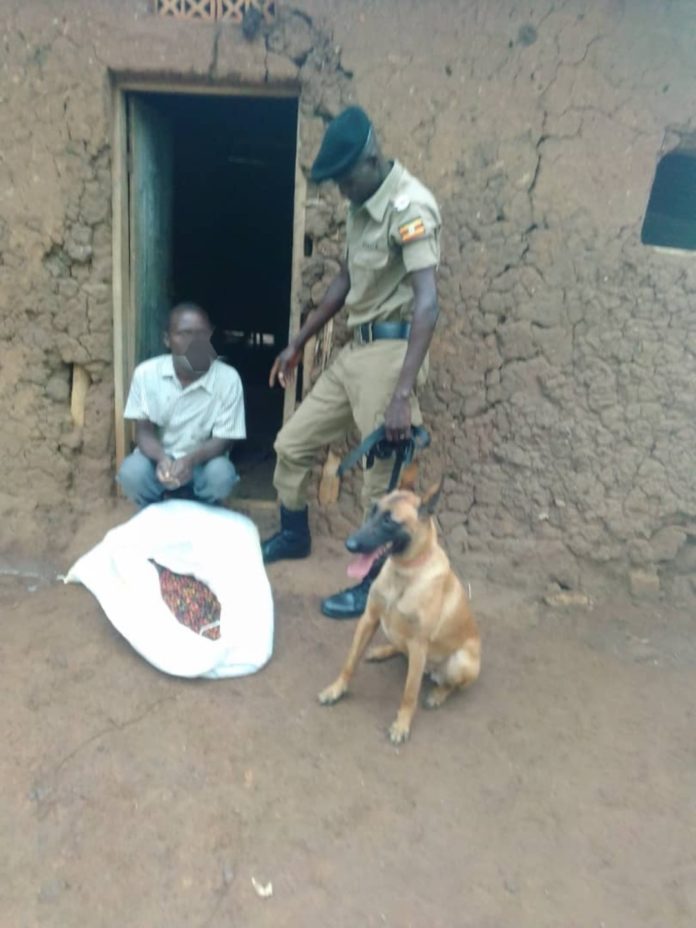
Police sniffer dogs aid arrest of 7 suspects

The police sniffer dogs have aided detectives to arrest suspects of robbery and recovery of all the stolen property. The incidents happened in different parts of the country.

In Serere district, the K9 visited a scene of burglary and theft of salon items after a case was reported at Kamod Police Station. Police dog NES was introduced to the scene, trailed for a distance of about half a kilometre and led officers to the house of one suspect identified as Eyoku Fustino.

After a thorough search of his premises, all items that had been stolen from the saloon were recovered.

In Kitgum, a Case of theft of battery was reported at CPS Kitgum Vide SD Ref: 15/10/05/2022. The team of police officers responded with Police dog Fox and tracked the suspects for about 500 meters away from the scene of the crime to the home of Oyet Bosco and Ojwee. On checking their house, the battery was found and the suspects were arrested.

Meanwhile, at Madudu Police Post in Mubende, a police dog Gaza responded to the theft of bananas from the garden. The dog tracked a suspect up to his residence and recovered the exhibit where they were hidden under the bed.

The suspect identified as Kimbogwe was arrested.

Still, in Mubende at Nabingola Police Post, a case of theft of coffee from the compound was registered.

The police dog Gaza was introduced at the scene and it tracked down a suspect identified as Kiwanuka up to inside his house where the exhibit was recovered.

In Kazo district, the police dog aided the arrest of three criminals who were involved in the theft of coffee, slot machines and matooke. All the suspects involved were arrested.

Stories Continues after ad

Absa Bank, Prudential Uganda collaborate on an insurance policy project

Absa Bank Uganda and Prudential Uganda have today announced the introduction of an affordable life insurance policy, expanding the bank’s bancassurance offer. All the top fees and financial baggage (funeral costs and any other paybacks) faced during the loss of the family member, that is; spouse, four legal children and parents, will be sorted by the policy.

Named the Absa Family Protection Plan, the policy will provide life insurance cover at premiums in three attractive packages of Shs5,000, Shs10,000 and Shs20,000 premiums which entitle the policy holder to funeral expenses, among other benefits to help families navigate the unexpected hardships that arise during times of losses and grief.

Funeral costs in Uganda are often high ranging from Shs500,000 to Shs15 million as a result of cultural and societal obligations including holding vigils, housing and feeding of relatives, caring for and transporting the body of the deceased.

Michael Segwaya, Absa Bank Uganda’s Executive Director and Chief Financial Officer said that there is a very low uptake of insurance in Uganda, which statistics are even lower than when considering life insurance.

“By partnering with Prudential, we are expanding our bancassurance offer toward ensuring that more Ugandans are insured as part of the drive to deepen financial inclusion in the country,” Segwaya said.

Musa Jallow, Absa’s Retail Banking Director added that this is affordably priced and offers more benefits than what is available on market’ which is going to be a key element to encourage more Ugandans to invest in life insurance.

“As a bank we will continue to play our part like we are doing today to in line with our purpose to bring possibilities to life and help customers to get things done,” Musa revealed.

Mr. Tetteh Ayitevie, CEO Prudential Uganda said that there is still work to be done when it comes to showing more members of the public the tangible benefits of life insurance and debunking the myths associated with the industry in general.

“However, we are energized because we are taking great strides towards improving the benefits and pricing of these products, with the Absa Family Protection Plan as an example of many more to come,” he applauded.

Stories Continues after ad
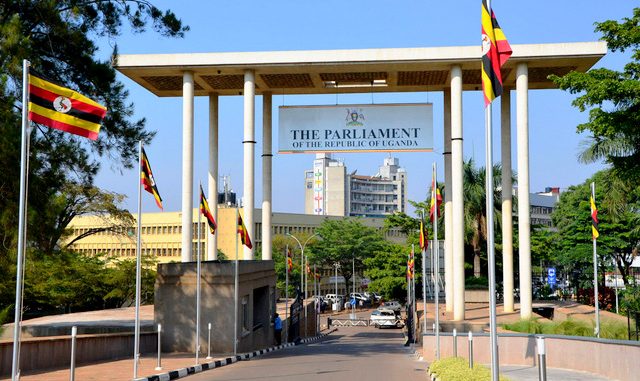
Prioritise psychiatric treatment – MPs

Parliament of Uganda

The soaring figures of Ugandans who are suffering from mental disorders have instigated Members of Parliament to demand for improved psychiatric health services in the country.

According to the latest statistics from the Ministry of Health and Uganda Counseling Association as published in the media, about 14 million Ugandans are mentally sick with a majority suffering from depression and anxiety disorders.

The Chairperson of the Parliamentary Forum on Mental Health, Hon. Geoffrey Macho, urged government to mainstream mental health treatment in all government hospitals by increasing funds for psychiatric treatment, upgrading the Mental Health Unit under the Ministry of Health into a department, among others.

“We request government to put budgetary plans into the budget of the Ministry of Health concerning mental health because the money allocated to the unit of mental health is very little. We also request that this unit is upgraded to a department because 14 million people is not a small number; this is more than a quarter of the country’s population,” Macho said.

He urged that government urgently takes over the supply of mental health medicine which has been left in the hands of the private sector who sell it expensively.

Macho was reacting to a statement from the Minister of State for Health (General Duties) Hon. Anifa Kawooya, on the status of operationalisation of the Mental Health Act, 2018 and the increasing need for mental health and psychiatric care in the country during the Tuesday, 10 May plenary sitting.

The concern was raised by Tororo District Woman Representative, Hon. Sarah Opendi, on 27 April 2022.

In her statement, Kawooya said that government is on course to implement the new Mental Health Act 2019, which came into force on 18 February 2021.

According to Kawooya, the new law introduces mental health services at community level, new referral and admission procedures and has significantly strengthened the protection of rights of people with mental health conditions.

However, operationalisation of the Mental Health Act 2019 still faces challenges of low recruitment of psychiatric personnel in health facilities, non-existence of the Uganda Mental Health Advisory Board to set standards and monitor the implementation of the Act and other regulations to properly enforce the Act.

“Some provisions of the Act require regulations for proper enforcement. A case in point is, Part III of the Act, which focuses on treatment and admission of persons with mental illness that requires guidelines on voluntary and involuntary admissions. The process of writing these regulations is ongoing….the ministry is also currently in the process of appointing and inaugurating the board members [of the Uganda Mental Health Advisory Board],” she said in the statement.

As per the Integrated Mental Health Services, a health centre IV is required to have an enrolled psychiatric nurse, while a district hospital should have a psychiatric clinical officer and two psychiatric nurses to run a mental health clinic. The Regional Referral Hospitals should have a psychiatrist and other cadres of mental health workers.

Kawooya said that so far, five out of the 13 regional referral hospital mental health departments are headed by psychiatrists and more than 15 new psychiatrists are being trained.

Aruu County MP, Hon. Christopher Komakech, questioned government’s capacity to recruit and fill up all the vacant psychiatric positions due to lack of training institutions.

“Right now, there is only one psychiatric nursing school in the entire country and that is the Butabika School of Psychiatric Clinical Officers. I do not think this institution can provide us with the psychiatric nurses that we need,” Komakech said.

Koboko Municipality MP, Dr Charles Ayume, also the Chairperson of the Committee on Health, said there are less than 60 psychiatrists in the country because most people think it is not well paying, thus explaining why most of the hospitals do not have psychiatrists.  He added that the committee on Health that is currently processing the Public Health (Amendment) Bill is trying to capture mental health as one of the Non-Communicable Diseases.

The Speaker, Anita Among who chaired the session, demanded that government provides countrywide counseling services for people with mental health problems.

Stories Continues after ad

New Sprite clear bottle launched to enhance plastic collection and recycling 

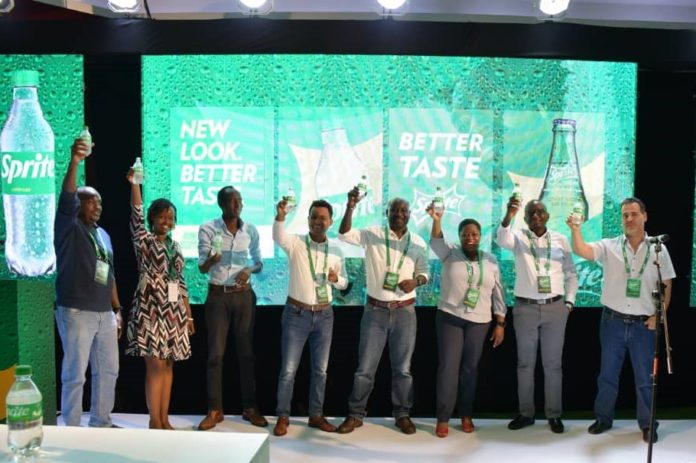
CCBA Management Team led by General Manager Melkamu Abebe pose with the new clear Sprite bottle

The Coca-Cola system has unveiled a new iconic look of its leading sparkling lemon-lime flavored soft drink Sprite in a clear polyethylene terephthalate (PET) plastic bottle packaging. 

This shift from its iconic green bottle means more Sprite bottles can be collected, recycled and reused to make new items, a move that is part of The Coca-Cola Company’s World Without Waste vision, which targets to collect and recycle the equivalent of every bottle or can it sells and use 50% recycled content in all its packaging by 2030.

“People in Uganda can enjoy a much better taste of their favorite sparkling lemon-lime drink knowing their bottle can be easily recycled and made into new items,” said Melkamu Abebe, the General Manager at Coca-Cola Beverages Africa in Uganda, during the launch.

“The shift from the green bottle to clear PET is a significant step in driving our sustainability agenda which is a key element of our business. We know that our vision for a World Without Waste is ambitious and can be challenging but together with our partners, we are committed to the course. This move also allows us to work with partners in the recycling industry and with waste collectors and aggregators to achieve more value for our recyclable plastics,” said

Melkamu Abebe, the General Manager at Coca-Cola Beverages Africa in Uganda, during the launch.

Clear PET can be made into a wide range of new products, such as pillow and duvet inners, as well as into new bottles, making it more valuable than green PET, which has limited uses.

“The World Without Waste” strategy represents The Coca-Cola Company’s commitment to doing business sustainably which includes addressing the packaging waste challenge. Additionally, clear PET plastic contributes to economic empowerment as it will contribute to enhanced income for waste reclaimers in Uganda who depend on collecting and selling packaging waste for a living,” said Debra Mallowah, Vice President Coca-Cola East and Central Africa Franchise (ECAF).

Since its launch 60 years ago, Sprite has been known for its iconic green bottle and this marks a major milestone in its growth and sustainability in various markets.

With its presence in over 200 countries, including Uganda, Sprite’s new transparent look features a see-through bottle, refreshed icon of the brand’s bold Sprite ‘spark’ with a distinct label and bright green cover.

Uganda becomes the 5th African market to introduce the Sprite clear PET, after South Africa, Nigeria, Ethiopia and Kenya.

Stories Continues after ad