Stanbic Bank
Stanbic Bank
18.8 C
Kampala
Stanbic Bank
Stanbic Bank
Home Blog Page 621

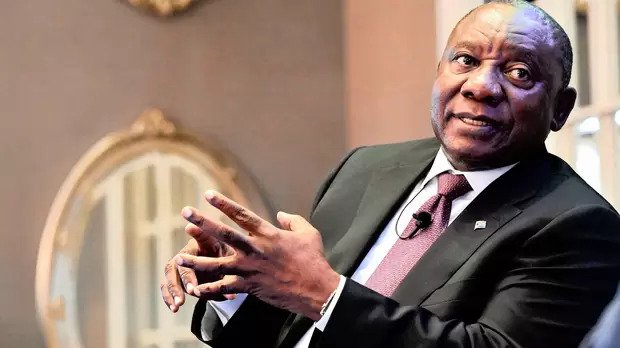
South African President whisked away from rowdy workers on Labour Day

President Cyril Ramaphosa

Angry workers Sunday forced South Africa’s President Cyril Ramaphosa from delivering his Labour Day speech in the northwestern Rustenburg city.

Striking mineworkers from the Sibanye Still-Water gold mines, who were demanding a pay rise of 1,000 South African rands ($63) stormed the podium where Ramaphosa was due to address workers disrupting the event.

“You want your 1,000 rands, I understand that. You want the employers to give you 1,000 rands. We have heard that message and we will be dealing with that matter,” Ramaphosa told the workers who seemed unsatisfied with his explanation.

The workers then became rowdy, booing and shouting: “Ramaphosa must go.”

They have been expecting Ramaphosa and his Cabinet to intervene in their strike that has been ongoing for weeks.

The presidential guards were later seen whisking Ramaphosa away from the Royal Bafokeng Stadium.

Earlier, trade unions and opposition parties said there was little to celebrate Labor Day as retrenchments and unemployment is now at a staggering level of 35%.

The main opposition party, Democratic Alliance, called on the government to create a conducive environment that allows job creation because millions are unemployed.

“As South Africa celebrates Workers Day today to honor workers across our country, there will be no celebrations for the tens of millions of South Africans that do not have a job,” the party said on its website.

It also said entire communities are moving closer to or below the poverty line as jobs are shed and local economies shrink.

The government said it has created a conducive environment for job creation, such as incentives to businesses, but the pandemic and sluggish economic growth are responsible for slowing job creation.

Stories Continues after ad

Forests and trees can help us recover from multiple crises, new FAO report says

A section of Mabira Forest in Uganda

With the world facing multiple crises including, COVID-19, conflicts, climate crisis and biodiversity loss, our forests can help us recover from their impact, but only if we step up action to unlock their potential.

In a key report launched today, the State of the World’s Forests Report 2022, the Food and Agriculture Organization of the United Nations (FAO) sets out three pathways for doing that: halting deforestation; restoring degraded land and expanding agroforestry and sustainably using forests and building green value chains.

“The balanced, simultaneous pursuit of these pathways can help address the crises facing people and the planet while also generating sustainable economic benefits, especially in (often remote) rural communities,” FAO Director-General QU Dongyu writes in the foreword to the report, subtitled “Forest Pathways for Green Recovery and Building Inclusive, Resilient and Sustainable Economies” and launched at the XV World Forestry Congress in Seoul.

The pathways are put forward “on the understanding that solutions to interrelated planetary crises have immense economic, social and environmental implications that need to be addressed holistically,” Qu adds.

The key arguments of the report are that:

Halting deforestation and maintaining forests could avoid emitting around 3.6 gigatonnes of carbon dioxide equivalent (GtCO2e) per year between 2020 and 2050, including about 14 percent of what is needed up to 2030 to keep planetary warming below 1.5 °C, while safeguarding more than half the Earth’s terrestrial biodiversity.

Restoring degraded lands and expanding agroforestry – 1.5 billion hectares of degraded land would benefit from restoration, and increasing tree cover could boost agricultural productivity on another 1 billion hectares. Restoring degraded land through afforestation and reforestation could cost-effectively take up to 1.5 GtCO2e per year out of the atmosphere between 2020 and 2050 similar to taking up to 325 million gasoline-powered passenger cars off the road each year.

Sustainably using forests and building green value chains would help meet future demand for materials – with global consumption of all natural resources expected to more than double from 92 billion tonnes 2017 to 190 billion tonnes in 2060 – and underpin sustainable economies with greater employment opportunities and more secure livelihoods.

Societies could make better use of forests and trees to simultaneously conserve biodiversity, better provide for human well-being, and generate income, particularly for rural people, the report says, arguing that “there will be no healthy economy without a healthy planet.”

But, current investment in forests falls way short of what’s required. According to one estimate, total financing for the forest pathways needs to increase threefold by 2030 and fourfold by 2050 for the world to meet climate, biodiversity and land degradation neutrality targets, with the estimated required finance for forest establishment and management alone amounting to $203 billion per year by 2050.

Ways forward along the pathways

The report says the ways for swiftly moving along the pathways may include: directing funding for recovery towards long-term policies aimed at creating sustainable and green jobs and further mobilizing private-sector investment; empowering and incentivizing local actors, including women, youth and Indigenous Peoples, to take a leading role in the forest pathways.

Others are; engaging in awareness raising and policy dialogue on sustainable forest use as a means for simultaneously achieving economic and environmental goals; and Maximizing synergies among the three forest pathways and between agricultural, forestry, environmental and other policies and minimizing trade-offs.

The report cites a wide range of examples from around the globe, both demonstrating the vital importance of forests and trees to people’s livelihoods and pointing to supportive policy initiatives – from the key role of non-wood forest products in Turkey and wood fuel in and Georgia, to smallholder forestry in China and Vietnam, sustainable charcoal in Côte d’Ivoire and formalizing land rights in Colombia.

FAO’s Forestry Programme is focused on bringing about transformation that benefits forests and the people who depend on them and helping to achieve the 2030 Agenda for Sustainable Development and the Sustainable Development Goals. FAO’s approach balances economic, social and environmental objectives to enable the present generation to benefit from the Earth’s forest resources while conserving those resources to meet the needs of future generations.

Stories Continues after ad

Standard Chartered Bank’s profit increase 36.9% in 2021

Standard Chartered

Standard Chartered Bank has released its financials for the year 2021, showing the bank increased its gross profit by 36.9 percent to about Shs123.2 billion from about Shs90 bn earned in 2020.

The financial statements however show that customer deposits dipped by 8.7 percent to Shs2.5 trillion from the high of about Shs2.7 trn.

Loan advances also dropped in 2021 by 1.9 percent to about Shs 1.22 trn from Shs 1.24 trn advanced in 2020.

Non-performing loans for the bank came down to about Shs 20.6 bln from about Shs22.6 bln in 2020.

Total assets in 2021 declined to about Shs3.7 trn from about Shs3.8 trn in 2020.

Moses Rutahigwa, Head Consumer, Private& Business Banking says the bank offers best digital solutions.

“We have maintained leadership in offering best in class digital solutions to the people of Uganda,” adding that over 91 percent of client transactions are now happening on non-branch channels.

Bank of India Uganda

Meanwhile, Bank of India Uganda saw its gross profit earnings go up by 22.4 percent to about Shs10.4bln in 2021 from about Shs8.5bln earned in the previous year.

Its customer deposits grew by 2.6 percent to about Shs224bln from about Shs 218.8bln in 2021.

The bank’s financial statements show that loan advances surged by 0.8 percent to about Shs 181.7bln in 2021 from about Shs 180.3bln in 2020.

Its total assets increased to about Shs 362.8bln during the year under review from about Shs 333.3bln in the previous year.

Non-performing loans [NPLs] sharply surged by 72.7 percent to bout Shs 3.8bl in 2021 from a low of about Shs 2.2bln in 2020.

In 2021, the bank would write off bad loans worth about Shs 1.6bn though it did not report the bad loans written off in 2020.

Stories Continues after ad
NSSF total assets increase 15.3% as member contributions grow

Mr. Richard Byarugaba.

The National Social Security Fund (NSSF) has increased its total assets as at March 31, 2022 by 15.3 per cent to about Shs 16.86 trillion from 14.62 trillion in 2021.

NSSF Managing Director Richard Byarugaba who published a transparency statement that covers events from March 31, 2021, the 15.3 per cent growth says that the increase was due to the continued growth in investment assets and contribution collection.

For instance, NSSF as of March 31, 2022 had given out loans worth about Shs 11.13 billion, lower from about Shs 14.49 billion loaned out as of March 31, 2021.

Byarugaba in his statement says members’ contributions grew by 6 per cent in the period under review to about Shs 1.0219 trillion from about Shs 965 billion in March 2021.

“Despite this being below budget by 9 per cent, the improvement was driven by the re-opening of the economy, especially the education sector,” he says.

Benefits that the Fund paid to qualifying members grew by 40 percent to about Shs 773bn mainly driven by mid-term benefits pay outs, as the Fund commenced paying in March 2020, and had paid Shs 161 bn as at March 31, 2022.

“98 per cent of the beneficiaries are living members and 2 per cent survivor benefit,” he says.

The Fund’s interest income, which makes up 95 percent of the Fund income, grew by 13 per cent to about Shs 1.3 trn from about Shs1.2 trn.

“Dividend income grew by 146 percent to about Shs 67.8 bn in 2022 from about Shs 27.5 bn in 2021, driven by a general increase in dividends earned from entities in the banking and telecom sectors.”

“Costs of administration, which is one of the major issues of concern, did better as they improved to 0.9 per cent from 1.02 per cent in the previous year on account of the growing balance sheet size coupled with cost savings realised from process improvements and better cost management,” Byarugaba reports.

Meanwhile, construction works are in progress at various real estate projects such as; Citadel Mbuya, Pension Tower, Lubowa, Temangalo Housing project, NSSF Mbale City House and Kyanja.

Stories Continues after ad

Kyambogo plants trees on the boundaries to safeguard its land

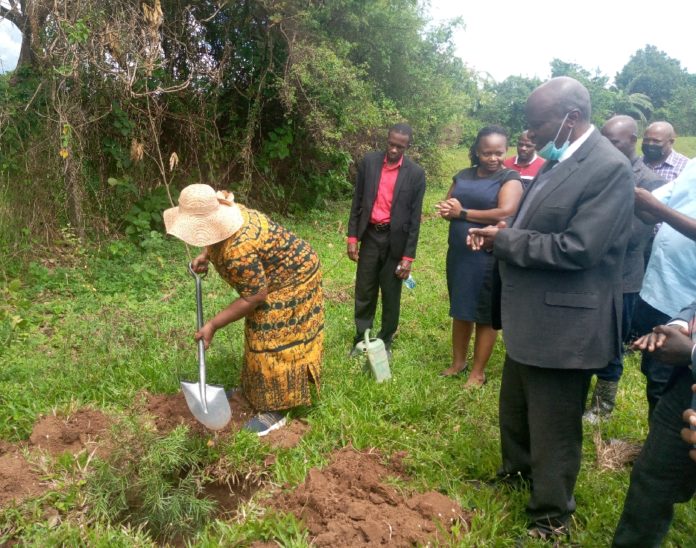
Counsel Sarah Lubega, the Vice Chair Person of Council, planting a tree. Photo by Ronard Shabomwe

Kyambogo University has embarked on planting trees on the demarcations of the University land as one way of safeguarding the land that has been encroached on several times by the people who claim the land belongs to them.

According to Patrick Kalule, the University engineer, this development is intended to help the university to have clear and well-marked boundaries of the university Land.

“There are threats on our land, this is one of the reasons why we are doing this, of course, we are trying to emphasize our boundaries, and that is one of the strategies we have used and many others shall come,” Engineer Kalule said.

Kalule, who is also the University Estates manager, said currently there is an area where encroachers have evaded the university land, but the stakeholders are in the process of sending them away.

He further revealed that the council decided to have the landmarked so that all the stakeholders can be aware of the boundaries. Over 1200 trees will be planted which Kalule revealed will cover close to seven kilometers.

Counsel Sarah Lubega, the university council vice-chairperson revealed that this development will help many university stakeholders to know the boundaries of the university land.

“Most of the people do not know where Kyambogo university passes, so the people adjacent to the land will know whether they are on their land or not. Even Kyambogo will also know where their land starts and ends,” says Counsel Sarah Lubega.

The same was emphasized by the University Vice-Chancellor, Professor Eli Katunguka Rwakishaya, who said many people have been setting up shelters and others have plantations on the university land since they do not notice anything like boundaries.

He says that when you plant trees along the boundaries of your land; it can be one way of keeping peace with the neighboring community since the boundaries will be so clear to everyone now.

According to other sources, this will also help in preserving the environment, attaining a green environment, beautification, and creating shades for students. Kyambogo University is sited on 247 Acres, and there are plans of having the entire land fenced.

Previously, Kyambogo University has had running battles with some squatters who claimed their ancestors settled in that land before the establishment of Kyambogo University. Last year, the court came in and halted both parties from practicing any activities since the land is still under contestation.

Stories Continues after ad

Karimajongs urged to surrender illegal guns and resort to other income generating activities

Maj Gen Geoffrey Katsigaz burning the recovered illeagl guns

Residents in Karamoja sub-region have been urged to voluntarily surrender all illegally possessed weapons and utilize the ongoing government programs against poverty for the transformation of the sub-region.

This appeal was made by the Deputy Inspector General of Police (D/IGP) Maj Gen Geoffrey Katsigazi on behalf of the Minister of Internal Affairs Hon (Rtd) Maj Gen Kahinda Otafire during the destruction ceremony of the recovered illicit fire arms on April 30, 2022, in kotido district.

“Ask for hoes, cows, seedlings, and tractors, from government and focus on legal trade; other than guns,” noted Maj Gen Katsigazi.

Maj Gen katsigazi observed that eradication of the flow of Light Arms and Small Weapons (SALW) in karamoja sub-region will provide a window of opportunities towards the realization of a peaceful, secure and prosperous continent.

 “What you have done will be remembered in the history of Uganda. People in Karamoja have suffered because of the presence of illegal weapons. Guns not only affect neighbors but also increase the crime rate in urban areas,” remarked Maj Gen Katsigazi.

The Deputy IGP called upon residents to support government in identifying criminals with guns, adding that government is committed to protecting citizens from guns coming from outside. He further implored local leaders in Karamoja sub-region to harmonize their messages against the illegal possession of weapons to their respective residents.

“We must all condemn criminals killing our people and stealing from us, and embrace proper ways of generating income,” emphasized Maj Gen Katsigazi.

The Commander of the UPDF 3 Division based in Moroto and head of the joint security forces operation on disarmament Brig Gen Joseph Balikuddembe remarked that the security forces in the region are a force multiplier to have peace so that transformation and development can take root.

“The appetite for guns and criminality must stop. Let us surrender the guns and save lives. Don’t surrender the guns only but surrender them and walk to the joint security forces, then we shall be in peace,” he noted.

Gen Balikuddembe observed that, over 378 illegal guns recovered since 2018 were destroyed at this destruction ceremony.

The Member of Parliament for Kotido district Lokoprimo Peter Abraham called upon citizens to surrender illegal guns for the restoration of peace and stability in the region.

The Local Council V chairperson, Lottery Paul commended all partners enforcing the disarmament exercise for their sacrifice and commitment to the project. Adding that, addressing the security challenges caused by the illegal guns in the region will help in scaling down poverty.

A Women Peace Group in support of Peace, entertained guests at the function with a song titled, ‘how I wish guns would become books’.

 The recovered illicit small arms and light weapons were got from the Karamoja sub-region, Northern and Rwenzori regions and Kampala Metropolitan areas. Most of the recovered illicit weapons were drawn from Kotido district, explaining why it hosted the event.

This symbolic ceremony marked the closure of the African Union (AU) Amnesty Month 2021/2022 Project on voluntary surrender of SALW that was launched in Uganda in November 2021 in line with the African Union Amnesty Road Map initiative of “Silencing the Guns in Africa by the year 2030.”

The implementation of the African Amnesty month 2021/2022 project in Uganda has been coordinated by the national Focal Point (NFP) under the ministry of Internal Affairs, in cooperation with UPDF and Police with funding from the Federal Republic of Germany, United Nations Office on Disarmament Affairs (UNODA), Africa Union Commission (AUC) and the Regional Center on Small Arms and Light Weapons (RECSA).

Stories Continues after ad

JSC promotes 10 Grade One Magistrates

Chairperson of the Judicial Service Commission - Justice Benjamin Kabiito

The Judicial Service Commission (JSC) has appointed on promotion 10 officers to the position of Senior Principal Magistrate Grade One in an acting capacity in the Judiciary Service.

All the officers appointed have been serving as Grade One Magistrates in several courts across the country.

“This recruitment is to fill positions in the expanded Judiciary structure that provides a career ladder between the position of Chief Magistrate and Magistrate Grade One, and whose goal is to improve access to justice to the people,” JSC said in the statement.

Among those promoted are; Timothy Lumunye, Daniel Bwambale  Busathiro, Martins Kirya, Irene Nambatya, Nassozi Rehema Ssebbowa, Albert Asiimwe, Mukasa Sanyu, Esther Nahirya, Stella Okwong  Paculal and Jane Tibagonzeka.

The Judicial Service Commission is a body mandated to recruit judicial officers and regulate their conduct.

Stories Continues after ad

Politicians advised not to be politics dependent, but engage in income generation ventures

Trevor Baleke

Politicians have been advised not to only depend on the allowances they earn, but engage in household income generation.

Kole Deputy Resident District Commissioner, Trevor Solomon Baleke at the weekend urged political leaders to participate in the various agricultural business activities as a way of creating another income stream for themselves.

Mr. Baleke explained that political leaders are meant to be exemplary not only in making good speeches and being smart but put into practice what they preach.

He said, as a way of mobilizing the public, leaders should have something to show behind their houses.

“You cannot encourage others to participate in farming when you don’t have even an acre of any crop. I am a deputy RDC of Kole from where I came this morning because you invited me and after here I am driving 382km back to my duty station because I must work but also I have gardens and livestock here because I must not only rely on my salary,” he said.

“I challenge you to have poultry or cattle in your homes and not to be the ones buying food all time when God blessed us with rich soils,” Baleke said.

Mr. Baleke was at the weekend addressing youth leaders from the 22 sub counties of Kamuli district in Busoga sub region where he was a guest of honor at the thanksgiving of the youth leaders at function hosted by Wankole Sub County Deputy Speaker, Norah Ntono.

He challenged the youth to reduce on the time they waste on Whatsapp engaging in discussions that take them nowhere but concrete of income generation.

“When you go back home, scroll through your phone book to see whether the people you are engaging with really matter in your life. Making arguments in whatsapp groups because you want to win should not be part of you if you want to get to the next level,” he said.

Mr. Baleke told the youth that president Museveni and government have put in place programs intended for the development of the youth and urged them to embrace these programs rather than lamenting all the time.

“Youth Livelihood Program (YLP), Operation Wealth Creation, Emyooga and Parish Development Model (PDM) are all programs where you as youth can benefit and change your livelihood. Unfortunately some of you focus on the challenges instead of the opportunities.

Mr. Baleke who has been the district NRM Administrative Secretary urged the youth to “continue trusting the NRM because all its focus was on how the lives of the people could be improved.”

He urged the youth to work together with other stakeholders to ensure that their concerns are heard.

“Go to the office of the RDC in Kamuli, Mrs Rose Birungi and Madam Kasadha her deputy are very good people. They shall listen to you. The office of the president is here to ensure that no one is left out on any program,” he said.

Stories Continues after ad

Muslims to celebrate Eid-al-Fitr on Monday 

Muslims will celebrate Eid-al-Fitr on Monday, May 2, 2022 to mark the end of the fasting month of Ramadan.

The Acting Director of Sharia, Uganda Muslim Supreme Council, Sheikh Muhammad Ali Waswa, explained that Eid-al-Fitir will be celebrated on Monday starting at 8am.

“I would like to inform the Muslim fraternity and the wider public in Uganda that it has been confirmed the new moon has not been sighted this evening. Therefore, Eid-ul-Fitir will be celebrated on Monday May 2, 2022,” Sheikh Waswa explained in an April 30 statement.

The national prayers will be held at National Mosque, Old Kampala which is UMSC headquarters and will be led by Sheikh Ramadhan Mubajje, the mufti of Uganda.

Prayers will commence at exactly 8am-9am.

“It is important to note that UMSC advises Muslims to observe Standard Operating Procedures (SOPs). Carry your prayer rags, wear a mask, observe social distance, sanitize and avoid touching surfaces,” he said.

He added that, “we congratulate all the entire Muslim fraternity upon reaching a graceful completion of the holy month of Ramadhan and we wish you a blessed Eid-al-Fitir.

Stories Continues after ad

NCDC approves Ham Kiggundu’s books for use in schools

City businessman Hamis Kiggundu popularly known as Ham.

The National Curriculum Development Centre (NCDC) has approved businessman Hamis Kiggundu’s two books to be used by students in secondary schools.

The books are titled ‘Success and Failure based on Reason and Reality’ and ‘Reason as the World Masterpiece’.

Before any book is adopted into the national curriculum, it has to go through evaluation processes by NCDC, which involve reviewing for language, relevance and message, among others.

Most schools have adopted a number of books written by foreigners and, therefore, it is time they adopted books written by Ugandans.

Hamis Kiggundu is a well-known businessman who not only trades in Uganda as Ham Enterprises Ltd, but also as Ham International UK Ltd in the UK, Ham International Ltd in the US and Skylight Investments in South Africa.

Kiggundu directly employs more than 1,200 people.

He had his primary, secondary, and university education in Uganda and holds a Bachelor’s degree in Law from Makerere University. He is commonly known as Ham.

Stories Continues after ad