Stanbic Bank
Stanbic Bank
24.7 C
Kampala
Stanbic Bank
Stanbic Bank
Home Blog Page 624

School proprietors applaud Dfcu bank for excellent customer service and post-covid-19 support

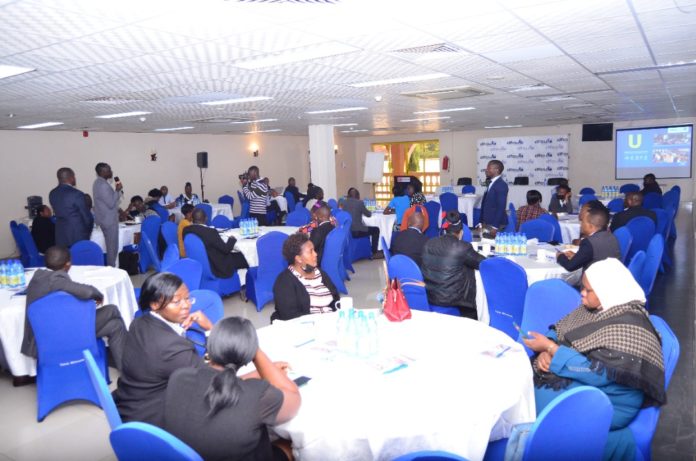
School engagement

Owners and operators of schools in Uganda have applauded dfcu Bank for the excellent customer service and the support offered to help them weather the Covid-19 pandemic and reopen their institutions. This was during the first dfcu schools’ engagement held this morning at Hotel Africana in Kampala, attended by school proprietors, directors, bursars, and head teachers as well as dfcu Bank Regional Managers and other staff members.

As part of the engagement, the dfcu bank team explained the different financing solutions available to the institutions and received feedback from the proprietors.

The schools called upon the bank to hold financial training workshops in their different regions to further empower them to make the right financial decisions to sustain their schools.

Making a keynote address, dfcu Bank Head of Business Banking Ronald Kasasa commended the school proprietors for managing to reopen their institutions despite the significant challenges caused by the Covid-19 pandemic.

“When the Covid-19 restrictions were lifted, we realised that school proprietors would struggle to reopen their institutions. We therefore decided to offer some relief in the form of extension of repayment periods, reduction of interest rates and many other facilities. Today, we have renewed our commitment to serve you even better. We are grateful for your feedback and look forward to continuing our dialogue with you when we visit your schools,” he noted.

“As we prepare to go into the new school term, we are ready to deal with your emerging needs and look forward to hearing what they are so that we can offer you solutions ahead of time,” Kasasa concluded.

During the engagement, dfcu Bank Senior Manager Enterprise Banking William Kayongo explained the benefits of using the SchoolPay fees system and introduced the Back-to-School solution which enables schools to access up to 30% of their regular fees collection per term upfront to help with beginning of term costs.

The bank promised to hold more regional financial literacy sessions, extendInvestment Clubs to the institutions as well as look into waiving of certain fees, all in a bid to support educators. 

Stories Continues after ad

Uganda Prisons dismisses reports of death by suicide in Kalisizo prison

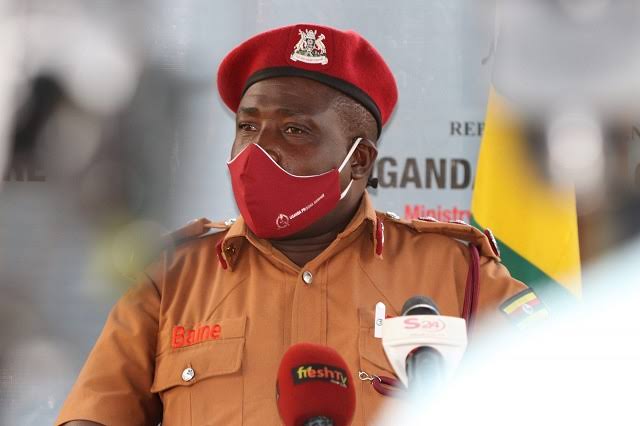
Frank Baine

The Uganda Prisons Service (UPS) has dismissed all reports indicating that an inmate committed suicide in a government prison in Kalisizo, Rakai district.

“The Uganda Prisons Service informs that public that nobody committed suicide at Kalisizo government prison. All prisoners in custody are alive and accounted for,” the prisons spokesperson Frank Mayanja Baine said.

He said the public is informed that the false story should be ignored with utmost contempt.

Earlier reporters indicated that Robert Luyima committed suicide in a bathroom. 

Stories Continues after ad

I want Parliament to help me get the 10 acres I requested for – Sudhir on Naguru land

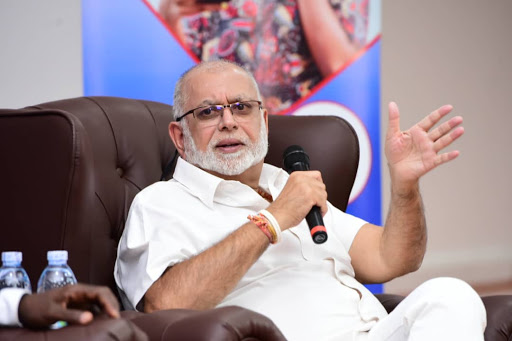
Chairman Ruparelia Group, Sudhir Ruparelia.

City Businessman Sudhir Ruparelia has requested Parliament to help him get the ten acres on the Nakawa-Naguru land he originally applied for in order to develop it.

Sudhir told Parliament while appearing before an Ad-hoc committee to explain his interest on the Nakawa-Naguru Land.

“My humble request is that to request in this committee to help me get the ten acres we originally applied for. If they were allocating land to people who don’t exist then what is wrong with me getting 10 acres,” Sudhir told Parliament.

A nine-member ad hoc committee of parliament is investigating the controversy surrounding the land, which is contested by several individuals and companies.

In 2011, the government displaced about 10,000 people to pave way for the setting up of a satellite city but the deal collapsed after Opec Prime Properties, the developer, abandoned the project. Last year, the government repossessed the land and what followed was a massive scramble for pieces of the land.

Being the chairman and majority shareholder in the companies of the Ruparelia Group, Sudhir investments are mainly in the areas of banking, insurance, education, broadcasting, real estate, floriculture, hotels, and resorts. This makes him capable of developing the land to benefit the wider community of Naguru and Kampala city.

Stories Continues after ad

DRC kicks off Ebola vaccination

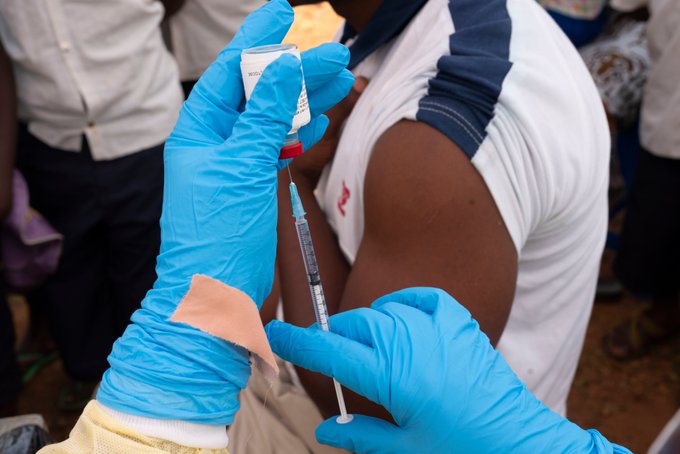
Health worker prepares to vaccinate a man

The Democratic Republic of Congo today kicked off Ebola vaccination in Mbandaka, the capital city of Equateur Province in the north-west, to halt the spread of the virus following an outbreak which has claimed two lives since 21 April.

Around 200 doses of the rVSV-ZEBOV Ebola vaccine have been shipped to Mbandaka from the eastern city of Goma. More doses will be delivered progressively in the coming days. The vaccination uses the “ring strategy” where the contacts and the contacts of contacts of confirmed Ebola patient are given the vaccine as well as frontline and health workers.

So far, 233 contacts have been identified and are being monitored. Three vaccination teams are already on the ground and will work to reach all the people at high risk. To date, two cases, both deceased, have been confirmed since the outbreak began. The disease has currently been reported only in Mbandaka health district.

“With effective vaccines at hand and the experience of the Democratic Republic of the Congo health workers in Ebola response, we can quickly change the course of this outbreak for the better,” said Dr Matshidiso Moeti, the World Health Organization (WHO) Regional Director for Africa. “We are supporting the country in all the key aspects of Ebola emergency response to protect and save lives.”

The national health authorities are stepping up response in addition to the vaccination. A 20-bed Ebola treatment centre has been set up in Mbandaka. Disease surveillance and investigation of suspected cases are underway to detect any new infections, with WHO providing material support as well as six epidemiologists to assist in the response.

The country’s National Institute for Biomedical Research has completed an analysis of a sample from the first confirmed case, results of which show that the new outbreak indicates a new spill-over event from the host or animal reservoir. Investigations are ongoing to determine the source of the new outbreak and how it came to infect the first confirmed case.

Congo has experienced 14 Ebola outbreaks since 1976, six of which have occurred since 2018 alone. Over the years, with the support of WHO and other partners and donors, the country has developed homegrown expertise capable of mounting effective Ebola response.

Investments in local expertise is paying off. Outbreak surveillance, detection and response have improved significantly.

Stories Continues after ad

#OutToLunch Government can grow coffee and sell to Vinci

Mature coffee tree

By Denis Jjuuko

In just 14 pages, A4 size, independent Uganda gave away perhaps the most generous concession ever on any agricultural product, taking back the country to the days of the Imperial British Company – a colonial enterprise that subjugated farmers and the entire population and left previously wealthy nations in abject poverty.

The ministry of finance entered into an agreement with controversial businesswoman Enrica Pinetti — she, you guessed right, of Lubowa International Specialized Hospital to be the sole buyer and exporter of Uganda’s coffee. After collecting tons of money in promissory notes and other forms, Enrica is still struggling to build a plinth wall. The ministry of finance claimed, of all things, that “heavy rains” have delayed the project!

The agreement as controversial as the so-called investor will see her company Uganda Vinci Coffee Company, a novice in the sector (and we heard registered on the same day the agreement was signed), given “priority of supply of coffee….before registering any contract or acknowledging any arrangement for the export of coffee beans (including screen 18 and above), so that the company will have ample supply of coffee to sustain its operations.”

Vinci claims that it will build a 60,000-tonne capacity plant in Namanve starting with a paltry 27,000 tonnes but the agreement is silent on when Vinci will grow its capacity to the 60,000-tonne mark. I highly doubt that they will ever get anywhere close to the promised capacity and there is no clause in the agreement that penalizes them if they don’t.

In the year ending October 2021, Uganda exported 6.55 million 60kg-bags translating into 393,000 tonnes. Vinci will only be able to process, if they ever build the plant, a paltry 6.8% for which they get a concession similar to those given to British companies during the colonial period. The rest of the coffee, Vinci will just export for the next 10 years without remitting any taxes and determining even the price of electricity they will consume.

The other laughable clause in the agreement is that Vinci will employ a mere 246 workers who they will even disenfranchise by not contributing to NSSF for 10 years. A company employing just 246 workers should never be given control of a sector that employs perhaps a quarter of the country’s population.

The ministry of finance claims that this is the best deal ever for Uganda and “nobody else asked.” I think nobody thought that anybody could sign such an agreement hence the lack of other players with better capacity than Vinci to ask. But Uganda, it seems is the epitome of “ask and you shall be given.”

The controversy of such a deal is that Uganda doesn’t own any coffee. If it was oil or some other minerals that belong to the country, nobody would be complaining.

As a smallholder coffee farmer, I pay for everything — seedlings, irrigation, fertilizers, transport, and wages without any support from government. Government should, therefore, not “undertake to take all reasonable measures to give priority of supply of coffee” to Vinci or anybody else as they don’t at the moment own any coffee. Coffee belongs to farmers and therefore government can’t decide who they sell it to.

Let Vinci compete for my beans and I will decide whether I sell to them or the competitor next door. Traders should also decide whether to sell to buyers in Sudan, Germany, China, Italy or anywhere else and not be forced to sell to one company.

It takes only 18 months for coffee to mature and become harvestable. I don’t know how long Vinci will take to build her factory but given her performance with the Lubowa hospital project, this will take years to be built if it will ever be built.

As Vinci builds its factory, government can start planting coffee on its vast land (or even acquire more land) which they can then “undertake to take all reasonable measures to give priority of supply of coffee” to Vinci. I don’t think any coffee stakeholder or farmer will raise any finger when beans from the government’s farms are given to a single buyer.

The writer is a communication and visibility consultant. djjuuko@gmail.com

Stories Continues after ad

Kataka, Blacks Power, Maroons and Kyetume eye promotion to Uganda Premier League

Maroons could be back in the UPL

Four teams tussle it out for the three promotional slots to the StarTimes Uganda Premier League and winning the 2021/2022 championship while others are fighting relegation to stay in the StarTimes FUFA Big League ahead of the final match day on Thursday 28th April, 2022.

Blacks Power FC, Kataka FC, Maroons FC and Kyetume FC can emerge winner of the season depending on the outcome of the final matches in which they will be involved.

The games to watch as the season concludes are; Kataka Vs Kyetume at the Mbale Municipal Stadium, Blacks Power Vs Luweero United at the Akibua Memorial Stadium, Nyamityobora Vs Maroons at the Kakyeeka Stadium and Ndejje University hosting Kitara at the Arena of Visions in Ndejje.

The winner of the 2021/2022 could be crowned from Mbarara, Lira or Mbale.

Kataka FC Vs Kyetume FC

A do or die encounter with all teams eyeing nothing than victory to guarantee their promotion to the top flight League.

The previous games weren’t good for the two with Kataka picking just a point off Blacks Power while Kyetume shockingly lost to relegation bound Proline at their own backyard.

The hosts sit on top of the log with thirty six (36) points while the visiting side is fourth on the table with thirty four (34) points. A draw will be to Kataka’s advantage while Kyetume need nothing than a win to confirm their return to the only league that matters.

Blacks Power Vs Luweero United

This is another anticipated thrilling encounter with both teams having genuine reasons to collect maximum points.  The Lira based hosts are promotion contenders while the visiting Kosovo Boys need atleast a point to survive relegation.

The Vialli Bainomugisha Coached Blacks Power is second on the table with thirty six (36) points the same with table leaders Kataka FC also same goal difference but separated by the goals scored while Luweero United is seventh on the table after collecting twenty five (25) points.

Nyamityobora Vs Maroons

It seems a walk in the park for the visiting Prisons side because the hosting Mbarara based team are playing for pride after confirming their relegation to the Western Regional League next season. The third placed Maroons need to win the game to be assured of the place in the SUPL come next season.

Ndejje Vs Kitara

This is a one game to determine Ndejje’s future in the StarTimes FUFA Big League.  The University side which has collected twenty three (23) points need a win to surpass Proline FC which has collected twenty five (25) points. The opponents of Calvary have nothing to lose and safe with twenty seven points on the log.

FUFA confirmed that the Winner of the 2021/2022 StarTimes FUFA Big League will be crowned the following day a few hours after the end of the fixtures.

“The Crowning ceremony will be delayed until Friday 29th April 2022 for a team that will have emerged winner of the Competition. The venue that produces the new winner of this season on Thursday is where the crowning ceremony will be held the following day. The FUFA Competitions Department and Events Management Office are handling the details of the Grand Finale and will be communicated during the meetings they will hold on the eve of the matches,” the FUFA Communications Director Ahmed Hussein noted.

Table standings ahead of final day

The top three teams will be promoted to the StarTimes Uganda Premier League while the bottom three drop to the Regional Leagues.

The fixtures: Thursday 28th April, 2022

Nyamityoora FC vs Maroons FC at Kakyeka Stadium, Mbarara

Kataka FC vs Kyetume FC, Mbale Municipal Stadium, Mbale

Blacks Power FC vs Luweero United FC, Akiibua Memorial Stadium, Lira.

Calvary FC vs MYDA FC- Green Light Stadium, Arua

Ndejje University FC vs Kitara FC-Arena of Visions, Ndejje

Stories Continues after ad

Premier Recruitment Ltd announces 100 job slots for Ugandan youths

Premier Recruitment

Premier Recruitment Limited has announced 100 jobs for Ugandan youths in Dubai. The job, according to the poster, will see them earn Shs2 million per month.

The recruitment agency says 100 bike riders are needed in Dubai with the requirements for applying for the job include; CV, registration fee, passport, driving license, age (24-40 years), medical fitness, and fluency in English.

Successful applicants will get a 2-year contract that will see them enjoy free accommodation, transportation, air ticket after, medical care, and overtime allowance.

One of its uniquenesses, Premier Recruitment, says that it prioritizes the safety of its workers.

“The main objective of our welfare team is to make sure all the candidates feel safe and get adjusted to the new environment. Our team continuously follows up with the candidates through different modes of communication and confirms that candidates are happy and settled comfortably. The candidates can also communicate with our team in case of any discomfort,” says the company.

Premier Recruitment is a recruitment company that provides job opportunities for Ugandans in both domestic and non-domestic areas and the industries. They focus on but not limited to security services, hospitality, accountants, marketing, legal, construction, and oil and gas.

They are team committed to reducing the rate of unemployment in Uganda by empowering opportunities with reputable employers in Uganda and internationally, provide an exceptional customer service by understanding the needs of both clients and candidates.

Stories Continues after ad

Sudhir Ruparelia: A successful businessman is one who builds a firm foundation with the bricks others throw at him

Group chairman, Ruparelia group of companies. Sudhir Ruparelia. One of the sponsors of the Expo

Ugandan businessman and billionaire Sudhir Ruparelia City tycoon shares an inspirational and motivational quote to youth and entrepreneurs on doing business the right way and working smart as a strategy to creating sustainable business ventures in Uganda and creating wealth.

Uganda is a country with numerous opportunities and resources if fully utilized creating wealth is simple for everybody to enjoy the country.

“We all have obstacles thrown at us. Sometimes it feels like it’s more than you can take, but it is your ability to overcome these challenges that define your true potential.

“Life is filled with difficulties and trials. But if reaching the stars were easy, then everyone would be there. This is how you can set yourself apart from the pack; by fighting past the hardships of life, the constant barriers that you find, and take use of them to build even stronger than your former self.”

Sudhir, born 17 January 1956 is a Ugandan business magnate and investor of Indian origin. He is the chairman and majority shareholder in the companies of the Ruparelia Group.

His investments are mainly in the areas of banking, insurance, education, broadcasting, real estate, floriculture, hotels, and resorts.

In February 2020, Ruparelia was appointed as honorary Consul of the Republic of Nepal to Uganda, by Bidhya Devi Bhandari, the president of Nepal.

He started building his empire in Uganda in 1985 after returning from the United Kingdom, when he went after being expelled from Uganda by then President Idi Amin in 1972 along with the other Asians in the country.

Last month, he kicked off the construction of the multibillion-swanky Pearl Business Park.

The mega project with an estimated 15 months scheduled timeline from the onset of construction to completion will encompass office premises, a shopping centre, health and leisure amenities, a 5-star hotel, modern hospital, among other things.

Ruparelia Group, through Meera Investments Limited, is building the 18-acre mixed-use facility on the premises of the former Chieftaincy of Military Intelligence (CMI) headquarters on Yusuf Lule Road in Kampala.

Ruparelia Group will divide the project into different phases. The first phase completion estimate is 2023, including office spaces, 16 lettable floors and two floors for parking.

The plan is to equip the facility with modern amenities such as a fully automated fire detection system on all floors and approximately 170 CCTV cameras in all public areas. In addition, the building will include internet access, a fitness centre and other health, safety and productivity utilities.

Meanwhile, on top of Pearl Business Park, Sudhir is also expanding Kabira Country Club, which is going to have a shopping mall complex attached to the hotel.

As if the above is not enough, mogul is also planning to build a 200-room Kingdom Kampala Hotel.

The Kingdom Kampala Hotel is estimated to be completed by 2026. This is another project by Meera Investments Limited, the real estate arm of the Ruparelia Group that owns a series of hotels, country clubs and over 300 commercial properties in and around Kampala.

Together with the government of Uganda, they will also build a modern Convention Centre at Commonwealth Speke Resort Munonyo. The centre will host 3,000 delegates and its first conference will be the Non-Aligned Movement (NAM) scheduled for next year. The construction is estimated to cost $40 million (Shs140 billion).

Some of the companies he owns are; Premier Recruitment Limited, Crane Management Services Limited, Goldstar Insurance Company Limited, Kabira Country Club, Kampala International School Uganda, Kampala Parents’ School, Kampala Speke Hotel, Meera Investments Limited – Kampala, Munyonyo Commonwealth Resort, Speke Resort and Conference Center – Munyonyo and Victoria University.

Stories Continues after ad

Kenya to get $244m in Extended Fund Facility and Extended Credit Facility

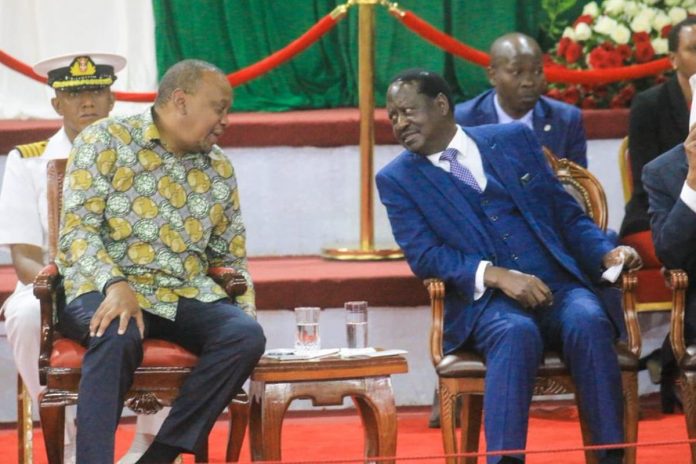
President Uhuru and ODM Principal Ralia Amollo Odinga who championed the proposed changes.

The International Monetary Fund (IMF) and the Kenyan authorities have reached a staff-level agreement on economic policies to conclude the third reviews of the 38-month EFF/ECF financed program. Kenya would have access to about US$244 million in financing once the review is formally completed by the IMF Executive Board.

The economic rebound is underway although global shocks are presenting new challenges in the form of rising global energy, fertilizer, and food prices, which will pressure inflation and create new spending needs.

Kenya’s robust program performance is delivering resilience that is helping the country navigate these global shocks while remaining within the authorities’ targets and continuing to make progress in addressing debt vulnerabilities, IMF says.

IMF staff led by Mary Goodman, conducted a hybrid mission to Kenya and in Washington DC to discuss progress on reforms and the authorities’ policy priorities in the context of the third review of Kenya’s economic program supported by the IMF’s Extended Fund Facility (EFF) and Extended Credit Facility (ECF). The arrangements were approved by the IMF Executive Board on April 2, 2021 , for a total amount of SDR 1.655 billion (US$ 2.34 billion at that time).

Goodman said: “The IMF staff team and the Kenyan authorities have reached a staff-level agreement on the third review of Kenya’s economic program under the EFF and ECF arrangements. The agreement is subject to approval of IMF management and the Executive Board in the coming weeks. Upon completion of the Executive Board review, Kenya would have access to SDR 179.13 million (equivalent to about US$ 244 million), bringing the total IMF financial support under these arrangements to SDR 865.77 million (equivalent to about US$ 1,178 million).”

The Kenyan economy has been staging a robust recovery as the effects of the pandemic wane, and the authorities remain vigilant. Spillovers from the war in Ukraine are expected to have a modest impact on growth in the near term, as Kenya’s direct exposure to Russia and Ukraine is relatively limited. IMF Staff projects growth at 5.7 percent in 2022, reflecting a pickup in agriculture and continued recovery in services and other sectors.

By mid-April 2022, 30 percent of adults had been fully vaccinated against COVID-19, up from 5 percent at end-2021. The medium-term outlook remains favorable, supported by Kenya’s proactive reform efforts, although the outlook is subject to uncertainty.

Spillovers from the war in Ukraine are expected to temporarily push up inflation as domestic retail fuel prices gradually rise to global levels. The Central Bank of Kenya (CBK) has stated that it stands ready to take appropriate action to contain second-round effects of higher global prices on inflation. Exchange rate flexibility has served Kenya well and should continue to be a shock absorber that will help mitigate the impact of these external shocks.

Kenya is on track to meet its fiscal objectives and put debt as a share of GDP firmly on a downward path. Kenya’s fiscal position has been underpinned by strong tax revenue performance this year, buoyed by a robust economic recovery and the important tax policy measures already undertaken as part of Kenya’s multi-year plan to reduce debt-related vulnerabilities. 

These resources bring resilience that will allow cushioning part of the impact of the sharp increase in global energy and fertilizer prices on households and businesses while still remaining within the authorities’ fiscal targets for FY2021/22.

“The FY2022/23 budget carries forward the authorities’ efforts to broaden tax revenue mobilization and maintain careful expenditure control while protecting social priority spending. Revenue targets for FY22/23 will be supported by tax policy changes, including planned custom interventions in the context of the East African Community, and improvements in tax administration. In this regard, the authorities will take into account the need to protect vulnerable groups in light of the recently-increased cost of living. A medium-term revenue strategy which is under development and tight spending control will help anchor deficit reduction in the years ahead.”

The banking sector has remained resilient, supported by steps taken by the CBK to sustain the economy and help households and businesses navigate the challenging environment. The CBK is also making progress in strengthening its monetary policy framework.

It will be important to maintain the momentum of reforms to tackle difficulties at financially-troubled state-owned enterprises (SOEs)—including Kenya Airways (KQ) and the Kenya Power and Lighting Company (KPLC). At KQ, which had already benefitted from a government guarantee on a large portion of its debt liabilities, steady progress on the ongoing restructuring effort will be important to minimize costs to the Exchequer.

At KPLC, crystallizing an action plan to restore KPLC’s medium-term profitability and fully cover any financing gaps through end-2023 will likewise be critical to minimize calls on the budget. The authorities’ plans to implement their Blueprint for Governance Reforms at the State Corporations will provide a welcome framework to strengthen the governance of SOEs.

Kenya is moving forward on its governance and anticorruption agenda. Revised documents for government tenders, introduced on April 21, 2022, will enable publication of beneficial ownership information for successful bidders in government tenders, which will be a requirement going forward.

The special audits being undertaken of COVID-19 vaccination spending up to end-June 2021 and plans to include a chapter on COVID-19-related spending in the Auditor General’s comprehensive audit of financial year 2020/21 expenditure should provide important transparency in the coming months on the government’s pandemic response.”

Stories Continues after ad

World Bank predicts food and energy price shocks from Ukraine war could last for years

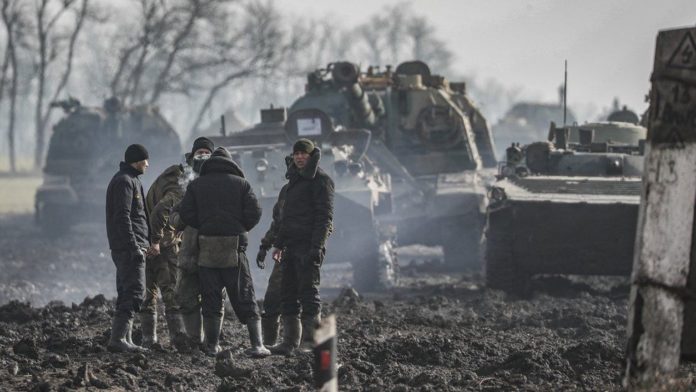
Russia-Ukraine war

The war in Ukraine has dealt a major shock to commodity markets, altering global patterns of trade, production, and consumption in ways that will keep prices at historically high levels through the end of 2024, according to the World Bank’s latest Commodity Markets Outlook report.

The increase in energy prices over the past two years has been the largest since the 1973 oil crisis. Price increases for food commodities—of which Russia and Ukraine are large producers—and fertilizers, which rely on natural gas as a production input, have been the largest since 2008.

“Overall, this amounts to the largest commodity shock we’ve experienced since the 1970s. As was the case then, the shock is being aggravated by a surge in restrictions in trade of food, fuel and fertilizers,” said Indermit Gill, the World Bank’s Vice President for Equitable Growth, Finance, and Institutions. “These developments have started to raise the specter of stagflation. Policymakers should take every opportunity to increase economic growth at home and avoid actions that will bring harm to the global economy.”

Energy prices are expected to rise more than 50 percent in 2022 before easing in 2023 and 2024. Non-energy prices, including agriculture and metals, are projected to increase almost 20 percent in 2022 and will also moderate in the following years. Nevertheless, commodity prices are expected to remain well above the most recent five-year average. In the event of a prolonged war, or additional sanctions on Russia, prices could be even higher and more volatile than currently projected.

Because of war-related trade and production disruptions, the price of Brent crude oil is expected to average $100 a barrel in 2022, its highest level since 2013 and an increase of more than 40 percent compared to 2021. Prices are expected to moderate to $92 in 2023—well above the five-year average of $60 a barrel. Natural-gas prices (European) are expected to be twice as high in 2022 as they were in 2021, while coal prices are expected to be 80 percent higher, with both prices at all-time highs.

“Commodity markets are experiencing one of the largest supply shocks in decades because of the war in Ukraine,” said Ayhan Kose, Director of the World Bank’s Prospects Group, which produces the Outlook report. “The resulting increase in food and energy prices is taking a significant human and economic toll—and it will likely stall progress in reducing poverty. Higher commodity prices exacerbate already elevated inflationary pressures around the world.”

Wheat prices are forecast to increase more than 40 percent, reaching an all-time high in nominal terms this year. That will put pressure on developing economies that rely on wheat imports, especially from Russia and Ukraine. Metal prices are projected to increase by 16 percent in 2022 before easing in 2023 but will remain at elevated levels.

“Commodity markets are under tremendous pressure, with some commodity prices reaching all-time highs in nominal terms,” said John Baffes, Senior Economist in the World Bank’s Prospects Group. “This will have lasting knock-on effects. The sharp rise in input prices, such as energy and fertilizers, could lead to a reduction in food production particularly in developing economies. Lower input use will weigh on food production and quality, affecting food availability, rural incomes, and the livelihoods of the poor.”

Special Focus:  The Impact of the war in Ukraine on commodity markets

The report’s Special Focus section offers an in-depth exploration of  the war’s impact on commodity markets. It also examines how commodity markets responded to similar shocks in the past. The analysis finds that the war’s impact could be longer-lasting than previous shocks for at least two reasons.

First, there is less room now to substitute the most affected energy commodities for other fossil fuels—because price increases have been broad-based across all fuels. Second, the increase in prices of some commodities is also driving up prices of other commodities—high natural-gas prices have raised fertilizer prices, putting upward pressure on agricultural prices. In addition, policy responses so far have focused more on tax cuts and subsidies—which often exacerbate supply shortfalls and price pressures—than on long-term measures to reduce demand and encourage alternative sources of supply.

The war is also leading to more costly patterns of trade that could result in longer-lasting inflation. It is expected to cause a major diversion of trade in energy. For example, some countries are now seeking coal supplies from more remote locations. At the same time, some major coal importers could step up imports from Russia while reducing demand from other large exporters. This diversion will likely be more costly, the report notes, because it involves greater transportation distances—and coal is bulky and expensive to transport. Similar diversions are occurring with natural gas and oil.

In the near-term, higher prices threaten to disrupt or delay the transition to cleaner forms of energy. Several countries have announced plans to increase production of fossil fuels. High metal prices are also driving up the cost of renewable energy, which depends on metals such as aluminum and battery-grade nickel.

The report urges policymakers to act promptly to minimize harm to their citizens—and to the global economy. It calls for targeted safety-net programs such as cash transfers, school feeding programs, and public work programs—rather than food and fuel subsidies. A key priority should be to invest in energy efficiency, including weatherization of buildings. It also calls on countries to accelerate the development of zero-carbon sources of energy such as renewables.

Stories Continues after ad