Stanbic Bank
Stanbic Bank
27.6 C
Kampala
Stanbic Bank
Stanbic Bank
Home Blog Page 628

Kole Deputy RDC urges GISOs to monitor government programs implemented in their areas

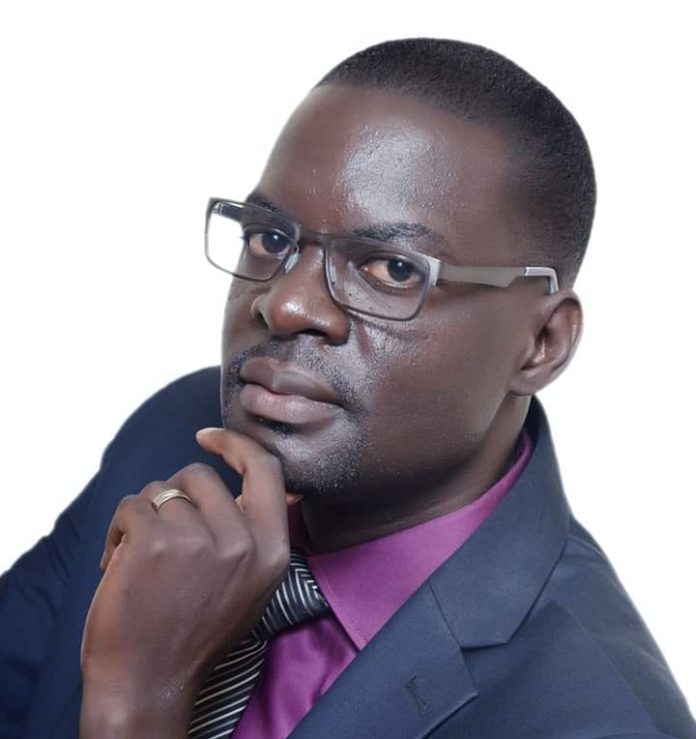
Trevor Baleke

Kole Deputy Resident District Commissioner (DRDC), Trevor Solomon Baleke has urged Gombolola Internal Security Officers (GISOs) to monitor government programs implemented in their respective areas of jurisdiction.

Mr. Baleke said shoddy work, poor quality service delivery lead to insecurity and this should not be allowed to happen.

“I am not here to sit in this office. I am here to monitor government programs and ensure accountability, service delivery. Once we join hands and make sure that government programs are implemented in an appropriate way,” he said.

Mr. Baleke was this Wednesday afternoon meeting all GISOs from the 11 sub counties and town councils of Kole District.

“I come from the village. I know what a common man deserves and how they feel when things do not go the right way. Women, Youth, elderly and everyone should benefit from the available government programs and civil servants have to do their work,” he said.

Baleke who on Tuesday went to Aboke Health Centre IV in Aboke Sub County on an impromptu visit told the GISOs said; “I am coming to your sub counties to visit the health centre IIIs and see what is happening. I will talk to the medical personnel and listen to the concerns of people. We shall meet with the Health Management Committee to ensure the concerns of both the health personnel and the citizens are handled,” he said.

Stories Continues after ad

MTN paves the way for women’s progress to achieve sustainable societies

Dorcas Inzikuru (L) receives the award on behalf of Nakaayi from MTN Uganda's Digital Communications Manager, Sheilah Najjita (R)

Given the high unemployment levels in the country, there is a need to break the bias and promote gender diversity across professions by encouraging women to seek opportunities in male-dominated industries.  In support of SDG 5 which advocates for gender equality, MTN Uganda in collaboration with key partners is making strides in empowering women in order to achieve sustainable societies.

MTN Foundation supports Girls with Tools

ProssyNalunkuumais pursuing a mechanical engineering certification at Smart Girls Foundation in Wakiso. Garbed in a blue mechanic’s overall shielded by gloves in hand, Nalunkuuma, who is bent over a car’s open bonnet is cognizant of the awkward stares she attracts from the public as a result of her career choice.

Driven by her passion and unfettered ambition to one day become a renowned mechanical engineer, Nalunkuuma continues to pursue her dream; breaking the bias against women in this male-dominated career.

“Despite girls’ persistent shunning of mechanical engineering, I chose to pursue this line of work because of the passion I have for it plus the need to be unique through penetrating a male-dominated world. My goal is to actively practice in this field through setting up an auto repair and parts shop,” she narrates.

Nalunkuuma, just like other girls at the Foundation, sought an opportunity to chase her engineering ambition at Smart Girls Foundation, a non-profit making, girl-centered, development organization that empowers and mentors girls in health and education to mention but a few.  Under the Foundation’s flagship projects, girls with tools, girls are equipped with skills in traditionally male-dominated professions including carpentry, machinery, and automotive mechanics and welding.

Over the years, MTN has supported this cause through donation to the Smart Girls Foundation and more recently, construction of an additional facility that will see the Foundation increase the number of girls trained to about 400 annually.As a result of MTN’s support, already, the organization recorded an increase in the number of girls trained at the facility from 30 to close to 90 in a wide range of programs including mechanical, electrical installations and welding.

Dorcas Muhwezi, the MTN Uganda general manager customer experience, who is also an engineer said it is reassuring to see a significant number of girls showing interest in engineering and having the ability to pursue their interests.

“It is encouraging to see such programs that empower the girls and help them develop practical skills. I was very excited to hear that some girls have already set up shop. As MTN, this success is the embodiment of our vision. We are committed to facilitating a diverse society through generational equality and increasing women’s representation for sustainable societies,” she noted.

MTN Supports Women in sports

In the same spirit, MTN last weekend rewarded a group of outstanding women in sports who have played a pivotal role in bridging the gender gap in the world of sport.

The awards which summed up the telecom’s month long celebration of women following the International Women’s day in March, saw the public nominate and vote for their phenomenal sportswomen of choice in a bid to narrow the gender gap in the sports profession through recognizing and celebrating women in sports.

The top 5 women in accordance with the public votes, each received Shs3,000,000 while the other 15 who made it to the top 20 were rewarded with Shs500,000 each.

“As MTN we deliberately set out to use the women’s month to shine a light on the greatness of women in sports. We believe that if we work together in recognizing and celebrating the women who have in no small way upheld our country’s flag far and wide, we shall erase the gap between genders in the sports profession,” Muhwezi said.

RehemaNanyonga, the Manager of the Suncity United Netball team, a community-based team leveraging Netball to empower underprivileged girls hailing from slum areas in and around Kampala, thanked MTN for the recognition award as well as the sponsorship package to facilitate the team’s travel for the U.S Open Junior championships in Atlanta, Georgia.

“As the Suncity United community, we are humbled to be recognized and supported in our endeavors by the biggest company in the country. This gesture from MTN has motivated us to continue pursuing our goals to continue inspiring more girls in our community through sports,” Nanyonga said.

During the awards ceremony, Suncity Netball team walked away with a community service award and a sponsorship package worth Shs30,000,000 in recognition of its efforts towards empowering young girls through sports.

Stories Continues after ad

Church of Uganda, NDA partner to end drug abuse in schools

Church of Uganda has entered into partnership with the Uganda National Drug Authority (NDA) to implement a drug abuse prevention program in Church of Uganda founded secondary schools.

The Archbishop of Church of Uganda The Most Rev Dr Stephen Samuel Kaziimba Mugalu and the Provincial Secretary Rev Canon William Ongeng represented Church of Uganda during the signing of the Memorandum of Understanding with Dr. Medard Bitekyerezo, the Board Chairman at NDA.

The signing event happened at National Drug Authority Laboratory in Mulago, Kampala.

The ultimate objective of this partnership is to help youths in secondary schools, to avoid initiation into the use of drugs, or, if they have started already, to avoid developing disorders.

“The ultimate objective of this partnership is to help youths in secondary schools avoid initiation into the use of drugs and if they have already started, help them to stop it. I thank Uganda National Drug Authority under the leadership of Hon. Dr. Medard Bitekyerezo for this initiative,” Kaziimba said.

“Before signing the MoU, I was taken around the laboratory in Mulago. The staff are very committed to ensure that drugs and other related health products on the market are safe for use. I thank them and all other health practitioners working hard to save lives.”

Dr. Medard Bitekyerezo, the Board Chairman at NDA says while they have started by engaging the church, they will with time expand to carry out health campaigns with cultural institutions and also families. He adds that lately, parents have limited time with their children.

NDA will be operating in all the 37 Dioceses under the Church of Uganda where they will hold training and enroll in care for those that will come out to confess their drug abuse-related problems.

Stories Continues after ad

Manchester United appoints Erik Ten Hag as new Manager

Erik-ten-Hag

Manchester United has announced the appointment of Erik ten Hag as their new Manager, from the end of this season until June 2025, with the option to extend for a further year.

John Murtough, the club’s Football Director, said: “During the past four years at Ajax, Erik has proved himself to be one of the most exciting and successful coaches in Europe, renowned for his team’s attractive, attacking football and commitment to youth.

“In our conversations with Erik leading up to this appointment, we were deeply impressed with his long-term vision for returning Manchester United to the level we want to be competing at, and his drive and determination to achieve that.

“We wish Erik the best of luck as he focuses on achieving a successful end to the season at Ajax and look forward to welcoming him to Manchester United this summer.” 

Erik ten Hag said: “It is a great honour to be appointed manager of Manchester United and I am hugely excited by the challenge ahead. I know the history of this great club and the passion of the fans, and I am absolutely determined to develop a team capable of delivering the success they deserve.

“It will be difficult to leave Ajax after these incredible years, and I can assure our fans of my complete commitment and focus on bringing this season to a successful conclusion before I move to Manchester United.”

Ten Hag has been Ajax head coach since December 2017, leading them to the league and cup double in 2018-19 and 2020-21.

The 52-year-old Dutchman will take over from interim boss Ralf Rangnick at the end of this season. Rangnick, who replaced the sacked Ole Gunnar Solskjaer in November, is set to move into a consultancy role.

He will become United’s fifth permanent manager since Sir Alex Ferguson retired in 2013.

Ten Hag will take charge of his first Premier League match when the 2022/23 season kicks off on the weekend of 6 August 2022.

Stories Continues after ad

Kenya suspends operations along Mahagi-Bunia-Kisangani Road over insecurity

Trucks carrying goods

Kenya, through its embassy in Democratic Republic of Congo, has suspended their nationals’ operations along Mahagi-Bunia-Kisangani Road after a group of armed persons suspected to be members of one of the rebel groups attacked and hijacked two of their truck drivers.

In a letter dated April 17, Mr Peter Owiti, the head of Chancery and Deputy Head of Mission in Kenya Embassy in Kinshasa said the two Kenyan drivers were kidnapped and trucks set on fire by militants in Eastern DRC.

“The embassy of the Republic of Kenya in Kinshasa is informed of the attack on Kenyan trucks and hijacking of two truck drivers on Friday, 15th April, 2022 at around 16:00hours at Kommanda Market, along Bunia-Mambasa road in Ituri province, by a group of armed persons suspected to be members of one of the rebel groups.”

“The embassy is engaged fully on the matter and closely working with the government of DRC to intervene and restore security on that route. Further, the Embassy is working with the relevant authorities to secure the release of the two truck drivers,” he said.

Truck owners and drivers have been ordered to immediately suspend their operations along the route until property security measures are put in place.

“The Embassy of Kenya in DRC hereby issues a notice to Kenyan Business Community, particularly the truck owners and truck drivers, to immediately suspend their operations along the Mahagi-Bunia-Kisangani route until property security measures are put in place,” Mr Owiti added.

Stories Continues after ad

Gov’t, Vaccines blamed for collapse of #Covid-19 businesses in Kampala

#Covid-19 vaccine

When Uganda reported its first #Covid-19 case on March 21, 2020, its nationals were not sure of what would happen thereafter. The population was not informed about the then new disease which had forced many powerful countries into total lockdown.

Covid-19 was first reported to the World Health Organization (WHO) on 31 December 2019 after it had been confirmed in Wuhan City and Hubei Province of China.

Before registering the first case in Uganda, President Yoweri Museveni and the ministry of health had picked a leaf from European and Asian countries and laid a strategy on how best they could fight it.

Among the measures, the country adopted the Standard Operating Procedures (SOP) which include; frequent washing of hands or sanitising, wearing facemasks and keeping social distance, setting up isolation centers, recruiting more health workers and equipping health facilities.

On the 22nd March 2020, Museveni imposed a total lockdown on all major sectors of the economy such as transport, limiting movements except the essential workers who included; health personnel, Journalists and Market vendors. The president believed that limiting movements would minimize chances of spreading the virus.

Night clubs, large gatherings like wedding ceremonies, church services, political rallies and others are also put under lockdown. The first lockdown lasted for nearly three months. The second lockdown lasted two months. Later Ugandans adapted to living and working in the unprecedented Covid-19 era.

After confirming first Covid-19 case, a handful of companies like Nytil, Jalshi Care Uganda SMC LTD, Southern range Nyanza Limited, Jude color solutions Limited and others taped into the opportunity there by venturing into production of non-medical masks to bridge the gap of limited supply of foreign companies Manufacturing medical facemask.

In the same line, Uganda National Bureau of Standards (UNBS) cleared Saraya Manufacturing (U) Limited, Jalshi Care Uganda SMC LTD, Hoima Sugar Limited, Movit Products Limited, Mukwano Personal Care Products Limited and Premier Distillers Limited to start the manufacturing of sanitizers.

The masks and sanitizers are currently sold in pharmacies, Shops and by vendors. The dealers and individuals reaped big from the onset of the pandemic since all the products were in high demand.

In the wake of the pandemic, the ministry of health announced Lancet, Test and Fly, Makerere University Hospital and Uganda Virus Research Institute (UVRI) as the fully flagged laboratories mandated for testing Covid-19 in Uganda. According to the World Health Organisation (WHO), since the outbreak of the pandemic, Uganda has registered 163915 Covid-19 cases including 3596 deaths.

This paper moved around Kampala to establish why many people discarded SOP components of sanitising and wearing facemasks. In a quick survey, The Observer established that one in 30 people wear facemasks in Kampala and most of the hand washing facilities at Market places, taxi stages and parks ran dry and the operators don’t remember when they last refilled them. We also learnt that at atleast eight in 10 boda-boda riders wear facemasks. We learnt that 100% of the population sanitise and wear masks at the strict places like supermarkets, health facilities and only at Namirembe Cathedral, St. Mary’ and All Saints Church, Nakasero.

Interviewed for this story Maria Birungi who spoke to us on behalf of Jalshi Care Uganda SMC LTD which produces Avion sanitizers and facemasks, said during the first wave of Covid-19, they produced products but to their dismay, they sold few of them because the population was not used to the situation.

“In the second wave, we produced and sold in large quantities because people had learnt how to live with the virus. As the second wave goes down, people are not buying both the sanitizers and the maskers,” she said.

Despite the government’s efforts to encourage people to observe SOPs, Maria said that their clients claim that Covid-19 no longer exists in the country and they resorted to living a normal life.

A doctor at Makerere University Hospital who spoke on point of anonymity said during the first wave of the pandemic, they received relatively few patients because they were not willing to pay huge amounts of money for the sake of knowing their Covid-19 status.

He said at that time in 2020, a Covid-19 could go for Shs 200,000 and above. However during the second wave which happened in 2021, they received patients every other time and reached a point when they could not manage them.

“We are receiving a good number of patients because we charge low costs of about Shs 180,000 compared to other testing centers in Kampala. Initially the facility was charging Shs 150,000. We receive all categories of people from government dignitaries to common man. Because a Polymerase Chain Reaction (PCR) test is required at every Airport, most of the patients take these test in preparation to leave the country,” he said.

Rachael Namwanje, who vends face masks at Wandegeya traffic lights, said she started the business last year. She would make profits of at least Shs 30,000 every day however the business has gone down and it is hard for her to sell 15 facemasks.

“The business would still stand but with the innovations and the emergency of the various Covid-19 vaccines, people feel they are safe because they took jabs,” she said.

She blamed the collapse of Covid-19 businesses on the government’s failures to enforce the SOPs in place to stop the spread of the virus. “People are not buying nor wear mask though the virus lives with us in the community,” she said.

The manager of one of the prominent supermarkets in Ntinda who didn’t want his identity revealed said the business went down.

“As Covid-19 cases went down, there is a belief that the virus is not as strong as it was and it is not with us that is why there is a low demand for both the sanitizers and the facemask,” he said.

He said some clients claim that despite having many players producing both products, the costs of sanitizers and masks are still high given the economic standing of the country where prices of essential commodities continue to soar every other day. 

Mr. Fortunate Collins, the General Manager at Saraya Manufacturing (U) Ltd said their experience with the first lockdown was challenging. At the time, they were the only manufacturer of the Alcohol Based Hand Sanitisers in the country.

“We used to supply to Kenya through our sister company called Saraya Kenya Limited and to South Sudan through our appointed distributors. The period presented unprecedented demand that our installed capacity could not meet. This led to increased costs of production as we had to hire extra manpower and to work night shifts and operate the factory on a 24Hr basis, yet we never increased the cost of the product,” he said.

“As the world went into Lockdown, we ran out of some raw materials like Allantoin which we could only get from Japan, causing further delays in meeting the demand on the market. Packaging materials like bottles also ran because our local supplier could not meet the demand and we resorted to importing bottles from our sister company in Malaysia, which was both costly but also time consuming. In all, we never increased the final cost of the product,” he said.

Since Saraya was the only manufacturer at the beginning of the lockdown, their sales were more than eight  times the previous ones, which was not the case with the second lockdown since UNBS certified more than 70 companies to manufacture the sanitisers.

Fortunate said the demand has significantly gone down compared to the previous two lockdowns. He attributes this to the reducing numbers of Covid-19 cases to reduced risks.

He said that they still have a fair share of sales from their traditional customers like hospitals and other international organisations like WHO and ICC.

Since their operations and existence are not premised on Covid-19, but rather to be a long term player in public health, fortunate said they have plans to scale up production and venture into other public hygiene products which they import from their subsidiaries.

Stories Continues after ad

Vipers edge closer to fifth league title

Vipers

Vipers SC will confirm their fifth StarTimes Uganda Premier League (SUPL) title in their next match after they stretched their lead at the summit to 14 points on Wednesday.

League top scorer with 16 goals, Caesar Manzoki, scored a brace in the Venoms 2-0 victory over Gaddafi at St Mary’s Kitende to move to 61 points, a massive 14 ahead of KCCA, who could only draw 1-1 with BUL. Both Vipers and Vipers have five matches left to play.

Vipers’ edging closer to the title was helped by KCCA’s continued indifferent form. The 13-time champions needed a Davies Kasirye 80th minute goal to rescue a point at Bugembe after Karim Ndugwa had teed up Ibrahim Nsimbe for BUL’s lead just before the hour.

What this means is that Vipers will be champions if they win or draw (superior goal difference) their next match. Victory, regardless of what happens with KCCA elsewhere, would confirm Vipers championship.

Manzoki, a massive inspiration for Vipers this season, struck his 15th and 16th goals in the 11th and 92nd minutes as the Venoms edged ever closer to sealing their title.

URA’s Stephen Mukwala and Shaban Muhammad of Onduparaka follow in the scoring charts with 13 goals apiece.

Vipers’ next game is against Express FC on April 29.

Gaddafi’s 10th defeat in 26 matches leaves them 11th on a 16-team table, four away from the relegation zone.

At Kavumba, a Joshua Lubwama 40th minute own goal was enough for Soltilo Bright Stars 1-0 victory over Wakiso Giants to move two places and three points away from relegation.

Wednesday results

Vipers SC 2-0 Gaddafi

Soltilo Bright Stars 1-0 Wakiso Giants

BUL 1-1 KCCA

Stories Continues after ad

MPs want Shs319bn Lubowa Hospital budget re-allocated

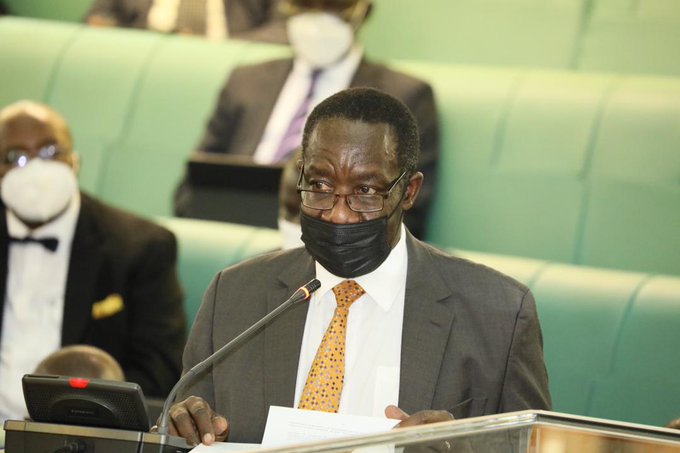
Chairperson of the Finance Committee, Hon. Keefa Kiwanuka

The Chairperson of the Finance Committee, Hon. Keefa Kiwanuka has advised the Minister of Finance to re-allocate the Shs319 billion earmarked in the 2022/2023 for the International Specialised Hospital in Lubowa.

This was during the meeting with the Ministers of Finance, led by Hon. Matia Kasaija while appearing before the committee on Wednesday, 20 April 2022 to present the implementation guidelines of the Parish Development Model (PDM).

The Butambala County MP who is also the Shadow Minister of Finance, Muwanga Kivumbi said that government has not yet provided evidence on value for the Shs348 billion that was allocated in the 2021/2022 financial year budget.

“The committee strongly feels that without proper justification, the Shs319 billion should not be allocated to Lubowa and it is money that Parliament should appropriate elsewhere,” said Muwanga Kivumbi.

Kasaija promised to provide a detailed statement on the status of the works but quickly added that the works were delayed by the COVID-19 pandemic.

“The works were slowed down for two years because many of the experts working at the site returned to their countries. I also suggest that time is found and the MPs visit the site. It would be good for you to go there and see for yourself,” said Kasaija.

He added that the works were further affected by the disagreement between the developer and the contractor.

“I am not defending the developer but the contractor had a financial problem so they had to be terminated and another found,” said Kasaija.

In 2019, legislators together with the Minister of Health were blocked from accessing the site. 

Meanwhile, the MPs warned government against politicising the PDM, saying that it risks failing to achieve its intended objective of eradicating poverty at household level if not properly managed.

According to the implementation guidelines of the PDM, the Parish Development Committee comprises local council II chairpersons, parish chiefs, chairperson of the women, disability councils and chairperson of the ruling party at the parish and an opinion leader or elderly.

Muwanga Kivumbi said that the current structure speaks to politics rather than development and proposed that consideration should be made to include a local councilor, parish priest and a member of the civil society.

“All other endeavours that we have undertaken were given political specs. People are going to think this is also an NRM thing,” said Muwanga Kivumbi.

He also questioned the rationale used to distribute the revolving fund saying that some which are more populated have been allocated less money compared to those that are less populated. 

“This programme is going to hugely disadvantage some areas of Uganda. Buganda has the biggest population of about 12 million people and if we go per parish, we are going to get about Shs117 billion and yet a region with a lesser population like Eastern Uganda is going to receive about Shs33 billion,” said Muwanga Kivumbi.

Hon. Karim Masaba (Indep. Industrial Division, Mbale City) questioned the efficacy of the mindset change campaign about the programme.

“So much money has been invested in mindset change but how do we know that people think positively about the programme. Some people think this money is free and should be eaten without paying it back,” said Masaba.

Rwampara County MP, Hon. Amos Kankunda wondered why government is implementing the PDM without baseline studies.

“Are we not likely to fail? Most of the beneficiaries do not have national identification cards and yet the National Identification and Registration Authority is failing to issue IDs to the locals,” said Bekunda.

The National Coordinator of the PDM, Hon. Denis Galabuzi clarified that the target beneficiaries are the subsistence households and not the whole Ugandan population.

“Data will be collected and that will help in planning and distribution processes. One of the activities will be household profiling. I also want to put it to you that some people live in grass-thatched houses but that does not mean they are in subsistence income category, it could be a lifestyle issue,” he said.

Galabuzi also allayed fears that the PDM is a political initiative, saying that the programme’s committee is based on good leadership.

“This is more like the parish council as provided in the Decentralization Act. These are leaders who have been entrusted by people to make decisions for them. But with bad politics some people can easily practice divisive politics and that is when the programme can go wrong,” said Galabuzi.

The PDM is a revolving fund aimed at creating socio-economic transformation by moving 39 per cent households out of subsistence economy into the money economy using parish/ward as the epicenter of development.

It emphasises the whole of government approach in ensuring increased production, processing and marketing, infrastructure and service delivery at grassroots level.

Parliament has allocated Shs17 billion shillings for the roll out of the PDM in the 2022/2023 financial year.

Stories Continues after ad
Malaria vaccination to start in 2023 – Aceng

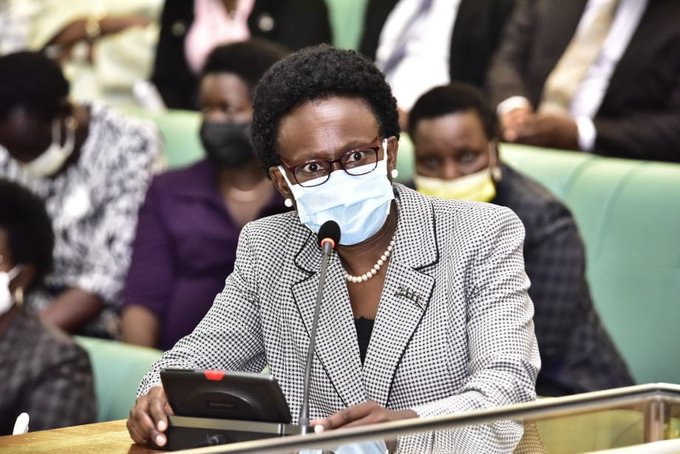
Health Minister, Dr. Jane Ruth Aceng.

The Minister for Health, Hon. Jane Ruth Aceng has revealed that government will start the implementation of the malaria vaccine at end of 2023.

Aceng made this revelation while responding to prayers in a motion urging government to strengthen efforts to prevent, control and eliminate transmission of malaria in Uganda.

 “We are ready for implementation of the malaria vaccine. It may be introduced at the end of next year and is mainly for children. It is not 100 per cent effective but we appreciate that it could bring the burden of malaria down,” Aceng said.

She added that the money that is spent on malaria is currently donor funded and from partnerships.

“We spend over US$120 million on malaria treatment annually with majorly donor support. We have also gone into partnerships with the private sector and Rotary who support various interventions,” the Minister added.

While moving the motion, Jinja South County West Member of Parliament, Dr Timothy Batuwa said government needs to improve the health budget to support malaria.

“Malaria is responsible for over 30 per cent of the total outpatient visits and 20 per cent of all hospital admissions. We have seen a total of 20 million cases and a death toll of 30,900 people in 2020 alone including over 70,000 children under five years,” he said.

He added that, “appreciating the efforts taken by government in the fight against malaria, the 2000 Abuja Declaration, in particular goal three seeks to have good health and well-being with goal targets which include ending malaria epidemic by the year 2030’.

Hon. Sara Opendi (NRM, Tororo District), said that malaria is the leading killer disease in Uganda.

“The WHO 2020 report indicates that 30,000 people have died of malaria in Uganda. Efforts have been made by the ministry on sensitization of the public about malaria but the challenge is limited funding for interventions to deal with the disease,” Opendi said.

Pingire County MP, Hon. Fred Opolot there is need to fast track the Malaria Control Bill.

“This Bill needs to have a chapter which will establish a fund known as the Presidential Malaria Trust Fund Uganda whose objective will be to secure predictable and sustainable means of procuring goods and services for malaria prevention and treatment,” he said.

Stories Continues after ad
PSFU hosts high-level Public-Private Policy Dialogue on the status of the EAC integration process on investments and job creation

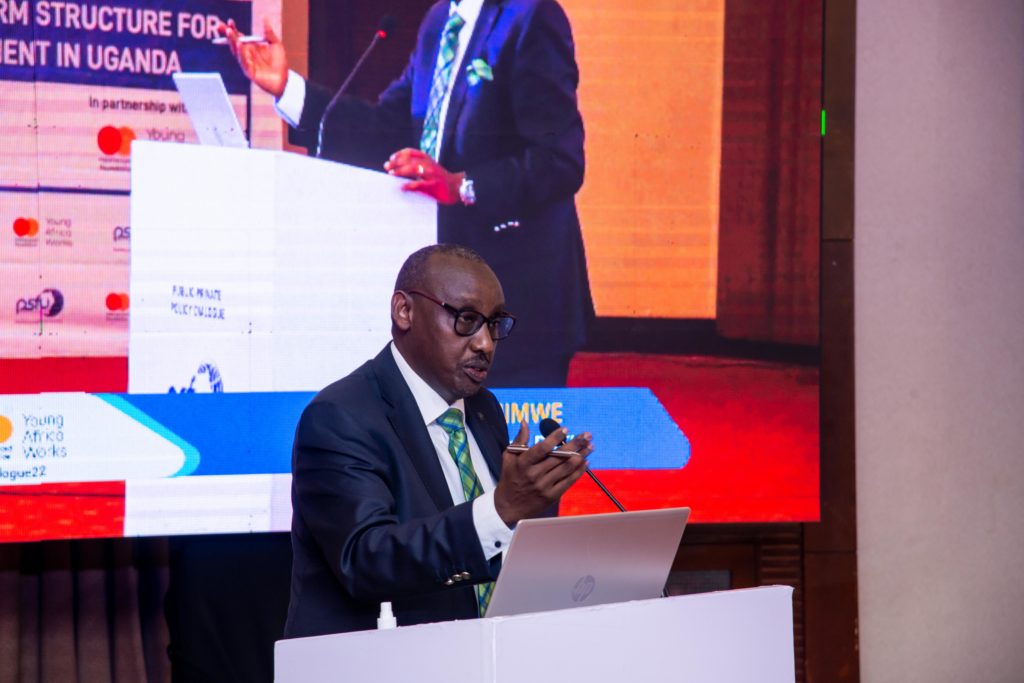
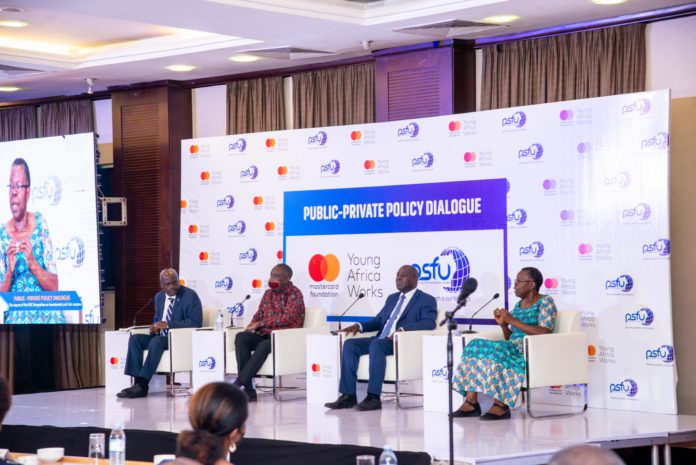
Private Sector Foundation Uganda (PSFU) the apex body of the private sector in Uganda, in partnership with the Mastercard Foundation and Young Africa Works Uganda, on Tuesday held a high level Private-Public Policy dialogue on the status of East Africa Community integration on investments and job creation, to get the young person’s outlook on the status of the EAC and an overview on the future.

From this conversation, solutions which should be taken to plan for the emerging opportunities, especially for the young people in the EAC integration process.

“There are existing business opportunities that can be harnessed to support the growth of the economy and job creation. Presently, the ecosystem, the companies and SMEs continue to be negatively affected by some market restrictions which hinder their ability to expand and grow and create both direct and indirect work opportunities to the youth in the value chains,” Stephen Asiimwe, Chief Executive Officer- PSFU

“Six weeks ago, we were in Nairobi with the East African Business Council and we drafted a common paper which is going to be presented at the Heads of State Summit to ensure that the private sector voice is heard before the president’s make meaningful decisions,” Asiimwe added.

Stephen Asiimwe, Chief Executive Officer- PSFU

According to the 2021 report by the World Bank, East Africa, one of the hardest hit regions by the third wave of the coronavirus was expected to rebound from 3.3 percent in 2021 and 3.4 percent in 2022. Several countries have since embarked on difficult but necessary structural reforms that address digital infrastructure gaps and make the economy more inclusive – ensuring affordability and building skills for all segments of society and generate more and better jobs for young men and women.

The dialogue was also meant to sensitize the public, especially MsMEs and the young people in business on the existing and emerging opportunities in the EAC customs union to foster industrialization and growth of the private sector in Uganda.

The dialogue was attended by over 100 key members of the business community, young entrepreneurs, academia, media and public officials to generate solutions to addressing the issues constraining the performance of the EAC and her implications of investments and job creation for Ugandans.

Among the invited guests was the Minister in charge of EAC Affairs-Cabinet of Uganda, Rt. Hon. Rebecca Kadaga, who pledged to support the private sector.

Rt. Hon. Rebecca Kadaga

“I pledge to take advice and work with you all to ensure that we achieve the objectives of the common market which came in 5 years after the customs Union and was meant to integrate the economies of this region, give opportunities to the private sector and increase competitiveness.” Kadaga highlighted

Among the next steps discussed were;

  • To collate the proposals of the young entrepreneurs on the status of the EAC integration and its implications to their investments, jobs and the future perspective.
  • To dialogue with Government on the need to address the prevalent restrictions to trade which affect investments and job creation
  • To agree on solutions which should be taken to plan for the emerging opportunities for the young people in the EAC integration process
  • Sensitize the public and the Young Africa Works Uganda Partners on the existing and emerging opportunities in the EAC customs union to foster industrialization and growth of the private sector in the region.

Private Sector Foundation Uganda (PSFU) is Uganda’s apex body for the private sector. It is made up of over 200 business associations, corporate bodies and the major public sector agencies that support private sector growth.

Since its founding in 1995, PSFU has served as a focal point for private sector advocacy as well as capacity building and continues to sustain a positive policy dialogue with Government on behalf of the private sector.

PSFU aims to strengthen Private Sector capacity for effective policy advocacy and market competitiveness nationally, regionally and internationally. Regionally, PSFU is the national focal point for the East African Business Council (EABC) and the COMESA Business Council (CBC).

Young Africa Works is the Mastercard Foundation’s strategy to enable 30 million young people, particularly young women, across Africa to access dignified and fulfilling work. Africa will be home to the world’s largest workforce, with 375 million young people entering the job market by 2030.

“With the right skills, these young people will contribute to Africa’s global competitiveness and improve their lives and those of their communities.”

The Mastercard Foundation will implement Young Africa Works in 10 African countries in collaboration with governments, private sector, entrepreneurs, educators, and young people.

The first phase of countries identified by the Mastercard Foundation are Rwanda, Kenya, Ghana, Senegal, Ethiopia, Ghana, and Nigeria.

Stories Continues after ad