Stanbic Bank
Stanbic Bank
21.2 C
Kampala
Stanbic Bank
Stanbic Bank
Home Blog Page 642

People can relax wearing face masks – Scientists

facemasks

Scientists on the #Covid-19 task force have said that the public can relax some of the public health measures like wearing facial masks.

In the last three weeks, the country on average reports 10 cases a day. #Covid-19 Data from the Ministry of Health shows the positivity rate of the country on average is 0.3 per cent, meaning only 3 people out of every 100 tested will be positive. With such few cases, scientists now think it is okay for people not to wear masks all the time.

Dr. Misaki Wayengera, the head of the ministerial COVID-19 scientific committee said it is okay for people not to wear masks all the time, especially with low positivity rates.

“Wearing masks is such a difficult thing for people. It is a very unnatural thing. If God wanted us to wear masks all the time He would have created them with them but man is not cut out for them. Wearing masks is a behavioral thing and the moment cases drop, the people also relax, but the moment the cases increase, they will wear masks without being reminded.”

Dr. Monica Musenero, an epidemiologist and Minister of Science, Technology, and innovation said the COVID-19 pandemic is a prolonged disease outbreak, and management of public health measures is important.

She said people need a break from wearing masks so that mask usage does not become a nuisance to them.

According to the current National Planning Authority-NPA, the country could see a surge in cases around June 2022. Dr. Musenero added that there is need for the public to continue adhering to some public health measures like handwashing and vaccination.

She also noted that mask usage should, however, continue in schools due to the high numbers of learners and teachers that gather in a school environment.

“In environments such as schools, it’s important to wear masks because there are many people from different communities who meet up. Since it is not possible to test all learners, it is important for learners to wear masks,” she added.

While wearing masks has been proved to prevent the spread of COVID-19, the prolonged usage of this particular type of personal protective equipment has been associated with temporary respiratory problems according to research.

A 2020 study carried out in New York and published in the Journal of Infectious Diseases and Epidemiology found that constant mask usage can lead to headaches due to hypercapnia and hypoxemia, acne located in the covered area due to the moist conditions there, skin breakdown, and impaired cognition in some cases.

The call for scientists to relax mask usage comes at a time when some parts of the world are reporting a new variant, Deltacron that is believed to be a mixture of both the Delta and Omicron variants. So far, scientists say it is as infectious as measles.

So far, Uganda has recorded 164,768 cases and 3,595 deaths.

Stories Continues after ad

Interview: “Do it Afraid!” – Dfcu Bank’s Rising Woman Winner Ejang Sandra advises Women entrepreneurs

Sandra Ejang

Dfcu Bank in partnership with Daily Monitor and Uganda Investment Authority (UIA) are running a program dubbed ‘Rising Woman’ that is aimed at recognizing, celebrating, and promoting a culture of mentorship among women in business. Sandra Ejang, the winner of Season 2 of ‘Rising Woman’ Season II from 2020, shares her journey of participating in the competition and her passion for the beekeeping business.

1.       Tell us about yourself and your business. 

My name is Sandra Ejang Elobu and my business is called Western Silk Road under the brand ‘AsaliWaMoyo’, which means ‘Honey of the Heart’.I work with farmer households countrywide, and I am invested in the entire bee keeping value chain.

2.       What was your experience participating in the Rising Woman competition?

Honestly, this is something that came in unexpectedly. First, when I read through the requirements, I wondered how I was going to come up with a business proposal for my business because I didn’t have significant experience in writing business proposals.When I was called for the second session of the interview, I was genuinely surprised because I did it while I was pregnant. For the third part of the interview, I had a newborn baby of nine (9) days. So, I showed up with a newborn baby and some of the finalists helped me to babysit. But when I emerged a winner, I was glad I did not stay home,I would have missed out on that opportunity. (laughs).

3.       What was your key highlight from your participation in the Rising Woman competition?

My biggest highlight was seeing different women from different parts of Uganda showing up for the competition. It was rewarding to know that this opportunity was reaching everyone and giving us all a fair chance at transforming our lives and businesses.

4.       If you were to go back in time, what would you have done differently?

There is nothing I would do differently because I won. If I had not been the overall winner, I would perhaps have some lessons to impart in hindsight. Though, I was surprised I won, because after listening to other women presenting their proposals, I was sure I was up against stiff competition.

5.       What lessons did you pick from your experience with the Rising Woman Initiative?

I learnt that working with other people takes you farther than working alone. I learnt this when we had a winners’ trip to Kenya, and I got a chance to meet other businesspeople. So, after seeing what the Kenyan women were doing, I realized I could work with other women to take our business dreams to new heights. I opened a shop called “The Bountiful Duuka”and stocked up on products from different vendors. My goal was to widen the market available to other startup entrepreneurs.

6.       Since participating in the competition and winning, what progress have you registered as a business and at an individual level?

·         As an individual, I got a chance to join the Vital Voices Program last year, and I had mentorship for one (1) year. Vital Voices Global Partnership is a leading international non-profit organization that invests in women leaders who are taking on the world’s greatest challenges.

·         As a business, Western Silk Road has been able to sign a lease for a new place, so we are moving the products out of my garage to a proper facility.

·         Western Silk Road offers market, technical beekeeping advisory, consultancy services, and beekeeping equipment to households. We have grown from 650 to 1,000 households. Also, we now have a women-only beekeeping group still under AsaliWaMoyo (‘Honey of the Heart’) that produces honey branded “Sweet Mama.”

7.       What advice would you give to a woman entrepreneur who is still undecided  about joining this year’s Rising Woman Initiative?

I’d urge them to feel the fear and do it anyway! Outside of emerging a winner of the funding, participants could also win a study tour which is a great way to grow one’s business acumen and network. This is in addition to the training, networking and advisory services open to all participants. Rising Woman is a firm foundation both for short, medium, and long-term business goals; it’s the perfect opportunity for women entrepreneurs. I say, do not be scared; I did it when I was pregnant and then with a nine(9) day old baby and I won.

8.       Please share some tips for anyone planning to join the competition.

Honesty is key; be honest about your business because it’s what you are going to defend to win. You also need to understand to ably present and defend your submission. Understanding your business and ably explaining your goals will make it much easier for you to win.

9.       Where do you see your business heading?

In about ten (10) years I will be the biggest bee keeping value chain business in Africa!

Stories Continues after ad

Sacked Uganda Airlines CEO wants over Shs3.5bn for termination of his contract  

Cornwell Muleya

Former Uganda Airlines Chief Executive Officer (CEO) Cornwell Muleya has threatened to sue the airline over unlawful suspension and termination of his employment contract.

According to a notice dated March 28 from his lawyers of Muwema & Co Advocates, Muleya said there was no factual, contractual or legal basis for the impugned action of disregarding the due process when they unlawfully suspended and subsequently terminated his contract of employment.

“We need to point out at the outset that your conduct in this case smacks of impunity and complete disregard of the law. It is therefore not protected by the immunities of public office which would otherwise attach to acts done in good faith. You will therefore do well to treat this as a notice of intended personal legal action against your person as well,” reads part of the notice from Muleya’s lawyers.

The Works and Transport Minister, Gen. Edward Katumba Wamala suspended Muleya and 12 other top officials on April 21, 2021, on the orders of President Yoweri Museveni to pave way for investigations into allegations of financial mismanagement, collusion, and nepotism in staff recruitment among other issues.

According to Muleya, the said suspension was illegal on two grounds; the Permanent Secretary of the Works ministry had no power to suspend him under the governance structure of the airline and that the power vests exclusively in the Board of Directors. Secondly, the suspension was illegal because it exceeded the maximum period of four weeks allowed under Section 63 (2) of the Employment Act, 2006.

“Our client was not accorded an opportunity to respond to the allegations nor was he heard before sending him on leave of absence. The above also contravened Regulation 1 (11) (d) of the Disciplinary Code under Schedule 1 of the Employment Act, 2006 which entitles an employee faced with a disciplinary action to a reasonable opportunity to state his case,” the notice reads.

“Despite the above glaring irregularities, our client was directed to keep away from the company premises without any lawful or just cause. Moreover, no promised investigation into alleged mismanagement by our client ever took place. Infact, no investigation report has ever been produced to this end.”

Muleya explained that whereas his employment contract provided for dismissal from employment on grounds of serious misconduct or gross negligence, it did not contain a termination clause..

He said due to his exceptional performance, his employment contract was extended on the same terms for another period of eighteen months from March 1, 2021 before the suspension.

“The purported suspension and termination of our client’s services as the Chief Executive Officer of UNACL was done contrary to all due process and the law. It presents a clear case of a witch-hunt wrought with malice and it reeks of illegalities,” the notice adds.

Muleya now wants Shs 3,545,186,318 in damages and other costs including salary arrears and gratuity among others.

He also wants immediate reinstatement as the Chief Executive Officer of the company and an apology for the material inconvenience, reputational damage and loss.

Stories Continues after ad

Africa’s five teams going to the 2022 FIFA World Cup confirmed

world cup trophy

The African line up for the 2022 Qatar FIFA World Cup has been concluded with the return leg matches of the play-off round completed on Tuesday.

African champions Senegal headline the five African countries to proceed to the World Cup alongside Morocco, Ghana, Tunisia and Cameroon.

Senegal edged out Egypt on penalties. Having beaten the Pharaohs on spot kicks to clinch their first Africa Cup of Nations title, the Lions of Teranga repeated the same feat, this time to seal a place in the World Cup.

Ghana qualified for their fourth World Cup after edging out Nigeria on the away goal rule following a 1-1 draw in Abuja. The two sides drew 0-0 in the first leg in Kumasi last week and heading into the return fixture, the Ghanaians only needed a scoring draw to progress.

Morocco were in emphatic form against the Congolese at the Stade Mohamed V in Casablanca, winning 4-1 on the night and 5-2 on aggregate to sail into their sixth World Cup appearance.

Cameroon scored in the fourth minute of added time as Cameroon beat Algeria 2-1 in Blida to qualify for their eighth FIFA World Cup. The two teams played to a 2-2 aggregate score, but Cameroon qualify to Qatar on the away goal rule.

Tunisia completed the roster of five for African teams to Qatar despite being held to a 0-0 draw by Mali at home. The 1-0 victory they picked in Bamako last week proved to be vital, as the Carthage Eagles flew to their sixth World Cup appearance.

So far, twenty-seven of the 32 nations have secured places at the 2022 World Cup in Qatar. It will be played from 21 November to 18 December.

QUALIFIED FOR QATAR 2022

Argentina, Belgium, Brazil, Cameroon, Canada, Croatia, Denmark, Ecuador, England, France, Germany, Ghana, Iran, Japan, Korea Republic, Morocco, Netherlands, Qatar, Poland, Portugal, Saudi Arabia, Senegal, Serbia, Spain, Switzerland, Tunisia, Uruguay.

Qualified for the Asian play-off

Australia, United Arab Emirates.

Qualified for the Oceanian final

New Zealand, Solomon Islands.

Qualified for the intercontinental play-offs

Peru.

Stories Continues after ad

Blankets and Wine celebrates 10th anniversary

The crowd dancing some of the songs during Blankets and Wine.

Every bourgeoise party-goer in Kampala was at Lugogo Cricket Oval on Sunday for the return of Blankets and Wine at its 10th-anniversary.

Popular as a high-end picnic day, the event registered a great turnup from regular fun-loving folks, celebrities and socialites who showed up in colourful, classy and chic outfits along with mats, snacks and drinks to have a good time.

Organized by House of DJs, the Tusker Cider-sponsored celebration saw revellers get free samples of UBL’s latest product upon entry and engage in fun activities from the specially-curated Tusker Cider hospitality tent. While there, guests indulged in games like Jenga, matatu, and a free throw basketball set up, which saw winners walk away with gift hampers.

Revelers

While speaking about the experience, Simon Lapyem, UBL’s Innovations Projects Manager, said “Blankets and Wine presented the perfect opportunity for our consumers to interact with the Tusker Cider brand and all it has to offer – fun, excitement and a unique way to have a good time with friends and family.”

A variety of vendor stalls were also on hand to deliver a lively and colourful variety of culinary delights.

For entertainment, the organisers lined up live performances from Ebrahim Soul’O, who kickstarted the afternoon with covers to Fave’s Baby Riddim, Juicy by Radio and Weasel, and a range of his own songs.

DJ Alisha playinhg her mixes during the event.

Additionally, DJs Bankrobber and Alisha mashed up the crowd with an exciting array of mixes – guaranteed to keep everyone on their feet.

As the sun set, Cosign Yenze – supported by a percussion ensemble – ushered the crowd into the night, setting the stage for Kenya’s Nviiri the Storyteller.

Nviiri the Storyteller while aperforming at Blankets and Wine

Nviiri, who is signed to Sauti Sol’s Sol Generation records, serenaded the crowd with hits like Nikita, Overdose, Baba Yako and the crowd favourite – Pombe Sigara.

Rwanda’s Bruce Melodie also entertained the crowd with his Saa Moya, Katalina and more, before Zex Bilangilangi and Spice Diana drove the event to its conclusion.

Stories Continues after ad

Enterprises need to adopt cloud technologies – Tech experts

Experts in the technology sector have asked local enterprises to opt for advanced systems to match the demands of the evolving business environment.

Farouk Semambya, an Information Technology (IT) Architect at MTN Uganda says cloud computing technologies allows enterprises to introduce new ways of working, and cost saving while eliminating the inefficiencies created by traditional automation.

Cloud-computing is on-demand access, via the internet, to applications, servers, data storage, networking capabilities, hosted to a remote data centre and managed by service providers. In essence, cloud computing makes everything from apps to documents available on the internet.

“All businesses need to be connected to the internet because it is now a necessity. With the internet, you can access everything. You need to be cloud-ready by surrounding yourself with tools that do the work. Get out of the mindset of having physical meetings by using the available tools, if you have a project, use trello. The cloud is not sophisticated, so it is for everyone,” Semambya said.

He made the remarks on Tuesday during a roundtable discussion held by Liquid Intelligent Technologies and The Innovation Village under the theme, “What Next: Technology’s response through cloud and cybersecurity?”

Enterprises that embrace cloud computing services lower the cost of doing business as regards IT costs especially at a time when startups are rising out of the distress caused by the pandemic.

“You bring in value by associating your enterprise with the cloud. The biggest challenges startups face is capital and for them to grow, they need to make sure the cash flow is there and can be managed. One of the solutions is to have some of their innovations being hosted around the cloud environment. The opportunities are there. As an enterprise, you can easily scale with a cloud offering, you can easily manage cash flow when you pay for what you need rather than what you think you may need,” Grace Kamulegeya, a software solutions architect and consultant at Makerere University said.

A report by Gartner Inc shows almost two-thirds (65.9%) of spending on application and infrastructure software will be directed toward cloud technologies by 2025, which is an increase from 57.7% in 2022. This is a clear indication that businesses are quickly moving to cloud computing and failure to adopt increases the business risk of becoming obsolete.

This discussion comes at the backdrop of the effects of the pandemic on companies. Dennis KekoKahindi, Chief Executive Officer at Liquid Intelligent Technologies Uganda said the roundtable discussion intends to explore the major changes within the cloud economy and demystify factors driving today’s private cloud valuations, the new cloud frameworks, and emerging strategies to help entrepreneurs measure growth and drive go-to-market momentum.

Although Africa accounts for only 1 per cent of the global public cloud market, the market continues to grow exponentially and has doubled in the past three years. The technology sector in Uganda continues to rapidly grow, with ongoing expansion and improvement of data infrastructure is a crucial aspect in pushing the country towards economic growth.

As Uganda, and the rest of Africa, look towards economic recovery and growth, Kahindi says cloud is the answer to cutting costs and increasing efficiencies as businesses move away from the requirement of hardware and installation. This is a must in the new era where office-bound working is becoming less of a priority and, in some instances, obsolete altogether.

“To enhance our value proposition on technology development, we have partnered with entities like Microsoft through the Go-Cloud initiative to raise awareness, adoption and usage of Azure Cloud across Africa. This programme provides connectivity and cloud-based services tailored to start-ups at different gestation stages, enabling them to grow and scale their businesses,” Kahindi added.

Even as enterprises integrate these technologies within their operations, challenges including a poor mindset towards adoption as well as the technical deficit to deploy applications on the cloud, stand in the way. But an even more concerning issue at the back of all people’s minds is the security of data shared over the cloud.

The question to ask is how prepared the economy is to address challenges of cybersecurity arising from the growing number of hackers, increasing malware attacks and thriving black market for stolen data. Cyberspace has become very competitive but a risky place for organizations who are losing lots of data, information and money to cybercrime.

Duncan-Allan Byamukama, IT Systems & Networks Supervisor at The Innovation Village said cyber security is very important given that most company work is done via the internet and awareness of the risks involved is a good place to start.

“The move to cloud allows entrepreneurs to expand their business portfolio and information infrastructure. So, as we aggressively take on digital technologies, let’s develop the local tech talent to ensure that the provide customized software skills to manage the cyber-attacks, deploy digital infrastructure to facilitate access to digital tools and build and enabling environment that fosters the growth and penetration of the digital across all regions of the country,” he said before advising on practical steps towards reducing cyber attacks on one’s enterprise.

“To require safety, we need to work in collaboration with IT computing, risk and threat intelligence and cloud security companies to combat the issues of cybercrime. Also, monitoring systems can help organizations identify a malware threat and combat any information,” he said.

Stories Continues after ad

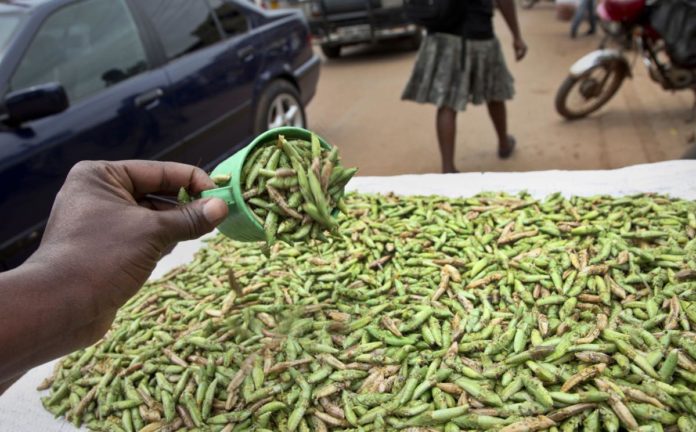
UNBS launches Standard to facilitate commercialization of edible insects

Grasshoppers

The Uganda National Bureau of Standards (UNBS) has launched the Edible Insects Standard in collaboration with Makerere University School of Food Technology, Nutrition and Bio-Systems Engineering (Food Science) with support from the International Centre of Insect Physiology and Ecology (ICIPE).

The standard is aimed at promoting safe consumption of edible insects which are harvested, processed and traded on the Ugandan Market, in line with the UNBS mandate of developing, promoting and enforcing standards in protection of public health and safety, and the environment against dangerous and sub-standard products.

During the launch, the UNBS Executive Director, Mr. David Livingstone Ebiru urged all traders of edible insects to seek UNBS certification to ensure safety of their products for public consumption.

“The quality assurance measures involve analysis of unwanted biological and chemical substances which may contaminate the insects during the process of harvesting, processing, packaging or transportation.” Mr. Ebiru added.

The Vice Chancellor of Makerere University, Professor Barnabas Nawangwe, thanked UNBS for partnering with the University to promote research in innovative products such as edible insects which require relevant standards to be in place in to facilitate commercialisation.

He further encouraged entrepreneurs to commercialize edible insects given their nutritional value and market opportunities both locally and internationally.

The standard, US 2146:2020 Edible Insects –Specification, specifies the requirements, sampling and test methods for edible insects which include Grasshoppers (Nsenene), White Ants, Termites, Crickets, amog others.

Some of the standard requirements state that the edible insect, whether, whole or granulated or powder or paste and either fried or dried shall; Be free from adulterants, extraneous material and objectionable odour, Be free from infestation and contamination from pests, Comply with the maximum pesticide residue and veterinary residues limits established by CODEX Alimentarius commission for similar commodities.

In addition, they should not contain heavy metal contaminants in amounts which may represent a hazard to health, should be hygienically produced, prepared and handled in accordance with the provisions of appropriate sections of US EAS 39 and should be packaged in food grade containers which will safeguard the hygienic, nutritional, and organoleptic qualities of the product, and more.

Mr. Ebiru encouraged the Ministry of Agriculture, Animal Industry and Fisheries (MAAIF) to consider promoting farming of Edible Insects in order to diversify the earning opportunities of farmers.

Besides the edible insects standard, UNBS also developed a standard for dried Insect products for compounding animal feeds, US 1712:2017 – Dried Insect Products for Compounding Animal Feeds –Specification, which guide farmers involved in Poultry and Fish Farming on how to use insects as alternative animal feed.

The Uganda National Bureau of Standards (UNBS) continues to implement its mandate of ensuring consumer protection and fair trade in Uganda.

Stories Continues after ad

WFP gets Shs11.9 trillion to support over 780,000 refugees in Uganda

WFP

The United Nations World Food Programme (WFP) has welcomed a contribution of Shs 11.9 trillion (EUR 3 million) from the European Union (EU) to provide cash transfers for 780,000 refugees in Uganda. This funding is in addition to an earlier contribution of Shs 17.9 (EUR 4.5 million).

WFP uses cash transfers to empower people with choice to address their essential needs by purchasing goods from the local markets, while also helping to boost these markets.More than 50 percent of WFP’s assistance to refugees in Uganda is provided in the form of cash transfers.

“The top-up from the EU comes at a time when we need it most. With influxes of new refugees, unpredictable weather, and other shocks such as Covid-19, refugees are now, more than ever, in need of assistance to enable them to progress towards self-reliance. These additional funds will enable WFP to continue providing much-needed food assistance to refugees and we call upon more donors to fund Uganda’s refugee response,” said Abdirahman Meygag, WFP Representative and Country Director in Uganda.

Despite this additional funding, WFP is still not able to provide full assistance to meet the minimum food requirements for refugees. In October 2021, WFP introduced a geographical prioritisation scheme – a system under which refugees are given rations according to the levels of vulnerability in the different settlements. Under this scheme, refugees in the most vulnerable geographic locations saw their rations increase from 60 percent to 70 percent. Settlements facing medium vulnerability had their rations maintained at 60 percent while the relatively less vulnerable settlements saw their rations reduced to 40 percent.

WFP’s analysis shows that ration reductions force refugees to spend a large share of their income on food to bridge the gap. The percentage of refugees with a high expenditure on food increased from 55 percent in 2020 to 60 percent in 2021.

High expenditure on food reflects high economic stress. The 2021 Integrated Food Security Phase Classification (IPC) categorised all refugee settlements in Uganda as facing crisis levels of food insecurity.

“Without this additional support from the EU, refugees who are already facing numerous challenges would be at even greater risk of hunger. Supporting refugees is an international legal obligation that we must work together to fulfil,” said Meygag.

Uganda has one of the most progressive refugee policies in the world, providing refugees with land, allowing them to work and access basics such as education and health services. WFP supports 1.3 million of the more than 1.5 million refugees that are hosted in Uganda.

“This crucial support affirms the European Union’s commitment to continue supporting Uganda to strengthen resilience among vulnerable refugees. We continue to laud Uganda for the remarkable commitment to helping those affected by crises and believe this progressive response should be provided with all the necessary support,” said Ambassador Attilio Pacifici, European Union Head of Delegation in Uganda.

WFP requires US$222.84 million to provide full rations to all registered refugees living in settlements in Uganda until December 2022. At present, even with ration adjustments, WFP has a shortfall of US$80.8 million for the next six months.

Stories Continues after ad
DR Congo officially joins the East African Community

EAC flags

The Democratic Republic of Congo has officially joined the East African Community (EAC) as its seventh member in a bid to boost its trade, social cohesion and security.

EAC heads of state approved the admission of DR Congo into the bloc at a summit meeting held virtually on Tuesday.

Bordering five member states of the organization – Tanzania, Burundi, Rwanda, Uganda and South Sudan – the DRC was assessed from June 25 to July 5, 2021 on its level of compliance with the organization.

Similarly, the DRC and Tanzania control almost equally almost all of Lake Tanganyika.

As early as early June 2019, Kinshasa had expressed its willingness to join the organization in a letter to Paul Kagame, then-current chair of the EAC Heads of State Summit.

Among the advantages for the DRC are the integration of the east of the country into the common telecommunications space, which will reduce costs with neighboring countries; several administrative facilities and a reduction in charges for the commercial and economic activities of Congolese citizens, as well as facilitating their mobility in the eastern countries.

Several EAC countries are among the DRC’s main African trading partners.

The DRC is also expected to benefit from reduced tariffs for goods received at the ports of Mombassa (Kenya) and Dar es Salaam (Tanzania).

In addition, in February, the EAC Heads of State Summit approved the addition of French as an official language of the community, alongside English and Swahili.

Kinshasa could also benefit from the application of the EAC’s Collective Security Pact, with the assistance of countries such as Kenya and Tanzania, in the fight against several rebels in the central African country.

Stories Continues after ad

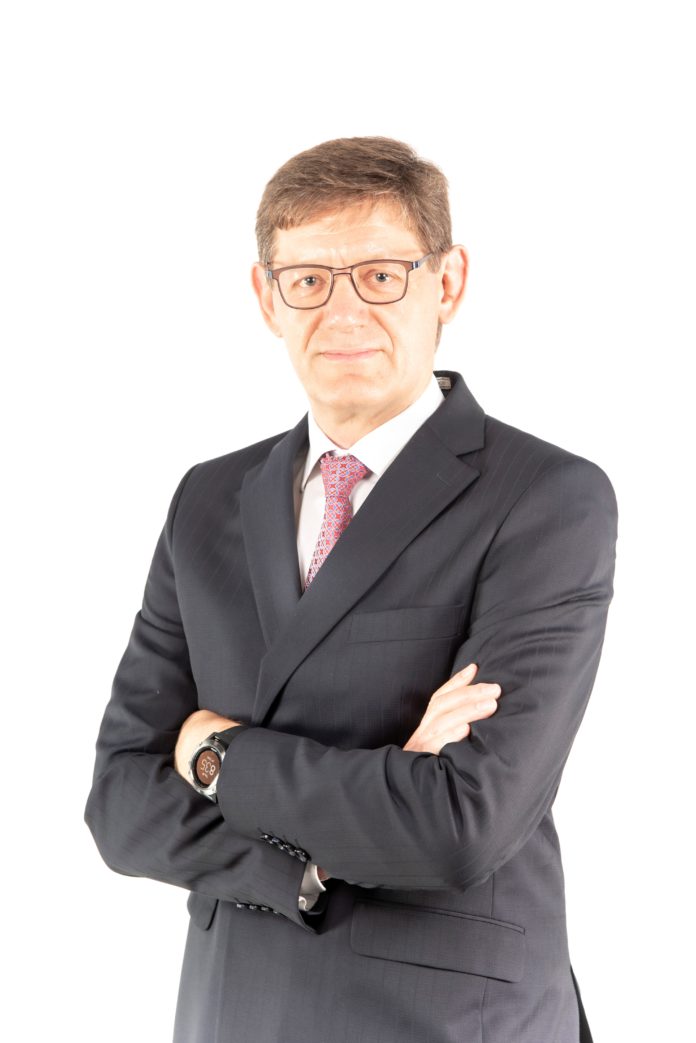
Arrie Rautenbach named Absa Group CEO

Arrie Rautenbach

Absa Group has announced the appointment of Arrie Rautenbach as Chief Executive Officer (CEO), effective immediately. The appointment follows a thorough recruitment and selection process completed by the Board.

Arrie, who is currently Chief Executive of the Group’s retail and business banking (RBB) unit, is the first internally appointed CEO since 2006. He has more than 25 years’ banking experience, which includes serving as the Group’s Chief Risk Officer, simultaneously providing executive leadership for the Group Separation Programme and Group Strategy Office. His extensive experience in the banking sector, his in-depth knowledge of Absa through several executive roles over the years, and his experience and strengths in strategy development and execution for the group, positions him ideally to lead the Group at this time.

Previous Absa roles include Chief Executive of Retail Banking, Managing Executive of Absa Card Division and Managing Executive of Distribution. He began his career with Absa Group at Bankfin in the late 1990s. Interim CEO Jason Quinn will resume his position as Group Financial Director with immediate effect.

Wendy Lucas-Bull, outgoing Absa Group Chairman, said: “On behalf of the Board, I am delighted to announce the appointment of Arrie as our Group CEO. I am confident that his leadership will provide the continuity and stability necessary to consolidate our purpose and strategy. I know that the Group is in good hands under Arrie’s executive leadership as I hand over the reins of the Board Chairmanship to Sello, who takes over on 1 April 2022. I would like to thank Jason and Punki for their significant contributions as Interim Group CEO and Interim Financial Director, respectively, during which time the Group’s positive operational momentum was maintained. I am pleased to be handing over the Chairmanship to Sello, with the Group in very good shape, having delivered record results for 2021 and with strong capital and liquidity ratios.”

Sello Moloko, Absa Group Chairman Designate, said: “Arrie’s appointment will anchor our performance and growth, as we consolidate our position as a leading financial services provider on the continent. Arrie is aligned with the Board on our organisational imperatives, including talent management and transformation. The Board looks forward to working with Arrie and the executive to ensure a Pan-African financial services Group that creates sustainable value for all its stakeholders. Furthermore, I look forward to continuing to work with Jason and Punki and thank them and the Exco for such strong delivery over the last year, which has placed the Group on a solid footing for the future.”

Arrie Rautenbach, Absa Group CEO, said: “I am humbled and honoured to lead Absa during challenging conditions locally and internationally. I am excited at the prospect of working with a talented and diverse team, leading an outstanding business that is positioned to seize the many opportunities that lie ahead. I look forward to working with the Board and the Executive in consolidating our strategy and performance, driving organisational and cultural transformation, and delivering financial and social value for all our stakeholders, and sustainable future growth and returns for Absa and its shareholders.”

Punki Modise will step down as Interim FD of Absa Group and Absa Bank and as an executive director of the Boards, with immediate effect. She will take the position of Interim Chief Executive: RBB and remains on the Group Executive Committee (Exco).

Arrie Rautenbach Arrie was previously the Chief Executive of Absa Group’s retail and business banking (RBB) unit and Absa Financial Services Ltd. He has been a Group Exco member for six years. With more than 25 years’ banking experience, Arrie previously served as the Group’s Chief Risk Officer, simultaneously providing executive leadership for the Group Separation Programme and Group Strategy Office. His earlier roles within the Absa Group included a number of executive leadership positions, encompassing Chief Executive of Retail Banking, Managing Executive of Absa Card Division and Managing Executive of Distribution. He began his career with Absa Group in Bankfin in the late 1990s. From a global perspective, Arrie has previously served on the Barclaycard and Retail and Business Banking and Risk executive committees (as part of Barclays Plc).

Under Arrie’s stewardship, Absa was awarded “Best Retail Bank in Africa in 2020” by The Asian Banker, and was previously the recipient of awards in the categories of “Best Retail Bank in Africa”, “Best Retail Bank in South Africa” and “Best Credit Card Management” (by The Asian Banker). He was previously named “Retail Banker of the Year” by the International Banker magazine.

An accomplished banker, Arrie has contributed to the industry through his board executive membership of the Banking Association of South Africa (BASA), board memberships of Woolworths Financial Services and other related industry bodies, locally and internationally, in addition to serving as the current Chairperson of Ford Financial Services.

Arrie holds a Bachelors in Business Administration (cum laude) and Masters in Business Administration from the University of North-West: Potchefstroom. He has also participated in an Advanced Management Programme at INSEAD. Within Absa, he completed the Absa Development Initiative (ADI) programme.

Stories Continues after ad