Stanbic Bank
Stanbic Bank
18.3 C
Kampala
Stanbic Bank
Stanbic Bank
Home Blog Page 649

Archbishop Kaziimba dedicates new Cathedral in Moroto

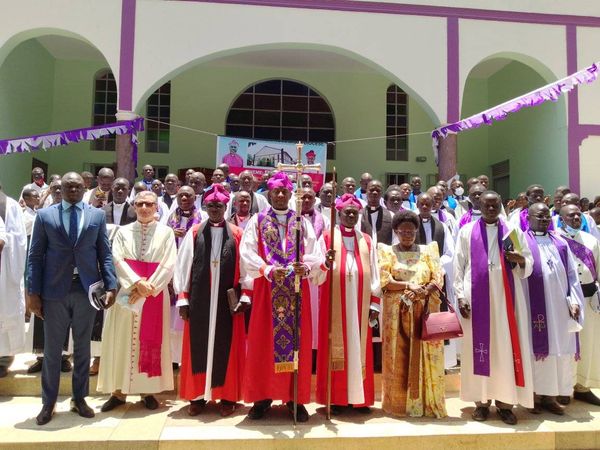
St Phillip’s Cathedral, Karamoja Diocese, has been dedicated and consecrated by the Archbishop of Church of Uganda The Most Rev Dr Stephen Samuel Kaziimba Mugalu in the presence of Rt Rev Joseph Abura and joyous Christians.

Archbishop Kaziimba congratulated the Christians, partners and we’ll wishers of Karamoja Diocese upon completing a magnificent sanctuary for the Lord.

President Yoweri Kaguta Museveni who was represented by Hon Gorretti Kitutu the Minister of Karamoja affairs thanked the Church for its role in household and community transformation.

He further expressed his gratitude to the Church for partnering with the government to popularize projects initiated by the government to benefit the ordinary Uganda.

 Rt Rev James and Mama Rose Nasak of North Karamoja Diocese, Rt Rev Damiano Guzezetti the Bishop of Moroto Catholic Diocese, interfaith and political leaders graced the dedication service.

Stories Continues after ad

UPL: Vipers awarded three points after successful petition against Tooro United

Vipers

The Fufa Disciplinary Panel has awarded Vipers three points and 3 goals following their successful petition over Tooro United’s use of an ineligible player.

Tooro United defeated Vipers 1-0 at Buhinga but used an ineligible player Ronald Kayondo who was supposed to be suspended after accumulating three yellow cards.

Kayongo was booked in matches away to Onduparaka (8th January 2022), at home against Onduparaka (8th February 2022), and against Sports Club Villa on 16th February 2022.

FUFA said in statement; “FUFA Competitions Disciplinary Panel has awarded three points and three goals to @VipersSC after a successful petition against Tooro United FC for fielding an ineligible player in the StarTimes Uganda Premier League match between the two teams on 11.3.2022 at Buhinga Stadium”

The aforementioned player could have sat out Police FC’s match which did not happen and subsequently featured in the next one against the Kitende side.

In so doing, “Tooro violated Article 30 par (9), (15) and Articles 19(19) of the FUFA Competitions rules,” the FUFA Disciplinary Panel stated on Saturday.

That puts Vipers on 49 points, seven ahead of second placed KCCA with 21 matches played while Tooro United stay bottom with nine points.

Stories Continues after ad

Important Online Casino Playing Tips for Ugandans

Online Casino Tips for Players in Uganda

When it comes to betting on the outcome of an event, such as sport or the spin of a slot machine, it’s safe to say that many of us love to gamble, no matter which part of the world we live in. Many jurisdictions have comprehensively updated their gambling laws and regulations in recent years, especially as a result of the rise in online casinos which includes Uganda.

In 2016 the National Lotteries and Gambling Regulatory Board (LGRB) was established in Uganda, and though many of the regulations still need to be updated and fine-tuned, betting is currently legal in the country.

Hundreds of betting establishments around Uganda have been licensed by the LGRB and gambling is fast becoming a major national industry. As well as brick-and-mortar betting shops and casinos, Ugandans have become attracted to the convenience and excitement of igaming. Online casinos most certainly provide a thrilling form of entertainment but with so many operators vying for your custom, it’s important to adhere to the following tips and guidelines to ensure you get the most out of your online casino experience.

Choose the Right Casino

Many offshore online casinos welcome Ugandan players and when it comes to selecting the right one, there are several crucial factors to consider. Reputation, generous bonuses, a variety of games, a wide range of banking options, great customer service, and a user-friendly interface should all feature on your checklist before you sign up to any gaming site. If you’re looking for a casino that ticks all of the above boxes Jackpot City is the best option. Jackpot City Casino has been around since 1998 and is powered by the popular Microgaming software thus ensuring a huge portfolio of slots, jackpot slots, roulette, blackjack, live dealer games, and video poker.

In addition, the award-winning site offers an attractive signup bonus to new players as well as awesome loyalty offers for established players. Jackpot City has a versatile banking section, is compatible across all devices and operating systems, and has a stellar reputation. Most importantly, you’ll know you’re in safe hands as the casino is licensed by the Malta Gaming Authority and is certified by eCOGRA. Regulation, licensing, and player safety are probably the most important elements of a great casino, as will be explained in the next section.

How to Recognise a Reputable Casino

An online casino can have all the bells and whistles in the world but is not worth a hill of magic beans if it treats the customer unfairly. This is where recognized regulatory bodies come in. Before registering at a new casino look out for the following icons which usually appear at the bottom of the site’s landing or home page:

  • Gambling Licence: Online casinos are required to have a license to operate and these are issued by Gambling Commissions. The role of these watchdog bodies is to ensure that the casino is run in a fair and honest manner. The commissions have the power to investigate substandard practices and fine the offending casino or revoke the license if necessary. Examples of renowned regulators include – The British Gambling Commission, The Gibraltar Gambling Commissioner (GGC), The Malta Gaming Authority (MGA) and Alderney Gambling Control Commission (AGCC).
  • eCOGRA Certificate: The eCommerce Online Gaming Regulation and Assurance was established in 2003. The role of this independent body is to ensure fair gaming, player protection and good practices across the iGaming industry.
  • Responsible Gambling Logo: Casinos should not only say they promote responsible gaming, but they should also work in conjunction with at least one of the many problem gambling organizations such as GamCare, BeGambleAware, or Gambling Therapy (gt).

If the casino displays any of the above logos it may be a good idea to click on them to make sure they are not out of date or even fake.

Player Safety and Responsible Gambling

As a Ugandan player there are many things you can do to ensure you have the ultimate gambling experience. As well as checking the above-mentioned logos here are a few more tips to guarantee your time at the casino is a pleasant one – whether your spinning the slots, at the roulette table, or betting on your favourite sport.

  • When you register at an online casino you are required to give personal and sensitive data, including your bank details. To ensure your details are kept safe and secure, check the casino uses the highest level of security such as 128-bit SSL security. This form of security is indicated by a padlock symbol. For extra peace of mind check the casino’s URL begins with “https”, not “http”.
  • Always be familiar with the site’s terms and conditions, especially when it comes to claiming bonuses. Many bonuses must be wagered up to x35 times before you can cash out any winnings. Not reading the T&Cs can lead to hassle and disappointment. Also, check the casino accepts players from Uganda or else your winnings could be forfeited.
  • Gambling is a form of entertainment and should never be considered as a sure-fire way of earning extra cash. You may win, but you can also lose. Gambling can be addictive so never get into debt to feed a gambling habit.
  • Gamble responsibly and never wager more than you can afford to lose. Check out the responsible gambling tools available at the casino which give you options such as setting your own deposit limits or taking a break if you are overdoing it. If you’re lucky enough to win, quit while you’re ahead; the cash-out button isn’t there for decoration purposes. Above all – never chase your losses.

If you approach online gambling with a responsible mindset, it can be a super relaxing pastime. You might even win big, but even if you don’t you’re sure to have big fun!

Stories Continues after ad

Sudhir kicks off construction of multi-billion Pearl Business Park

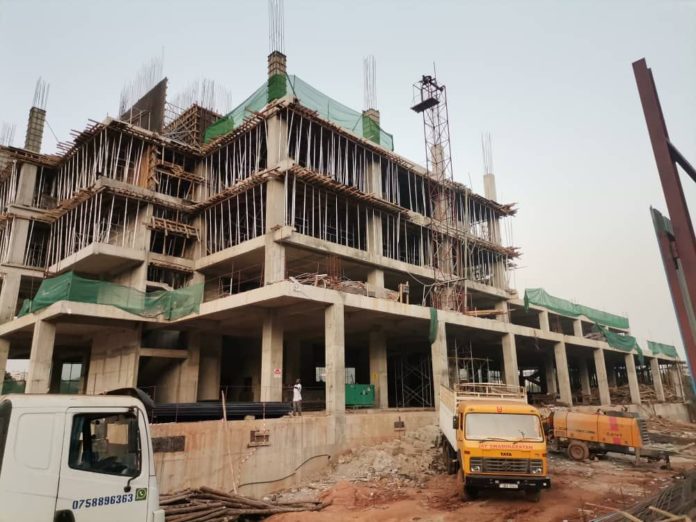
Tycoon Sudhir Ruparelia has kicked off the construction of the multibillion-swanky Pearl Business Park.

The mega project with an estimated 15 months scheduled timeline from the onset of construction to completion will encompass office premises, a shopping centre, health and leisure amenities, a 5-star hotel, modern hospital, among other things.

Ruparelia Group, through Meera Investments Limited, is building the 18-acre mixed-use facility on the premises of the former Chieftaincy of Military Intelligence (CMI) headquarters on Yusuf Lule Road in Kampala.

Ruparelia Group will divide the project into different phases. The first phase completion estimate is 2023, including office spaces, 16 lettable floors and two floors for parking.

The plan is to equip the facility with modern amenities such as a fully automated fire detection system on all floors and approximately 170 CCTV cameras in all public areas. In addition, the building will include internet access, a fitness centre and other health, safety and productivity utilities.

Meanwhile, on top of Pearl Business Park, Sudhir is also expanding Kabira Country Club, which is going to have a shopping mall complex attached to the hotel.

As if the above is not enough, mogul is also planning to build a 200-room Kingdom Kampala Hotel.

The Kingdom Kampala Hotel is estimated to be completed by 2026. This is another project by Meera Investments Limited, the real estate arm of the Ruparelia Group that owns a series of hotels, country clubs and over 300 commercial properties in and around Kampala.

Stories Continues after ad

PROFILE: Who was Speaker Jacob L’Okori Oulanyah?

Speaker Jacob Oulanyah

The speaker of Parliament, Hon. Jacob L’Okori Oulanyah passed on today in Seattle. His death was confirmed by President Yoweri Museveni.

“It is with a lot of sadness that I announce the death of Jacob Oulanyah, the Speaker of Parliament. I got information of this sad news at 10.30am, East African time from People that have been with him and the doctor that was caring for him in the intensive care unit,” Museveni announced.

Jacob L’Okori Oulanyah was a Ugandan agricultural economist, lawyer and politician, who served as the Speaker of the 11th Parliament of Uganda (2021 – 2022) but passed on 20th March 2022 in Seattle.

He was elected to that position on 24 May 2021, after defeating the former Speaker Rebecca Alitwala Kadaga. He served as Deputy Speaker of the Ugandan parliament, from May 2011 until May 2021. Oulanyah was also the Member of Parliament representing the Omoro County constituency, Omoro District, Acholi sub-region, in Uganda’s Northern Region.

He was born in the then Gulu District, on 23 March 1965 to Nathan L’okori and Karen Atwon. He attended St. Joseph’s College Layibi, Dr. Obote College Boroboro, and Kololo Senior Secondary School for his O-Level and A-Level education.

In 1988, he joined Makerere University, the oldest university in the East African Community, where he studied agricultural economics. He graduated in 1991 with a Bachelor of Arts in that subject. That same year, he entered law school, also at Makerere University, graduating in 1994 with a Bachelor of Laws degree. He served as speaker of the university students’ guild during his stay at Makerere. In 1995, he attended the Law Development Centre (LDC), where he obtained a postgraduate diploma in legal practice.

Following his graduation from the LDC, Oulanyah worked as a lecturer at the centre. During the same timeframe, he began private law practice at the law firm of Oulanyah, Onoria & Company Advocates.In 2001, he entered politics by successfully contesting for the parliamentary seat of Omoro County, in the then Gulu District under the no-party system also known as the Movement Political System.

He was however a cardholder of the Uganda People’s Congress (UPC). He also participated in the peace talks between the government of Uganda and the Lord’s Resistance Army rebels. In 2006, standing as a UPC candidate, he lost his re-election bid. In July 2006, he quit the UPC and joined the ruling National Resistance Movement (NRM).

In 2008, he served as the chairman of the commission of inquiry into the controversial sub-lease of Kisekka Market, one of the municipal markets in the city of Kampala. In March 2011, Oulanyah was elected to represent Omoro County then in Gulu District, in the Ninth Parliament, this time on the NRM ticket. He was elected as Deputy Speaker of Parliament on 19 May 2011.

Following the February 2016 general election, Oulanyah was re-elected as Deputy Speaker of Parliament on 19 May 2016. In the vote, conducted by secret ballot, he received 300 votes, while Muhammad Nsereko received 115. On 13 July 2019, Oulanyah was awarded an honorary Doctorate of Divinity by Zoe Life Theological College USA and acquired the title, Doctor enabling him to be called Rt. Hon. Dr. Jacob L. Oulanyah

On 24th May 2021, Jacob Oulanyah was voted Speaker of Parliament in a race against his former boss, Rt. Hon. Rebecca Kadaga and Kira Municipality MP, Ibrahim Ssemujju. Jacob obtained 310 votes against Kadaga’s 197 and Ssemujju 15.

Stories Continues after ad

Breaking! Speaker Oulanyah Dead

Speaker of Parliament Jacob Oulanyah

It is unfortunate to announce that the Speaker to the Parliament of Uganda, Hon. Jacob Oulanyah has passed away.

The president of Uganda, Yoweri Kaguta Museveni confirmed the sad news in a tweet

The speaker has been undergoing treatment in the USA.


Oulanyah was born in the then Gulu District, on 23 March 1965 to Nathan L’okori and Karen Atwon. He attended St. Joseph’s College Layibi, Dr. Obote College Boroboro, and Kololo Senior Secondary School for his O-Level and A-Level education. In 1988, he joined Makerere University, the oldest university in the East African Community, where he studied agricultural economics. He graduated in 1991 with a Bachelor of Arts in that subject. That same year, he entered law school, also at Makerere University, graduating in 1994 with a Bachelor of Laws degree. He served as speaker of the university students’ guild during his stay at Makerere. In 1995, he attended the Law Development Centre (LDC), where he obtained a postgraduate diploma in legal practice.

May his soul rest in peace.

Parliament’s director of communication Chris Obore could not pick calls from this reporter.

Stories Continues after ad

Stanbic Bank retains 22% Bancassurance market lead

Stanbic bank

Bancassurance contributed Shs 103.5 billion to the Shs 1.1 trillion Gross Written Premium (GWP) recorded by Uganda’s insurance sector in 2021 with Stanbic Bank accounting for 22 per cent to consolidate its position as market leader.

Bancassurance is the sale of life assurance and other general insurance products through commercial banking institutions; in 2020, bancassurance sales contributed only Shs 32 billion to the Shs 1.06 trillion GWP recorded by the country’s insurance sector.

Stanbic Bank Uganda’s Bancassurance agency dominated other commercial bank players in a small but steadily growing business unit, with the lender aggregating Shs 22.5 billion in GWP, equivalent to 22 percent of the total market share.

Thebank generated Shs 8.1 billion in short-term general insurance premiums and Shs 14.5 billion in life insurance premiums to cap a year of growth amidst stiff competition.

Stanbic Bank also paid out the most claims in 2021 with life insurance claims paid on behalf of various insurance companies amounting to Shs 5.6bn and Shs 1.5Bn in general insurance claims.

According to the Insurance Regulatory Authority (IRA) the insurance industry enjoyed a generally good year with GWP for both life and non-life cover growing by 11 per cent mostly boosted by a 22 per cent increase in Life Gross Written Premiums.

Makonese Tichaona, Stanbic Bank’s Head of Wealth and Insurance for the East African region has welcomed the performance noting that in a competitive market where the various bancassurance agencies continue striving to improve their solutions, Stanbic’s Bancassurance business  managed to be consistent in its delivery by focusing on client-centred solutions.

Makonese added that through leveraging data science SBIA has been able to craft   tailor made solutions to address client needs. The affordable five-in-one Business Comprehensive cover that addresses the needs of the SMME to the business community is a case in point.

Dogo Singh Sherman, Stanbic Bank Uganda’s Manager for Bancassurance said: “We are pleased to retain our market share in a small but growing bancassurance business and 2022 offers us another challenging opportunity to consolidate our position we will continue to innovate through unique partnerships with the customer at the centre of everything we do.”

Stories Continues after ad
Man City draw Atletico, Chelsea to face Real Madrid in Champions League quarter-finals

UCL-trophy

The UEFA Champions League quarter-final draw has been made, with holders Chelsea set to meet 13-time winners Real Madrid.

Manchester City will play Atletico Madrid, while Liverpool tackle Benfica and Bayern Munich take on Villarreal.

The draws were open, so there was no seeding or country protection. Any team could be drawn against any other team.

As it was the case in the round of 16, the away goals rule no longer applies. If the tie is level after 180 minutes, it goes to extra time. If the teams still can’t be separated after an additional 30 minutes, the tie goes to a penalty shoot-out.

This season’s final takes place at the Stade de France in Paris, which also staged the showpiece in 2000 and 2006 as well as the UEFA EURO 2016 decider. The game will be played on Saturday 28 May.

Champions League quarter-final draw

QF1: Chelsea v Real Madrid

QF2: Manchester City v Atlético Madrid

QF3: Villarreal v Bayern Munich

QF4: Benfica v Liverpool

Semi-final

SF1: Manchester City or Atlético Madrid v Chelsea or Real Madrid

SF2: Benfica or Liverpool v Villarreal or Bayern Munich

Schedule

Quarter-finals

First legs: 5/6 April

Second legs: 12/13 April

Semi-finals

First legs: 26/27 April

Second legs: 3/4 May

Final

Saturday 28 May (Stade de France, Paris)

Stories Continues after ad

Coca-Cola donates Shs107m towards economic inclusion of Refugee Women in Yumbe

Hon Musa Noah, MP Koboko North, Melkamu Abebe General Manager CCBA, Hon. Naima Melsa Gule Avako and Hon. Ezma Siraji Brahan, MP Aringa County recieving the dummy cheque at Century Bottling Company

The Coca-Cola Foundation through Coca-Cola Beverages Africa (CCBA) in Uganda has donated Shs 107m to TCP Global.

The donation is aimed at expanding micro-loan programs in Yumbe District, Northern Uganda in order to enable refugee women access loans from their Saccos, through an existing partnership with the Care Community Education Centre (CCEDUC). The donation will enable the organization to add ten women’s Village Savings and Loan Associations (VSLA) groups to the twenty-seven it is currently assisting. The VSLA groups have a minimum of 15-30 women indicating that over 500 women are bound to benefit from the program.

Speaking at the handover engagement, Naima MelsaGuleAvako,  theYumbe Member of Parliament representative applauded Coca-Cola for the support. She noted that women often face financial exclusion due to lack of necessary support to acquire loans and lack of collateral.

“We know that a lack of access to finance is one of the major barriers women face especially in marginalized communities across the world. The key to building resilience is financial stability. Women financial empowerment has a ripple effect which extends to the family, community, and the entire nation. Without access to finance, women face difficulties in collecting and saving income to grow their businesses and pulling their families out of poverty,” she said.

“This grant will enable the economic uplifting of many women as we eliminate the hurdles in accessing finance that the majority of women face. Community-based savings groups provide access to even the most basic financial services, which are extremely limited in rural areas. These groups provide a secure place to save, the opportunity to borrow in small amounts and on flexible terms, and a network of support and solidarity. We are grateful to The Coca-Cola Foundation for this support,” she added.

According to The Consultative Group to Assist the Poor (CGAP), nearly one of every three women in the world 1.1 billion women is excluded from the formal financial system yet financial inclusion has been identified as an enabler for 7 of the 17 Sustainable Development Goals. 

In his remarks Melkamu Abebe, General Manager, Coca-Cola Beverages Africa (CCBA) in Uganda, reiterated the company’s commitment to youth and women economic inclusion as part of its contribution to building a better Africa.

“As the Coca-Cola system, we believe in doing business the right way wherever we operate. Doing business the right way means we must be responsive within the communities in which we operate, and we must always stick to our vision of making Africa a better place for all. Women, in particular, form more than 50% of Uganda’s young population; yet in spite of this demographic, women are usually under-represented in the main fields of economic progress and wealth creation.At Coca-Cola we have made clear commitments to change that and have delivered on these commitments. Most significantly, we delivered on our global 5by20 Women Empowerment initiative, under which we aimed to empower five (5) million women globally by 2020. I am proud to say that two (2) million of the empowered women were in Africa, all empowered to work and succeed as entrepreneurs earning sustainable incomes,” he said.

The covid-19 pandemic exacerbated the challenges faced by women led businesses as majority are involved in activities that were most hit. There is overwhelming evidence that achieving equality and empowerment for women has broad ripple effects that are good for society. As pillars of their communities, women invest a sizable portion of the income they earn on the health and education of their children and in their local economies, creating a tremendous economic impact

“Economic inclusion is the opening of gainful economic opportunities by providing access to markets and other economic activities leveraging the business and the entire industry. When addressing Economic Inclusion our aim as the Coca-Cola system is to boost income, provide decent earning potential and improve skills and business knowledge for women, resulting in them accessing other opportunities. This focus is even more important as we emerge from the COVID-19 pandemic and its impact on economies around the world  including ours,” Abebe concluded.

Stories Continues after ad

IMF disburses Shs447b to support Uganda’s budget

IMF logo

The Executive Board of the International Monetary Fund (IMF) has disbursed Shs 447 billion (US$125m) to support Uganda’s budget. The disbursement follows the completion of the first review of the Extended Credit Facility (ECF) Arrangement and 2021 Article IV Consultation with Uganda.  The Shs 447b (US$ 125m) brings to aggregate disbursement-to-date to Shs 1.3 trillion (US$385m).

Uganda’s ECF Arrangement for a total US$ 1 billion at the time of program approval on June 28, 2021, is aimed at supporting the near-term response to the COVID-19 pandemic and boosting more inclusive private sector-led long-term growth. Reforms focus on creating fiscal space for priority social spending, preserving debt sustainability, strengthening governance, and enhancing the monetary and financial sector frameworks.

The Ugandan authorities have skillfully managed the second wave of the pandemic in July last year, which has however implied a lower growth rebound, and some additional fiscal support to cushion the revenue shortfall from the lockdown and expand cash transfers to the vulnerable. Real growth was revised down to 3.8 per cent from 4.3 per cent for FY21/22. The fiscal deficit will be higher than programmed at the time of the ECF approval to accommodate new demands on security and social sectors approved in the supplementary budget. The social impact of the pandemic is, however, profound, with deep scars on human capital potentially persisting over the medium term.

In spite of a challenging environment and some technical and legislative delays, all quantitative performance criteria were met, and the reform agenda implementation is progressing. Of note, progress was made in strengthening fiscal transparency, the budgetary planning framework and the governance framework by institutionalizing the use of guidelines for prioritizing public investments and a framework for rationalizing tax expenditures, tracking, auditing, and publishing of COVID-19 spending and upgrading the anti-corruption legislation, among others.

At the conclusion of the Executive Board’s discussion, Mr. Bo Li, Deputy Managing Director and Acting Chair stated: “The Ugandan authorities remain firmly committed to their economic program amidst a challenging environment. Program performance has been satisfactory. All quantitative targets were met, except one, and all but three structural benchmarks for 2021 were completed.”

“The slight relaxation of the fiscal deficit in fiscal year 2021/22 relative to the programmed target was necessary to mitigate the impact of the pandemic’s second wave and address higher security tensions. Returning to the programmed fiscal consolidation path remains essential to keep debt sustainable while creating more space for private sector credit. Enhanced domestic revenue mobilization, rationalization of non-priority spending, and shifting the composition of spending towards priority social areas will help achieve the fiscal objectives and address Uganda’s large development needs. Improving budget preparation including through fewer supplementary budgets and strengthening cash and arrears management remains essential,” he said.

“The banking system is well-capitalized and financial stability risks should continue to be minimized. Further monetary policy accommodation is needed as fiscal support is removed but uncertain external conditions call for monetary policy to remain data dependent. Greater exchange rate flexibility is needed to preserve external buffers, with foreign exchange interventions limited to smoothing excessive exchange rate fluctuations,” he said.

Bo Li said:“Accelerating the momentum on structural reforms is essential to limit pandemic scars and help move Uganda towards its goal of middle-income status. Progress on governance reforms including through regular audits of COVID-19 expenditures, publication of beneficial owners’ information and enhanced scrutiny of politically exposed persons should be sustained. Accelerating financial inclusion, fostering climate adaptation policies and improving trade integration are also essential for building a faster-growing greener economy.”

Stories Continues after ad