Stanbic Bank
Stanbic Bank
20.7 C
Kampala
Stanbic Bank
Stanbic Bank
Home Blog Page 671

Ambrose Tashobya appointed NCS Chairman

Ambrose Tashobya

Ambrose Tashobya has been appointed the new chairman for National Council of Sports (NCS) for the period 2022-2024, the Minister of State for Education and Sports Hon. Denis Hamson Obua confirmed.

Tashobya replaces Dr. Donald Rukare whose two-year tenure expired.

“In exercise of the powers vested upon me by Section 3 (ii) of the National Council of Sports Act (1964), I am pleased to appoint the chairman and Members of the National Council of Sports for the term of 2 years with immediate effect,” Obua said.

Tashobya is a former Vice president at the Uganda Olympic Committee (UOC) and former president of the Federation of Basketball Association (FUBA).

2012 Olympics gold medalist Stephen Kiprotich is among the new faces on the board.

The board will over-see operations of all the 54 sports associations and federations in the country.

Chairman: Ambrose Tashoya

Members: Stephen Kiprotich, Cecilia Anyakoit, Zubair Galiwango, Andrew Owiny Otengo, Juliet Oyulu, George William Galiwango, Gloria Evelyn Piloya, Agatha Arembe Namirembe, Susan Anek Nowell Ongom and Derrick Namisi.

Stories Continues after ad

Why I still maintain that bank notes signed by the deceased Central Bank Governor are no longer legal tender

Mr. Muwema

The response to my opinion questioning the validity of Bank notes signed  by the late Governor, Professor Tumusiime Mutebile  which was made by Dr. James Akampumuza on the 11th February, 2022, demonstrated a limited appreciation of the intricacies around  the legal nature of paper money.

What my colleague and others of his persuasion need to know is that the acceptance of money as signed legal tender was the subject of a lot of litigation  in the United States of America, under what came to be known as the legal tender cases which included Knox Vs Lee 79.US 457(1870). Those cases caused a lot of controversy back then because private banks among others, used to issue their own bank notes until the Federal Reserve Act 1913 was enacted to create the Federal reserve system to by which issuance of paper currency was regulated under one central authority. Since then, it became a requirement that bank notes operating as legal tender should bear the signature of living persons. I will not delve deeper into the legal history of money as legal tender as I must keep the discussion intimate to the local context of the Ugandan bank notes.

Although my colleague has done better than many people who have a preponderance to hurriedly comment without any prior encounter with any knowledge on the subject, he failed to draw a distinction between the process of issuing money as legal tender and the company law principles of perpetual succession. This failure of distinction has driven his opinion outside the acceptable realms of jurisprudence on the money subject.

Any legal practitioner with a sufficient grasp of company law should certainly know that under the principle of perpetual succession there is a presumption of continuity of the business of the company. As such, contracts signed by an officer of a company continue to bind the company even after the demise of the official. I explained this in my earlier opinion when I stated that the late Governor’s signature on any BOU contract would continue to convey proprietary rights by and against the Bank. I added however that the same signature on the bank notes would not convey proprietary rights to the bank or users, when the maker passes on. I will explain again that money is a sovereign legal instrument to which the rules applicable to other fungible goods exchanged in the market cannot be applied by the stretch of any academic argument.

At the risk of repetition, I must emphasize that the principle of perpetual succession does not apply to bank notes which must be duly signed and authenticated at the material time they are tendered. If this principle were applicable, then we would still have bank notes signed by former Governors like Leo Kibirango (1981-1986), Suleman Kiggundu (1986-1990) and Charles Kikonyogo (1990-2000). There would be no rationale for issuing new Bank notes signed by a new Governor, if it was possible to retain previously signed bank notes.

We cannot ignore the common best practice of withdrawing bank notes signed by former Governors from circulation by the central bank. This practice which is worldwide, gives effect to the law. For those in doubt, this practice must be viewed as a fundamental extrinsic aid in arriving at the correct statutory interpretation of the BOU Act in relation to issuance of money as legal tender.

The reason why BOU has always replaced bank notes signed by a governor or bank secretary who is no longer in office is because the term- legal tender, is used in a present continuous tense. There is no room for a past Governor or Bank Secretary to sign a bank note which qualifies to be legal tender today when they are not physically present in office.

S.3 of the BOU Act which mandates the Governor to sign and authenticate bank notes, also provides for the deputy Governor to sign in his absence. It should be understood that a reference to the holder of an office under S.3 Interpretation Act Cap 15 is construed to mean the person for the time being lawfully holding, acting or performing the functions of that office. In that sense, therefore, a bank note can only be treated as legal tender if it is signed by the Governor lawfully holding, acting or performing the functions of that office. As we all know, the late Tumusiime Mutebile like any other former Governors is no longer the Governor of the central bank and therefore he cannot otherwise issue any legal tender today or at all.

It is surprising that my colleague did not even attempt to explain why the law would provide for another person to sign for the Governor in his absence if indeed his signature is supposed to stand in perpetuity. Moreover, as I stated earlier (and to which no rebuttal was given), the late Governor’s signature on the bank notes is an electronic signature which is liable to be revoked under S.69 Electronic Signatures Act 2011.So on what basis can anyone claim that his electronic signature can be held in perpetuity. This claim of perpetuity, rather than my opinion, is the real absurdity.

I wish to end by stating that our continued use of the bank notes signed by the late Governor does not make them legal tender. We are all using these illegal bank notes under a state of compulsion because we don’t have any other mode of exchange available. Whereas all Ugandans who continue to use these illegal Bank notes under such compulsion are excused from any form of liability, it is incumbent upon us as a country to cause the redemption of our currency by calling for appointment of a new Governor to sign on new Bank notes without delay. Our national currency is the life blood of our economy, we cannot afford to saddle it with avoidable legal uncertainties for this long.

Fred Muwema

Managing Partner

Muwema & Co. Advocates

Director Legal & Corporate Affairs

Anti-Counterfeit Network Africa

15th February, 2022

Stories Continues after ad

Museveni mourns Emorimor, says he passed with flying colours

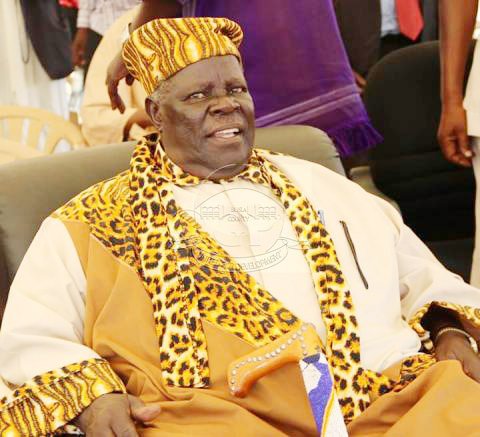
President Yoweri Museveni has eulogized the fallen Teso cultural leader Papa Augustine Osuban Lemukol.  

Speaking at the official send off at Kololo Independence grounds, Museveni said, the late Emorimor passed with flying colours and he has no issues against him.

“The Emorimor came up with many well-intentioned development projects. I am here to say goodbye to him and acknowledge his proper use of leadership, which others can emulate,” he said.

The President expressed his dismay over inadequate funding of cultural institutions in the country.

 Museveni said the government will soon come up with a policy where a cultural leader can be given a car every five years. “This should be an entitlement, not a donation from government,” Museveni added.

“I express my condolences to the family of Papa Augustine Osuban Lemukol, all Ugandans and Africans and wish him eternal rest,” he mourned.

Emorimor Osuban Lemukol died on 5 February 2022 at Mulago National Referral Hospital.

He was born in 1934 and was enthroned in April 2000.  He served as Commissioner in the Ministry of Agriculture and Animal Husbandry until his retirement in 1979.

He also served on several boards including Kinyara Sugar Works, Uganda Tea Growers Corporation, Produce Marketing Board and Uganda Medical Stores from 1989 to 1998.

Stories Continues after ad
LoP protests motion seeking for removal of MP Zaake from Parliamentary Commission

MP Zaake

The Leader of Opposition in Parliament (LoP) who doubles as Nyendo-Mukungwe legislator Mathias Mpuuga has petitioned the Clerk of parliament protesting the motion seeking for removal of Mityana Municipality MP Francis Zaake from the Parliamentary Commission.

The motion seeking for eviction of Zaake from the commission is being moved by the Gulu West Member of Parliament Ojara Martin Mapenduzi. The mission is seconded by Amolatar Woman MP Atim Agnes Apea the National Resistance Movement (NRM), Soroti West MP (Independent) Jonathan Ebwalu and Busia MP Geoffrey Macho (Independent). The group accuses Zaake of incompetence and misconduct.

“We have written to the Clerk of Parliament over the ambiguous motion being fronted by some Members with the intention of removing Zaake from the Parliamentary Commission. The motion contravenes Rule 107 clauses 2 to 7 which demand a written notice,” Mpuuga said.

Mpuuga said that being served to the office of the Speaker articulating the grounds of the motion and the evidence thereof, the Parliamentary Rules of Procedure requires that the grounds and evidence be displayed at the Members’ notice board, and a list placed at the Sergeant at Arms office.

“For atleast third of MPs with voting rights have to sign. It remains unclear how the a third of MPs was notified  and persuaded to sign the petition which was never displayed for 14 days as required by the Rules of Procedure. The motion abuses the requirements of Rule 110(5),” Mpuuga said.

LoP said the motion  compromises transparency and compliance to Rules 110(2) & 107(5) and the rule of Natural Justice which demands fair hearing.

It all started with Members of Acholi Parliamentary forum boycotting a motion seeking to censure Security Minister Jim Muhwezi. The Opposition MPs ressoved to boycott parliamentary settings claiming that minister of security has abdicated his responsibility and that has resulted into forced disappearances, arbitrary arrests and detentions, continued torture. We find him unfit to continue occupying that sensitive office.

Political analysts however said that the motion for removal of Zaaka from the commission is aimed at mounting pressure on the opposition to drop the motion to censure the security minister.

Stories Continues after ad

Museveni to grace Archbishop Janani Luwum Day celebrations

Late Archbishop Janani Luwum

Minister of State for Ethics and Integrity Akello Rose Lilly has revealed that the country is set to commemorate Archbishop Janani Luwum Day.

The day will be marked tomorrow under the theme; “Hope beyond Affliction”, Lamentation 3:21-26. The theme encourages people to believe God for sustainable transformation in all aspects of life.

Janani Luwum was the 2nd Archbishop of the Church of Uganda, Rwanda, Burundi and Boga-Zaire from 1974 to 1977. This day will mark 45 years since Janani Luwum was brutally murdered under the then Military Government of General Idi Amin Dada.

According to the minister, the commemoration Service will be celebrated at Kololo Independence Grounds and will led by Arch-Bishop, The Most Rev. Dr. Stephen Kazimba Mugalu and the commemoration service will be graced by  President Yoweri Kaguta Museveni

In honour of St. Janani Luwum home and burial grounds, a commemoration service will be held on the same day at Wii Gweng, Mucwini, Kitgum District.

Who is Archbishop Janani Luwum?

Archbishop Janani Luwum was born in 1924 in Mucwini among the Acholi people. He went through all stages of education at the time until he took on his first calling as a teacher at Boroboro College, Boroboro Parish in Lira District. On 6th January 1948, in dramatic conversion, Janani Luwum accepted Jesus Christ as his Lord and Savior and it is then that he switched to Church Ministry.

Janani Luwum served in almost all key positions in the church ranging from Principal of Buwalasi Theological College, Provincial Secretary at Namirembe, Bishop of Northern Uganda and in June 1974 following unanimous election; he was installed as Archbishop of the ecclesiastical Province, then covering Uganda, Rwanda, Burundi and Boga-Zaire (Eastern DR Congo).

Archbishop Janani Luwum served during the times of turmoil in Uganda; specifically, under the reign of Gen. Idi Amin Dada. This however did not hinder him from standing out for the values that we, up to date, strive to uphold in this country.

He was known for defending the truth at all times irrespective of the repercussions. His ability to speak the truth against the brutality towards Ugandans exhibited during Amin’s regime was a sign of unwavering courage. He strived to see youth, women and men involved in gainful employment; thus promoting hard work for self-reliance. He was passionate about development in all areas where he served, with emphasis on poverty reduction and rural development.

In recognition of the values St. Janani Luwum President Museveni in 2015 declared 16th February as a national day. The day is aimed at reflecting on the life of St. Janani Luwum and strive to bring positive change in our lives and the lives of those around us.

Stories Continues after ad

Government set to name and shame Emyooga fund defaulters

The state Minister for micro-finance Haruna Kasoro Kyeyune has ordered the District commercial officers in Ankole sub region to ensure that they name and shame all Emyooga program defaulters before arresting them.

Minister Kasolo issued the directive on Monday February 14th in Ntungamo district while concluding his tour to monitor the progress of Emyooga program in the counties of Rushenyi and Ntungamo Municipality while meeting political, civic and Emyooga leaders.

“I give an ultimatum of one week to the District commercial officers in Ankole sub region to visit all Emyooga SACCOs, document all defaulters and report back to me with the list of names, contacts and places of residence such that they can be put on all public places notice boards, places of worships, websites, radios, televisions and billboards,” he said.

Minister Kasolo revealed that naming and shaming will act as a warning to recover the funds from Sacco members.

The minister said that all steps are intended to strengthen the Emyooga program such that the funds can keep rotating with its members to realize social-economic transformation of all Ugandans.

However, he hailed Ntungamo district for performing well in the Emyooga program compared to the district where Ntungamo stands at 78% recovery.

The minister further cautioned the general public against overspending on non-capital ventures stressing that it is the reason why most Ugandans will remain poor.

The Ntungamo district chairman Samuel Mucunguzi Rwakigoba asked the minister to hire an independent audit firm saying that there has been a conflict of interest between district commercial officers and the implementing bank which is Micro Finance Support Centre who should audit the other.

The deputy RDC Ntungamo Byarugaba Isaiah Kanyamahaane acknowledged the great achievement made after the introduction of Emyooga program saying that whoever is despising the program is an idiot.

Kanyamahaane hailed the manager Microfinance Support Centre satellite office Ntungamo Asiimwe Grace for the work done in implementing the program in the district.

The Ntungamo District NRM vice chairperson Asiimwe Evans Rutahweire commended the NRM party chairman who is also the president for being wise to introduce the program that has transformed the society.

Ntungamo district has 85 Emyooga SACCOs except Journalist Omwooga Sacco where UGX 2.650Bn were disbursed and each constituency received UGX 530M.

The amount recovered Shs1, 842,566,350. He noted that among best performing SACCOs are Ntungamo Municipality produce dealers led by Natamba Edward, Ntungamo Municipality Vendors and Women Entrepreneurs Omwooga.

Stories Continues after ad

Police nabs its officer for criminalizing adultery

Handcuffs

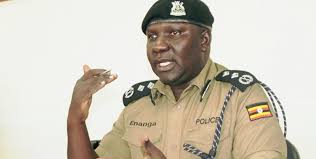
The police have arrested Inspector of police (IP) Julius Ogwang for criminalizing adultery. His arrest has been confirmed by Fred Enanga, the police Spokesperson.

Last week, the country witnessed an incident where a shameful incident of adultery, a civil matter, was criminalized. The incident was responded to by inspector of police, Julius Ogwang of Kira Road Police Station.

“The two victims were arrested and interrogated on camera, in a manner that violated their privacy. Adultery is no longer a criminal offence in our country. Therefore, criminalising it, is an act of unprofessionalism and abuse of authority, which the force cannot tolerate,” Enanga said.

He cautioned married persons whether in estranged, complex or sensitive relationships, to respect the sanctity of marriage and use lawful means, instead of smearing one’s reputation. 

“Adultery, can be used as a ground for civil processes like divorce, separation, custody of children and sharing of property. Other areas where the public, in conspiracy with selected officers, criminalise civil matters are private debts, where thousands are threatened with arrest,” he said.

“We strongly condemn the criminalisation of civil matters in the police. The officer who registered the case, IP Ogwang Julius, is arrested and charged with discreditable conduct, which upon conviction, can lead to a dismissal from the force. Our action therefore should act as a warning to other undisciplined officers, who look to gain from the proceeds of their selfish interests, at the expense of the UPF mandate. The role of the police in civil conflicts, complaints and disagreements is to protect life and property,” he said

Enanga said there are other circumstances, where a victimised married person, can report their matters to police. These include complaints of elopement, where one elopes with a married person and stays with them, trafficking in persons, where a person uses their power or positions of superiority and takes advantage of the victim’s vulnerability or disability, and under domestic violence, where the victim is tortured physically or emotionally, by the sexual behaviour of a married partner.

Stories Continues after ad

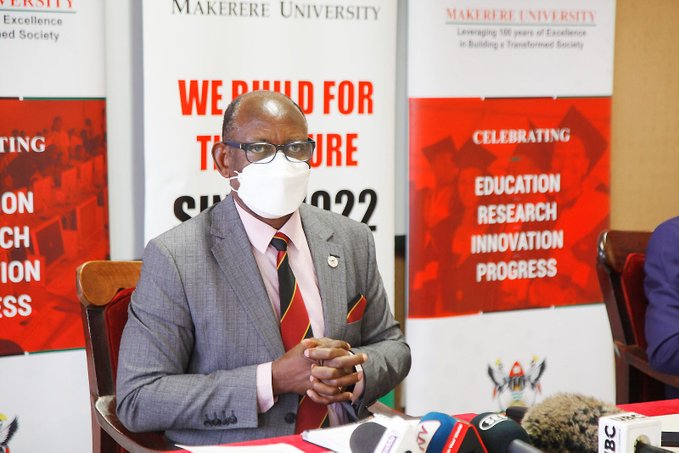
Makerere University VC Prof Nawangwe pardons 16 students

Prof Nawangwe

Makerere University Vice Chancellor, Professor Barnabas Nawangwe has revoked the suspension of 16 students who participated in a strike over online lectures.

Several students last Monday went on strike to oppose the university’s decision regarding the decision to proceed with the blended mode of teaching and learning, despite the full reopening of the country’s economy.

The University Management then received reports of bullying of freshers by some continuing students. This bullying was in the form of forced jogging, physical assault and use of offensive or profane language. The same individuals also destroyed university property in an attempt to get the freshers out of their rooms.

Through a letter addressed to each of the students, Nawangwe wrote: “In lieu of the written and oral explanations and apology from yourself. I hereby revoke your suspension and reinstate you as a student of Makerere University. I urge you and warn you to desist from any further actions that disturb peace at the university and bring the university in disrepute.”

Nawangwe encouraged the students to strongly desist all attempts to disrupt the University activities.

“As you may know, engaging in disruptive behavior and organizing unsanctioned demonstration both have a profound effect on the image of the University and the entire higher education sector. Such actions also disturb the peace of other stakeholders and disrupt important activities,” the letter reads.

The University reversed its decision to hold online lectures for the better part of semester one which started on January 29, 2022 and will now fully reopen for all students on March 5, 2022.

Stories Continues after ad

Uganda’s economy beats forecast, grows by 6.5% in 2021

Traders-go-about-their-businesses-in-Kampala

Uganda’s economy grew by between 6.5 and 7.0 per cent in 2021, beating projections due to effects of Covid-19 restrictions, Bank of Uganda (BoU) has said.

According to the BoU Monetary Policy statement for January, high-frequency indicators of economic activity for October 2021 to January 2022 show that the economy has rebounded from the Covid-19 induced lockdowns.

“The economy is estimated to have bounced back in 2021, growing in the range of 6.5-7.0 per cent, although it came after a 1.5 per cent contraction in 2020 as the pandemic forced parts of the economy to shut,” the report reads.

“Indeed, the high-frequency indicators of economic activity for October 2021 to January 2022 suggest that the economy was on a strong Rebound. Domestic demand is making a strong comeback as COVID-19 related restrictions are eased, adding to the gains from robust external demand,” it adds.

The report adds that considering this recovery and signs that the effect of the Omicron outbreak on economic activity has been relatively small, the outlook for economic growth is more positive than earlier projected.

But BoU warns that in 2022, there could be a loss of growth momentum as globa1 factors turn adverse, but real GDP is projected to grow by around 6 per cent as   domestic   demand   recovery   broadens.  

“However,   lower   global growth,   continued   supply   chain disruptions and tighter global monetary and financing conditions could constrain external demand. In addition, the recovery might remain fragile and uneven across sectors. Over the medium term, government investment in infrastructure is expected to enhance productive capacity and coupled with increased social spending and a recovery in tourism, should bring annual growth above 7 per cent,” the report says.

On the domestic front, uncertainty about the evolution of the pandemic continues to cast a shadow on the economic recovery.

“New COVID-19 variants and a resurgence of lockdown measures would weigh on the outlook. Another important source of uncertainty for the outlook is the public investment and how this will be financed under the fiscal consolidation path, which is necessary to keep debt sustainable and avoid the risk of debt distress. The slow execution of public investment projects and further delays in oil investments could dampen the growth outlook,” the report states.

Stories Continues after ad

Security Agencies uncover and dismantle new terror cells in Lukaya, Butambala

CP Enanga

The Directorate of Crime Intelligence in coordination with Counter-terrorism, conducted raids on two hide outs of suspected terrorists, in Lukaya-Kalungu and Bulo village in Butambala district, where they arrested 7 suspects (names still withheld).

Upon interrogation, they clearly indicated how they were being inspired, to carry out attacks on security personnel and VIP installations, within the country, by Imam Sulaiman Nsubuga, of the Lweza ADF Cell, who is still at large.

According to the police spokesperson, Fred Enanga, they are aware of the planned attacks on security personnel and continue to review our security posture, in the face of these targeted threats.

“Much as our counter terror task teams have greatly weakened the ADF, criminal elements and other hostile groups in the country, the sponsors of terrorism, are trying hard to reconstitute and re-establish operational terror cells and related capabilities. Their operational cells are mobile, autonomous, and flexible in the range of their targets or objectives,” Enanga said.

“Although we have now entered day 80, since the deadly suicide attacks occurred at CPS and Parliamentary Avenue, we have credible information indicating that, these hostile groups are determined to carry out attacks to reveal their existence. Their tactics include use of suicide bombers, attacks on VIP’s and security personnel, ride along shoot and kill, on bodabodas, use of AK 47 SMG random attacks and bomber attacks.”

“Our task teams are aware of these threats, of smaller but operational terror cells.  We are putting more attention on eliminating them and preventing them from being created.  The arrests and disruptive operations we have made are proof of the reality, that there are individuals in Uganda, who have become radicalised to violence and are willing to act upon it.  We are doing everything in our means to disrupt their mobility and proliferation.”

Enanga thanked the local communities who furnished them with relevant information about these hostile cells that had started recruiting individuals for terrorism purposes.  “The threats are real and call for increased vigilance and caution, as people go about our daily activities,” he emphasized.

Stories Continues after ad