Stanbic Bank
Stanbic Bank
19.6 C
Kampala
Stanbic Bank
Stanbic Bank
Home Blog Page 673

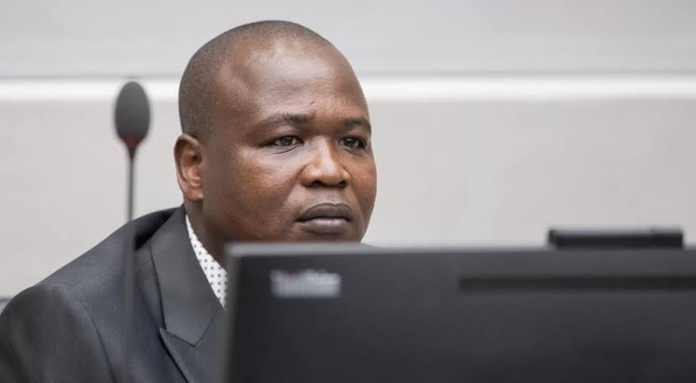
Hearing of Dominic Ongwen’s appeal kicks off at ICC

Dominic Ongwen

The hearing of Dominic Ongwen’s appeal has kicked off at the Appeals Chamber of the International Criminal Court (ICC).

The hearing, which started today and ending on 18 February 2022, is aimed at addressing the Defence’s grounds of appeal relating to Mr Ongwen’s conviction and sentence.

Prosecutor, Ongwen and his lawyers are appearing before a panel of judges led by Judge Luz del Carmen Ibáñez Carranza (presiding), Judge Piotr Hofmański, Judge Solomy Bossa, Judge Reine Alapini-Gansou and Judge Gocha Lordkipanidze, and a number of amici curiae who were invited to provide observations on the appeals and participate in the hearing.

Ongwen’s lawyers raised 90 grounds of appeal consisting of alleged legal, factual and procedural errors relating to the conviction, and 11 grounds of appeal, alleging legal, factual and procedural errors relating to the sentence. The appeal brought against the conviction is the largest ever considered by the Chamber, raising complex and novel issues.

On 4 February 2021, Trial Chamber IX found Dominic Ongwen guilty of a total of 61 crimes comprising crimes against humanity and war crimes, committed in Northern Uganda between 1 July 2002 and 31 December 2005.

On 6 May 2021, Trial Chamber IX sentenced Dominic Ongwen to 25 years of imprisonment. A phase dedicated to the reparations to victims is ongoing. On 21 July and 26 August 2021, the Defence filed its appeal briefs against the conviction and sentence, respectively.

Stories Continues after ad

Roast and Rhyme returns with unique post-lockdown edition

The original Mpola Enjoyments, circa March 2020

Lovers of cold beer, live music and sizzling grilled meat have another reason to rejoice since the lifting of curfew with the much-anticipated return of the Roast and Rhyme festival.

This is going to be the first Roast & Rhyme edition held at its home at Jahazi Pier Munyonyo since March 2020 – almost two years ago.

This edition, dubbed the Reggae Ragga NyamNyam, will take place on the 27th of February at Jahazi Pier Munyonyo.

The organisers – Swangz Avenue and Bell Lager – say this edition will welcome the public back “outside” with the signature picnic-themed afternoon on the shores of Lake Victoria featuring bigger and better amenities, comfortable seating and certified chefs and vendors who will be on-ground to serve savoury barbecue menus and exciting ‘Bell na Nyama’ combos at affordable prices.

According to Matilda Babuleka, the Bell Brand Manager, this edition will deliver Mpola Enjoyments, which are about having a good time in a chill, laid-back environment surrounded by friends and loved ones, enjoying games like Matatu and Ludo, while being soothed by the live sounds of reggae and ragga music performed by Ugandan artists.

The organisers have also hinted at a possible barbecue showdown between attendees who trust their grilling skills, which will be judged by a yet-to-be-revealed celebrity chef, and the winners will take home exclusive Mpola Enjoyments kits.

Gates will be open as early as 11:00am and tickets are available for 70k (5-11th Feb) early bird, 80k (12th-18th Feb) early bird max and 100k (19th-27th Feb) standard.

Tickets are available at Drew & Jacs Forest Mall, Positive Emotions Garden City, Soothing Spa Acacia Mall, Nail Villa Senana Building, Funz Videos (Kabalagala, Kisementi, Kyanja) and Swangz Avenue The Square Building, 2nd-floor 3rd street Industrial area.

Stories Continues after ad

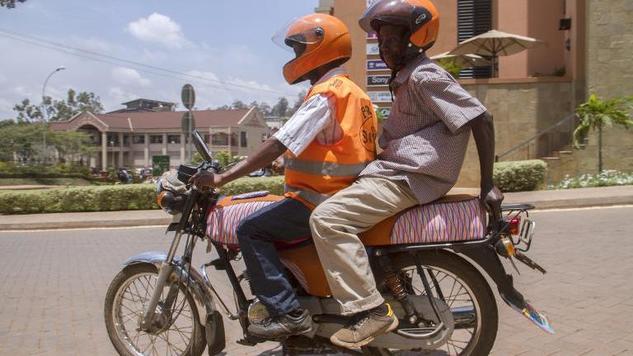
Only registered boda bodas will be allowed to operate in Kampala – Gov’t

Boda Boda rider

The inter-ministerial committee composed of Ministry of Kampala capital city and metropolitan affairs, Ministry of Local Government, Ministry of Security, Ministry of Works and Transport, the Uganda Police Force and representatives from boda boda associations from the five divisions of Kampala had a meeting on 20th January 2022 and came up with resolutions to guide on the operations of the boda boda industry country wide.

One of the resolutions from the meeting was that boda boda riders will have to be registered and only operators that have been registered will be allowed to operate in the city.

Other resolutions were; KCCA is to gazette boda boda stages within Kampala. The leadership of these stages will be formalized and known. Any stage that shall not have been gazetted will be illegal.

They will conduct training of boda boda operators in collaboration with police, KCCA and Uganda driving standards agency and also collaborate with Uganda licensing system and the police to ensure that the boda boda operators are tested and issued with driving licenses upon completion of training.

Ensuring that all boda bodas operating in the five divisions of Kampala are registered and clearly identified with retro-reflective jackets that identify the rider with the stage of operation and the division where the stage is based. Gazetting stages which shall be done by KCCA, municipalities, districts, sub counties and the division leadership. The details will be provided on completion.

It should be noted that KCCA decongested the city by removing the street vendors and relocated them to gazetted market areas of operation. This considerably freed the streets of unwanted chaos and disorganization that was associated with street vending.

The government continues to support efforts to decongest the city by reducing ion the traffic jam in the greater Kampala metropolitan area through upgrade of feeder roads to bitumen standard, repairing of major roads, signalizing of junctions under the urban road rehabilitation project and ensuring smooth operations of the taxi parks with gazette stages which has created a conducive environment for motorists.

Stories Continues after ad

Excitement as Nabakooba commissions TB X-ray machine at Mityana General Hospital

Songs of joy and praise welcomed Lands and Housing Minister Judith Nabakooba in Mityana District on February 12 as she made her way to commission the first ever Tuberculosis X-ray machine in Mityana General Hospital.

Nabakooba, who also happens to be born and bred from the district, was received in the area by local leaders led by the Chairman LCV, National Resistance Movement cadres and other locals who treated her to a triumphal entry into the district.

Commissioning the machine, Nabakooba thanked President Museveni for having prioritised Mityana among the places to be supported in this term.
She also thanked her health counterpart in cabinet, Dr Jane Ruth Aceng for having been at the centre of implementing what the president directed for Mityana.

“We have been in touch with Dr Aceng and her Doctors almost on a daily basis following up on this machine. I want to thank her for the first batch of this machine. The equipment looks small but you have heard it is a highly digitised equipment. I was told it is the simplest, its results are accurate and it is manageable,” she said.

The minister urged leaders in Mityana to ensure the machine serves its purpose. She asked them to make sure they monitor and make sure the people accessing the services of the machine are well attended to.

“I will create time as a leader to come and talk specifically to the team running the scan and x-ray units. I want to understand their operations and how we can help them deliver their job without complaining. I want to pledge that the ministry of health promised me that other deliveries are going to be coming. The health centre twos that are going to be elevated to health centre three are work in offing, I have been talking to Dr Aceng and she told me it is going to be done.”

Representing the health minister at the commissioning, Dr Raymond Byaruhanga, a technical advisor in the ministry of health said the equipment was procured under the United States government friendship with Uganda.

He explained that Mityana was prioritised among the first beneficiaries because the district happens to be one of those at the heart of the country in terms of TB services.

“Hon Minister Nabakooba working together with the minister of health made it possible that this machine is brought to this district. We thank you (Hon Nabakooba) for encouraging us to procure this machine. This equipment is a fully fledged X-ray machine, which takes X-rays for TB screening. This machine is mobile, can be used anywhere and you don’t need dark rooms to use it. It uses intelligence to screen for TB,” he said.

According to Byaruhanga, the machine cost the government 120,000 USD and has a guarantee of maintenance. He encouraged the people not to steal the spare parts from it.

The machine has a computer system and once diagnosed, it can send the chest X-ray results anywhere on the patient’s phone. It can do over 200 plus X-rays in an hour.

It can also identify broken ribs, pneumonia, an enlarged heart but for now it can only do chest diagnosis.

“The cost for the service for this equipment is free of charge and the number of chest results it can do in a day is in millions. It is maintained free of charge for the next couple of years. It uses electricity but in villages where there is no power it can use batteries,”Byaruhanga shared.

The expert appealed to the leaders to utilise this machine by taking it to communities and letting locals use it.

“We as the ministry of health are working to make sure we facilitate the health workers as they go to the community to use it. We have trained two people from the hospital (Mityana) on how to use it, a senior clinical officer and the radiographer. We are going to facilitate them to move around the community with it.”

In his remarks, Patrick Mugisha, the Chairman LCV Mityana district thanked the government for thinking about his district.

He said with Mityana being among the first people to receive the machine in Uganda, the government is really prioritising them as a district.

“I usually tell people that once it comes to life matters we all have to be in the same boat. I believe this X-ray is going to help us a lot.”

He asked the Minister to help expedite the repair of the bigger hospital x-ray that has been down for some time now.

“We asked for this hospital to be made a referral hospital, if elevated, we shall have better services here. We hope to cut the distance from Mityana taking critical patients to Mubende and Kampala. We put a number of beds and other facilities in here, we pray that it is expedited,” he said.

Stories Continues after ad

CNOOC announces contractor for the Kingfisher Development Project

CNOOC sign

CNOOC Uganda Limited has announced the PC1 contractor for the Kingfisher Development Project. Excel Construction Limited, a Ugandan company, has been contracted to construct the well pads, access roads, and water intake points. On 7th February 2022, Excel Construction Limited mobilized their equipment and machinery to ensure that work programs are delivered by the end of 2022.

Following the official announcement of the final investment decision on 1st February 2022, the sector is transitioning into the development phase in preparation for the sustainable production of these resources. As a responsible company, CNOOC Uganda Limited ensures that all its contractors adhere to national content regulations and that their operations are in strict compliance with the relevant laws and regulations, to live up to the industry’s best practices.

“Having Excel construction Limited as the PC1 contractor reflects CNOOC Uganda Limited adherence to the national content principles and we shall continue doing so to ensure that more Ugandans have the opportunities to be involved in and benefit from the oil industry.” Stated Mr. Chen Zhuobiao, President of CNOOC Uganda Limited.

On 8th February 2022, CNOOC Uganda Limited awarded the EPC-3 contracts and the integrated drilling services contracts. With these newly awarded contracts and others to come, we expect to enhance employment of Ugandans through direct, indirect and induced jobs, training of workforce and procurement of locally available goods and services. Priority shall be given to local suppliers on the national supplier database as guided by Petroleum Authority of Uganda, enhancement of knowledge and technology transfer in Uganda.

“I commend CNOOC Uganda Limited for their efforts towards national content enhancement which is key to the social and economic development of Uganda and Ugandans. I urge you to continue working closely with the government of Uganda to ensure that we have sustainable exploitation of the oil and gas. We look forward to first oil in early 2025 now that FID was announced on 1st February 2022.” Said Ruth Nankabirwa, Minister of Energy and Mineral Development.

To further enhance national content participation, we have engaged in enterprise development and training programs for capacity development and regular supplier development engagements, support to universities and higher institutions of learning like UPIK and the Albertine VTIs, strategic partnerships with local agencies and associations to support national content initiatives. These include the Stanbic Business Incubator, Uganda Chamber of Mines and Petroleum, Association of Oil and Gas Suppliers, Uganda Manufacturers Association, among others.

All the land needed for the project facilities has been acquired according to international best practices. We have attained 99% of land acquisition for all the project required land. Currently, 57 resettlement houses are being constructed for the affected persons in the 3 sub-counties of Kyangwali, Kabwoya & Buseruka. As part of good practice and alignment with IFC performance standards, we also implemented livelihood restoration programs under the different RAP phases; completed RAP1 phase one and currently the RAP phase two livelihood restoration projects are ongoing for agriculture and livestock projects one supported by CNOOC Uganda Limited for the affected people in the area of operation. The company has further implemented corporate social responsibility projects in the fields of education, health, sports and during disaster times. Thus, this has contributed to the social wellbeing of the communities.

CNOOC Uganda Limited reaffirms its commitment to the efficient and effective development of the Kingfisher development area in an environmentally friendly and sustainable manner.

Stories Continues after ad

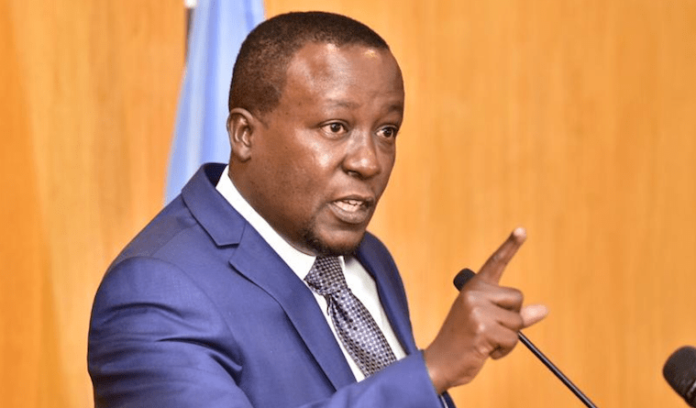
Gov’t is intentionally keeping you poor – Kabuleta tells Lango people

Joseph Kabuleta

The National Economic Empowerment Dialogue (NEED) leader Joseph Kabuleta has told the people of Lango Sub Region that the government has failed to compensate them after losing their property during the Lord Resistance Army (LRA) insurgency because it wants to keep them poor.

In 2010, President Yoweri Museveni promised monetary compensation to over 10,000 victims of the two-decade-long war between the LRA and the government but up to date nothing has ever been done.

Lango sub-region is currently divided into nine districts of Alebtong, Amolatar, Apac, Dokolo, Kole, Lira, Oyam, Otuke and Kwania District and locals here mainly rely on land as the key economic asset.

Addressing the people of Lango on Friday, the former presidential candidate said the sub region is one of the underdeveloped areas in Uganda and this is because the government has paid less attention to economically empowering the locals.

“I understand that most of you lost your property such as houses, cattle and land. Some of you are now refugees as a result of Museveni’s war with LRA rebels. Government promised to compensate you but up to date, it has never done so. This is a deliberate move to keep you in poverty,” Kabuleta said.

He further rallied the Lango people to demand for their fair share of the national cake, if they want to alleviate themselves from poverty.

“The deteriorating education and health systems in the area are also indicators that the government has not played its role in developing Lango. You should not sleep, stand up and demand what rightly belongs to you;That’s the fair share of the national cake.”

NEED under the stewardship of Kabuleta is currently on a nationwide sensitization campaign premised on protecting Uganda’s national deposits that could be used by citizens to alleviate themselves from poverty.

NEED has so far managed to spread the economic empowerment message to Buganda, Bugisu, Bukedi, Teso, Sebei and Lango sub-regions.

Last year in September, Kabuleta launched NEED with an aim of promoting economic empowerment among Ugandans. He said the political movement is constituted of politicians who currently hold no office but have influence in their respective sub-regions and are able to start meaningful discussions that could see Ugandans fight for their resources.

Stories Continues after ad

Smartphone use increases compliance rates for TB treatment in Uganda – Study

Dot Selfie study team in agroup photo. Photo by Davidson Ndyabahika.


Public health specialists in Uganda are pushing for a Smartphone-based approach as an alternative in Tuberculosis (TB) treatment adherence, after a study in Kampala found compliance rate at about 90 percent among those using VDOT, along with high patient satisfaction rates compared to 30 percent in the usual care group.

A study dubbed ‘DOT Selfie’ also known as Video Directly Observed Therapy or VDOT was conducted among 144 randomly selected tuberculosis (TB) in six TB clinics around Kampala. The clinics included Kisenyi, Kitebi, and Kawaala health centers alongside Lubaga, Mulago, and Mengo Hospitals.

‘DOT Selfie’ method allows for remote treatment monitoring through patient-recorded videos through a smartphone app showing their daily medication intake. The patients then submit the videos to the health system for review by health workers for monitoring treatment adherence compared to Usual Care DOT (UCDOT).

The method is promising as a flexible and less invasive option to help ensure TB patients complete their treatment successfully.

Currently, directly observed therapy (DOT) for treatment adherence monitoring is the recommended standard.  But research has shown that it is challenging to implement at scale because it is labor-intensive.

The study results show that there was limited adherence to treatment from among the patients that were enrolled on the usual care, with adherence at just 9.9 percent. Some of the study participants highlighted the lack of treatment supporters in the Usual Care DOT as well as the stigma associated with health worker visits.

Dr. Juliet Nabuye Sekandi the study Principal Investigator notes that the study was motivated by fact that tuberculosis (TB) is treatable and curable only if patients take their medication. The mobile phone-based interventions to improve patient adherence have been tried out in other countries especially in the U.S. and in India.

The DOT Selfie study conducted in Uganda sought to evaluate the effectiveness of using Video Directly Observed Treatment (VDOT) to improve medication adherence in TB treatment versus usual care DOT in an African context.

Uganda remains among the high TB/HIV burden countries in the world. The first national population-based TB disease prevalence survey in 2014/15 estimated the prevalence of TB at 253 cases in every 100,000 people. The survey also showed that Tuberculosis caused 80,000 new cases much higher than HIV (60,000 new cases).

The WHO’s post-2015, End TB Strategy adopted by the World Health Assembly in 2014, aims to end the global TB epidemic as part of the newly adopted Sustainable Development Goals. It serves as a blueprint for countries to reduce TB incidence by 80%, TB deaths by 90%, and to eliminate catastrophic costs for TB-affected households by 2030.

Throughout the last decade, tuberculosis (TB) treatment success has not surpassed 90%, the global target. Dr. Sekandi observes that poor medication adherence is likely to increase rates of loss to follow-up, disease relapse and drug resistance for individuals with active TB.

“What we see in routine care is that patients sometimes forget to take their medicine, they get tired and get off medicine maybe after a month or two because TB treatment is for six months,” she discloses.

Dr. Sekandi who is also an Assistant Professor, Department of Epidemiology & Biostatistics & Global Health Institute at the University of Georgia in the United States observes that this particular study is aimed to improve adherence to medication to ensure that patients can take advantage of medicine that actually cure their TB.

“That is why we have invested this time to research on a new method to try and help the patients to take their medicines completely and efficiently,” said Dr. Sekandi.

The findings of the study show digital adherence technologies like VDOT can play a positive role in delivering patient-centered TB care. Also, patients using VDOT were at least 8 times more likely to have favorable adherence as measured by observation of medication compared to patients using usual care DOT.

The coronavirus pandemic and the subsequent impacts such as lockdowns further underscored the importance of the usage of mobile Health (mHealth) tools.

“This is the perfect timing to think about a method like this that is technology-based. This method started way before Covid-19, but the pandemic has been a catalyst for us to begin to realize that the remote methods of patient care are necessary because lockdowns, no travel, people were in their homes but they could still be able to interact with healthcare providers and get the support that they need like the face-to-face interactions. I would say COVID has helped us to accelerate and improve the methods that we have in our hands,” says Dr. Sekandi.

The study lead team included Dr. Sekandi and Dr. Esther Buregyeya, an Associate Professor, Department of Disease Control & Environmental Health MakSPH as study Principal Investigators. The core research team lead was Ms. Damalie Nakkonde. Others on the team are Mr. Patrick Kaggwa IT specialist, Ms. Daphine Kyaine, Mrs. Gloria Nassanga Kabanda, and Ms. Michelle C. Geno all Research Assistants.

In their findings, the study team observed that patients who owned cellphones were more likely to have a higher level of adherence regardless of study arm. Also, findings suggest that the VDOT intervention is a strong facilitator of social support for TB patients and that small incentives to patients motivate adherence to treatment.

During this intervention study, each participant received a Smartphone with a VDOT App, SMS text reminders for medication intake, a weekly internet bundle of 400MBs, and a weekly airtime incentive of Uganda Shillings 1,000.

Dr. Sarah Zalwango, the Kampala Capital City Authority (KCCA) Manager Medical Services and a Clinical Director, VDOT Study says this method will offer flexibility and is good for low-resource settings.

“What we do as health workers, we have the Direct Observed Therapy where the patient is observed physically while swallowing the medicine. So, if you have this option of doing it in your own space, and you do not have to move to be observed and have a treatment supporter of course it will come a long way in helping to save on many things; transport, [human resource] constraints,” says Dr. Zalwango.

Elsewhere, studies have shown that Digital adherence technologies (DATs)—have the potential to facilitate more patient-centered care for monitoring TB medication adherence than the existing standard of care; directly observed therapy (DOT) models.

According to Dr. Zalwango, VDOT fits well into the TB / Leprosy Control Program (NTLP) recently agreed strategy of patient-centered care. She notes that since the National TB Program is currently piloting the same method in other districts across the country, it will be a game-changer in monitoring treatment adherence as well as improved outcomes.

“It will go a long way leave alone the challenges it comes with which includes smartphones, data availability but for those that can have access to that, it will help that portion so that they take that option and they don’t have to enroll in the directly observed therapy,” Dr. Zalwango.

“I appreciate all the researchers for the great work well done in the DOT selfie study, in particular, I want to recognize Dr Esther Buregyeya from Makerere School of Public Health, who was the local PI, Dr Juliet Sekandi from the University of Georgia, who was our lead PI the national TB and Leprosy program for technical support and Lubaga hospital for providing a home for the study”, the study wouldn’t have been possible without your efforts,” she adds.

How VDOT works

Mr. Patrick Kaggwa, a health informatics specialist on the program explains that each participant enrolled on the VDOT-Selfie study was required to use a smartphone to record and send time-stamped encrypted videos showing his/her daily medication ingestion.

He notes that video directly substitutes the need for daily face-to-face meetings between the health provider and patient.

“During this study, each patient was given a smartphone with the app, whereby every morning, the patient would take videos and this would be sent to the web-based system. This was done to ensure that the health workers observe the video and tell whether the patient took their medicine and all this helped to document adherence,” says Kaggwa.

“The system is automatically designed to review videos, document adherence, and also document side effects in the medication videos,” he adds.

Kaggwa also notes that the study had a messaging system where patients would receive translated messages as reminders to patients to take their medicine. This was in addition to the mobile-phone-based ‘social bundle’ incentives to motivate adherence to continued daily submission of videos to the health system.

Limitations

Muwanguzi (not real name), one of the TB patients being monitored in one of the facilities said during a dissemination workshop held in December 2021 at Pope Paul 11 Memorial Hotel in Kampala says it was very hard for him to take the videos from his workplace.

“I remember the first time to take a video, I had to deceive my boss that I was undertaking some other treatment because I thought they would stigmatize me so much at workplace”. He noted. 

Besides giving feedback to health workers, Muwanguzi says the VDOT app helped him not to hide his illness.

“Months before getting TB treatment, I had tested HIV positive but I had reached a point of ignoring my daily ARVs but when I got the smartphone, I was able to record myself taking all my medicine as prescribed by health workers,” he testified.

Mr. Vincent Kasiita, a qualitative researcher at MakSPH says from in-depth interviews conducted among health workers from KCCA clinics, several health workers viewed the use of the VDOT method as increased workload especially if not well-trained signaling recruitment of more health workers to review these videos.

According to Kasiita, some TB clinics had no computers to use for the VDOT practical trials. For the side of patients, he says; “It was difficult for some of them to operate smartphones since most of these participants were of less or had no education as one patient had to say; “I have never operated even an ordinary small phone, how will I be able to learn using a smartphone and use it to take daily videos”.  

He avers that other patients were very scared of recording their videos and submitting them for fear of their videos being used in adverts as one patient said, “what if I find my video being used in an advert?”.

However, Kasiita observes that the VDOT method is patient and evidence-centered. He cites the availability of video evidence of taking medication.

“We want patients to be at the center of their healthcare unlike before when we depended mostly on treatment supporters that have been policing patients,” he said policymakers.

Researchers recommend the provision of incentives to motivate TB medication adherence. They also recommend community sensitization of TB to minimize TB patient stigmatization.

Stories Continues after ad

Crane Bank Supreme Court ruling in Full

Meera Investment Limited properties that Dfcu had illegally acquired through bogus transaction.

Introduction:

This is a ruling on an application to withdraw an appeal and the party that is supposed to meet the costs of the withdraw of the appeal.

Background:

Crane Bank Limited (In receivership) hereinafter the applicant/appellant, sued the 1st respondent and Meera Investment Limited in the High Court Commercial Division, Vide Civil Suit No.493 of2017. In that Suit, the appellant sought recovery of money, allegedly Misappropriated by the 1st respondent as a director and shareholder of the appellant. The appellant also sought delivery of Freehold Certificates of title to 48 properties with duly executed transfer deeds in her favour.

Through their written statement of defence, the respondents denied the appellant’s assertions and instead challenged the competency of the suit contending that the appellant did not have locus standi to bring the suit, the suit did not disclose a cause of action and that the suit was generally barred in law.  

Prior to the institution of the suit, Bank of Uganda had placed the appellant under statutory Management and later Receivership in line with the provisions of the Financial Institutions Act.

Consequently, the respondents (defendants in High Court Civil Suit No. 493 of 2017) filed Miscellaneous Application No. 320 of 2019 arising from the head suit, wherein they sought the dismissal of the suit on grounds that the appellant was not clothed with locus standi, the suit did not disclose a cause of action and that the same was barred in law. Wangutusi J. allowed the application and dismissed the suit with costs which were to be borne by the Bank of Uganda. Aggrieved with the decision of the High Court, the appellant lodged an appeal to the Court of Appeal and on June 23, 2020 delivered its judgment dismissing the appeal with costs in the terms held by the High Court.

Dissatisfied with the finding of the Court of Appeal, the appellant filed the instant appeal in this court on eleven (11) grounds to wit;

1.       The learned Justice of the Court of Appeal erred in law in holding that the respondents raised the objections which were relied upon by the High Court to dismiss the appellant’s suit in their written statement of defence.

2.       The learned Justice erred in law in holding that the points of law were raised on the presumption that the facts in the plaint were true and there was no need to adduce additional evidence.

3.       The learned Justice erred in law in holding that the points of law raised were based on Order 7 rule 11 and Order6 rule 29.

4.       The learned Justice erred in law in holding that the appellant, as a receiver, is not granted the powers to sue under the Financial Institutions Act.

5.       The learned Justice erred in law when they upheld the decision of the learned Judge that on being placed under receivership, Crane Bank Ltd lost its legal capacity to institute legal proceedings.

6.       The learned Justice erred in law in holding that the learned Judge was right to find that a person who cannot be sued cannot be sue.

7.       The learned Justice erred in law in holding that after twelve months, the receiver was expected to have completed the options listed in section 95 (1) and that in this case, the receivership ended on the January 20, 2018.

8.       The learned Justice erred in law in holding as a point of law, the receivership had indeed ceased to exist by the time the learned Judge made his ruling.

9.       The learned Justice erred in law in holding that by operation of law, the receivership had expired after 12 months could easily be ascertained from the plaintiff.

10.   The learned Justice erred in considering and determining the issue; “Whether the shares are beneficiary owned by the 1st respondent in which case the appellant would become a Ugandan Citizen”, without any evidence having been taken.

11.   The learned Justice erred in law in holding that the request for delivery of the freehold title was illegal.

The appellant prayed that the appeal be allowed, the decision of the Court of Appeal set aside with a consequential order that the High Court proceeds with the hearing of the suit before another judge.

This appeal Has had a checkered history since it was filed in this court with several applications instituted emanating from it, to be specific, six in number to wit Miscellaneous Application No.32 of 2020, Miscellaneous Application No.33 of 2020, Miscellaneous Application No.39 of 2020, Miscellaneous Application No. 40 of 2020, Miscellaneous Application No.02 of 2021, which were all heard and determined. Miscellaneous Application No.44 of fo2021 was filed later and the same is yet to be heard and disposed of.

Before the appeal could be fixed for hearing, the appellant through her lawyers on September 15, 2020 filed a Notice to withdraw the appeal under   Rule 90 (1) of the Rules of this Court. Pursuant to the filing of that notice, the Registrar of this court endorsed the Notice on the same day and consequently wrote to the lawyers of the respondents informing them of the withdraw of the appeal and also served them with the Notice of withdrawal.

However, the lawyers of the respondents objected to the withdraw through the letter addressed to the Chief Justice dated September 20, 2021. The respondents ‘objection was based on Rule 90 (4) of the Rules of this court wherein they argued that the appeal should be dismissed with costs.

Consequently, this appeal was fixed for mention on 9th November 2021 for this court to determine the issues in contention to wit the notice of withdraw by the appellant vis avi objection from the respondents.

Representation:

On 9th November, 2021 when this appeal came up for mention, Mr. Peter Kabatsi, Mr. Joseph Matsiko, Mr. Elison Karuhanga represented the respondents while Mr. Albert Byamugisha represented the appellant.

Arguments on the Notice to withdraw the Appeal:

For the appellant, Mr. albert Byamugisha argued that on 15th September, 2021, the appellant lodged a notice of

withdrawal of the appeal under Rule 90(1) of the rules of this court which notice of withdrawal was signed and sealed by the Registrar of this court on the same day. Counsel further submitted that the notice of withdrawal was served on the respondents’ advocates, but in a letter dated 20th September, 2021, the respondents’ advocates indicated that the appeal stood dismissed with costs in accordance with rule 90(4) of the rules of this court.

Mr. Byamugisha also argued that following the filling of the notice of Withdrawal, they were served with a ruling notice in Supreme Court Civil Application No.39 of 2020, Sudhir Ruparelia versus Crane Bank Limited (In Receivership) and Bank of Uganda for 4th October, 2021 at 10:00am. In response to that notice, counsel for the appellant wrote to the Registrar of this court indicating that the application abated with the withdraw of the main appeal as there was no pending appeal. Mr. Byamugisha informed court that despite the objection, the court proceeded to deliver the ruling, the consequence of which is that the appellant filed Civil Application No.44 of 2021, Cranes Bank Limited (In Receivership), Crane Bank Limited (In Liquidation) and Bank of Uganda versus Sudhir Ruparelia in which they sought to set aside the ruling in Civil Application No.39 of 2020. Counsel informed court that he was advised by the Registrar of this court that all applications for review or recall of judgments and rulings were to de-cause listed.

According to Mr. Byamugisha, the instant appeal stood dismissed on 20th September, 2021 when the respondent advocates wrote to the court in respect of the notice to withdrawal.

On the issue of costs, Mr. Byamugisha argued that the proposal by the respondents that Bank of Uganda pays costs is not visible as Bank of Uganda is not a party to the instant appeal and as a consequence, it would be unconstitutional, under article 28 to condemn Bank of Uganda unheard. He thus contended that the mere fact that Ms. Kasule swore affidavits as legal counsel for Bank of Uganda does not mean that they should be condemned to pay costs.

On whether the appellant was trying to change the decisions of the lower courts on award of costs, counsel conceded that it is indeed true that the High Court in its ruling indicated that Bank of Uganda should pay the costs but as regards the decision of the Court of Appeal, he was of the view that there is a contradiction as to the award of costs as the court merely held that there was no reason to deny the respondent costs of the suit. He thus prayed the appeal be dismissed with costs as per the notice of withdrawal.

For the respondent, Mr. Kabatsi argued that it is true that the appellant filed a notice of withdrawal but the same does not speak in finality. Mr. Kabatsi submitted that the respondents do not accept the conclusion of the withdrawal as it intends to overturn the decision of the High Court and Court of Appeal as to who should pay costs. To Mr. Kabatsi, the issue as to who should meet the costs of the suit and the subsequent actions arising therefrom was argued by both parties before the lower courts and both courts agreed that Bank of Uganda pays the costs. Mr. Kabatsi thus advanced the argument that any attempt by anyone other than a higher court to try and overturn and vary the decision of those courts is not sustainable. It was further the contention of counsel for the respondent that the issues in the instant appeal shall be effective after they have been settled and decided by this court, and until this court directs otherwise, this appeal was, as of the date of the mention still pending before this court, the reason it was caused listed. Mr. Kabatsi was also of the view that not only does the withdrawal purport to reverse the decision of the Court of Appeal and High Court but equally purports to usurp the powers of this court by determining who pays the costs.

Counsel for the respondents further submitted that the reason Bank of Uganda should meet the costs of this appeal and in the courts below is because it is on record that it is bank of Uganda behind the filing of the incompetent suit which argument was bought by the High Court and thus awarded costs against it. Mr. Kabatsi was of the view that the appellant was not in existence and thus could not be compelled to pay its own costs. To buttress this argument, counsel cited the case of Kyaninga Royal Cottages Ltd versus Kyaninga Lodge Limited HCMA No.551 of 2018 where the director of the company was condemned to pay costs as he was behind the filing of the suit for a none existent company.

In regard to the instant appeal, Mr. Kabatsi argued that the deponent of the affidavit in reply put it on oath that Bank of Uganda instructed advocates and it must have been the one that paid the fees and thus behind the filing of the plaint. Counsel further argued that when the Court of Appeal delivered its judgment, the appellant consented to the terms of the decree and signed it. The decree clearly provided that the Bank of Uganda was to pay the costs of the appeal. He thus prayed that this court should condemn the attempts of the appellant and Bank of Uganda to substitute binding orders of the court by a notice of withdrawal. To Mr. Kabatsi, this court has already found Bank of Uganda in contempt of court orders and this is yet another act of contempt of the orders of the lower courts.

In conclusion, Mr. Kabatsi prayed that the instant appeal be dismissed, the decisions of the lower courts maintained and that Bank of Uganda should pay the costs of the lower courts and in this court.

Consideration by the Court:

In determining the issue in controversy, we have fully considered the record of Appeal, submissions by respective counsel, the law and the authorities cited in their entirety.

The question to be determined in this appeal is whether the appeal should be withdrawn with costs or dismissed with costs, and as to who should meet those costs.

For the appellant, it was the contention of Mr. Byamugisha that the appeal stood dismissed on the date when counsel for the respondent objected to the withdraw of the appeal and that the costs of the appeal are to be met by the appellant.

On the contrary, counsel for the respondent contends that the appeal stood dismissed in line with rule 90(4) of the rules of this court.  Withdraw of appeals in this court is governed by Rule 90 of the rules of this court. In our view, sub rules 1 and 4 of Rule 90 are the most relevant sub rules in the determination of the issue in contention. The rule provides as follows.

RULE 90; Withdraw of Appeals

1)  An appellant may at any time after instituting his or her appeal and before the appeal is called on for hearing lodge in the registry notice in writing that he or she does not intend further to prosecute the appeal.

4) If all the parties to the appeal do not consent to the withdrawal of the appeal, the appeal shall stand dismissed with costs, except as against any party who has consented, unless the court on the application of the appellant, others orders.

What is not in dispute is that the appellant on September 15, 2021 lodges in the registry of this court a notice to withdraw the instant appeal which notice was communicated to the lawyers of the respondents by the Registrar of this court on September 16, 2021. Upon receipt of that notice, the lawyers of the respondent immediately objected to the withdraw through a letter dated sept 20, 2021 to the Hon. The Chief Justice. In that letter, the respondent’s lawyers elucidate several aspects justifying their objection to the withdraw.

We have however, found it necessary to reproduce paragraph 2 of that letter which in our view brings out the respondents’ objection.

“From the onset, we humbly state that we object to the withdrawal in accordance with Rule 90 (4) of the Supreme Court Rules. The Appellants have failed to follow the we stated procedure in Rule 90 of the Supreme Court Rules and we demand that the appeal is dismissed with costs subject to other considerations below”

In that letter, the respondents’ lawyers highlight several legal principles which in our view were reechoed on the day this matter came up for mention. Most importantly, the respondents contend that the appeal stood dismissed as of the day the objection and not on the day when the notice of withdrawal was filed in court.

In line with rule 90(4) of the rules of this court, where either party to the appeal objects to the withdrawal, the appeal stands dismissed with costs. As to which party is supposed to meet the costs of this instant appeal is the issue that should be resolved.

We have perused the record of appeal and at page 253 is the ruling of Wangutusi J. dismissing the suit with costs to be borne by Bank of Uganda. In justifying the award of the costs against Bank of Uganda, the trial judge noted and we quote;

“At the time of filing the suit, Bank of Uganda had taken over management. Counsel for the plaintiff/Respondent submitted that the proceedings were not commenced by the Bank of Uganda Limited in Liquidation. A perusal of the affidavit in reply to the application throws light on who brought the suit to court. The affidavit herself and occupation in paragraph 1 thus;

I am an adult female Ugandan of sound mind and the Legal Counsel of Bank of Uganda which is the statutory receiver of Crane Bank Limited in Receivership and I swear this affidavit in that capacity.

From the foregoing, there is no doubt that the suit was filed by Bank of Uganda. Since section 96 of the Financial Institutions Act insulated Crane Bank under receivership from court proceedings, execution or other legal processes, the person that should pay costs should be the person who instituted the suit and that is Bank of Uganda. This is so because Crane Bank in Receivership had no capacity to foot the costs and much so, the Bank of Uganda that instituted the suit was aware of this incapacity”.

In her appeal to the Court of Appeal, one of the grounds raised by the appellant relate to the award of costs. That is ground 9 of the Memorandum of Appeal in this court. Ground 9 is worded in the following terms;

“The learned Judge erred in law and in fact in awarding costs of the suit as he did”

In its judgement, the Court of Appeal dealt with the issue in regard to the award of costs whereof they upheld the finding of the High Court. In addressing this question, the Court of Appeal held thus;

“…………. We agree with the learned Judge in dismissing HCCS 493 of 2017 and awarding costs following the dismissal. The preliminary objection in this case wholly disposed off HCCS 493 of 2017. There was therefore, nothing left to try following the dismissal. We for those reasons find this ground in negative……… in the instant case, we find no much misconduct and as such, we find no reason to deny the respondents costs of the suit. We therefore, uphold the trial Judge’s order as to costs”.

When the Court of Appeal dismissed the appeal, a decree was extracted from its judgement which was endorsed by both counsel to the appeal in line with Rule 35(2) (a) of the judicature (Court of Appeal Rules) Directions S.1.13-10. This in effect implied that counsel for the appellant consented to the contents of the judgement and decree of the Court of Appeal.

The appellant like we have indicated before was dissatisfied with the finding of the Court of Appeal and instituted the instant appeal in this court. The instant appeal is premised on eleven (11) grounds and none of those grounds relates to the issue of costs as held by the Court of Appeal. This in our view is conclusive that the appellant was not aggrieved with the decision of the Court of Appeal that upheld in totality the finding of the High Court on the issue of award of costs against Bank of Uganda and since the appellant chose to withdraw her appeal in its entirety, it is evident that the decision if the Court of Appeal stands and the same cannot callously be overturned by a notice of withdrawal endorsed by the Registrar of this court.

The powers of Registrars are well stated under Order 50 of the Civil Procedure Rules S.1. 71-1 as amended. Those powers do not extend to Registrars constituting themselves as appellate courts and thus overturn decisions of the lower courts. For the instant appeal, the Registrar of this court by endorsing that notice of withdrawal without appreciating its import in our view had the effect of overturning a decision of the Court of Appeal, heard by a full bench of that court. In Blasio Konde versus Bulandina Nankya & Another, SCCA No.07 of 1980, this court largely addressed the question of parties entering into a consent which has the effect of overturning the decision of the lower court. However, the court further laid down several principles, one of which relates to the reversal of a decision of a lower court without a formal hearing by an appellate court. This court observed thus:

Only an appellate court can reverse a decision of the court below after hearing the appeal”

This court did not fully hear the instant appeal. The Registrar of this court was not an appellate court above the Court of Appeal. It is only a full bench of this court that can reverse a decision of the Court of Appeal. The endorsement of the notice of withdrawal by the Registrar of this court had the effect of overturning the decision of Court of Appeal on the issue of costs which in our view was erroneous. When the appellant chose to withdraw her appeal, the decision of the court of Appeal remained standing since there was no pending appeal against it.

A critical perusal of the Notice of Withdrawal of the appeal filed by the appellant would imply that the appeal filed by the appellant would imply that the appellant and its shareholders are to pay the costs of this appeal and from the courts below to themselves;

Logically, that does not make legal sense since the reason the appellant was taken over by Bank of Uganda was because it was financially distressed and incapacitated, neither can a shareholder of the appellant who is entitled to costs of an action pay costs to himself.

In further reference to the Blasio decision (supra), this court stated that “An appeal may, of course be dismissed by consent; for the appellant thereby merely gives up his right of appeal, and the decision of the court or tribunal below is left standing”.

Like we observed before, the Blasio decision dealt with the issue of parties consenting to withdraw their actions but at the same time sets general principles of application. If an appellant chose to withdraw their appeal, the effect is that the decision of the lower court remains standing.

Consequently, the Court of Appeal decision and the orders it made from which the instant appeal emanates stand. That includes the order as to who should meet the costs of the instant appeal and in the courts below.

However, the law that guides the withdrawal of appeals in this court; Rule90(4) provides that where either party to the appeal objects to the costs. In line with this provision, we accordingly dismiss this appeal with costs in the terms found by the Court of Appeal.

For avoidance of doubt, the Court of Appeal upheld the finding of the trial court by the Bank of Uganda, since it was the Bank of Uganda behind the filing of the suit and other subsequent actions. That order shall stand.

Before we take leave of this matter, we note that the Court of Appeal in its judgement found at page 155 of the record of appeal in this court made orders to the effect that the receivership of the appellant had ended on January 20,2018. We equally considered this aspect in our ruling in Civil application No.32 of 2020 and found that indeed, Receivership of the applicant had ended on January 20, 2018. The implication of that finding in our view is that the management of the appellant reverted to the shareholders after January 20,2018.

In the result, this appeal is dismissed with costs to the respondents in the terms found by the lower courts. The dismissal of the instant appeal takes effect as of the date of endorsement of this ruling.

We so order.

February 11, 2022

Stories Continues after ad

Uganda Cup round of 32 draw held

Uganda Cup trophy

The draw for the round of 32 of the 48th edition in the Stanbic Uganda Cup was held at FUFA House Complex on Friday, February 11, 2022.

FUFA Competitions Director Hajjati Aisha Nalule supervised the draw also graced by Diana Kahunde (Brand and Marketing Manager Consumer and High network – Stanbic Bank Uganda) and Hamid Juma (Honorary FUFA Executive Committee Member).

Nalule confirmed that matches at this round will be held between 21st and 27th February 2022. Once again the clubs were reminded that only grounds with all green surfaces will be used.

SC Villa and Vieprs are yet to play their round of 64 matches. The winner between Super Eagles and SC Villa will take on Express FC while Kalongo United will face whoever wins between Kigezi Home Boyz and Vipers SC.

Full Draw for Round of 32

Tepa Vs Iganga Young – Ngora

Onduparaka Vs Tooro United – AbaBet Green Light Stadium, Arua

Luweero United Vs Ndejje University – Kosovo playground, Luweero

Express Vs Super Eagles or SC Villa – Betway Mutesa II Wankulukuku

Busoga United Vs BUL – Kakindu Stadium, Jinja city

Police Vs Gaddafi – MTN Omondi Stadium, Lugogo

Ateker Vs Maroons – Soroti

KCCA Vs Soltilo Bright Stars – MTN Omondi Stadium, Lugogo

Kalongo United Vs Kigezi Home Boyz or Vipers –  Agago

Mbarara City Vs URA – Kakyeka Stadium

Mbale Heroes Vs NEC– San Siro

TIPSA Vs Kitara – Koboko

Kataka Vs Paidha Black Angels – Mbale Municipal Stadium

Wakiso Giants Vs Kyetume – Kabaka Kyabaggu Stadium, Wakiso

UPDF Vs Impala Hill – Army Barracks Stadium, Bombo

Booma Vs Kajjansi United – Masindi

Stories Continues after ad
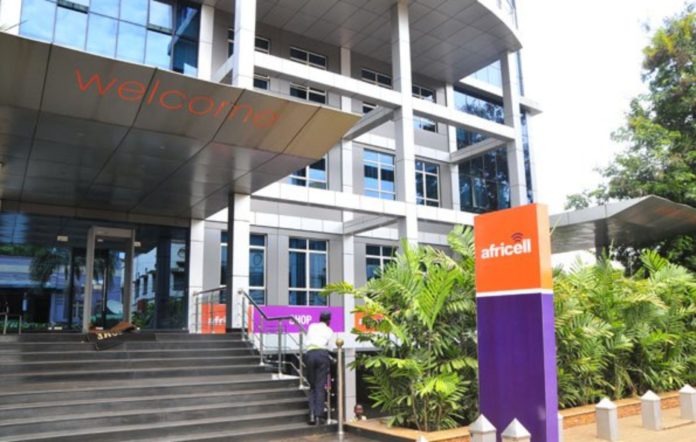
SEACOM takes over Africell assets in Uganda

Africell offices in Kampala.

SEACOM, the pan-African telecommunications service provider, has announced it will acquire selected infrastructure assets from Africell in Uganda. The acquisition marks a significant step for SEACOM and is a testament to the company’s commitment to providing, competitive end-to-end connectivity and ICT solutions across the region.

Telecom service provider, Africell announced its exit from Ugandan market after establishing that it is struggling to be a leader not only in terms of mobile services but also in terms of community impact and the digitally lead transformation of society.

“East Africa has been an important market for SEACOM ever since we first arrived on the shores of Mombasa in 2009. By officially establishing ourselves in Uganda through proprietary facilities and resources, we are prioritising widespread connectivity and opening up opportunities to work with businesses in search of quality Internet services.” Tejpal Bedi, Managing Director and Regional Head of Sales, SEACOM ENEA.

This latest expansion comes on the heels of SEACOM’s recent acquisition of Kenyan service provider Hirani Telecom’s metro fibre network. SEACOM is poised to take over a comprehensive portfolio of infrastructure essential for connecting enterprise customers. This includes 760 kilometres of fibre within the Ugandan capital city of Kampala and surrounding towns, a 250 square metre data centre, and office space for SEACOM representatives and staff members.

Tejpal Bedi, Managing Director and Regional Head of Sales, SEACOM ENEA said; “The acquisition goes hand in hand with our five-year strategy into expanding operations in the region. As such, we are very excited about having a greater local presence.”

SEACOM has provided wholesale solutions to Uganda since its inception in 2009, and corporate solutions since 2018. The leading service provider enjoys a large footprint in Uganda’s financial services sector (FSI) and works with government and non-governmental organisations, including those in the education, technology and hospitality sectors.

Although dominated by small businesses, Uganda is home to a thriving private sector with thousands of medium to large-sized businesses located primarily across Kampala and the central region. There’s also a growing Internet penetration rate with competitive connectivity prices as compared to other countries in the region.

The acquisition of established infrastructure will allow for further expansion into East Africa, enabling SEACOM to provide seamless integration of its services for clients across Uganda, Kenya, and Tanzania, and decreasing the reliance on third-party last mile providers to deliver connectivity solutions  solutions that include wireless and fibre Internet access, cloud connectivity, as well as hosting facilities, such as email and security, such as distributed denial of service (DDoS) protection software.

Tejpal Bedi, Managing Director and Regional Head of Sales, SEACOM ENEA said: “SEACOM is responding to the needs of the market. Customers are starting to buy more bandwidth. Businesses are making use of the cloud like never before, using enterprise resource planning, Office 365, and customer relationship management (CRM) solutions that serve not just to fill gaps, but aid in driving digital transformation and strengthening internal and external capabilities. The growth of the Internet in the region follows the demands of these businesses, and it’s up to us to facilitate that. The end result is lower prices, improved reactions, and an overall better experience for our customers.”

Stories Continues after ad