Stanbic Bank
Stanbic Bank
18.3 C
Kampala
Stanbic Bank
Stanbic Bank
Home Blog Page 684

Rwanda denies Ugandans entry despite the reopening of Katuna Border

Ugandans at the Katuna border after blocking traffic to the Uganda's southern neighbour, Rwanda

The Government of Rwanda has denied Ugandans entry despite the reopening of Katuna Border. Last week, Rwanda announced the re-opening of the border three years after the closure in 2019. The closure aimed at paving way for reconstruction of roads on the Rwandan side.

And, today, President Paul Kagame reopened the border and denied Ugandans entry. A few vehicles were seen crossing from both countries. Ugandan officials from the Uganda Revenue Authority (URA) and immigration office have crossed to Rwanda to engage their counterparts on this new development.

Rwanda’s decision followed Lt. Gen. Muhoozi Kainerugaba, Senior Presidential Advisor on Special Operations and Commander of Land Forces of Uganda People’s Defence Forces’ (UPDF) visit on January 22, 2022.

“The government of Rwanda has taken note that there is a process to solve issues raised by Rwanda, as well as commitments made by the government of Uganda to address remaining obstacles,” Rwanda said in a statement.

Since the closure of Rwandan border, there has been a raging border row between the two countries where Kagame posed travel restrictions stopping its nationals from traveling to Uganda and blocking goods from entering into the country, a move that contradicts with the intentions that led to the formation of the East African community (EAC).

Kagame’s government has always accused Museveni of facilitating the dissident group, Rwanda National Congress (RNC) led by Gen Kayumba Nyamwasa dissidents.

Last year, rebel groups of Allied Democratic Forces (ADF) attacked Uganda killing at least seven people. In tandem rebel outfit M23 seized at least two villages in the eastern DRC near the border with Uganda and Rwanda.

Kagame’s Army Rwanda Defence Forces (RDF) has since blamed Eastern DRC attacks on Uganda saying that the Ex-M23 group didn’t seek refuge in Rwanda during their retreat from DRC in 2013, it has been based in Uganda where the attack originated where the armed group retreated.

Stories Continues after ad

Who is Monsignor Mpanga, the caretaker of Kasana-Luweero Diocese?

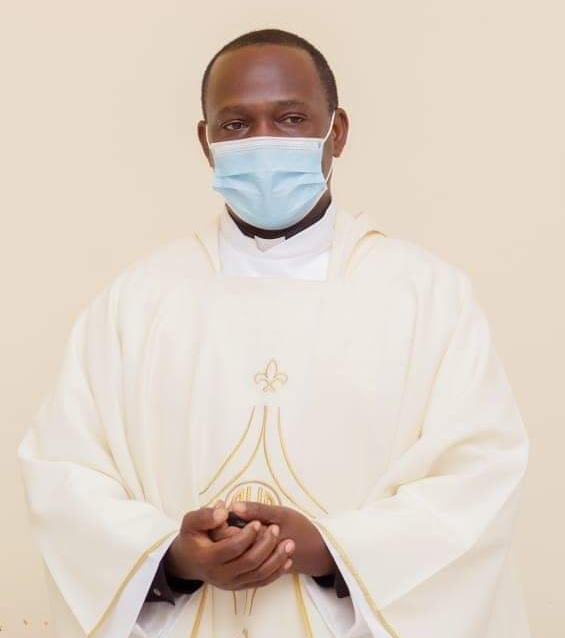
Monsignor Francis Xavier Mpanga

Over the weekend, Monsignor Francis Xavier Mpanga was appointed the caretaker of Kasana-Luweero Diocesan. He was named by the Board of Consulters which convened on Friday, January 28, 2022.

His appointment was confirmed by Diocesan Chancellor Rev. Fr. Cyril Kasigwa in a message to the Diocesan Staff Association.

Monsignor Mpanga’s appointment follows the elevation of Bishop Paul Ssemogerere as the head of Kampala Archdiocese. The Archbishop was acting apostolic administrator for eight months, having assumed office after the death of his predecessor Dr Cyprian Kizito Lwanga in April last year. Pope Francis later appointed Bishop Ssemogerere on 9th December 2021 to replace Archbishop Lwanga.

During the installation of Archbishop Paul Ssemogerere, the representative of the Pope in Uganda, The Most Rev. Luigi Bianco said Kasana-Luweero Diocesan Board of Consultors would elect the Diocesan Administrator for fill the gap which was created during the recent changes.

Monsignor Francis Xavier Mpangawas  Vicar General of Kasana-Luweero Diocese, a position he assumed after the retirement of Msgr Mathias Kanyerezi.

He was born on August 23, 1967 at Bwambaale village in Gombe, Wakiso district.

He holds a Diploma in Philosophy and Bachelor’s Degree in Philosophy from St. Thomas Aquinas Seminary-Katigondo, Diploma in Theology and Bachelor’s Degree in Theology from St. Paul’s Seminary-Kinyamasika, Diploma in Teacher Education and Master’s Degree in Education Leadership from Kisubi Brothers’ University.

He served as an Assistant Parish Priest St. Bruno Sserunkuuma Catholic Parish-Kikyuusa and later Parish Priest, Diocesan Vicar General and Director Diocesan Catechists’ Department in Kasana-Luweero Diocese.

Stories Continues after ad

UPDF provides free medical services to Budadiri residents

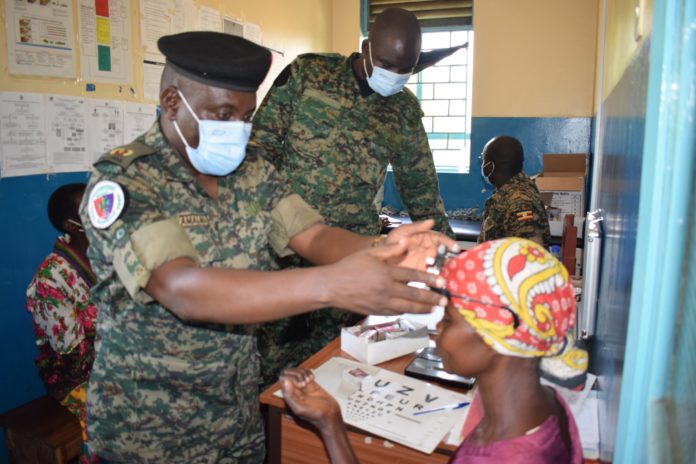
The UPDF Chieftaincy of Medical Services is offering free medical services to residents of Budadiri at Budadiri Health Centre IV and Buwasa Health Centre IV in Sironko district.

The medical outreach camps are organized by the UPDF as part of its activities to mark the 41st Tarehe Sita and Defence Forces Week.

The UPDF physician and cardiologist Col Dr. John Lusiba, who is heading the medical team in Sironko District said they are offering general medicine, free dental and eye care, antenatal services and free Safe Male Circumcision to residents.

The In charge of the UPDF Eye department, Maj Javis Amagara and head of the mobile eye team said over 210 have benefited from the free specialized eye care treatment and spectacles were given to those who needed them.

Residents expressed their gratitude and thanked UPDF for the treatment. They appreciated UPDF medics for their discipline and professionalism.

Stories Continues after ad

18-year-old singer Kapa Boy drops new single ‘Talk to Me’

At 18-years-old, Kawempe-raised singer Kapa Boy has released a brand new love single dubbed “Talk To Me”.

Kapa Boy is a young Afro-beat and Dancehall singer, born and raised from Kawempe, with a dream of becoming a big star in future

“Talk To Me” is an Afro-beat/Dancehall love song on which Kapa Boy collaborates Nigerian singer Jerry Logo.

The song showcases his unique art but also leaves the promise that he has areas to work on and perfect especially his lyrical content and vocal delivery.

Nonetheless, the song is one you can enjoy if you are in love and the young singer revealed that the video will be released soon.

About Kapa Boy

The name Kapa Boy has caught several Ugandans by surprise as they often comment of how “weird and funny” his stage name sounds.

Most often note that he must have gotten the inspiration from renown female dancehall singer Kapa Cat but he reveals not.

Kapa Boy says that his name is coined from two different names. He also maintains that he is here to seriously pursue a music career.

His love for music started straight from school where he used to perform on school parties. Having joined the school choir, his passion for music continued to grow.

He decided to take it on as a career in 2019 but unfortunately, in 2020, his father who had backed up his decision passed away.

Despite it being such a low moment in his life, Kapa Boy reveals that his father’s demise only motivated him to work harder and keep the dream alive.

He teamed up with Nigeria’s Jerry Logo on this new song and he hopes it can be the start to greater things yet to come.

Stories Continues after ad

Late Father Simon Lokodo: Loved and hated in equal measure

Father Simon Lokodo

As Ugandans were still coming to terms with the death of Bank of Uganda Governor Prof Emmanuel Tumusiime-Mutebile, another sad news of the passing on of Father Simon Lokodo came in. Father Lokodo, the departed former minister of Ethics and Integrity was loved and hated in equal measure as he went about his duties of having citizens, regardless of class, possess some form of morals and decency in their daily lives.

Father Lokodo was loved by moralists, religious leaders and others while on the other hand, the man from Karamoja sub region was hated by atheists, prostitutes, the corrupt and liberalists who included Uganda’s men and women of the so-called free world.

Those who loved Lokodo’s work believed that Uganda, a country whose motto is, “For God and My Country’, must have citizens that fear God and therefore possess good morals and decency, though the definitions of good morals and decency are matters of debate.

On the other hand, those who hated Lokodo believed that the then minister was encroaching on their freedoms and rights as enshrined in the national constitution and other international instruments like the UN Universal Declaration of Human Rights and the African Charter on Human Rights.

The late minister became the talk of the town when his office introduced the Anti-pornography law (which some Ugandans jokingly referred to as mini-skirt law) for it tried to ban the wearing of miniskirts in public. Liberalists saw this law as infringing on the rights of women, who wanted to show some flesh of their bodies, especially the thighs thought to be attractive to men.

Lokodo believed that women who showed their thighs were an obstruction to men to concentrate, even though women argued that their bodies had nothing to do with obstructing men from going on with their activities.

In the law, Lokodo strictly wanted women to show off their nude bodies in the bedrooms, maybe to their husbands and boyfriends for purposes of sexual arousal. Tom nudity was a private affair that had no purpose in the public sphere.

Using the same law, Lokodo was able to apprehend some people including artists Desire Luzinda, whose enraged boyfriend circulated their sex nudes on social media, causing excitement among porn lovers whilst attracting condemnation from moralists and religious leaders. 

Lokodo also helped in the formulation of the marriage and domestic relations bill that aimed at, according to its makers, having stable families. Unfortunately, this bill remains in parliament gathering dust as it was never ascended to by President Yoweri Museveni, who said the intended law would instead cause family instabilities especially when the issue of sharing property was factored in.

Muslims on the other hand opposed Lokodo and his group on the domestic relations bill, arguing that their marriage is based on the Koran and Sharia Law and that as such it needs no government interference. It is one of the reasons why Museveni could not ascend to the bill that failed to harmonise religious marriage.

Lokodo let down

Despite Lokodo’s efforts to have a country where citizens were morally upright, the good minister was let down by both politicians and senior public officials, who exchanged bitterly in public, corruption reports skyrocketed, yet sexual scandals kept coming out of religious institutions, as government ministers and MPs were not spared either of sex escapades outside marriage. These hurt Lokodo so much.

The most that caused debate on morals in Uganda was the revelation of a sexual affair between the retired Church of Uganda Archibiahop Stanley Ntagali and a wife of one of his flock.

Pastor Aloysius Bujingo’s sex life continues to dominate the morality debates in the country, having broken away from his officially wedded wife Teddy. He has gotten a new partner in the name of Susan Makula. The two new love birds are fighting a case of bigamy in court.

In conclusion, this writer can say the late Lokodo was a good man who tried to have morals established in a complicated system, where even religions leaders who many Ugandans look up to, have failed the morality test.  May His Soul Rest In Peace.

Stories Continues after ad

Keem Fame Rich fascinates people with his success as Uganda’s youngest digitalpreneur, Promoter and Artist

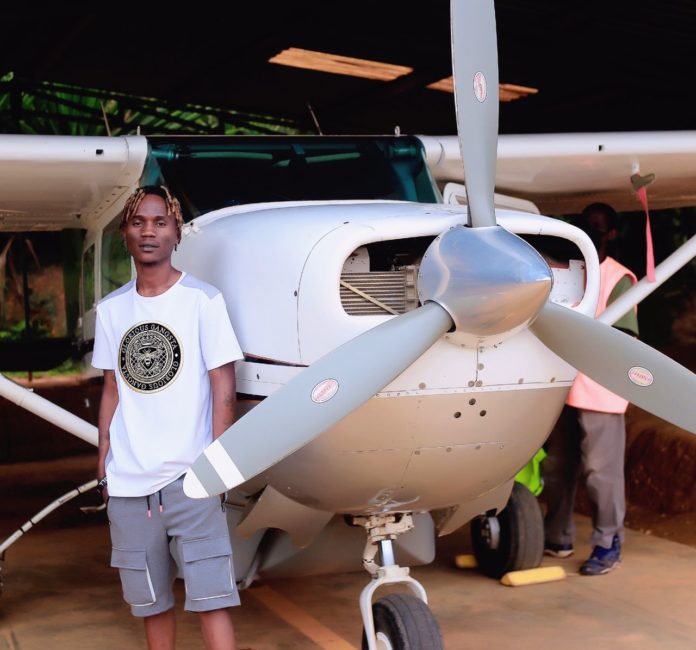
Keem Fame Rich

It is all about having the right outlook in life; this is something people and professionals across fields have said, and they say that right as this positive outlook help individuals not only tread on their paths but also effortlessly move forward in their endeavours, becoming a fine talent in their respective industries.

We noticed how Keem Fame Rich, one such self-driven youngster, chose to walk his path, acquire knowledge consistently and create his path to success in the world of digital. Today, Keem Fame Rich, all of 23 years of age, has become one of the rising most digitalpreneurs and the youngest digital entrepreneur in the business world, achieving massive momentum.

He believed in having the right visions in life and worked relentlessly towards the same, for he believed that strong visions could change the game of any industry for the better, and that’s what happened when he jumped into the digital marketing field to carve his niche.

Today, as a teenager entrepreneur, he owns “Keemfame.com” a full-service digital marketing company in Dubai and Kampala Uganda, and has shown the world what he truly possesses as an ace Ugandan business talent. The Kampala, Namungoona boy began working at the naïve age of 14 and since then has only carved an upwards and onwards journey for himself in the field.

So far, Keem Fame Rich has worked as a consultant to several celebrities in the Ugandan music industry and has taken the game of digital marketing to a whole new level across Dubai, London, and Africa at large providing services under his company, including but not limited to web and mobile app development, public relations, YouTube marketing, influencer marketing, online reputation management, social media marketing and much more.

Stories Continues after ad

Former Minister Fr. Simon Lokodo is dead

Father Simon Lokodo

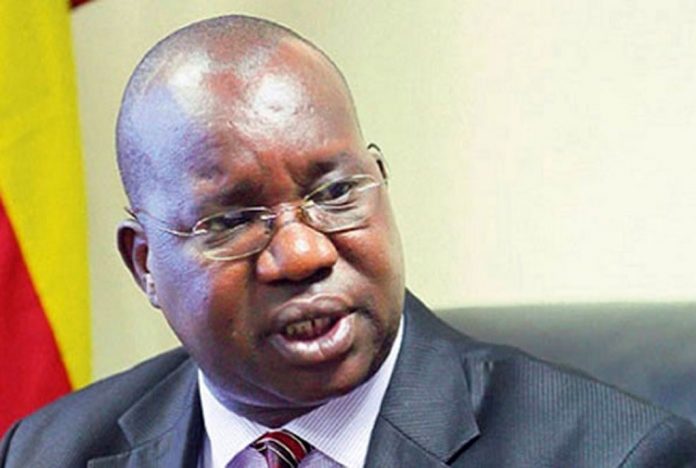
The former Minister of State for Ethics and Integrity Fr. Simon Lokodo has passed on.

His death has been confirmed by the Uganda Human Rights Commission (UHRC). Fr. Lokodo died earlier today in Geneva, Switzerland.

“It is with great shoch and pain that we have learnt about the passing of our member of the Commission Fr. Simon Lokodo who passed on in Geneva, Switzerland,” UHRC said on Twitter.

He previously served as the Minister of State for Industry from 2009 to 2011. He also served as the elected Member of Parliament representing Dodoth County, Kaabong District since 2006 until his death in 2022.

Stories Continues after ad

UBL’s Tusker Cider to create market for Ugandan apples

Tusker Cider, Uganda Breweries Limited (UBL)’s latest product, will create a steady market for apples grown by Ugandan farmers, according to the brewery’s leadership.

The cider, which is an alcoholic beverage made from apples, was unveiled during an event held at Legends Rugby Grounds, that was attended by UBL’s leadership, customers and several public and private sector stakeholders including Stephen Asiimwe, Executive Director of the Private Sector Foundation of Uganda (PSFU), Henry Banyenzaki, Director of Monitoring and Evaluation at OWC, Eng. David Luyimbazi, Deputy Executive Director of KCCA, and many more.

Speaking during the ceremony, the chief guest, Minister of State For Finance, Planning and Economic Development In Charge Of General Duties, Hon. Henry Musasizi said, “We appreciate the role that UBL is playing in the sourcing of local raw materials for your products, thereby providing a ready market for agricultural produce and contributing towards the Buy Uganda, Build Uganda agenda.”

He added that the government’s National Development Plan (NDP) identifies agriculture as a vital growth sector to Uganda’s economy capable of reducing poverty and stimulating economic growth.

Eunice Waweru, UBL’s acting Managing Director, said, “Tusker Cider represents a whole new direction through which we continue with our proud 75-year legacy of contributing to the growth of the Ugandan economy. In the coming years, it will be made from 100% locally sourced apples, under our Local Raw Materials (LRM) program.”

The brewery’s Local Raw Materials (LRM) program seeks to build a strong and resilient supply chain to satisfy the business’ annual demand for high-quality inputs like sorghum, barley and cassava while empowering smallholder farmers all over the country.

The program which started almost 20 years ago injects over Shs 45 billion annually for the purchase and distribution of agricultural inputs and modern machinery to over 30,000 farmers that supply over 95% of the raw materials used by the business, with a goal of sourcing 100% by 2030.

Stories Continues after ad

Combatting neglected tropical diseases in Africa

Health workers

Over the past decade, significant progress has been made in the elimination, control and eradication of neglected tropical diseases in the African region, where all but one neglected tropical disease (Chagas) are prevalent.

More than a billion people are affected by neglected tropical disease globally. Africa accounts for nearly 40% (400 million people) of the global burden. These diseases can be devastating, including causing severe pain, disabilities and deformities, malnutrition, stunted growth and cognitive impairment. Anaemia caused by some of these diseases have a direct impact on maternal mortality.

Neglected tropical diseases are a set of 20 diseases or disease groups that occur predominantly in tropical and subtropical areas. They include lymphatic filariasis, more commonly known as elephantiasis, onchocerciasis or river blindness, schistosomiasis, or bilharzia, as well as human African trypanosomiasis, often called sleeping sickness.

The global Neglected Tropical Disease global roadmap 2021—2030 seeks to reduce by 90% the number of people requiring treatment for the diseases; at least 100 countries eliminate at least one neglected tropical disease; eradicate two diseases (Guinea worm and yaws); and reduce disability related to these diseases by 75%.

Africa has made great strides towards the elimination goals. Leprosy has all but been eliminated as a public health problem, with only the Comoros yet to achieve the elimination goal in one of its three islands. Forty-one African countries have been certified free of Guinea worm – a crippling parasitic disease. The Democratic Republic of the Congo is preparing for certification this year. Benin, Cote d’Ivoire and Togo have been validated for eliminating sleeping sickness as a public health problem. Equatorial Guinea, Ghana, Rwanda and Uganda have started the validation process towards elimination.

The Expanded Special Project for the Elimination of Neglected Tropical Diseases, a World Health Organization (WHO) initiative launched in 2016, has achieved significant progress in the control and elimination of neglected tropical diseases. Advocacy by WHO and partners for treatment saw more than 2.7 billion tablets donated to African countries and distributed between 2016 and 2020, with 38 countries reaching 100% geographical coverage over one year for at least one neglected tropical disease. The number of people requiring preventive chemotherapy decreased from 592 million in 2016 to 588 million in 2019.

Despite these significant advances, challenges remain. They include inadequate government ownership of the neglected tropical disease control and elimination programmes, low level of integration of these diseases in the mainstream health programmes, insufficient funding as well as the impact of the COVID-19 pandemic. Others are inadequate health infrastructure, limited diagnostic and data management capacity, and insecurity in some countries.

With the launch of the Neglected Tropical Disease global roadmap in 2021 and the development of the African Tropical and Vector-borne Disease framework for 2022—2030, WHO hopes to build on the lessons from previous neglected tropical disease programmes, including innovations emerging from the COVID-19 pandemic response, to support countries in developing multi-year master plans.

The focus will be on strengthening country ownership with domestic funding for neglected tropical diseases, applying a holistic approach to tackling the diseases and measuring impact to gauge progress on implementation. Advocacy and resource mobilization, strong engagement of community health workers and communities will also be critical.

Stories Continues after ad
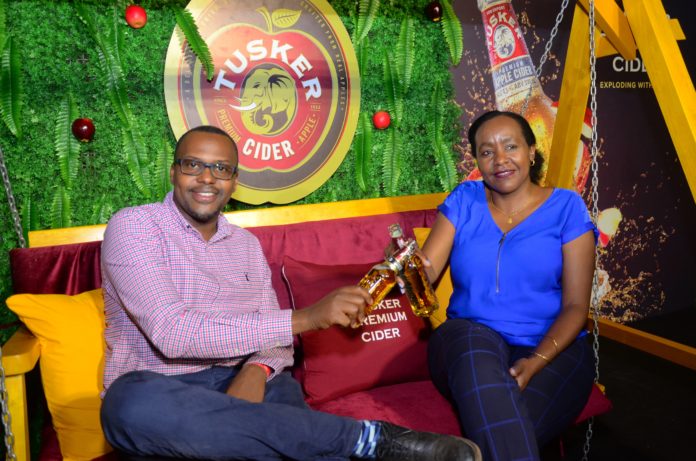
Tusker Premium Cider hits Ugandan market

Uganda Breweries Limited (UBL) has officially unveiled Tusker Cider, the latest addition the business’ diverse product portfolio.

The cider, which is made from the finest quality apples, is an extremely rich and flavourful drink that is the perfect companion for consumers looking for new, easy going and exciting experiences through which to have a good time.

The product was unveiled in a colorful and stylish event held at Legends Rugby Grounds. The invite-only apple-themed ceremony featured lots of games and challenges that saw consumers win Tusker Cider hampers full of goodies.

It was hosted by TV and radio host, Sheila Salta, who was also unveiled as the brand’s ambassador.

Speaking to the product, Emmy Hashakimana, UBL’s Marketing and Innovation Director, said, “Tusker Cider delivers a rich fruity flavour with a sharp crisp finish that is lightly carbonated, very refreshing with a subtle natural sweetness – all designed to excite your taste buds as you celebrate life every day. It is the first cider to be locally sourced and produced in East Africa, making it a unique opportunity for us to build a deeper connection with our consumers.”

And build a deeper connection with the consumers, they did, as the event coincided with the reopening of the night economy after close to two years of closure over the COVID-19 pandemic.

The guests – who never missed an opportunity to echo the “Tuli Waweelu” mantra – were entertained by DJs Roja and Xzyl, with the crowning moment being an electric performance by Azawi, who performed hits from her 2021 album, African Music, like Party Mood, Slow Dancing and My Year.

Hashakimana added that the cider, which is under UBL’s Innovations line, joins the brewery’s track record of introducing never before seen innovative products that continue to challenge the adult beverages sector like Uganda Waragi Coconut and Pineapple, Bond 7 Honey, Gordons Pink and most recently, Baileys Delight.

Tusker Cider, which is best served chilled, is available at the recommended retail price of Shs 3,500 and is available through on multiple e-commerce platforms like Jumia, Kikuubo Online and SafeBoda; supermarkets; distributors; stockists; and different bars around the country.

Stories Continues after ad