Stanbic Bank
Stanbic Bank
24.7 C
Kampala
Stanbic Bank
Stanbic Bank
Home Blog Page 695

New Ambassadors awaiting Parliamentary Vetting

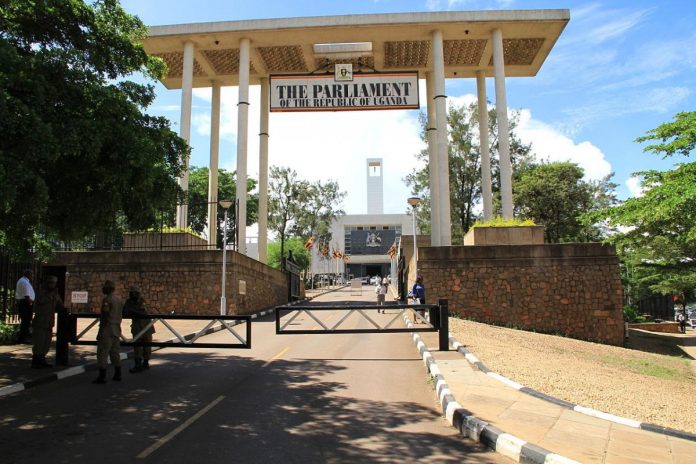
Parliament of Uganda

Ugandan ambassadors and their deputies that President Museveni appointed are still waiting for their vetting by Parliament, ahead of being sent to their stations abroad.

In December 2021, President Museveni appointed 37 ambassadors and 4 deputies. While he appointed them, he retained some old ones but also replaced a number of them across the world.

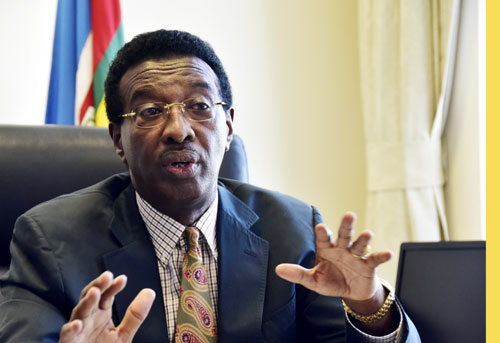
The permanent secretary at the Ministry of Foreign Affairs, Lt. Gen. Joseph Musanyufu said Parliament has to vet the ambassadors. He further said that the ambassadors themselves are still waiting for this to happen.

“We are waiting for the parliament to vet the ambassadors before they are posted,” he said in an interview.

About the availability of funds for the ambassadors, Bagiire said they might require a supplementary budget.

Parliament has been on recess since December when the speaker adjourned the house. Jacob Oulanyah the speaker of parliament in mid-December adjourned the House sine die. This means they did not set an appointment date for the next sitting.

The Speaker said that during the recess, the MPs celebrate Christmas and the New Year. He told them to renew themselves so that they come back fresh to work.

However, they can recall MPs on short notice should there be an emergency that requires the plenary. The responsibility of vetting new ambassadors falls under the Parliamentary Appointments Committee under the Speaker.

The Clerk to Parliament, Adolf Mwesigwa Kasaija has written to MPs informing them of the resumption of parliamentary business.

He said the the plenary will resume on Thursday January, 27, 2022 at 2:00 pm. Many these have been looking forward to begin their diplomatic tour of duty.

Stories Continues after ad

DRC reaffirms her willingness to join the East African Community

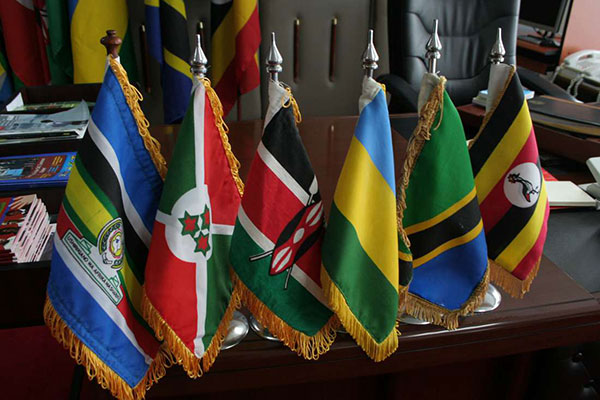
Flags of East African countries

The Democratic Republic of Congo (DRC) has reaffirmed her willingness to join the East African Community.

DRC’s Deputy Prime Minister and Minister for Foreign Affairs, Christophe Lutundula Apala Pen’Apala, said that DRC was looking forward to increased trade and investment, and strengthened relations with EAC, adding that her relations with EAC Partner States had largely been at a bilateral level.

Pen’Apala said that DRC was keen on cooperating with the EAC for maximum exploitation of both natural and human resources in the region. 

Pen’Apala expressed hope that this would be the last round of negotiations before DRC is admitted into the EAC.

The Minister said that DRC has a big population who are consumers that constitute a big market for the EAC, adding that DRC was also in dire need of investors and was therefore offering incentives for entrepreneurs who would like to invest in the country.

Pen’Apala noted that DRC faces security challenges in the eastern part of the country, adding that the country was therefore keen on tackling these challenges together with the EAC.

The Minister disclosed that DRC had embarked on a national programme of reconstruction in various sectors including infrastructure, agriculture, energy and environmental conservation. He said that DRC had the world’s second largest natural ecosystem in the Congo Forest and was keen on preserving this system from wanton destruction to mitigate the effects of climate change.

Asked whether DRC’s membership to EAC would pose challenges because it already belongs to COMESA and SADC, Pen’Apala said that there was no problem in multiple membership to various regional economic communities (RECs), adding that all RECs in Africa were working in harmony to ensure that Africa becomes a real common market by the year 2063.

Pen’Apala was addressing journalists after the official launch of the negotiations between the EAC and DRC for the admission of the latter into the Community in Nairobi, Kenya. 

Speaking at the media briefing, the Chairperson of the EAC Council of Ministers who is also Kenya’s Cabinet Secretary for EAC and Regional Development, Adan Mohamed, said that the EAC and DRC negotiation teams were expected to conclude their negotiations within 10 days.

Mohamed said that the report of the negotiations would then be presented to the Council who would later submit it to the Summit of EAC Heads of State for consideration.

CS Mohamed said that the negotiations between EAC and DRC for the admission of the latter into EAC was good news for a continent that has been performing below its potential in terms of its share of global trade.

On his part, EAC Secretary General Peter Mathuki said that EAC expects seamless negotiations with DRC that would result in increased trade and investment opportunities for the benefit of the people of East Africa.

The Secretary General said that substantial progress had been made since the Verification Mission visited DRC in the months of June and July 2020.

“As you are aware the 18th Extra-Ordinary Summit of Heads of State, the summit received and considered the report of the Council on the Verification Mission on the Admission of the DRC to join the EAC and directed the Council to expeditiously commence and conclude negotiations with the DRC for admission to the East African Community and report to the next Summit,” said Dr. Mathuki.

Dr. Mathuki said that the negotiations were an important milestone in the entire roadmap of the admission of DRC into the EAC. 

“Once this phase is successfully concluded, it shall pave the way for the accession phase which literally concludes the admission process and upon pronouncement of Summit on the matter, DRC will be admitted as the seventh member of the EAC,” said Dr. Mathuki.

“DRC’s intention to join the Community is not by default. DRC shares borders with five EAC Partner States, namely Tanzania, Burundi, Rwanda, Uganda and South Sudan,” added the Secretary General.

Stories Continues after ad

NUP leadership told to address issues raised by New Vision than attacking the paper

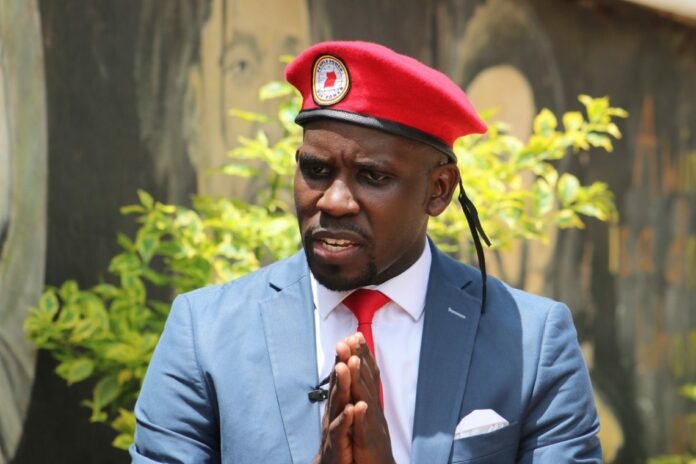
Joel Ssenyonyi

Opposition political party, the National Unity Platform (NUP) has been urged to address the issues raised by New Vision rather than attacking the managers of the paper.

Joel Ssenyonyi, the Nakawa West legislator who doubles as the NUP party spokesperson attacked the managers of the paper calling them incompetent and propagandist for the government and stressed that New Vision has joined the WhatsApp group of tabloids to write fake dramatic headlines.

In the lead headline on Monday 17th January 2022, New Vision said, “NUP top bosses in bitter split” and on Wednesday 19th January it wrote; “NUP crisis deepens over cash.”

Fans have now attacked Ssenyonyi and told him together with the party leaders to address the issues raised than attacking individuals.

“If the information isn’t true, why are you bothered?” one of the social media users replied to Ssenyonyi.

Betungura Benon said; “Mr senyonyi ,u need to prove the world wrong ,that ur party is not in crisis over cash ,other  than attacking mr Don ,thats the problem with NUP supporters ,they dont want thier party not to be talked  about ,but for them they talk ill things about NRM  ,and wanted the public to accept whatever  they talk about NRM .its really absurd. Aperson of ur caliber  ,wouldn’t  be thinking like those bayayes of kamuwokya ,ur thinking capacity should be beyond  that .Any way ,all NUP supporters  are like that .have been brain washed ,very unfortunate.”

“Joel the information is true and correct, don’t think that we we are fools, Ugandans now know the kind of goons in the NUP, so stop lamanting, we no longer have opposition in Uganda since humiliated Dr kiiza besigye for having stood four times, for you goons in won’t even do what besigye did, you would be addressing issues like fuel prices bat you simply quiet, just lamenting,”

“Address the issues raised in the report. prove him wrong,” RiskyUganda replied on twitter.

“Please give us the facts, don’t be like the ‘others’. Real NUP bigwigs are voicing similar sentiments in private. Walk around the streets of Rubaga South and listen to former People Power Mobilisers,” a one Mawejje replied.

Tumushabe Richard Rutaremwa replied on Facebook; “Joel, u are a political dwarf and u are my witness! Disapprove this with facts and let’s move on! You must be a good Bible reader, especially the book of Lamentations!”

Aggrey Waguma asked; so should we sweep it under the carpet?

Mbuga Ahmed replied; There’s no smoke without fire. Let the storm calm, we’ll know who’s saying the truth. Not only is New Vision driving this narrative, but also NUP diehards within the camp are confirming that something like that is happening from within. At the end, the truth shall come out. Until then, u aren’t immune to propaganda.

Ndyabasa Eastone said; “Prove that he is wrong because we have all that transpired in the retreat.”

Stories Continues after ad

Human Rights Commission confirms Kakwenza was tortured

Kakwenza Rukirabashaija

The Uganda Human Rights Commission (UHRC) has confirmed that Novelist Kakwenza Rukirabashaija was subjected to torture while in prison.

“Yesterday, UHRC visited Kakwenza Rukirabashaija at Kitalya Government Prison. The team from UHRC interacted with him extensively and noted the visible scars & injuries on his body that were healing. We look forward to a judicial resolution of his matter,” the commission confirmed on their twitter account.

Kakwenza was arrested at Kisasi after a three days twitter feud with supporters of UPDF Land forces commander Muhoozi Kainerugaba. Kakwenza averred that Muhoozi’s supporters were allegedly bullying him for criticizing President Yoweri Museveni.

He was charged with two counts of offensive communication, contrary to Section 25 of the computer misuse act 2011. The Lawyer pleaded not guilty and subsequently remanded to Kitalya prison till 21st January 2022.

Prosecution averred that Kakwenza on 24th December 2021 in the Kampala District, willfully and repeatedly used his Twitter handle to commit cases of offensive communication against the President of Uganda Yoweri Kaguta Museveni and the first son Lt Gen Muhoozi Kainerugaba, with no purpose of legitimate communication.

Rukirabashaija is the author of the novel The Greedy Barbarian, which takes on themes of high-level corruption in a fictional country. He was arrested on 13 April 2020 in Uganda, and held for seven days, during which time he was interrogated about his fiction and subjected to torture and later released. Rukirabashaija details this treatment in his latest work Banana Republic: Where Writing is Treasonous.

Stories Continues after ad

Absa Bank Uganda trains journalists on financial markets

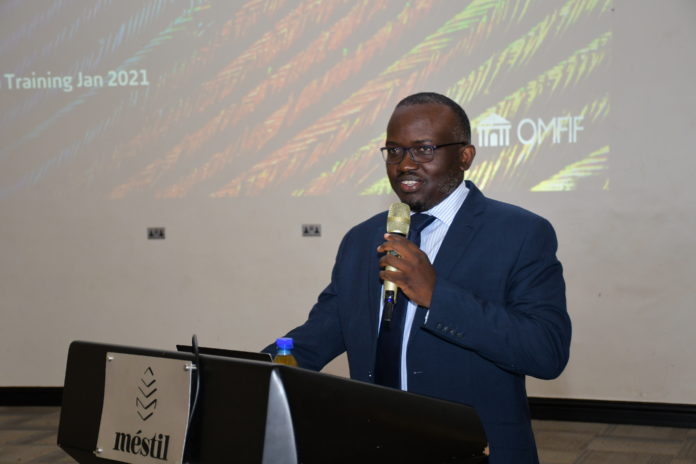
David Wandera, Absa Bank Uganda Executive Director and Head of Markets

Absa Bank Uganda has trained journalists in an in-depth analysis of the financial markets ahead of the unveiling of the 2021 Africa Financial Markets Index (AFMI) report on Tuesday January 25, 2022.

The training, led by David Wandera, Absa Uganda’s Executive Director and Head of Markets, was aimed at providing a platform for the media to get a better understanding of Uganda’s financial markets.

The index is conducted by Absa Group in partnership with the Official Monetary and Financial Institutions Forum (OMFIF) acts as a guide to be used by policymakers and market participants to promote open, accessible and transparent markets that are best placed to mobilise capital and promote investment on the continent.

It measures the performance of 23 African countries across six pillars, namely: Market Depth; Access to foreign exchange; Market transparency, tax and regulatory Environment; Capacity of local investors; Macroeconomic opportunity and Enforceability of standard financial markets master agreements.

Speaking to the reporters, Wandera said, “The index is a measure of the various factors that would attract investors to Uganda, and the importance of unveiling it here is to bring to light the areas in which we are doing well and those in which we need to improve.”

According to the 2020 AFMI report, Uganda remained in 10th position, the same as the previous year and maintaining a score of 52, mostly attributed to the introduction of a revamped primary dealer system by the Central Bank in September 2019 to spur bond market activity.

Stories Continues after ad

Gov’t wants Umeme to halt new investments as power firm’s 25-year concession nears expiry

Umeme employees

The Ministry of Energy and Mineral Development has recommended the halting of new investments by energy distributor, Umeme ahead of the expiry of its 25-year concession in 2025.

The Minister of State for Energy, Sidronius Okaasai Opolot said this during a meeting with members of the Committee of Environment and Natural Resources to respond to issues raised during the scrutiny of the budget framework paper for the financial year 2022/23.

Okaasai said that as Ugandans demand for electricity infrastructure, that has got an impact on the final buyout of Umeme, there is a need to watch out for new investments made.

“To manage the concession buyout and minimise suffocating expenditure of the Government when the Umeme concession ends, it is important that additional investments by Umeme be regulated and or halted to reduce the final buyout amount,” Okaasai told the committee.

He added that the Government should start providing annually for buyout amounts.

Umeme intends to invest in extending the distribution of power which includes buying transformers, poles and construction of substations with the hope that their concession which is nearing an end can be extended.

As of December 2018, Umeme’s capital investments amounted to close to Shs700 billion and yet they had projected to invest Shs 1.5 trillion.

Although Umeme wants the concession renewed since they cannot get investments from abroad, the Government is now turning its focus into public financing of electricity.

According to Okaasai, this is intended to reduce the high costs of electricity.

“The high costs are driven by private sector participation, especially generation. Public financing of electricity generation, transmission, and distribution will be required if the final consumer prices are to be reduced in the medium to the long term,” Okaasai said.

The unit cost of generation of power averages US$8.8 and final costs including transmission and distribution averages 12 cents.

The Energy Ministry is also giving incentives to industries in the different industrial parks in the country in the form of electricity subsidies.

According to Paul Okitoi, the Commissioner of Policy and Planning, the Government provided for the reduction of power costs in industrial parks to stimulate production.

However, members of the committee tasked the Government to provide subsidies for local companies that are outside the industrial parks.

Sheema Municipality MP, Dickson Kateshumbwa said it is unfair to provide power at five cents in the industrial parks, and then companies in Tororo or Kisoro pay a higher price.

“Are you looking at industrial parks or manufacturers? Someone should not be penalized because he started a factory in Ntinda or Kisoro and now he has to pay higher cents because he is not in Namanve,” Kateshumbwa said.

Fredrick Angura, Tororo South County MP said that the local investors have consistently been affected by the fact that the Government highly considers foreign and big investors. He says the subsidies should be given to small industries as well.

“The parks that are benefitting from these incentives are considered to be those with foreign and big investments; how I wish there was a measure to look at the small industries as well”, Angura said.

Dr. Emmanuel Otala, the Chairperson of the committee also tasked the team with the consideration of local investors saying that concentrating all the incentives on the parks does not help the smaller manufacturers.

The Energy Ministry agreed with the MPs saying they will generally subsidise for manufacturers, but have only started with those in the industrial parks.

Energy Minister renews pledge to take over power generation and distribution from private firms

Stories Continues after ad

Security Minister bans hawkers in villages

Maj.Gen.Jim Muhwezi.

The Minister for Security Maj. Gen. Jim Muhwezi has banned hawkers from villages saying they are a source of insecurity.

In a letter dated 11th January 2022 to all the Resident District Commissioners (RDCs), Resident City Commissioners (RCCs), District Police Commanders (DPCs) and District Internal Security Officers (DISOs), Muhwezi says the criminals are pretending to be traders.

“We have received information that there are criminals moving around villages especially in Western Region, masquerading/pretending to be hawkers/traders,” reads part of the statement.

“This practice of moving in villages selling items should not be allowed as it is a source of insecurity.”

Muhwezi said that those who want to sell items should move to the trading centres.

“Those who want to trade should do so in trading centres,” he said.

Stories Continues after ad

NUP curses New Vision over ‘propagandist article’, brands it ‘tabloid’

Joel Ssenyonyi

Opposition political party, the National Unity Platform party is in bitter terms with the New vision over what they termed to be a propagandist article.

The article which was published in the New vision of Monday 17th January 2022 claimed that NUP top bosses are in a bitter split which the party denied.

According to NUP, New vision’s act is the burden that awaits those who take on the responsibility to oppose a dictatorship stressing that for a regime that survives on propaganda, this and such has been long overdue.

They narrated that such acts are meant to discredit, derail, divide and eventually destroy those who oppose the dictatorship hence calling up on their members to remain focused.

Joel Ssenyonyi, the Nakawa West legislator who doubles as the NUP party spokesperson stressed that New vision has joined the WhatsApp group of tabloids to write fake dramatic headlines.

Ssenyonyi who noted that the regime will use anyone and anything just so they can try to derail them by creating none existing storms appealed to all their people to remain focused not fall into their trap.

According to Mathias Mpuuga, the Buganda region NUP Deputy president and the Leader of opposition of the 11th Parliament this act is probably a figment of somebody’s wild imagination stressing that he has not heard a policy or decision disagreement to the level he has seen in some form of a shabbily cooked story to wit in the New vision.

Mpuuga said that the article is misplaced and is meant to foment disagreements in the rank and file of the National Unity Platform.

He stressed that some sections of the media are part of the state apparatus and want to see NUP disintegrate.

Stories Continues after ad

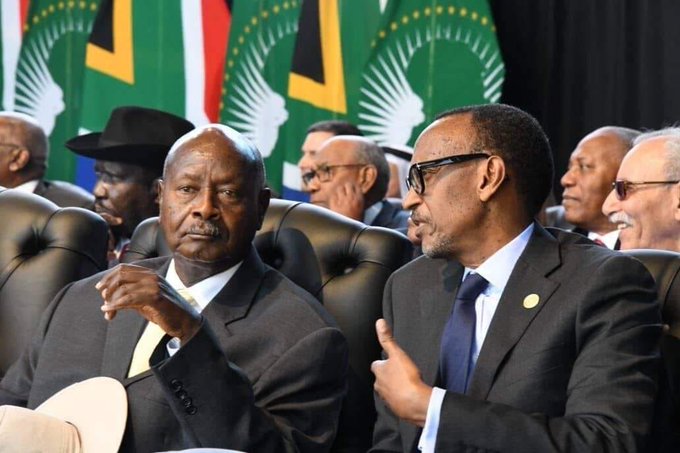
Uganda – Rwanda row: Museveni sends special message to Kagame

Presidents Museveni and Kagame

President Yoweri Kaguta Museveni has sent a special message to President Paul Kagame despite raging border tensions between Rwanda and Uganda. The message was delivered by Ambassador and Permanent Representative of Uganda to the United Nations (UN) Adonia Ayebare.

“Thank you Paul Kagame for warmly receiving me at Urugwiro Village today to deliver Yoweri Kaguta Museveni’s special message.” Ambassador Ayebare said on twitter.

Ayebare’s visit comes a few days after Uganda’s Minister of Defence Vincent Bamulangaki Ssempijja visited Burundi and Tanzania. The message is averred to be about security concerns and terrorist activities carried out by various rebel groups against East African members States.

Last year, rebel groups of Allied Democratic Forces (ADF) attacked Uganda killing at least seven people. In tandem rebel outfit M23 seized at least two villages in the eastern DRC near the border with Uganda and Rwanda.

Kagame’s Army Rwanda Defence Forces (RDF) has since blamed Eastern DRC attacks on Uganda saying that the Ex-M23 group didn’t seek refuge in Rwanda during their retreat from DRC in 2013, it has been based in Uganda where the attack originated where the armed group retreated.

Currently, there is a raging border row  between the two countries where Kagame posed travel restrictions stopping its nationals from traveling to Uganda and blocking goods from entering into the country, a move that contradicts with the intentions that led to the formation of the East African community (EAC).

Kagame’s government has always accused Museveni of facilitating the dissident group, Rwanda National Congress (RNC) led by Gen Kayumba Nyamwasa dissidents.

Stories Continues after ad

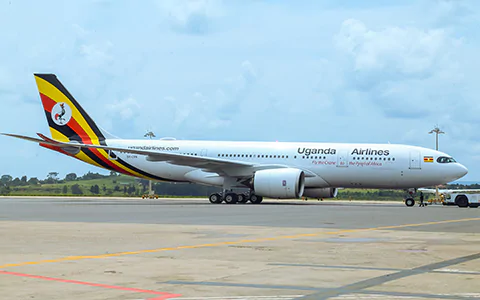
Uganda Airlines wins Africa and World’s Youngest Aircraft Fleet Award for second year in a row

Uganda Airlines

Uganda Airlines has been awarded the ch-aviation Youngest Aircraft Fleet Award for Africa and the World for the second year running.

The ch-aviation Youngest Aircraft Fleet Award recognises airlines from across the globe that keep a young, modern, and efficient fleet. For the first time, ch-aviation also recognises Aircraft Leasing companies with the ch-aviation Youngest Aircraft Portfolio Award.

“Congratulations to Uganda Airlines for winning the ch-aviation Youngest Aircraft Fleet Award for the second year in a row, with an average aircraft age of 1.95* years,” the award organisers posted on Monday, January 17, 2022.

According to the organisers, Uganda Airlines took the first position for the second year in a row, with an average aircraft age of 1.95* years. Its fleet consists of six jets.

Founded in 2018 as a scheduled carrier, Uganda Airlines has been steadily growing its fleet. Today they serve nine countries, 12 destinations, and 13 routes and expect to see five new routes in 2022 Jambojet is ranked second in the category of Africa’s Youngest Aircraft Fleet. The airline, a subsidiary of

Kenya Airways, is a low-cost carrier with a fleet of six de Havilland DHC8-Q400s averaging 3.59* years old. Air Seychelles is in third place; they count seven aircraft in their fleet, with an average of 5.07* years. From their headquarters in Mahé, they serve six countries, seven destinations, and seven routes.

Fourth place belongs to Air Austral. Operating as Air Reunion from 1986 to 1990, and before that as Reunion Air Service, Air Austral is part of Alliance Vanille. They have a fleet of 11 aircraft, with an average aircraft age of 6.30* years.

Air Tanzania is in fifth place. With a fleet of 13 aircraft, their average aircraft age is 6.56* years. From their headquarters at Dar es Salaam (DAR), they connect to 9 countries and 23 destinations, serving 35 routes.

The winners on each continent are: Uganda Airlines (Africa), SalamAir (Asia), airBaltic (Europe), Frontier Airlines (North America), Fiji Link (Oceania) and SKY Airline (South America).

Airlines and Aircraft Leasing companies dedicated to keeping their aircraft fleet young and using new generations of aircraft contribute significantly to the decrease of C02 emissions within the aviation industry and help achieve better fuel efficiency.

Stories Continues after ad