Stanbic Bank
Stanbic Bank
21.9 C
Kampala
Stanbic Bank
Stanbic Bank
Home Blog Page 727

Uganda pledges more funding for family planning at the launch of FP2030 global masterplan

Dr.-Charles-Olaro-Director-Health-Services-MoH

Uganda has pledged to increase its annual funding for family planning activities.

According to Dr. Charles Olaro, the Director of Health Services at the Ministry of Health, the Ugandan government has pledged to annually ringfence 50% of domestic resources allocated for the procurement, warehousing, and distribution of family planning commodities by 2025

Leaders from across the reproductive health space including Melinda French Gates and UNFPA Executive Director Natalia Kanem gathered at the global event LAUNCHING FP2030: Moving Forward Together to Transform the Future introducing the transformed FP2030 partnership and its new leadership alongside the first FP2030 commitments from national governments and donors.

The inclusive and wide-reaching new scope of the partnership was outlined in FP2030’s latest report, The FP2030 Transition. Uganda’s Director of Health Services Dr Charles Olaro announced the Ugandan government’s commitment to transform the lives of Uganda’s women, girls and communities through improved access to family planning.

At a global gathering marking the launch of the new decade of the Family Planning 2030 (FP2030) partnership, Uganda’s Director of Health Services, Dr Charles Olaro, joined leaders from across the family planning and global health fields as they pledged major new commitments towards ensuring that every woman and girl across the world has access to life-saving family planning services.

FP2030, a global partnership that supports the reproductive rights of women and girls, convened the event where more than $3.1 billion in funding was committed towards widening access to family planning over the next 5 years. Major commitments came from organizations including the Bill & Melinda Gates Foundation, United Nations Population Fund (UNFPA), International Planned Parenthood Federation (IPPF) and Fòs Feminista. National government commitments were also celebrated, with countries including Benin, Burkina Faso, Ethiopia, Guinea, Kenya, Madagascar, Mali, Mauritania, Niger, Nigeria, Senegal, Tanzania and Togo sharing their inspiring pledges towards sustaining global action in family planning alongside Uganda. The key commitments made by the Ugandan government were:

  • By 2025, the Uganda government pledges to increase Uganda’s modern contraceptive prevalence rate for all women from 30.4% to 39.6% and reduce the unmet need from 17% to 15%
  • The government of Uganda also commits to annually allocating at least 10% of Maternal and Child Health resources to adolescent responsive health services by July 2025
  • The Ugandan government further pledges to annually ringfence 50% of domestic resources allocated for the procurement, warehousing, and distribution of family planning commodities by 2025

This brings the total number of commitment makers to 46 as of November 2021, with the event marking the official start of the new decade of the FP2030 partnership. This follows its previous iteration as the FP2020 partnership which was launched in 2012 and in the years since has overseen some remarkable progress, notably an increase in the number of people using contraception by 60 million over nine years (doubling in the number of modern contraceptive users in 13 low-income countries), preventing more than 121 million unintended pregnancies, 21 million unsafe abortions, and 125,000 maternal deaths also prevented in 2019 alone. Uganda’s modern contraceptive prevalence rate (mCPR) for all women rose from 21.3% in 2012 to 30.4% in 2020, and the country added 1.6 million users of modern contraception over this period of time.

Building on the strengths and successes of FP2020, the new FP2030 partnership is now poised to embrace a more accessible and inclusive global partnership, with a new Governing Board made up of representatives from governments, multilateral agencies, donors, global NGOs and civil society and youth organizations, with a focus on diversity, particularly in terms of gender, age, geography, sexual orientation and background, including young people under the age of 30. In addition, in 2022, FP2030 will open regional hubs in Africa, Asia and Latin America, with greater direction set by regional and national leadership. The locations of the first of these, the two FP2030 Africa hubs, will be announced in early 2022.

The high-profile event saw important discussions take place on a range of topics, including the need to innovate in family planning amidst global crises like #Covid-19, and preserving and sustaining family planning funding amidst global cuts in funding and supply chains. FP2030 and its partners highlighted the critical nature of access to family planning, an essential right for every woman and girl no matter where she lives. By giving women and girls the ability to shape and make their own choices about family planning, there are proven improvements for both health-related outcomes and long-term social and economic progress.

“The pandemic has demonstrated the centrality of health and that global challenges require global solutions. The launch of Family Planning 2030 is an opportunity to expand and improve our collaborative work on family planning. Family planning and contraception, including postpartum and post-abortion services, must be recognized as essential health services and as critical for reducing gender inequalities,” commented Dr. Tedros Ghebreyesus, Director General of the World Health Organisation (WHO).

Uganda’s Director of Health Services, Dr Charles Olaro, outlined the importance of family planning when making the commitment, noting that the Ugandan government is renewing its commitment to FP2030 because it believes women and girls have the best chance to succeed when they can make their own decisions about their fertility.

FP2030’s latest report, Becoming FP2030, was also released alongside the event. The first of two reports being released this year, it provides a deeper look into the vision powering the new decade of partnership, a vision that will be focusing on five key areas: policy, data, financing, gender norms, and system responsiveness. Outlined in this is the rationale behind the new regional hubs in Africa, Asia and Latin America, which will strengthen the partnership’s ability to provide support to key commitment makers representing communities in these locations.

The report also sets out the partnership’s new approach, which is deeply rooted in transparency and accessibility, with FP2030 planning to deepen their engagement with youth and other underserved groups, including people with disabilities and members of the LGBTQIA+ community. The narrative provided by The FP2030 Transition sets the scene for FP2030’s data report, due to be released in December, which will provide a comprehensive analysis of the current state of family planning worldwide.

Stories Continues after ad

Kabuleta urges Museveni to remove #Covid-19 restrictions

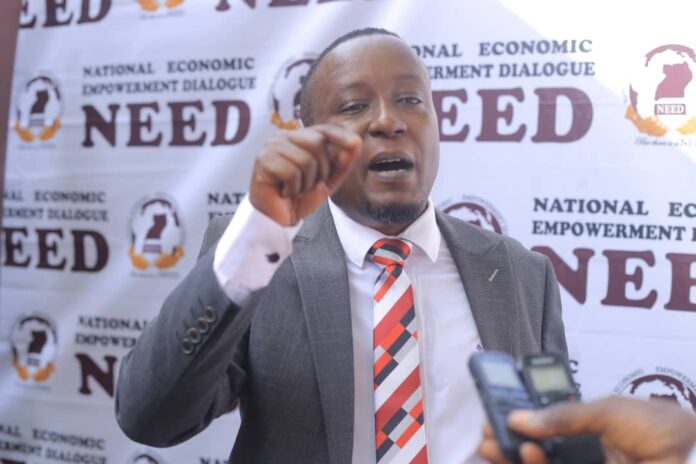
Joseph Kabuleta

Former Presidential candidate Joseph Kabuleta, who is also the National Economic Empowerment Dialogue (NEED) political pressure group leader, has said that President Museveni should remove all Covid-19 restrictions as the first step towards addressing the deteriorating security situation in the country.

Kabuleta said this in the wake of Tuesday’s coordinated bomb blasts in Kampala city centre that claimed the lives of four Ugandans and left over 30 severely injured.

“The police and other security organs are abdicating their primary responsibility of protecting the lives and property of Ugandans and are instead raiding bars and locking up revelers. Perhaps that’s why we are having all these fatal bomb blasts across the city.”

“The president should remove curfew and other restrictions so that policemen can get back to the serious work of hunting down real criminals and terrorists,” Kabuleta, who is also a Pastor stated.

President Museveni is expected to address the nation on Saturday and he will be talking about the Covid-19 situation in the country as well as security and terrorism issues.

Kabuleta said: “The COVID cases are dropping by the day and the original target of 4.8m people vaccinated has been met. So there’s no conceivable reason for the president to carry on with the restrictions.”

The former journalist also cautioned the President against using Tuesday’s unfortunate bomb blasts as an excuse to keep the nation in a perpetual state of emergency.

“Ugandans are yearning for their freedom to move and associate as they please. These are part of their rights. School children are anxious to get back to their routine and the entertainment industry is looking forward to a merry Christmas.”

“There is no emergency any longer. COVID has largely been contained. So what’s the rationale behind prolonging curfew and other restrictions into January 2022?” he wondered.

Kabuleta concluded by saying that the Museveni government has dealt with terrorism before and it was restrained without the need of infringing on people’s freedom to move or associate.

“In the aftermath of the July 2010 bomb blasts, Ugandans learnt how to be vigilant at entrances to public places, but the right to assemble was respected. The same approach should be used in dealing with the current wave of terror in the city.”

Stories Continues after ad

UNICEF gets Shs67 billion funding to improve lives of mothers and children in Uganda

UNICEF gets Shs 67 billion funding to improve lives of mothers and children in Uganda

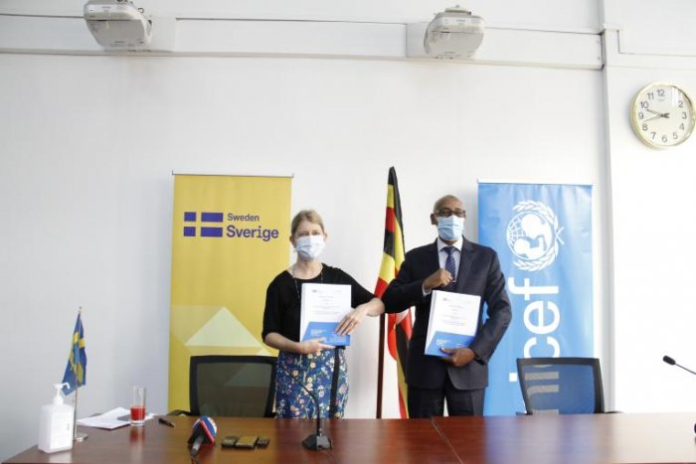
The Government of Sweden has announced new funding to UNICEF to improve the lives of mothers, children and youth in Uganda under the agency’s new Country Programme 2021-2025.

The five-year funding worth 165,000,000 Swedish Kronor (US$18.7 million) will be utilized by UNICEF to support the most vulnerable and under-served women and children in rural areas as well as in urban settings including refugees and host populations and those affected by humanitarian crises.

The new funding will enable UNICEF to contribute to the accelerated mass COVID-19 vaccination campaign, critical for continuity of learning and safe reopening of schools and closely linked to the prevention of teenage pregnancies. Under-nutrition in children is another government priority where UNICEF support is critical and that will be boosted by this contribution.

Under the new UNICEF Country Programme 2021-2025, UNICEF is committed to continue supporting government efforts to ensure increased access to and use of quality integrated health, nutrition, HIV, newborn, and water and sanitation services; improved learning for all children and young people; and protection of all boys and girls in Uganda from all forms of violence, abuse, neglect and exploitation, including harmful practices.

The Swedish Ambassador, Ms. Maria Håkansson, was pleased to announce the extension of the long-standing partnership with UNICEF.

“The support comes at a critical time in Uganda’s fight against the COVID-19-pandemic. In the short term our support will enable UNICEF to play a critical role in the Government’s accelerated mass vaccination campaign that started last week. This will help prevent the expiry of millions of doses of vaccine and contribute to safe reopening of schools,” said Maria Håkansson.

She added, “Around half of Uganda’s population is below 18 years of age and 25 percent of teenage girls in Uganda are already mothers or pregnant with their first child. Keeping girls in schools reduces the risks of early childbearing and child marriage.”

The UNICEF Representative to Uganda, Dr. Munir Safieldin, thanked the Government of Sweden for the continuous support extended to UNICEF especially at this critical time when the nation is slowly recovering from the pandemic.

“Since its declaration, children and young people are bearing the brunt of the COVID-19 pandemic. The new funding received is clear evidence of our shared commitment to improve the lives of children in Uganda, who have been greatly affected by the pandemic,” said Dr. Safieldin.

“UNICEF remains extremely grateful for the Swedish support which will go a long way in supporting the Government of Uganda to ensure boys and girls have access to critical health care, protection services and are able to return safely to school and learn.”

The Government of Sweden has been a significant partner to UNICEF Uganda since 2013, supporting the joint work undertaken by UNICEF Uganda and the Government of Uganda, most recently in the areas of maternal and newborn health, adolescent health, HIV/AIDS, and building health systems that facilitate the delivery of services. Under the recently concluded Government of Uganda-UNICEF Country Programme 2016-2020 that coincided with the beginning of the COVID-19 pandemic, Sweden supported the continuity of essential health services for children and women and other COVID-related emergency needs.

Dr. Safieldin emphasized that “the new funding will build on the gains made for children and support the country to build back better.”

Stories Continues after ad

Museveni’s national address pushed to Saturday

President Yoweri Museveni

President Yoweri Museveni’s address to the nation about the terror attacks and the current Covid-19 situation and other related matters has been postponed to Saturday. This was confirmed by the President’s Senior Press Secretary Nabusayi Lindah Wamboka.

“Museveni’s National address has been pushed from Friday to Saturday 20th November 2021 at 8pm,” Lindah said.

In the last two months, the country has witnessed six bombings in various areas in the country.

According to police, the first explosive occurred at Digida Pork joint in Komamboga, Lungala along Kampala Masaka Highway, Luweero, and the recent incident at Kampala Central Police Station (CPS) and Parliamentary Avenue. The terror attacks have claimed the lives of at least seven people.

The president is expected to tell the country what the government has in place to counter the terrorism and pandemic at the same time.

Stories Continues after ad

EC sets dates for nomination of candidates for Local Government Councils by-elections

EC chairman Justice Simon Byabakama.

The Electoral Commission has selected Monday 29th November and Tuesday 30th November 2021, as the dates for the nomination of candidates for Local Government Councils by-elections 2021.

The nomination of candidates shall take place at the respective District/City headquarters beginning at 9 am and ending at 5 pm on each of the appointed dates.

All persons aspiring to contest in the Local Government Councils by-elections are urged to familiarize themselves with the requirements for nomination for each elective position, as outlined in the Guidelines issued by the Electoral Commission.

“Aspiring candidates can collect copies of the nomination forms and the above guidelines from the District Electoral Commission offices in each district across the country, or obtain soft copies of the forms and guidelines from the Electoral Commission website: www.ec.or.ug,” the Chairperson of Electoral Commission Justice Byabakama Mugenyi Simon said.

Aspiring candidates are particularly urged to note the following: All persons participating in the nomination exercise shall be required to comply with guidelines issued by the Electoral Commission in accordance with the Government of Uganda and Ministry of Health measures against the spread of COVID-19. These include observing social distancing, hand washing, and wearing of masks.

Accordingly, an aspiring candidate shall be accompanied to the nomination venue by only two persons, that is, the proposer and the seconder; The aspiring candidate will be allowed to use only two (2) vehicles for purposes of attending the nominations and each vehicle shall not carry more than three persons including the driver; and, Convoys and processions shall not be allowed during the nomination exercise.

The categories to be filled during these by-elections include: District Chairperson (Kayunga District), District Women Councilors (DWC), District Directly Elected Councilors (DDEC), Municipality Directly Elected Councilors (MDEC), Municipality Women Councilors (MWC), Sub-county Chairpersons (SCCP), Sub-county Directly Elected Councilors (SCDEC) and Sub-County Women Councilors (SCWEC).

The Special Interest Groups (SIGs) Councilors include: People with Disabilities (PWDs), Older Persons, Workers and Youth.

Candidates’ campaign meetings will be conducted for a period of thirteen (13) days, that is, from Thursday 2nd to 14th December 2021.

Polling and tallying of results for elections of Councillors representing Special Interest Groups (SIGs) shall take place on Wednesday 15th December 2021.

Meanwhile polling for the District Chairperson, Kayunga, and other Local Government Councils shall take place on Thursday 16th December 2021, at all polling stations in the affected electoral areas.

Stories Continues after ad

Robert Kabushenga appointed to KCB Board of Directors

Robert Kabushenga

KCB Bank Uganda has appointed former Chief Executive Officer of Vision Group, Robert Kabushenga to the board of directors.

Kabushenga has been appointed alongside the Chief Technical Officer of Trade Mark East Africa, Ms Allen Asiimwe, and Lawrence Kiambi, the KCB Group Chief Finance Officer.

“We are so excited to welcome Allen Asiimwe, Robert Kabushenga and Lawrence Kiambi as board members. The bank looks forward to tapping into their leadership and wealth of experience. Welcome to the pride!” KCB said in a statement.

Kabushenga welcomed the appointment saying; “I am honored to join KCB Bank Uganda as a Non-Executive Director. I never once thought I would end up in the work of finance. Now here I am. And the company of fine minds I will be keeping!!”

Kabushenga brings over 20 years of experience having worked as Vision Group CEO from January 2007 to 2020. He also previously worked as Executive Director of the Uganda Media Centre, doubling as the government spokesperson.

Stories Continues after ad

More nominees for FUFA Awards 2021 revealed

Fufa award accolades

The organizing committee of the 2021 FUFA Awards has released more nominees in six categories. The Committee is headed by FUFA Executive member Rogers Byamukama.

Unlike the previous awards where voting was done via Short Message Service (SMS), this time, fans will only vote for their favorite players and coaches online.

The categories released included; Fans’ favorite foreign-based player of the year, Male and Women Coach of the year, Beach Soccer and Futsal players of the year, Member Association of the year, Member Association of the Year, FUFA Presidential Award, Fair Play Award, Best XI men, Best XI women and Best Squad of a particular year in addition to the Male and Female player of the year nominees who were released earlier.

Byamukama stated that last year the awards were not held due to the Covid-19 and disruption of activities.

“We are excited again as we engage a high gear for preparations of our long awaited Airtel FUFA Awards. As we all know because of Covid 19, we were not able to organise last year’s edition and primarily because of very few activities. The awards are about rewarding sporting excellence in a season so it would not make sense to just have them when you have not had actors participate in footballing activities.”

“We have always rewarded both the male and female player of the year award winners with brand new cars and even this time the top two athletes will be recognized. The rest of the winners will receive cash prizes,” he added.

On Monday 22nd November, the nominees for female player of the year award will be trimmed from five to three whereas the final three for Male player of the year category will be confirmed on Wednesday 24th November.

The nominees for Airtel FUFA female player of the year 2021 are; Lady Doves FC players in Daisy Nakaziro and Fazilah Ikwaput, Joan Naggayi (She Maroons), Fauzia Najjemba (Kampala Queens) and Margret Kunihira (Kawempe Muslim Ladies).

Vipers’ trio Abdul-Azizi Kayondo, Bobosi Byaruhanga and Yunus Sentamu are joined by Express forward Erick Kenzo Kambale and URA captain Shafik Kagimu for the male nominees.

This year the winners will be rewarded at a glamorous event that will be staged at Speke Resort Munyonyo on Saturday 4th December 2021.

The nominees from the six categories that were revealed are;

Airtel FUFA coach of the year: Morley Byekwaso (U-20 Hippos team), Wasswa Bbosa (Express), Hussein Mbalangu (Arua Hill SC/Mbarara City FC)

Airtel FUFA Women football coach of the year:  Fred Musiime (Lady Doves), Sida Alex (She Maroons), Ayub Khalifa (U-20 Women National team)

Beach Soccer player of the year nominees: Wasswa Emmanuel (St. Lawrence Beach Soccer Club), Kigozi Ambrose (Buganda Royal Beach Soccer Club), Kawawulo Isma (MUBS Beach Soccer Club)

Member Associations’ award nominees: Express FC (Club), Uganda Youth Football Association (Special Interest Group), Kampala Region Football Association (Region Football Association)

Futsal Player of the year nominees: Farouk Tumwesigye (Big Talent), Mutyaba Travis (Synergy FC), Najib Muwonge (Mengo FC)

Fans Favourite Ugandan foreign based player: Denis Onyango (Mamelodi Sundowns, South Africa), Fahad Bayo (Ashdod FC, Israel), Joan Nabirye (Vihiga Queens, Kenya), Taddeo Lwanga (Simba SC, Tanzania).

Stories Continues after ad

Simbamanyo ordered to pay Shs1.3b in legal costs after losing court case

Simbamanyo house which was acquired by tycoon Sudhir Ruparelia.

The Commercial Court has ordered Simbamanyo Estates Limited and its proprietor Peter Kamya to pay Shs 1.3 billion in legal costs to Equity Bank Uganda Limited and two business firms; Meera Investments Limited and Luwaluwa Investments Limited.

In the ruling, the Commercial Court Registrar, Mr Elias Kisawuzi ordered Simbamanyo and Kamya to pay Shs 600 million to Equity Bank, Shs 400 million to Meera Investments and Shs 300 million to Luwaluwa Investments.

Kisawuza held that the bank and the business entities presented three bills for the cases, which the court dismissed with costs.

According to the ruling, the costs include; fees, charges, disbursements, remuneration and reimbursements allowed to a litigant in person.

“The general rule remains that unsuccessful party will be ordered to pay the costs to the successful party, but the court may make a different order. In other words, the court may decide that as successful party must not be awarded his or her costs,” the court said.

Simbamanyo and Kamya had filed an application to stop the sale and transfer of their properties; Simbamanyo House located along Lumumba Avenue and Afrique suites in Mutungo. In October 2020 the court dismissed the application with costs.

Records show that Equity bank sold the properties to recover its USD 10 million loan acquired by Simbamanyo in 2017.

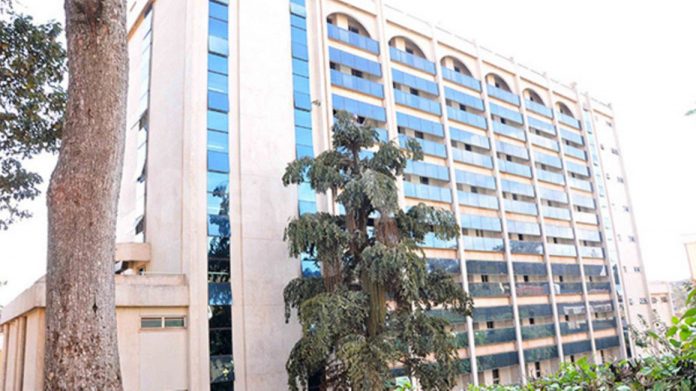
The Simbamanyo House at was acquired at $5 million about (Shs18.5 billion) by Meera Investments Limited which is owned by city tycoon and businessman Sudhir Ruparelia. The building has since been renamed the Gender and Labour House.

Simbamanyo has been involved in numerous court battles against the bank in which it challenged the legality of the USD 10.5 million unpaid loan.

The bank argued that the proprietors of Simbamanyo defaulted on their loan obligations when they failed to pay any money as required by the contract.

Stories Continues after ad

Museveni directs NSSF to stop paying URBRA off savers’ funds

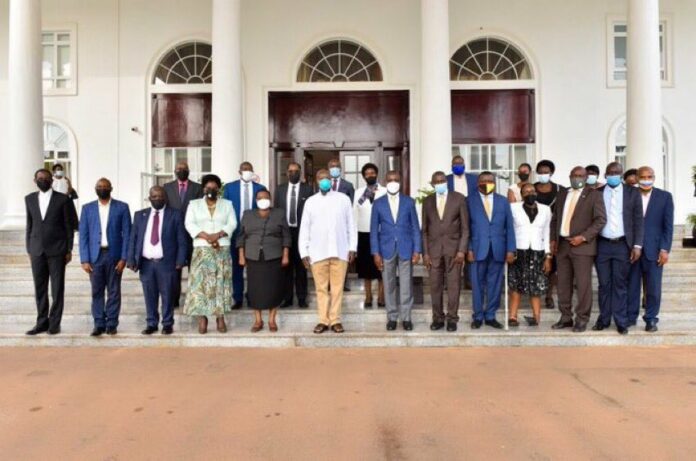
President Museveni pose for a group photo after meeting NSSF stakeholders.

President Yoweri Museveni has directed the National Social Security Fund (NSSF) to stop paying Uganda Retirement Benefits Regulatory Authority (URBRA) off savers’ funds.

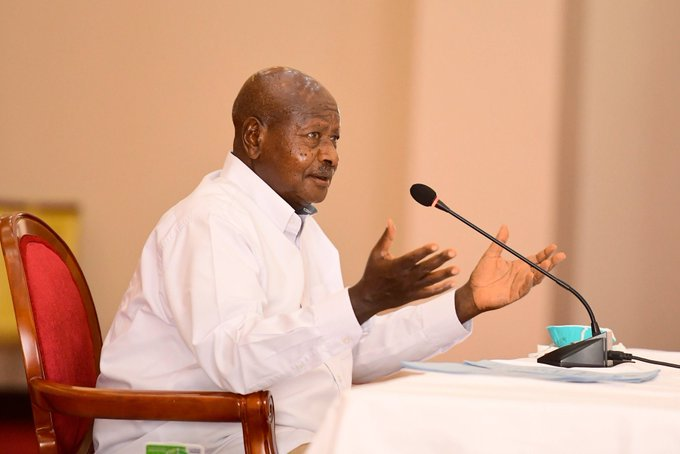
“I met a select committee to discuss the NSSF Bill. We talked about midterm access and the role of the Uganda Retirement Benefits Regulatory Authority (URBRA). I noted that URBRA is being wrongly paid off workers’ savings and this should stop immediately,” Museveni said.

URBRA is a government-owned, semi-autonomous agency responsible for regulating, licensing, supervising, and controlling the retirement sector in Uganda, the third-largest economy in the East African Community. The authority is also responsible for issuing guidelines to allow the liberalization of the retirement sector in the country.

The Agency was charging NSSF Shs7 billion annually however, Museveni directed it to stop and instead said they should restructure and be paid by the government. “This is not negotiable, URBRA should not be paid by workers, it is supposed to be paid by the Government. When you create an agency, you should cater for it,” he said.

URBRA was established by an Act of Parliament of Uganda in 2011. The agency is under the Uganda Ministry of Finance and Economic Development but is semi-autonomous, with a governing board and a management team led by an executive director as the chief executive officer.

Before 2012, there were only two major retirement benefits plans in the country: the Public Employees Retirement Plan, for some civil servants, and the National Social Security Fund (Uganda), for privately employed people whose employers had at least five employees on payroll.

Stories Continues after ad

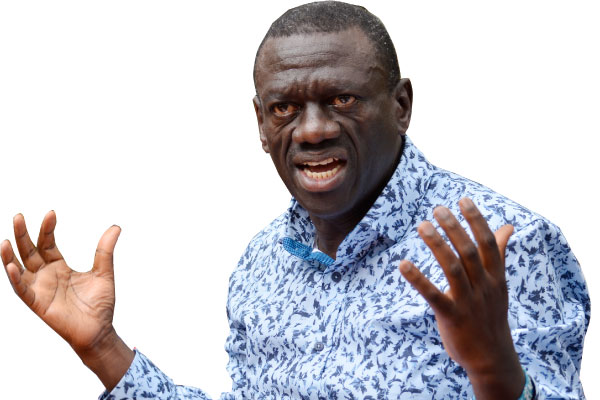
Frustration, desperation and anger causing violent extremism – Besigye

Dr. Kiiza Besigye, the former FDC president

The Former Presidential Candidate Dr. Col. Kizza Besigye has revealed that frustration, desperation and anger brewed from the injustices have led to formation of violent insurgent groups that fight the State coercive forces, non-violent political resistance, gangs that will terrorize people for their survival and escalation of petty crime.

Besigye said a few hours after Uganda witnessed twin bombings which went off at Parliamentary Avenue and Kampala Central Police Station (CPS) claiming at least three people.

According to Besigye, the insecurity and violence in Uganda, which is an ever present threat, is not, primarily a National Security problem rather a Human Security problem.

“The anger and hopelessness from the injustices lead to degradation of confidence in one’s own worth or abilities; self-esteem, the sense of having nothing to lose, and can foment suicidal tendencies. Many young people have been killing themselves, including, by self-immolation! These are human bombs waiting for a detonator,” he said.

He said nobody manipulated and confused Hussein Walugembe (29), the Boda Boda rider who burnt himself dead at Masaka Central Police Station; similarly, no one manipulated Mugisha Akors (23), Wasswa Bogere (24), Edgar Kyamunywa (40), Andrew Andrew Mukiibi (28) etc, who, all violently killed themselves recently.

“Long-standing injustices have translated into Poverty, Youth marginalization, unemployment and exclusion from opportunities for self-development,  Disease, Hunger and Ill-health, Environment degradation that’s intensifying poverty, migrations and nomadism; unplanned for population growth,” he said adding that, “In Uganda, all these forms of expression are present. The response of the NRM Junta to all of them is the same- get more guns to “crush the pigs”. No amount of cameras and other technological gadgets can stop them.”

He said in spite of the great hype and projection of Uganda’s security systems as being robust and efficacious, the reality is different. Much, much more could be achieved with much fewer people and resources.  This is due to pervasive corruption, poor facilitation, intrigue and conflict between Security Organisations, politicization of security Organisations.

“Security Organisations are, themselves, high up on the list of suspects in most cases of insecurity and violence. It’s believed that some can cause violence and insecurity to attract ‘operational funds’  to cast a sister organisation in bad light; or to eliminate political or job rivals etc,” he said.

He pointed out that promotion and appointments in Security Organisations has been, primarily, based on blood relations, loyalty to individuals and cronyism, rather than, knowledge, skills, experience and patriotism. This is because these Organisations are meant, mainly, for Regime security, rather than Human security. This inherently undermines the efficacy of the Organisations.

Besigye said Regional military adventurism  is a major factor in the generation of the huge numbers of refugees that have been pouring into Uganda- especially, from Sudan and DRC. Some of these refugees enter with guns or with experiences in violence that they can share with citizens. They also add onto the tension over scarce resources.

“Human Security Crisis is a part of the general National crisis Uganda finds itself in. We shall not get out of this crisis by anything short of a fundamental reset of the State. The NRM Junta must be brought to an end and a transition to a new democratic State where all citizens enjoy full and equal rights and opportunities, under the rule of law,” he said.

Stories Continues after ad