Stanbic Bank
Stanbic Bank
27.6 C
Kampala
Stanbic Bank
Stanbic Bank
Home Blog Page 729

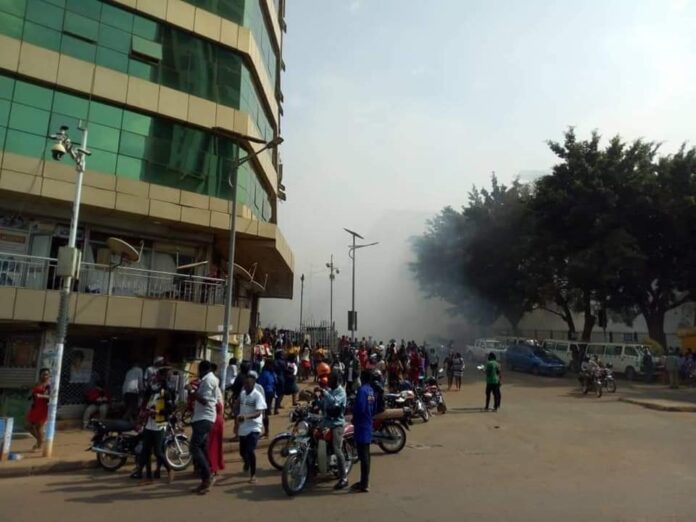
BREAKING: Two suspected bombs explode at CPS and Parliamentary Avenue

Two suspected bombs have exploded near Central police station (CPS) and Jubilee Insurance house along Parliamentary Avenue.

Cars are seen burning near Jubilee Insurance in some of the photos shared on social media while another explosion was reported at Kooki towers, opposite Central Police Station in Kampala.

Several people have been reported injured.

The two crime scenes have been condoned off by Police.

More details to follow…

Stories Continues after ad

FDC to Museveni: Stop yelling at Parliament over Dr. Musenero, let her appear before committee for questioning

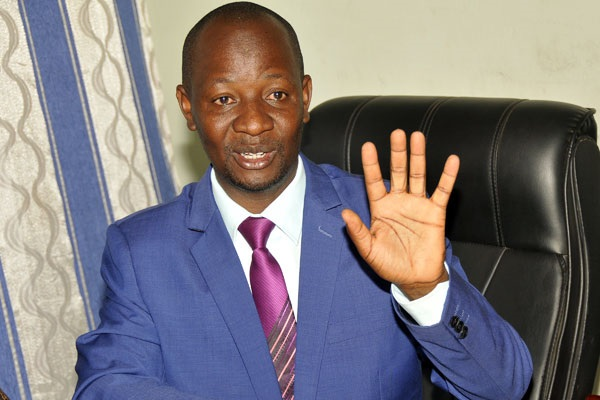
Ssemujju Ibrahim Nganda

The Forum for Democratic Change (FDC) has expressed its concern over the continued lack of clarity on Covid-19 vaccine procurement and manufacturing in the country.

This year, the government set aside Shs 560 billion for procurement of Covid-19 vaccines and Shs 31 billion for manufacturing of Covid-19 vaccines. The country has so far bought less than 300,000 doses of Covid-19 vaccines. The process to manufacture vaccines stalled.

According to a supplementary budget that was tabled before parliament, the ministers want an additional Shs 50 billion for vaccine manufacturing. This prompted Busiro East MP Medard Ssegona to call for an inquiry into the money which was accorded to the Veterinary Doctor. Since then the president has been furious, rubbishing the MPs for calling an inquiry into the usage of the money.

“Covid-19 is being turned into an enterprise to make money by President Yoweri Museveni and his close associates,” FDC party spokesperson Ibrahim Ssemujju Nganda said adding that, “Museveni has maintained throughout the pandemic period that his government is working on manufacturing Covid-19 vaccines. But nothing has been done.”

“We welcome parliamentary inquiry into the use of Shs 31 billion for vaccine manufacturing. If the vet is clean, let her run to the select committee of Parliament and not State House,” Ssemujju said while questioning Museveni’s decision to defend Dr. Musenero.

“If Museveni didn’t partake of this money, let him not yell at Parliament. He should if it is in his interest ask to appear before the committee to explain his participation. The relationship between Dr. Musenero and the health sector is also a point of concern. Museveni said that the health sector refused to employ his veterinary doctor. Maybe it is the reason he took her to the State House. How with that history revealed, the two ministers work in order to produce a vaccine,” he said.

Stories Continues after ad

Police redeploys Flying Squad Unit to counter organized crime groups and human trafficking

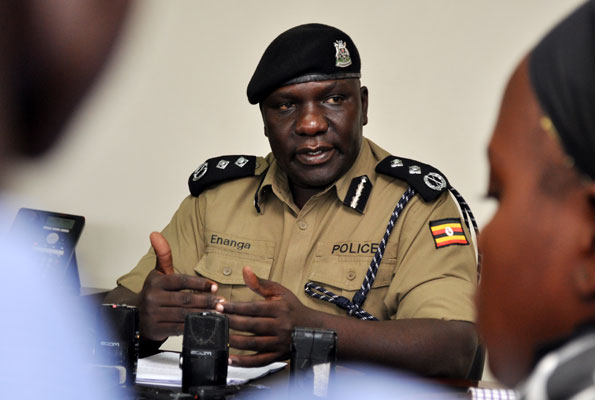
Fred Enanga, Police spokesperson

Police has redeployed Flying squad Unit following three month refresher course on gun violence and counter terrorism. The redeployment was confirmed by police spokesperson Commissioner of Police (CP) Fred Enanga

According to police spokesperson Fred Enanga, the Flying Squad Unit will focus on countering organized crime groups and human trafficking under the Criminal Investigations Directorate (CID) ahead of the festive season.

“We want to inform the public that our Flying Squad Unit is back from training. They have been redeployed in the traditional districts of Uganda and along major routes to support the territorial teams. Their deployment is intelligence-driven,” Enanga said adding that, “120 Officers completed their training and redeployed.”

In May 2018, the Inspector General of Police (IGP) Martins Okoth Ochola disbanded the Flying Squad and ordered all its personnel to report to CID headquarters in Kibuli.

At that moment, the Flying Squad was under Assistant Commissioner of Police (ACP) Herbert Muhangi, who moved to head the Human Power Audit Department of Police.

All the six who are at the rank of Assistant Superintendent of Police have been reverted to general police and then posted to upcountry police stations. Vincent Adupa has been appointed OC Soroti police barracks, Lawrence Ayesiga has been appointed OC Agwata police station in Dokolo district, Innocent Bimanywa has been appointed OC Karita police station in Amudat district.

Other Flying Squad commanders appointed include Morris Okidi who is now OC Campswahill police station in Moroto district, Kenneth Nyeko has been appointed OC Rwaje police station in Buvuma district while Madrine Namutebi has been named OC Kazinga police station in Kyegegwa district.

The Police Flying Squad Unit was formed in 2012 under the reign of former Inspector General of Police Edward Kale Kayihura to replace the Rapid Response Unit (RRU) as an emergency response to high crime rates in Kampala and its suburbs.

The unit was based at the Kampala Police Stations and Nalufenya where they planned and executed most of their operations.

Despite its achievements, the unit relied mostly on unprofessional operatives and former criminals to carry out their operations which tainted its image.

Its members were cited among others in armed robberies, murders, torturing of suspects and extortion of money.

Stories Continues after ad

Uganda Airlines, Airbus Flight Hour Services Company partner to provide aircraft spares support services at Entebbe

Uganda Airlines, Airbus Flight Hour Services Company partner to provide aircraft spares support services at Entebbe

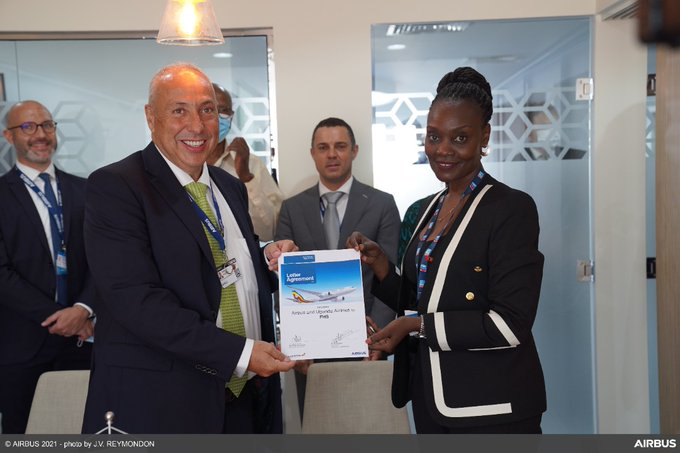
Uganda Airlines has partnered with Airbus Flight Hour Services Company, a subsidiary of Airbus, for A330 aircraft spares support services.

The agreement was signed by Mikhail Houri, Airbus President Africa and the Middle East and Jenifer Bamuturaki Ag. Chief Executive Officer (CEO) of Uganda Airlines.

Speaking after the signing, Bamuturaki said Airbus Flight Hour Services Company will position a consignment of critical spares in Entebbe.

“The alternative would have been to buy our own spares, which would require an astronomical capital investment running into hundreds of millions of dollars. But with this signing on board now, it means that Airbus will ensure spares availability for Uganda’s aircraft using their money. In simple terms,they will be investing in our spare parts supplies as we keep on the move making money to pay back,” Bamuturaki said.

She added that for provision of this service, Uganda will pay Airbus company per aircraft flight hour at a mutually agreed rate.

Mikail Houari, Airbus President for Africa and Middle East, said; “I am extremely happy and hopeful that this was happening.”

“On behalf of Airbus, we’re extremely happy that this is happening. This is largely for the mutual benefit of all of us here today. We’re looking forward to many more good times with Uganda,” Houari said.

The airliner’s A330-Neo Aircraft Airbus is at Al Maktoum Airport Dubai for the Dubai Air show which kicked off over the weekend. Uganda Airlines was chosen to be among the exhibitors showcasing at the Dubai Air show.

The DubaiAirshow2021 is one of the largest and most successful air shows in the world, connecting aerospace professionals across industry experts to facilitate successful global trade.

Stories Continues after ad

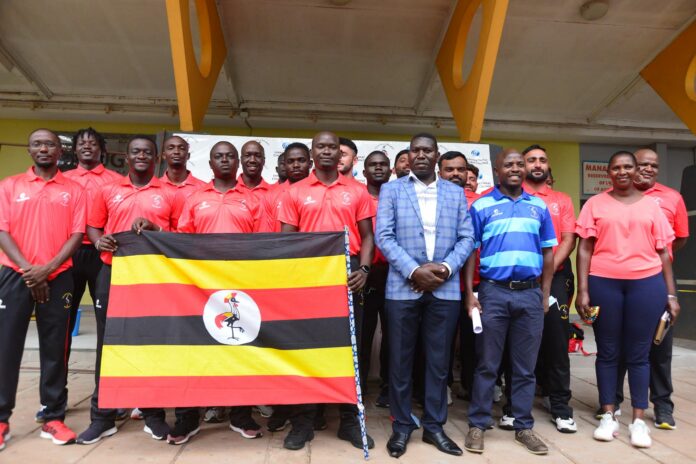
Cricket Cranes in Kigali for the Africa T20 World Cup finals

Cricket Cranes

The Uganda’s senior men’s national cricket team – The Cricket Cranes – are in Kigali, Rwanda for the International Cricket Council (ICC) Twenty20 World Cup Sub-Regional Qualifier for Africa Group A.

Uganda emerged unscathed in the seven-team pool with flawless displays against Malawi (10 wickets), Rwanda (103 runs), Lesotho (10 wickets), Eswatini (6 wickets), Ghana (79 runs), and Seychelles (95 runs) for a haul of 12 points to deservedly earn the solo ticket to next week’s ICC Men’s T20 World Cup Africa Qualifier – dubbed The Africa T20 Finals in Rwanda.

That was only the first step for Uganda in the four-way qualification process to the 2022 ICC T20 World Cup in Australia. The second step is the Africa Finals and Uganda have to do it all over again at two ovals; the Integrated Polytechnic Regional Centre (IPRC) in Kicukiro and Gahanga International Stadium to earn the lone spot to the third step – The ICC T20 World Cup Global Qualifier scheduled for mid-next year.

In Kigali this time, Uganda will line up against familiar foes in Kenya, Nigeria, and Steve Tikolo’s Tanzania, the champions of Sub-Regional Group B last week – who edged Botswana by 3 runs in the do-or-die decisive game at Gahanga to secure their berth.

According to the latest updated World Rankings on icc-cricket.com, Kenya is seeded 25th, Uganda is 28th, Nigeria (36th), and Tanzania (38th). The rankings show no major gulf in class between the four continental finalists which points to one thing – an anticipated closely contested affair over the next week that will see teams compete in a two-round robin format on three double-header match days.

Returning Captain Brian Mark Masaba who replaced youngster Gerald Mubiru told Uganda Cricket Association (UCA); “I am super excited to be able to go out on the field with the boys again. Been tough sitting out, but that’s how it goes sometimes. The team is looking good, not much change from the last team. Each one’s roles are clear cut and everyone knows what the job is.”

Cricket Cranes team: Brian Masaba (Captain), Deus Muhumuza (Vice Captain), Ronak Patel, Simon Ssesazi, Dinesh Nakrani, Frank Akankwasa, Riazat Ali Shah, Kenneth Waiswa, Bilal Hassun, Frank Nsubuga, Saud Islam, Richard Agamire, Henry Ssenyondo, Fred Achelam (wicket-keeper).

17 November 2021:

10:15 am: Kenya vs. Uganda, IPRC Cricket Ground, Kicukiro-Kigali

2:45 pm: Uganda vs. Nigeria, Gahanga International Stadium

18 November 2021:

10:15 am: Tanzania vs. Uganda, Gahanga International Stadium

2:45 pm: Nigeria vs. Uganda, IPRC Cricket Ground, Kicukiro-Kigali

20 November 2021:

10:15 am: Uganda vs. Tanzania, Gahanga International Stadium

2:45 pm: Uganda vs. Kenya, Gahanga International Stadium

Stories Continues after ad

Deputy Speaker, WHO Representatives commit to addressing mental health challenges in Uganda

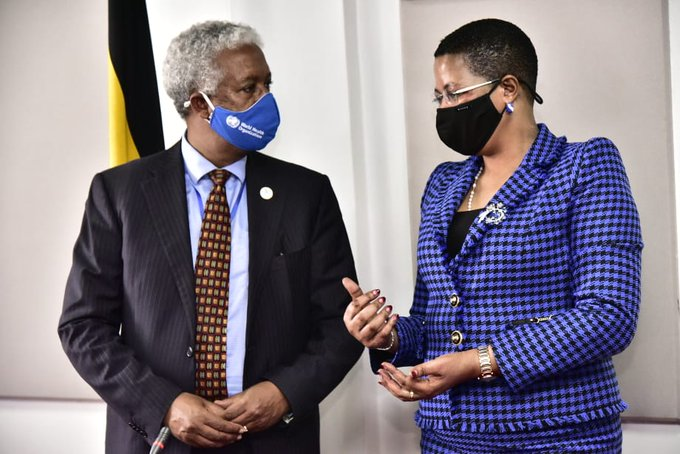
The Deputy Speaker of Parliament, Anita Among, and one of WHO Representatives, Dr Yonas Tegegn Woldemariam

The Deputy Speaker of Parliament, Anita Among, and a team from the World Health Organization (WHO), led by the WHO Representative, Dr Yonas Tegegn Woldemariam have committed to working together to address and promote mental health challenges in the country.

In a meeting attended by among others, the Uganda Parliamentary Forum on Mental Health, led by its chairperson, Macho Godfrey, Busia Municipality, aimed to create a solid basis for close collaboration to address mental health issues in Uganda, which account for 3.14% of the country’s total disease burden.

“The burden of mental health disorders is high in Uganda and COVID-19 has further reinforced this burden. We need to seriously think about expanding mental health services at the grassroots level, as it is at the district level that the treatment gap can be adequately addressed.” Among said.

The Deputy Speaker of Parliament also called for a mechanism to provide counselling services to children before they return to school due to the stress they have experienced during the pandemic and the trauma and stigma caused by COVID-19 cases recorded in schools.

The WHO Representative to Uganda, Dr Yonas Tegegn Woldemariam said, “Mental health problems are driven by many factors, including environmental factors, drug abuse and now the COVID-19 pandemic. There is a need for concrete action to ensure the good mental health of Ugandans.”

He further said that mental health issues cannot be addressed by the Ministry of Health and WHO alone, but also the support of parliamentarians to take the message to their various communities is needed.

Despite the universal nature and magnitude of mental illness, the gap between the demand for mental health services and supply remains large. Relatively few people in Uganda have access to quality mental health services. The serious gaps in mental health care that remain are the result of decades of chronic under-investment in mental health promotion, prevention and care seen in most developing countries. Stigma, discrimination and human rights violations against people with mental disorders remain widespread.

The United Nations has made several resolutions and declarations for strategies and guidelines to guide countries on prevention and control of mental disorders and promotion of mental health since 1975 including a comprehensive mental health action plan 2013-2030 and the definition of mental health, and human rights (2020).

In addition, to this support, there is a need to develop appropriate messages on mental health promotion, prevention and early intervention to combat stigma and discrimination; strengthen multi-sectoral collaboration and encourage partnerships with all stakeholders, including local and international NGOs, and prioritize teachers and students at all levels; to strengthen community-based mental health services by training primary health workers to promote the integration of mental health in primary health care.

During the meeting, WHO pledged to provide technical support to the Parliamentary Forum on Mental Health to review and finalize its draft strategic plan, development of a monitoring tool and a dashboard to enable the parliamentary forum to track implementation at the district level, and to assist the PFMH in organizing capacity-building workshops on mental health for Members of Parliament.

Stories Continues after ad

Canada donates 1.9 million doses of #Covid-19 vaccine to Uganda

Covid-19 vaccine

The Ministry of Health has received 1,904,140 doses of the Moderna COVID-19 vaccine, donated by the Canadian Government and shipped via the COVAX facility, the world’s facility for universal access to COVID-19 vaccines.

The arrival marks an important step towards the goal to ensure equitable distribution of COVID-19 vaccines globally. Uganda is targeting the vaccination of nearly half of its population, which is about 22 million people, in a phased manner. Currently, the eligible population comprises individuals 18 years and above.

“This first donation of the Canadian-financed vaccines to Uganda is a significant moment and a concrete example of global solidarity in action,” said the Minister of Health Dr. Jane Ruth Aceng. “We especially want to thank the Government of Canada for the timely and critical support they made to COVAX to make this possible,” she added.

COVAX, the vaccines pillar of the Access to COVID-19 Tools (ACT) Accelerator, is co-led by the Coalition for Epidemic Preparedness Innovations (CEPI), Gavi – the Vaccine Alliance, and the World Health Organization (WHO) – working in partnership with UNICEF as a key implementing partner. UNICEF is handling the procurement and delivery of the vaccines and related supplies on behalf of the COVAX Facility.

The COVID-19 pandemic is a global threat that does not recognize borders. “Canada is committed to a global effort to stop COVID-19 to address its devastating impacts on people around the world. Since February 2020, Canada has committed over $2.5 billion in international assistance in response to COVID-19,” said acting High Commissioner to Uganda David Da Silva.

“This latest contribution of 1.9M doses of Moderna to Uganda is an example of Canada’s commitment to supporting equitable access to safe and effective vaccines everywhere. We are proud to work with the Government of Uganda to end this virus together. As we’ve said before ‘No one is safe until everyone is safe,’” he emphasized.

“The COVID-19 crisis is a child rights crisis. The longer the pandemic goes on in Uganda, the more intense the impact on women and children. As a key COVAX partner, UNICEF Uganda appreciates the dose-sharing by the Canadian Government. The arrival of this shipment in Uganda is very timely as the demand for vaccination is currently exceeding the available supply of vaccines,” said Dr. Munir Safieldin, UNICEF Representative to Uganda.

“I urge other governments to push equitable and fast access to COVID-19 vaccines, including through donations like this one,” reinforced Dr. Munir Safiedin, UNICEF Representative to Uganda.

All partners need to work together to end the pandemic; only a truly global response can protect health services and the people children rely on. In this race against time to end the COVID-19 pandemic and vaccinate people, it is critical that as many safe and effective vaccines as possible are available to as many people as possible as quickly as possible.

Vaccination is key to protecting our children and ourselves and building safer communities and societies that are free from harmful vaccine-preventable diseases. As we deploy vaccines against COVID-19, it is critical that children continue to have access to existing vaccines in order to prevent outbreaks of vaccine-preventable diseases alongside the COVID-19 pandemic.

Stories Continues after ad

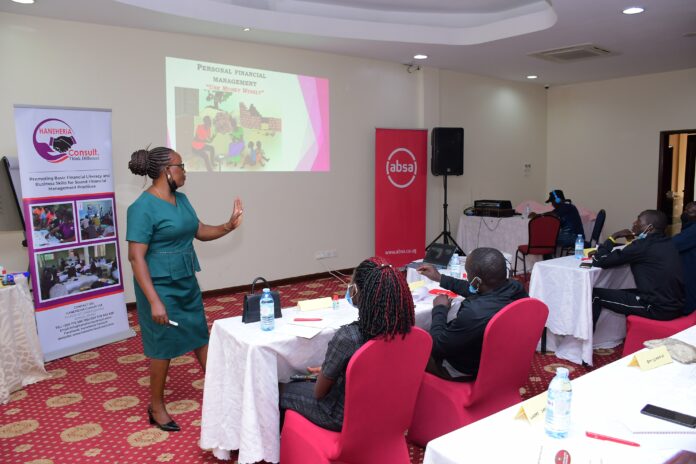
Absa, BoU tip athletes on financial literacy

Absa Bank Uganda and Bank of Uganda have conducted training in financial literacy for Ugandan athletes and coaches to bolster their financial decision-making capabilities.

The training, which was conducted at the Mbale Resort Hotel, was facilitated by Mutesi Myria Lugwire, a Bank of Uganda Financial Literacy Master Trainer & Lead Consultant.
Eight athletes and two coaches benefitted from the training, most notable of whom were Peruth Chemutai, who became the first Ugandan woman to win gold at the 2020 Tokyo Olympic Games by dominating the 3,000m steeplechase final.

Others included Oscar Chelimo, Sarah Chelangat, Fred Musobo, Coaches Peter Chelangat and Benjamin Njia, among others.
The engagement also involved the attendees opening accounts with Absa Bank Uganda, with Shs1 million already deposited by the bank as seed funds.

An additional training session will be conducted in Kapchorwa to enable the wider camp of athletes beyond Team Uganda to gain this crucial knowledge.
The initiative is in response to the fact that many Ugandan sportspeople tend to retire into poverty and squalor long after their time in the limelight and glory has passed.

The training included modules in budgeting and personal financial management, saving, investment, increasing income streams and planning for retirement.
Absa, BoU tip athletes on financial literacy.

Absa Bank Uganda and Bank of Uganda have conducted training in financial literacy for Ugandan athletes and coaches to bolster their financial decision-making capabilities.

The training, which was conducted at the Mbale Resort Hotel, was facilitated by Mutesi Myria Lugwire, a Bank of Uganda Financial Literacy Master Trainer & Lead Consultant.
Eight athletes and two coaches benefitted from the training, most notable of whom were Peruth Chemutai, who became the first Ugandan woman to win gold at the 2020 Tokyo Olympic Games by dominating the 3,000m steeplechase final.

Others included Oscar Chelimo, Sarah Chelangat, Fred Musobo, Coaches Peter Chelangat and Benjamin Njia, among others.
The engagement also involved the attendees opening accounts with Absa Bank Uganda, with Shs1 million already deposited by the bank as seed funds.

An additional training session will be conducted in Kapchorwa to enable the wider camp of athletes beyond Team Uganda to gain this crucial knowledge.

The initiative is in response to the fact that many Ugandan sportspeople tend to retire into poverty and squalor long after their time in the limelight and glory has passed.

The training included modules in budgeting and personal financial management, saving, investment, increasing income streams and planning for retirement.

Speaking during the training, Harriette Kasirye, Absa Uganda’s Head of Brand and Marketing said, “This programme is part of our commitment to being an enabler in the lives and careers of Uganda’s talented sportspeople. We recognise the immense value they bring to the nation and are making it a priority to see that they thrive both professionally and in their personal lives.”

Absa Bank Uganda was the official sponsor of the team that represented Uganda at the 2020 Tokyo Summer Olympics with a Shs 54.5m package that went towards medical care, health insurance and training kits for the team of 22 that comprised boxers, athletes, swimmers among other sports disciplines.

Speaking during the training, Harriette Kasirye, Absa Uganda’s Head of Brand and Marketing said, “This programme is part of our commitment to being an enabler in the lives and careers of Uganda’s talented sportspeople. We recognise the immense value they bring to the nation and are making it a priority to see that they thrive both professionally and in their personal lives.”

Absa Bank Uganda was the official sponsor of the team that represented Uganda at the 2020 Tokyo Summer Olympics with a Shs 54.5m package that went towards medical care, health insurance and training kits for the team of 22 that comprised boxers, athletes, swimmers among other sports disciplines.

Stories Continues after ad

Uganda moves to bring the African Continental Free Trade Area to life

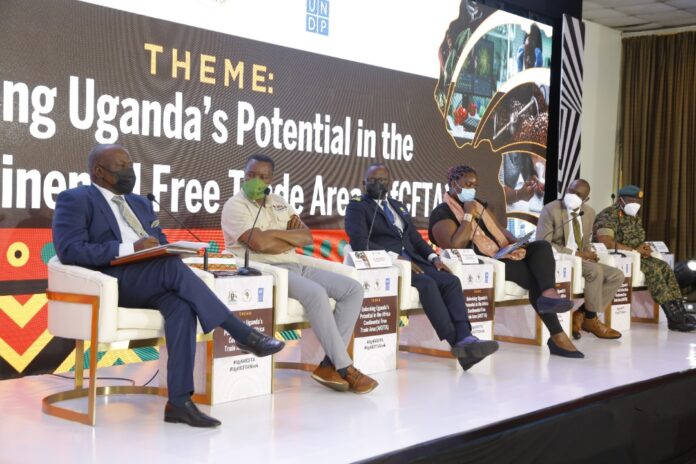
The Government of Uganda through the Ministry of Trade, Industry and Cooperatives in partnership with the United Nations Development Programme (UNDP) have held a three-day dialogue with key stakeholders to discuss opportunities presented by the African Continental Free Trade Area (AfCFTA) and how Government, private sector, development partners and other stakeholders can collaborate to position the country as a fast mover in harnessing opportunities presented by the agreement.

The AfCFTA is projected to raise Africa’s income by 7 percent, lift 30 million people out of extreme poverty, and lift 68 million people out of moderate poverty by 2035. It is also projected to boost intra-African trade by 52.3 percent when import duties and non-tariff barriers are eliminated. Though, there are several challenges and opportunities that Uganda needs to address to harness the potential of the AfCFTA.

The Agreement has been touted as a game changer for economies like Uganda, as it promises larger market opportunities, triggering more trade and investment and allowing greater value addition, export diversification and productivity growth leading to more and better jobs with greater social inclusion.

The AfCFTA also promises higher intra-regional trade in agri-food products, including from surplus to deficit countries, thereby stabilising food prices and improving food security in Africa. It offers an opportunity to promote socioeconomic transformation and improve competitiveness through regional value chains in manufacturing while improving competitiveness, triggering greater trade and investment in green enterprises, and promoting socioeconomic transformation.

Unlocking the Potential of AfCFTA in Uganda

Under the theme ‘Unlocking the Potential of AfCFTA in Uganda’, the dialogue held as part of the AfCFTA Week activities between 10-12 November 2021, UNDP and partners sought to increase awareness of AfCFTA opportunities for Uganda and identify opportunities for partnership.
The dialogue, held at the Kampala Serena hotel, was graced by Hon. David Bahati Minister of State for Trade, Industry and Cooperatives (Industry), Hon. Harriet Ntabazi, State Minister for Trade, Ministry of Trade Industry and Cooperatives (Trade), Ms. Geraldine Ssali the Permanent Secretary Ministry of Trade, Industry and Cooperatives, Mr. Wamkele Mene, the AfCFTA Secretary General and the UN Resident Coordinator Ms. Susan Ngongi Namondo, among other private sector stakeholders.

Speaking during the dialogue, Hon. Bahati underscored the role of the private sector in spearheading “our effort to take advantage of the opportunities in the AfCFTA.”

The Minister described the AfCFTA as one of the drivers of Africas growth and industrialisation agenda. “With a population of 1.3 billion people and a combined GDP of US$$3.4 trillion, the AfCFTA offers the continent, and Uganda, a solid base for a speedy industrialization,” he said.

Fostering recovery from COVID-19
The Minister noted that implementation of the AfCFTA is timely especially in light of the economic challenges exacerbated by the COVID-19 pandemic, which has adversely impacted global economic growth projections. “The African Continental Free Trade Area provides us an opportunity to further consolidate our resilience and should catalyse our recovery from the impact of COVID-19,” he said.
On her part, Dr. Joy Kategekwa, UNDP Africa Strategic Advisor stressed the need for renewed efforts to create awareness about the AfCFTA and the opportunity it presents, a commitment to support and increase the capacity of entrepreneurs and exporters to meet quality standards needed in the market and sustain supply chains while establishing an enabling infrastructure such as roads and energy.
In agreement, citing the example of Ugandan pineapples touted as being the best in the world, Hon. Ntabazi stressed the need to increase quantity and quality of products and services consistently as well as improve packaging and branding to improve the countrys competitiveness. Hon. Bahati called for renewed efforts toward addressing impediments inhibiting nations from fully harnessing the opportunities presented by the AfCFTA market.

Overcoming hindrances to the AfCFTA dream

Different speakers listed a number of challenges, including high interest rates, unfavorable tax policies, quality standards, poor dispute resolution mechanisms, insecurity, low digitalization levels and inability of key institutions to identify opportunities and linking them to entrepreneurs and limited support to boost quality productions.

AfCFTA Secretary General who made a presentation at the dialogue lauded the government of Uganda for the great strides that have been made towards implementation of the AfCFTA.
On her part, UNDP Resident Representative, Ms. Elsie Attafuah underscored the importance of inter-country trade and cooperation, noting that “Development experience shows that no country has ever achieved rapid economic growth and prosperity without trading with other countries.”

Ms. Attafuah noted that the AfCFTA is an opportunity Uganda cannot afford to lose. “The successful implementation of AfCFTA in Uganda will put us at a new inclusive and sustainable development path by building an industrial value chain and specialization structure based on Ugandas comparative advantages,” she said.

Africa accounts for just 2.9% of global trade and only about 17% of African exports are intra-continental, compared with 58% for Asia and 65% for Europe. The AfCFTA therefore heralds a new chapter in Africas integration and development one of cooperation through trade to drive economic and structural transformation.

The African Continental Free Trade Area is the worlds largest free trade area which provides an opportunity for countries in Africa to competitively integrate into the global economy, reduce poverty, and promote inclusion. The potential impacts at the household level are also significant.

The third National Development Plan (NDP III) and Vison 2040 identifies Uganda strategic opportunities for positioning to harness the African Continental Free Trade Area. These include: i) a youthful population, the third largest in the World; ii) rapid urbanization; iii) a strong comparative advantage in agriculture and minerals; and iv) a strategic geographical location on the continent which is ideal to position Uganda as trade and logistics hub.
Unlocking AfCFTA Potential

UNDPs offer is supporting the Ministry of Trade, Industry and Cooperatives to accelerate Ugandas implementation of the AfCFTA, focusing on awareness raising, enhancing market access opportunities, preparing a National AfCFTA Implementation Strategy, and establishing a catalytic Trade Finance Facility with special focus on small and medium enterprises (SMEs).

The support is also geared towards building local and regional partnerships, both technical and financial, for ensuring more efficient implementation of AfCFTA in Uganda.

This is being done in collaboration with the Ministry of Trade, Industry and Cooperatives and with support from key private sector business support organizations such as the Uganda Manufacturers Association (UMA), Uganda National Chamber of Commerce and Industry (UNCCI), Private Sector Foundation of Uganda (PSFU), Federation of Small and Medium Enterprises of Uganda (FSME-U), the Uganda Small Scale Industries Association (USSIA), among others.

Stories Continues after ad

Mbale City RCC blocks Bobi Wine from accessing radio station

The National Unity Platform (NUP) Party President Robert Kyagulanyi Ssentamu aka Bobi Wine has been blocked from accessing Bugisu Cooperative Union (BCU) radio station where he was scheduled to address his supporters.

The former presidential candidate was blocked by police on orders of Mbale Resident City Commissioner (RCC) Mr Ahamada Washaki.

“We got directives from Mbale Resident City Commissioner, Mr Ahamada Washaki not to host the former presidential candidate,” BCU radio programmes manager Mr Richard Werishe said.

“I was supposed to address the people of Bugisu Sub-region on Radio BCU FM 100.6 from 11:00am to 12:00pm. And thereafter meet with the NUP Mobilisation Committees from Bugisu Sub-region but we are told the RDC has ordered the radio program to be cancelled,” Bobi wine said.

He added: “Police deployed many armed thugs to beat and harass our people on our way from Mbale. They are on borrowed time. Uganda will be free.”

Later Police trucks escorted him out of Mbale City.

He is tomorrow Saturday 13th November, 2021, expected in Lira District where he will address the people of Lango Sub-region on 89.8 FM Wa FM Radio, and thereafter speak to the party regional mobilisation team.

Stories Continues after ad