Stanbic Bank
Stanbic Bank
27.6 C
Kampala
Stanbic Bank
Stanbic Bank
Home Blog Page 730

MOSAC launches the 7th edition of FMU national rally championship 2021

MOSAC has launched the 7th edition of the FMU national rally championship 2021. The rally is scheduled to take place on the 26th -27th November 2021 in Jinja.

During the event, MOSAC unveiled Premier recruitment LTD and Victoria University who are part of the Ruparelia Group as their partners ahead of the sexy speed rally.

“Besides that we are also unveiling the event log and name of the rally ‘sexy speed rally’. The event is scheduled to unveil the co-partners of this event on the 16th November 2021 in Kampala and 17th November 2021 in Jinja,” MOSAC said in a statement.

They said the event shall have a corporate social responsibility in conjunction with the Ministry of Health where they will conduct a covid-19 vaccination exercise.

“In line with our mission of being driven by innovation and excellence, we pledge to give the best and our partners to have utmost satisfaction,” reads in part of the statement.

Stories Continues after ad

Speaker Oulanyah hosts Indian Minister

Speaker Oulanyah hosts Indian Minister

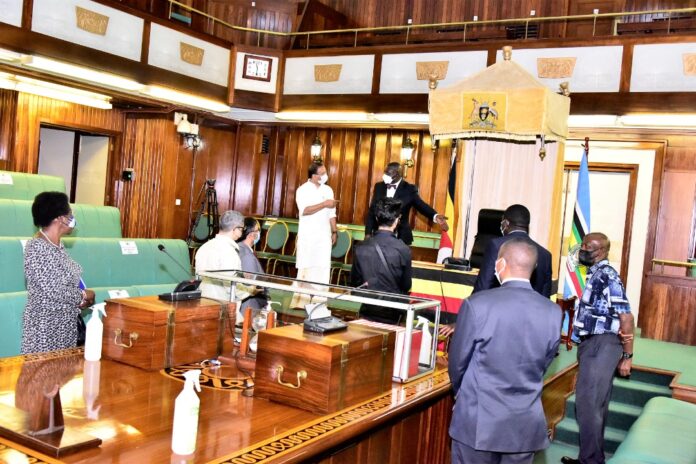
The Speaker of Parliament, Jacob Oulanyah and India’s Minister of State for External and Parliamentary Affairs, Hon Shri V. Muraleedharan have held discussions aimed at strengthening relations between the two Parliaments

In a meeting held on Friday, 12 November 2021, Oulanyah said the two Parliaments can cooperate in areas of training and benchmarking.

He said new legislators in the Uganda Parliament would benefit from training at the India Legislature on the best Parliamentary practices.

Oulanyah said there is need for exposure of the new MPs to a different environment to bring them up to speed with the ideal construct of their roles and dealing with Parliamentary procedures. “I look to revive the exchange support platform we had with the Parliament of India to help with capacity building of the Members. As a beneficiary, I speak on good authority that it is resourceful,” he said.

He added that benchmarking is an area of cooperation that needs to be exploited both by the Executive and Parliament.

“We have a brand new Parliament with only 115 incumbents out of 529 MPs, something that poses a challenge in many ways evidenced in the fact that we are expanding our Chamber to accommodate the big number,” the Speaker said.

Muraleedharan said that the two Parliaments have been working together and this has been strengthened by the high-level political visits between the two states.

“The cooperation between the Parliaments and the trainings will continue to exist and grow in all facets possible. I will therefore carry your suggestion with the Speaker of Parliament on this matter,” the Minister said.

Muraleedharan also invited the Speaker and MPs to attend the centenary celebrations of the Public Accounts Committee of India’s Parliament in December. Oulanyah confirmed attendance.

Stories Continues after ad

East Africa’s largest makerspace MoTIV wins inaugural UNESCO prize for creative economy

MoTIV wins inaugural UNESCO prize for creative economy

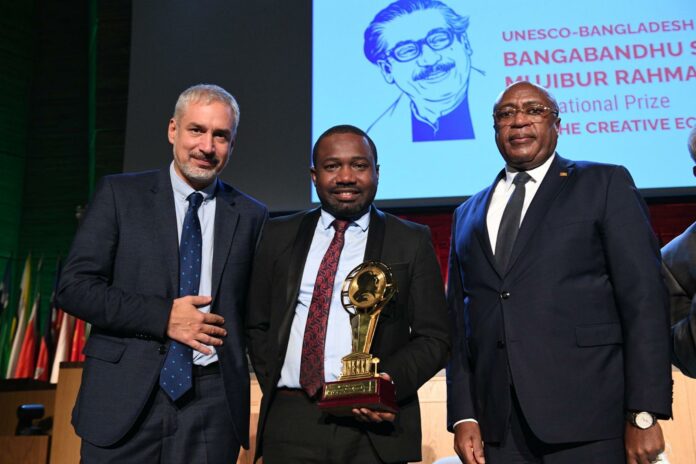
MoTIV, East Africa’s largest makerspace headquartered in Kampala, Uganda has won the UNESCO-Bangladesh Bangabandhu Sheikh Mujibur Rahman International Prize for the creative economy.

Established in March 2020 under the Mastercard Foundation’s Young Africa Works in Uganda strategy, MoTIV provides a holistic solution that fosters collaboration in an impactful and sustainable way by providing tools, training, a marketplace, and value chain support to creatives.

Out of 69 institutions nominated for the “creative economy” award, Uganda’s MoTIV emerged as the winner. MoTIV will use the US$50,000 prize money to kickstart a creative fund to unlock increased potential in the sector and support creatives to scale their ideas.

To mark the UN International Year of Creative Economy for Sustainable Development, UNESCO and the Government of Bangladesh inaugurated the “UNESCO-Bangladesh Bangabandhu Sheikh Mujibur Rahman International Prize for the “Creative Economy” biennial prize award named in honor of the founder of the nation of Bangladesh, Sheikh Mujibur Rahman. The awards are intended to recognize creative institutions globally for their outstanding initiative to promote the engagement of young people within the creative and cultural industries.

Japheth Kawanguzi, the Team Lead at MoTIV said, “This win is not only for MoTIV but for the entire creative community. Uganda’s creative industry consists of talented designers, artisans, and makers who are looking for opportunities and platforms to be able to turn their ideas and skills into products and sustainable businesses. MoTIV was created specifically to overcome challenges within the sector.”

He continued, “We believe that by supporting the growth and development of creatives, we will drive industrial growth and nourish local businesses within the ecosystem, as we strive towards transforming our socio-economic trajectory upwards.”

“The Mastercard Foundation joins in celebrating the catalytic work that MOTIV is doing to support young creatives in Uganda. The recognition they have received is well deserved. It serves as a reminder that across Uganda and Africa, young people are charting unique pathways to opportunity – and by getting behind their aspirations, we can create a multiplier effect that’s unstoppable,” said Samuel Adela, Country Head, Mastercard Foundation

For local creatives, 2021 has been a year to reflect and refine businesses. Primah Elizabeth Birungi, the proprietor of Kujieleza, a business that offers communication and speech therapy services recently underwent training in MoTIV’s Creative Business Academy, she says the award is a huge win for Uganda’s creative sector.

“In the past, we’ve had the most unguided creatives where people are passionate about things but lack the confidence to showcase or actually start out. There’s not been a lot of mentorship in the past and for me mentorship has been the golden nugget,” she says, adding, “Winning the award means we’re moving towards sustainability as creatives. Uganda is known for having the most creatives whose startups don’t exist beyond two years. The award means we’re picking up everyone and holding them at their weakest. It means we’re reaching towards a safer space for creative businesses to thrive.”

A report by the United Nation Educational, Scientific and Cultural Organization (UNESCO) highlights the cultural and creative industries generate annual global revenues of US$2,250 billion and exports of over US$250 billion. The sector has also created nearly 30 million jobs worldwide and employs more people aged 15−29 than any other sector. In Uganda, the creative sector employs more than five million young people aged between 15−29 than any other sector.

When launching the International Prize for the creative economy award, UNESCO stressed the need to protect and support the creative economy in the aftermath of COVID-19. Deputy Chief of Cabinet of the Office of President of the General Assembly, Ambassador Farrukh Iqbal Khan, called upon the global community to place creativity and cultural aspects at the center of its policy-making and as a key component of economic and social recovery through partnerships with different sectors and communities, including Indigenous people.

“This is because the creative economy reflects the remarkable innovation and creativity inherent with the world’s most remarkable natural resource: its people. Every society, culture, and country have an abundance of this resource,” he said.

Stories Continues after ad

Victoria University extends physical classes at Market Plaza, serves lunch to over 2000 members of the community

Uganda’s leading education hub, Victoria University (VU) has extended classrooms to a fully furnished state of the art Market Plaza.

The University says, shifting some lectures to Market plaza was made to help students observe Standard Operating Procedures (SoPs), complying with Ministry of Health, Ministry of Education and Sports (MoES, National Council for Higher Education (NCHE), and creating room for more students to join the institution since numbers are increasing on a daily basis.

“Victoria University is building capacity that will see the institution become the leading University in Uganda very soon. We have a lot of students joining and we now have enough space at Market Plaza, about three to four floors which are going to include lecture rooms, lounges and a restaurant for students,” Dr. Lawrence Muganga the University Vice Chancellor said.

He added that since Market Plaza is located within the business community, the University resolved to shift students doing business related studies plus those doing Information and Technology (IT), to acquire more skills while solving problems facing businessmen.

“We are building a university that will transform society; the education we provide is to change society. You see this is a busy place, it is where the best businesses are and these people have problems they personally can’t solve. That’s where Victoria University comes in! That’s why we want every student studying business, or IT to come here and solve problems of the business community,” Dr. Muganga added.

Dr. Muganga, assured learners that Victoria University is building capacity that will see the institution become the leading University in Uganda very soon.

“We going to lead the way and others will follow. We are going to transform society, which is our core aim,” Dr. Muganga vowed.

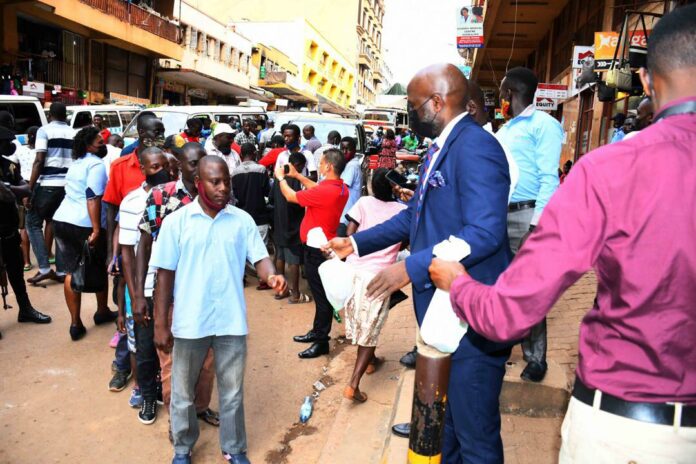
At the same Event, Victoria University served lunch to over 2000 members of the community.

Stories Continues after ad

Green Jobs: Gov’t donates working equipment to 16 youth groups

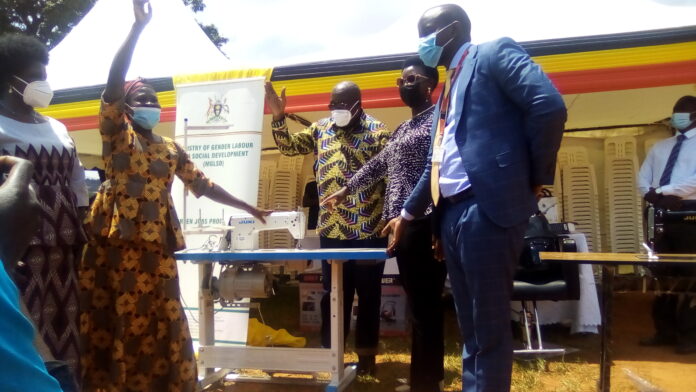
Government has donated working equipment to 16 youth groups from six districts in the country. The equipment was donated under the Green Jobs and Fair Labour Market Programme which aims at at fighting unemployment, decent work deficits, and workplace unsustainable environment practices in the Country.

The equipment included; tailoring machines, tents and plastic chairs, Motorcycles, water harvesting tank, water pumps, car washing machines, salon equipment and maize milling machine.

Speaking at the handover function, the state minister for labour Col. Okello P. Charles Engola Mac-Odwog urged the beneficiaries to put the received equipment to use for  a likelihood and create more jobs for other youths who didn’t make it through to the list of beneficiaries.

“You are a symbol of hard work and determination, therefore the best performers in these groups will be linked to the operation wealth fund,” he said.

According to Mr. Busingye Hillary who represented the permanent secretary of Ministry of Gender Labour and Social Development Aggrey David Kibenge, this is the third cohort when the government is donating working equipment to youths. In the first cohort where president Yoweri Museveni presided over the function, 67 youth groups benefited from the initiative in 2017 and 190 youth groups in the second cohort.

“These groups are verified by local councils and district leaders, therefore these people are deemed fit to receive the equipment,” he said adding that, “Green Jobs and Fair Labour Market Programme is here to reduce poverty, address unemployment and under employment while sustaining the environment.”

Lilian Aber, the woman MP of Kitgum urged the government to continue prioritizing such programs noting that the youth will get out of poverty. “ When ministry of gender tables a supplementary budget for just programs, I will be the first person to support it  because youth constitute 75% of the country’s population,”

Mr. Simon Ogikayi aka King Jahfire who is one of the Beneficiaries  from Kitgum district applauded president Museveni for prioritizing youth and urged him to roll out  the program throughout the country.

Stories Continues after ad

Three charged for trying to grab NSSF land

Handcuffs

The Chief Magistrate’s Court in Makindye has remanded three people for attempting to transfer ownership of prime land belonging to the National Social Security Fund (NSSF) in Lubowa.

The persons are part of the bigger group of 10 people, including government officials, who are accused of illegally parceling out the said land near Kampala. Court has since issued criminal summons for the seven co-accused who are still at large.

The three that were charged are: Mr Mohammed Lubowa, 48, a resident of Ndejje Rubugumu, Makindye Division; Mr Moses Bogere, 51, a resident of Seguku, Entebbe Road; and Mr Patrick Onyango, 39, a surveyor and resident of Namugongo Ward in Kiira Municipality, Wakiso District.

They form part of a group of ten suspects who, from 25th February 2015 to an undisclosed time in 2019, undertook to forge documentation to convert the land comprised of Block 269 Plot 1322 at Lubowa from customary tenure to freehold tenure. NSSF is the legally registered proprietor of the land and all the original titles are in the names of the Fund.

Between 2003, 2004 and 2018, the NSSF acquired approximately 600 acres of land at Lubowa, along Entebbe Road in Wakiso district. It is comprised in Kyadondo Block 269 and parcelled into 109 separate freehold plots.

The Fund acquired part of the land by way of a debt swap from National Housing and Construction Company Limited (NHCC), the rest of it was acquired through outright purchase from Uganda Holdings Limited (Mitchell Cotts) and Mr Peter Emusugut.

Stories Continues after ad

Parliament should summon Ministry of Finance instead of Sudhir over gov’t shares in Munyonyo

Sudhir Ruparelia, East Africa's wealthiest man.

Businessman Sudhir Ruparelia has filed his response to Parliament regarding the government shares in Munyonyo Commonwealth Resort Limited. Parliament had summoned Sudhir to explain the status of government shares in the 5-star facility.

“The committee has noted with concern that Uganda Development Corporation (UDC) as an investment arm of Government, has not been availed an opportunity to manage the Government shares it owns in Munyonyo Commonwealth Resort,” said the letter to Sudhir.

“Thus, you are invited for a meeting with the committee, to explain the status of Government shares and the accessibility UDC has had to the shares, in order to efficiently manage them,” the letter added.

The businessman has however filed his response to concerns raised by Parliament’s committee on Tourism, Trade and Industry.

In his response dated November 10, which was received by both the Ministry of Finance, Planning and Economic Development (MoFPED) and the office of Clerk to Parliament, Sudhir noted that Government, through MoFPED, holds 25 per cent of the shares (equivalent to 15,061,209 – 120 ordinary shares).

The other shareholders are Meera Investments Ltd (8,434,277,107 ordinary shares), Sudhir Ruparelia (30,724,866,605 ordinary shares) and Jyotsna Ruparelia (6,024,483,648 ordinary shares).

The city tycoon added that Government had the right to choose which entity should hold its shares on its behalf, but added he was yet to receive directives to transfer the shares from MoFPED to UDC.

“GOU holds the 25 per cent shares through the Ministry of Finance, Planning and Economic Development. GoU is free to decide by whom its shares are held,” explained Ruparelia.

“We have not received communication from the Minister of Finance, Planning and Economic Development regarding the decision to transfer its shares to UDC as choses and preferred entity to hold GoU shares. In case we missed it, kindly share a copy so that when we appear we address you about it appropriately through the normal procedures for transfer of shares and UDC will then be the entity holding GoU shares,” he added.

The meeting with Sudhir was scheduled for Friday November 12. But the tycoon told the committee that he would be returning on the evening of the same day, consequently asking for rescheduling of the meeting.

Stories Continues after ad

Oulanyah contributes Shs100m towards clearing of Shs60 billion Church House debt

Oulanyah hands over Shs 100 Million

The Speaker of Parliament of Uganda Jacob Oulanyah has contributed Shs 100 milliom towards Church House debt clearance and Shs 20 million towards the purchase of street lights in Uganda Martyrs Anglican Site, Namugongo.

The contribution is geared towards clearing Shs 60 billion to guarantee Church House for the future of the Church of Uganda. Earlier this year, Archbishop Kazimba launched a Love Gift campaign urging one million believers to each contribute Shs 60,000 or more towards the cause.

The debt is arising from a loan the church acquired to facilitate the construction of the 16-floor commercial building. The building is located on Plot 34 on Kampala Road, opposite the Bank of Uganda.

“I thank God for enabling me fulfill my pledge, during Martyrs Day on 3rd June 2021, of Shs 100 million towards the Church House loan repayment, which I have this morning had the opportunity to hand over to the Most Rev. Dr. Stephen Kaziimba, Archbishop of the Church of Uganda,” Oulanyah said.

“I have also honoured the pledge of Shs 20 million towards purchase of solar lights for the Uganda Martyrs Anglican Site in Namugongo. The contribution was received by Rev. Bbosa Esau, the Principal of Namugongo Martyrs Seminary,” he said.

Archbishop Kazimba applauded the Speaker for his regular support to the Church of Uganda and for the support he has enjoyed from Members of Parliament under his leadership and urged Christians to continue sending in their contributions.

The building was constructed at a cost of over US$ 17 million from various contributions in schools, churches, donors and a loan that was acquired from Equity bank as the construction commenced in 2010.

According to an agreement that was signed between the Church of Uganda and Equity bank, Christians contributed 30 percent of the total amount of money that was used in the construction as the rest is a loan acquired from Equity bank.

Equity bank was given a priority as the first tenant and it will move its headquarters to the building (Church House) to occupy the first four floors of the building.

Stories Continues after ad

#Covid-19 more deadly in Africans with diabetes

Covid-19 testing kits

Africa’s sharp increase in diabetes is clashing with the COVID-19 pandemic and poor access to vaccines. Africa’s death rates from COVID-19 infections are significantly higher in patients with diabetes, according to a preliminary analysis which the World Health Organization (WHO) presented today in advance of World Diabetes Day on 14 November.

 “COVID-19 is delivering a clear message: fighting the diabetes epidemic in Africa is in many ways as critical as the battle against the current pandemic,” said Dr Matshidiso Moeti, WHO Regional Director for Africa. “The COVID-19 pandemic will eventually subside, but Africa is projected in the coming years to experience the highest increase in diabetes globally. We must act now to prevent new cases, vaccinate people who have this condition and, equally importantly, identify and support the millions of Africans unaware they are suffering from this silent killer.”

Diabetes impairs the body’s ability to produce or process insulin, a substance essential to counteracting a dangerous rise in blood sugar. The disease causes inflammation and poor blood circulation, both of which increase the risk of complications, including death, from COVID-19.

A recent WHO analysis evaluated data from 13 countries on underlying conditions or comorbidities in Africans who tested positive for COVID-19. It revealed a 10.2% case fatality rate in patients with diabetes, compared with 2.5% for COVID-19 patients overall. The case fatality rate for people with diabetes was also twice as high as the fatality rate among patients suffering any comorbidity. In addition to people with diabetes, the three most frequent underlying conditions included patients with HIV and hypertension.

The countries contributing data to the analysis were Burkina Faso, Chad, Cote d’Ivoire, Democratic Republic of the Congo, Eswatini, Guinea, Namibia, Niger, Rwanda, Senegal, Seychelles, Sao Tome and Principe and Uganda.

An estimated 24 million people are living with diabetes in Africa in 2021 according to the International Diabetes Federation and the continent is expected to experience the highest increase in diabetes globally, with the number of Africans suffering from the disease predicted to rise to 55 million by 2045, an increase of 134% compared with 2021. Africa is the region with the highest number of people who do not know their diagnosis – an estimated 70% of people with diabetes do not know they have the disease.

 “Health officials in Africa should take advantage of the growing availability of low-cost rapid diagnostic tests to routinely test patients in diabetes centres to ensure early detection and proper care,” said Dr Benido Impouma, Director, Communicable and Noncommunicable Diseases Cluster at WHO Regional Office for Africa. “These centres also can be key venues for vaccination.”

Since the early days of the pandemic, people with diabetes in countries around the world have been prioritized to receive COVID-19 vaccinations. Africa has faced challenges in this strategy.

Access to vaccines remains poor. Thus far, only 6.6% of the African population is fully vaccinated against COVID-19, compared with about 40% globally. Data from 37 countries indicates that since March 2021, over 6.5 million COVID-19 vaccine doses have gone to Africans with comorbidities, representing 14% of all doses administered so far. Efforts to prioritize people with comorbidities, like diabetes, are accelerating with about half of those 6.5 million doses administered in just the last couple of months. However, there is still a lot more work to be done to ensure people at high risk receive the vaccines they need.

 “Nine months since COVID-19 vaccination campaigns began in Africa, we are still nowhere near where we need to be with protecting our most vulnerable,” Dr Moeti said. “There is an urgent need to step up vaccination and other key services to people at high risk, including those with diabetes.”

There are two main types of diabetes: type 1 caused by a condition early in life that damages the pancreas and impairs insulin production; and type 2—which is linked to poor diet, obesity and lack of exercise—where the body struggles to process insulin. About 90% of diabetes cases globally, and the vast majority in Africa, are type 2, with rising rates in Africa attributed to the same poor diets and sedentary lifestyles causing a surge in type 2 diabetes around the world. In addition to COVID-19 risks, diabetes can also increase risk of heart attack, stroke, kidney failure, lower limb amputation, visual impairment, blindness and nerve damage, including erectile dysfunction.

“All Africans at risk of diabetes must have access to testing,” Dr Moeti said. “We can also stop diabetes from claiming more lives by promoting healthy, affordable diets and regular exercise.”

During the COVID-19 pandemic, access to diabetes care has been severely disrupted in the African Region. Lockdowns to limit the spread of COVID-19, for example, have impeded access to health care and the basic elements of proper disease management, such as routine glucose monitoring and eating a healthy diet.

To improve equitable access to quality diabetes care, WHO launched the Global Diabetes Compact in April 2021. This builds on work in recent years to rollout the WHO Package of Essential Noncommunicable Disease (WHO PEN) interventions for primary health care in low-resource settings. So far 21 African countries have started using this package. Benin, Eritrea, Eswatini, Lesotho and Togo have achieved national expansion covering all primary health care facilities.

Stories Continues after ad

FutureProofing Healthcare launches whitepaper focusing on preparing African health systems for the future

Futureproofing Healthcare Systems Across Africa

As part of its continued commitment to creating new, sustainable health systems, FutureProofing Healthcare Index (FPHI) launched its newest whitepaper, a best practice document that focuses on solutions and policy actions to prepare African health systems for the future.

The FPHI whitepaper is a result of data collected as part of the Africa Sustainability Index, a policy tool that measures the current status of health systems across the content.

Led by a panel of independent African health experts, this research outlines proposed policy recommendations and highlights important actors and key areas of focus.

“Existing data has consistently indicated that most healthcare systems across the continent are underfunded and short-staffed. Taking this into consideration, the whitepaper aims to address how systems can be adapted and adjusted for sustainable improvement,” said Dr Githinji Gitahi, CEO of Amref and one of the Africa Sustainability Index panellists. “It will enable various health stakeholders to move forward constructively and efficiently, to create a more sustainable future for African healthcare and drive us closer to Universal Health Coverage (UHC).”

UHC means that a patient anywhere can access essential, high-quality health services without facing socio-economic hardship. The World Health Organisation (WHO) has placed a prominent focus on the drive towards UHC, outlining a path for countries to follow as a guide to this important transition. UHC is also part of United Nations’ Sustainable Development Goals, providing the blueprint to achieve a better and more sustainable future across the globe. The whitepaper details a series of actions that could be taken and best practice examples from across Africa in achieving this transformation.

Dr Gitahi said the COVID-19 pandemic has caused further strain to health systems across the globe, though exacerbated in Africa, creating a critical need for the transition.

“As part of the FPHI Africa Sustainability Index, we have identified four key areas of action to drive UHC: closer regional collaboration, re-prioritising healthcare spending, technologies to improve healthcare delivery, and improving gender equality in healthcare. The whitepaper provides an overview of why it matters, outlining practical policy action and best practice examples,” he said.

Closer regional collaboration to encourage innovation

Innovation is a fundamental driver in achieving UHC, but the Index showed that it is an area where Africa lags behind on a global scale. One of the issues identified is the disparity in healthcare personnel across the region.

Dr Saber Boutayeb, a Professor of Medical Oncology at the University of Rabat in Morocco and panellist for the Africa Sustainability Index, said: “It is only through regional collaboration that a true innovation ecosystem can be established across Africa. The indexation of African peer-reviewed scientific journals in international databases could go a long way in creating that ecosystem. Many other great examples exist on the continent that can be adopted by other countries.”

Southern Africa has been identified as a continental leader in this area and referenced as a case of best practice in regional collaboration. Inter-governmental organisations have come together to establish regional value chains to support industrialisation of the pharmaceutical industry.

According to the whitepaper, the following recommendations can help achieve innovation through regional collaborations: regional research clusters; Public Private Partnerships (PPPs); and sharing data across borders.

Furthering gender equality through healthcare systems

The Index shows differences across the continent in health status between men and women. Access to reproductive healthcare and family planning is lagging in many African countries, meaning young African women are often the most affected by limited healthcare systems.

Dr Glenda Gray, President and CEO of the South African Medical Research Council and part of the Africa Sustainability Index, explained that young African women are often not prioritised to receive even primary education. The Index results show adult literacy is generally higher among men than women. “Health experts believe that elevating women to leadership roles in the medical sector could be a solution to close the gender gap in healthcare,” she added.

Data-driven interventions are also crucial in creating systems that prioritise women. A systematic approach of gathering data about women’s health issues, such as teenage pregnancy, would provide information to inform policy change.

 “Significant health progress has been made throughout the African continent. However, it still lags globally. The UN has a goal of achieving Universal Health Coverage (UHC) by 2030. This is a measurable benchmark that countries can use as a guide for their health system reforms. The whitepaper was created to be a tool that health stakeholders and policymakers can utilise along this journey. It is compiled through the guidance of African experts across various disciplines in the health industry, for their peers. We hope that it encourages the right people to keep advocating for improved healthcare for those who do not have the power to do it for themselves,” adds Dr Gitahi.

Using technology to speed up system-level changes and improve health delivery

The Africa Sustainability Index revealed variations throughout the content in access to and quality of healthcare services. Quality and access must be approached holistically to make a significant impact towards UHC.

 “Beyond developing appropriate policy solutions, a key remedy to national challenges will be putting technology at the heart of developing sustainable healthcare solutions. Taking advantage of Africa’s massive and still growing mobile accessibility could bring healthcare to people directly,” said Seth Akumani, from the UN Development Program in Ghana and a panellist for the Index.

Recommended actions to using technology to improve health delivery are to make the implementation of strategic innovation policies an absolute priority; restructuring financial models to reduce patient costs; appointing regional – and national – level coordinators for eHealth and improving the policy and regulatory landscape. In the research survey, 48% of respondents cited “using mobile and social networks to access healthcare” as the technology step needed to make the biggest sustainability impact.

Re-prioritise healthcare spending to address system gaps

 “Financing is not always directly correlated with a positive performance on access or quality. The Index suggests there is sometimes little difference in how African countries finance their healthcare system. However, similar approaches do not result in the same level of sustainability of healthcare systems,” said Olumide Okunola, World Bank Nigeria Health Specialist and Sustainability Index panellist.

Okunola said: “It is not simply about having more money flow into health institutions, but rather using it intelligently to improve quality overall. An increase in spending should be the norm; this can be boosted through forward-looking investments in preventative care across Africa.”

The Whitepaper outlines prevention efforts, national health commissions and sustainable political commitment as some of the recommendations to address systems gaps in healthcare spending.

The Africa Sustainability Index is available on futureproofinghealthcare.com and the most recent whitepaper is available at FPHI whitepaper.

Stories Continues after ad