Stanbic Bank
Stanbic Bank
28.7 C
Kampala
Stanbic Bank
Stanbic Bank
Home Blog Page 731

Aston Villa appoint Steven Gerrard as head coach

Gerrard

English Premier League club Aston Villa have confirmed the appointment of Steven Gerrard as their new head coach.

Gerrard takes over from Dean Smith, who was relieved of his duties at the weekend after Villa suffered a fifth straight Premier League defeat, a 1-0 loss at Southampton.

The former midfielder is back in the Premier League having been inducted into the Hall of Fame this year thanks to his 120 goals and 92 assists in 504 top-flight appearances for Liverpool.

He joins Villa from Rangers after spending the last three years with the Scottish club, ending their 10-year wait for a top-flight title last season as his team went the entire campaign unbeaten.

“Aston Villa is a club with a rich history and tradition in English football and I am immensely proud to become its new Head Coach,” Gerrard told the club’s official website.

Gerrard’s last Premier League appearance came in May 2015, when he played the final match of his distinguished 17-year professional career at Anfield.

He came through the Reds’ Academy and is only one of three players to make 500+ appearances in the competition for one club.

He won the UEFA Champions League, two FA Cups and three EFL Cups during his time at Liverpool, as well as earning 114 caps for England.

The 41-year-old’s first match in charge of Villa is at home to Brighton & Hove Albion on Saturday.

All eyes will be on Anfield when he returns to Liverpool on Saturday 11 December.

Stories Continues after ad

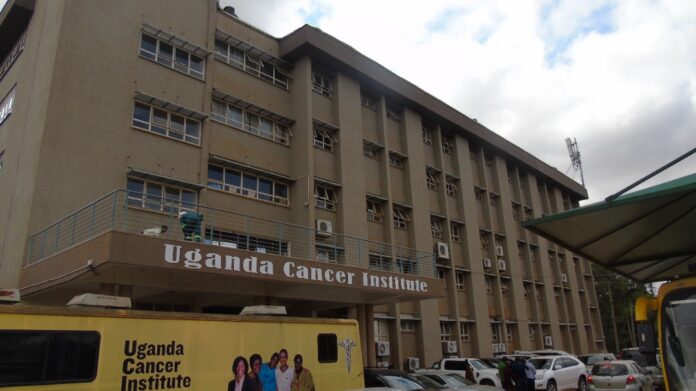
Uganda Cancer Institute to host the SIOP Africa Congress 2022

Uganda Cancer Institute

Uganda Cancer Institute is set to host The International Society of Paediatric Oncology-SIOP Africa Congress from 16th – 18th March 2022 at the Serena Kampala- Hotel. The event will take place under the theme “Innovate for Africa”.

The congress will encompass all persons involved in the fight against childhood cancer. From health workers, survivors, parents, friend of a survivor, to mere well-wishers, everyone has a role to play in improving childhood cancer care.

It is important to note that children with cancers in Africa have survival rates as low as 20 percent. This can be attributed to several reasons such as delayed diagnosis, lack of diagnosis, obstacles to accessing care, treatment abandonment, toxic death, and disease relapse among others. One really important concern is that protocols and guidelines prescribed in higher-income countries are often not feasible in many parts of Africa due to resource constraints.

However, amidst all the challenges, there have been some positives with several efforts being made to ensure not every child with cancer dies. For instance, in Uganda, survival rates for children are at 50 percent for the most common childhood cancers we see which is above the survival rate for the rest of Africa which is at 20 percent. As such numerous often unrecognized innovative things are being done all over the African continent to ensure our children get the best treatment possible within limits of available resources. We believe that SIOP Africa will provide a platform to share these efforts and work together collectively henceforth.

The WHO Global Initiative for Childhood Cancer aims to improve outcomes for children with cancer around the world. The WHO aims at improving the survival rates from 20 percent across Low Income countries to 60 percent of which many of the African countries fall under.

The 14th Congress will be a hybrid (both physical and virtual) congress that will see doctors, nurses and medical experts from all over  Africa and beyond share their different ways on how to manage cancer in children and more so during the period of a pandemic.

It is important to note that despite the advent of COVID-19, cancer still remains a leading cause of death worldwide with over 70 percent of this occurring in Low and Medium Income Countries such as those in Africa including Uganda as of 2018. Effective anticancer medicine is the backbone of good treatment especially in children. At the outset of the COVID-19 pandemic it was anticipated that the worst outcome of the disease would be in Sub-Saharan Africa given the low capacity of the health care system. In the same vein it was thought the shortage of anticancer therapy would be more felt in Africa.

It was therefore advised that governments come up with pre-emptive planning for procurement processes to prevent shortages of cancer drugs. All this being done in line with National Essential Cancer Medicines Lists. With this in place there is assurance of quality anticancer medicines through pharmaceutical supply chains.

With the above background, Uganda has registered tremendous improvements in creating access to quality cancer drugs including those for childhood cancers. We have in place a well-streamlined procurement process, that deals directly with multinationals such as Roche, Novartis-Sandoz, Pfi zer among other manufacturers. This has ensured the availability of quality essential cancer medicines at the Uganda Cancer Institute improving from 28.5% to 90% in one year.

The key essential children’s cancer medicines such as cyclophosphamide, vincristine, daunorubicin, L-asparaginase, cytarabine, 5-fluorouracil, cisplatin, ifosfamide, mesna, chlorambucil, dacarbazine, methotrexate, 6-mercaptopurine among others are now routinely available throughout the year. Our direct engagement with manufacturers has also seen increased availability of target molecules such as Rituximab and Erlotinib which would normally not be available in developing countries. With the highly planned process outlined above, the advent of COVID-19 pandemic found Uganda ready with adequate stock of ant cancer medicines.

Furthermore, treatment has greatly improved with acquisition of new radiotherapy machines such as the true beam linear accelerator, the first of its kind in the region.

The Institute is also training specialists in the region with over 180 fellows in paediatric cancers.

These developments from the Uganda Cancer Institute among many other developments across Africa will be shared at 2022 SIOP Africa Congress in March.

SIOP Africa, is the biggest society of health workers who look after children with Cancer in Africa. It has more than 250 registered members with many more active but unregistered members. These members meet every after two years to share ideas on how to treat and manage cancers in children in Africa.

The aim is it to improve and disseminate knowledge of childhood malignant diseases, and their management, in African countries.

Stories Continues after ad

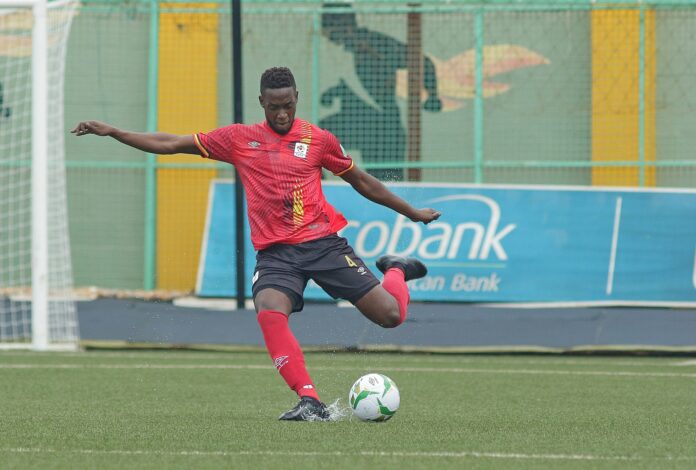
Cranes players, technical staff resolve to clear Jjuuko’s red card fine

Murushid Jjuuko

The Uganda Cranes players, technical staff and FUFA president Eng. Moses Magogo have agreed to make a contribution towards the clearance of the fine handed to defender Murushid Juuko.

The decision was agreed upon when Magogo visited the team camp at Imperial Botanical Beach Hotel ahead of the 2022 World Cup qualifier against Kenya..

Juuko was sent off in the game against Mali for elbowing an opponent in Kitende prompting FIFA to slap him with a Shs 20 million fine.

The incident happened during the goalless draw in September – elbowing Mali forward Ibrahim Kone in the second half.

In a communication dated October 9 and sent to Jjuuko and copied to FUFA, Jjuuko was fined Swiss Francs 5,000 ($ 5414) and suspended for two games which ban he has served.

According to FUFA, the players have pledged Shs 8,850,000, Technical team Shs 7.3 million, and Magogo Shs 1,850,000. Juuko himself has already contributed Shs 1 million.

Cranes host Kenya today at the St Mary’s Stadium in Kitende for their second last group E World Cup qualification game before heading away to Mali in three days’ time.

Stories Continues after ad

Bomb blast injures two children in Kibuku

Crime scene

Two children aged 5 and 6 have fallen victim to an incident suspected to be a blast in Kibuku district.

According to ASP Immaculate Alaso, the Police spokesperson of Bukedi North Region, the officers responded to an incident suspected to be a blast of an ordinance at Kujji I village, Kujji parish in Tirinyi Town Council, Kibuku and cordoned off the scene.

This was after the children tampered with the suspected ordnance that they were playing with in the banana plantation.

The two juvenile victims identified as Namwoyo Ivan a 5 year old and Kagoro Innocent 6yrs sustained minor injuries and were rushed to Tirinyi Health centre III for treatment.

The scene was cordoned off awaiting for the arrival of the bomb squad.

Stories Continues after ad

Silverbacks squad for 2023 World Cup qualifiers named

During a press conference at Kati Kati lugogo to launch Uganda's World Cup Campaign.

A team of 14 players has been summoned by Coach Mandy Juruni during a press conference this morning at Kati Kati lugogo as the Federation of Uganda Basketball Associations (FUBA) President Nasser Sserunjogi launched the World Cup Campaign.

Eight locally based players have been summoned and these are; Ivan Muhwezi, Peter Obleng, Fayed Baale, Jimmy Enabu, Tonny Drilleba, Titus Odeke, James Okello, Ben Komakech.

The foreign-based players; Deng Geu, Mohamed Ghedi Abdihakim, Eric Rwahire, Robinson Odoch Opong, Womala Emmanuel Timothy, Brandon Davies.

The team will start nonresidential training sessions this Friday, 12 November at Africa Bible University in Lubowa before the final 12 is named. The sessions will be handled by Mandy Juruni, assisted by Andrew Tendo.

Ishmail Wainright, who plays in the NBA has been left out of squad because of his busy schedule. Wainright recently signed a two-way deal to join Phoenix Suns from the Toronto Raptors.

The Silverbacks will kick off the qualifiers against Mali on November 26, and then Cape Verde and Nigeria on November 27 and 28 respectively in Group A.

The first window of the qualifiers – a three-day tournament, will take place in the Angolan city of Benguela with eight teams from Groups A and C vying for six places in the decisive Second Round of the African Qualifiers.

The FIBA Basketball World Cup 2023 African Qualifiers will be played over the course of 15 months (November 2021, February 2022, July 2022, August 2022 and February 2023) to define the continent’s five representatives in Indonesia, Japan and Philippines.

Stories Continues after ad

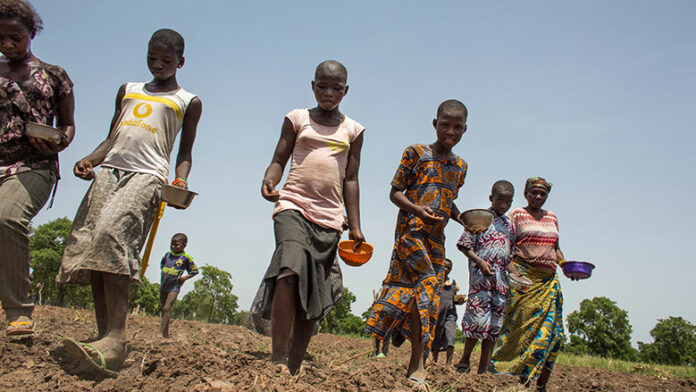
Building climate-ready communities: Why science, technology and innovation matters to us all

For the last 10 days, over 20,000 delegates from 200 countries have been at the Glasgow Climate Conference in Scotland, discussing ways to keep climate change under control. This global discourse around climate change points towards one fact; we are in a climate emergency and researchers say that we have seven years to fix it before it is too late.

One of the world’s most pressing concerns is how to stay beneath the carbon budget, which refers to how much carbon dioxide countries can release into the atmosphere before the world is guaranteed to warm at least 1.5 degrees Celsius as set by the goals of the Paris climate agreement.

Although Uganda has an average footprint that amounts to about 0.1 per year according to World in Data, 2017. The country still experiences the effects of climate change as well. Today, our average temperatures have increased by 1.3°C with maximum temperatures increasing by 0.6–0.9°C.18. The volume and frequency of rainfall have also been affected.

According to data from the Climate Risk Profile, Uganda has experienced a statistically significant reduction in annual as well as seasonal rainfall with decreases of 6.0 mm per month, per decade. This decline in rainfall has been observed in some northern districts; Gulu, Kitgum, and Kotido. The decreasing rainfall has been followed by longer periods of drought. Specifically, over the past 20 years, the western, northern and northeastern regions have experienced more frequent and longer-lasting drought conditions.

With climate change becoming a serious threat to the lives of billions of people and the planet, Uganda today joins the rest of the world to mark the 20th edition of World Science Day for Peace and Development to highlight the importance of “Building Climate-Ready Communities”. The focus for this year’s celebration is to see how we can bring science closer to society by highlighting some key scientific aspects and possible solutions provided by science, technology and innovation to help resolve some of the major global challenges’ society is facing today.

Ancel Ochino Bwire, business adviser of Uganda Green Enterprise Finance Association (UGEFA), believes that the solution to climate change is in the creation and support of Green businesses and since 2020, this is what UGEFA have been working towards.

UGEFA is a Ugandan initiative funded by the European Union and implemented by ADELPHI and Finding XY. Its primary focus is working towards transitioning sustainably to a green economy.

According to Bwire, the initiative which started in 2020, was inspired by the urgency of the climate crisis which requires as many if not all hands-on boards to mitigate. Towards this goal, UGEFA with the help of the European Union took on the task of supporting the creation of scalable climate-conscious businesses through capacity building and co-creation with financial institutions to facilitate access to tailored missing middle finance.

 “We have 83 green companies going through the accelerator program. The companies are in the categories of eco-tourism, clean energy, sustainable transport, waste management and green manufacturing and agro-processing,” Bwire says.

Elvis Kadhama, Founder of Pearl Entrepreneurs Academy Ltd (PEAL) and UGEFA supports Green businesses, is providing a holistic last-mile solution to socio-economic and environmental challenges faced by low-income communities through giving them access to clean energy.

 Kadhama’s green cause springs from a tragic experience, where his friend lost two daughters in a kerosene lamp induced fire that torched their house. Since then, Kadhama has made it his cause to supply safe and sustainable energy equipment to rural communities that live off the grid of electricity. Through a friendly payment plan, PEAL supplies a range of products that reduce the emission of pollutants into the atmosphere. The products include Solar lamps that are substituted for Kerosene lamps, Energy-saving cooking stoves that are smoke-less, Solar home systems and water filters.

“By adopting sustainable and clean energy, low-income households save an average of two to four dollars per week which are spent on kerosene. These interventions also reduce the costs of firewood as well as the rate at which trees are cut down for fuel thanks to the use of cost-effective cooking stoves and water filters. He hopes that the fight against climate change can be a concerted effort.”

Samantha Niyonsaba Karama, Future Lab Lead at The Innovation Village says building climate-ready communities is work that requires efforts from every stakeholder in the ecosystem. She commends the crucial role that science plays in illuminating the crisis at hand by providing data on the status quo while also providing solutions countering the crisis.

Niyonsaba added, “We know that the need for a green economy is urgent because of scientific research and empirical evidence. To address the issue of climate change and build better-prepared communities, through our Energy-tech lab, we provide support and mentorship to entrepreneurs creating frugal environmental innovations that have resulted into groundbreaking technologies that have helped individuals and communities to slow down climate change.”

“We also fund and work with Ecoplastile, a company that is reducing plastic waste and combating deforestation through the recycling of plastic waste to create Plastic Timber and pavers. It is only through this collaboration, combining the private sector, innovators, technology, and the public sector that communities can be supported as they transition into being environmentally conscious and climate change combative livelihoods,” Niyonsaba emphasized.

As we celebrate the World Science Day for Peace and Development today and the climate conference concludes this Friday, there is a need to empower communities with information and innovative solutions that can enable them to reduce their carbon footprint and contribute towards the conservation and preservation of the earth.

Stories Continues after ad

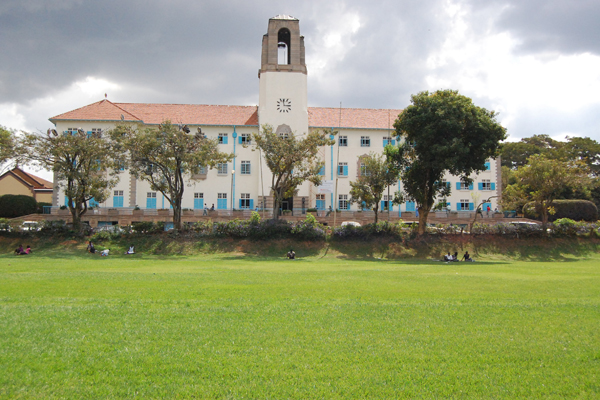
Makerere University’s Guild presidential elections for Friday

Makerer University Main Administration

The Makerere University Guild President elections are set to take place on 12th November, 2021. The 11 candidates are in high gear canvassing for votes.

Like other previous elections, the aspirants are from the National Political Parties like the National Unity Platform (NUP), Forum for Democratic Change (FDC), National Resistance Movement (NRM), Democratic Party (DP) and independents.

According to Article 27(2) of Makerere University Guild constitution as amended in February 2016, the candidates have to be on a normal progress with full semester load of examination results and with a CGPA of 2.80.

Mr. Kananga William, the Makerere Electoral Chairman, said that the team has fully completed the verification process and all candidates are good to stand since they met all the requirements as per the guild constitution purposes.

Due to COVID-19 pandemic Kananga said the voting will be both virtual and physical to all students. All first year, finalists, Medical and Veterinary students are allowed to vote physically at campus. Then continuing students from other colleges will vote virtually using evote.mak.ac.ug.

“We expect the voting to be smooth and many students will turn up for this exercise. 25403 students will vote physically and 8055 students will vote online,” Kananga said.

The duly nominated candidates include;

  1. Ayeyo Sam, IND
  2. Bukala Silver, NRM
  3. Byayesu Agrippa, DP
  4. Kamulegeya Obeid, FDC
  5. Mutsinzi Ronald, IND.
  6. Mwasse John, IND.
  7. Nambassa Shamim, NUP
  8. Omega Victor, IND.
  9. Ssewanyana Nelson, IND.
  10. Tumuhaise Martin, IND.
  11. Tumusiime Moses, IND.
Stories Continues after ad
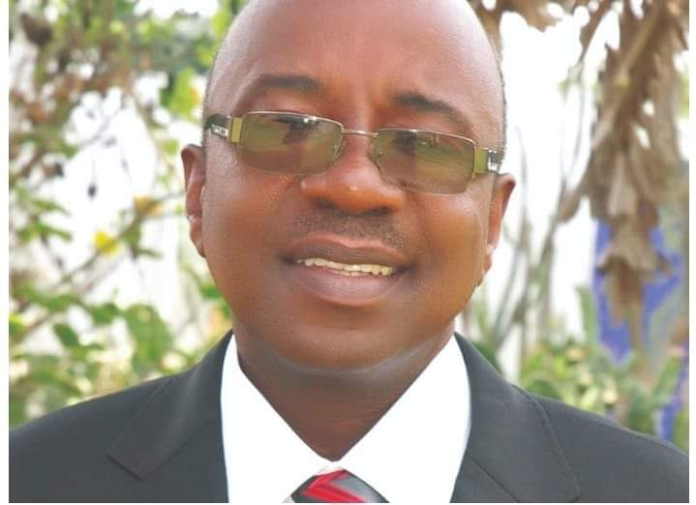
King’s College Budo headteacher Patrick Bakka Male is dead

Mr. Patrick Bakka Male

The Headmaster of King’s College Budo, Mr. Patrick Bakka Male has passed on. His death was confirmed by the city lawyer and a Budonian Kato Mpanga.

“To the King’s College Budo community, I am very sorry to announce to you the untimely demise of Mr. Patrick Bakka Male, Headmaster 2008 to date. May his soul rest in peace and May God comfort his family and all the bereaved,” Mpanga said on Twitter.

Patrick Bakka Male, is former headteacher of Mengo SS. He held a Bachelor’s degree in Science with Education, majoring in Physics and Mathematics, a Masters’ degree in Education Administration and Planning.

He taught at Namilyango College for a few months in 1986 and later in the year went to King’s College Budo where he taught Mathematics and Physics. In 2002, he was posted to Muntuyera High School-Kitunga.

Between 2004 and 2007, he was transferred to Mengo Senior School as headteacher. In 2008, Male was transferred to King’s College Budo until today.

In tandem, the lord Mayor Erias Lukwago eulogized him saying he was a very accomplished educationist, principled, amiable and soft-spoken gentleman.

“Just received the shocking and harrowing news of the passing on of my good friend and Headmaster of King’s College Buddo, Mr.Bakka Male,” he said.

“His unflinching efforts to preserve and uplift the pedigree and academic excellence of our Iconic institution will always be remembered. He’s been a father to our children. We shall always miss you, our elder. May your soul rest in eternal peace.”

Stories Continues after ad
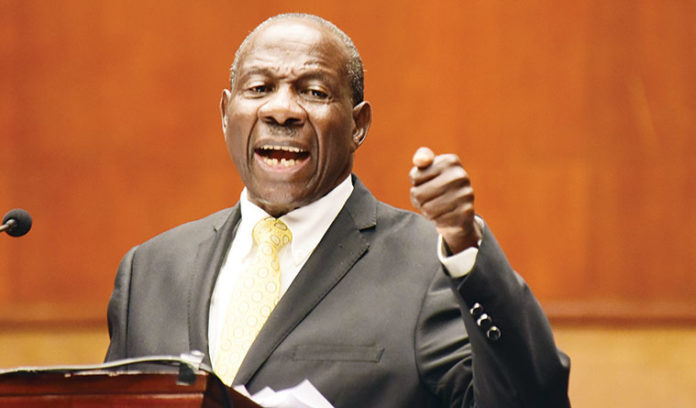
Gov’t seeks Shs3.8 trillion supplementary budget four months into financial year

Finance Minister: Matia Kasaija.

Members on the Budget Committee are scrutinising a Shs3.8 trillion supplementary budget, of which Shs1.3 trillion has already been spent as being within the limit allowed by the Public Finance Management Act.

Section 25 (1) of the Public Finance Management Act allows accounting officers, subject to the approval of the Permanent Secretary/Secretary to Treasury to spend up to an additional three per cent more of the appropriations made to it without prior approval by Parliament.

Those over and above three per cent and requiring prior approval by Parliament includes a request for Shs11.4 billion to ‘meet the outstanding PAYE and Withholding Tax for the Commission of Inquiry into Land matters.

The State House needs Shs272 billion to fund Kiira Motors with Shs104 billion for classified expenditure.

In Office of the Prime Minister, Shs176 billion is earmarked for external financing for the World Bank for the Development Response to Displacement Impact Project (DRDIP) for refugee schools, hospitals, roads and bridges in 15 districts.

The Defense Ministry requires Shs146 billion out of which Shs131 billion to cater for shortfalls on wage, pension, medical expenses, food, clothing, machinery, residential buildings and the National Housing Corporation, with Shs15 billion going to classified expenditure.

Political parties represented in Parliament will bag Shs35 billion if the request is given a green light by the Legislature.

The Ministry of Gender, Labour and Social Development wants Shs10.7 billion; musicians will get Shs7.7 billion as support to host e-concerts.

Shs3 billion will be dedicated to mounting a mindset-change campaign in readiness for the rollout of the parish model initiative.

Uganda Police Force is in need of Shs60.1 billion to fingerprint guns as directed by President Museveni in 2018, and some for classified expenditure.

Appearing before the Committee, Finance State Minister, Henry Musasizi decried the slow growth of the economy, which he attributed to the current Covid-19 lockdown.

“The current lockdown measures instituted to contain the spread of Covid-19 pandemic have negatively impacted on the level of economic activity and consequently disrupted the revenue performance momentum,” he said.

To finance the request, the Finance Ministry, said Hon Musasizi, will do budget suppression totaling to Shs1.2 trillion, a move that did not amuse Shadow Attorney General, Wilfred Niwagaba.

“Which legal framework gives the Ministry powers to suppress budgets already passed by Parliament,” he said.

The Committee will scrutinise and report to the House on suggestions to dispose of the requests.

Stories Continues after ad

Over 11,000 refugees arrive in Uganda following intense fighting in Eastern DRC – IRC

Refugees

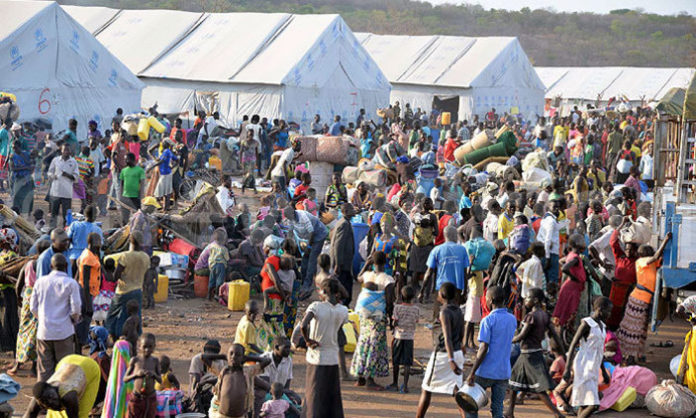
The International Rescue Committee (IRC) is monitoring the situation in Uganda, where over 11,000 refugees from Eastern Democratic Republic of Congo (DRC) have arrived following ongoing fighting in the villages of Binja, Kinyarugwe and Chanzu.

Elijah Okeyo, IRC Uganda Country Director said, “There’s a fear of further escalation of conflict in the DRC and we are expecting more arrivals in the coming days. We are concerned about potential protection issues as the majority of those arriving over the border are women and children.”

Uganda has a long history and tradition of welcoming refugees from all over the world and is one of the world’s largest refugee hosting countries, with 1.5 million refugees mainly from South Sudan and the Democratic Republic of Congo.

“IRC is currently assessing the situation and looking into preparing a response for those arriving. The IRC calls for all parties in the DRC to commit to International Humanitarian Law including the protection of civilians,” he said.

The International Rescue Committee (IRC) in Uganda empowers post-conflict communities and refugees to recover in safety and build a productive, peaceful, and healthy future. By promoting high quality durable solutions that deliver on the interdependent aims of saving lives, strengthening institutions, and supporting social cohesion, the IRC is laying the building blocks for long-term stability and development, and is bringing people from harm to home.

The IRC began programming in 1998 in northern Uganda in response to mass displacement wrought by the Lord’s Resistance Army. Since then, the IRC has expanded to provide critical services for refugees and vulnerable Ugandans throughout the country.

The IRC started supporting refugees and vulnerable individuals in Kampala in 2012, and was one of the first organizations to respond in 2016 at the onset of the South Sudanese refugee crisis. As of 2019, the IRC entered Tooro to support refugees while also providing epidemic preparedness and response services throughout the region.

In addition to emergency support, the IRC also invests in long-term stability for refugees and Ugandans through programs like immunization, family planning, legal services, women’s empowerment, education, and livelihoods. More recently, IRC has been involved in supporting Afghan evacuees in Uganda.

Stories Continues after ad