Stanbic Bank
Stanbic Bank
28.7 C
Kampala
Stanbic Bank
Stanbic Bank
Home Blog Page 732

Gov’t seeks Shs3.3b to secure offices for Presidential Advisors at Kingdom Kampala

Kingdom Kampala building

Government is seeking a supplementary budget allocation of Shs 3.3 billion to secure office space for more than 20 Special Presidential Advisors at the Kingdom Kampala building.

This was revealed by Yunus Kakande, the Undersecretary in the Office of the President who had appeared before Parliament’s budget committee to request a supplementary budget of close to 36 billion Shillings.

According to Kakande, Shs3.3 billion has been used to procure office space and partition it at Kingdom Kampala, a building owned by businessman Sudhir Ruparelia.

Some of those who will occupy the offices include; former Prime Minister Amama Mbabazi, former Vice President Edward Kiwanuka Ssekandi, former Security Minister General Elly Tumwine, Dr Ruhakana Rugunda, Amelia Kyambadde, Florence Nakiwala Kiyingi and Sarah Kanyike among others.

The advisors will join 323 MPs who already have offices at Kingdom Kampala, a facility rented at Shs18 billion for two years. Kakande says that the process which is expected to be complete by January 2022 was unavoidable because of the Presidents appointment.

Part of the supplementary budget emerges out of installment of Shs1.5 billion to Commonwealth Resort, Munyonyo, another facility owned by Sudhir Riparellia, for facilitating State guests for the Swearing of President Museveni in May 2021.

Others are the installment of court grants to previous Makerere University Chancellor Mondo Kagonyera at Shs3.9 billion and operationalization of the Apex stage at Shs3 billion, for learning and viable usage of checking and assessment results, and construct limit inside the Office of the President and other oversight entertainers that will, thusly, upgrade the general observing and proof based revealing for all administration approaches, projects, and undertakings.

Another 550 million Shillings is for the obtainment of station carts for the Minister for Economic Monitoring among others.

Stories Continues after ad

E-Learning Innovation restores hope for Uganda’s refugee children in Kyangwali

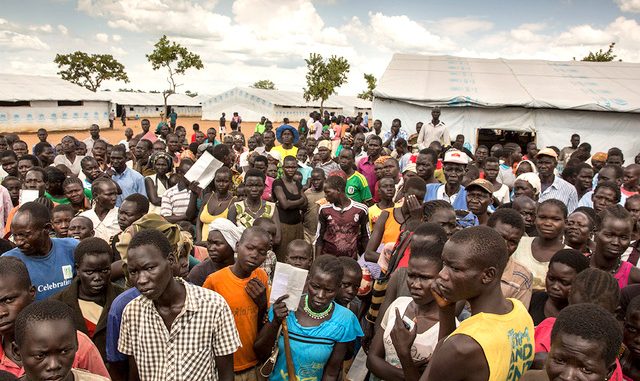
Refugees in Uganda

War Child is set to launch ‘Can’t Wait to Learn’ program in Refugee Settlement in western Uganda. The program is part of the INCLUDE project funded by the European Commission’s Civil Protection and Humanitarian Aid Operations (ECHO).

This landmark event signals a light at the end of the tunnel for thousands of conflict-affected children across the country. High-ranking officials including Dr. Joyce Moriku, the State Minister of Education will be in attendance as well as key UNHCR representatives.

Since COVID-19 swept the country, the tablet-based e-learning programme has offered a vital alternative to learning in the classroom. Besides it flexible operating model – the tablets don’t require an active internet connection – the delivery of the programme has also been carefully adapted to meet the needs of the changing environment.

As part of the transition to remote learning, COVID-19 awareness-raising was incorporated, for example, through water, sanitation and hygiene materials. Can’t Wait to Learn teachers and ‘facilitators’ go house-to-house to check in with children on their learning progress and clean and re-charge the tablets.

“War Child staff conduct routine checks on us and my mother was taken through the ‘Caregiver Manual’ which helps her support me when I’m stuck”, says Scovia (10) who lives in Rhino Camp. “I enjoy the phonics games, my reading is improving – there are a lot of interesting stories which motivate me to complete.”

Despite increased access challenges due to nationwide lockdowns, War Child’s mobile teams have succeeded in reaching 3,125 children in 8 refugee settlements in the last 18 months.

Now, they will extend their support to Kyangwali, with plans to reach an additional 705 children by the close of the year.

For children like 14-year-old Violet – a refugee from South Sudan – this can’t come quick enough. “I used to enjoy school with my friends – we would play, share ideas and go to class together”, says Violet. “When schools closed, I became bored. I wander the streets; moving from place to place.”

As 77-weeks of hard-closures look set to hold until January, Violet and others have no other option but to stay home. With many parents unable to put food on the table and tensions rising, children are at heightened risk of domestic violence, child labour and other forms of exploitation.

Besides its potential to transform their future, Can’t Wait to Learn offers children hope and has been proven to contribute to improved self-esteem. “In several country contexts, research shows that the creative educational games have a measurable positive effect on children’s wellbeing”, says Felicity Brown, War Child Regional Senior Researcher.

Stories Continues after ad

BOU should pay costs to Sudhir, Lawyers cite COA decree

Chairman of Ruparelia Group, Mr. Sudhir Ruparelia.

City businessman Sudhir Ruparelia’s lawyers have insisted that the Bank of Uganda (BOU) must pay costs of the long-running legal battle between the tycoon and his Meera Investments Ltd and the BoU, in the aftermath of the fallout resulting from the closure of Crane Bank Ltd.

The lawyers led by Counsel Peter Kabatsi of the Kampala Associated Advocates said both the High Court and the Court of Appeal ordered that the Bank of Uganda must pay costs because the central bank has been handling this matter from the beginning and not its shadow (Crane bank in receivership).

This is a contention of whether BOU or Crane Bank (in receivership) should pay costs after the central bank lost a case in which it had sought to recover Shs 397 billion from Sudhir. Both the High Court and Court of Appeal ruled that there was no reason to deny costs to be paid to Sudhir.

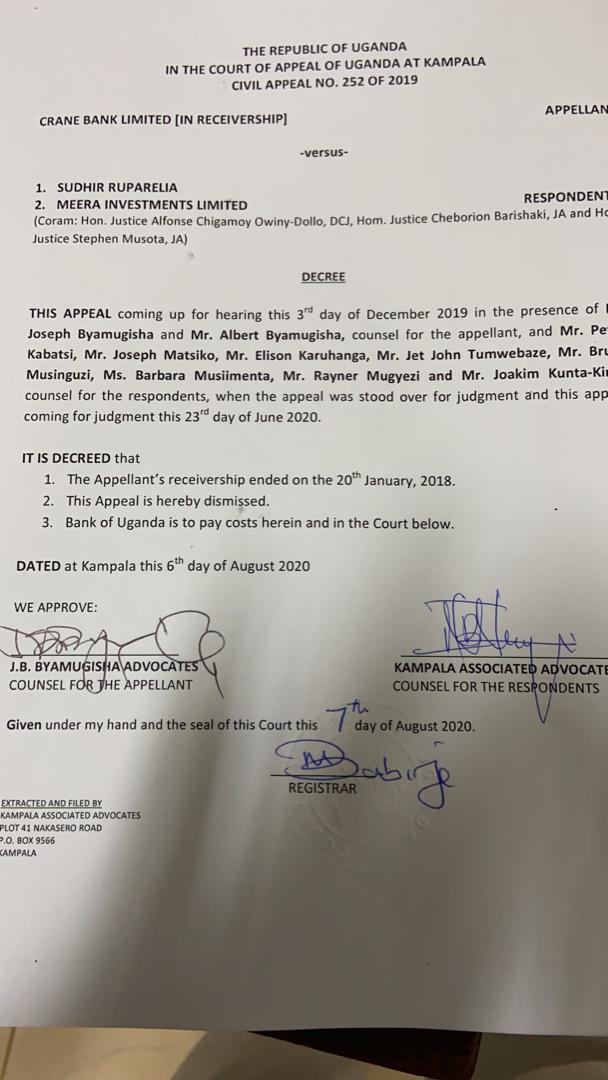
Sudhir’s lawyers cited the decree from Court of Appeal dated 6th August 2020 signed and approved by J.B. Byamugisha Advocates and KAA whereby BoU is ordered to pay the cost.

BOU COA Decree

“It would cause a lot of injustice if BOU lawyers turn around to say the ‘shadow’ would bear the costs of the suit,” Kabatsi said, rejecting the arguments that the case had been withdrawn.

Through his lawyers, Sudhir said the move by BOU is prejudicial and, if not stopped, he would suffer irreparable damages. He argued that he has already incurred losses because of BOU actions.

The Supreme Court in August this year, dismissed with costs, an application by lawyers representing the Bank of Uganda in which they sought to substitute the court record from Crane Bank Ltd (in receivership) to Crane Bank Ltd (in Liquidation), with the court rejecting the move, as in bad faith and intended to circumvent facts.

BoU later withdrew the suit, after suffering successive defeats to Sudhir’s lawyers.

A panel of the Supreme Court Justices including Ruby Opio-Aweri, Faith Mwondha, Lillian Tibatemwa, Ezekiel Muhanguzi and Night Tuhaise, in a ruling issued on August 12 rejected arguments by BoU lawyers led by veteran attorney the late Dr. Joseph Byamugisha, reasoning that Crane Bank Ltd (in Receivership), Crane Bank Ltd (in Liquidation), and Crane Bank Ltd are three distinct entities with different rights, powers and obligations.

Earlier in the High Court, Justice David Wangutusi noted in his ruling that at the time BoU and Crane Bank (in receivership) filed the suit against Mr Ruparelia and his Meera Investments in January 2017, Crane Bank Ltd was a non-existing entity, having been terminated when the Central Bank sold its assets to dfcu Bank in October 2016.

On Monday, October 4, 2021, Supreme Court quashed attempts by the BOU to hold on to the jurisdiction  of the defunct Crane Bank Ltd, arguing that once the commercial bank was closed, it was no longer a financial institution and therefore outside the legal care of the central bank.

Stories Continues after ad

UBL’s Juliana Kagwa named new Vice-Chairperson of Uganda Alcohol Industry Association

The Uganda Alcohol Industry Association (UAIA) has elected Uganda Breweries Limited’s Juliana Kagwa as the association’s new Vice Chairperson, taking over from Manish Kalla of Grays Uganda.

The change was made during the association’s Annual General Meeting at Kati Kati Restaurant recently, where Ms Kagwa, the former Secretary-General, joined Nile Breweries Limited’s Onapito Ekomoloit, who has retained his position as Chairperson and Srinivasa Reddy of Premier Distilleries, who remains the association’s Treasurer.

Other committee members include John Magara of Beedee Eff; Raghavendra Reddy Ganesh of Blue Nile Distillers; G. Uwa Maheshwar Reddy of Hema Beverages; and M.S Harinath Reddy of King Albert Distillers.

UAIA is an umbrella body bringing together the registered and regulated producers of adult beverages in Uganda. It was formed in 2006 to align the interests of the manufacturers and promote the responsible consumption of alcoholic beverages.

The association recently unveiled a report on the illicit alcohol market in Uganda, which highlighted the social and economic impact of the continued proliferation of illicit alcohol on consumers.

The report titled Understanding and Sizing Illicit Alcohol Consumption in Uganda contains findings from research conducted in 2020 by Euromonitor International. Among others, it shows that; illicit alcohol makes up 65% of the total market volume in Uganda; its consumption grew by 9% in the last three years, and this increased during the lockdown due to the closure of entertainment establishments.

Additionally, the report found that an approximated Shs 1.6 trillion in revenue goes unrealised by the government and Uganda Revenue Authority due to tax evasion, which is a result of a lax culture of enforcement of the Enguli act, which prohibits the manufacture and consumption of Enguli (alcohol) without a license.

Stories Continues after ad

IUCEA and GIZ launch the EAC online matchmaking platform to link young professionals to jobs

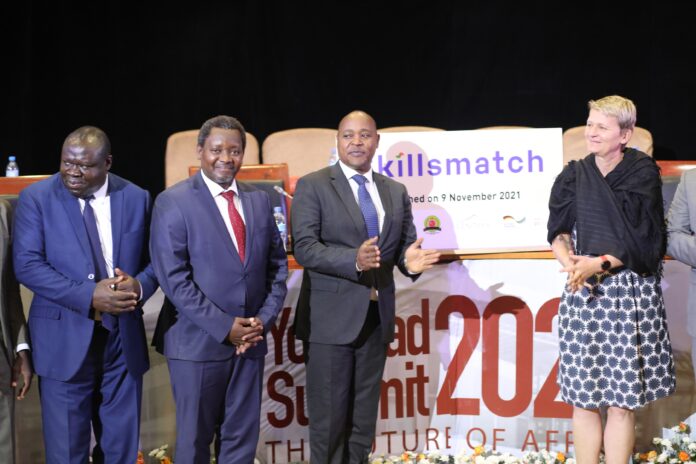
IUCEA and GIZ launch the EAC online matchmaking platform to link young professionals to jobs

The East African Community (EAC), through its project ‘’Digital Skills for an Innovative East African Industry’’ (dSkills@EA), has launched an online matchmaking platform for skills. Skillsmatch links young professionals with businesses for jobs, internships and applied master theses and aims to bridge the skills gap, especially regarding digital skills for the application and development of digital products and services that are needed in the region’s industry. Skillsmatch is an easy-to-use online platform for providing businesses and young professionals with relevant matches to their needs, supported by Artificial Intelligence.

The launch took place at the YouLead Summit 2021 in Arusha, Tanzania, following the presidential addresses by H.E Paul Kagame, the President of the Republic of Rwanda and H.E Jakaya Kikwete, the former President of the United Republic of Tanzania.

The EAC Secretary General, Hon. Dr. Peter Mathuki, and the Ambassador of Germany to Tanzania, H.E. Regine Heß unveiled the platform to the public.

“Our goal is to help the youth in the EAC become better skilled to lead transformational change in the business environment under the current trend of digitalization. Together, we have an incredible responsibility and opportunity to share our experiences in an authentic way and ensure that our collaborative efforts are shaping the next generation of youth employment and innovation transfer,” said H.E. Regine Heß.

“We are putting more effort to support universities in the region to produce graduates that are relevant for the job market to reduce youth unemployment. We urge companies to use the Skillsmatch platform to spotlight and prompt action around key challenges to digital inclusion by supporting young professionals to gain industry practical experience through internships”, said Prof. Gaspard Banyankimbona, the IUCEA Executive Secretary.

John Bosco Kalisa, EABC CEO, noted that, “according to McKinsey’s survey on reskilling, it has been highlighted that nearly 9 in 10 executives and managers say their organizations either face skill gaps already or expect gaps to develop within the next five years. One-third of companies’ workforce across East Africa face disruptions resulting from technology and market trends that require reskilling of professionals; thus, it is relevant that the market has available a pool of talent that can help support businesses for socio-economic growth.”

dSkills@EA is a project of the EAC, in cooperation with the German Government, that aims at strengthening employment and innovation-related digital skills of youth in the EAC and supports the industry’s digital transformation. The project is implemented by the Inter-University Council for East Africa (IUCEA), the Centre of Excellence for ICT in East Africa (CENIT@EA) at the Nelson Mandela African Institution for Science and Technology (NM-AIST), the Deutsche Gesellschaft für Internationale Zusammenarbeit (GIZ) and an East African-German academic consortium, including the DAAD and the University of Oldenburg.

Stories Continues after ad

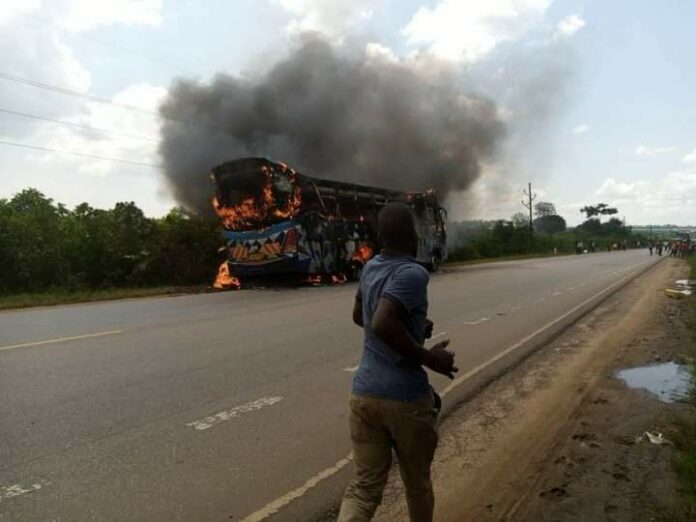
Gateway bus catches fire along Kampala-Masaka highway

A bus registration number UAU 926U, belonging to Gateway bus company has caught fire in Mpigi along Kampala-Masaka highway. The bus was heading to Kabale in South Western Uganda.

According to Faridah Nampiima, spokesperson Traffic and road safety, all occupants have reportedly been evacuated however their properties were all destroyed. The fire is reported to have originated from brake system.

“No fire engine yet at scene. However there is too much traffic along the road with efforts to have the fire extinguished,” she said.

Stories Continues after ad

H.E General Obasanjo is a wrong choice for the mediation of the Ethiopian conflict

President Obasanjo


Pan African Forum states that the Ethiopian conflict has given millions across Africa and the world sleepless nights. The world is trying to see how it can help Ethiopia peace. We have looked at the American civil war and how Abraham Lincoln handled it.We have learnt some lessons which we can now share with those who want peace in Ethiopia.

Pan African Forum knows that if you face a big problem, avoid making it bigger. President Abraham Lincoln understood the wisdom of this advice during the Trent affair, a diplomatic crisis between the United States and Great Britain that began one hundred sixty years ago and nearly led to war.

Pan African Forum agrees with Lincoln’s restraint and commitment to his top priorities that offered a valuable lesson: Often the conflicts you don’t engage in can be just as important as the ones you do. The AU played in the hands of the conflict in Ethiopia.

Pan African Forum therefore states that the conflict in Ethiopia is worry for peace in the region and for those concerned about Africa like us.  We listened to General Obasanjo address the UNSC yesterday as the AU Special Mediator on the war in Ethiopia.

Pan African Forum has made its conclusion that the biggest problem AU and Africa makes all the time  is to think that  General Obasanjo can bring peace anywhere in Africa .The General  has a poor record of solving any conflict on the continent and he cannot change things in the ongoing  Ethiopian conflict.

Pan Africa Forum would like to remind all those hoping for good news to prepare for shocks. We say boldly that Obasanjo will make matters worse for Ethiopia. This African son of soil with due respect is poor at negotiations and hungry for money. He will grab money and leave Ethiopia bleeding like he did to South Sudan. He will accelerate the collapse of Ethiopia.

Pan African Forum has serious intelligence evidence back to 20 years ago and these records speak volumes about the failures of General Obosanjo in peace process on African continent. Let the world know that from the Taylor case, Zimbabwe sanctions, Zimbabwe Commonwealth debacle, the DRC Nkunda case, the South Sudan conflict, General Obosanjo has failed to deliver solutions. Let us not kill the people of Ethiopia twice. They need serious help now and not tomorrow.

We note with great concern and condemn the violence in Ethiopia. The rebels and the Government seem to be at opposite ends given the double standards of USA which has now initiated the removal of Dr.Abiy Ahmed from power. We saw this 2 years ago and warned the world.

Pan Africa African  therefore concludes that the AU Peace Mediator on Ethiopian Conflict us not capable of resolving anything even if Sahara Desert turned into an Ocean  of water

Let the AU send other peace envoys to Ethiopia like Former President of MozambiqueJoachim Chissano who have delivered peace in Uganda, Madagascar and other places.  General Obasanjo like the late former UN Secretary General has bad luck in solving conflicts in Africa. He will leave Ethiopia in worse situation like he did to South Sudan situation. If we are wrong, then time will tell.


Thanks

Dr. David Nyekorach-Matsanga

Founder/Chairman
PAN AFRICAN FORUM(UK)LTD

LONDON UNITED KINGDOM


Stories Continues after ad

Kagame, Museveni row: Rwanda blames Eastern DRC attacks on Uganda

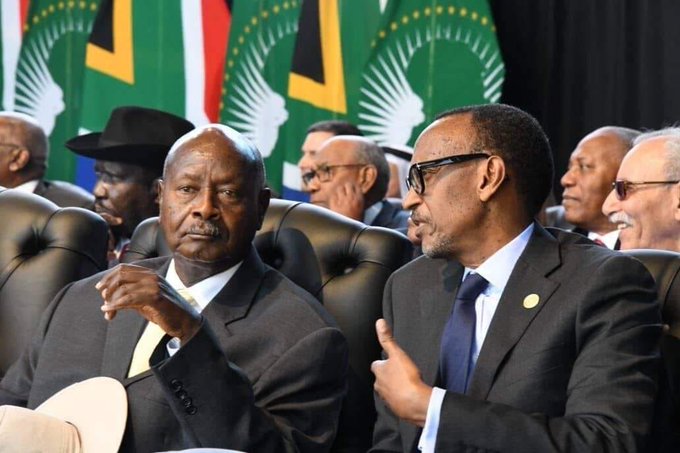
Presidents Museveni and Kagame

Rwanda’s national army Rwanda Defence Forces (RDF) has denied any involvement in activities of rebel outfit M23, which attacked government military bases and villages in Republic of the Congo (DRC).

On Sunday, gunmen seized at least two villages in the eastern DRC near the border with Uganda and Rwanda. Lieutenant-Colonel Muhindo Luanzo, assistant to the administrator of Rutshuru Territory, blamed the attack on fighters from M23, a rebel group that seized large swaths of territory in 2012 and 2013.

“It has been reported that an armed group reported to be Ex-M23 rebels on Sunday 7 November 2021, crossed into DRC From Uganda territory where it is based  and attacked and occupied the villages of Tshanzu and Runyoni,” Kagame’s Army said in a statement.

RDF said the Ex-M23 group didn’t seek refuge in Rwanda during their retreat from DRC in 2013, it has been based in Uganda where this attack originated and to where this attack originated and to where the armed group retreated. Many Congolese have since been flocking to Uganda.

The two villages, Tshanzu and Runyoni, were the last redoubts of M23 before they were chased by Congolese and United Nations forces into Uganda and Rwanda in 2013.

Since then, there have been regional efforts to demobilise the fighters, but the group has complained about the slow implementation of a peace accord and some have returned to the DRC.

Stories Continues after ad

Archbishop Kaziimba calls for packaging of family planning information basing on Biblical teachings

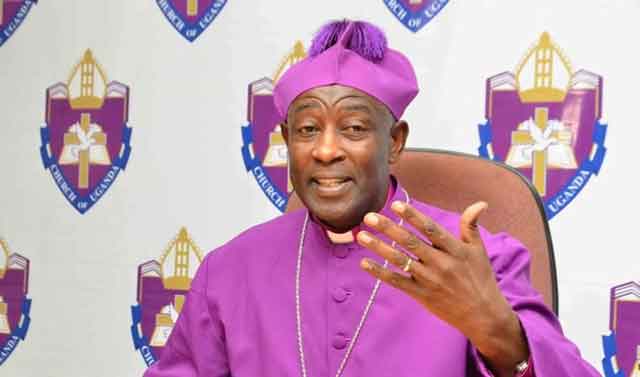
Archbishop stephen-Kaziimba

The Archbishop of Church of Uganda, The Most Rev Dr Stephen Samuel Kaziimba has urged Reproductive Health Uganda to package family planning information in an appropriate manner based on the teachings of the Bible.

Archbishop said while meeting a team from Partners in Population and Development Africa Regional Office (PPDARO) and Reproductive Health Uganda. The team presented a fact sheet about integrating population dynamics in reproductive health.

“Some people often narrow family planning to the use of contraceptives and reproductive health but it goes way beyond that. It looks at what you are feeding your family, how prepared you are to look after it, your sources of income, sustainability, etc. There is a need for a holistic view of family planning,” The Archbishop said.

Archbishop Kaziimba is well known as a Male Gender Champion and an advocate of Family Planning.

In his Charge on his day of enthronement as the 9th Archbishop of Church of Uganda on 1st March 2020, he said; “I am also known as a champion for family planning and believe there is a place for birth control in Marriage God’s Way. I want to be clear, however, that I completely disagree with and cannot support abortion as a method of birth control. Let us promote life rather than destroying life. I want to encourage people to produce the number of children they can manage.”

PPDARO was represented by Mr. Achilles Kiwanuka, RHU by Ms. Doreen Kansiime while Church of Uganda Secretariat was represented by Mr. Stephen Angalla Ochieng from the Directorate of Health and Mr. Sadiiki Adams from the Communications Office.

Stories Continues after ad

Ministry of Agriculture warns of a pending locust invasion from Mandera County in Kenya

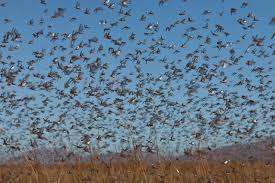
Desert Locusts

The Ministry of Agriculture, Animal Industry and Fisheries (MAAIF) has warned that there is a pending locust invasion from Mandera County in Kenya.

The Permanent Secretary of Ministry of Agriculture, Maj. Gen. David Kasura-Kyomukama said the Food and Agriculture Organization (FAO) forecast on Desert Locust released on 31st October, 2021, Desert Locust swarms are still active in Mandera County in North East Kenya, Ethiopia and Somalia.

In February 2020, Uganda confirmed the invasion of Desert Locusts in some parts of Amudat, Nabilatuk and Nakapiripirit districts after ravaging several parts of Kenya. The country witnessed five waves of Desert Locust invasions from 9th February, 2020 up to October 2020.

Since the outbreak, the government through its agencies stepped up control measures which included rapid spraying in all affected areas with both manual and motorized pumps and sensitization of people. The existing swarms however didn’t cause significant damage to the vegetation cover.

“It is worth noting that Uganda successful controlled Desert Locusts and averted a potential loss of over US$800M arising from protection of food and cash crops in the affected areas and efforts assured food security,” he said.

Earlier today, the development partners, the Government of Japan and FAO Uganda availed key items to control of Desert Locusts. The items include motorcycles, spray pumps, surveillance kits, Double Cabin pickups, trucks and other vehicles and equipment.

JICA Senior Representative Mr. Fukuhara Ichiro said; “Japan’s long standing cooperation with Uganda is well documented; we have over the years jointly implemented various development projects that have positively impacted the Agriculture sector.”

“The agriculture sector is considered the backbone of Uganda’s economy, not only contributing the biggest share to Uganda’s GDP but also being the biggest employer of Uganda’s labor-force it is therefore incumbent upon all of us to work at ways to develop the sector.”

Recently, JICA implemented the promotion of Rice Development Projects (PRiDe) phase one and two in Northern Uganda farmers Livelihood improvement project (NUFLIP) Phase one and two, and two projects on enhancing Diagnostic capacity for animal disease control.

Stories Continues after ad