Stanbic Bank
Stanbic Bank
18.2 C
Kampala
Stanbic Bank
Stanbic Bank
Home Blog Page 737

PM Nabbanja hits back at Eng. Onek, says she will not stop supervising his ministry

PM Nabbanja

The Prime Minister Robinah Nabbanja has hit back at the Minister for Relief Disaster Preparedness and Refugees, Eng. Hillary Onek saying she will not stop supervising his ministry for effective service delivery.

“We changed the modes of working. We have little time yet we have to implement the manifesto. I don’t undermine my elder brother Eng. Hillary Onek but I will not stop working and supervising ministries for effective service delivery. I will not entertain laziness,” she said.

Yesterday Eng. Onek petitioned the Prime Minister expressing his dismay over her continuous micromanagement of his office.

In a letter dated September 26, 2021, copied to President Yoweri Museveni, the Speaker and Deputy Speaker of Parliament, Onek said from the time of her appointment, he has been observing with total displeasure the fact that his role and that of his deputy as Ministers in charge of Refugees, Disaster and land policy makers on matters of refugees and disaster management have been totally usurped by her office.

The Minister accused Nabbanja of calling meetings, going to disaster affected places and visiting refugee settlements without informing either his office or that of his deputy. To his shock, Onek said his staff who he supervises are being called for meetings sidelining him and his deputy.

He accused the Prime Minister of calling a meeting with local leadership of Bududa without involving his office or even the area Members of Parliament which may lead to decisions being made that contradicts earlier and official cabinet position.

“You have purged the department of disaster management, taken over the distribution of relief items and causing interdiction of staff members without proper investigation. The interdicted staff was accused of causing financial loss without conducting a forensic audit by involving the office of the Auditor General,” he said.

“On October 5, you wrote to my office halting the settlement of refugees in Kyangwali over land ownership dispute, the decision was arrived at without involving either me or my deputy or any technical staff from the department of refugees,” he said.

“I have worked with the previous three Prime Minister and all along I know that their constitutional role is to coordinate legislative agenda, lead government business in parliament and monitor all ministries and government programmes. They never got involved in the micro management of other ministries. If you decided to micromanage other ministries, what then is the role of sector ministers who are supposed to plan, make policies and deliver on the manifesto to the president?” he asked.

He said that since the Prime Minister has decided to render his docket irrelevant, she should put it in writing to the president who is the appointing authority and he will relieve him of his responsibilities and allow her to carry on her duties.

“I will not be held accountable for decisions that have been taken without my input,” he said.

Stories Continues after ad

Uganda Breweries partners with Buganda Kingdom to host mass #Covid-19 vaccination at Bulange

Jackie Tahakanizibwa, UBL Corporate Relations Manager (L) receives a token of appreciation from the Katikkiro, Owek. Charles Peter Mayiga

Uganda Breweries Limited (UBL) has partnered with Buganda Kingdom to hold a mass vaccination this weekend with the aim of driving vaccination uptake among the population.

The event will be held at Bulange on Saturday, 6th and Sunday 7th November, 2021 from 9 am to 5 pm.

“Vaccination remains the strongest response to this pandemic and a full return to normal. Vaccination is the safest and most sustainable way to ensure we safeguard both the health and economic wellbeing of our people. I call upon all subjects of His Majesty to embrace vaccination and turn up in big numbers to Bulange on Saturday and Sunday and get vaccinated with ease,” Katikkiro Charles Peter Mayiga said.

He added that the vaccines are free and safe.The event will provide several mobile vaccination stations in one location and will enable those who need to receive their 1st or 2nd shot to get it with ease. Both Pfizer and Astra Zeneca doses will be available. Coca-Cola will provide refreshments to everyone who will come for vaccination.

“Our priority is to increase accessibility to COVID-19 vaccines making it as safe and convenient as possible for people to get vaccinated. This is the only way to allow for full and safe reopening of the economy. We are honored to be able to work together with the Buganda Kingdom through this initiative to strengthen the public health response to the pandemic,” said Jackie Tahakanizibwa, Corporate Relations Manager, UBL.

Over the past two months, UBL and Coca Cola have supported the scaling up of COVID-19 vaccines extending mobile vaccination sites to bars, markets and public centers within the greater Kampala Metropolitan area. The drive has also focused on public sensitization to drive awareness of the benefits of vaccination as a measure against the prevailing pandemic.

Other partners of the initiative include Vision Group, NBS, Safe Boda, Private Sector Foundation Uganda, Tugende, NICE UG, Red Cross, Majestic Brands, CBS and BBS TV.

“Our target is to vaccinate as many people in Kampala as possible, effectively disseminating the available stock of vaccines to the population. This model has been tried globally and been proven to work. Several vaccination centres will be established within the venue and our Public Health team will deploy sufficient resources to ensure we are able to vaccinate as many people as possible during the day in a smooth and convenient manner,” said Dr. Daniel Okello, Director of Public Health Services, KCCA.

According to statistics from the Ministry of Health, total doses of COVID-19 vaccines administered stand at 3.1 million. The government has set a target to get the majority of the population vaccinated to facilitate the safe and full reopening of the economy.

“Vaccination is a proven lifesaving public health intervention. We continue to encourage the public to get fully vaccinated against COVID-19. Vaccines protect you from getting seriously ill and dying from COVID-19. In addition to vaccination, we appeal to the public to continue to adhere to the SOP’s in place,” Katikkiro added.

The initiative compliments efforts by Uganda Breweries under the Bell Raising the Bar program, a USD 1 million fund established to prepare the hospitality industry for safe reopening by establishing health measures and providing essential training to boost their capacity to reopen their businesses under the respective national guidelines.

“Economic recovery remains hinged on vaccination that will enable easing of restrictions that are currently impacting business recovery,” Jackie Tahakanizibwa, Corporate Relations Manager, Uganda Breweries Limited concluded.

Stories Continues after ad

Gov’t releases road-user fees structure for motorists accessing Kampala-Entebbe Express Highway

kajjansi-inter-change

Government has released the road user fees structure for motorists who will access Kampala-Entebbe Express Highway. The road fees structure was released during an engagement held at Kajjansi Toll plaza.

According to the fees structure released by the Ministry of Works and Transport, motorcycles with 400cc will pay Shs 3,000 to access the 49.5 kilometres expressway.

Light vehicles with two axles will pay Shs 5,000, Shs 10,000 for light vehicles with three axles and medium goods vehicles with two or three axles, Shs 15,000 for large goods vehicles and large buses with four and five axles and Shs 18,000 for large goods vehicles with six and more axles.

Minister of Works and Transport General Edward Katumba Wamala said the collected revenue will exclusively be used to finance the operations and maintenance of the Kampala Entebbe expressway.

“There are only three categories of people who will be exempted from paying tolls which are the presidential convoy and emergency vehicles like ambulance and fire brigade vehicles. The rest of the road users will be expected to pay,” he said.

Executive Director of Uganda National Roads Authority (UNRA) Allen Kagina said the collection of road user fees is expected to start in January 2022.

The road user payments will be made at various toll plazas constructed at Busega, Kajjansi and Mpala.

She said before accessing toll gates, loaded vehicles will go through weigh bridges and wayward users will be subjected to fines and offloading excess cargo before being cleared.

The US$ 476 million Kampala-Entebbe Express Highway is expected to play a pivotal role decongesting Kampala and enhance the trade movement within the central business district. The Highway has two sections starting from Busega on the northern bypass to the existing Kampala- Entebbe road at Mpala, and a 12. 6km section commencing from Kajjansi interchange to Munyonyo.

The highway has three interchanges at Busega, Kajjansi and Abayita Ababiri, connecting to various trading centers, and has 19 overpass bridges and 17 underpasses for local people to access their properties along and around the road. It will be accessed after paying fees that will soon be revealed to the public.

Stories Continues after ad

Antonio Conte appointed new Tottenham Hotspur Head Coach

Conte

Tottenham Hotspur have confirmed the appointment of Antonio Conte as their Head Coach on a contract until the summer of 2023, with an option to extend.

Antonio has won titles in Serie A, including a hat-trick of Scudettos with Juventus, the Premier League and also managed Italy, leading the Azzurri to the quarter-finals of Euro 2016.

Antonio began his coaching career as an assistant in Siena in 2005 and had spells at Arezzo, Bari – where he won Serie B – and Atalanta before returning to Juventus in 2011. He won the title in his first season, 2011/12, completing the campaign unbeaten and equalling a club record 28-match unbeaten run set by Fabio Capello. He completed a hat-trick of titles with success in 2012/13 and 2013/14, when Juve amassed a Serie A record of 102 points.

Antonio took charge of the Italian national team in 2014 and led them to the quarter-finals of Euro 2016, topping their group and beating Belgium and Spain along the way.

After two years in charge of the Azzurri, Antonio returned to club football at Chelsea in 2016 and secured the Premier League crown in his first season, 2016/17, with a then league record of 30 wins in 38 matches, including a run of 13 straight victories.

Antonio added the FA Cup to his list of honours in 2018 before moving back to Italy and Internazionale in May, 2019. Having finished second in Serie A in 2019/20, and reached the final of the Europa League, he guided Inter to their first title in 11 years in 2020/21, ending Juventus’ run of nine successive Scudettos.

Antonio said: “I am extremely happy to return to coaching, and to do so at a Premier League club that has the ambition to be a protagonist again.

“Tottenham Hotspur has state-of-the-art facilities and one of the best stadiums in the world.

“I can’t wait to start working to convey to the team and the fans the passion, mentality and determination that have always distinguished me, as a player and as a coach.

“Last summer our union did not happen because the end of my relationship with Inter was still too recent and emotionally too involved with the end of the season, so I felt that it wasn’t yet the right time to return to coaching.

“But the contagious enthusiasm and determination of Daniel Levy in wanting to entrust me with this task had already hit the mark. Now that the opportunity has returned, I have chosen to take it with great conviction.”

Stories Continues after ad

Absa Bank donates 50 computers to public libraries to enhance online learning capabilities in Uganda

PC Handover- Director Natonal Library, Mr Adonia Katungisa - Vica Chancellor Makerere University, Prof Nawangwe - Absa MD, Mumba Kalifungwa - Airtel MD, Manoj Murali

Absa Bank Uganda has donated 50 computers through the National Libraries of Uganda to ten public libraries to enhance the online learning capabilities of the youth amid the closure of schools.

The beneficiary libraries include the public libraries located in Lira, Jinja, Mbarara, Hoima, Masindi, Fort Portal, Soroti, Mbale, Kabale and Kawempe Youth Center. The donated computers will enable the youth to access the Bank’s ReadytoWork Programme, which teaches valuable soft skills to enhance employability through training modules to youth aged 18-35 to help them transition from school to the work environment. This skilling ultimately results in youth taking two pathways, formal employment or self-employment.

Speaking to the donation, Mumba Kalifungwa, Absa Bank Uganda’s Managing Director, said, “The world is shifting towards a digital future, and this has resonated throughout all sectors, including education. This situation has been exacerbated by the COVID-19 pandemic and the closure of schools.  As a bank, we believe that education remains a key driver supporting positive social economic development in our communities and as such, we are proud to support the learners’ online learning efforts by providing the tools to ensure the continuation of their education journey.”

Education and skills development is one of the strategic pillars under the Bank’s Corporate Citizenship Strategy and since its inception in 2016, 3,075 youth across the country have signed on to and graduated from the programme.

The public libraries will be enabled to access free wireless internet from Airtel Uganda, who in addition have partnered with the Bank to provide free data for youth to sign up for the ‘ReadytoWork’ training across the country. They only need to dial code *175*200# and follow the prompts.

Commenting on the partnership, Airtel Uganda Managing Director Mr. Manoj Murali said, “We thank Absa Bank for championing such programmes, like the ReadytoWork, that give the youth appropriate knowledge and skills to allow them to not only be employable but also create jobs and make a meaningful contribution to the economy of Uganda.”

“For the past three years, Airtel Uganda has supported public Libraries with free and reliable wireless 4G internet to enable the youth to conduct resourceful research in support of their education, and through the ReadytoWork programme, the youth will be able to get 500MB valid for 60days from Airtel to access the ReadytoWork website,” Murali noted.

Prof. Barnabas Nawangwe, the Vice-Chancellor of Makerere University and guest of honour at the ceremony said, “This donation comes at a very opportune time given the current hurdle of discontinued education. The support will help open doors for idle youth to make better use of their time by attaining soft skills training that will assist them in the future.”

Stories Continues after ad

Ibrahim Bbosa named URA spokesperson

Ibrahim Bbosa

The Public  Relations Officer of the Uganda Communications Commission (UCC), Mr Ibrahim Bbosa, has been appointed as Assistant Commissioner, Public and Corporate Affairs at Uganda Revenue Authority (URA).

Bbosa replaces Vincent Sseruma who recently bowed out after a long career at the tax collection body. Denis Kugonza Kateeba, who previously worked as head of Accounts at Uganda National Roads Authority, has been appointed the Commissioner Tax Investigations.

According to the URA Memo, Robert Muteebi has been appointed Commissioner Information Technology and Innovation while Allen Nassanga is the Assistant Commissioner Research and Innovation. Sarah Muzungyo was named Commissioner Domestic Taxes.

URA has since registered a number of successes for the last 30 years including earning the government’s trust in its capacity to transparently collect and account for all revenues.  The tax body has positioned herself among her regional peers as a facilitator of trade in a harmonized environment.

In July, URA opened its revenue collection account for the financial year 2020/2021 with a surplus of about Shs 278 billion. They attributed the surplus revenue registered in the month of July, which is nearly three times an equivalent of the allocated budget for the ministry of trade, industry and cooperative, to among other things; the rolling out of digital tax stamps (DTS) whose purpose is to deter under-declaration at production and importation levels.

President Museveni recently said URA has not yet performed to its maximum and hence urged them to add more efforts. The president said corruption and inefficiency have prevented URA from performing to its maximum. He tasked URA to ensure the tax to GDP ratio goes up.

“When we had just come from the bush, people were collecting money and putting it in their own pockets. It was in 1991 when we realized there was massive stealing. That’s how we came and said we must create a special department and the idea of URA came. The tax collection jumped to 11% from 4% of GDP. However it has stagnated there all this time,” Museveni said in September as URA marked 30 years of existence.

“Although you are congratulating yourselves, performance doesn’t lie. We can know if the tax people are doing work. The tax to GDP ratio has stagnated around 11%, 12% and 13%. As soon as we created URA we jumped to 11% but we are now stuck there. Where is the other money going? Buildings are increasing and imports. Do you think God is happy with you?” he said.

Stories Continues after ad

UNAIDS calls for action against criminalization of people who use drugs

UNAIDS Executive Director, Winnie Byanyima

UNAIDS has called for action against the criminalization of people who use drugs, for the redress of criminalization’s negative effects on HIV, viral hepatitis and other health issues, for the respect of human rights and for more funding for community-led harm reduction programmes.

“UNAIDS is committed to supporting countries in their journey towards the decriminalization of drug possession and to full-scale implementation of harm reduction programmes,” said UNAIDS Executive Director, Winnie Byanyima. “UNAIDS calls for the full involvement of communities of people who use drugs in achieving legal reform aimed at decriminalization and in the organization of harm reduction programmes at the country level. This will help us to end inequalities and end AIDS.”

People who use and inject drugs are among the groups at highest risk of acquiring HIV but remain marginalized and often blocked from accessing health and social services. In 2020, 9 percent of all new HIV infections were among people who inject drugs. Outside of sub-Saharan Africa this rises to 20 percent . Although women represent less than 30 percent of the number of people who use drugs, women who use drugs are more likely to be living with HIV than their male counterparts.

Timely introduction and full-scale implementation of accessible harm reduction programmes can prevent HIV infections, as well as many cases of viral hepatitis B and C, tuberculosis and drug overdose. The United Nations system is united in promoting harm reduction services and decriminalization of personal possession of drugs, based on the evidence that harm reduction and decriminalization provide substantial public and personal health benefits and do not increase the number of people with drug dependency.

Despite this position, reflected in the United Nations system common position supporting the implementation of the international drug control policy through effective inter-agency collaboration, in reality less than one percent of people who inject drugs live in countries with the United Nations-recommended levels of coverage of needles, syringes and opioid substitution therapy, and the funding gap for harm reduction in low- and middle-income countries sits at a dismal 95 percent.

Even where harm reduction services are available, they are not necessarily accessible. Punitive drug control laws, policies and law enforcement practices have been shown to be among the largest obstacles to health care in many countries. Criminalization of drug use and harsh punishments (such as incarceration, high fines or removal of children from their parents) discourage the uptake of HIV services, drive people underground and lead to unsafe injecting practices, and increase the risk of overdose.

Women who use drugs face higher rates of conviction and incarceration than men who use drugs, contributing to the increased levels of stigma and discrimination they face in health-care settings. In effect, criminalization of drug use and possession for personal use significantly and negatively impact the realization of the right to health.

Earlier this year, United Nations Member States set bold global targets on decriminalization of drug possession for personal use and on elimination of stigma and discrimination against people who use drugs and other key populations. To reach these targets by 2025, strategic actions at the country level need to start today.

Stories Continues after ad

Nabbanja, Onek Feud: Minister accuses PM Nabbanja of micromanaging his ministry

PM Nabbanja

The Minister for Relief Disaster Preparedness and Refugees Eng. Hillary Onek has petitioned the Prime Minister Robinah Nabbanja expressing his dismay over her continuous micromanagement of his office.

In September, the minister expressed his disappointment about how money is being diverted from the ministry’s budget to the Prime Minister’s office. According to a leaked letter dated September 15, from Eng. Onek to Nabbanja, the minister expressed displeasure over the decision to divert Shs5 billion from Shs15 billion budget.

In a letter dated September 26, 2021, copied to President Yoweri Museveni, the Speaker and Deputy Speaker of Parliament, Onek said from the time of her appointment, he has been observing with total displeasure the fact that his role and that of his deputy as Ministers in charge of Refugees, Disaster and land policy makers on matters of refugees and disaster management have been totally usurped by her office.

The Minister accused Nabbanja of calling meetings, going to disaster affected places and visiting refugee settlements without informing either his office or that of his deputy. To his shock, Onek said his staff who he supervises are being called for meetings sidelining him and his deputy.

He accused the Prime Minister of calling a meeting with local leadership of Bududa without involving his office or even the area Members of Parliament which may lead to decisions being made that contradicts earlier and official cabinet position.

“You have purged the department of disaster management, taken over the distribution of relief items and causing interdiction of staff members without proper investigation. The interdicted staff was accused of causing financial loss without conducting a forensic audit by involving the office of the Auditor General,” he said.

“On October 5, you wrote to my office halting the settlement of refugees in Kyangwali over land ownership dispute, the decision was arrived at without involving either me or my deputy or any technical staff from the department of refugees,” he said.

“I have worked with the previous three Prime Minister and all along I know that their constitutional role is to coordinate legislative agenda, lead government business in parliament and monitor all ministries and government programmes. They never got involved in the micro management of other ministries. If you decided to micromanage other ministries, what then is the role of sector ministers who are supposed to plan, make policies and deliver on the manifesto to the president?” he asked.

He said that since the Prime Minister has decided to render his docket irrelevant, she should put it in writing to the president who is the appointing authority and he will relieve him of his responsibilities and allow her to carry on her duties.

“I will not be held accountable for decisions that have been taken without my input,” he said.

Stories Continues after ad

Terror is a product of inequality not Arabic/Islamic

Mr Nabende Wamoto.

Two weeks ago, two of my fans, a young teacher based in Kyengera-Wakiso district first thanked me and implored me to write about the on-going bombings in Kampala and the suburbs and a Ugandan female Ms. Betty Wekou living in North America, member of NAMCA (North American Masaba Cultural Association) asked for whom do I write and added if she could publish my pieces in that region. It was very satisfying.

In his farewell address 1796, President George Washington warned against doing what the United States has done and continue to do in the Middle East. He admonished the young Republicans to be neutral and “to observe good faith and justice towards all Nations”, cultivating peace and harmony with each other. He said the US should avoid permanent inveterate antipathies towards some Nations and a passionate attachment to others, “such attachments” he went on “engender a variety of evils and lead to the illusion of an imaginary common interests in cases where no real common interests exist, and by the latter, without adequate inducement or justification.” If any lessons are to be learnt from history, it is worth remembering Washington’s statement including us in Uganda.

Terrorism has got problems of definitions. There is no agreed definition because the term terrorism has become pejorative. It is the actual or threatened use of violence for religious, political, social or any other goal, directed not only, against victims themselves but also against the larger related group(s) of a scope often transcending National boundaries. Federal Bureau of Investigations (FBI) of the US defines terrorism as “the unlawful use of force or violence against persons or properties to intimidate or coerce government(s), the civilian population or any other segment thereof in furtherance of political or social objectives.

Derived from the Greek word meaning “to tremble” terrorism is virtually as old as humanity. It has been recurrent throughout history. The secret societies found in some tribal cultures maintained their status through TERROR.

Terrorism is by no means unique to Muslims or Arabs. In the 12th century AD, an Ismaili sect of Shiite Muslims conducted terrorist campaigns against Sunni Muslims. In Northern Ireland, Protestants and Catholics groups terrorised each other after the Reformation. In the 18th and 19th centuries, systematic terrorism received impetus in the wake of the French Revolution. In the USA, the Ku Klax Khan was set up after the defeat of the confederacy in the American Civil War to terrorised Slaves and representatives of the Reconstruction Administration by the Federal Government. The Russian Revolutionary movement before World War 1 had a strong terrorist element. In the 20th Century, groups such as the Irish Republican Army (IRA) often carried out their terrorist activities beyond the boundaries of individual countries with the occasional support by Bulgaria and Italy under the Fascist Benito Mussolini. This kind of state-sponsored terrorism led to the assassination of Francis Ferdinand of Sarajevo in 1914 precipitating World War 1.

When the British rule was coming to an end in Palestine, both the Arabs and the Jews practiced terrorism not only against one another but also against the British. The Jewish terrorists killed 338 Britons in Palestine during the 1940s. They blew up King David Hotel, the British headquarters in Jerusalem in 1946 killing 91 people and perfected the lethal Letter bomb. This later became a favorite weapon for Arab terrorists. In early 1960s, the unresolved Middle East conflict between the Arab nations and Israel led to several wars in the region with the Black September and Palestine Liberation Organization (PLO) terrorist arm/group conducting commando terrorist operations both in Israel and in other Countries. In 1983 Lockerbie incident in which Pan American flight 103 was blown up in the air killing 259 people which led to what became repetitive showdowns in modern history. North Korean bombing in Rangoon in the same year resulted into the death of 4 Cabinet Ministers and 13 other Koreans. This was followed by the bombing of the South Korean passenger airline jet in 1987 by North Korean operatives. The simultaneous Nairobi and Dar-es-Salaam bombings on 1st August, 1998 characterised typical terrorist attacks followed by the 11th September, 2001 Twin Towers’ bombing in New York City, USA and the 28th November, 2003 New Paradise Hotel bombing in Mombasa, Kenya. According to Mahatma Gandhi, the root of violence is “wealth without work, politics without principles, pleasure without conscious, commerce without morality, knowledge without character, science without humanity and worship without sacrifice” and Buddha said “Teach these triple truth to all: A Generous Heart, Kind Speech and a Life of Service and Compassion are the things which renew humanity.” Is the modern world Uganda inclusive ready to embrace these virtues for our common good and prosperity. The threat of corruption is actually another act of terrorism that is never viewed as such yet it is poised to decimate the populations of the African continent.

Let all countries make it clear that all acts of terrorism are indeed illegitimate and let this include Slavery, Piracy, Genocide, the high death toll resulting from road daily accidents which occur as a result of poor state of road surfaces yet the cost of a kilometer is very high, those who procure sub-standard or expired drugs or in worst case scenarios fail to procure expected government stores at all through diversion of the budgeted finances and unethical engineers who allow buildings to collapse and vehicle breakdown that murder innocent persons. These are neither Muslims nor Arabs but are all terrorists.

There is a little bird called Kanyamunyu in Nkore (no pun intended to Mathew Kanyamunyu please), Nnamunyu among the Baganda or Magpie by the English. Where as I like the black and white bird, I can’t say the same on it’s persistent intimidation to her chicks as it instils fear to draw blood.


Nabende S.P Wamoto (0776658433/0752658433)

simonwamoto@yahoo.co.uk

Stories Continues after ad

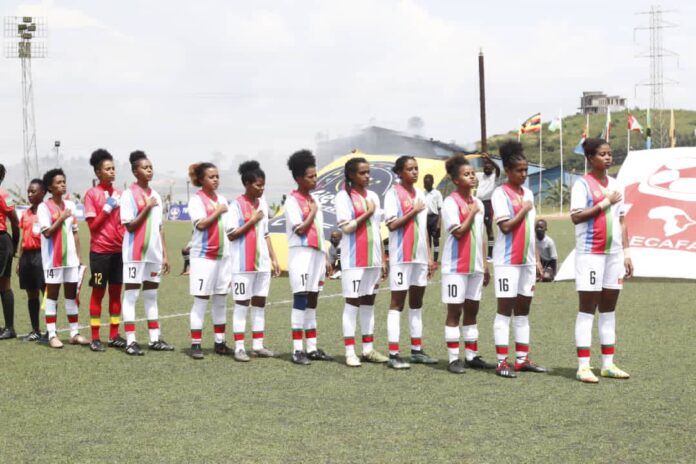
CECAFA Women’s U20: Eritrean players disappear from camp in Jinja

Eritrean players

Five Eritrean Women U-20 players have gone missing at the ongoing 2021 CECAFA Women U20 Championship in Njeru, Jinja.

The CECAFA Communications Department has confirmed in a press release that the players disappeared from their Hotel on Tuesday morning.

“The matter has been reported to the Police in Jinja, and investigations are on-going,” CECAFA said adding that with the help of FUFA and Police, they are doing their best to locate the players.

Eritrea have so far lost two opening games at the ongoing CECAFA Women U20. They were beaten 1-0 in the opener against Tanzania last Saturday and fell 5-0 to Ethiopia on Monday.

Their next game is on Wednesday against hosts Uganda.

Eritrean players have had a history of disappearing during sports tournaments to seek asylum in other countries. In 2011 during a Cecafa event in Tanzania 13 Eritrean players vanished and later requested for asylum, while 12 members of the national team sought asylum in Kenya in 2009.

In 2010, during the Cecafa tournament in Dar es Salaam, Tanzania, 13 Eritrean players disappeared and defected. Several of those players have since ended up in Houston, Texas under a US refugee resettlement program.

In December 2019, 7 Eritrean players taking part in Cecafa Men’s Senior Challenge Cup in Uganda also disappeared after the tournament.

Stories Continues after ad