Stanbic Bank
Stanbic Bank
18.5 C
Kampala
Stanbic Bank
Stanbic Bank
Home Blog Page 739

UNBS enforces quality standards against uncertified maize grain millers

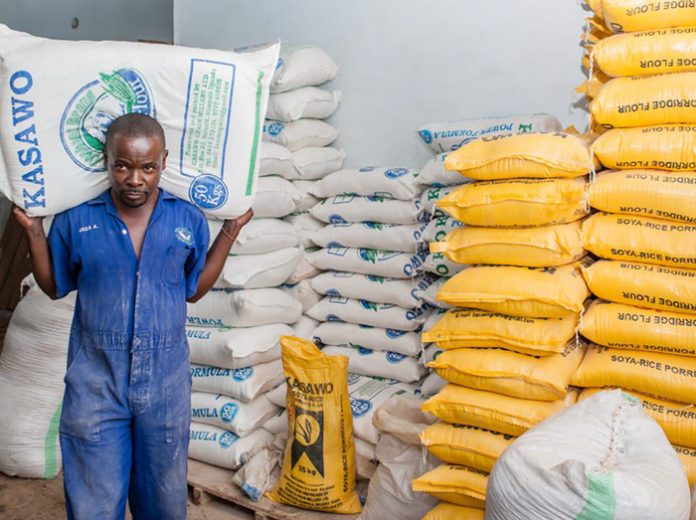
Worker at maize miller

Uganda National Bureau of Standards (UNBS) has embarked on enforcing quality standards against uncertified maize grain millers.

The standard’s body has for over a year been sensitizing and building capacity of Maize Millers, Processors and Dealers in different parts of the country to ensure that they adhere to the Maize and Maize Flour Quality Standards by obtaining UNBS Certification (Q-Mark) before placing them on the market.

UNBS urged Maize Millers, Processors and Dealers to adhere to the above requirements of the Standards to ensure safe Maize Grain and Maize Flour on the market.

After expiry of the notice period to the Maize Millers, Processors and Dealers, the Bureau has commenced nationwide enforcements of compliance to the above Standards in the Central and Eastern Regions of Country. This has resulted in a number of Maize Mills being sealed off, including 25 in Luweero District and 24 Maize Mills in Jinja District due to poor hygiene and working conditions contrary to the requirements of the Quality Standards. The owners of these facilities have been asked to take corrective action, including applying for UNBS certification before they can be allowed to resume their operations.

According to the UNBS Executive Director Mr. David Livingstone Ebiru, the enforcements of the Maize Grain and Maize Flour Standards became necessary following reported incidences of high levels of aflatoxins in Maize Grain which was putting the Health and Safety of consumers at risk both on the domestic and exports markets.

The Bureau has so far certified a total of 96 Millers with 113 Maize Products comprising 95 permits for Maize Flour, one for Maize Grit, seven Fortified Maize Flour and 10 for Maize Grain. There are also 208 other Applications at different stages of the certification process. This number is expected to increase further as UNBS intensifies its enforcement operations.

Stories Continues after ad

Uganda to use World Cities Day to promote sustainable urbanization

Uganda has joined the rest of the world to celebrate the World Cities Day this Sunday, 31 October 2021, in line with the United Nations General Assembly Resolution 68/239 of 27 December 2013, which emanated from the Shanghai International Expo 2010 deliberations.

The UN General Assembly designated every 31st October as World Cities Day to provide an opportunity for the promotion of global interests in urbanization, and engender international cooperation to address the challenges of urbanization, in turn contributing to sustainable urban development.

Over half of the world’s population lives in cities, a figure expected to increase by three billion by 2050. Uganda is a predominantly rural nation with approximately 20 per cent the population living and working in urban areas, and urbanizing at 5.2 per cent annually.

Uganda is joining the rest of the World on this day focusing on the promotion of sustainable urbanization.

According to Sheila Naturinda, the day gives individuals, communities, and government officials a chance to highlight challenges and find solutions. All in relation to cities, towns, and communities. She is the Communications Specialist at the World Bank’s Uganda Support to Municipal Infrastructure Development (USMID-AF) Programme.

“The UN General Assembly designated October 31 as the World Cities Day for the world to promote their interest in global sustainable urbanization, push forward co-operation among countries and cities in meeting opportunities and addressing challenges of urbanization,” she said.

Furthermore, she said various engagements have been planned as part of the celebration. This year’s theme draws focus to cities that are prone to environmental disasters because of the concentration of socio-economic assets.

Naturinda said that building the adaptive capacity and cultivating the social capital that already exists will reduce disaster risks. She added that it will also strengthen urban resilience to often unpredictable shocks and stresses due to climatic changes.

“Adapting cities for climate resilience is being intentional about helping cities and their residents prepare for, mitigate and respond to risks posed by both predictable and unpredictable shocks and stresses due to climatic changes,” she said.

Stories Continues after ad

Singer Juliana Kanyomozi named brand ambassador of Molfix

Juliana Kanyomozi named brand ambassador of Molfix

Singer Juliana Kanyomozi has been named brand ambassador of Molfix, a Global diaper brand. She was unveiled alongside Tracy Kakuru Otatiina, Brenda Nanyonjo, singer Veronica Luggya aka Vinka, Manuela P. Mulondo and Rachael Mwine.

Molfix, the companion of mothers, is in more than 100 countries providing Hypoallergenic Molfix diapers designed to protect baby’s skin. Molfix diapers nourish your baby’s skin with the aloe vera, and chamomile extract it contains.

“Today, Molfix unveiled its Brand Influencers in Uganda. We are happy to be taking this journey with Tracy Kakuru Otatiina, Brenda Nanyonjo, Veronica Luggya aka Vinka, Juliana Kanyomozi, Manuela P. Mulondo and Rachael Mwine who are all exceptional women and mothers. We are happy to be taking this journey with them,” the company said.

The company revealed that the Soft breathing inner and outer surfaces of Molfix protect babies and prevent leakage and hence making parents comfortable to spend time comfortably with their babies.

“Globally, Molfix is the 5th largest baby diaper brand. It has elastic side bands and a middle rubber system which reliably protects babies against leaks without irritating them.”

In addition to providing ease of movement to your babies with airsoft technology, Molfix Pants can also be easily removed due to its flexible side bands. The impermeable elastic barriers protect your baby against rashes. The umbilical cord hollow grasps your newborn’s body without disturbing your baby.

Stories Continues after ad

Attorney General tasked to explain presidential directives on contracts

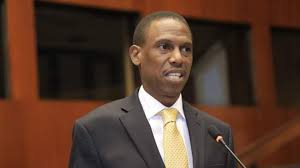
AG Kiryowa Kiwanuka

The Opposition in Parliament has demanded an explanation from government on the arbitrary directives awarding contracts to various construction entities for construction of roads, schools and health facilities across the country.

This was made in a statement presented by the Shadow Minister for works and Transport, Hon Yusuf Nsibambi during plenary sitting on Thursday, 28 October 2021.

He said that President Yoweri Museveni is now initiating procurement needs, informally meeting service providers and subsequently issuing directives commanding government Ministries, Departments and Agencies.

“He (President Museveni) issued about five arbitrary directives. Whereas the President enjoys executive authority under the Constitution, the same ought to be exercised judiciously and within confines of the law as provided under Article 9 (1) of the constitution,” he said.

Nsibambi cited some of the arbitrary directives including, a letter dated 15 May 2021 in which Uganda National Roads Authority (UNRA) was directed to enter and agreement with Zhongmei Engineering group on pre-financing agreement for construction of Kanoni-Misingi-Mityana Road (37 Km).

He further cited that in a letter dated 21 June 2021, the President directed UNRA to enter into an agreement with China Communication Construction Company on pre-financing arrangement for construction of Pakwach-Karuma Road, Pakwach Bridge, Kisubi-Nakawuka-Natete Road, Nakawuka-Kasange-Mpigi Road, Nakawuka-Mawugulu-Nanziga-Maya Road, Kasange-Buwaya Road, and Nakasero-Northern Bypass VVIP Road.

“The processes, cycle and activities of procurement and disposal of public assets in Uganda are governed by the Public Procurement and Disposal of Assets (PPDA) Act. Non-compliance of the PPDA Act and regulations made thereunder by any person whether public servant or not attracts criminal action or sanctions and in some cases civil liability,” said Nsibambi.

He added that the directive from the Permanent Secretary of the Ministry of Health to all Local Governments to surrender and prepare the ground for the Uganda People’s Defense Forces (UPDF) brigade to take over construction works for schools and health facilities falls short on the required legal procurement standards.

“The law clearly guides that procurement processes do not commence with identification and zoning out a sole contractor where a competitive procurement was available but suffocated,” Nsibambi said.

He urged the Ministers of; Works and Transport, Health and Education to adhere to the provisions of the law under the Constitution, PPDA, Act and Public Finance Management Act, instead of the presidential directive.

He also called on the Minister of Health to recall and cancel the letter written by the ministry’s permanent secretary to all local governments on the UPDF.

“This House should move to advise the President to stop that arbitrary conduct,” Nsibambi said.

The Leader of the Opposition, Hon Mathias Mpuuga, said that the ministries concerned should clarify the laws on pre-financing in regard to the Presidential directives.

“Pre-financing is indirect borrowing and without parliamentary approval. It is a public debt to which we would like the finance minister to come and explain whether he is privy to the arrangement and its implications to the law,” said Mpuuga.

He added that as a result of the arbitrary directives by the President, the World Bank has raised concerns and has threatened to cancel funding.

Deputy Speaker Anita Among directed the Attorney General to provide a statement on the presidential directives. “Give us a law that backs up the presidential directives. We need this on Wednesday,” she said.

She also clarified that the presidential directives are not final and that the burden to ensure that the right procedures are followed lies with the technical people.

Stories Continues after ad

Angola to host FIBA Basketball World Cup 2023 African Qualifiers

UG Basketball team

Uganda will play in Angola for the first window of the FIBA Basketball World Cup 2023 African Qualifiers.

The three-day tournament will take place in the Angolan city of Benguela from November 26-28 with eight teams from Groups A and C vying for six places in the decisive Second Round of the African Qualifiers.

The Silverbacks of Uganda are in Group A alongside Cape Verde, Mali and Nigeria. Groups B and D will open their African Qualifiers campaign in February 2022.

The qualifiers will tip off on Friday, November 26 with Cape Verde taking on Nigeria; Mali will go up against Uganda; Cote d’Ivoire will face Angola and Guinea will play Central African Republic.

Angola hosted two qualifying windows of the World Cup 2019 African Qualifiers in the capital Luanda in November 2017 and December 2018.

The FIBA Basketball World Cup 2023 African Qualifiers will be played over the course of 15 months (November 2021, February 2022, July 2022, August 2022 and February 2023) to define the continent’s five representatives in Indonesia, Japan and Philippines.

The host countries for the remaining African Qualifiers windows will be announced at a later date.

For the first time in its history, the FIBA Basketball World Cup will be played across multiple countries.

Stories Continues after ad

Protect rights and choices of adolescent girls and vulnerable communities in the country – UGANET

UGANET

The Civil Society Organisation (CSO), Uganda Network on Law Ethics and HIV/AIDS (UGANET) has called for protection and fulfillment of the rights and choices of adolescent girls, key population and other vulnerable communities in the country.

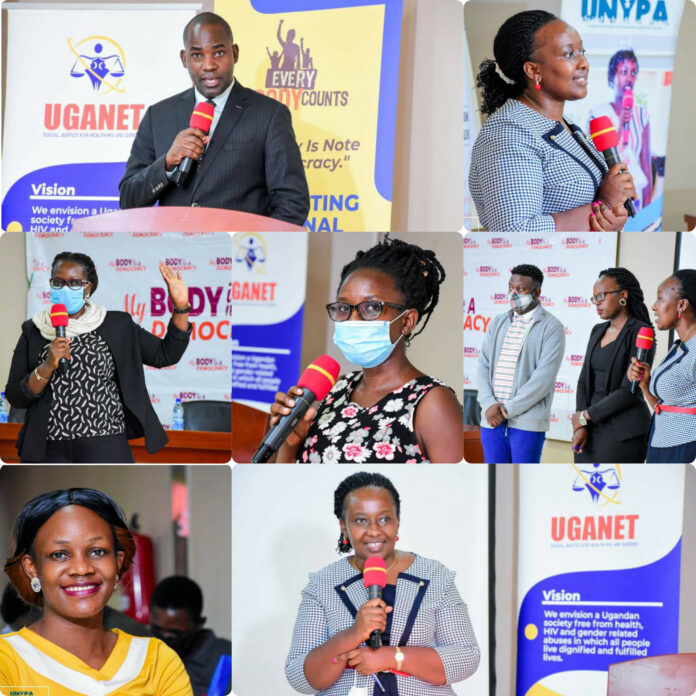
Speaking during the national symposium on bodily Autonomy and Integrity, the Executive Director of UGANET Dora Kiconco said bodily Autonomy and Integrity is a key constitution right enshrined in Article 24 of the constitution Uganda.

Sexual Reproductive Health Rights (SRHR) remains a big challenge particularly in relation to HIV prevention and access to safe abortion. According to reports over 4000 girls were impregnated during the covid-19 pandemic. The country criminalises sex with a child under the age of 18 however; Uganda is amongst the 20 countries with teenage pregnancy and defilement.

According to Kiconco, UGANET in consortium with the Uganda Key Population Consortium (UKPC) and Uganda Network for young people living with HIV/AIDS (UNYPA) funding from the Aids and Rights Alliance For Southern Africa (ARASA) under the program ‘My body is not a democracy’, are supporting national advocacy on bodily Autonomy and integrity in the country.

Kiconco said they aimed at sensitizing individuals to make informed decisions about their sexual and reproductive health needs without coercion, violence and intimidation.

“We stand with women and girls in all diversity, key populations in claiming these rights and choices throughout their lives. Fulfilling rights to bodily autonomy and integrity requires that stakeholders make quality sexual and reproductive health information services available and accessible.”

She said Ugandan leadership should swing in action to fight the shooting numbers defilement and unwanted pregnancies.

“MPs should angrily be responding by passing budgets for SRHR and making reforms to create lee way for safe abortion. We should deist from criminalize public health issues just like they did for HIV/Aids,” she said, “Adding that when putting up punishments for public health issues, this results into problems.”

Busongola North MP Kitanywa Sowedi urged Ugandans to stop discrimination in respective of their believes. “Thank you for identifying that there are some gaps in Ugandan laws. We respect every right of Ugandans so long as it doesn’t infringe on another’s rights. Suggest those reforms and I will forward them to parliament.”

Stories Continues after ad

ICPAU urges professional accountants to avail free business tips to struggling SMEs

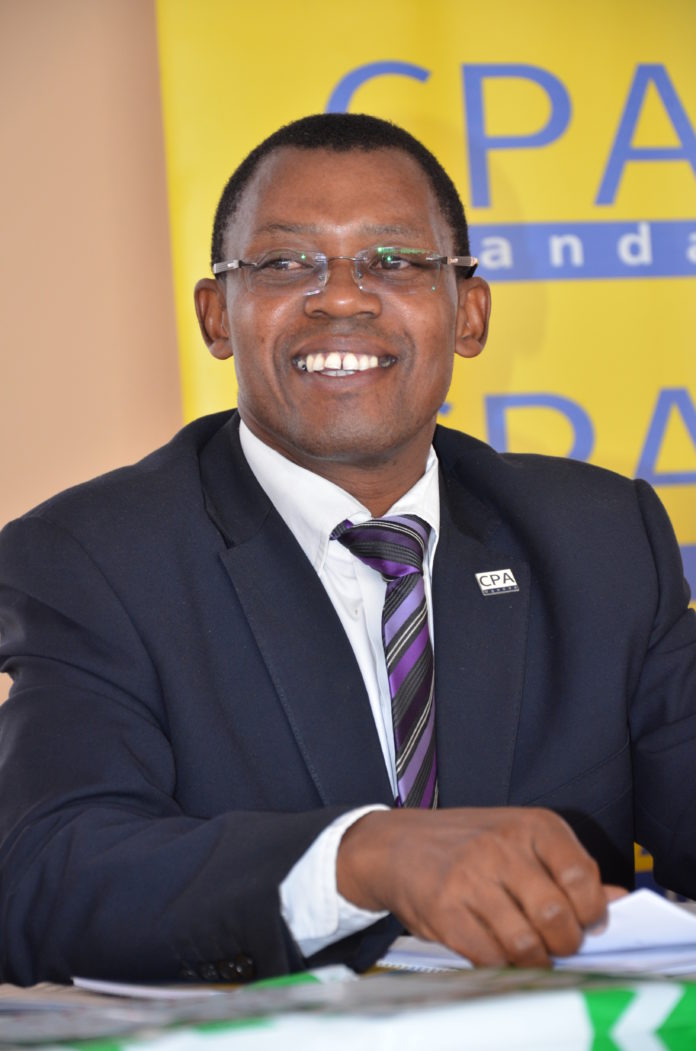
CPA CEO Derrick Nkajja

The Chief Executive Officer (CEO) of the Institute of Certified Public Accountants of Uganda (ICPAU) Derrick Nkajja has urged professional accountants to help Small and Medium Enterprises (SMEs) during the Covid-19 pandemic.

Speaking at the virtual release of the Certified Public Accountants examination results, Nkajja said professionals should provide business management ideas to SMEs facing financial crises due to Covid-19.

He said the development will save distressed businesses from the COVID-19 after effects.

The examinations were conducted from 4th to 8th October 2021 at seven different examination centers including Fort Portal, Kampala, Gulu, Mbale, Arua, and Nkozi. A total of 4,238 students attempted the October 2021 examinations.

“We appreciate the level of preparedness of these candidates,” said CPA Geoffrey Byamugisha, the chairperson of the CPA Examinations Board.

Byamugisha further said that with determination and preparedness, students can pass the CPA course papers at first attempt.

In 2021, at least 118 students completed the CPA course compared to 109 in December 2020. Of the 118 students, 64 are female while 54 are male.

Since the 1990s when the course first started, this has brought the total number of students who have completed the course to 4,113.

Meanwhile, small and Medium Enterprises (SMEs) registered 80% losses during Covid-19 pandemic, a new survey by Innovations Village has unearthed. According to the report, the majority of them made considerable losses because they lacked innovations to provide services beyond physical presence.

The report further notes that during Covid-19, consumers abandoned traditional retail shopping online apart from accessing food stuff traditionally in the market. According to the report, the survey says online is the thing following strict standard operating procedures of accessing retail shops put up by the ministry of health and risk of Covid-19 Infections.

Stories Continues after ad

Less than 10% of African countries to hit key Covid-19 vaccination goal

Covid-19 vaccine

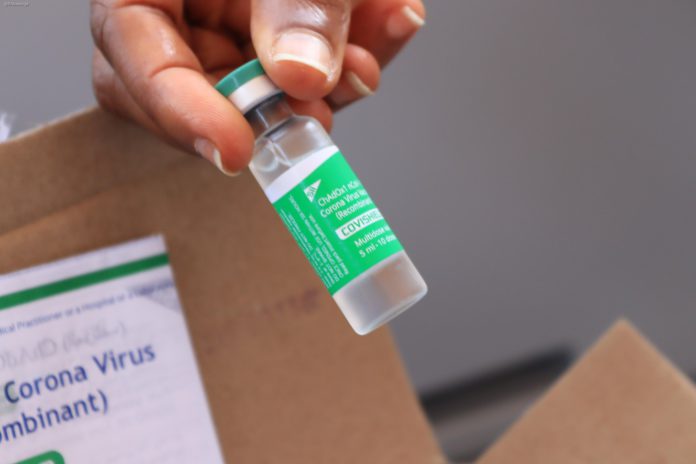
Just five African countries, less than 10% of Africa’s 54 nations, are projected to hit the year-end target of fully vaccinating 40% of their people, unless efforts to accelerate the pace take off. This comes as the Region grapples to meet rising demand for essential vaccination commodities, such as syringes.

Three African countries, Seychelles, Mauritius and Morocco, have already met the goal that was set in May by the World Health Assembly, the world’s highest health policy-setting body. At the current pace just two more countries, Tunisia and Cabo Verde, will also hit the target.

In addition, limited access to crucial commodities such as syringes may slow the rollout of COVID-19 vaccines in Africa. UNICEF has reported an imminent shortfall of up to 2.2 billion auto-disable syringes for COVID-19 vaccination and routine immunization in 2022. This includes 0.3ml auto-disposable syringes for Pfizer-BioNTech COVID-19 vaccination.

There is no global stockpile of the 0.3ml specialized syringes, which differ from the 0.5ml syringes used for other types of COVID-19 vaccines and routine vaccination. The market for 0.3ml auto-disable syringes is tight and extremely competitive. As such, these are in short supply and will remain so through at least the first quarter of next year.

Already some African countries, such as Kenya, Rwanda and South Africa, have experienced delays in receiving syringes.

“The looming threat of a vaccine commodities crisis hangs over the continent. Early next year COVID-19 vaccines will start pouring into Africa, but a scarcity of syringes could paralyze progress. Drastic measures must be taken to boost syringe production, fast. Countless African lives depend on it,” said Dr Matshidiso Moeti, World Health Organization (WHO) Regional Director for Africa.

The COVAX Facility is working to address this threat by securing deals with syringe manufacturers, and through better planning to avoid deliveries outpacing the supply of syringes.

In October to date, around 50 million COVID-19 vaccine doses have arrived in Africa, which is almost double what was shipped in September. COVAX, the global platform to ensure equitable access to vaccines, has delivered almost 90% percent of the vaccines deployed this month and has accelerated its shipments since July. However, at the current pace, Africa still faces a 275 million shortfall of COVID-19 vaccines against the year-end target of fully vaccinating 40% of its people.

Africa has fully vaccinated 77 million people, just 6% of its population. In comparison, over 70% of high-income countries have already vaccinated more than 40% of their people.

Countries still need to improve their readiness for COVID-19 vaccine rollouts. Forty-two percent of countries in the African Region have not yet completed district level plans for their campaigns, while nearly 40% have not yet undertaken intra-action reviews which are key to refining and improving their vaccination campaigns.

 “In Africa, planning must become much more granular. This way we can spot challenges before they arise and nip any problems in the bud. WHO is supporting African countries in developing, improving and implementing their National Vaccine Deployment Plans and continually refining their COVID-19 vaccine rollouts as they proceed,” said Dr Moeti.

WHO is conducting emergency support missions to five African countries to help support, speed up and improve their COVID-19 vaccine rollouts, with plans for missions to another 10 countries this year. WHO experts are working with local authorities and partners on the ground to analyze the reasons for any delays, and how best to address them. In South Sudan, authorities aim to ensure that the WHO mission will help the country meet its goal of achieving a tenfold increase in the daily COVID-19 vaccination rate, from 2 000 to 2 5000.

Nearly 8.5 million COVID-19 cases and more than 217 000 deaths have been recorded in Africa. In the week ending on October 24, there were more than 29 300 new cases, a drop of nearly 30% compared with the previous week. But 10 African countries are still in resurgence, including four with upward trend or high plateau: Gabon, Congo, Cameroon and Egypt. The Delta variant has been found in 41 countries, the Alpha variant in 47, and Beta in 43.

Stories Continues after ad

Travellers stranded for hours at Entebbe airport over delayed #Covid-19 test results

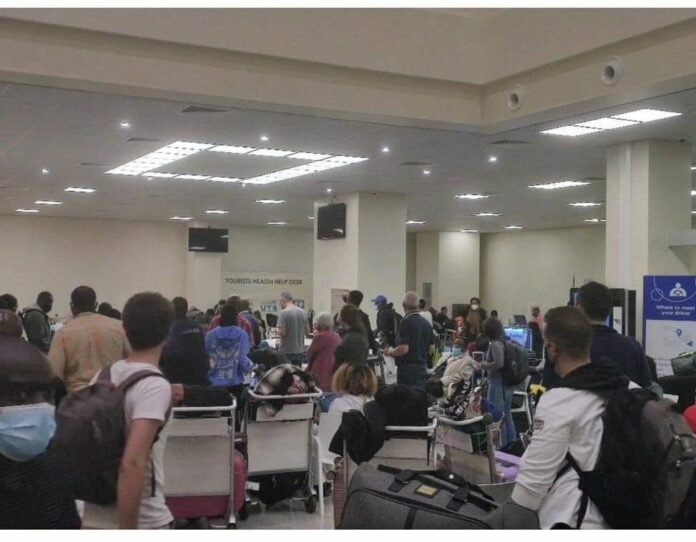
There is chaos at Entebbe International Airport as incoming passengers have been stranded for several hours due to the delay in receiving their Covid-19 test results.

Government made it mandatory to test everyone for Covid-19 entering the country through Entebbe International Airport, even for those who were fully vaccinated.

However the test results are taking close to 24 hours to be released to the travelers creating a bigger crowd of people at the airport raising concern.

Some passengers took to social media to share their frustration while at the airport while others asked authorities to look into the matter as airport management struggles for space to cater for a crowd beyond the airport’s capacity.

“Don’t come to Uganda by airport! People waiting all night to receive their Covid test results at the airport,” a one Philippe Breul posted on his page.

Health Ministry Spokesperson, Ainebyoona Emmanuel said that they are working around to address the delays in the testing process at the Entebbe International Airport.

“We are working around the clock to address the delays in the testing processes at the Entebbe International Airport. The mandatory COVID-19 testing for all in-coming travelers started today morning. We welcome all the feedback and challenges are being fixed,” he said.

Stories Continues after ad
Micho names Cranes team for Northern Regional Tour in Kitgum

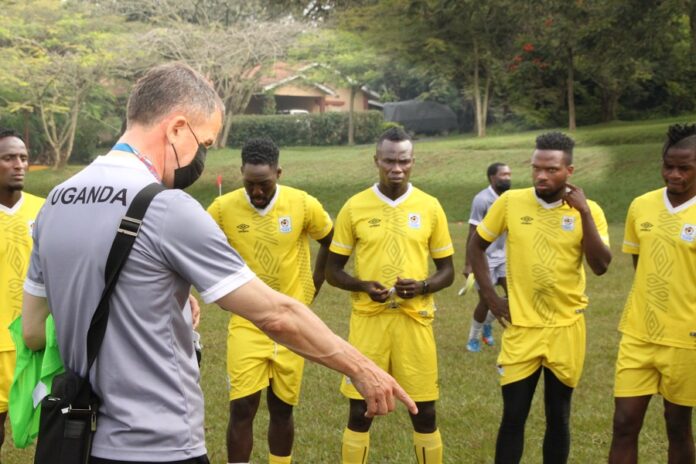
Micho during training

Uganda Cranes head coach Milutin Sredojevic has named a 23 man team for the Northern regional tour slated to be held on Thursday 4th November 2021.

The 23 man squad has locally based players in the StarTimes Uganda Premier League with three goalkeepers, seven defenders, eight midfielders and five forwards.

The tour is part of Uganda Cranes preparations for the final two games in group E of the 2022 FIFA World Cup qualifiers at home against Kenya on 11th November and away to Mali on 14th November 2021.

Last month, the Uganda Cranes played the Eastern region select team at the Mbale Municipal Stadium and won 1-0 courtesy of Joackiam Ojera’s goal.

Uganda Cranes main sponsors Airtel Uganda and partners Nile Special sponsor the regional tours.

Summoned Uganda Cranes team:

Goalkeepers: Joel Mutakubwa (Express), Alionzi Nafian (URA), Jack Komakech (Vipers)

Defenders: Ashraf Mandela (URA), Paul Willa (Vipers), Abdul-Aziz Kayondo (Vipers), Denis Iguma (KCCA), Enock Walusimbi (Express), Najib Fesali (URA), Livingstone Mulondo (Vipers)

Midfielders: Shafik Kuchi Kagimu (URA), Bobosi Byaruhanga (Vipers), Mahad Kakooza (Express), Bright Anukani (Vipers), Julius Poloto (KCCA), Ibrahim Orit (Vipers), Milton Karisa (Vipers), Rogers Mato (KCCA)

Forwards: Sadat Anaku (KCCA), Yunus Sentamu (Vipers), Steven Mukwala (URA), Rwothomio Cromwell (URA), Martin Kizza (Express)

Stories Continues after ad