Stanbic Bank
Stanbic Bank
19 C
Kampala
Stanbic Bank
Stanbic Bank
Home Blog Page 752

National Payment Systems Act: Will new regulations deliver growth in the Fintech sector?

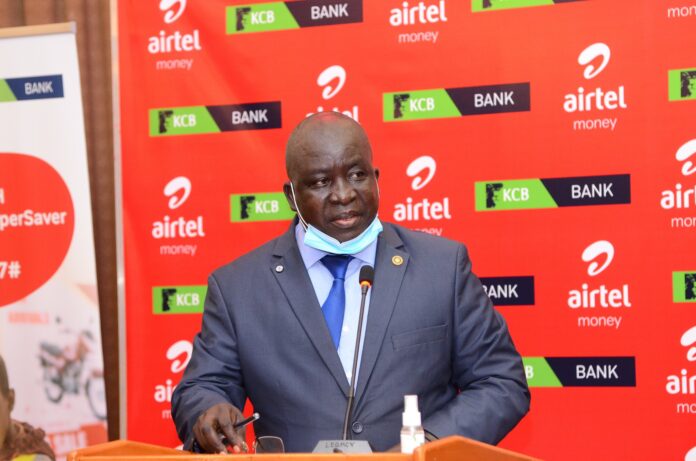
Mackay Aomu, Director National Payments Systems Department at Bank of Uganda

It’s been thirteen years since the Ugandan payments landscape was disrupted by the First mobile money system.

In 2009, MTN Uganda introduced the first mobile money transaction service and today, the sector has grown to more than 170 private players consisting of mobile network operators, commercial banks, non-bank financial institutions, third-party operators, Fintech innovators, and technology providers operating within the Fintech market.

At entry of the service in the market, main services offered were transfer of funds from one person to another. However, services have since evolved to include remote purchase of airtime, payments of utilities, school fees payments, taxes, insurance premiums, international remittances, savings and loans among other things. For years, the main concern for Bank of Uganda has been ensuring safety of customer’s funds transacted over mobile money platforms.

Mackay Aomu, Director National Payments Systems Department at Bank of Uganda says the time is ripe for some order in the sector hence the introduction of the National Payments Systems Act to regulate players and protect consumers from fraud activities.

Aomu likens the Act to a “plumbing system” for money in the economy that ensures effective transmission of monetary policies. The National Payment Systems Act provides regulations and guidelines that help to maintain the integrity of the sector.

Key take-outs of the Act 

Power of the Central Bank 

The Act provides for the Central Bank’s power to, among other things, oversee the operations of qualified systems and thereby ensure the safety of participants’ funds and the efficiency of payment systems.

Licensing 

The central bank has the power to grant licenses to applicants if they have satisfied the requirements necessary. It will enact licensing regulations providing eligibility and procedure of application, under the Licensing Regulations and the Electronic Money Regulations. So far Aomu says five licenses have been given to MTN, Airtel, Mcash, Micro pay and Interswitch. Other operators await their licenses too.

Consumer Protection 

The Act requires protection of the privacy of participants and non-disclosure of their information unless such disclosure is in accordance with the law, an order of court or consent of the participant or customer as per Section 59 of the Act. This requirement is in tandem with the recently passed Data Protection Act, 2019.

The Regulatory Sandbox Framework 

The National Payment Systems Act provides a regulatory sandbox framework. The purpose of the sandbox is to govern the manner in which a person or institution can obtain a limited access level to a payments system’s ecosystem for purposes of testing.

Aomu says this framework means that FinTechs have room to test their product on the market to ascertain its viability.  “Here, FinTechs are allowed to come into the market to test a product. If a fintech company is not successful in the first six months they can ask for an extension. When they succeed they can get a license,” he explained

Aomu believes that the National Payment Systems Act will not only benefit FinTechs but the entire ecosystem, BOU inclusive. He says success has already been registered by the agent banking model, a well-regulated service now facilitating 85 percent of transactions deposited. To him, mobile money services are enabling inclusion of the informal sector, an indication that their funds are available for intermediation.

The Executive Director of the Uganda Bankers Association, Wilbrod Owor says the Act is a welcome move because it brings order, oversight, rules, data security systems, operating systems, network systems and corporate governance.

“We are dealing with a lot of money going to a lot of people. The financial sector thrives on the integrity of its systems and therefore it’s important to mitigate any risk,” Owor said.

He added “FinTechs are huge and necessary partners in the current digital climate therefore as more enter the space, more frameworks are needed. FinTechs, like banks, have embraced the Act despite murmurs in some corridors. Although some think the Act will create barriers of entry but all=so stifle growth given its financial implications.”

Xente’s Founder and Chief Executive Officer, Allan Rwakatungu is currently undergoing one of the licencing processes required under the Act for one of his products.

 “Of course, it means more paperwork, a lot of it, and it takes time,” he says as he welcomes the move too. The FinTech has spent five months trying to meet regulations for one of its products.”

Regardless of this, Rwakatungu believes that this is a small price to pay for something as progressive as the Act. He says that at an early stage, startups may not see the necessity but once the company grows and gets big clients like government agencies and corporations, there will be a need for trust and assurance that money is safe and this is where regulatory frameworks become crucial.

Hellen Mukasa, the Legal Lab Lead at The Innovation Village appeals to FinTech startups to read the Act and ensure that they are compliant so as to benefit from it.

“Regulation of the startups in this sector is welcome because it means that the terms of engagement for all players involved are clear. There are benefits to adhering to the law and obvious heavy costs to operating outside regulatory frameworks especially in the financial sector which comes with risk.”

Mukasa said, “Overall, there is relief among the ecosystem players, with the enactment of the Act. Many startup founders feel that this advancement means that Uganda has embraced the digital economy. This kind of operating environment is expected to open up space for more innovations in the FinTech sector while enforcing safety through the regulations.

Stories Continues after ad

Medical Interns to call for nationwide industrial action

The medical Interns under their umbrella body, Federation for Uganda Medical Interns (FUMI) have declared a sit down strike over delayed and neglected implementation of presidential directive to increase medical interns’ pay.

Referring to the president’s directive issued on 9th August, Dr. Nabwire Mary Lilan, the FUMI president has petitioned  the office of the prime minister to increase the number of medical interns starting in July, 2021 and also progress on the implementation of the directive.

Dr. Nabwire expressed  disappointment about the conditions of internship training and gave a directive that medical interns are paid half of the recommended pay of the fully appointed officers in their respective professional cadres. That intern pharmacists and doctors get 2.5 million, then nurses and midwives get 2.4 million starting from July 2021.

However, this implementation has not yet yielded any achievement as the medical interns are still receiving their normal payments.

“To date there has been no response from the Ministry of Finance Planning and Economic Development to the implementation of this directive. Medical Interns received Shs 750,000 as their monthly pay for the months of July and August. Furthermore, we have reliably been informed that Ministry of Finance Planning and Economic Development released the usual amount for this new quarter and the Ministry of Health plans to pay Shs 940,000 gross pay, (750,000 UGX net pay) to the medical interns for the month of September as this is what they received from the Ministry of Finance,” the letter reads.

The letter expresses solidarity of the interns to President Museveni’s commitment to increase their salaries. And the interns are willing to categorically distance themselves from any institution or and any individual who seems to slow down the government’s program.

The president’s lack of official communication from the Ministry of Finance regarding the implementation of the directive has not only limited the medical interns’ choices but has also cultivated untold demotivation and doubt among them countrywide

“Dear Hon. Minister of Finance, medical interns are a valuable asset and are critical to the Ugandan health system, as we are very dedicated to offering health services to our patients 24/7 and it’s only appropriate that issues concerning our welfare should be addressed with the much needed attention and urgency and the president’s directive respected,” the letter notifies.

“In light of all the above, medical interns nationwide regret to inform you that we will be laying down our tools with effect from 6th November, 2021 and stay home until the president’s directive is respected and implemented,” the letter emphasizes.

Stories Continues after ad

Ugandan innovators to roll out Zofi Cash platform advancing money to salaried employees

Zofi Cash platform launch

Ugandan innovators are set to roll out the Zofi Cash platform that advances money to salaried employees in Kenya, Tanzania, Rwanda and Ghana.

The platform enables employees to take care of financial emergencies that can’t wait for payday which is normally at the end of the month. With Zofi Cash, the Employees can request for Salary advances once need arises and upon approval the advance can be withdrawn from the Zofi Cash App to the employees’ mobile wallet.

Zofi Cash is paid at the end of the month with as low as 3% fee based on the days employees’ request for the advance before payday.

According to Paul Kirungi, Founder and CEO Zofi Cash, all around the world, the key driving factor behind personal development and growth is financial inclusion. “However, the question that we have ignored for decades is what kind of financial inclusion we need. The type of inclusive finance we are focusing on at Zofi Cash is income/ earned wages. If someone doesn’t qualify for a loan facility in the bank, they should at least have early access to wages they have made. Our only goal is to make every day a payday.”

While speaking at the launch, Board Chairman, Mr. Segirinya Hannington, noted that Zofi Cash is on a journey to change the landscape of financial inclusion because it’s the best path to economic development for our people and the nation.

According to CK Japheth, Founder of the Innovation village, Zofi Cash is a solution for all because it answers technologically advanced gaps to make financial processes more efficient by disrupting traditional methods to establish long-term solutions which answer individual financial needs in all economic conditions.

“Today’s milestone puts Zofi Cash among Africa’s top fintech platforms for the future geared towards building a more inclusive financial system responsive to people’s needs,” he said.

The App was rolled out in Uganda targeting to start operations in Kenya, Tanzania, Rwanda and Ghana by 1st December 2021.

Stories Continues after ad

Ssebulime Murder: Court, police dodge MP Nantaba and body guard’s testimonies before sentencing Cpl SSali

Minister Nantaba and her guards

Kayunga district Woman MP Aida Nantaba has revealed that Court and police dodged her testimony before conviction and sentencing of Cpl Ssali David, a police officer who killed Ronald Ssebulime.

On Monday, Mukono High court judge, Henry Kaweesa Isabirye abruptly convicted and sentenced Cpl Ssali David to 20 years in prison for extrajudicial killing of Ronald Sebulime, the prime suspect in the attempted murder of Kayunga district woman MP Aida Nantaba. The 46-year old Police Officer attached to Naggalama Police Station was convicted of murdering Ssebulime on March 24, 2019 at Nagojje Trading Center.

The former minister said the police officer was convicted and sentenced at a stage of cross examination of witnesses. She said she was on Tuesday (19th October 2021) meant to appear before court to narrate her ordeal about what transpired on the fateful day when Ssebulime was gunned down.

“The abrupt conviction and sentencing was simply the short cut to avoid my testimony, that would expose Police’s (Ssali’s) and Sebulime’s dark mysterious agenda. I know they could not stand my testimony. It was going to bring out evidences which the mafias couldn’t stand,” she told Eagle Online Reporter adding that court and police dodged her testimony and that of her bodyguard before the sentencing of the Cpl Ssali.

She said the State Attorney did not want her evidence in Court, including the recording, the changed photos of the bike/ exhibit in their custody and sundry.

Nantaba insisted that police should simply look through Ssali’s phone log to know who ordered Ssebulime’s extrajudicial execution, but somehow this did not form part of the state’s evidence. She said the officer was sentenced before revealing who really ordered him to kill Ssebulime.

According to court, the accused changed his plea of not guilty after noticing overwhelming evidence against him from the investigating officers.

In a recorded voice call discussion between Ssali and Nantaba obtained by Eagle Online, Ssali said he was deployed by District Police Commander (DPC) of Naggalama police station after Nantaba had just registered a complaint of assassins who were purported to be trailing her.

Ssali said they were later given police patrol 999 and the driver under the commander known as Afande Bamuzibire and set off for a deadly mission in Nagojje off Kampala- Kayunga highway.

Police later through its mouthpiece Fred Enanga acknowledged Ssebulime was illegally killed after days of denying. Enanga apologized for the earlier denials and said that police patrol in the area had told their superior lies.

Stories Continues after ad

Police officer falls off truck transporting arrested NUP Councilors

Officer

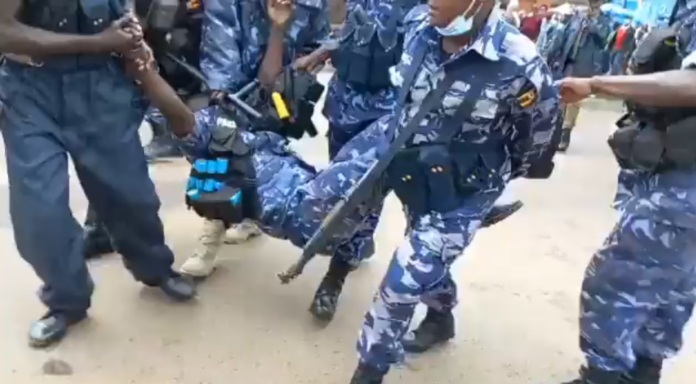
A police officer clad in Field Force Unity (FFU) uniform has fallen off a patrol truck transporting the National Unity Platform (NUP) councilors who had gone to forcefully reopen the renovated Old Taxi Park.

Councilors who included Farida Nakabugo, Moses Kataabu and other individuals were arrested earlier today for among other flaunting Covid-19 guidelines and holding illegal assembly. At the arrest, Farida could not fit in the mobile detention truck and thus police failed to lock its door.  One of the officers decided to ride on the swinging door in a bid to stop suspects from escaping.

As the driver turned on Namirembe road, the officer fell off the truck and lost consciousness. His colleagues however rushed him to an unknown health facility.

Yesterday, Kampala Capital City Authority (KCCA) postponed the reopening of Old Taxi Park. “KCCA wishes to inform the general public and other key stakeholders that the Old Taxi Park will not be reopened tomorrow (today) 20th October, 2021 as earlier scheduled,” KCCA said in a statement.

Last month, KCCA said it will open the park on October 20, 2021 after renovating administration offices, fencing the park, and demarcating stages.

On May 7 2020, KCCA embarked on works that involved drainage improvements, parking area and embankment construction and beautification of the park.

In 2018 KCCA received a Shs 3 billion grant from the government of Netherlands for redevelopment of Old Taxi Park. The proposed redevelopment of the Old Taxi Park is linked to the just completed Urban Transport Master Plan where KCCA plans to provide residents of Kampala with fast and reliable public transport services by 2040.

The renovated Taxi Park is expected to increase the economic potential of more than 25,000 people who work in this area. This will benefit passengers, taxi drivers, conductors, food vendors and small business owners.

Stories Continues after ad

Gov’t releases Shs5.8t for second quarter of FY 2021/22

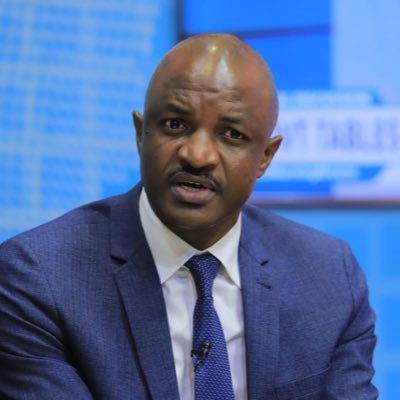
Ramathan Ggoobi, the Permanent Secretary, Ministry of Finance

Government has released a total of Shs 5.8 trillion for quarter two expenditure. This represents 25.5 per cent the approved Budget (excluding External Financing, Appropriation in Aid and Public Debt).

According to Ramathan Ggoobi, the Permanent Secretary in the Ministry of Finance, the release for quarter two FY 2021/22 has prioritised expenditure in; Health and Social Protection, Agriculture and Industry, Governance and URA, as well as Judiciary and Legislation.

In Health Institutions and Social Protection, Shs294.69 billion has been allocated and the funding is mainly to cater for: National Medical Stores (Shs120.73  billion including essential medicines; Ministry of Health (Shs50.20 billion); Ministry of Gender, Labour and Social Dev (Shs42.45 billion) including SAGE (Shs32.73 billion); and Referral Hospitals(Shs34.8 billion).

Shs184.75 billion has been allocated to Agriculture and Industry. The funding is mainly to cater for: MAAIF (Shs36.4 billion); Min.of Trade, Industry and Cooperatives (Shs35.6 billion), NAADs (Shs31.43 billion); Uganda Coffee Development Authority (Shs22.8 billion) NARO (Shs22.1 billion and NAGRIC (Shs19.8 billion).

Governance, Revenue Collection has been allocated Shs437.10 billion and funding is mainly to cater for: MoFPED (Shs254.9 billion including the funding for support to SMEs and capitalisation of UDB. URA (Shs82.1 billion) and National Citizenship and Immigration Control (Shs28.9 billion).

Judiciary, Legislature, EC, Missions abroad – Shs256.8 billion. The funding is mainly to cater for: Parliament (Shs140 billion. Judiciary Shs74 billion and Electoral Commission (Shs37.4 billion).

Under infrastructure, the key releases were made to UNRA (Ushs303 billion), Ministry of Energy and Mineral Development (Ushs68.81 billion), Ministry of Works and Transport (Shs43 billion) and Ministry of Water and Environment (Ushs 170 billion) to cater for cater for accumulated certificates.

According to the ministry, performance so far, this financial year indicates that the economy has continued on its recovery path following the partial reopening of the economy as shown by high frequency indicators of economic activity.

The exchange rate has remained relatively stable. However, the shilling has been appreciating, averaging 3.530.6/USD in September due to increased foreign exchange inflows.

Inflation has remained low and stable. Headline and core inflation averaged 2.3 percent and 3.1 percent respectively for the last 12 months to September 2021. However, inflation is expected to gradually rise through 2021, but is projected to remain below the 5 percent target.

Ramathan Ggoobi said government will continue to provide support to the private sector through interventions like the Small Business Recovery Fund to ensure continued recovery. This Financial year the economy is projected to grow at 3.8 percent above the outturn of 3.4 percent registered in FY 2020/21.

The total Budget excluding debt, external financing amounts to Shs22.76 trillion, and to-date Shs12.074 trillion has been released which amounts to 53 percent of the Approved Budget. Shs5.6 trillion was released in the first quarter.

Stories Continues after ad

Uhuru lifts countrywide curfew for Kenya

Security checks vehicles-in Kampala.

President Uhuru Kenyatta has ordered the lifting of the dusk to dawn curfew.During Mashujaa Day Celebrations at Wang’uru stadium in Kirinyaga County, Uhuru said the move follows a review of the containment measures by the national response team and the National Security Council

He said it had been established that surge of infections had decreased to below two per cent in the last two weeks.

He said the council will however continue to monitor the situation across the border before full reopening of the economy.

Uhuru said the Interfaith council, health workers and security personnel had done a commendable job in ensuring that the containment measures put in place are adhered to.

He said currently over 5 million Kenyans have been vaccinated against the disease.

Uhuru said following the review, the number of those attending worship services across the country has been revised upwards from the current one third to two-thirds of the congregation.

“I want to thank all of us for being your brother’s keeper.… we are not yet out of the woods but I order and direct that the nationwide dusk to dawn curfew be vacated immediately,” Uhuru said.

The President had hinted at lifting the curfew that was imposed in 2020 as one of the cotianment measures against the spread of Covid-19.

Uhuru was responding Karatina residents who had urged him to lift the dusk to dawn curfew, saying it had made life difficult.

“We will look at it, I’m working, and very soon, you will hear it, I do not want to speak too early but very soon,” he said amid cheers.

When President Uhuru Kenyatta last updated Kenyans on the status of the coronavirus on November 4, last year, he proclaimed a 60-day night curfew restricting movement from 10pm to 4am. That curfew was to end on January 3,2021.


Stories Continues after ad

Col Nakalema resurrects murder case against Mulago hospital medic

Col. Nakalema

Mulago Referral Hospital medical doctor Dr. Matthew Kirabo is facing charges of killing his former girlfriend Desire Mirembe on July 6, 2015.

It’s alleged that Dr. Kirabo killed Mirembe while he was still a student of Makerere University after the couple reportedly conflicted in their love affair. The head of State House Anti-Corruption Unit Col Edith Nakalema has resurrected the murder case that has been forgotten for six years.

Both were second-year Makerere University School of medicine students and Mirembe was then aged 19. 2015 reports show that Mirembe was allegedly killed by Dr. Kirabo who dumped her body in Mabira Forest in Buikwe District.

In 2015 Kirabo was arrested, and on November 30, the same year was committed to the High Court for trial. However, the court granted him bail and for yet unknown reasons the hearing of this case had become stale and since then the hearing dates had never been fixed.

However, following the intervention of Col Nakalema, Principal Judge Flavian Zeija last week set the date for the hearing of the case on Wednesday.

The date was set after a meeting Col Nakalema held with the complainant (deceased’s father ), Zeija and the Director of Public Prosecutions.

“When I met the parent, I obviously apologized for the delay. Justice delayed is justice denied. It has taken quite a while, even if someone is innocent, or guilty, you need to have the case heard so that it is determined. However, apologizing for the delay does not mean that I’m condemning Kirabo because it is a trial and the facts as to whether Kirabo committed the offence or not will have to be examined,” Zeija said.

Emmanuel Musoke (main complainant) also Mirembe’s father alluded that the suspect continued with his studies, graduated and is employed as a medical officer at Mulago Hospital yet his daughter is in the grave and justice had never been served.

Dr. Kirabo had a program of pursuing further studies in the US and the only reason as to why he did not fly out was because his passport was still being held by the High court.

Mirembe used to stay at Akamwesi Hostel in Wandegeya and before this death she texted her mother who lives in the US informing her that she had left for Jinja with a stranger however she was scared. That was the last message her mother received from the daughter before she learned of her death.

After much pressure on Kirabo who was then a student, he revealed where Mirembe’s body was (in Mabira forest) and he also confessed to murdering his uncle, a lecturer at Makerere University.

Stories Continues after ad

MPs inspect schools ahead of Shs324b loan approval

MPs inspect schools

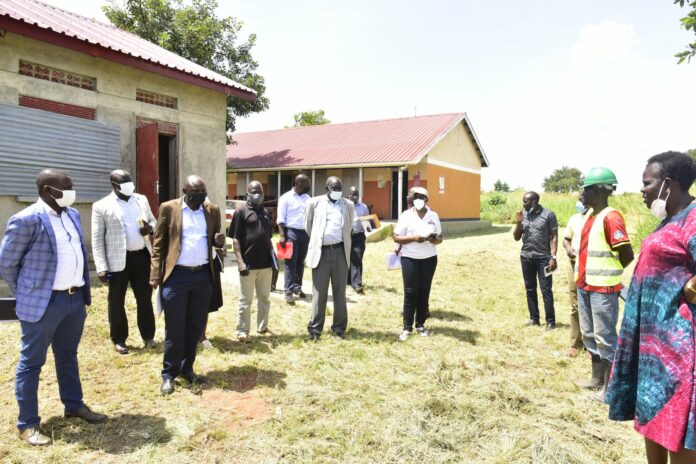
Parliament’s Committee on National Economy has embarked on a tour of Uganda Inter-governmental Fiscal Transfer Reform (UgIFT) Programme funded seed secondary schools as a benchmark for approving a further US$90 million (Shs324b) loan to build more schools.

Led by Chairperson, Hon John Bosco Ikojo, the Committee is assessing the absorption of the UgIFT facility to inform its recommendation to Parliament on whether the request to borrow the US$90 million loan from the International Development Association of the World Bank.

Under the Uganda Secondary Education Expansion Project (USEEP), government intends to use the US$90 million loan to construct a school in 108 sub-counties across the country. This is in line with its policy to have a government school in every sub-county in the country.

The committee visited Maaji and Lakwana Seed Secondary Schools in Adjumani and Omoro Districts respectively, where delays by contractors and centralisation of the tendering process being the main frustrations of local leaders.

In Maaji Seed Secondary School, despite releases by the Ministry of Education and Sports for the quarter, the contractor is stuck, with local leaders saying they abandoned their sites for apparent lack of funds to continue with works, since payment is based on works completed.

“Because of these perennial delays, the district should give the contractor up to December to complete constructions, and if they fail, the district should not extend the contract since the contractor will have failed,” said MP Ikojo.

Mr Ramadhan Ikule, a director at Achor United Traders Limited, who were awarded the tender to construct the school, said since last payments were remitted in June, they have been having financial stresses.

“The project is paid according to certificate [of phased completion]; the last payment we had was in June,” he said.

But MP Moses Attan Okia (FDC, Soroti City East) blamed contracts tendered at the centre for the challenge, which he said overwhelms contractors due to the numerous sites they work on, overstretching their capabilities.

For decentralization to properly function, MP Attan recommended that all such contracts be an entirely local government affair.

At Lakwana Seed Secondary School in Omoro District, officials said the contractors have been perennially absent since the death of one the company’s director, a move the legislators condemned since the project is not awarded to an individual, but a distinct legal entity capable of acting in its own name, whether or not its founders are living.

With payments of over Shs1.2 billion made to the contractor out of Shs1.8 billion, MPs and district leaders expressed concerns about the prospects of completing the project within the required timelines.

Omoro District Vice Chairperson, Stephen Opio said contractors are frustrating and unsupervisable because they don’t owe it to the Districts that they are executing the contracts.

Rule 155 of Parliament’s Rules of Procedure require the Committee on National Economy to assess the absorption of previous loans as a precondition for voting more funds to similar projects.

In a brief to Parliament, Finance Minister, Hon Matia Kasaija said projections are that 113,000 students will gain access to newly built classrooms and school facilities, while 77,000 others will go to school courtesy of new schools constructed.

Stories Continues after ad

Church of Uganda says it hasn’t leased Bubulo Girls land, warns fraudsters

Part of the contested school land that is fenced off.

Church of Uganda has warned fraudsters against leasing Bubulo Girls High School land.

Parents of Bubulo Girls in Manafwa district petitioned the leadership of Church of Uganda over the continued leasing of land by school board members and officials of Mbale Diocese.

The parents protest what they call illegal by a section of board members and church officials to lease seven acres to private investors at the expense of the school.

“We have seen an advert by a one Acom Anna Mary, Head teacher/Secretary to the Board of Bubulo Girls High School, dated 8th October 2021, purporting to lease out the captioned land. The church Land Policy vests powers of approving use of church land in the Registered Trustees of the Province of Church of Uganda,” reads part of the letter from Rev. Canon William Ongeng, the Provincial Secretary to the Bishop Mbale Diocese, Rev Patrick Gidudu.

The letter reminds the Bishop that land use decisions at diocese level shall be approved by the Diocesan Council which shall recommend it to the Registered Trustees of Church of Uganda. In addition, the Registered Trustees shall appraise land proposals of the business nature from dioceses for commercial, financial and economic feasibility.

Further, all land transactions shall be prepared in the names of Registered Trustees of church of Uganda and church commissioners as the Executors.

The board of trustees established a standing committee to review all land use proposals after which it makes a report for consideration by the full Board of Trustees.

A  Board of Trustees standing committee is scheduled to meet on 26th October 2021.

“You are advised to submit the proposed lease request of the above land to the chairman of the board of trustees for possible consideration by the standing committee during the above or other subsequent meeting,” the letter reads.

Bubulo Girls High School is one of the Church of Uganda traditional founded school in Manafwa which was formerly part of the greater Mbale district. The land under contestion was a donation from the community to the church.

Stories Continues after ad