Stanbic Bank
Stanbic Bank
29.6 C
Kampala
Stanbic Bank
Stanbic Bank
Home Blog Page 756

Fifteen African countries hit 10% #Covid-19 vaccination goal

#Covid-19 vaccine

Fifteen African countries, nearly a third of the continent’s 54 nations, have fully vaccinated 10 percent of their people against Covid-19.

The global goal of fully vaccinating 10 percent of every country’s population by 30 September was set in May by the World Health Assembly, the world’s highest health policy-setting body. Almost 90% of high income-countries have met this target.

Seychelles and Mauritius have fully vaccinated over 60 percent of their populations, Morocco 48 percent and Tunisia, Comoros and Cape Verde over 20 percent . Most of the African countries that have met the goal have relatively small populations and 40 percent are small island developing states.

All these countries have enjoyed sufficient supplies of vaccines, and many could access doses from separate sources in addition to those delivered through the COVAX Facility, the global platform to ensure equitable access to vaccines. Half of the 52 African countries that have received COVID-19 vaccines have fully vaccinated just 2 percent or less of their populations.

“The latest data shows modest gains but there is still a long way to go to reach the WHO target of fully vaccinating 40 percent of the population by the end of the year. Shipments are increasing but opaque delivery plans are still the number one nuisance that hold Africa back,” said Dr Richard Mihigo, Immunization and Vaccines Development Programme Coordinator for the World Health Organization (WHO) Regional Office for Africa.

Nine African countries, including South Africa, Morocco and Tunisia, had reached the 10 percent goal at the beginning of September and another six managed to sprint ahead to reach the target this month due to rising vaccine deliveries.

Twenty-three million COVID-19 vaccines arrived in Africa in September, a ten-fold increase from June. Yet just 60 million Africans have been fully vaccinated so far and 2 percent of the more than 6 billion vaccines given globally have been administered on the continent.

COVAX is working with donors to identify the countries that can currently absorb large volumes of vaccines and send them their way and plans to strengthen its support for countries that do not have other sources of vaccines.

WHO has assisted 19 African countries in conducting intra-action reviews, which analyse their vaccination campaigns and offer recommendations to improve them. The reviews show that uncertainty around deliveries has been a major impediment for many countries.

By deploying a team of international experts, WHO is providing targeted support to a select group of countries to identify and resolve bottlenecks in their COVID-19 vaccine rollouts, including working with local authorities and partners to identify and address the root causes of challenges to administering vaccines. WHO is also working to share crucial lessons and best practices among African countries to help them accelerate their vaccine rollouts.

COVID-19 case numbers in Africa dropped by 35 percent to just over 74 000 in the week to 26 September. Almost 1800 deaths were reported across 34 African countries in the same period. The Delta variant has been found in 39 African countries. The Alpha variant has been detected in 45 countries and the Beta in 40.

“Despite the declining case numbers we must all remain vigilant and continue to adhere to the proven public health and safety measures that we know save lives, such as wearing a mask, washing our hands regularly and physical distancing, especially while vaccination rates remain low,” said Dr Mihigo.

Dr Mihigo spoke during a virtual press conference today facilitated by APO Group. He was joined by Dr Pamela Smith-Lawrence, Acting Director, Health Services, Ministry of Health and Wellness, Botswana, and Mrs Fortunate Bhembe, Deputy Director of Pharmaceutical Services, Ministry of Health, Kingdom of Eswatini.

Also on hand to answer questions were Dr Fiona Braka, Team Lead, Emergency Operations, WHO Regional Office for Africa, and Dr Thierno Balde, Regional COVID-19 Deputy Incident Manager, WHO Regional Office for Africa.

Stories Continues after ad

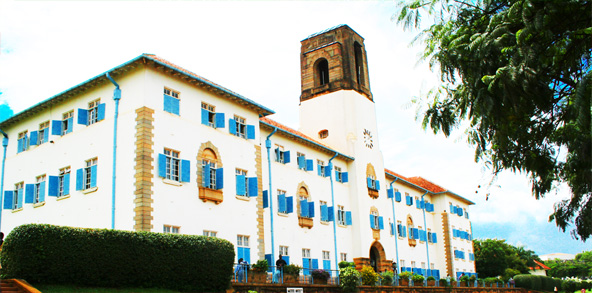
Chinese Embassy donates Shs55m for reconstruction of Makerere University main building

Makerere Main Building before it burnt down

Makerere University Vice Chancellor, Prof Barnabas Nawangwe is all smiles after receiving a fat cheque of Shs55 million from the Embassy of the People’s Republic of China, a contribution towards the reconstruction of the University’s main building that was engulfed by fire last year.

“I wish to thank the Embassy of the People’s Republic of China for the very generous contribution of UGX 55 million for the reconstruction of the Makerere Main Administration Building. Thank you very much indeed,” Prof Nawangwe tweeted.

Earlier this year, findings regarding the fire were recorded in the National Building Review Board report of November 2020 and it was revealed that the fire started at around 11:30 pm on September 19th, 2020 in Room 315 which is also the University Bursar’s office.

It should be recalled that 31st August 2021, the Ministry of Finance, Planning and Economic Development released Shs 21 billion for the reconstruction of the Makerere University Ivory Tower building. However, no report has been made to show how much has been gotten from other fundraisers.

A cabinet resolution last month advised that all key elements will be retrieved and stored in the museum called the main building museum 2020.

Upon construction, the management of the university was tasked to ensure that all CCTV cameras in the building are fully functional and monitored from the central surveillance room at all times.

According to the new plan, the main hall which was not affected by the fire will remain. However, it will be refurbished and equipped with modern technologies.

Stories Continues after ad

Oil and Gas Summit: Absa Bank urges SMEs and local companies to access financing to invest in the sector

Oil pipeline

Absa Bank Uganda has urged Small and Medium Enterprises (SMEs), Local and multi-International companies to have bankable proportions to access financing to invest in the oil and gas sector in the country.

Recently, Uganda and Tanzania signed a final oil deal that will see the construction of a US$3.55 billion-crude export pipeline that would pump Ugandan oil for export. Uganda’s oil is expected in 2025.

The 1,445 km-project will run from Uganda’s western oil rich district of Hoima, where crude reserves were discovered in 2006, to Indian Ocean seaport of Tanga in Tanzania. The East African Crude Oil Pipeline (EACOP) will create over 15,000 direct jobs and temporary ones will peak to 30,000.

Mrs. Irene Mutyaba Kabira, the Corporate Banking Director at Absa Bank said the biggest challenge that most of the companies face is collateral. However the banking system has since evolved and the financial sector is putting forward a number of structured conditions that can be able to address some of the pertinent issues that have been raised.

Speaking during the 6th edition of the Uganda International Oil and Gas Summit held under the theme: Driving the final steps in commercialization and production, Mrs Kabira said sector players can now access financing from a number of financial service providers including Absa Bank for putting up Silos, farm equipment, vehicles.

 “In order to benefit from the Oil and gas sector, manufacturing companies need to have capacity to produce, supply to meet demand. The real winner in the oil and gas sector will be those companies that have taken time to prepare how best they would like to get over it,” she said.

In tandem, she urged companies to create a corporate governance system that will drive data decision entities in order to be able to get money that they need to invest in their projects.

“Companies should look at joint ventures. When you look at the magnitude of the contract running the sector, companies need to step back and think of other entities where they can bring the muscle together and win bigger contracts,” she said.

“There are a lot of Private Equity Funds in the market at the moment. We need to try and find out more information on how we can benefit from some of them and prepare ourselves to produce to scale in terms of the oil and gas sector,” she said.

Stories Continues after ad

Uganda to increase coffee exports to Saudi Arabia

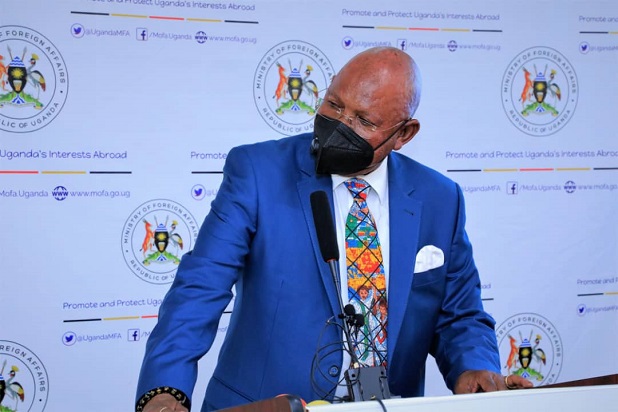
Jeje Odongo addressing participants at the Expo

Uganda’s Minister of Foreign Affairs Gen Abubakhar Jeje Odongo has reiterated Government of Uganda’s commitment to increase Coffee Exports to the Kingdom of Saudi Arabia.

The Minister made these remarks on September 29th 2021, while presiding over the official opening ceremony of the first Uganda-Saudi Arabia Expo under the theme, “The Uganda Coffee industry perspective: farming, processing and exports”.

The Expo is aimed at increasing the quantities of exported coffee and coffee products from Uganda to Saudi-Arabia.

The one day Hybrid event was organized by the Ministry of Foreign Affairs, the Ugandan Mission in Saudi-Arabia in conjunction with, the Council of Saudi Chambers, Uganda Coffee Development Authority (UCDA).

Minister Odongo commended the efforts of Uganda Ambassador to Saudi Arabia Isaac Ssebulime and the staff of the Uganda Embassy in Riyadh for organising this event noting that this is in fulfillment of the Ministry of Foreign Affairs deliberate policy to pursue Economic and Commercial Diplomacy in a bid to strengthen bi-lateral trade with the Kingdom of Saudi Arabia.

Gen Odongo further highlighted that Uganda’s export of coffee and coffee to Saudi Arabia is US 419,000 dollars and noted that this figure needs to improve because Saudi Arabia is the fastest growing Coffee market in the Middle East.

The function was capped up with a coffee tasting ceremony conducted by Uganda Coffee Development Authority (UCDA).

He informed the gathering that President Yoweri Kaguta Museveni directed the Uganda Coffee Development Authority to accelerate the coffee production from 3.5M 60kg to 20M by 2025.

“The Saudi Arabia market is projected to grow at a Compounded Annual Growth Rate (CAGR) of 6.2 percent during 2021- 2027 which will present an opportunity for business men and women from both Countries,” Odongo noted.

In his opening remarks, Ambassador Ssebulime Biruma, Uganda’s Ambassador to Saudi Arabia noted that this was a historical occasion for the first time, businessmen from the Kingdom of Saudi Arabia and the Republic of Uganda have convened to chart ways of increasing trade between the two Countries.

The Ambassador further paid tribute to King Salman bin Abdulaziz, the Custodian of the Two Holy Mosques and Prince Mohammed bin Salman, the Crown Prince and President Yoweri Kaguta Museveni for their leadership which has guaranteed peace in the two countries and ensured continued warm and cordial relations.

He noted that it is because of their capable leadership that discussions to promote business and other matters of socio-economic transformation are being held.

Ambassador Ssebulime appreciated the Minister of Foreign Affairs, Gen Jeje Abubakhar Odongo for accepting to grace the function and officiating the Opening ceremony as well as reiterating Government of Uganda’s commitment to increase coffee exports to the Kingdom of Saudi Arabia.

He also commended the President, the Secretary General and Staff of the Federation of Saudi Chambers for the partnership, encouragement and support for this project to increase trade and he noted that this will initiate arrangements to create the Saudi-Uganda Business Council which will be the ultimate vehicle to drive business between two brotherly states.

The Chief Executive Officer of Inspire Africa Coffee, Nelson Tugume who represented the private sector appreciated the Ministry of Foreign Affairs for opening up Uganda’s missions to the private sector in a way of promoting Commercial Diplomacy.

The event registered remarkable success with a virtual attendance of over 500 participants and informative presentations were made by the Executive Manager, International Relations who represented the Federation of Saudi Chambers, Dr. Ian Clarke representative of Uganda Coffee Exporters, and a Representative from the Islamic Development Bank to mention but a few.

It was concluded with a coffee tasting and cupping ceremony conducted by the Uganda Coffee Development Authority (UCDA) for participants to enjoy freshly brewed Ugandan coffee.

Stories Continues after ad

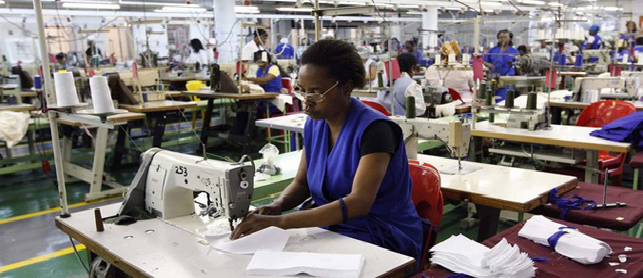
Gov’t stays taxes on fabrics and garments

textiles

The Minister of State for Trade, Hon. Harriet Ntabazi has told Parliament that government stayed imposition of the specific duty rates of USD 3 and USD 3.5 per kilogramme for fabrics and garments respectively.

Ntabazi made this revelation while presenting a ministerial statement on the-would have been strike by textile dealers in Kampala due to the decision by Uganda Revenue Authority (URA) to use textile weight for taxation.

“Government considered the traders’ concerns and revised its earlier position on the remaining 47 products (tariff lines) and stayed application of the specific duty,” she said.

Ntabazi added that after a meeting with the traders in the presence of the Finance Minister, they agreed to deal with the traders concerns. The issue had been earlier raised by the Kasilo County MP, Hon Elijah Okupa, who then noted that traders were unhappy with paying taxes per kilogramme when fabrics and garments do not weigh the same.

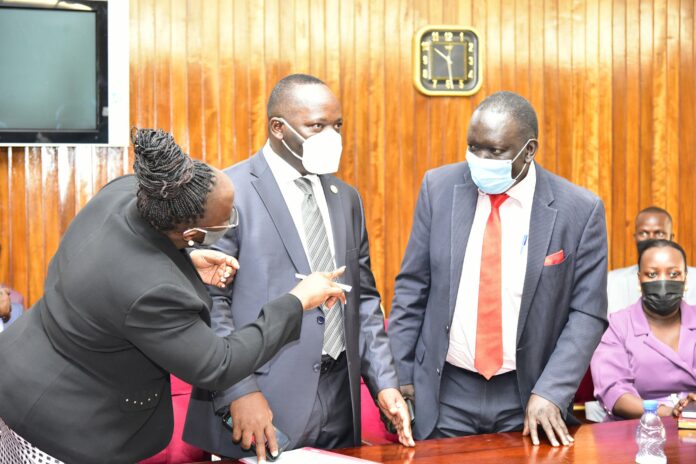
Speaker Jacob Oulanyah was concerned about the provisions in the law which relate to taxation.

“Did they amend the laws mid-term without Parliament? These are points we need to know; we are in the budget process, why would you break the financial year into two regimes? Why don’t we review it with the budget so that we don’t disrupt the market,” he asked.

The State Minister for Finance, Hon Amos Lugoolobi said that they had to choose one line of tax because there was a stalemate in the industry and containers were stuck in customs.

He added that after the specified period, when the law was passed some goods were in transit.

“We saw that many traders had already ordered for their goods; we thought this time would enable them to clear their goods that were already in transit. After that period, we shall have a review with them to see if we should keep the 35 per cent or keep the US$3 or US$3.5 per kilogramme,” he said.

Stories Continues after ad

Court remands MPs Ssegirinya, Ssewanyana on new murder charges

MPs Ssegirinya and Ssewanyana

Kawempe North MP Muhammad Ssegirinya and Makindye West Legislator Allan Ssewanyana have been remanded to Kigo Prison.

The two were re-arrested moments after being released from Kigo government Prison. Appearing before Masaka Chief Magistrate Charles Yeitesi, they were slapped with new charges of murder allegedly committed at Kissekka village in Lwengo district.

Prosecution avers that that Ssewanyana, Ssegirinya and others still at large 2nd August 2021 at Kisekka B Village, Kankamba Parish, Kisekka Sub- County in Lwengo district with malice aforethought killed Bwanika Joseph.

Last week, Masaka High Court Judge Nakintu Victoria released Ssegirinya and his counterpart Ssewanyana on Shs 20 million cash bail each and bonded each of their sureties with Shs 100 million non cash.

They are accused of terrorism contrary to section 7 (1) and (2) (d) and (d) of the Anti-Terrorism Act 2002 in count one, aiding and abetting terrorism contrary to section 8 of the Anti-Terrorism Act 2002 in count two, murder contrary to sections 188 and 189 of the Penal code Act in Counts three, four, five and attempted murder contrary to section 204 (a) of the Penal code Act.

They in tandem have been remanded till 13th October 2021.

Stories Continues after ad

Kyambogo Guild president John Mbaziira sacks two of his ministers

NUP's John Mbaziira

The National Unity Platform (NUP) Guild president at Kyambogo University John Mbaziira has sacked two of his cabinet ministers for misrepresentation, misconduct and disruption of guild affairs.

The sacked ministers include; Minister of Ethics and Integrity, Kamya Carols and Deputy Prime Minister Nkurunziza Alphonse.

According to a letter dated 28th September, the duo was informed of the termination of their offices. The latter is accused of misconduct and disruption of cabinet meetings while the former, the minister of integrity, fell short of his integrity. Carols is accused of dodging cabinet sessions as well as summons on the same matter.

The two, according to the letters issued to them, are expected to quit office with effect from 28th September. However, sources indicate that the two are not willing to step aside as they believe Mbaziira John Senior is not working towards the good of the students community but rather satisfying his own interests.

“Your continued absence from duty has greatly created a gap in the performance of the executive via your office. The letter is therefore to formally announce the termination of your service as the as the 17th Guild minister for Ethics and Integrity as well as dismissing you from the executive as mandated by Article 10 Clause 2(a) and Article 8 Clause 8(h) respectively,” reads in part of letters.

Stories Continues after ad

Opposition MPs resolve to snub parliamentary sittings until Ssegirinya and Ssewanyana are presented in court

Opposition MPs

The Opposition Member of Parliament have resolved not attend plenary until Kawempe North MP Muhammad Ssegirinya and Makindye West Legislator Allan Ssewanyana are produced in courts of law.

The two were re-arrested moments after being released from Kigo government Prison. They are accused of terrorism contrary to section 7 (1) and (2) (d) and (d) of the Anti-Terrorism Act 2002 in count one, aiding and abetting terrorism contrary to section 8 of the Anti-Terrorism Act 2002 in count two, murder contrary to sections 188 and 189 of the Penal code Act in Counts three, four, five and attempted murder contrary to section 204 (a) of the Penal code Act.

Speaking at Parliament, the MPs led by the Leader of opposition Mathias Mpuuga, demanded a government explanation on the whereabouts of other opposition supporters who have allegedly been in detention for a while.

“We cannot attend to Parliament business when the rights of our colleagues are being violated. The two haven’t been produced in court beyond the 48 hours and we are here legislating normally. We know that even if they were guilty, the laws of the land state how they must be treated,” LoP said.

“Without the state explaining this, we are constrained to move as though it is normal business when MPs have been abducted. We ask through you for an immediate explanation from the government. We seek your guidance on whether u have been briefed as was the first time,” he said.

Mpuuga said the presumption of innocence is cardinal in our criminal procedure system. Today you may think it is Ssewanyana and Ssegirinya but tomorrow, it may be you.

Yesterday, opposition MPs stormed out of the Parliament after the Attorney General, Kiryowa Kiwanuka’s comments about the re-arrest of Ssewanyana and Ssegirinya. Kiwanuka said the two MPs will be presented in court and they can go back as many times as the offences they commit.

Stories Continues after ad

PM Nabbanja, Hillary Onek feud over Shs5b

PM Nabbanja

There is a growing feud between the Prime Minister Robinah Nabbanja and the Minister for Relief, Disaster Preparedness and Refugees Hillary Onek.  The disagreement is alluded to the Shs5 billion diverted from his budget.

The minister is disappointed about how money is being diverted from his budget to the Prime Minister’s office. According to a leaked letter dated September 15, from Eng. Onek to Nabbanja, the minister expressed his dismay over the decision to divert Shs5 billion from his Shs15 billion budget.

“I would like to protest against the change in our work plan and diversion of the little resources intended to address the massive disasters that have befallen our people,” the letter reads in part.

He went ahead and asked the PM in the letter to notify the Ministry of Finance, Planning and Economic Development, as well as the Auditor General. This would be in the event that she goes through with the diversion of the Shs5 billion. He said through this, they will make proper accountability for the Shs15 billion.

However, the source in the Relief Department at OPM said Onek’s protest letter is aimed at absolving himself from any misuse of the funds.

On the contrary though, another source close to the PM said she diverted the money to personally supervise the process of resettling those affected by floods. The source added that corruption has crippled the handling of relief situations.

In July, Nabbanja rejected relief items donated to people displaced by floods in Kasese district saying they were sub-standard. The items included beans, sugar, mosquito nets, among others. She said the supplier must bring better quality items because Kasese is not a dumping site.

Stories Continues after ad

Emirates SkyCargo marks five years in transporting temperature sensitive pharmaceuticals

500_emiratesskycargogdpcertifieddedicatedpharmaceuticalfacility

Emirates SkyCargo, the global leader in the air transport of temperature sensitive pharmaceuticals, is marking an important operational milestone.

Five years ago, in September 2016, Emirates SkyCargo raised the bar in the air cargo industry for the safe and efficient transport of pharmaceuticals by launching its dedicated GDP certified pharma handling facility at Dubai International Airport and at the same time unveiling its three-tiered specialised product – Emirates Pharma.

Nabil Sultan, Emirates Divisional Senior Vice President, Cargo, said: “At Emirates SkyCargo, we recognised very early on that our customers were looking for increasingly specialised solutions for their cargo and this was true especially for valuable and life-saving medicines that have to be transported under very strict conditions. After extensive planning and significant investment to our infrastructure, processes and people, we introduced our 360 degree transportation solution backed by state of the art GDP certified Dubai handling facility for our pharma customers in September 2016.

“The response from the market was overwhelmingly positive and we managed to very quickly transform the perception that Dubai was a destination to be avoided for pharma cargo in the summer to that of Dubai being a reliable hub for pharma customers all year round. Our pharma volumes have continued to grow over the years and to date we have transported more than 400 million kilos of pharma cargo under our Emirates Pharma umbrella.”

Emirates SkyCargo has over 20,000 sq. metres of GDP compliant storage and handling space at its hub in Dubai processing close to 200,000 kilos of pharmaceuticals every single day comprising vaccines, biologics, medicines for illnesses such as cancer, diabetes and a range of other medical treatments.

Emirates SkyCargo’s pharma operations in Dubai have undergone rigorous evaluation for compliance to GDP guidelines by Bureau Veritas, Germany including two full certification cycles involving multiple certification and surveillance audits. Emirates SkyCargo’s pharma operations have also successfully undergone multiple audits conducted by customers and pharmaceutical manufacturers.

The carrier has one of the world’s largest fleets of Cool Dollys which help maintain cargo at a stable temperature between aircraft and terminal. Close to 50 of these Cool Dollys are dedicated for pharmaceutical cargo. Emirates SkyCargo also works with a number of specialized container providers in order to offer customers a better choice and fit for their shipping needs.

Building connections to deliver cures: The establishment of a world class transportation hub for pharmaceuticals at Dubai by Emirates SkyCargo has facilitated the rapid and secure transport of pharmaceutical products from manufacturing locations to end destinations. Over the years, the carrier has been able to connect increasing volumes of pharma cargo between markets spread across six continents including India, Germany, Belgium, the Netherlands, UK, Russia, United States, Brazil, Australia, Korea, Japan, UAE, Saudi Arabia and Egypt. Nearly one third of the total pharma cargo exported on Emirates SkyCargo every year originates from India.

Emirates SkyCargo has also worked with ground handlers across more than 35 leading pharma origin and destination airports to ensure high standards of pharma handling from origin to destination. In Chicago, one of the major pharma stations in the Emirates SkyCargo network, the carrier worked closely with the local ground handler for developing a GDP certified airside pharmaceutical handling facility spread over 1000 sq. metres. Pharma operations at Copenhagen, another important pharma station, were also moved to a dedicated GDP certified facility in 2019.

During the pandemic, it became even more essential for Emirates SkyCargo to maintain the supply chain across the world for pharmaceutical products, for treatment of COVID-19 and other illnesses. By deploying an increasing number of cargo only flights on passenger aircraft, Emirates SkyCargo offered continued connectivity for the transport of urgently required pharmaceuticals.

As early as August 2020, Emirates SkyCargo commenced preparations to make its hub fit for purpose for the transportation of COVID-19 vaccines. More recently, the carrier expanded its cool room infrastructure with 94 airline pallet positions at its EU GDP certified dedicated pharma facility at Dubai International Airport. The extended cool room provides additional capacity in a temperature-controlled environment (2-25 degrees Celsius), allowing for the equivalent of between 60-90 million doses of COVID-19 vaccines to be stored at any one point of time.

Between October 2020 and September 2021, Emirates SkyCargo has transported more than 250 million doses of COVID-19 vaccines to more than 75 destinations through its hub in Dubai.

As part of the Dubai Vaccine Logistics Alliance, Emirates SkyCargo joined hands with DP World, International Humanitarian City and Dubai Airports to combine expertise and strengths to expedite the movement of vaccines to developing nations through Dubai. The carrier also entered into an MoU with UNICEF to facilitate the distribution of COVID-19 vaccines in support of the COVAX facility for equitable distribution of vaccines.

 In May 2021, Emirates SkyCargo set up the Emirates India Humanitarian Air Bridge and donated cargo capacity to transport essential supplies including oxygen cylinders, concentrators and relief tents free of charge on flights from Dubai to Indian destinations to help the Indian community battle the COVID-19 pandemic.

Stories Continues after ad