Stanbic Bank
Stanbic Bank
26.4 C
Kampala
Stanbic Bank
Stanbic Bank
Home Blog Page 757

CNOOC Uganda rewards best performing 2020 students at PLE, UCE and UACE levels in Hoima District

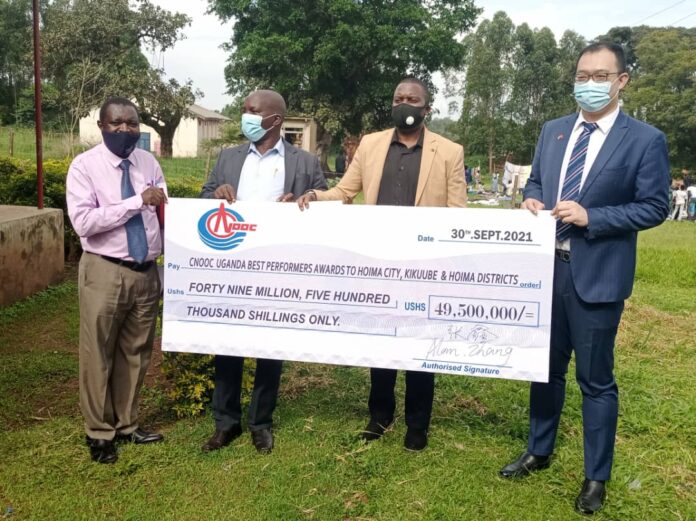
CNOOC Uganda has awarded 180 best Performing Hoima and Kikuube students at PLE, UCE and UACE level under its Corporate Social Responsibility dubbed ‘CNOOC Best Performer’s Award’.

The CNOOC Best Performers Award was inaugurated in 2012, with an aim of encouraging better performance to the students in Hoima District. To date, the Program has rewarded 750 students as follows (in 2013-60 were awarded in 2014, 90 were awarded annually in 2015, 2016, 2017, 2018, 120 students in 2019, 120 in 2020 and this year, 2021, 180 more students will be rewarded which will bring the cumulative total of BPA beneficiaries to 930 students at PLE, UCE and UACE levels.

Awarding the students with prize money and certificates is a move to motivate them particularly those below and getting to the candidate classes and this indirectly contributes to improved performance of students in Hoima and Kikuube Districts in regard to national standings. Hoima and Kikuube districts are currently experiencing rapid development and CNOOC Uganda believes that the better the youth are prepared and the education sector transformed, the more the residents shall benefit from the industry.

A total of 14,000 US Dollars (Shs 49.500, 000) has been awarded to the best performing students this year, 2021. These students were selected by the office of the Education Officers, Hoima city and Kikuube and Hoima Districts based on the Uganda National Examinations Board (UNEB) results.

CNOOC Uganda shall continue awarding the best performers to reaffirm its willingness to be good neighbors with communities in the area of operation and to achieve a win-win situation with its stakeholders.

The ceremony was presided over by Samuel Kisembo Araali, Resident City Commissioner (RCC), as a Chief Guest who commended CNOOC Uganda for the unwavering support to the communities especially in the area of operation. He also congratulated the award winners along with their parents and teachers and urged the students to continue working hard at their next level of education and always consider giving back to the community so that those who come after them can receive the same support.

Aminah Bukenya, CNOOC Uganda’s Media and Publicity Manager said that “the Best Performers Awards affirms our willingness to be a good neighbor and a trusted friend to fulfil the win-win principle with key stakeholders in the region. We have considered positive discrimination for the students with disabilities”.

Zakalia Lubega, Head of Corporate Affairs stated that, “Despite COVID times that have hit the world globally, we still feel that it is important to push forward the dream of the excellent performers in the area of operation. This is why the Best performers have still been upheld”.

Mr. Godfrey Serwanja, the DEO Hoima stated that the awards have motivated schools into performing better at all the three levels compared to previous years before the awards. He affirmed a 400% improvement in the grades since the launch of the Best Performers Awards Program that can be attributed to these motivational awards.

As an energy company with a strong sense of social responsibility, CNOOC Uganda is committed to supporting the education sector which falls well in line with the Company’s Corporate Social Responsibility Initiatives which include environment, health, education and sports.

Stories Continues after ad

Favourable financial and insurance products needed to enhance local content within the oil and gas industry

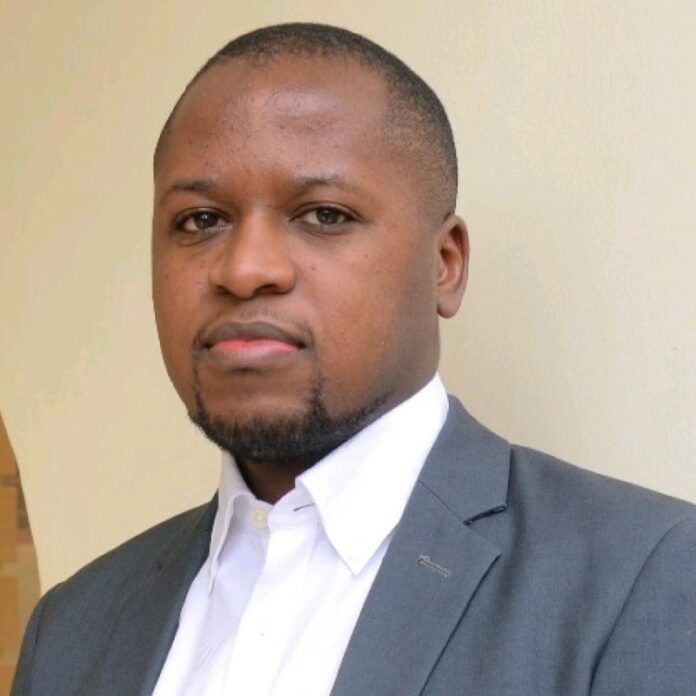
Phillip Niwamanya, Oil and Gas Sector Head at Absa Bank Uganda

Lack of collateral for financing is one of the challenges hindering local SMEs’ participation in the oil and gas industry.

This was one of the issues discussed during the virtual industry dialogue for the month of September organised by the Uganda Chamber of Mines and Petroleum (UCMP), organised under the theme: Limitations to in-country value retention.

It is estimated that of the $20 billion of investment into Uganda’s economy from the oil and gas sector in the next five years, $6 billion is available for local companies to tap into and retain and SMEs would be some of the major beneficiaries of this investment.

According to CNOOC, the National Content Regulation 2016 gazettes several civil works for Ugandans, including Pre-Drilling Civil Works, Development of the KingFisher Oil Field Infrastructure, KingFisher Oil Field Treatment Facilities and the Development of KingFisher Oil Pipeline Feeder Line. Other opportunities include site preparation, camp upgrades, transportation and supply of construction materials such as cement, aggregates, sand, security and medical services.

In spite of these opportunities, only 40% of SMEs have access to bank loans and over 80% are not served or underserved by financial institutions. This is mainly because access to financing comes with the requirement of providing collateral, which most lack.

This reluctance to lend to SMEs is due to high-risk perception, information asymmetry between lenders and borrowers, poor corporate governance and market linkages. Additionally, SMEs struggle with undercapitalisation, inadequate technical and management skills, and lack of market access due to poor quality and non-standardised products.

Speaking during the discussion, Phillip Niwamanya, Absa bank Uganda’s Sector Head, Oil and Gas remarked, “The Oil and Gas space is unique. The kind of financing required is short term but that financing is tied to high standards in the sector. Financing in oil and gas is typically structured around contract requirements.”

He added that financing local contractors in the oil and gas industry requires looking at four risk areas; payment, performance, nature of the asset and environmental/social risks to ascertain the capability of the SME to fulfil the contract.

Banks in the oil and gas industry have, however, configured customized solutions to cater to the unique challenges of SMEs in Uganda and some solutions provided include uncollateralized lending, business advisory services, training and asset-based financing to assist SMEs perform their contractual obligations. Several of these solutions cater to SMEs throughout the contract lifecycle from bidding all the way to contract completion.

Maurice Amigola, the CEO of Minet Uganda, emphasised the importance of insurance providers creating products that cater to the different risk needs of the industry within the direct services, indirect services and specialist services, which would include local SMEs. Where local insurers lack capacity to take on the risks, there is an opportunity to work with other reinsurance companies to share risks.

Stories Continues after ad

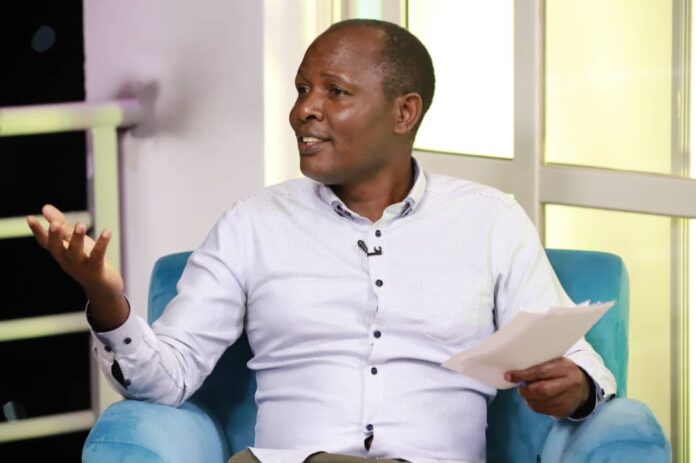
Fred Bamwesigye appointed Director General of Uganda Civil Aviation Authority

Fred-Bamwesigye

Fred Bamwesigye has been appointed the Director General of Uganda Civil Aviation Authority (CAA).

Bamwesigye, 54, who has been serving as Acting DG for over one year, will commence work in the new position on October 1, 2021.

He has been serving as the Acting Director General following the retirement of Prof David Kakuba early last year.

Born in Ruhaama, Ntungamo, Bamwesigye previously served as Human Resource Manager at National Environmental Authority (NEMA) before joining CAA to serve in the same position.

The instrument of appointment was signed by Works and Transport Minister Gen Katumba Wamala on September 28, 2021.

He will be entitled to a monthly salary of Shs30m, an official car and security.

He will among other activities oversee the implementation of multi-million dollar projects aimed at expanding and transforming Entebbe International Airport and regional airfields.

Stories Continues after ad

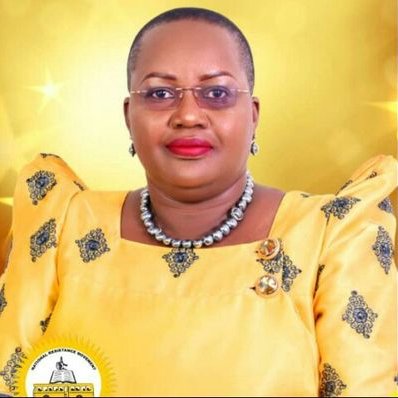
Court dismisses Lydia Wanyoto’s election petition against Connie Galiwango

Lydia Wanyoto

The High Court in Mbale has dismissed an electoral petition challenging the victory of Connie Nakayenze Galiwango as Mbale City Woman Member of Parliament.

In February, Lydia Wanyoto Mutende, the National Resistance Movement (NRM) flag bearer petitioned the court challenging the election of Connie Galiwango. According to Wanyoto, the election was marred with violence, voter bribery and intimidation of voters.

According to Electoral Commission results, who Connie Galiwango contested as an Independent candidate after losing the NRM primaries to Wanyoto, polled 40,729 votes while Ms Wanyoto got 25,276 votes in the January 14 general election.

In his ruling, Justice Andrew Byabashaija dismissed Lydia Wanyoto Mutende’s election petition dismissed with costs.

“Galiwango resoundingly won the election with 40,729 votes against the 25,276 votes. That is a wild margin given that there were four other candidates in the race. The success of such a winning candidate at election cannot be interfered with or taken away without any justification. It should be upheld, having found that the petitioner is not entitled to any remedies. The petition is therefore, dismissed in its entirety with costs to first and second respondent,” he ruled.

However Wanyoto vowed to appeal against Justice Andrew Byabashaija’s ruling.

Stories Continues after ad

Gen Museveni has resorted to suppression of his political opponents – Charles Rwomushana

Rwomushana

Former Internal Security Organisation (ISO) operative Charles Rwomushana has come out to say that is incapable of resolving the contradictions arising out of the current political violence.

According to Rwomushana, Gen Museveni is using suppression but with time when the situation goes out of hand, he may even opt to be killed just as it happened during the NRA war.

“Of course I assume we have that minimum consensus that we face organised vicious political violence. This violence must have political outcomes. When we promulgated the 1995 Constitution, our focus was the vice of presidents like Museveni who after State capture became a danger to opponents and liberties of dissenters,” he said.

He said the alleged crimes Museveni sings around, the constitution provided that should someone do 12 months remand without trial, then that person should be granted bail.

Rwomushana says that if there was proof that if Museveni was allowed to detain as many suspects as he wanted and that would end the Panga Squads Operations, then somehow his idea would hold water.

“The 1967 Constitution could not curtail Museveni NRA inspired political violence. That very violence culminated in the 1995 constitution. The 1995 constitution must collapse under the same violence that hatched it. Museveni’s legitimacy and that of his fraudulent 1995 constitution has come to an end,” Rwomushana adds.

Stories Continues after ad

Fifteen African countries hit 10% #Covid-19 vaccination goal

#Covid-19 vaccine

Fifteen African countries, nearly a third of the continent’s 54 nations, have fully vaccinated 10 percent of their people against Covid-19.

The global goal of fully vaccinating 10 percent of every country’s population by 30 September was set in May by the World Health Assembly, the world’s highest health policy-setting body. Almost 90% of high income-countries have met this target.

Seychelles and Mauritius have fully vaccinated over 60 percent of their populations, Morocco 48 percent and Tunisia, Comoros and Cape Verde over 20 percent . Most of the African countries that have met the goal have relatively small populations and 40 percent are small island developing states.

All these countries have enjoyed sufficient supplies of vaccines, and many could access doses from separate sources in addition to those delivered through the COVAX Facility, the global platform to ensure equitable access to vaccines. Half of the 52 African countries that have received COVID-19 vaccines have fully vaccinated just 2 percent or less of their populations.

“The latest data shows modest gains but there is still a long way to go to reach the WHO target of fully vaccinating 40 percent of the population by the end of the year. Shipments are increasing but opaque delivery plans are still the number one nuisance that hold Africa back,” said Dr Richard Mihigo, Immunization and Vaccines Development Programme Coordinator for the World Health Organization (WHO) Regional Office for Africa.

Nine African countries, including South Africa, Morocco and Tunisia, had reached the 10 percent goal at the beginning of September and another six managed to sprint ahead to reach the target this month due to rising vaccine deliveries.

Twenty-three million COVID-19 vaccines arrived in Africa in September, a ten-fold increase from June. Yet just 60 million Africans have been fully vaccinated so far and 2 percent of the more than 6 billion vaccines given globally have been administered on the continent.

COVAX is working with donors to identify the countries that can currently absorb large volumes of vaccines and send them their way and plans to strengthen its support for countries that do not have other sources of vaccines.

WHO has assisted 19 African countries in conducting intra-action reviews, which analyse their vaccination campaigns and offer recommendations to improve them. The reviews show that uncertainty around deliveries has been a major impediment for many countries.

By deploying a team of international experts, WHO is providing targeted support to a select group of countries to identify and resolve bottlenecks in their COVID-19 vaccine rollouts, including working with local authorities and partners to identify and address the root causes of challenges to administering vaccines. WHO is also working to share crucial lessons and best practices among African countries to help them accelerate their vaccine rollouts.

COVID-19 case numbers in Africa dropped by 35 percent to just over 74 000 in the week to 26 September. Almost 1800 deaths were reported across 34 African countries in the same period. The Delta variant has been found in 39 African countries. The Alpha variant has been detected in 45 countries and the Beta in 40.

“Despite the declining case numbers we must all remain vigilant and continue to adhere to the proven public health and safety measures that we know save lives, such as wearing a mask, washing our hands regularly and physical distancing, especially while vaccination rates remain low,” said Dr Mihigo.

Dr Mihigo spoke during a virtual press conference today facilitated by APO Group. He was joined by Dr Pamela Smith-Lawrence, Acting Director, Health Services, Ministry of Health and Wellness, Botswana, and Mrs Fortunate Bhembe, Deputy Director of Pharmaceutical Services, Ministry of Health, Kingdom of Eswatini.

Also on hand to answer questions were Dr Fiona Braka, Team Lead, Emergency Operations, WHO Regional Office for Africa, and Dr Thierno Balde, Regional COVID-19 Deputy Incident Manager, WHO Regional Office for Africa.

Stories Continues after ad

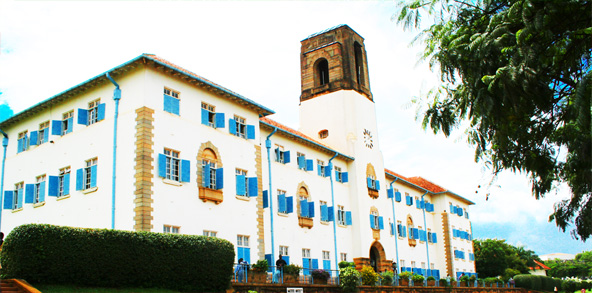
Chinese Embassy donates Shs55m for reconstruction of Makerere University main building

Makerere Main Building before it burnt down

Makerere University Vice Chancellor, Prof Barnabas Nawangwe is all smiles after receiving a fat cheque of Shs55 million from the Embassy of the People’s Republic of China, a contribution towards the reconstruction of the University’s main building that was engulfed by fire last year.

“I wish to thank the Embassy of the People’s Republic of China for the very generous contribution of UGX 55 million for the reconstruction of the Makerere Main Administration Building. Thank you very much indeed,” Prof Nawangwe tweeted.

Earlier this year, findings regarding the fire were recorded in the National Building Review Board report of November 2020 and it was revealed that the fire started at around 11:30 pm on September 19th, 2020 in Room 315 which is also the University Bursar’s office.

It should be recalled that 31st August 2021, the Ministry of Finance, Planning and Economic Development released Shs 21 billion for the reconstruction of the Makerere University Ivory Tower building. However, no report has been made to show how much has been gotten from other fundraisers.

A cabinet resolution last month advised that all key elements will be retrieved and stored in the museum called the main building museum 2020.

Upon construction, the management of the university was tasked to ensure that all CCTV cameras in the building are fully functional and monitored from the central surveillance room at all times.

According to the new plan, the main hall which was not affected by the fire will remain. However, it will be refurbished and equipped with modern technologies.

Stories Continues after ad

Oil and Gas Summit: Absa Bank urges SMEs and local companies to access financing to invest in the sector

Oil pipeline

Absa Bank Uganda has urged Small and Medium Enterprises (SMEs), Local and multi-International companies to have bankable proportions to access financing to invest in the oil and gas sector in the country.

Recently, Uganda and Tanzania signed a final oil deal that will see the construction of a US$3.55 billion-crude export pipeline that would pump Ugandan oil for export. Uganda’s oil is expected in 2025.

The 1,445 km-project will run from Uganda’s western oil rich district of Hoima, where crude reserves were discovered in 2006, to Indian Ocean seaport of Tanga in Tanzania. The East African Crude Oil Pipeline (EACOP) will create over 15,000 direct jobs and temporary ones will peak to 30,000.

Mrs. Irene Mutyaba Kabira, the Corporate Banking Director at Absa Bank said the biggest challenge that most of the companies face is collateral. However the banking system has since evolved and the financial sector is putting forward a number of structured conditions that can be able to address some of the pertinent issues that have been raised.

Speaking during the 6th edition of the Uganda International Oil and Gas Summit held under the theme: Driving the final steps in commercialization and production, Mrs Kabira said sector players can now access financing from a number of financial service providers including Absa Bank for putting up Silos, farm equipment, vehicles.

 “In order to benefit from the Oil and gas sector, manufacturing companies need to have capacity to produce, supply to meet demand. The real winner in the oil and gas sector will be those companies that have taken time to prepare how best they would like to get over it,” she said.

In tandem, she urged companies to create a corporate governance system that will drive data decision entities in order to be able to get money that they need to invest in their projects.

“Companies should look at joint ventures. When you look at the magnitude of the contract running the sector, companies need to step back and think of other entities where they can bring the muscle together and win bigger contracts,” she said.

“There are a lot of Private Equity Funds in the market at the moment. We need to try and find out more information on how we can benefit from some of them and prepare ourselves to produce to scale in terms of the oil and gas sector,” she said.

Stories Continues after ad

Uganda to increase coffee exports to Saudi Arabia

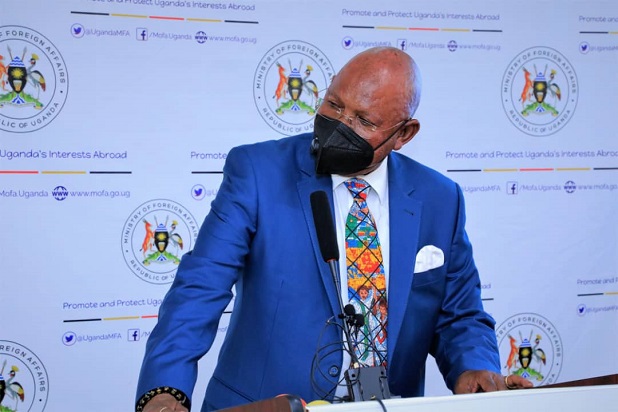
Jeje Odongo addressing participants at the Expo

Uganda’s Minister of Foreign Affairs Gen Abubakhar Jeje Odongo has reiterated Government of Uganda’s commitment to increase Coffee Exports to the Kingdom of Saudi Arabia.

The Minister made these remarks on September 29th 2021, while presiding over the official opening ceremony of the first Uganda-Saudi Arabia Expo under the theme, “The Uganda Coffee industry perspective: farming, processing and exports”.

The Expo is aimed at increasing the quantities of exported coffee and coffee products from Uganda to Saudi-Arabia.

The one day Hybrid event was organized by the Ministry of Foreign Affairs, the Ugandan Mission in Saudi-Arabia in conjunction with, the Council of Saudi Chambers, Uganda Coffee Development Authority (UCDA).

Minister Odongo commended the efforts of Uganda Ambassador to Saudi Arabia Isaac Ssebulime and the staff of the Uganda Embassy in Riyadh for organising this event noting that this is in fulfillment of the Ministry of Foreign Affairs deliberate policy to pursue Economic and Commercial Diplomacy in a bid to strengthen bi-lateral trade with the Kingdom of Saudi Arabia.

Gen Odongo further highlighted that Uganda’s export of coffee and coffee to Saudi Arabia is US 419,000 dollars and noted that this figure needs to improve because Saudi Arabia is the fastest growing Coffee market in the Middle East.

The function was capped up with a coffee tasting ceremony conducted by Uganda Coffee Development Authority (UCDA).

He informed the gathering that President Yoweri Kaguta Museveni directed the Uganda Coffee Development Authority to accelerate the coffee production from 3.5M 60kg to 20M by 2025.

“The Saudi Arabia market is projected to grow at a Compounded Annual Growth Rate (CAGR) of 6.2 percent during 2021- 2027 which will present an opportunity for business men and women from both Countries,” Odongo noted.

In his opening remarks, Ambassador Ssebulime Biruma, Uganda’s Ambassador to Saudi Arabia noted that this was a historical occasion for the first time, businessmen from the Kingdom of Saudi Arabia and the Republic of Uganda have convened to chart ways of increasing trade between the two Countries.

The Ambassador further paid tribute to King Salman bin Abdulaziz, the Custodian of the Two Holy Mosques and Prince Mohammed bin Salman, the Crown Prince and President Yoweri Kaguta Museveni for their leadership which has guaranteed peace in the two countries and ensured continued warm and cordial relations.

He noted that it is because of their capable leadership that discussions to promote business and other matters of socio-economic transformation are being held.

Ambassador Ssebulime appreciated the Minister of Foreign Affairs, Gen Jeje Abubakhar Odongo for accepting to grace the function and officiating the Opening ceremony as well as reiterating Government of Uganda’s commitment to increase coffee exports to the Kingdom of Saudi Arabia.

He also commended the President, the Secretary General and Staff of the Federation of Saudi Chambers for the partnership, encouragement and support for this project to increase trade and he noted that this will initiate arrangements to create the Saudi-Uganda Business Council which will be the ultimate vehicle to drive business between two brotherly states.

The Chief Executive Officer of Inspire Africa Coffee, Nelson Tugume who represented the private sector appreciated the Ministry of Foreign Affairs for opening up Uganda’s missions to the private sector in a way of promoting Commercial Diplomacy.

The event registered remarkable success with a virtual attendance of over 500 participants and informative presentations were made by the Executive Manager, International Relations who represented the Federation of Saudi Chambers, Dr. Ian Clarke representative of Uganda Coffee Exporters, and a Representative from the Islamic Development Bank to mention but a few.

It was concluded with a coffee tasting and cupping ceremony conducted by the Uganda Coffee Development Authority (UCDA) for participants to enjoy freshly brewed Ugandan coffee.

Stories Continues after ad

Gov’t stays taxes on fabrics and garments

textiles

The Minister of State for Trade, Hon. Harriet Ntabazi has told Parliament that government stayed imposition of the specific duty rates of USD 3 and USD 3.5 per kilogramme for fabrics and garments respectively.

Ntabazi made this revelation while presenting a ministerial statement on the-would have been strike by textile dealers in Kampala due to the decision by Uganda Revenue Authority (URA) to use textile weight for taxation.

“Government considered the traders’ concerns and revised its earlier position on the remaining 47 products (tariff lines) and stayed application of the specific duty,” she said.

Ntabazi added that after a meeting with the traders in the presence of the Finance Minister, they agreed to deal with the traders concerns. The issue had been earlier raised by the Kasilo County MP, Hon Elijah Okupa, who then noted that traders were unhappy with paying taxes per kilogramme when fabrics and garments do not weigh the same.

Speaker Jacob Oulanyah was concerned about the provisions in the law which relate to taxation.

“Did they amend the laws mid-term without Parliament? These are points we need to know; we are in the budget process, why would you break the financial year into two regimes? Why don’t we review it with the budget so that we don’t disrupt the market,” he asked.

The State Minister for Finance, Hon Amos Lugoolobi said that they had to choose one line of tax because there was a stalemate in the industry and containers were stuck in customs.

He added that after the specified period, when the law was passed some goods were in transit.

“We saw that many traders had already ordered for their goods; we thought this time would enable them to clear their goods that were already in transit. After that period, we shall have a review with them to see if we should keep the 35 per cent or keep the US$3 or US$3.5 per kilogramme,” he said.

Stories Continues after ad