Stanbic Bank
Stanbic Bank
18.3 C
Kampala
Stanbic Bank
Stanbic Bank
Home Blog Page 762

NSSF assets hit Shs15.5t despite #Covid-19 pandemic

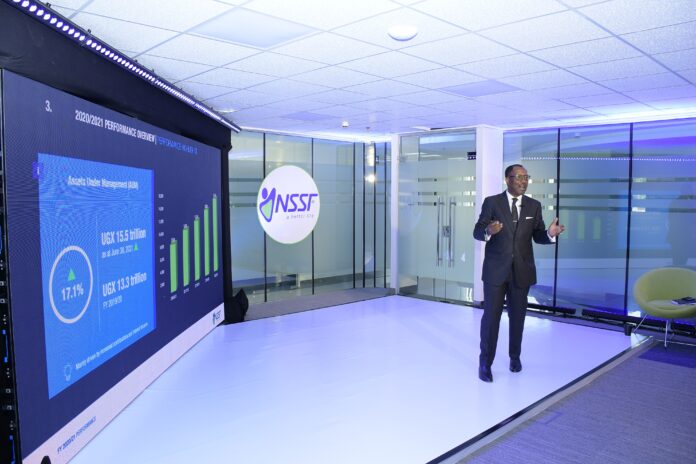
NSSF Managing Director, Richard Byarugaba.

The Managing Director of the National Social Security Fund (NSSF) Richard Byarugaba has revealed that the Fund’s assets hit Shs15.5 trillion despite #Covid-19 pandemic.

Addressing the media at the release of the Fund’s financial performance, Byarugaba attributed the increase to growth in interest income largely attributed to the increased return on Treasury Bonds in the Fixed Income portfolio, dividend income, and property sales.

He said the performance demonstrates the Fund’s ability to withstand shocks occasioned by a stressed economy and an uncertain business environment in the era of #Covid-19 pandemic.

“The socio-economic effects of the #Covid-19 pandemic are still wreaking havoc on economies across the globe, and most businesses may take several years to shake off the effects of #Covid-19. Nonetheless, our performance shows that the Fund is not only resilient but can absorb such shocks and continue its growth trajectory,” he said.

He said the Fund’s income increased by 25 per cent from Shs1.472 trillion to Shs1.84 trillion.

Results released by the Fund also show that its Assets under Management (AUM) increased by 17 per cent from Shs13.3 trillion to Shs15.5 trillion as of June 30, 2021, mainly driven by increased contributions and interest income despite an increase in Benefits paid out. Member contributions increased by 8 per cent from Shs1.27 trillion to Shs1.37 trillion.

Byarugaba said that despite recorded job losses in some sectors of the economy, many employers show encouraging signs of recovery.

“For instance, we saw recovery of most employers that benefited from the amnesty we offered to businesses that were affected by the #Covid-19 pandemic the previous year,” he said.

The amount of money paid out to qualifying members also increased by 29 per cent from Shs496.4 billion in 2019/20 to Shs642.3 billion in 2020/21. The growth is attributed to an increase in claimants and the introduction of Invalidity Benefit payments for #Covid-19 patients, Byarugaba added.

Byarugaba assured NSSF savers that the Fund is committed to creating value over the long term, while remaining dynamic enough to respond to members’ needs in the medium term, especially with an enabling legal regime upon enactment of the NSSF Amendment Bill.

“Our performance demonstrates that we are creating value for our members even in a very difficult economic environment, and this value will be reflected in the return the Minister of Finance, Planning & Economic Development will announce next week.”

He played down expectations of a very high interest rate but said the Fund will keep its promise to pay a competitive rate, higher than the 10-year average rate of inflation plus 2 percentage points.

Finance Minister Kasaija will announce the new interest rate on members’ savings at the Annual Members Meeting which will take place on September 29, 2021.

Speaking about the NSSF Amendment Bill, Byarugaba said that the Fund is well positioned to implement the new provisions once they become law.

“We have been preparing over the last one year when it became clearer that the bill would be passed. We have solutions for the changes on the horizon, for instance mid-term benefits including mid-term access, expansion of coverage to include the informal sector, and expansion of the voluntary space. We have built a very dynamic institution that can adapt, embrace these changes and thrive,” he said.

Assets under Management increased by 17 per cent from Shs13.3 trillion to Shs15.5 trillion as of June 30,2021, driven by increased contributions and interest income.

Total Comprehensive Income increased by 25 per cent from Shs1.472 trillion to Shs1.84 trillion, driven by growth in interest income attributed to the increase in return on Treasury Bonds in the Fixed Income portfolio, increase in dividend income, and property sales.

Member contributions increased by 8 per cent from Shs1.27 trillion to Shs1.37 trillion. This is better than a marginal percentage growth of 5 per cent recorded the year before. The growth is attributed to the recovery of some employers that have benefited from the Fund Amnesty we offered to businesses that were affected by the #Covid-19 pandemic in the previous year.

Benefits paid to qualifying members increased by 29 per cent from Shs496.4 billion in 2019/2020 to Shs642.3 billion in 2020/21. The growth is attributed to an increase in number of claimants, and introduction of IB payments for the #Covid-19 patients.

Stories Continues after ad

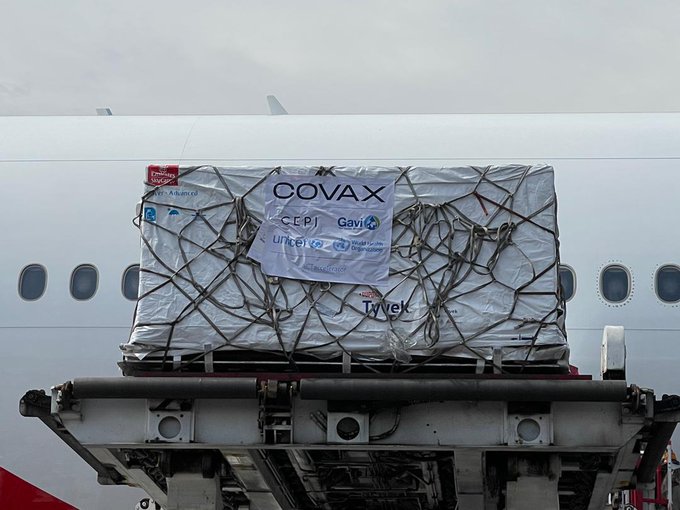
Africa needs seven-fold rise in Covid-19 vaccine shipment

Covid-19 vaccine

COVID-19 vaccine shipments to Africa must rise by over seven times from around 20 million per month to 150 million each month on average if the continent is to fully vaccinate 70% of its people by September 2022.

The 70% target was agreed at the global COVID-19 summit hosted by the United States of America on the margins of the United Nations General Assembly this week.

At the summit, the United States pledged to share 500 million more COVID-19 vaccines to low-income countries over the next year, bringing its total pledges to more than 1.1 billion doses.

“The global COVID-19 summit was a dose of hope for Africa and we commend pledges to share more vaccines, save lives and build back better. It is the kind of international solidarity that will help to end the pandemic. This is about life and death for potentially millions of Africans so there is no time to waste in getting these shipments moving,” said Dr Matshidiso Moeti, World Health Organization (WHO) Regional Director for Africa.

The COVAX Facility, the global platform to ensure equitable access to COVID-19 vaccines, has been forced to slash planned deliveries to Africa by 25% this year, due to global supply shortages and export bans. COVAX shipments are still coming into African countries – with 4 million doses received in the past week. However, only a third of the vaccines that wealthy countries pledged to share with Africa by the end of 2021 have been received.

“Actions speak far louder than words and African countries need clear delivery dates so they can plan properly. We also need strong structures set up to ensure that all promises made are promises kept,” said Dr Moeti.

WHO has assisted 18 African countries in conducting intra-action reviews, which analyse all aspects of their vaccination campaigns and offer recommendations. The reviews have shown that vaccine supply security and uncertainty around deliveries have been a major impediment for many African countries. Also, the longer the delay in rolling out the vaccines, the greater the risk of additional challenges emerging such as variants, hesitancy, operational gaps or other threats.

While Africa’s third wave continues to ease, 108 000 new cases were recorded, and more than 3000 lives lost in the week to 19 September. There have now been nearly 8.2 million COVID-19 cases recorded on the continent. The Delta variant has been found in 38 African countries. The Alpha variant has been detected in 45 countries and the Beta in 40.

“Health workers, services and communities can and should use this time to regroup and prepare for the next wave. With end-of-year travel and festive celebrations fast approaching, fresh increases in cases should be expected in the coming months. Without widespread vaccination and other preventive measures, the continent’s fourth wave is likely to be the most brutal yet,” said Dr Moeti.

The WHO Regional Office for Africa held a virtual press conference today facilitated by APO Group. During the briefing Dr Benido Impouma, Programme Director for Universal Health Coverage/Communicable and Noncommunicable Disease, WHO Regional Office for Africa, was joined by Professor Jean-Jacques Muyembe, Director-General, National Institute for Biomedical Research (INRB), Democratic Republic of the Congo and Technical Secretary of the Multisectoral Committee for the Response to COVID-19 in DRC, and Dr Githinji Gitahi, Group Chief Executive Officer, AMREF Health Africa.

Also on hand to respond to questions were Dr Richard Mihigo, Coordinator, Immunization and Vaccines Development Programme, WHO Regional Office for Africa, and Dr Thierno Balde, Regional COVID-19 Deputy Incident Manager, WHO Regional Office for Africa.

Stories Continues after ad

BREAKING: Former ISO Director General Col Kaka Bagyenda reportedly placed under house arrest

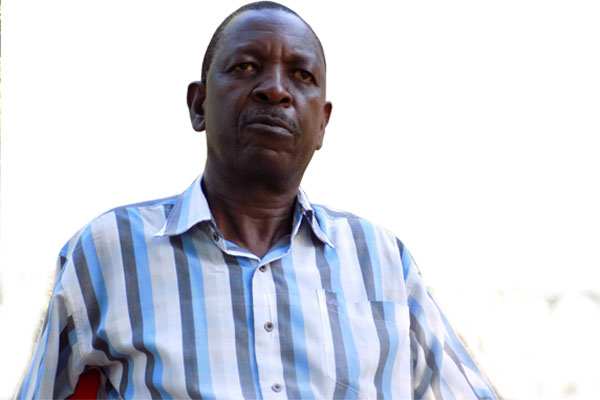
Former ISO boss Colonel Frank Kaka Bagyenda


Former Director General of Internal Security Organisation (ISO) Frank Kaka Bagyenda is under house arrest Eagle Online can exclusive reveal.

According to security sources, a search was carried out last night at his home where he has been placed under house arrest.

It is said that Col. Kaka Bagyenda is being investigated by a sister security agency for an undisclosed reason.

“Yes we mounted a search last night but I am not in position to reveal the details. Wait when the operation is done, details will be made public” a source said.

Col. Bagyenda’s problems started two weeks ago when his close associate Amos Rwangomani was arrested from a city restaurant by security operatives and it is said his arrest could be connected to Rwangomani.

Col. Bagyenda was dropped as ISO DG in January 2020  and was posted to Angola Uganda’s Ambassador.


Stories Continues after ad

Belgium donates 153,900 Covid-19 vaccines to Uganda

Belgium donates 153,900 Covid-19 vaccines to Uganda

Belgium has donated 153,900 doses of COVID-19 vaccines to Uganda. The vaccines will contribute to stepping up the vaccination campaign for teachers and reopening schools to more than 10 million pupils and students. With this, Belgium is responding to the Ugandan government’s request to receive COVID-19 vaccines.

On August 2, the Ugandan government addressed an official request for assistance from the EU Civil Protection Mechanism to the Emergency Response Coordination Center (ERCC). The request for assistance consisted of administering the second dose of AstraZeneca to vaccinate the 162,026 teachers who received the first dose and 100,000 doses from Johnson & Johnson to vaccinate rural teachers for whom the logistics of vaccination will be facilitated with a single-dose vaccine.

The 153,900 doses of AstraZeneca vaccines arrived in Kampala on Wednesday, September 22. This vaccine donation is supported by the Embassy of Belgium in Kampala and Enabel – the Belgian Development Agency, in charge of logistics and coordination with the Ugandan authorities.

“Every child back to school. Everywhere in the world. That’s my goal. By vaccinating teachers we contribute to providing renewed access to education for as many children, youngsters and students in Uganda, as quickly as possible” emphasizes Minister of Development Cooperation, Meryame Kitir.”

According to Ugandan authorities, vaccinating priority groups such as teachers will help reopen schools for more than 10 million pupils and students. Uganda has experienced a new wave of COVID-19 in recent months, with a daily peak of 2,280 cases per day in June 2021 and a confirmed mortality spike in July (up to 40 per day). On September 17 it was noted that vaccination coverage remains very low overall: approximately 1,622,367 people (out of a population of approximately 45 million) received at least one dose of a vaccine. The availability of the COVID-19 vaccine in Uganda remains minimal and below the African average. To control the pandemic, the country has had to take drastic measures, resulting in the complete closure of schools for almost 18 months.

The impact on students (primary and secondary) has been particularly severe. Young people have not been to school for 18 months; distance learning is hardly possible due to the lack of equipment and internet connection.

In addition to this bilateral donation to Uganda, our country will redirect 4 million doses to third countries by the end of this year. Belgium is mainly using the COVAX mechanism for this purpose.

At the request of the Minister of Development Cooperation, Meryame Kitir, our country’s focus for the next deliveries will be on Africa and more specifically on our African partner countries, where access to vaccines is sorely lacking. Only 2% of Africa’s total population has been vaccinated. “We can be very proud of the high vaccination coverage in our country. But at the same time, I remain very concerned because many people in vulnerable countries do not have access to a vaccine. This virus has no borders. International solidarity and cooperation is the only way out of this health crisis. We will only be safe when everyone is safe,” said Minister Kitir.

To date, two million doses of vaccine have been allocated by Belgium for vaccine sharing. Almost one million doses have already been delivered to third countries, of which more than 70% are African countries.

Stories Continues after ad

Absa Group to implement second significant B-BBEE transaction

ABSA

Absa Group Limited, one of the largest diversified financial services providers in Africa, plans to implement a second significant broad-based black economic empowerment (B-BBEE) transaction as part of its broader efforts to achieve transformation in a meaningful and sustainable way.

“The planned transaction is a demonstration of our commitment to transformation and cements our longstanding view and approach of creating inclusive growth in Africa. While it is aligned with the South African government’s B-BBEE objectives and with the commitments contained in the Financial Sector Code, we will also extend the offer to include employees across our operating markets,” said Jason Quinn, Absa Interim Group Chief Executive.

While the transaction is in development, it is currently envisaged that the scheme will hold up to 8% of the Group’s issued share capital, which equates to approximately R9.4 billion, based on the Group’s share price on 20 September 2021, and that it will be broad-based, including third-party investors and staff. The staff component will enable all Absa employees across the Group’s operations to become shareholders and to participate in the Group’s growth.

In 2004, Absa became the first of the large banks in South Africa to conclude a significant B-BBEE transaction, issuing a 10% stake to Batho Bonke Capital. The Batho Bonke empowerment consortium consequently became the second-largest shareholder in Absa. As the Batho Bonke transaction unwound, allowing beneficiaries to sell their shares, South Africans, from community trusts to women’s groups, BEE companies, stokvels and employees, benefited.

Subsequently, as part of its separation from Barclays PLC, Absa announced that it would undertake a new B-BBEE transaction in line with its transformation efforts. Barclays transferred a 1.5% stake in Absa to the Absa Empowerment Trust in 2017. Dividends subsequently received by the Absa Empowerment Trust in relation to those shares have been used to purchase additional shares, resulting in the initial stake increasing to approximately 1.9%. These shares will form part of the new B-BBEE transaction.

The development of the proposed B-BBEE scheme was hindered last year, when the COVID-19 pandemic prompted a sharp economic downturn and unfavourable market conditions. Full details of the proposed scheme, which will be subject to shareholder and other approvals, will be published once the design has been finalised. The scheme is expected to be implemented in 2022.

“The intention to undertake a new B-BBEE transaction demonstrates Absa’s significant commitment to transformation,” said Quinn. “Meaningful Black participation, including ownership, at all levels of the South African economy, is a national priority to ensure sustainable sociopolitical, financial and economic stability.”

Stories Continues after ad

Kyambogo deaf students struggle to understand communications in 17th Graduation ceremony

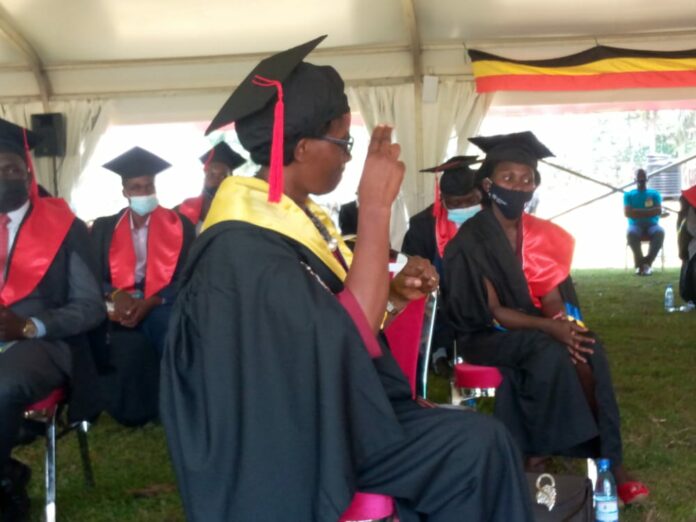
A colleague helping Deaf students to interpret what is being communicated. Photo by Ronard Shabomwe.

Deaf students who attended the 17th Kyambogo University graduation ceremony have struggled to listen to communications for a failure of the university to provide sign language interpreters.

The university invited two students with special needs, who are representing other special students with special needs in the university. Most of these students are from the Faculty of Special Needs and Rehabilitation. Other Deaf students are among the best performing students, who have been invited to attend physically.

This website observes that a group of over 10 deaf students, were left behind after finding that the university invited them knowing that they do not hear and they have not hired sign language interpreters.

Allan Adeke, one of the affected students, said that this was a bad experience because they have lost more vital information on their graduation ceremony day. Adeke a graduand of Diploma in special needs education adds that if it was not their colleagues who realized it later and helped them, they would have missed everything from the beginning to the end.

“Staff knows that graduands with hearing impairment would attend the physical graduation but they leave us behind, whom we don’t have, fluent sign language interpreters” Adeke adds.

Our reporter noticed that Adeke was trying to request the ushers to notify the authorities that they were not getting anything being communicated.

Scovia Nalumansi, another deaf student, graduating with a Bachelor Degree in Economics with Education expressed her disappointment and said that if the university was not prepared for them, they should have invited them.

Deaf students were later helped by their hearing colleagues who know sign language. Jackson Buyinza a colleague said that this was not a good gesture for an institution like Kyambogo, which has a faculty handling students with special needs.

Alex Twinamatsiko another colleague who helped in interpreter for them said that this was unfortunate, but he thinks the management didn’t mean to fail them but forget about them.

He adds, “This University has always had students with special needs on their hearts, but I think this was not intentional. It is not the habit of Kyambogo University.”

The graduand of Masters in Special Needs Education calls upon all the university Departments always to present the nature of the disability of their students before graduation.

Our reporter contacted Reuben Twinomujuni, the senior Public Relations Officer of the University, to why they failed to get a sign language interpreter but did not get any reply. Kyambogo University is famous for special needs education, which is taught in the Faculty of Special Needs and Rehabilitation.

Kyambogo University invited over 110 people to attend the 17th graduation ceremony physically which started on Tuesday 21st and is ending on Thursday 23rd, and among these are some students with different disabilities. The most affected students have been those with hearing impairments.

Stories Continues after ad

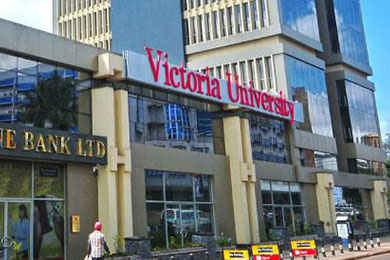
Victoria University offering Higher Education Certificate to students who didn’t get good grades in UACE

Victoria University

Victoria University is offering the Higher Education Certificate General (HEC) to candidates who qualify for UACE award but have not scored sufficiently good grades to enroll for degree or diploma programmes at University.

The National Council for Higher Education has accredited and provided the minimum standards for the Higher Education Certificate Programme. The programme is a level 4 qualification of the Qualification Framework approved by National Council for Higher Education as an avenue into Higher Education Institutions.

The Higher Education certificate is an intensive programme intended for students who have successfully completed the Uganda Advanced Certificate of Education (UACE) or its equivalent science subjects, but may not have attained sufficient grades to enroll for diploma or degree programmes of their choice in the Higher Education Sector.

“Victoria University envisages a country where every child has an opportunity to access quality and meaningful higher education and as such no child or student should be categorized as a failure, the cardinal job of educators is to search, bring out and nature the aspiration, passion, creativity and ability that’s sits within every student,” the Academic Registrar Mrs. Winfred Nassiwa said.

“Therefore in our bid to avail higher education to all, Victoria University is delighted to offer the HEC programme to all Ugandans interested in pursuing higher education as a bridge to pursuing a degree of their choice and within a field of their choice,” she added.

The HEC programme will be available in 3 pathways;

HEC (General): For those interested in pursuing a diploma or degree program within the Humanities, Arts and Business filed.

HEC (Biological Sciences): For those interested in pursuing g a diploma or degree programme within the health science field.

HEC (Physical Sciences): For those interested in pursuing a diploma or degree programme within the engineering and technology related field.

Minimum requirements; UCE or its equivalent, UACE with at least 2 subsidiary passes obtained in principal subjects or its equivalent, Vocational qualifications at level 2 or 3 of the Uganda Vocational Qualifications Framework or Qualifications equivalent to UACE as shall be determined by NCHE in consultation with UNEB.

The duration of the HEC programme shall be one academic year (structured as a two-semester programme) lasting no less than 3 weeks. The minimum graduation load is 40 credits.

“I believe the information will help all concerned people to understand the purpose of the programmes and to encourage students who meet the minimum requirements to take up the available opportunity at Victoria University,” Mrs Nassiwa said.

Persons who complete the HEC with credit and distinction are eligible for admission to a relevant Bachelor’s degree program while those who obtain pass are only eligible for admission to a diploma program of their choice.

The fees structure per semester Shs482,200 plus functional fees Shs350,000.

Stories Continues after ad

PHOTOS: Gen. Salim Saleh’s son Alex weds in style


Alex Akandwanaho the son of Gen. Caleb Akandwanaho (Salim Saleh) and Brig. Jovia Akandwanaho has finally wedded his long time girlfriend at a function held at their home.

Alex works with Saracen Security Limited as one of the top managers. At the wedding, the Commander of Land Force, Lt. Gen. Muhoozi Kainerugaba was the best man.


Gen. Akandwanaho is the Coordinator of Operation and the young brother to President Yoweri Museveni. According to sources, Alex performed both civil and church ceremonies since the bride is reported to be of Rwandan origin where civil marriage is emphasised.

President Museveni didn’t attend the function due other state duties but also #Covid-19 SOPs which he observes religiously.

Stories Continues after ad

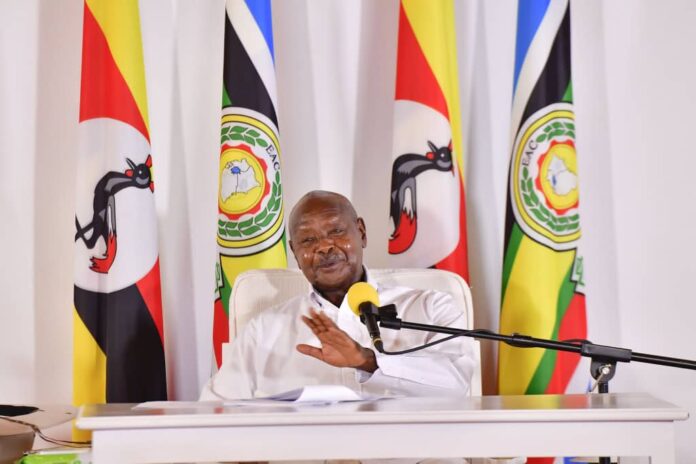
#Covid-19: Museveni reopens Churches as schools wait

President Museveni


President Yoweri Museveni has said that places of worship, wedding should be allowed to operate provided they don’t exceed 200 people. In the same spirit Museveni allowed tertiary institutions of learning to resume studies beginning on November 1.

“Limit the number of worshippers at any one time to not more than 200 provided the place of worship can ensure physical distancing of 2 meters on either side and adequate aeration. There must be strict adherence to all SOPs at all times. hand washing/ use of alcohol based sanitizer, temperature monitoring, and consistent wearing of face masks by all congregants including the choir and preachers”.Museveni said.

The president further instructed the reopening of Casinos, gaming shops and gyms and post secondary education (tertiary) for other lower educational institutions, he said due to the high risk involved with #Covid-19 infection, they can reopen next year.

“The casinos, gaming, betting shops and gyms can now operate during the day and close by 6:00pm” as for bars and other entertainment centres, Museveni said, “Bars are a high risk area where individuals have no sobriety to observe the SOPs. They  will be considered for re-opening when the 4.8 million priority population is vaccinated. These should remain closed as the local cinema halls are areas of immense crowding and mostly have poor aeration and are designed to have artificial ventilation systems”.


Below is the statement in full 


Dear Countrymen and Countrywomen,

Since my last address to you on the 30th of July 2021, the #Covid-19 transmission rates in the country have continued to decline. Despite this, some districts continue to show higher transmission rates and are considered hotspot districts. This persistent transmission is in the following 9 districts namely: Kampala, Kalungu, Kabale, Kumi, Soroti, Tororo, Gulu, Nwoya and Yumbe.

The daily average number of confirmed cases over the last one month has declined and stabilized at 124 cases countrywide, from an average of 1,445 cases at the peak of the second wave in June 2021. Similarly, the daily average number of deaths has declined to 6 from 57 deaths at the height of the peak of the second wave.

As of 22nd September 2021, the country has registered 122,502 confirmed cases and 3,135 deaths. Additionally, the current admissions stand at 340 in both public and private facilities (272 in public, 66 in prisons and only 2 in the private facilities), of whom 144 (38%) are in the severe and critical category.


Epidemic curve showing COVID-19 cases (March 2020 – September 2021) 

Following the previous wave, the current national #Covid-19 response strategy now focuses on the following interventions:

  1. #Covid-19 Vaccination

Government continues to carry out extensive mobilization of #Covid-19 vaccines and by the end of December 2021, we expect about 12 million doses as shown below:


Table 1: Vaccine arrival forecast Sept-December 2021

Source of Vaccine Type of Vaccine Quantity Status
USA Pfizer 1,647,000 Received –  20 September 2021
USA Moderna 647,000 Received – 6 September 2021
France AstraZeneca 501,000 22 September 2021
Belgium AstraZeneca 344,900 22 September 2021
China Sinovac 700,000 30 September,2021
USA Pfizer 3,488,940 End of October, 2021
GoU Johnson & Johnson 1,200,000 End of October 2021
GoU Sinopharm 2,000,000 End of September 2021
COVAX AstraZeneca 1,000,000 Mid October 2021
Ireland AstraZeneca 350,000 Mid October 2021
Belgium Johnson & Johnson 100,000 End of November 2021
Total 11,978,840  


As of now, we have 2,294,000 doses of vaccines available at the National Medical Stores (NMS) out of 11,978,840 million doses expected by end of December 2021.

In regards to the vaccination strategy, the following are being undertaken:

  1. Scaling up vaccination for all the eligible Ugandans aged 18 years and above (approx. 22 m)
  2. Prioritizing the vaccination of the 4.8 million priority population: health workers, teachers, security personnel, elderly persons of 50 years and above, those below 50 years with comorbidities and 330,000 students in post-secondary institutions aged 18 years and above.

Therefore, I now direct with immediate effect that, all RDCs, CAOs and DHOs must  carry out intensive mobilization for all eligible priority groups to go for vaccination. They should, in addition, ensure that no vaccines are wasted or left to expire. In any district where vaccines expire, the RDC, CAO and DHO will be dismissed.


  1. Surveillance

In order to prevent the third wave and importation or emergence of new variants in the country, I direct the Ministry of Health to:

  1. Enhance surveillance at the airport and all the 53 land ports of entry. Government will establish testing facilities at the airport and all land border points of entry. In the interim (not more than 2 weeks), the private laboratories will continue to test the incoming travellers.
  2. The UPDF and Civil Aviation Authority (CAA) will support the Ministry of Health to complete the modifications necessary for installation of the testing facilities and to carry out the surveillance processes.
  • Carry out regular and systematic genomic sequencing to detect any new variants (locally emerging and imported)
  1. Work with Ministry of Education and Sports to support head teachers to carry out surveillance and early reporting of suspected cases in schools to the District and City Task Forces once the schools open
  2. Follow up the use of Rapid Antigen Self-tests with World Health Organization (WHO), and once approved, inform the Ministry of Education and Sports to consider their use in schools


  1. Safe re-opening of sectors under lock down

For safe lifting of restrictions, the National Task Force usually considers a number of factors such as; risk of transmission in that sector, vulnerability of individuals and the overall economic impact. This is further guided by the following:

  1. Scientific evidence based approach for safe and sustainable reopening in a phased manner
  2. Enforcement of the SOPs by the sector in line with the #Covid-19 Statutory Instrument
  • Increased awareness by the sector of the risks and adherence to SOPs


I am aware of the limitations of the current Public Health Act. Cabinet will fast track its amendment to facilitate the enforcement of SOPs and include among others, the on-spot and court fines of those who fail to adhere to SOPs.

In this regard, the National Task Force has reviewed the sectors that were pending lifting of restrictions and I now direct as follows:

  1. Places of Worship:

The places of worship can now open under the following conditions:

  • Limit the number of worshippers at any one time to not more than 200 provided the place of worship can ensure physical distancing of 2 meters on either side and adequate aeration.
  • There must be strict adherence to all SOPs at all times. hand washing/ use of alcohol based sanitizer, temperature monitoring, and consistent wearing of face masks by all congregants including the choir and preachers.
  • No congregation for worship after curfew hours
  • The 200-persons-limit, physical distancing and all other SOPs should be respected even during special occasions e.g. weddings, funeral services, confirmation etc
  • Partner with Government to communicate and mobilize the population for vaccination and other control measures.
  1. Weddings, Burials and other social events:

The number of persons attending these events can now increase to 200 under strict observance of SOPs

  1. Casinos, Gaming, Betting shops and Gyms:
  • The casinos, gaming, betting shops and gyms can now operate during the day and close by 6:00pm.
  • The various local governments, Cities and Kampala Capital City Authority, working with the National Gaming and Lottery Board MUST inspect the various betting outlets for suitability and adherence to SoPs before opening.


  1. Concerts, disco halls, performing artists and beaches

These tend to congregate large numbers and are difficult to control.  With the level of vaccination still low, I direct that these remain closed until at least the 4.8 million priority population is vaccinated.

  1. Bars

Bars are a high risk area where individuals have no sobriety to observe the SOPs. They  will be considered for re-opening when the 4.8 million priority population is vaccinated.

  1. Cinemas and Bibanda (Local Cinema Halls)

These should remain closed as the local cinema halls are areas of immense crowding and mostly have poor aeration and are designed to have artificial ventilation systems.


  1. Curfew

Restriction of movement of persons at the night time is key to the enforcement of other preventive health measures. Curfew remains at 7:00pm – 5:30am. Boda bodas should stop movement at 6:00pm.


  1. Weekly markets

These are open door settings and currently transmission rates are low in some areas. These can be opened with strict adherence to SOPs and the curfew hours except for current hotspot districts (Soroti, Kampala, Kalungu, Kabale, Kumi, Tororo, Gulu, Nwoya and Yumbe). The RDCs, RPCs, DPCs, DISOs, GISOs should enforce adherence to SOPs.

The Minister for Health should follow up the hotspot districts and review their situation for safe re-opening of the weekly markets after two weeks.


  1. Reopening of schools:

Infections in children below 18 years are often mild and they recover quickly. However, many of the 15 million learners are day scholars who once infected, go back home and infect their parents and grandparents that may subsequently die. This was observed during the second wave.

To avoid a similar scenario, the National Task Force,  on several occasions considered conditions for safe re-opening of schools which included; vaccination of teachers, non-teaching staff, 330,000 students aged 18 years and above, plus all the other priority population, This was in addition to the rate of transmission in the country.

To-date, out of the targeted 550,000 teachers, 269,945 have already received the 1st dose of vaccination while 96,653 have received the second dose. This leaves a total of 280,055 not yet vaccinated at all.


Table 2: Vaccination Status of the 4.8 million priority population to-date

Category Target 1st dose 2nd dose Unvaccinated 1st dose Unvaccinated 2nd dose
Teachers 550,000 269,945 (49%) 96,653 (17.6%) 280,055 453,347
50yrs+ 3,348,500 309,592 (9.2%) 135,799 (4.1%) 3,038,908 3,212,701
Comorbidities 500,000 27,698 (5.5%) 10,347 (2.1%) 472,302 489,653
Health workers 150,000 112,129 (74.8%) 56,687 (37.8%) 37,871 93,313
Security 250,000 145,389 (58.2%) 48,493 (19.4%) 104,611 201,507
Total       3,933,747 4,450,521


I, now, direct as follows:

  1. Post-Secondary institutions of learning to open with effect from 1st November 2021 on condition that; all teachers and non-teaching staff are vaccinated
  2. The 330,000 students aged 18 years and above in post-secondary institutions should be vaccinated as soon as possible
  3. The rest of the learning institutions will open in January 2022.

I call upon all teachers and support staff to get vaccinated as soon as possible to enable safe re-opening of schools.


  1. Patient Care

Regarding patient care and the challenges observed in the second wave which were:

  • High patient numbers
  • Inadequate oxygen supply
  • Insufficient bed capacity
  • High cost of care and holding of dead bodies by the private health facilities


I direct the Ministry of Health as follows;

  • Fast track the installation of Pressure Swing Adsorption (PSA) oxygen plants at National (1) and Regional Referral Hospitals (15) and the cryogenic plants at 3 designated regions
  • Prepare selected district hospitals in hard-to-reach areas and islands as treatment centres to cater for patients that have challenges accessing Regional Referral Hospitals
  • Strengthen Home Based Care (HBC) through refresher training of VHTs and equip them with the HBC Tool kits
  • Work with the Ministry of Education and Sports to ensure that schools designate their sick bays with basic Infection, Prevention and Control materials for isolation of mildly sick children once schools open.
  1. Strengthening decentralized response

The implementation of the preventive health measures is majorly carried out by the Local Governments.  I therefore direct the Ministry of Local Government to ensure continuous functionality of the District and Sub-County Task Forces.


The Ugandan health workers have done a commendable job since the start of the pandemic. I would like to commend them for the spirit of hard work and patriotism.


I thank you for listening.


For God and my Country


Yoweri Kaguta Museveni

22 September 2021


Stories Continues after ad

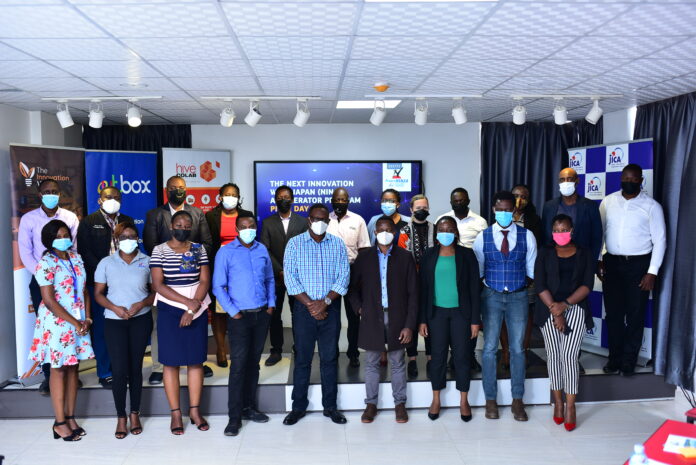
Five innovators to get $18,000 funding from JICA

Five innovators to get $18,000 funding from JICA

Five Ugandan startups that are ready for the next level of growth have been selected for the Next Innovation with Japan Accelerator program.

During a pitch day that took place at The Innovation Village recently, startups including M-scan, Laboremus Uganda, ChapChap Africa, Endiro Direct, AkelloBanker, Patasente and Easy Matatu pitched their business solutions and competed against twelve startups to emerge winners of the NINJA Accelerator Uganda program.

Uchiyama Takayuki, the Chief Representative at Japan International Cooperation Agency (JICA) Uganda Office said the startups were required to showcase aspects of relevance, impact, feasibility, readiness, traction and innovation.

“We looked at the business profitability, sustainable business models, future growth strategy and return on investment. For the innovation aspect, we assessed the business incorporation of technology to provide solutions and address societal challenges” Uchiyama said, adding that, “Now that the assessment process is done, the winner will undergo a three-month custom-made program based on their individual business need and capacity so as to achieve their desired level of growth. They will have a chance to access mentorship sessions, executive networking opportunities with partners and investors within the Japan ecosystem and support to test and refine their business idea.”

As part of the accelerator program, each of the five start-ups will receive up to $18,000 proof-of-concept funding to test their ideas. They will also be given the opportunity to raise between $0.5-1 million in investment, Uchiyama added.

The NINJA Accelerator Uganda program comes at a time when many startups are struggling to keep their businesses afloat given the insufficient financial resources, lack of innovation and unawareness of business principles for some.

With programs like these that break down barriers and create a path for entrepreneurs to grow their businesses, The Innovation Village believes that Uganda could produce the continent’s next game changers. The program is now expected to breathe life into some of Uganda’s top startups and catapult socioeconomic transformation.

The Founder of Business to Business e-commerce channel, Endiro Direct, Roger Agamba said,

“Endiro Direct is thrilled to be able to participate in the NINJA Accelerator Uganda program and work with the team to develop a solution that solves a real and often difficult challenge of access to markets for many coffee producers in Uganda and Africa.”

Sharing the same sentiment, Jean Anthony Onyait, the Chief Executive Officer of agriculture finance and tech startup, Akellobanker, said the NINJA Accelerator Uganda program is an opportunity to think big and get creative about its services.

He said: “We will go a long way in building our operational, technological and financial capacity to scale rapidly in Uganda and to expand to other markets in East Africa”.

George Bakka, the Chief Executive Officer of Patasente, a Fintech startup, noted that the NINJA accelerator program has come at a good time in its growth trajectory. It is an opportunity for the startup to learn more, build new capabilities, further refine its product and lay the foundation for both local and regional scale-up.

According to Lema Andrew, the Co-Founder Easy Matatu, joining the program for the first time is an opportunity to access business, technical, investment support as well as gives visibility to its product as it works to fix public transport challenges in Africa.

As implementing partners, The Innovation Village, Hive Collab and Outbox will each be assigned a startup to train and mentor. The collaboration these three hubs and the JICA task force will be one of the ecosystem’s largest efforts towards supporting startups and entrepreneurs in Uganda.

Stories Continues after ad