Stanbic Bank
Stanbic Bank
24.5 C
Kampala
Stanbic Bank
Stanbic Bank
Home Blog Page 763

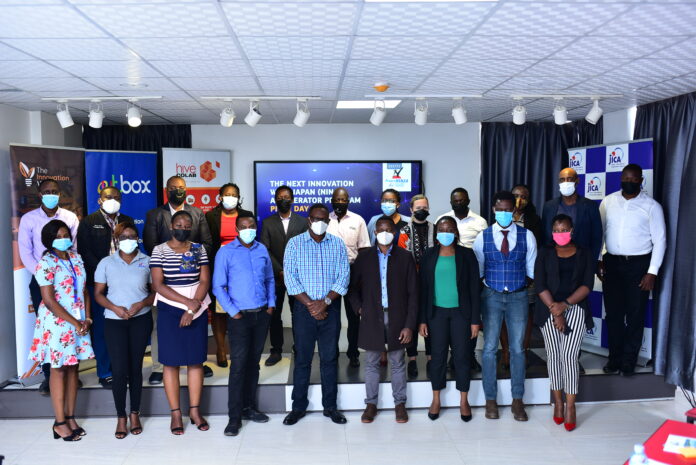
Five innovators to get $18,000 funding from JICA

Five innovators to get $18,000 funding from JICA

Five Ugandan startups that are ready for the next level of growth have been selected for the Next Innovation with Japan Accelerator program.

During a pitch day that took place at The Innovation Village recently, startups including M-scan, Laboremus Uganda, ChapChap Africa, Endiro Direct, AkelloBanker, Patasente and Easy Matatu pitched their business solutions and competed against twelve startups to emerge winners of the NINJA Accelerator Uganda program.

Uchiyama Takayuki, the Chief Representative at Japan International Cooperation Agency (JICA) Uganda Office said the startups were required to showcase aspects of relevance, impact, feasibility, readiness, traction and innovation.

“We looked at the business profitability, sustainable business models, future growth strategy and return on investment. For the innovation aspect, we assessed the business incorporation of technology to provide solutions and address societal challenges” Uchiyama said, adding that, “Now that the assessment process is done, the winner will undergo a three-month custom-made program based on their individual business need and capacity so as to achieve their desired level of growth. They will have a chance to access mentorship sessions, executive networking opportunities with partners and investors within the Japan ecosystem and support to test and refine their business idea.”

As part of the accelerator program, each of the five start-ups will receive up to $18,000 proof-of-concept funding to test their ideas. They will also be given the opportunity to raise between $0.5-1 million in investment, Uchiyama added.

The NINJA Accelerator Uganda program comes at a time when many startups are struggling to keep their businesses afloat given the insufficient financial resources, lack of innovation and unawareness of business principles for some.

With programs like these that break down barriers and create a path for entrepreneurs to grow their businesses, The Innovation Village believes that Uganda could produce the continent’s next game changers. The program is now expected to breathe life into some of Uganda’s top startups and catapult socioeconomic transformation.

The Founder of Business to Business e-commerce channel, Endiro Direct, Roger Agamba said,

“Endiro Direct is thrilled to be able to participate in the NINJA Accelerator Uganda program and work with the team to develop a solution that solves a real and often difficult challenge of access to markets for many coffee producers in Uganda and Africa.”

Sharing the same sentiment, Jean Anthony Onyait, the Chief Executive Officer of agriculture finance and tech startup, Akellobanker, said the NINJA Accelerator Uganda program is an opportunity to think big and get creative about its services.

He said: “We will go a long way in building our operational, technological and financial capacity to scale rapidly in Uganda and to expand to other markets in East Africa”.

George Bakka, the Chief Executive Officer of Patasente, a Fintech startup, noted that the NINJA accelerator program has come at a good time in its growth trajectory. It is an opportunity for the startup to learn more, build new capabilities, further refine its product and lay the foundation for both local and regional scale-up.

According to Lema Andrew, the Co-Founder Easy Matatu, joining the program for the first time is an opportunity to access business, technical, investment support as well as gives visibility to its product as it works to fix public transport challenges in Africa.

As implementing partners, The Innovation Village, Hive Collab and Outbox will each be assigned a startup to train and mentor. The collaboration these three hubs and the JICA task force will be one of the ecosystem’s largest efforts towards supporting startups and entrepreneurs in Uganda.

Stories Continues after ad

UBL, Coca-Cola partner with KCCA to step up Covid-19 vaccination campaign

Vaccination drive

Uganda Breweries Limited and Coca-Cola Beverages Africa in Uganda, with the Private Sector Foundation of Uganda, have partnered with Kampala City Council Authority (KCCA) and the Ministry of Health to speed up COVID-19 Vaccination and open up the economy.

The private sector players today launched a rejuvenated COVID-19 vaccination drive that will increase the number of vaccination points in the Kampala Metropolitan Area for more people to get access to the available vaccines.

Under the initiative, UBL, Coca-Cola and other private sector players will support the scaling up of COVID-19 mobile sites in the greater Kampala Metropolitan area by sensitizing and mobilising the public to go and get vaccinated against COVID-19.

“Through this initiative, we intend to drive awareness of the benefits of vaccination and encourage as many people to get vaccinated. This will be done through mobile sites spread around the city to bring vaccines closer to people and scale up accessibility and convenience. The collaboration between the government and private sector is key to ensure that the public health response to the pandemic is strengthened to mitigate the devastating socio-economic impacts of the pandemic,” said Juliana Kagwa of Uganda Breweries Limited.

Dorothy Kisaka, KCCA Executive Director applauded UBL for the move and encouraged even more private sector players to come on board to increase uptake of vaccines.

“Our priority is to establish more vaccination centers within the Kampala Metropolitan area. Visit any of these locations and receive your shot. COVID-19 vaccines are safe for you. Protect yourself and others by getting vaccinated.” she said

According to statistics from the Ministry of Health, total doses of COVID-19 vaccines administered stand at 1.78 million.

“Vaccination is a proven lifesaving public health intervention. We continue to encourage the public to get fully vaccinated against COVID-19. Vaccines protect you from getting seriously ill and dying from COVID-19. In addition to vaccination, we appeal to the public to continue to adhere to the SOP’s in place,” Ms Kisaka added.

Uganda’s economy contracted 1.1% in 2020 because of the pandemic and the related containment measures. According to Bank of Uganda, Uganda’s economy is projected to grow between 3% – 3.5% this financial year however the near-term outlook remains worrying as vaccinations are lagging well behind set targets.

Coca-Cola Beverages Africa Public Affairs & Communications Director, Simon Kaheru, said vaccination was imperative to save lives and the economy.

“Everybody should go and get vaccinated otherwise these lockdowns will continue to disrupt our lives. All of us should realize in our different businesses that we will not operate normally unless we are protected from COVID-19. We are calling on all closed businesses to take this seriously bar owners, boda-boda riders, telecommunications employees, everybody come and get vaccinated to protect your lives and your businesses. This is the only way we can open up the economy,” Kaheru said.

“Under PSFU we set up a COVID-19 Task Force and we have mobilized more members to get involved. I call upon all businesses to send their employees and their families to every vaccination centre available, on top of enforcing the SOPs,” he added.

“This initiative compliments our Raising the Bar program, a USD 1 million fund established to prepare the hospitality industry for safe reopening by establishing health measures and providing essential training to boost their capacity to reopen their businesses under the respective national guidelines. Economic recovery remains hinged on vaccination that will enable easing of restrictions that are currently impacting business recovery,” added Juliana Kagwa.

The initiative will also mobilize players within the hospitality and entertainment sector including bar owners and staff to embrace vaccination as a key strategy towards full reopening of all sectors of the economy.

Stories Continues after ad

Stanbic Bank Uganda Holdings subsidiary, FlyHub appoints Joel Muhumuza as CEO

Joel Muhumuza

FlyHub Uganda Limited, a subsidiary of Stanbic Bank Uganda Holdings Limited (SBUL) has announced the appointment of Joel Muhumuza as its first Chief Executive Officer.

FlyHub is a newly created FinTech company and one of four subsidiaries under SBUL, the others being, SBG Securities, Stanbic Bank Incubator Limited and the well-known Stanbic Bank Uganda.

A certified digital money practitioner with expertise in digital product development, business process mapping and technology project management, Muhumuza has ten years of experience in the digital financial services arena having worked in Uganda , Kenya, Zambia, and South Africa.

Prior to joining FlyHub, he held roles as the Country Director for JUMO East Africa(Uganda and Kenya), a digital lending Fintech and Manager Financial Services at Financial Sector Deepening Uganda.

He also worked as the Product and Business Development lead at UNCDF in Zambia and South Africa, as well as Commercial lead for the AppLab under Gates Foundation.

FlyHub’s mandate is to extend the horizon of appropriate digital financial technology usage in both Standard Bank Group, and other key market actors, in the delivery of quality financial products to businesses and individuals.

Reporting to SBUHL’s Chief Executive, Muhumuza will provide strategic vision and direction for the company to set the right foundation for success.

He is also tasked to build the right processes and put a quality team in place to execute the Standard Bank Group agenda of providing relevant technology solutions to meet the bank and clients’ needs.

“It’s a pleasant honour to be appointed FlyHub’s first Chief Executive. I am looking forward to building and leading a team that will help achieve our mission of being a technology solutions hub for financial service providers and businesses in Uganda and beyond,” said Muhumuza.

Joel holds an MBA, Bachelor’s Degree in Commerce, and a Digital Finance certification from Tufts University DFA program

Stories Continues after ad

Three arrested in Katakwi over double murder

Handcuffs

The Police in Katakwi district, has in custody three suspects, who form part of a group, which allegedly raided the home of Omachar Emmanuel, a businessman during the night of September 20, 2021, at Aleles village, Akisim parish, Angodingodi, Sub County, in Katakwi District.

The arrested suspects include; Ijoot John Robert, Olem Simon and Asege Agnes, all from the same village.

ASP Ageca Oscar Gregory, the police spokesperson in the East Kyoga region said; “They killed him together with his wife Achode Teddy, and inflicted serious injuries to their two daughters.”

The scene of crime was visited by the Regional team from East Kyoga and Katakwi CPS which included homicide detectives, who rushed the two juvenile victims to Katakwi General hospital for further medical attention. They also conveyed the bodies of the two deceased persons to hospital for further post mortem analysis.

“The team arrested the three suspects on preliminary information linking them to the murder, and transferred to Katakwi CPS, for further interrogation, to help establish the circumstances and motivation behind the murder. Exhibits of material value were recovered at the scene,” ASP Ageca said.

“The police assures the public that there is no place for such acts of violence and impunity, and will fast track the investigation to ensure the suspects are thoroughly processed and arraigned before the courts of law.”

“We further ask the public to disregard alarmist reports that Bijambiya (panga wielding gangs) had killed the two people. The incident is a straight forward case of murder.”

Stories Continues after ad

Salesians Missions offers sponsorship to refugee children in Palabek Refugee Camp

Refugees

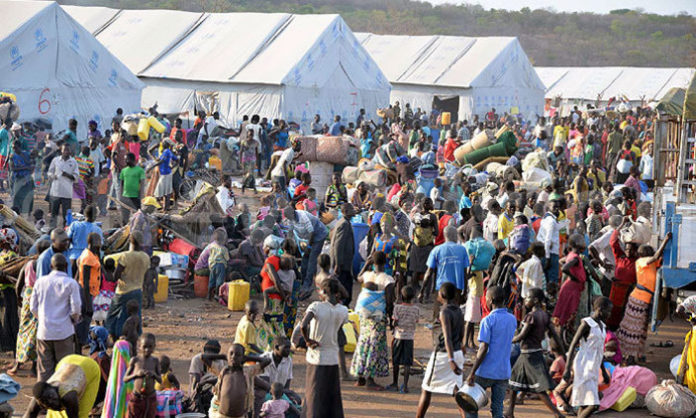
Salesians Missions in Palabek Refugee Resettlement Camp have offered educational sponsorship to refugee children.

Salesian missionaries living and working at Palabek Refugee Resettlement Camp in Uganda are able to provide education to refugee children thanks in part to donor funding from Salesian Missions, the U.S. development arm of the Salesians of Don Bosco.

Palabek Refugee Resettlement Camp is currently home to more than 56,000 refugees and asylum seekers. It was officially set up in April 2016 to reduce congestion in larger refugee camps in the northwestern corner of Uganda. Several agencies are involved in providing food and education within the camp. While some have left because of the pandemic, Salesians have remained.

Salesians offer education to refugee children in the camp. There are 100 children in primary school, 54 in secondary school and 25 older youth in the Don Bosco Vocational Training Center where they learn skills in sewing, solar energy, mechanics, agriculture, construction and hairdressing.

Salesians also run a special sponsorship program to help youth attend school outside of the camp. Many children and older youth have to walk 10 to 15 kilometers (approximately 6.2 to 9.3 miles) each day to reach the schools. The sponsorship program enables Salesians to take youth to boarding facilities outside of the camp closer to the schools. Youth are able to live and study there, as well as have access to healthy nutrition and recreational activities.

For older youth who want to learn technical skills not offered at the Don Bosco Training Center in the camp, Salesians also offer a sponsorship program. The program brings young refugees to other centers outside of the camp where they can learn plumbing, blacksmithing, driving, animal care and other skills.

Father Ubaldino, rector of the Salesian community in Palabek Refugee Resettlement Camp said, “At the technical and vocational level, many young refugees want to go out to work, they want to learn a trade, that in most cases, allows them to return to South Sudan and contribute to the reconstruction of the country, destroyed by many years of violence and war.”

“We have the case of a young girl who learned mechanics and then took a driving course. Now she returns to South Sudan and is working as a driver in an agency, with a salary of $700 per month, far above the minimum wage in Uganda,” Fr. Ubaldino added. “We are very grateful to our donors who have helped many children and young people make the dream of a good education come true, allowing them and their families to live a more dignified life.”

Stories Continues after ad

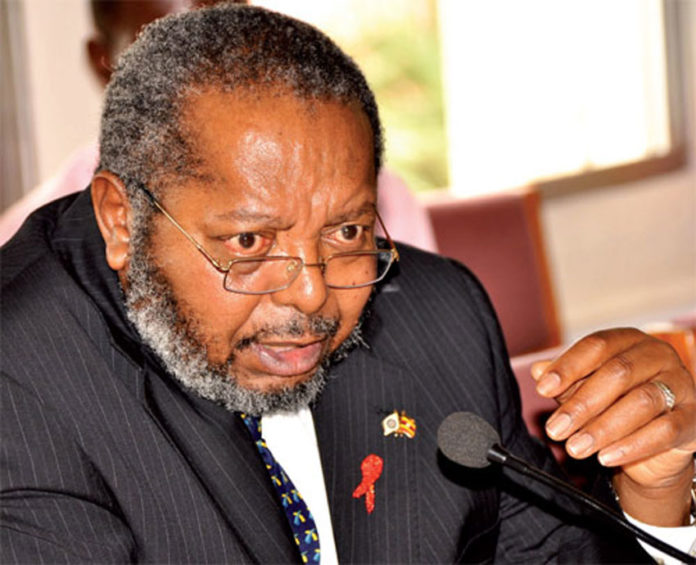
Gov’t won’t take your money on dormant accounts – BoU clarifies

Late Emmanuel Tumusiime-Mutebile

Bank of Uganda (BoU) has said government has no intentions of taking over or even taxing unclaimed balances in dormant bank accounts or mobile money accounts.

In a communication from BoU Governor Emmanuel Tumusiime-Mutebile and the Minister of Finance Hon Matia Kasaija, they say media reports that there were plans by government to take depositors’ idle cash on dormant bank accounts under the National Payment System (NPS) Act were misleading.

As a regulator of the banking sector, BoU applies a set of laws to deal with unclaimed balances or dormant accounts for Supervised Financial Institutions (SFIs) and Electronic Money Issuers (EMIs).

According to Section 119 of the Financial Institutions Act (FIA) 2004 and Section 83 of the Microfinance Deposit-taking Institutions (MDI) Act 2003, a dormant account is one that has not had any activity for a period of two years in an SFI. This includes fixed deposit accounts that have not had any activity for two years following the maturity date.

After two years of inactivity, the SFI transfers the said accounts to a separate register of dormant accounts in its books and a notice in writing of that action is sent to the customer at his or her last known address.

Once the dormant account has been on the register for three years, the Supervised Financial Institution advertises this fact in the print media. It should be noted that any account may be transferred out of the register of dormant accounts if the depositor or if the depositor is dead, his or her legal representative, makes such a request.

Unclaimed balances shall after a period of five years from the date of the advertisement be transferred to Bank of Uganda.

The public should note that BoU shall refund any unclaimed balances to the depositor or those balances with the supervised Financial Institution or if the depositor is dead, his or her legal representative, if a request is made after the dormant account has been transferred to the Bank of Uganda.

For purposes of electronic money (mobile money), section 57 of the National Payment Systems Act 2020, made similar provisions. The public should note that act give the mandate to regulate Electronic Money Issuers.

According to section 57 of the NPS Act 2020, a dormant account is that has not had any activity for a period of nine consecutive months. The electronic money issuer shall give notice to the customer at least one month before expiry of the nine months.

At expiry of nine months, the e-money account will be suspended and subsequently blocked. five days after blocking the e-money account, the electronic money issuer shall give notice to the customer that the account is blocked and provide instructions on how the account can be activated.

If the account is not activated within six months after it has been blocked, the electronic money issuer shall close the e-money account. Upon the closure of the account, the trustees shall transfer the balance on the electronic money account and the identification information of the relevant customer to Bank of Uganda.

BoU shall pay unclaimed balances to the customer if the claim is made within seven years; if the account owner is dead their legal representative or administrator of his estate shall make such a claim.

BoU shall after those seven years, if unclaimed, transfer the unclaimed balances to the Consolidated Fund.

The public is informed that there is a period of 10 years within which to rectify the issues of unclaimed balances on our accounts held with supervised financial institutions. Customers, who hold accounts with electronic money issuers have a total of eight years and three months within which to deal with the issue of dormant account.

As such, BoU assures Ugandans that government will not take over unclaimed balances that are lying idle on accounts held either with supervised financial institutions or with electronic money issuers.

Stories Continues after ad

Kyambogo University student dies few hours to her graduation

Tracy Ndagire

Kyambogo University student Tracy Ndagire has passed on at Uganda cancer institute Mulago where she was admitted over an unrevealed health problem. Tracy died two days to her graduation.

Tracy, who was scheduled to graduate tomorrow, pursued a Bachelor of Science in Surveying and Land Information Systems.

According to Jude Zziwa, a friend to the deceased, Tracy will be laid to rest later today in Kinoni, Masaka.

“Am thankful that God gave us an opportunity to know you right from your early years. All the way from High School, you were full of life, fun to be with, sold out to love and serve the Lord. I remember how you always got so excited to receive us whenever we came to do ministry at your school, you gladly carried loud speakers at Gayaza High School,” Zziwa said in a Facebook post.

He added: “We connected and you became part of us, we became family, and you brought life to all the fellowships of young people and all the ministries you got connected to. You lived a short yet very effective life. We shall forever remember you.”

Stories Continues after ad

Four arrested as NEMA cracks whip on wetland encroachers

Four arrested as NEMA cracks whip on wetland encroachers

The National Environment Management Authority (NEMA) received a new Executive Director, Dr. Barirega Akankwasah on September 1, 2021 who, in his acceptance speech highlighted statistics on reducing wetland coverage having reduced from 15.5 percent in 1994 to 13 percent in 2017. He further indicated that if the trend goes unchecked, the country is bound to face dire consequences including extinction of the country’s national symbol, the Crested Crane, whose habitat is wetland.

Consequently, he issued a public notice indefinitely suspending receipt, issuance and consideration for all projects within wetlands effective September 2, 2021. The decision was made to reduce pressure on wetlands and to enable Government build capacity to regulate developments in wetlands.

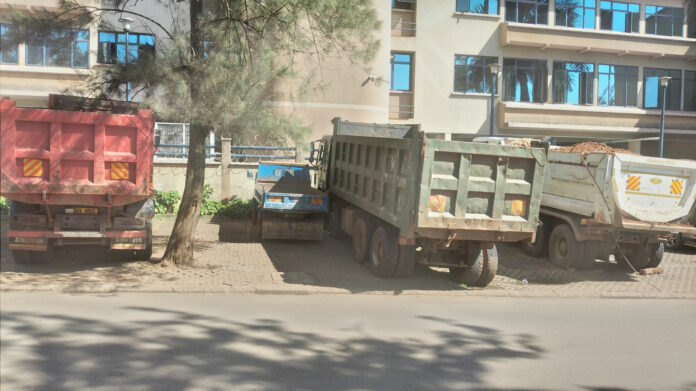
Subsequent operations targeting encroachers in and around Kampala have led to arrests, and a number of trucks have been impounded for backfilling wetlands.

Kyetinda wetland system; This system is located in Makindye Division around Ggaba-Munyonyo area. Aside from the other hydrological functions of this wetland such as flood control, the wetland is particularly important because it acts as a natural purification system for the water that feeds the National Water intake plant in Ggaba.

The 20th September 2021 operation by the environment police led to impounding of Two trucks; UAQ 704 W and UAS 249 P in Munyonyo, near Auto Spa backfilling part of the above wetland system. Two suspects were arrested, but released on Police bond.

Nsooba-Lubigi wetland system; This expansive wetland system has been targeted by encroachers for settlement, farming, bricklaying etc. Aside from being a critical habitat for certain species, the wetland plays a critical role in shielding parts of Wakiso and Kampala from flooding.

Two trucks; UAU 520X belonging to Energo and UAV 605G have been impounded from Kyanja while backfilling part of the Nsooba – Lubigi wetland system. One suspect is currently detained at Kololo Police station; while the other is out on Police bond. All suspects will be arraigned in court to face the law.

“NEMA has noted that some impounded trucks belong to construction companies and therefore calls on the owners of these companies to prevail over their employees who have made it a habit to utilize company trucks to engage in environmental degradation – specifically backfilling wetlands at a fee,” NEMA said in a statement.

NEMA is a semi-autonomous institution of the Government that coordinates, monitors, regulates and supervises environmental management in the country. NEMA spearheads the development of environmental policies, laws, regulations and standards, and guides Government to make sound environmental management decisions.

Stories Continues after ad

Court remands Francis Onebe over the murder of his wife

Francis Onebe

Makindye Chief Magistrates Court has remanded city Business man Francis Onebe over the murder of his wife Immaculate Asio Onebe.

Onebe was arrested last week after his wife’s body was retrieved from a septic tank at their residence in Munyonyo.

Appearing before magistrate Sarah Ann Basemera, Onebe and a private security guard Bonny Oriekot were charged with murder and subsequently remanded to Kitalya Prison.

Prosecution avers that Onebe Francis together with his home guard Bony who allegedly murdered Mrs. Immaculate Asio Onebe have been charged of Murder C/S 188 &189 of the Penal Code Act.

“Francis Onebe, 63 an accountant, Bonny Oriekot, 26, a security guard attached to Pentagon Security Limited and others still at large during the month of January, 2021 at Mawanga zone LC1 in Munyonyo , Makindye division in Kampala district murdered Asio Immaculate Mary Blessing Onebe,” the prosecutor Lydia Nakato told court.

According to the DNA test results, the decomposing body which was retrieved from a septic tank of Francis Onebe’s home was of his wife, Immaculate. The 62 year old proprietor of a security firm reportedly went missing in January 2021. She was buried on the weekend in Kaberamaido district.

Onebe was arrested after police established his intentions to flee the country. But upon arrest, Onebe said he was traveling for treatment, and his earlier reasons to travel to Nairobi also indicated appointments with doctors.

The arrest also followed the nabbing of a former security guard of Onebe who sneaked into the home. It is averred that the guard identified as Okariot disappeared moments after Onebe’s wife went missing.

In January, Onebe reported the case of missing wife Immaculate Onebe at Kabalagala police alleging that his wife was kidnapped by security agencies which were moving in a ‘drone’. He mounted a search for his wife, visiting the Special Investigations Unit (SIU) in Kireka, Chieftaincy of Military Intelligence (CMI) in Mbuya and Criminal Investigations Directorate (CID); however he failed to locate her.

Onebe the prime suspect in the death of his wife didn’t relent, he placed adverts in newspapers, radios and television stations as well as social media.

Stories Continues after ad

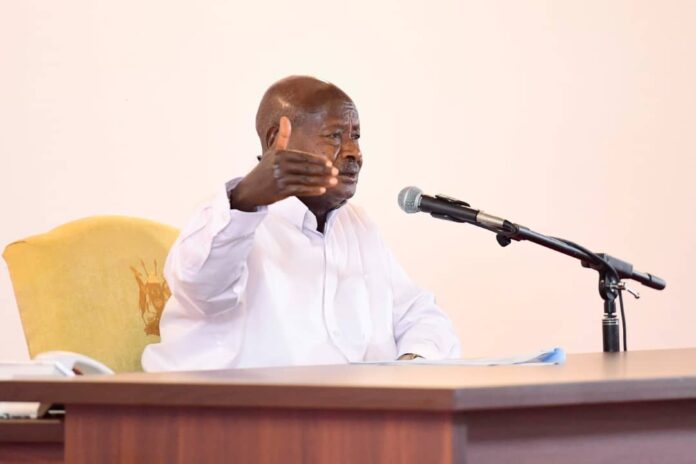
Museveni to reopen places of worship as schools remain closed till next year

Museveni

President Yoweri Museveni is tomorrow expected to address the Nation on COVID-19 situation and other related issues in the country.

On 18 June 2021, the president instituted a total lockdown for 42 days in the country. The lockdown was peddled at curbing the spread of Covid-19 pandemic.

When the 42 days elapsed, Museveni relaxed the lockdown on the major sectors which included Tourism, transport; he however extended the lockdown on places of worship and schools for 60 days and 42 days on betting, Cinema halls and other sports activities.

According to a source at the state house, the president will direct the reopening of churches and places of worship under the strict guidelines in place to control the spread of Covid-19 virus.

“According to what I have heard, schools will remain closed till next year. The continued closure is alluded to government’s motive of vaccinating at least 500,000 teachers in the country,” the source said.

Yesterday, the ministry of education and sports expressed its dismay over the low uptake of vaccination among teachers across the country.

A total of 366,108 teachers out of a target population of 550,000 have got their first and second doses. This now raises questions on how the government will proceed with the possible reopening of learning institutions which is hinged on the vaccination of teachers.

In the meantime, the education ministry is now targeting the vaccination of 310,000 learners above the age of 18 in tertiary institutions.

Stories Continues after ad