Stanbic Bank
Stanbic Bank
26.7 C
Kampala
Stanbic Bank
Stanbic Bank
Home Blog Page 766

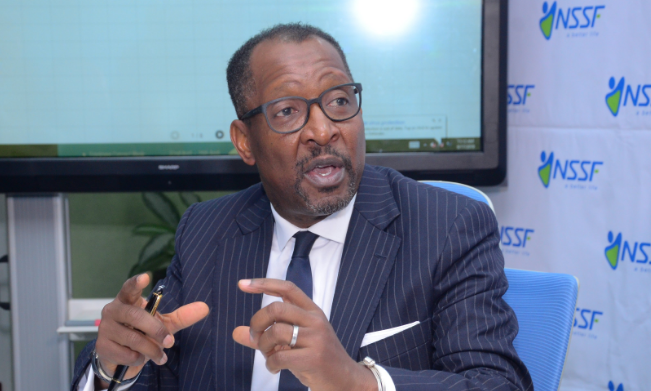
NSSF pays Shs1.8bn to #Covid-19 patients

NSSF Managing Director Richard Byarugaba

The National Social Security Fund has announced that it paid Shs 1,785,943,795 to its members that were severely diagnosed with #Covid-19.

The fund had made a commitment to its members that it would step in for severe cases that involved those admitted in Intensive Care Units and those on life support in several health facilities to supplement on medical expenses.

“NSSF has paid out Shs1,785,943,795 to qualifying members who were diagnosed with #Covid-19. Here’s how paying Annet’s Invalidity Benefit in three days enabled life-saving medical care,” reads a message on the fund’s twitter handle.

NSSF in June said members battling #Covid-19 in the Intensive Care Unit (ICU) would be given an option to access part of their benefits under the invalidity benefits provision.

Richard Byarugaba, the NSSF Managing Director, told Daily Monitor that the Fund had already helped some members in that regard. However, he did not provide specifics on how many members had approached NSSF in this regard or how much had been paid out.

“It is an invalidity benefit. Basically, it is a benefit which is available to members who are either incapacitated or are not able to work. And since we have seen that #Covid-19 can sometimes result in serious medication, the [NSSF doctor] assesses and then authorizes it [pay out],” he was quoted adding that the assessment for the payout is done in less than a week.

Mr Byarugaba noted that the payout would purely be based on the discretion of the NSSF doctor, who after assessing submitted documents, will authorise the payout.

NSSF has since last year been swarmed by request from both members and the public to create a provision in which members, whose income sources have been affected by #Covid-19 access part of their benefits to shore them out of the hard times.

Stories Continues after ad

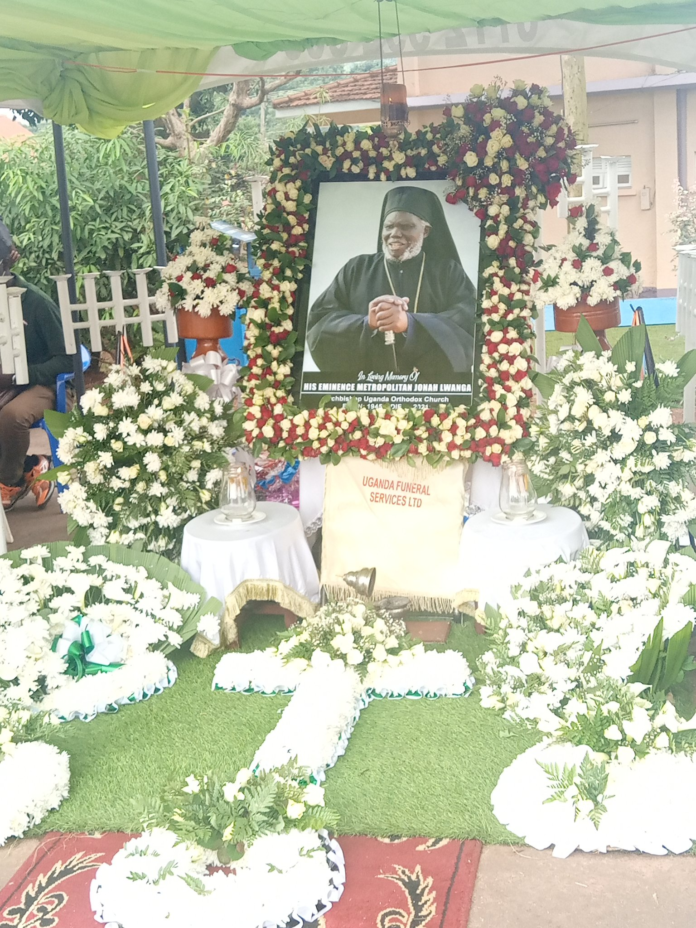
Orthodox Archbishop Jonah Lwanga laid to rest at St. Nicholas Cathedral Namungoona

The late Archbishop Jonah Lwanga laid to rest at St. Nicholas Cathedral Namungoona

The late Archbishop of Uganda Orthodox Church Metropolitan Jonah Lwanga has been laid to rest at St. Nicholas Cathedral Namungoona. The Archbishop breathed his last on September 5, 2021 in Greece’s capital Athens where he had gone for a visit.

According to Reverend Father John Kibuuka Bbosa, the prelate succumbed to prostate cancer. “An autopsy of the late Lwanga as provided to the Church on Monday evening by the hospital where he died in Athens, confirmed the cause of  his death,” Fr. Kibuuka said.

At the final send off, President Yoweri Museveni through Vice President Jessica Alupo eulogized the late Archbishop saying that his death has robbed the country. “His wise counsel on matters of governance and human rights will be missed,” Museveni said.

Vice-President, who is also the chief mourner, said President Museveni will at a later date lay a wreath on the burial site of the late Metropolitan Jonah Lwanga. She said the Government will tomorrow move a motion in Parliament to honour the late Orthodox leader for his contribution to the Church and to the socio-economic development of Uganda.

On behalf of Inter-Religious Council of Uganda (IRCU), Archbishop of Church of Uganda Stephen Kazimba Mugalu said the passing of Archbishop Jonah Lwanga has left a very big gap in IRCU.

He said Lwanga was passionate about unity among the different religious denominations in Uganda, as well as his ‘invincible courage’ and being an ‘ardent supporter of the Uganda national dialogue’. “We will dearly miss him.”

In a condolence message delivered by Katikkiro Charles Mayiga, Kabaka Ronald Muwenda Mutebi eulogizes Archbishop Jonah Lwanga as a man who loved his culture and who was truthful.

“Archbishop Lwanga was consistent. You could not second guess him. You knew where he stood. He loved humanity from his deeds. While we are urged to love God, it is futile to love him, yet we don’t love humans who live with us. He was trusted,” Kabaka said.

The former presidential candidate Robert Kyagulanyi Ssentamu aka Bobi Wine said Archbishop Lwanga spoke the truth even when the truth was dangerous.

“We are proud to have him in our generation. It is dangerous that we have lost outspoken religious leaders in a short time. It is upon us to carry on the legacy as we lay him to rest. We should stand for what is right,” Bobi Wine said.

Bobi Wine said It is disturbing that in less than a year, the country has lost many outspoken religious leaders, some of them in ways that have not been explained.

Stories Continues after ad

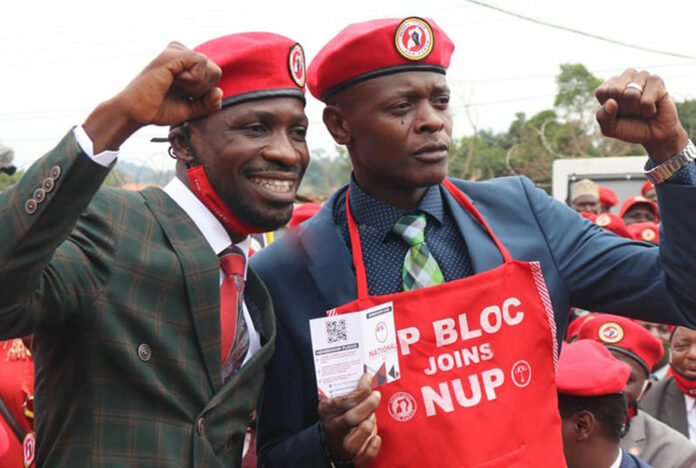
Jose Chameleone denounces Bobi Wine’s NUP, says is a still a member of NRM

Bobi Wine and Chameloene

Singer Joseph Mayanja known as Jose Chameleone has denounced National Unity Platform (NUP), a Political Party led by the former presidential candidate Robert Kyagulanyi Sentamu aka Bobi Wine.

At a party which was organised by President Yoweri Museveni’s brother Michael Nuwagira aka Toyota, Chameleone said he is still a member of the National Resistance Movement (NRM).

“I am still your family, I have never left NRM. If you doubt that, put up your cameras and record me. I am still NRM,” he said, adding that he had his own issues why he had crossed to NUP, “I am now a prodigal son.”

He was handed a brand new range rover and in tandem, he went down on his knees applauding Toyota for the gift offered to him.

On August 13, 2020 joined NUP a few weeks after President Museveni unfollowed him on twitter. He sought a ticket to stand for Kampala Mayoral office however he was denied a ticket on grounds that he was not meeting minimum requirements. The ticket was handed to former Kawempa North MP Latiff Ssebaggala who later bowed out of the race.

Since then, Chameleon has been meeting Museveni’s brother who is also the coordinator of Operation Wealth Creation (OWC) Gen Salim Saleh under the guise of lobbying for the musicians.

Stories Continues after ad

Minister Hellen Asamo, siblings in court battle over where to bury mother

HON ASAMO HELLEN

The Minister of State for Gender, Labour and Social Development (Disability Affairs) Hon. Hellen Asamo Grace and her siblings Eryaku Isac and Martha Mbabazi Atai are in a court battle on where to bury their mother.

A court order from Chief Magistrate, Her Worship Aanyu Margaret dated 17th September, 2021 blocked Hon Asamo and her agents from conducting the burial of the late Iyapo Phoebe Auma which was scheduled for 18th September.

“This matter coming up for final disposal (ex-parte), this 17th day of September, 2021, before Her Worship Aanyu Margaret, Chief Magistrate in the presence of counsel Menya Paul for the applicants and in the presence of the applicants and in the absence of the respondent,” reads part of the letter.

“It’s hereby ordered that; An interim order doth issue restraining the respondent (Hon Asamo), her agents or any funeral service providers or anybody acting under her authority from conducting burial of the late Iyapo Phoebe Auma due for burial on 18th September 2021 until determination of the main cause number 37 of 2021 on 20/9/2021.”

Eryaku Isac and Martha Mbabazi Atai dragged Hon Asamo to court to block the burial of their late mother Iyapo Phoebe until they all agree on where to bury her body.

Court also ordered for the body to remain with the funeral services company until the matter is resolved before court.

“The body of the deceased remains in the custody of A-Plus Funeral Services until then. Costs shall stay in the cause,” Court ordered.

Stories Continues after ad

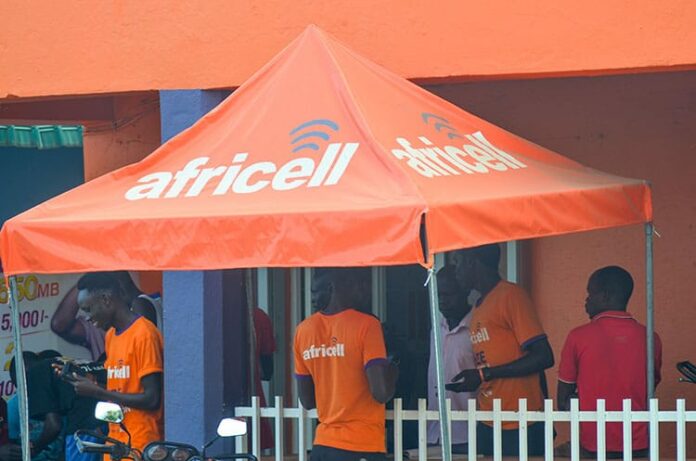
Airtel Uganda takes over Africell customers

Africell

Airtel Uganda has taken over Africell customers, a week after Telecom service provider announced that it will exit Uganda market next month.

Last week, Airtel Uganda announced that every Africell customer who joins them, will get 50% bonuses on data bundles. “50% Bonus on all Data Bundles for everyone switching from Africell to Airtel. Make the move today and enjoy the best offers on the largest 4G Network in Uganda,” Airtel said.

Africell will be the third telecom company to be acquired by Airtel Uganda. Airtel entered the Uganda Market on June 8 2010 when Bharti Airtel acquired 16 Zain Africa operations. In 2013, Airtel fully acquired Warid Telecom Uganda in the first ever in-country acquisition in the telecommunications sector.

“Africell has decided to leave Uganda and focus on other opportunities for social and commercial impact. Doing so is the most sustainable way to fulfill our overall mission to advance the African telecom sector,” Africell announced, adding that “The decision was made in the long term interest of the Ugandan telecom sector.”

 “Africell will stop services on 7 October 2021 and the last day of employment with Africell Uganda will be 30 November 2021. Africell will clearly communicate the transition in respect to its employees and clients,” Africell said.

“We understand that all employees have unique personal circumstances and the Human resource office will be in contact to explain specific packages for employees. As of 8 September 2021, Africell will not accept new customers. In the next month, the company will be helping current customers to switch to other service providers,” Africell said.

Africell Uganda was established in May 2014, when it acquired the majority stake that Orange Telecom owned in its Uganda cellular network. Africell paid $12 million for that stake, inheriting an estimated 1,000,000 subscribers. In November 2014, the Group Chairman and CEO announced plans to invest US$150 million in the next 5 years, to upgrade the Africell network in Uganda.

In 2014, the network subscribers in Uganda were estimated at one million. As of September 2018, its subscriber customer numbers had risen to 2.1 million. In April 2020, the company’s website gave the number of subscribers as over 3,000,000.

In 2018, Africell Holdings, the parent company of Africell Uganda, secured a loan of US$100 million from the Overseas Private Investment Corporation (OPIC), to expand operations in Uganda and the Democratic Republic of the Congo. Africell Holdings maintains subsidiaries in the Gambia, Sierra Leone, DR Congo and Uganda. As of January 2015, Africell Uganda maintained coverage in the majority of Uganda’s geographical area.

Stories Continues after ad

Mountain Slayers Uganda equips Rwenzori guides and rangers

Mobile stretchers are part of the equipment that will be put to use in the mountains. Previously, ill or injured hikers had to be carried down on the back of a guide or porter (a so-called manbulance)

Mountain Slayers Uganda (MSU) has handed over mountain climbing safety equipment to the Rwenzori Ranges Hikers Association (RRHA) and Rwenzori Mountaineering Services (RMS) teams.

The handover of equipment preceded a 10-day training of 14 guides and two rangers from Rwenzori Ranges Hikers Association (RRHA), Rwenzori Mountaineering Services (RMS) and Uganda Wildlife Authority (UWA) on safety in the mountains carried out in June 2021 by Sentinel Outdoor Institute.

The activity that took place at Rwenzori Base Camp Guest House in Kasese was the culmination of a project dubbed “Galvanizing Mountain Tourism Through Enhancing Mountain Safety” and led by Mountain Slayers Uganda President Paul Lumala.

The training which  aimed to increase the level of safety for both local and international tourists while climbing the Rwenzori and focused on Outdoor Leadership, Group Organisation and Management, Wilderness First Aid (WFA) and Cardio-Pulmonary Resuscitation (CPR, Leave No Trace (LNT) and Field Emergency Evacuation.

According to Lumala, the team completed the test without incident and found the equipment to be effective as the guides led the team to summit Rwenzori’s highest peak Margherita at 5,109 metres.

Josephat Baluku who has been a professional guide with Rwenzori Mountaineering Services for over 30 years said that the training empowered them and has made them more efficient guides.

“Most of the equipment we were using was not the standard recommended gear. For example, with the new ice axe, we can now easily identify the crevasses (holes in the glaciers) so that hikers don’t fall in them. I once fell into a crevasse and couldn’t remove myself. I sustained an injury that left a scar. With the new gear and the training we received, I can remove myself from a crevasse using the different static ropes and other equipment,” he explained.

Baluku is excited to use the gear and invites all Ugandans to try climbing the Rwenzori adding that the climbing experience will be easier with their improved skills plus the safety equipment. It’s their mountain and not only for foreigners, he said.

Nelson Bwambale who has been a guide for 2 years says the training has boosted his confidence and made him a better guide.

“We will be able to guide hikers in the way it should be done. We have been well trained, and I encourage Ugandans to come and enjoy the mountains and their beauty.” said Bwambale.

Lumala said that as Mountain Slayers Uganda, the club members are on a mission to localize hiking of mountains but having had several trips to the Rwenzori in the past had observed issues with safety.

For instance, if a climber suffered from Acute Mountain Sickness or an injury, the tour guides were using a “human ambulance system” or “ambulance”. This is where a 10-man team takes turns carrying the injured hiker down steep, slippery rocks back to safety at the mountain foothill,” Lumala explained.

“Many people fear that they may fall off a cliff, get altitude sickness, get injured and unable to move which are all valid fears. We, however, believe that through the training that was conducted coupled with the right gear we supplied the guides, safety issues have been minimized and this alleviates one of the biggest barriers preventing some people going into the mountains,” said Lumala.

He added that the success of this project will make members feel more confident in selling the idea of climbing the mountain because the right skills were imparted in the guides to provide necessary response to the different situations that may arise.

“Most of the experienced guides are past 55 years and will eventually retire. It’s nice to know that we are helping the younger guides sharpen their skills beyond what they are picking out of being apprentices. This all culminates into a winning situation for adventure seekers out there,” Lumala said.

Stories Continues after ad

CAF Confederation Cup: URA FC to face Egypt’s Al-Masry

URA team

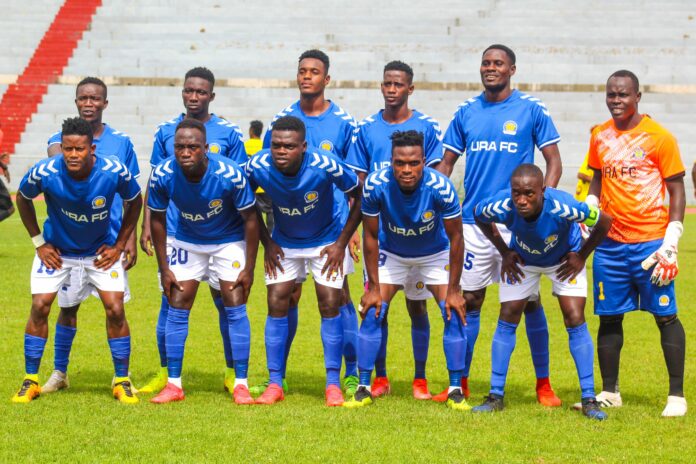
URA FC will face Egyptian side Al-Masry in the second preliminary round of the 2021/22 CAF Confederation Cup after eliminating Ethiopian Coffee with a 5-2 aggregate win.

The Tax Collectors who won 2-1 in Kitende, picked a 3-1 victory away in Ethiopia in the first round to advance.

Cromwell Rwothomio put URA ahead before two quick-fire goals courtesy of Ashraf Mandela and Kagimu to lead 3-0. Ethiopian Coffee however pulled one back from the spot with 20 minutes to play thanks to Asrat Tunjo but wasn’t enough.

The Ethiopians enjoyed most of the possession in the opening minutes of the game but had no real threats going forward and did not do much to trouble the URA defense.

URA will host Al Masry in the first leg between October 15-17 and the return fixture will be played a week later.

Al Masry were exempted to take part at the first Preliminary stage. The Egyptians were knocked out by KCCA FC in 2017 at the playoff round.

The winner over the two-legged affair will make it to the last qualification stage.

How URA lined up

URA XI: Nafien Alionzi (G.K), Ashraf Mandela, Derrick Ndahiro, Fesali Najib, Hudu Mulikyi, Patrick Paul Mbowa, Joackiam Ojera, Shafik Kagimu (Captain), Said Kyeyune, Steven Mukwala, Cromwel Rwothomio

Subs: James Alitho (G.K), Benjamin Nyakoojo, Ronald Kigongo, Faruku Katongole, Ibrahim Juma Dada, Living Kabon, Viane Ssekajugo, Ivan Sserubiri, Moses Sseruyidde.

In the Caf Champions Legue, Uganda’s representatives Express FC were dumped out after they lost 1-0 away in Sudan to Al Merriekh. Ahmed Hamed 73rd minute goal ensured the hosts tied the fixture 2-2 after both legs, their away goal at the St. Mary’s Stadium proving very crucial in the end.

Stories Continues after ad

Museveni condemns coup d’etats in Guinea and Mali, says elections is the option for peaceful transfer of power

President Museveni

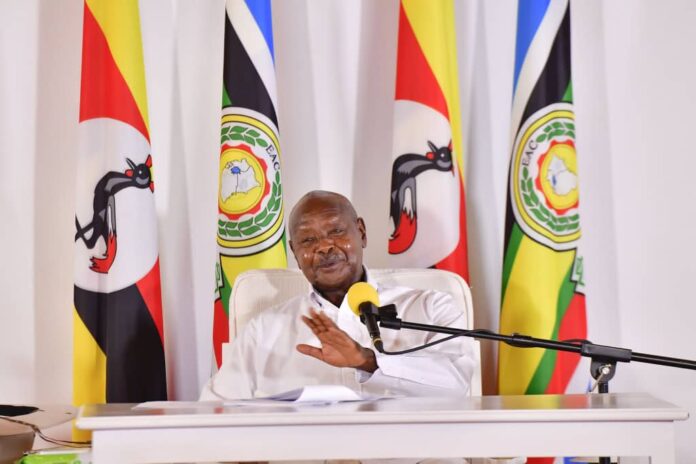
President Yoweri Museveni condemned the coup d’etat which saw the overthrow of President Alpha Conde and Ibrahim Boubacar Keita.

President Keita was in August 2020 toppled as Mali after being forced to resign in the 2020 Malian coup. In tandem, Alpha Conde was last month withdrawn as president of Equatorial Guinea.

According to Museveni, the coup plotters would have resorted to elections as the peaceful transfer of power if they were not agreeing on certain issues.

“Elections mean one person, one vote, by secret ballot, at regular intervals. This is the minimum they all have set and it is a good one. If people who do not share our views win the elections, provided they do not engage in extra–judicial killings, we should accept their leadership and struggle against their wrong positions peacefully,” Museveni said.

He said the position of one person, one vote, by secret ballot, at regular intervals, is a good minimum position because it addresses the substance of democracy, which means the continuous and perpetual supremacy of the sovereignty of the people.

“Nobody has a right to interfere with this. Some of us, in the foot-steps of the freedom fighter elders, cannot contentedly accept that Africa becomes a Latin America in Africa. The struggle led by the elders was: “for a free and United Africa”; not for “an unfree (neo-colonialism) and dispersed Africa,” he said.

Full Speech Below

The Military Coups that have taken place in Mali and Guinea must be evaluated by the African freedom fighters so that we correctly take a principled stand. In a recent interview with Radio France, I condemned the Coup in Guinea because that was the latest. The same condemnation extends to the one in Mali and all the others like the one that was in Madagascar, some time ago.

Why? It is because the African resistance, right from 1912 when the ANC was founded after the humiliating takeover of the whole continent by the imperialists after defeating the incapable traditional chiefs, had 5 aims: to expel the imperialists from Africa (decolonization); in order to do that, the freedom fighters had to unite the African Peoples in each territory (colony) by emphasizing Patriotism (the unity of all the people as opposed to tribalism – the word being used was “African Nationalism); however, patriotism was not enough to defeat the imperialists – we needed Pan African action to gain more strength (hence, the Manchester conference of 1945, the Accra Conference of 1958, the OAU conference of 1963 etc.); this Pan-Africanism, apart from the coordinated anti-imperialist actions, also anticipated the political and economic integration of either the whole of Africa (Dr. Nkrumah) or in parts (Nyerere Mwalimu); in the anti-imperialist struggles, we were supported by the socialist countries of the Soviet Union (1917), China(1949), Cuba (1959) etc. and the progressive groups in the west such as Dr. Shepherd of the USA, Lord Fenner Brockway of UK, Olof Palme of Sweden etc.; and, finally, the freedom fighters opposed and resisted neo colonialism – freedom in name but bondage in practice – that is why we condemned the killing of Lumumba, the overthrow of Nkrumah, Modibo Keita etc..

In other words, starting with 1912, African freedom fighting meant the following:

  1. Decolonization-anti-imperialism.
  2. Patriotism or Nationalism as opposed to Sectarianism.

iii. Pan- Africanism in fighting the imperialists but also leading to economic and political integration after liberation (CFTA Continental Free Trade Area and, where possible, Political Federations – like Tanzania- the union of Zanzibar and Tanganyika or the federation of Ghana, Guinea and Mali).

  1. Internationally, working with those that supported the independence of Africa and opposing those that support the subjugation of Africa.
  2. And, by that very fact, opposing neo colonialism in Africa, Asia and Latin America (the war in Vietnam, the killing of Lumumba, the actions in Libya, recently, etc.).Here, in Uganda, this is how we have been assessing actors. Idi Amin announced his coup d’etat at 1500 hours on the 25th of January, 1971.

By 1700 hours, on the same day, we met at Yona Kanyomozi’s house in Bugolobi and we resolved to fight Idi Amin with arms. Who were we? We were part of the East African Student Movement that included people like Adrew Shija – Tanzania, John Garang- South Sudan, Peter Kinyanjui -Kenya, Mwakasungula – Malawi, Charles Kileo -Tanzania, Eriya Kategaya – Uganda etc. We believed in the five aims outlined above and we assessed all political actors accordingly. We did not fully agree with Mzee Obote. However, we thought that we could work with him on the issue of integration of Africa and on anti- imperialism.

With Idi Amin, however, there was no hope. It was clear that he was an uninformed tool of some external actors whose interests were inimical to ours. Amin and the soldiers that followed him had, therefore, no right to interfere with our destiny march. Guns, our guns bought for them from China (AK-47s), Czechoslovakia (BTR-60- armoured personnel carriers) etc., with our own money, could not intimidate us. We could and we did quickly learn the use of these instruments of force and, by 1979, Amin and his misdirected soldiers, were in full-flight, running away from the justice of the Ugandan revolutionaries.

Were we wrong to take up arms against Idi Amin? Not at all. This is because Idi Amin and his fellow golpists in Africa, were almost all of them agents of anti-African interests. We were calling them reactionaries and puppets of foreign interests. Who were they? They were the following: Mobutu Sese Seko Kuku Ngbendu Wa Za Banga, Eyadema of Togo, Afrifa of Ghana, Bokassa of Central Africa Republic, Habyarimana of Rwanda, etc etc. What proof do we have that they were agents of foreign interests and against our destiny? When Afrifa overthrew Mzee Nkrumah, the latter had either proposed to or had actually sent a reconnaissance group to the Zambezi valley (Zambia side) to participate in the confrontation against Ian Smith in Rhodesia (Zimbabwe).

I remember that in one of his speeches, Afrifa actually cited this as one of the reasons for overthrowing Mzee Nkrumah. After that, Ghana withdrew completely from the anti-colonial struggle and yet, thitherto, she had been the point man in the anti-colonial struggle.

Fortunately, for Africa, we had a few far- sighted and courageous elders of ours that did not desert the frontline of resistance to colonialism and imperialism. These were: Mwalimu Nyerere (Tanzania), Mzee Kaunda (Zambia), Mzee Seretse Khama (Botswana), Abdul Nasser (Egypt), Houari Boumediene (Algeria) and Mzee Sekou Toure (Guinea-Conakry). With material supplies (weapons) and training from the socialist camp (the Soviet Union, China, Cuba etc.), they gave training camps and rear bases to the African freedom fighters from Mozambique, Angola, Zimbabwe, Namibia, South Africa and Guinea Bissau. By 1974, the African Armies had defeated  the Portuguese Army in Africa ( a total of almost

200,000 soldiers); by 1980, the regime of Ian Smith, which had declared that it would sit on top of the Africans for another 1000 years, was defeated.

In 1986,Uganda’s leadership came into our hands and we also made our humble contribution. Ever since 1975, the number of the frontline states had grown from the original 3 (Tanzania, Zambia and Botswana) to the then six (adding Mozambique, Zimbabwe and Angola). Later, Namibia (1990) joined the frontline states. By 1994, South Africa was liberated. All this was the work of the African freedom fighters, supported by other anti- colonial forces in the World.

The question to ask is: “What would have happened if the Afrifa – Amin – Mobutu line of collaboration with imperialism at the expense of African interests, had succeeded?” In the article, I have talked of only the African Countries where there was fighting. There were, however, others that were not independent by the time the Afrifas betrayed us in Ghana. These were Sao-Tome and Principe, Equatorial Guinea, Djibouti, Seychelles.

Swaziland, Lesotho, Western Sahara etc. Definitely, in the countries where the fighting took place, the imperialists had no intention of accepting African empowerment, leadership, and democratic participation. Portugal used to say that their African colonies (Mozambique, Angola etc.) were not colonies. That they were “overseas provinces of Portugal”!! It was a titanic struggle in which our few elders led as well.

Therefore, “the struggle between the two lines”, as the Chinese used to say, the line of independence and the line of flunkeyism, has been crucial and decisive in Africa. The imperialists wanted to extirpate the independent thinking leaders in Africa, like they did with Lumumba, Nkrumah, Modibo Keita, etc. The Portuguese invaded Conakry on the 22nd of November 1970. Sekou Toure and the Guinean resistance defeated them. Hence, Guinea of Sekou Toure, remained a reliable rear- base for the PAIGC (Partido Africano Independencia of Guinea and Cape-Verde). That is how Guinea-Bissau, led by the capable Amilcar Cabral, whom the traitors assassinated on the 20th of January 1973, struck one of the biggest blows to Portuguese colonialism, so much that the defeated Portuguese Commander there, General Spinola, when he went back to Portugal, led the “golpe” (coup) against the fascist “Professorio Doctorio” Marcello Caetano.

Another strategic defeat had been inflicted on the Portuguese in Cabo Delgado Province when comrade Samora Machel defeated General Kaulza D’Arriaga’s “Operation Gordian Knot”, in 1971, where he had employed 35,000 soldiers in that offensive. The imperialists tried to overthrow Mwalimu Nyerere (the William Chacha Coup, the planting of bombs by South African Commandos landed by submarines at, for instance, Selander bridge- 200 meters from where I was staying at Sun and Sand hotel ;); etc.

Therefore, when it comes to these new Coup d’etats in West Africa, we must ask three questions. The questions are:

1.“What is the ideological stand of these Coup makers? Do they understand the 5 aims of the African freedom fighters that caused the formation of the ANC in 1912?

  1. Whom are they overthrowing in terms of ideology and aims? Who is Alpha Conde, who is Keita, ideologically? Are they in the tradition of the African freedom fighters like Nkrumah,Nyerere, Sekou Toure etc?

3.What right do these Coup makers have when it comes to interfering with our destiny? I certainly do not know the ideological position of the Coup-makers. There are, however, clues that show that they may not be part of the freedom fighters. The African Union has made some positive steps in working for the realization of some of our 5 strategic aims. The OAU supported the decolonization of Africa by creating the committee of 9 that Coordinated the anti-colonial armed struggle. This committee was based in Dar-es-Salaam and was headed by George Magombe and, later, by General Hashim Mbiita (both of Tanzania).Secondly, recently, they accepted and launched the CFTA (the Continental Free Trade Area)- one of the strategic aims of the African freedom fighters, to ensure our prosperity. It is this African Union that has outlawed Coups. Who, then, are you to make a Coup against the decision of the AU? Whose interest are you serving? Besides, I was amazed and amused by the arrogance of these people. When summoning former Government Ministers etc, one of them said that if anybody summoned does not come, he/she will be regarded as having declared rebellion!! Really!! Especially for the politicians, they have a right and even an obligation to say: “No”, to whatever they don’t agree with. Saying “No”, includes not attending meetings called. It is a peaceful way of showing one’s unhappiness. It is up to the organizer to come and see why I did not come to the called meeting so that, if he can, he addresses and cures the grievance. To declare that peaceful abstaining from a meeting is rebellion, shows that you may be fascist.

  1. Who is Alpha Conde, Who is Keita of Mali, ideologically? Certainly, the few times I interacted with Professor Conde, he belongs to the tradition of African freedom fighters; he told me that he supported the federation of West Africa that would utilize the Mandingo, Fulani and other cross-border communities, to build such a political union, in addition to economic integration (ECOWAS, CFTA, COMESA etc.). Of course, we do not know much about the internal politics of Guinea. Nevertheless, even when you have other differences, it should not eclipse the big aims you share. This is what we always believe and do. Examples of this are plenty.

5.Finally: “Do the coup-makers have a right to interfere with our destiny? “The answer is a categorical “no”; it is good that the African Union accepted the minimum position of outlawing these coups. The freedom fighters, who themselves have not harmonized well among themselves, but must reject flunkeyism, should have no problem with leaders that do not share their views provided they are elected. Elections mean one person, one vote, by secret ballot, at regular intervals. This is the minimum they all have set and it is a good one. If people who do not share our views win the elections, provided they do not engage in extra–judicial killings, we should accept their leadership and struggle against their wrong positions peacefully. The position of one person, one vote, by secret ballot, at regular intervals, is a good minimum position because it addresses the substance of democracy, which means the continuous and perpetual supremacy of the sovereignty of the people.Nobody has a right to interfere with this. Some of us, in the foot-steps of the freedom fighter elders, cannot contentedly accept that Africa becomes a Latin America in Africa. The struggle led by the elders was: “for a free and United Africa”; not for “an unfree (neo-colonialism) and dispersed Africa.”

The 5 strategic goals, had, each, a reason: Decolonization  to regain the freedom to decide for ourselves; Patriotism  to create strength in each country by uniting the people and opposing sectarianism (Umoja ni nguvu, Agali awamu g’galuma enyama); Pan-Africanism  to create more strength, cater for our prosperity through uniting the African markets for our producers of goods and services through economic integration and create strategic security through political integration; Utilizing the support of the Socialist Countries as well as the anti-colonial forces in the West to strengthen ourselves  after Independence even some of the right-wing actors in the West, started working with the freedom fighters, although quite often they relapse into their wrong attitudes of arrogance; And rejecting all attitudes of neo-colonialism;Uganda is strong today and on the verge of becoming a middle income Country, because we rejected flunkeyism-we resisted Idi Amin when he was being dined and wined in some capitals. The present chaos in many parts of Africa is on account of not fully implementing the goals of the elder-freedom fighters. That is why some of us cannot give up the struggle for these strategic goals.

In the last 60years, the only actors on the African scene that came through military Coups that stood with the freedom fighters at some point were: Marian Ngouabi in Congo-Brazzaville; General Obasanjo on the matter of Angola; Col. Mengistu on the issue of Zimbabwe (I think he trained some freedom fighters from there); and Col. Houari Boummedione of Algeria who trained freedom fighters from Mozambique and other countries that were still occupied. Sometimes, in a number of cases, some Western leaders take the side of the African freedom fighters in some controversial arguments. I can remember 1976 when H.E Jimmy Carter took our side in the matter of Angola when the South African Whites (the Boers) had invaded Angola to put their puppets in power; 1980 when Rt. Hon. Margaret Thatcher brokered the settlement on Zimbabwe; and 1990-1994 when H.E De Kirk,reached a peaceful settlement on South Africa. All these were, however, preceded by the correct and determined actions of the African freedom fighters.Long live the Sovereignty of the African people through regular free elections of one person one vote, by secret ballot.

Yoweri K. Museveni Gen.(Rtd)

PRESIDENT

Stories Continues after ad

Bolt announces 12 driving hour limit for its drivers

Bolt

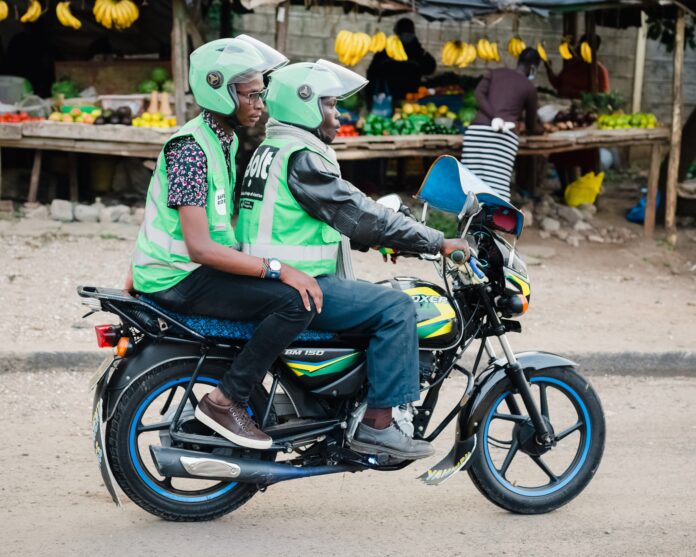
Bolt Uganda has announced a 12-hour time limit for drivers on the ride-hailing platform. The working time limit is in place to ensure that drivers arrive for trips energized and rejuvenated. The restriction on the number of hours also allows drivers to prioritize other engagements such as family needs, recreational, educational, and entrepreneurial activities.

Starting this month, after spending up to 12 hours of driving with Bolt, the app will notify the driver to take a 6 hour break.

“Bolt strongly supports driver safety and believes in leveraging technology to develop ways of working that make transportation safer. You’ll need to be offline for 6 hours before your driving hour timer is reset and you can start driving again,” Moses Mugerwa, the Bolt Uganda Operations Manager said.

He said the restrictions are meant to prevent accidents caused by drowsy driving and are already in place in some countries. Bolt is now broadening the rule to all their global riders and drivers that use its app.

According to traffic police records for the last four years, at least 2,634 pedestrians and cyclists are killed on Ugandan roads each year. An examination of road fatalities between 2016 and 2019 reveals that 10,537 pedestrians and riders were killed on city streets, highways, and village roads. Driver fatigue is listed as a leading cause of these accidents.

Mugerwa said, “The app helps you to keep track of your time and make roads safer for both drivers and riders. They based this feature on expert guidelines that show that driving for long periods of time without taking a break increases the risk of an accident on the road.”

He also stated that because there are government guidelines in place to combat the ongoing pandemic, Bolt operates until the assigned curfew times, which are 6 p.m. for boda bodas and 7 p.m. for vehicles, and then turns off during curfew times.

Bolt made the decision to implement this as a response to the problem of drowsy driving and driver fatigue, both of which continue to affect people on the roads.

Bolt has studied the feature in other countries where it has been implemented and has built a version with a lot of feedback in mind so that it works properly. Some may forget to take time off to rest in the rapidly expanding gig economy. As a result, this feature will provide additional comfort and peace of mind to drivers and passengers.

Stories Continues after ad

Guinea declares end of Marburg virus disease outbreak

Health workers

Guinea has declared the end of the Marburg virus disease outbreak having recorded no new cases over the past 42 days, two incubation periods, or the time between infection and the onset of symptoms. The virus was confirmed on 9 August, marking the first time the disease emerged in the country and in West Africa.

Only one case of the index patient who was diagnosed with the virus posthumously was recorded and more than 170 high-risk contacts monitored for 21 days. The disease, a highly infectious virus that causes hemorrhagic fever, was detected in southern Guinea, the same region where the initial cases of the February June Ebola 2021 outbreak as well as the 2014 2016 West Africa Ebola outbreak were detected.

Guinea’s health authorities, with support from World Health Organization (WHO), promptly mounted emergency response, deploying expert teams to carry out further investigations, step up disease surveillance, assess the risks and bolster community mobilization, testing, clinical care as well as infection prevention and control measures.

“Without immediate and decisive action, highly infectious diseases like Marburg can easily get out of hand. Today we can point to the growing expertise in outbreak response in Guinea and the region that has saved lives, contained and averted a spill-over of the Marburg virus,” said Dr Matshidiso Moeti, WHO Regional Director for Africa.

While the outbreak has been declared over, flare-ups can occur. WHO continues to support Guinea in its efforts to remain vigilant, maintain surveillance and build capacity to respond quickly to a possible resurgence of the virus.

Guinea’s health authorities, WHO experts and scientists are deepening investigations into the source of the Marburg outbreak, including analysis on bats as well as undertaking serological surveys to not only help understand how the virus emerged, but also help prevent potential future outbreaks.

Marburg, which is in the same family as Ebola, is transmitted to people from fruit bats and spreads among humans through direct contact with the bodily fluids of infected people, surfaces and materials.

Although there are no vaccines or antiviral treatments approved to treat the virus, supportive care – rehydration with oral or intravenous fluids – and treatment of specific symptoms, improves survival. A range of potential treatments, including blood products, immune therapies and drug therapies, are being evaluated.

In Africa, previous outbreaks and sporadic cases have been reported in Angola, the Democratic Republic of the Congo, Kenya, South Africa and Uganda.

Stories Continues after ad