Stanbic Bank
Stanbic Bank
18.2 C
Kampala
Stanbic Bank
Stanbic Bank
Home Blog Page 771

Youths decry inadequate funding to AIDS activities

Youths decry inadequate funding to AIDS activities

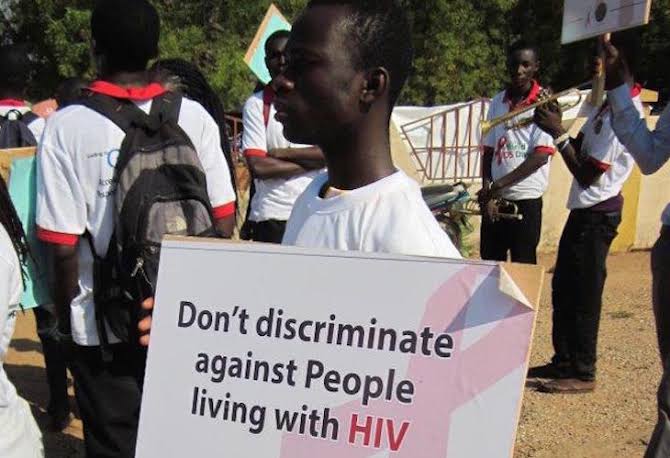
Although Uganda is grappling with Covid-19 pandemic, youth have decried increased cases of HIV/AIDS spread during COVID-19 season.

Under their umbrella organisation, Uganda Network of Young People Living with HIV/AIDS (UNYPA), youths want the Ugandan Government to allocate resources towards AIDS treatment and care services.

“We beg government to invest more into youths-led programmes like HIV intervention. We acknowledge Ministry of Health drive to curb the COVID-19 pandemic but should not forget AIDS is still with us. The lockdown has hindered provision of HIV services in society, “Ruth Awori programme Manager said.

UNYPA is a youth led organisation with a membership of 50,000 young people countrywide with mission of creating an enabling environment for all Young people living with HIV/AIDS in Uganda.

The appeal was made at the launch of Y Plus beauty pageant under the theme: Opening opportunities at Kampala Serena Hotel.

Y plus pageant is an annual campaign aimed at stigma and discrimination as well as addressing the structural drivers of gender based violence and other HIV/SRHR related issues against young people living with and affected by a HIV/AIDS.

“Y plus beauty pageant addresses both self stigma faced by young people living with HIV and community stigma driven by the environment towards uplifting their plight and harnessing the power of empowered youth Hiv activism,” Awori explained.

She stressed that theme: Opening opportunities seeks to utilize the available opportunities to create new innovations for the young people living with HIV where they can be able to access Hiv sexual reproductive health right services, create extra seats for them on forums to front issues that are affecting them as well as brain storm ways of creating an enabling environment and safe spaces in Uganda.

UNYPA started in 2003 to provide leadership and coordinate the greater and meaningful involvement and participation of YPLHIV in Uganda in the national, regional and global HIV and AIDS response. UNYPA advocates improving the quality of life of young people living with HIV in Uganda and as a network. UNYPA is driven by the needs of young people living with HIV and implements an evidence informed national programme and advocacy for YPLHIV to lead healthy and productive lives.

Stories Continues after ad

Kajoba starts nationwide Goalkeeping Tutorial Programme

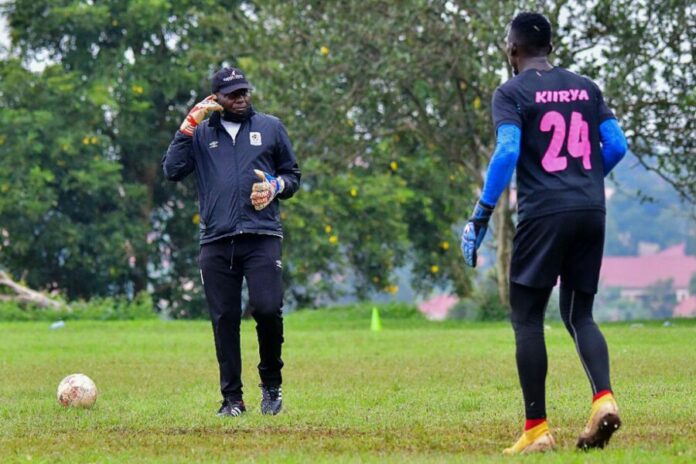
Kajoba talking to Wakiso Giants Goalkeeper Samson Kirya.

Uganda Cranes goalkeeping coach Fred Kajoba has embarked on a countrywide project aimed at sharing and equipping shot stoppers with basics of between the posts.

The experienced Kajoba had a training session with Wakiso Giants FC goalkeepers at their training Centre in Kabojja.

The programme will be extended to other clubs before the start of the new league season.

Kajoba believes this is a good initiative that will help him and the National technical staff monitor the performance and progress of the goalkeepers at different clubs.

“The Federation asked me to utilise the time when the national team is not engaged in any international fixture to pass on skills and knowledge to goalkeepers in Uganda. We have a nationwide strategy but we have started with StarTimes Uganda Premier League Clubs,” Kajoba is quoted by the fufa website adding that, “We shall also organise the same for the StarTimes FUFA Big League Clubs and later the FUFA Regional Leagues, fourth and fifth division clubs.”

“I believe it is a good initiative that will help us monitor the progress and performance of the goalkeepers, additionally, sharing notes with the other goalkeeping coaches helps us to read from the same script,” added Kajoba.

He believes the basic elements of goalkeeping that include; decision making, confidence, command, positioning, footwork, ball skills and resilience must be learnt at club level.

Kajoba has attained goalkeeping coaching skills from Liverpool FC (England), Celtics (Scotland) and New York Redbull (USA).

Stories Continues after ad

Museveni mocks people trying to spy on Uganda

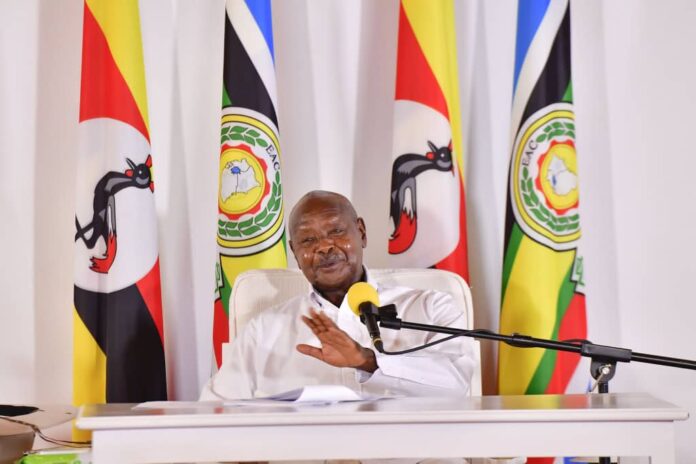
President Museveni

President Museveni has come out to make fun of those trying to spy on Uganda. For the past few weeks and days there has always been reports of espionage being done on Uganda by different people who were thought to be citizens.

The latest was Victoria University Vice Chancellor Dr Lawrence Muganga who was bundled up recently by joint security agencies from his work promises.

According to the UPDF spokesperson Brig Flavia Byekwaso, Mr Muganga was arrested for illegal stay in the country and espionage.

According to reports, Dr Muganga was a Rwandan spy but his manner of arrest sparked backlash from the public and some notable figures.

Subsequently, they released him after the intervention of President Museveni.

The President however through his Twitter page yesterday said that he didn’t follow such matters further. This is because he wondered what these people really want to spy about Uganda.

“I did not follow up on reports that some people were apparently spying on us, but it is a wastage of time. Spying on us to do what?” President Museveni said.

For some time now, tensions have been flaring between Rwanda and Uganda with each country accusing each other of spying on it.

This led to the Rwandese president Paul Kagame closing up the Katuna border. He further accused President Museveni of acting like the master of the region.

However while speaking to a French media outlet earlier this week, President Museveni rubbished these accusations as lame.

Stories Continues after ad

Hotel Africana owner BMK dead

Hajji Bulaimu Muwanga Kibirige

Business man Hajji Bulaimu Muwanga Kibirige has passed on Friday morning at Nairobi hospital after battling with prostate cancer for a long time.

He has been commonly known as BMK and the proprietor of Hotel Africana.

“With a heavy heart, we announce the death of our proprietor, Hajji Bulaimu Muwanga Kibirige. He has been a great father, a very good leader, a mentor and a friend to everyone. May his soul rest in peace,” Hotel Africana tweeted.

Stories Continues after ad

Startup Policy: Strides made and how it can be a game changer for entrepreneurship

Startup Policy: Strides made and how it can be a game changer for entrepreneurship

When Italy passed the world’s first-ever Startup Act in 2012, it sparked off a trend that drove other countries to work on legislation that encouraged the growth of their startup ecosystem.

Inspired by Italy’s startup policy, many African governments have considered providing a safety net for their startups by putting in place a Startup Act that provides a conducive environment for startups and their investors to thrive. The passing of startup laws in Tunisia and Senegal, in 2018 and 2019 respectively has triggered the tabling of similar bills in other countries like Ghana and Rwanda. In a similar move, stakeholders within Uganda’s budding ecosystem are rooting for a startup policy.

Ugandans have a strong entrepreneurial bone. In fact in 2014, the Global Entrepreneurial Monitor (GEM) reported it as the most entrepreneurial country in the world with 28 percent of adults owning or co-owning a new business.

While this passion for entrepreneurship exists, it has been noted that these businesses are small-scale, informal, with little employment effect and high discontinuation rates before their first birthday.

The reasons why the startups take this trajectory can be found in the voices of entrepreneurs like Ralph Warom, a Techpreneur running a business called HyperLion Solutions.

“I want to start a Limited Liability company, but I am wondering whether to open it up here because Uganda is not favorable for budding startups,” Warom says.

He says Uganda’s current laws are not the best for entrepreneurship, citing the processes from the copyright law as expensive, an issue that makes it hard to protect one’s idea.

In all of this, Warom says the biggest challenge is taxation. “If every budding business was exempted from taxes for the first two years of its operation, it would go a long way in growing our businesses.” His belief is that in the long term, the Startup Act benefits the government given that more businesses would join the formal sector as opposed to running informally and hiding their finances from tax authorities. Conversations about challenges such as these and how the policy will address them, started early this year.

At the forefront of this advocacy for Uganda’s Startup policy is Hellen Mukasa, a lawyer and Legal Tech Lab Lead at The Innovation Village. Mukasa says the Startup Act Uganda project is an initiative of several key stakeholders.

“There is the Private Sector Foundation Uganda (PSFU) which is Uganda’s apex body for the private sector, Startup Uganda, The Innovation Village, The Mastercard Foundation and at the center of it all, entrepreneurs,” she says.

The efforts began with a countrywide consultative meeting during which these stakeholders sought to appreciate the challenges that hamper the growth of startups from the perspective of the entrepreneurs. Startup Uganda, a body that brings together players in the startup ecosystem, is mobilizing startups and entrepreneurs. The Programs Partnership Manager, Gilbert Buregyeya says Startup Uganda is channeling the voice of the ecosystem and this consists of startups and Innovation Support Organisations.

“For this policy to be effective, we need to hear from the last mile entrepreneur in regards to their needs,” he says.

For the past four months, the team has been gathering what entrepreneurs want to see in the policy and voicing these needs.

In April 2021, the dialogue culminated into the development and approval of a Position Paper by the Policy Advocacy Committee of PSFU. This was followed by the national public-private dialogue to further gain opinions on the relevance of a National Startup policy from entrepreneurs, academia, private sector and relevant government ministries.

Last month, a select team of ecosystem leaders and representatives of the key ministries was put in place to lead the harmonization of existing laws and preparation of a policy brief.

A representative from PSFU says the body is working through the Ministry of Trade, Industry and Cooperatives to assess the existing Micro Small Medium Enterprises (MSME) Policy to identify if the interest of the startups can be addressed in this policy. If it’s found to be lacking, a separate policy will be developed to support startups.

Mukasa says as they comb through existing laws and policies, some laws or policies may require amendment to align with the Startup policy. This, she says, is because the entrepreneurs are the foundation of this initiative.

At the end of the day, the ecosystem players will benefit from startup-friendly policies and a conducive business environment leading to increased venture capital interest to grow startups. In more advanced countries, startup policies ease business registration, exempt startups from some fees and bureaucratic procedures, and provide tax incentives among other things. The hope for many startups now is that similar ideas can come to life through Uganda’s first startup policy.

Stories Continues after ad

Makerere University students to sit their exams despite pending tuition balances

Makerere-University

Makerere University has resolved that all continuing students will sit for their exams despite pending tuition balances.

The decision was reached at a time when the University is using the Academic Management Information System (ACMIS) whereby students’ information is being transferred to this new system. Students are unfortunately not able to generate the payment references to the banks.

Students will next week start their exams via electronic platform where students will be required to log on the system and write their exams.

In the letter from the Evarist Bainomugisha, the University Bursar, granted students an opportunity to do exams as the Directorate of Information Computer and Technology system (DICTS) will update students when their accounts will be activated.

“The Senate and University Management agreed that continuing students should proceed and sit for their forthcoming exams. The payment of tuition and registration will be made after the ACMIS students portals have been activated,” he said.

However, the letter emphasized that students’ results will only be accessed after students have fully registered and cleared tuition balances.

The University is set to kick off examinations on 13th September up to 30th September. All first year and continuing students with pending exams have been encouraged to prepare enough for them.

Stories Continues after ad
Lumbuye is held at Kocaeli Valiligi Foreigners Detention Centre – MP Nkunyingi Muwada alleges

Fred Lumbuye

Kyadondo East MP Nkunyingi Muwada has revealed that Ugandan blogger and ardent supporter of National Unity Platform (NUP) Fred Kajubi Lumbuye is held at Kocaeli Valiligi Foreigners Detention Centre in Turkey.

Lumbuye was last month arrested at the Ugandan Embassy in Istanbul, Turkey where he had gone to renew his passport. Since then, Lumbuye had not been seen anywhere despite all efforts made by NUP lawyers in Uganda and Turkey.

“Lumbuye is alive and quite well though bored being in one place. He claims that he had been told that he will stay in the detention centre for six months. His wish is to secure his freedom and possibly relocate to another Country but not Uganda,” Muwada said.

“He applauded you all for caring for his safety. Unfortunately he is not allowed to speak on phone, write or take photos on grounds that the detention facility is monitored by the Turkish Government. We were guided through the lawyers on how to process the details of his wishes,” Muwada said.

Upon arrest, Minister for foreign affairs Okello Oryem confirmed that the blogger was to be deported to Uganda. A plane aboard Lumbuye was expected to touchdown at Entebbe International airport on 7th August 2021.

“Lumbuye will be in Uganda tomorrow morning. On arrival he will be put in custody and later brought to book for inciting sectarianism using social media,” the minister said.

Later reports indicated that Lumbuye was detained at Gulu Air base barracks and later Nakasongola. Eagle Online could independently not verify the information since the Army Spokesperson Brig. Gen Flavia Byekwaso dismissed the reports.

Lumbuye is accused of peddling lies that President Museveni was ill and admitted to a hospital in Germany. This was followed by the claims that Museveni had died.

During the swearing in ceremony of ministers, Museveni said the country has got another challenge of social media, which urgently needs to be dealt with. He ordered security agencies to hunt down anybody who was trading rumors that he was dead and for those outside the country, their citizenship be revoked.

Stories Continues after ad
#Covid-19 variants prolong Africa’s pandemic wave

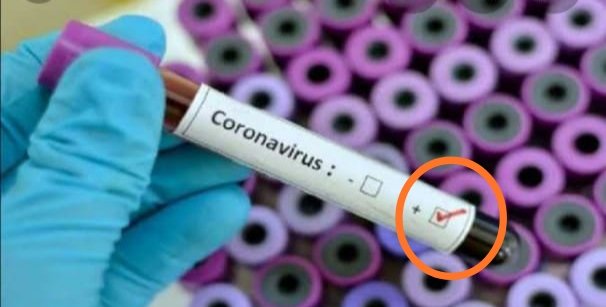
Covid-19 testing kits

Weekly #Covid-19 cases in Africa fell by more than 20 percent the sharpest seven-day decline in two months as the third wave pandemic tapers off. However, the rate of deceleration is slower than the previous waves owing to the impact of more transmissible variants.

The continent recorded more than 165,000 cases in the week ending on 5 September—23 percent lower than the week before, yet still higher than the weekly cases recorded at the peak of the first wave.

The more contagious Delta variant that partly fuelled the third wave has been dominant in several countries that experienced #Covid-19 surge. In southern Africa, for instance, where more than 4000 #Covid-19 genome sequencing data was produced in August, the Delta variant was detected in over 70 percent of samples from Botswana, Malawi and South Africa, and in over 90 percent from Zimbabwe.

“While #Covid-19 cases have declined appreciably, the downward trend is frustratingly slow due to the lingering effects of the more infectious Delta variant,” said Dr Matshidiso Moeti, World Health Organization (WHO) Regional Director for Africa. “We are spearheading critical work and supporting countries in scaling up pathogen surveillance through genome sequencing to detect and respond effectively to #Covid-19 variants.”

In collaboration with the South African National Bioinformatics Institute, WHO is at the forefront of the efforts to set up the Regional Centre of Excellence for Genomic Surveillance and Bioinformatics in Cape Town. The centre will support 14 countries before being expanded to serve more countries. Last year, WHO and partners established a #Covid-19 sequencing laboratory network in Africa which has to date produced nearly 40,000 sequencing data.

“The continent lags far behind the rest of the world when it comes to sequencing, with only 1 percent of over 3 million #Covid-19 sequences conducted worldwide occurring in Africa,” said Dr Moeti. “The third wave has shown us how variants can hijack the efforts to tame the pandemic. Countries must step up surveillance because without genomic information, variants can spread undetected. You can’t fix what you don’t measure.”

WHO has also recently provided financial support to countries including Eswatini, Sao Tome and Principe and Senegal to reinforce genomic surveillance. To date, the dominant Delta variant has been detected in 31 African countries, while the Alpha and Beta variants have respectively been identified in 44 and 39 countries.

The C.1.2 variant initially identified in South Africa has so far been detected in 130 cases in 10 countries globally, including five in Africa. Although the variant has exhibited concerning mutations, there is no evidence that it is more transmissible or may affect vaccine efficacy, but more research is needed.

As Africa’s third #Covid-19 pandemic wave eases off, vaccine shipments to the continent continue to grow, with around 5.5 million doses received through COVAX in the first week of September. However, only around 3 per cent of the continent’s population is fully vaccinated.

 “To ultimately tip the scales against this pandemic, our best efforts to reduce transmission through public health measures must be met by a significant step-up in vaccine supplies and vaccinations,” Dr Moeti said.

Dr Moeti spoke during a virtual press conference today facilitated by APO Group. She was joined by Professor Alan Christoffels, Director of the South African National Bioinformatics Institute, and Dr Christian Happi, Professor of Molecular Biology and Genomics and Director at the African Centre of Excellence for Genomics of Infectious Diseases at Redeemer’s University in Nigeria.

Also on hand to respond to questions were Dr Nicksy Gumede-Moeletsi, Regional Virologist, WHO Regional Office for Africa, Dr Richard Mihigo, Coordinator, Immunization and Vaccines Development Programme, WHO Regional Office for Africa, and Dr Thierno Balde, Regional #Covid-19 Deputy Incident Manager, WHO Regional Office for Africa.

Stories Continues after ad

DRC declares meningitis outbreak in north-eastern Tshopo province

DR Congo

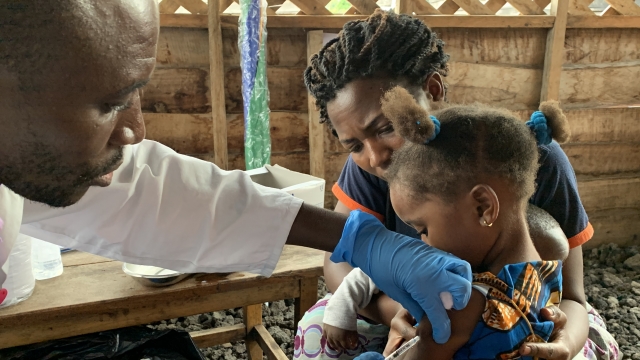
The Democratic Republic of the Congo has declared an outbreak of meningitis in the North-Eastern Tshopo Province where 261 suspected cases and 129 deaths, a high case fatality ratio of 50 percent, have been reported.

Confirmatory tests carried out by the Institut Pasteur in Paris detected Neisseria meningitidis one of the most frequent types of bacterial meningitis with the potential to cause large epidemics.

The health authorities have deployed an initial emergency team, and with the support of the World Health Organization (WHO), efforts are underway to quickly ramp up the response. A crisis response committee has been set up in Banalia, the community affected by the outbreak, as well as in Kisangani, the capital of Tshopo, to accelerate the outbreak control efforts. WHO has provided medical supplies in Banalia and plans to deploy more experts and resources.

 “Meningitis is a serious infection and a major public health challenge. We are moving fast, delivering medicines and deploying experts to support the government’s efforts to bring the outbreak under control in the shortest possible time,” said Dr Matshidiso Moeti, WHO Regional Director for Africa.

More than 100 patients are already receiving treatment at home and in health centres in Banalia. Meningitis is transmitted among people through droplets of respiratory or throat secretions from infected people. Close and prolonged contact or living in close quarters with an infected person facilitates the spread of the disease. Although people of all ages can catch the disease, it mainly affects babies, children and young people.

 “We are scaling up control measures within the community and rapidly investigating suspected cases in surrounding localities to treat patients and curb potentially widespread infections,” said Dr Amédée Prosper Djiguimdé, WHO Representative in the Democratic Republic of the Congo.

More than 1.6 million people aged between 1 and 29 years were vaccinated in a massive campaign in 2016 in Tshopo, which lies in the African meningitis belt that runs across the continent from Senegal to Ethiopia and comprises 26 countries. The African meningitis belt is the most vulnerable globally to recurrent outbreaks.

Meningitis outbreaks have occurred in several provinces of the Democratic Republic of Congo in the past. In 2009, an outbreak in Kisangani infected 214 people and caused 15 deaths—a case fatality ratio of 8%.

Meningitis is potentially fatal and is a medical emergency. Admission for treatment is necessary and appropriate antibiotic treatment must be started as soon as possible. Over the years, major improvements have been made on vaccines, which are specific to the type of meningitis.

In November 2020, the World Health Assembly the global health policy-setting body approved a roadmap for a meningitis-free world by 2030, with three key objectives: elimination of bacterial meningitis, reduction of vaccine-preventable bacterial meningitis by 50 percent and deaths by 70 percent, as well as reduction of disability and improvement of quality of life after meningitis.

Stories Continues after ad

Political, Religious leaders petition court over continued closure of Churches

Political, Religious leaders petition court over continued closure of Churches

Religious leaders and a section of politicians from the National Unity Platform (NUP) have petitioned court over continued closure of places of worship.

In June 2021, president Yoweri Museveni imposed the second lockdown, directing the closure of all schools and other teaching institutions, public transport places of worship, bars and others. When he lifted the lockdown on various sectors and businesses, the president ordered that places of worship should remain closed for another 60 days.

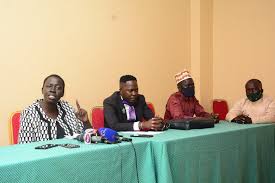
In a joint presser at Hotel Triangle in Kampala, they expressed their dismay on how the government treats the matter of worshiping places.

According to Dr Lina Zedrina from NUP, as practitioners of the various religious groups, the values of religion lie in one’s self and practicing it. She shared that people have since slid back in terms of spiritual growth. She further said it would have been a different case if the places of worship were open.

“The times churches were open we would go and confess. Places like the taxi park and kikuubo are open, why not the churches. Spiritual damage is a lot and we can feel it. We are seriously thirsty, please open the churches so we can enjoy our constitutional right to worship,” Dr. Zedrina said.

Sheikh Asuman Lule Ssemakula of Masjid Central Kitintale shared that growing up, all people were always told to fear God. This is because through this, one would get wisdom. He shares that before reopening buses lodges, the government would have fronted places of worship.

Evelyn Naikoba, a lawyer, said they have taken the matter to constitutional court to challenge the phenomenon of the continued closure.

“We are challenging the discriminatory treatment given to places of worship that is why we are in constitutional court. What we see is a crackdown on religious institutions and Covid-19 just presented an opportune time to do this,’’ she said.

Stories Continues after ad