Stanbic Bank
Stanbic Bank
17.7 C
Kampala
Stanbic Bank
Stanbic Bank
Home Blog Page 924

Police intensifies vigilance as arrested NUP supporters appear before the Magistrate

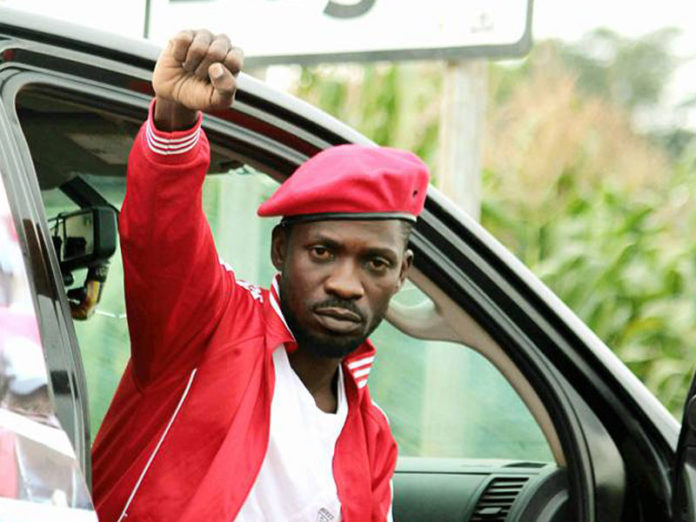
Police intensifies security

Police have intensified vigilance as the arrested supporters of the National Unity Platform (NUP) are set to appear before City Hall magistrate.

The People Power supporters were arrested on Wednesday when police raided NUP offices in Kamwokya. Since then, police have not explained why it raided Registered party offices nor declared what they picked from the Ghetto based political party.

Police intensifies security

The raiding of NUP offices followed a declaration that the party will be carrying out a national wide consultations ahead of the 2021 general elections. The national wide consultations are peddled at meeting various party leaders to pave ways on how they will conduct their campaigns ahead of the 2021 general elections.

According to spokesperson of NUP Joel Ssenyonyi, the security personnel moved away with Shs23 million that had been put aside to facilitate the nomination of NUP parliamentary flag bearers. The averred that party branded materials like red berets, red t-shirts and other items.

Police intensifies security

The raid was condemned by sister political parties of Democratic Party (DP) saying police actions were uncalled for since all political organisations are preparing ahead of the 2021 general elections.

Stories Continues after ad

Tanzania to elect new president on October 28

Tanzania to elect a new president

The EAC Election Observer Mission is due for deployment in Tanzania, effective Friday 23rd October, 2020. The Mission will arrive in Dar es Salaam on Friday 23rd October 2020 and will observe the General Elections slated for 28th October, 2020.

The deployment of EAC Election Observer Mission is a mandate under the Treaty for the Establishment of the EAC and pursuant to the invitation of the National Electoral Commission of Tanzania (NEC), as well as the decision of the Council of Ministers on observation of elections in the EAC Partner States. The Mission’s mandate is to observe the overall electoral environment, pre-election activities, the polling day, the counting and tallying/announcement of results.

The Mission, which is led by Sylvestre Ntibantunganya, former President of the Republic of Burundi, will deploy in various regions of the country including Zanzibar, after the briefing session in Dar es Salaam.

The Mission has drawn observers from different but complementary disciplines and includes, members of the East African Legislative Assembly, Ministries responsible for EAC Affairs from the EAC Partner States, the National Electoral Commissions, and EAC Youth Ambassadors.

The exclusion of citizens of the United Republic of Tanzania as observers in the mission is consistent with the adopted practice on the EAC Principles of Election Observation and Evaluation, which precludes nationals of the host country from participating as Election Observers in their own countries.

Commenting ahead of the deployment, the EAC Secretary General, Libérat Mfumukeko, said that the Mission was being undertaken pursuant to Article 3 of the Treaty for the Establishment of the EAC, which requires “…adherence to universally acceptable principles of democratic governance and in line with the EAC Principles of Election Observation and Evaluation.”

The Secretary General noted that, “As the region moves deeper in the integration process with the ultimate goal of having a Political Federation, EAC Partner States need to standardise their governance practices and should take keen interest in each other’s political and electoral processes.”

Mfumukeko said that successful and peaceful elections in Tanzania was of paramount importance to the Partner States and the Community as a whole because lack of peace and stability in any Partner State will definitely undermine the milestones the region has so far achieved through integration.

“Therefore, we expect a successful mission and we very much believe that this will further strengthen the democratic process and advance development in the region,” he said.

The Mission will prepare a Report that will be submitted to, among others, the National Electoral Commission of Tanzania, through the EAC Council of Ministers for consideration and implementation of the recommendations. The Mission will leave Tanzania on 2nd November, 2020.

Stories Continues after ad

Court defers judgement in Bobi Wine, Kibalama NUP case

bobi wine and kibalama

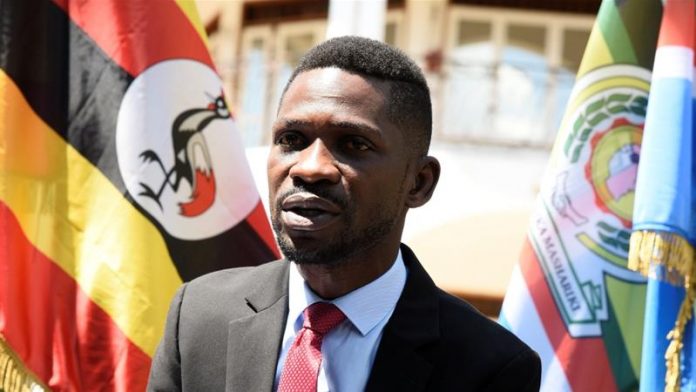
The High Court has postponed the judgement in the matter between the President of the National Unity Platform (NUP) formerly National Unity Reconciliation and Development Party (NURDP) Robert Kyagulanyi Sentamu and Mzee Nkonge Kibalama.

In August, former NURDP members, Basile Difas and Hassan Twaha dragged Mzee Kibalama and other individuals to court for allegedly selling the party to Robert Kyagulanyi aka Bobi Wine and later changing its name and leadership.

Last month during the cross examination of the founder of the party Mzee Nkonge, the High Court judge Musa Ssekaana pledged to deliver his ruling today.

Kibalama was appearing before Court to pronounce himself about changing his affidavits in the case brought against him. Kibalama and former party secretary had sworn and signed affidavits that the party leadership and the name were changed after delegates’ conference which occurred in Kakiri.

And according to a statement released by the spokesperson of the judiciary, Jameson Karemani, the judgment has been deferred to next week.

“Be informed that the NUP judgment will not be there today but on some other day next week to be communicated to you,” Karemani said.

In 2019, Kibalama and other party members applied to the Electoral commission to have NURP change to NUP and the application was objected. It was revealed that in 2012 and 2013, they attempted to change the party name to Independent National Unity Party however their application was declined.

During cross examination, Mzee Nkonge first objected to filing right documents to have NURP changed to NUP however in turn he contradicted himself saying the documents were false and he made a mistake. He objected that Bobi Wine is the president of NUP.

Stories Continues after ad

Denis Onyango nominated for PSL Goalkeeper of the Year Award

Denis Onyango

The South African Premier Soccer League (PSL) have officially announced the list of nominees for the 2019/20 PSL Awards.

The nominees include Uganda Cranes Captain Denis Onyango, who has been nominated in the category of the Goalkeeper of the Season.

Onyango helped Mamelodi Sundowns clinch last season’s league title, keeping eight clean sheets and will face competition from Kaizer Chiefs’ Daniel Akpeyi and Ronwen Williams of SuperSport United.

onyango nominated

Onyangos’s Sundowns teammates Themba Zwane and Gaston Sirino have been included on the four-man shortlist for Player of the Season alongside Peter Shalulile (Highlands Park) and Samir Nurkovic (Kaizer Chiefs).

This year, there are four nominees instead of the normal three after the players were tied on votes and could not be separated even after using the provisions in the rules to eliminate names.

The awards will be held next week Thursday, 22nd October 2020 in a virtual event.


Full List of nominees:

Footballer of the Season

Samir Nurkovic (Kaizer Chiefs)

Peter Shalulile (Highlands Park)

Gaston Sirino (Mamelodi Sundowns)

Themba Zwane (Mamelodi Sundowns)


Absa Premiership Player’s Player of the Season

Hlompho Kekana (Mamelodi Sundowns)

Lebogang Manyama (Kaizer Chiefs)

Themba Zwane (Mamelodi Sundowns)


Absa Premiership Coach of the Season

Ernst Middendorp (Kaizer Chiefs)

Pitso Mosimane (Mamelodi Sundowns)

Eric Tinkler (Maritzburg United)


Absa Premiership Young Player of the Season

Bongokuhle Hlongwane (Maritzburg United)

Goodman Mosele (Baroka FC)

Sphesihle Maduna (AmaZulu)


Absa Premiership Goalkeeper of the Season

Daniel Akpeyi (Kaizer Chiefs)

Denis Onyango (Mamelodi Sundowns)

Ronwen Williams (SuperSport United)


Absa Premiership Defender of the Season

Daniel Cardoso (Kaizer Chiefs)

Rushine De Reuck (Maritzburg United)

Motjeka Madisha (Mamelodi Sundowns)


Absa Premiership Midfielder of the Season

Lebogang Manyama (Kaizer Chiefs)

Thabo Nodada (Cape Town City)

Themba Zwane (Mamelodi Sundowns)


MTN8

MTN8 Last Man Standing

Clayton Daniels (SuperSport United)

Bradley Grobler (SuperSport United)

Ronwen Williams (SuperSport United)


TELKOM KNOCKOUT

Telkom Knockout Player of the Tournament:

Judas Moseamedi (Maritzburg United)

Gaston Sirino (Mamelodi Sundowns)

Hlompho Kekana (Mamelodi Sundowns)


NEDBANK CUP

Nedbank Cup Most Promising Player

Keletso Makgalwa (Mamelodi Sundowns)

Evidence Makgopa (Baroka FC)

Sifiso Ngobeni (Bloemfontein Celtic)


*(under 23)

Nedbank Cup Player of the Tournament

Terrence Dzvukamanja (Bidvest Wits)

Victor Letsoalo (Bloemfontein Celtic)

Motjeka Madisha (Mamelodi Sundowns)

Stories Continues after ad

Researchers turn Ugandan folktales into digital animation

Animations

Researchers at Makerere University have transformed Ugandan Folktales into Digital Animation (films) for educational and leisure.

The researchers include Professor Dominica Dipio, head of Literature in Makerere University, Dr Susan Kiguli a poet and Senior lecturer of Literature Archt. Richard Musinguzi, Dr Jimmy Spire Ssentongo lecturer in the Department of Philosophy at Makerere University and Isaac Tibasiima also from the department of literature.

The folktales include Njabala (a buganda region adaption), Hidden riches (a western Uganda adaption) Lia and Origa (an eastern Uganda adaption) and Opiyo and Odongo (a northern Uganda adaption).

Professor Dominica Dipio the principal investigator explains that children are not cared for in contents displayed on media platforms because they consume adult contents which are not good, so they decided to work on this project which she says will help children in schools and those at home enriching them with cultural folktales.

Professor says they collected and adapted Ugandan folktales into animation films for the educational and recreational purposes of children and the youth. In its first phase, they produced four animation films, on topical issues, based on tales collected from different regions of Uganda.

Two multi-media products, storybook and audio stories are in the process of being produced from the four films to make the products more accessible for the intended users.

The emphasis in these films is that the narrative becomes visual, oral and it also becomes what you engage with in emotions.

She says that these animated films, which are informed of cartoons, do interest children and if they have a useful content, it helps them in learning and being groomed with discipline.

The folktales collected were creatively interpreted and animated to fit into the contemporary mentorship and recreational needs of, particularly, Ugandan youths.

According to professor Dipio, this research addresses the problem of paucity of cultural-based educational and recreational materials for young people. It premises that cultural artifacts are repositories of a community’s memory; and folktales are such expressions of a community’s shared values, that may be both culture-specific and cross-cultural.

The research also addresses the problem of cultural over-dependency on foreign contents and identity crisis in the global context. Uganda needs to contribute its share of intangible cultural heritage folktales, myths, legends, and traditions.

Stories Continues after ad

An open letter to President Museveni and Cabinet: Do not let the first-mover advantage on medical marijuana growing pass Uganda

Sudhir Ruparelia, East Africa's wealthiest man.

By Dr. Sudhir Ruparelia and Rajiv Ruparelia

Your Excellency, I believe you very well recall the vanilla ‘madness’ of 2002-2005 when Ugandan farmers got rich overnight in Mukono and Masaka; those good old but shortlived days when vanilla almost became like gold. We all remember when farmers in had to spend nights in their gardens, guarding their golden harvests from thieves; when traders started fighting each other over who should buy from which farmer and at some point, government had to intervene.

For those who are not aware, this sudden vanilla fortune was driven by two occurrences, thousands of kilometers away, in Madagascar, one of the world’s largest producers of vanilla. The island nation was struck by two successive cyclones in one month- Tropical Cyclone Kesiny in May 2002 (Northern Madagascar) and Tropical Cyclone Manou in the South East, killing people, destroying transport infrastructure and thousands of acres of crops, especially the prized vanilla.

Global vanilla markets reacted and Uganda overnight went from nearly a zero exporter of vanilla to earning USD7.8 million in 2002 and USD11.5 million in 2003. Farmers and traders, became millionaires overnight.

Subsequent storms like, Cyclone Gafilo in March 2004 and Cyclone Dora, Indlala and Jaya that hit Madagascar between 2006 and 2007 kept Uganda in vanilla business, but sooner Madagascar recovered and took back its vanilla markets. It was instead time for Ugandan vanilla farmers to be hit by financial storms and cyclones.

It had to take another major storm- Cyclone Enawo in March 2017 to hit Madagascar, followed by Tropical Cyclone Kesiny in Northern Madagascar in May 2017 for Ugandan farm gate prices to rise to as much as UGX170,000-200,000 per kilo! Again Uganda had another windfall with national export earnings jumping 295.2% from USD3.2 million in 2016 to USD12.7 million. But soonest Madagascar began recovering, prices went down and in 2018, Uganda’s export earnings fell to USD8.2 million and fell further to USD4.47 million in 2019.

Well, we do not know when the next cyclone will come for Vanilla farmers to enjoy yet another rich season but one lesson we can learn from the above is the power of being a first mover.

A first-mover advantage can be simply defined as the ability to beat of competition as a result of being the first to go to market with a new product category. Of course, how lasting this advantage gets, depends on many other things like a good investment and regulatory climate, among other variables.

Coming back to East Africa, this week, it was all over the news that Rwanda will start receiving applications for licenses to grow medical marijuana for export, following an October 13th cabinet meeting that approved the regulatory guidelines on the cultivation, processing and export of high-value therapeutic crops. Other countries in the region, including Uganda are also at various stages of approval of the growing of medical marijuana.

While we are not attempting to compare Uganda with any other country, as we are a unique and independent country, it is also a market reality that the global medical marijuana market, estimated to reach between USD40 billion and USD45 billion by 2025, is not unlimited. The early birds will certainly catch the most and possibly the biggest worms and like in the case of Madagascar and vanilla elaborated above, will hold onto this advantage for many years to come. Those that will come on the next wave, will have to play second-fiddle, hoping and praying for some storms of some kind so they can gain some short-lived windfalls.

If there is anything that Covid-19 has taught the markets, it is the danger of relying on the same sets of traditional sources of income. In the case of Uganda, tourism, Uganda’s largest forex earner is on its knees and is not expected to recover fully until 2003 and beyond- and this presupposes a vaccine is discovered sooner than later.

Although coffee export earnings, according to statistics from Uganda Bureau of Statistics (UBOS) and Bank of Uganda Coffee are on the path to recovery, this is only because we exported more bags of coffee, otherwise prices are still on the low.

According to UBOS, although monthly earnings from coffee exports reached a recordhigh of USD419.5 million in July 2020, this was because Uganda exported 540,000 bagsthe highest monthly export quantity since 1997. It is also worth noting that average prices also fell to USD1.53 in July and USD1.48 August- a record lowest in about 10 years.

According to the International Coffee Organisation (ICO), world global coffee consumption is expected to reduce as the Covid-19 pandemic continues to put pressure on the global economy and the lockdowns adding more pressure on out-of-home coffee consumption. This according to ICO, the intergovernmental organization for coffee exporting and importing governments, including Uganda, has left the global markets with a surplus of about 1.54 million bags. This, surplus, added to another 4.4 million bags carried over from the 2018/19 season, will according to ICO continue holding back global price recovery. ICO reported that World Coffee prices in September 2020 remained at an average of US cents 116.25 per pound. Although a little higher than the average US cents 107.25 for the 2019/20 coffee year, it was still way below the 10-year average (2007 and 2018) of US cents 135.3 per pound.

Elsewhere as coffee farmers and traders continue to feel the pinch, other traditional Ugandan exports are also under pressure. A comparison of export earnings of the 6 months before Covid-19 (September 2019-February 2020) and the 6 months after Covid19 (March-August 2020) also shows declining export revenues on many other agriculture exports, almost all of them double-digit.

Significant declines were from: Cotton (-65.3 %), Tobacco (-63.5 %), Fish (-30.4%), Hides & Skins (-47.1%), Maize (-28.3%), Beans (-41.7%) and Cocoa (-17.3%). The Only Exceptions, Which Grew, Were: Fruits & Vegetables (+31.3%), Tea (+5.6%) And Flowers (+19.2%) – but again the devil could be in the details.

Your Excellency, if there is one lesson we should pick from the Covid-19 crisis is the need to not only add value (like you have always emphasized to especially the bazzukulu), but even more importantly the need to diversify. Value addition and diversification are important because, truth be said, some markets for some of our agriculture products are over saturated. Even with value-addition, we can only go far, because we do not have much competitive advantage.

That is why we believe Uganda has a real opportunity to establish both a competitive and a fast-mover advantage in the medical marijuana for export business- we have the right climate and more arable land than most, if not all our neighbours combined. If we miss this opportunity, we may probably never catch up.

Medical Marijuana is a whole new industry, a game-changer. Global Research firm Nielsen predicts that by 2025, sales of all legalized cannabis in the U.S. alone will reach $41 billion. Medical marijuana for export will not only create new revenue streams for the country, but it will also spur many other local value-addition sectors and thousands of jobs.

Your Excellency, the private sector has been ready since 2018 and we believe that now, more than ever, there are all reasons to fast-track legislation on medical marijuana production, to give Uganda competitive edge.

The Ruparelia Group, one of the largest commercial agriculture players that controls over 40% of the cut flowers export market, registered Premier Hemp Limited in July 2018. We are ready and willing to leverage our expertise in commercial agriculture to grow this golden crop on a large and for-export-only scale. But we are not alone, 20 other companies have applied for licenses as provided for under Section 11 (1) of The Narcotic Drugs and Psychotropic Substances Act, 2016 and are waiting for clearance and written consent of the Minister of Health.

Will there be challenges and mistakes along the way? Yes, like any other new industry, there will be very many challenges, but as you rightly told Uganda on June 08th 2017, during the reading of the 2017/18 budget: “Failing is part of success. Therefore we shall learn from our mistakes, and keep trying until we succeed.”

Dr. Sudhir Ruparelia is the founder and Chairman of Ruparelia Group and Rajiv Ruparelia is the Group Managing Director. The Ruparelia Group is one of Uganda’s largest business conglomerates with investments in financial services, real estate, education services, hospitality, agriculture and media/broadcasting.

Stories Continues after ad

NRM tribunal disqualifies Museveni’s brother Sodo from Sembabule race

Sodo Aine Kaguta brother to President Yoweri Museveni as been disqualified as National Resistance Movement (NRM) party flag bearer for Mawogoola North following a petition by Shartis Kutesa, a daughter of Foreign Affairs Minister Sam Kutesa.

Sodo beat Kutesa in NRM party primaries but Kutesa contested the defeated alleging that the elections were marred by violence and vote rigging. She thereafter, petitioned the party for redress.

Also disqualified are Col. Fred Mwesigye of Nyabushozi and Stephen Kangwagye for Bukanga.

However, a source that talked to Sodo told Eagle Online that Sodo wasn’t aware about  his disqualification as he was on the way to Sembabule for nomination.


Stories Continues after ad

UNBS officials charged in court for soliciting bribes from Mukama Nayamba

Two officials from Uganda National Bureau of Standards (UNBS) have been charged and by the Anti-Corruption Court on allegations of soliciting and receiving a bribe from the Manager Mukama Nayamba located in Sheema District.

The two suspects are Shaka Vitalias and Mwamule Norman both employees of UNBS working at Mbarara regional offices, as a head of Inspection and Surveillance respectively.

It is alleged that on July 29, 2020 the suspects who were driving an official car registration number UAJ 486X Nissan pickup, went to Mukama Nayamba processing factory and introduced themselves and indicated that they had come to do official business of inspection.

Unfortunately, upon completion of their inspection they intimated that the factory had failed to measure to the standards and threatened to close it. Scared of their actions, the Manager of the factory offered them one million which they declined, but insisted that they needed Shs10 million.

According to police, with the continued engagement, the two parties settled at Shs6 million which was handed over to Shaka Vitalias. The suspect later came a week after and demanded more money to the dismay of the workers at Mukama Nayamba.

But on consultation with their MD, a position was reached that these people should be tracked and be arrested. Indeed a Shs3 million trap was set to which the suspects succumbed to on August 6, 2020.

The suspects were then arrested, searched and found in possession of the money, and detained at Sheema Police Station.

Police opened a case file CRB 496/2020 was opened, investigations expedited and charges of corruption C/S 2(a)&26 of the Anti-Corruption 2009 as Amended were sanctioned and dully consented to.

The suspects were re-arrested and brought to Kampala where they appeared today 15/10/2020 before His worship Moses Nabende and remanded till October 23, 2020 for hearing of their bail application.

Stories Continues after ad

Pastor Augustine Yiga ill, admitted to Nsambya Hospital

'Pastor' Augustine Yiga

The proprietor of Kawala based television ABS TV and Revival Christian Church (RCC), Pastor Augustine Yiga Abizaayo is reportedly ill and in critical condition. The renowned pastor is admitted to Nsambya Hospital where he is receiving medical attention.

Reports indicate that the ‘Miracle performing pastor’ has spent two days at the medical facility over unrevealed illnesses. The frail ‘Man of God’ was about to re-appear on his Television after 40 days of fasting and repentance to the almighty God.

The ‘be-healed’ pastor was planning to make a comeback with the ‘Miracle making rings and Red pens’ costing Shs100,000 each. His son Andrew Jengo, also the caretaker of Yiga’s business, would later return with anointing prayer services where believers will be required to Shs100,000 to be anointed with Olive oil.

Pastor Yiga is known among others for faking miracles and child neglect. This year he was charged with acts likely to spread the deadly Covid-19 pandemic and was subsequently remanded to Kitalya Prison before releasing him on bail.

Stories Continues after ad

Student leaders seek Parliament intervention in re-opening of universities

Student leaders meeting Kadaga

Student leaders from public and private universities have called on government to reconsider the decision to re-open academic institutions for only finalists.

The guild student leaders from Makerere University, Kyambogo University and Uganda Christian University who presented a joint petition to Speaker Rebecca Kadaga on 14th October 2020, argued that the decision to re-open institutions of higher learning to only finalists disadvantages continuing students.

The Information and Senate Representative from Makerere University, Joshua Muhwezi Lawel said government’s proposal to make it compulsory for continuing students to adapt to online learning is not feasible since internet penetration is still very low.

“This model discriminates students with disabilities especially those with visual and auditory impairments,” he said adding that, “online learning model is still affected by number of challenges which include bandwidth limitation, high costs of internet subscription, unreliable internet and infrastructure limited to only urban areas.”

Muhwezi added that online learning does not favour courses that require practical engagement especially science courses like human and veterinary medicine and engineering.

“We propose that online learning is suspended because it is discriminatory and inefficient,” he said.

Muhwezi called on government to make arrangements for continuing students to attend classes physically arguing that the Standard Operating Procedures to curb the spread of the coronavirus are easily observed in gazetted areas.

“Students doing practical courses should be allowed to come back and access accommodation in their respective halls of residence and hostels since online studies are not feasible,” said Muhwezi.

The Guild President of Uganda Christian University, Timothy Kadaga called on government to suspend taxes on private universities since they have been closed for the past six months and yet their operations largely depend on tuition fees from students.

“The tax suspension will give these universities time to recover from the six months of inactivity,” he said.

Timothy Kadaga also urged institutions of higher learning to exercise lenience in tuition fees payments saying that parents cannot afford the 100 per cent fees.

“Parents have been affected financially; we therefore, ask that institutions of higher learning should allow students to pay 60 per cent of the tuition fees as opposed to the required 100 per cent,” he said.

Speaker Kadaga said she will convene a meeting between the student leadership and the Ministers of Education, Health and Finance to find a way forward.

“We need to find a solution on whether continuing students should study online or not,” she said.

The Speaker added that attempts by legislators to move a motion to suspend taxes on private universities were futile.

“We tried to move a motion on taxes on private universities but the Minister vehemently opposed it,” Kadaga said.

The Ministry of Education and Sports announced that academic institutions will re-open on 15 October 2020 for finalist students at all levels following a six months’ closure due to the Covid-19 pandemic.

Stories Continues after ad