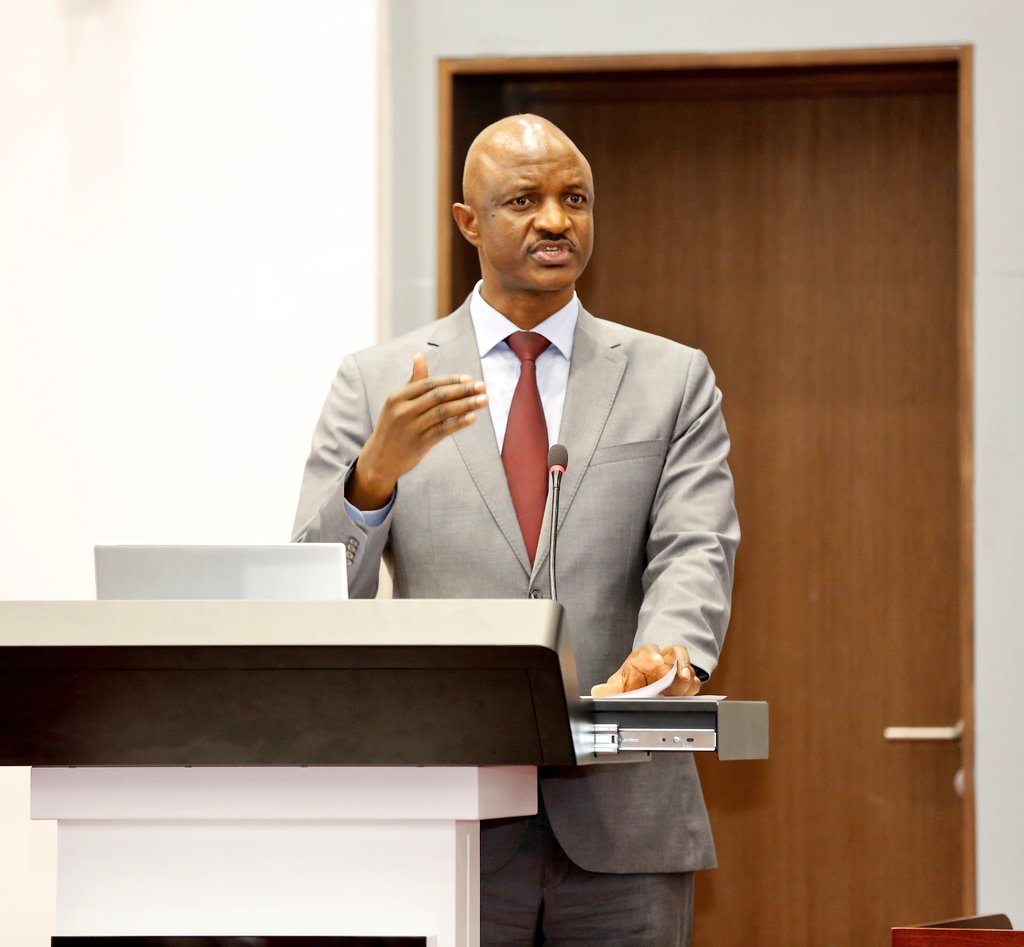
The Permanent Secretary and Secretary to the Treasury at the Ministry of Finance, Planning and Economic Development, Dr Ramathan Ggoobi, has challenged heads of Internal Audit in District Local Governments, cities and municipal councils to transform audit reports into tools for reform rather than records of recurring failure.
Addressing a high level meeting of internal auditors at the ministry headquarters, Ggoobi said the effectiveness of public service delivery hinges on the strength of oversight at the local government level, where a significant share of public resources is spent.

“More than a third of public expenditure is implemented at local governments. If an internal audit fails at this level, then the government fails where citizens actually live. Audit reports must become instruments of change, not archives of failure,”Ggoobi said.
He warned that Uganda’s broader economic ambitions could be undermined if weaknesses in internal audit persist.
“We cannot achieve fiscal discipline, investor confidence or ten fold growth if internal audit is weak,” he said, stressing that sound financial governance is central to the country’s development agenda.

To illustrate the scale of the challenge, Ggoobi revealed that pension overpayments exceeding Shs31 billion have been made to thousands of beneficiaries. He also cited persistent payroll irregularities, ghost worker risks and diversion of funds from approved activities as evidence that public resources are not adequately safeguarded.
Procurement malpractices remain another area of concern. According to the PSST, government continues to register significant price variations for similar goods and works, alongside repeat audit findings that point to systemic weaknesses.
“These repeat findings year after year show that we are not following through to ensure corrective action,” he said.
Ggoobi outlined four structural weaknesses undermining the effectiveness of internal audit. These include a focus on compliance auditing instead of risk based auditing, weak follow up on audit recommendations, skills mismatch in the face of increasing digitisation, and limited operational independence of internal audit units.
He called for an immediate shift in approach.
“Internal auditors must audit risk, not just paperwork. They must follow the money until action happens. They must use data analytics such as IFMS analytics, payroll trend analysis and procurement price comparisons to prevent losses before they occur,” he said.
As part of government’s commitment to reform, Ggoobi pledged to strengthen the Office of the Internal Auditor General, expand training and build capacity in information technology auditing, and enhance the status and independence of Heads of Internal Audit across government entities.
He noted,“Uganda’s ten fold growth goal requires strong public finance governance,” he said. “Every wasted shilling translates into higher taxes, more debt or gaps in service delivery.”
The meeting ended with a renewed call for internal auditors to reposition themselves as frontline defenders of public resources and catalysts for accountable governance at all levels of government.