Uganda is set to make history in the 2026/27 financial year with expected oil revenues surpassing Shs2.2 trillion from its first oil exploration activities. Of this, Shs4 trillion is earmarked to support the national budget, thus a huge milestone for the East African nation’s economy.
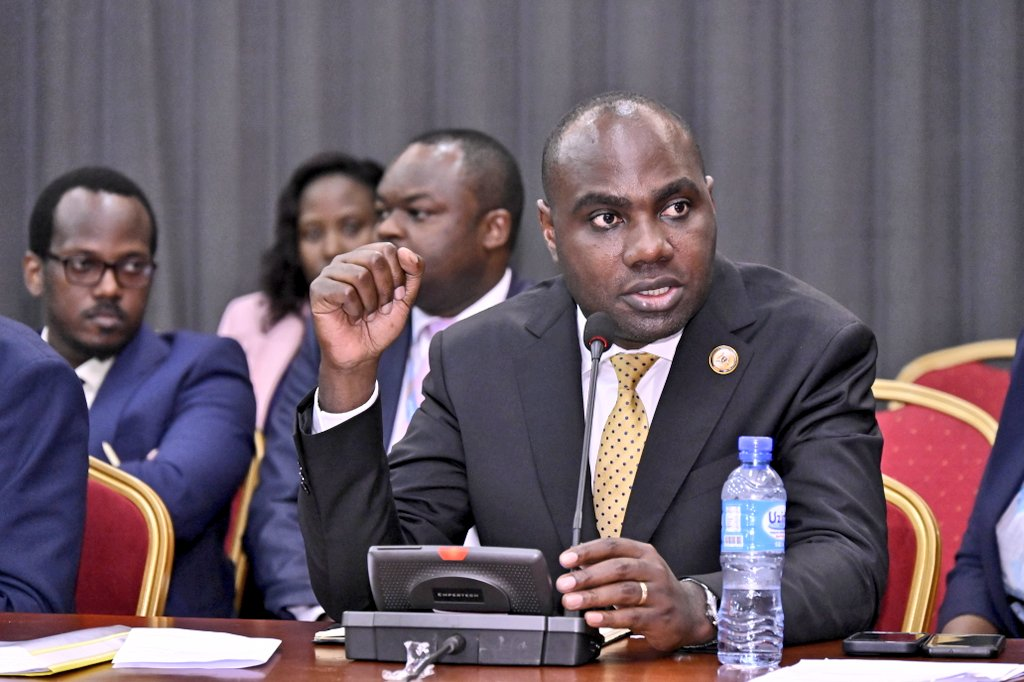
The announcement was made by Henry Musasizi, Minister of State for Finance during his presentation of the 2026/27 Ministerial Policy Statement before Parliament’s Committee on Finance.

“In preparation for the first oil, overall progress on the East African Crude Oil Pipeline is at 80 percent. Five engineering studies are underway for the oil refinery project. The Government expects about Shs2.2 trillion from oil revenues next financial year, of which Shs1.4 trillion is programmed to finance the budget,” Minister Musasizi said.
The Minister highlighted that these funds will help advance key national priorities while sustaining macroeconomic stability. The revenue injection from first oil is a historic step for Uganda, positioning the country as a rising player in the region’s energy sector.
Beyond oil, Minister Musasizi detailed achievements under the Parish Development Model and wealth creation funds. As of December 2025, all PDM SACCOs were capitalized with an additional Shs529 billion, with each of the 10,589 verified SACCOs receiving Shs50 million as the first tranche.

“Cumulatively, Shs3.63 trillion has been disbursed as parish revolving funds to last-mile beneficiaries, achieving financial inclusion for more than 3.6 million previously unbanked individuals,” he noted.
The Emyooga Programme has also made a significant impact, with over Shs100 billion disbursed in affordable credit benefiting more than 350,000 individuals. Additionally, Shs76.32 billion in seed capital supported 3,816 circles, assisting over 1 million beneficiaries and contributing to the creation and maintenance of more than 1.1 million jobs across the country.
Agricultural initiatives are also gaining traction. By December 2025, the government had provided Shs40.7 billion to the Agricultural Credit Facility and Shs7.5 billion to the Uganda Agricultural Insurance Scheme, benefiting nearly 960,000 farmers.
“These interventions are not only driving economic growth but also strengthening food security and rural livelihoods,” Musasizi said.
Looking ahead to the 2026/27 national budget, the Ministry of Finance is set to receive Shs2.78 trillion. Key subventions include Shs7.728 billion for the Tax Appeals Tribunal, Shs4.2 billion for the Public Procurement and Disposal of Assets Appeals Tribunal, Shs10.425 billion for the Economic Policy Research Centre, and Shs9.354 billion for the Capital Markets Authority. Enterprise Uganda will receive Shs26 billion, the Microfinance Support Centre Shs176.670 billion, the Uganda Development Bank Shs415.190 billion, and Pearl Bank (formerly Post Bank) Shs4.086 billion.
Minister Musasizi reassured Parliament that Uganda’s economic outlook remains positive.
“The economy is characterized by strong growth momentum, low inflation, stable financial markets, and improving external performance. Going forward, the Ministry remains focused on addressing emerging risks while sustaining the gains achieved under its core mandate of sound economic management,” he said.
Experts note that the anticipated oil revenues, combined with ongoing development programs, will strengthen Uganda’s fiscal position and provide opportunities for further investment in infrastructure, agriculture, and social programs. With these strategic interventions, the Government aims to ensure that economic growth translates into tangible benefits for ordinary Ugandans, particularly in previously underserved rural areas.
The 2026/27 budget framework shows Uganda’s potential as an oil-producing nation while highlighting the Government’s commitment to inclusive economic development, fiscal discipline and long-term prosperity for all citizens.