About one in seven Ugandan adults living with HIV do not know their status despite major gains in HIV treatment and viral suppression, according to preliminary findings from the 2025 Uganda Population-based HIV Impact Assessment (UPHIA 2025).
The survey, whose preliminary results were released by the Ministry of Health on Thursday, found that 85.3 percent of people aged 15 years and above living with HIV were aware of their status, while 99.1 percent of those who knew their status were receiving antiretroviral treatment (ART).

Among those on treatment, 96.5 percent had achieved viral suppression, highlighting continued progress in Uganda’s HIV response even as the country faces a persistent gap in identifying people who are living with the virus but have not yet been diagnosed.
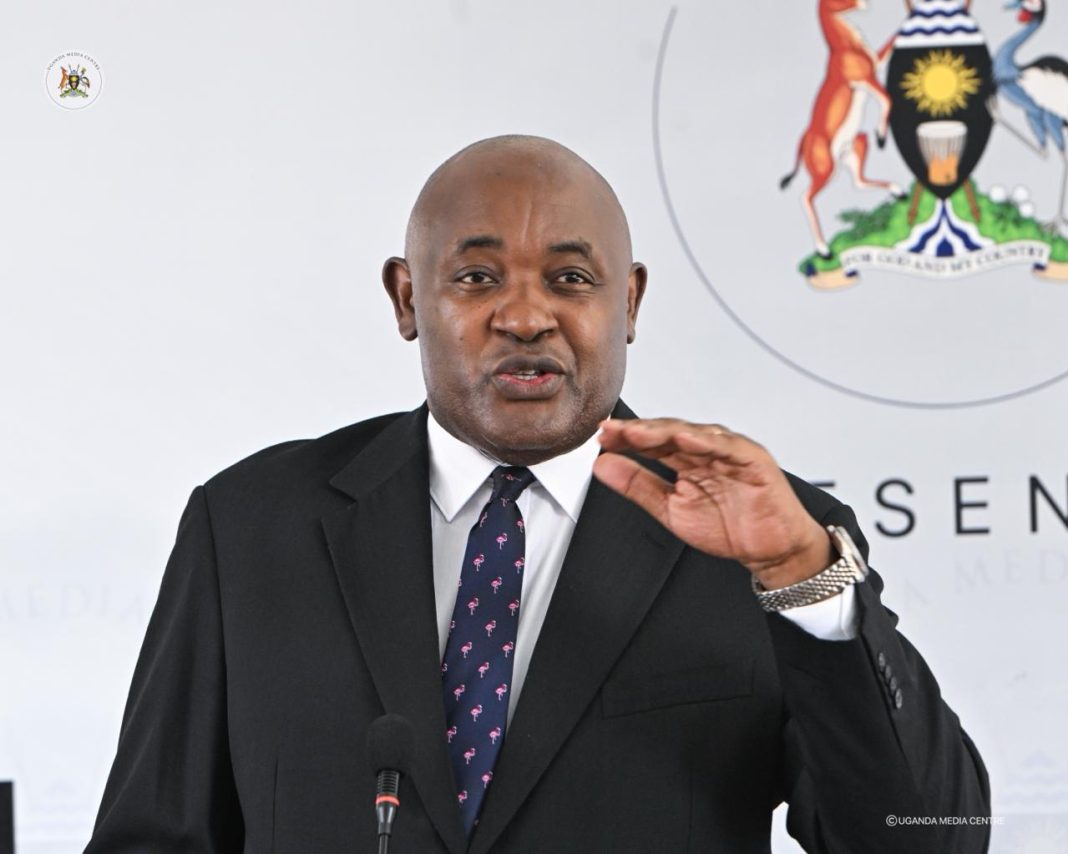
Presenting the findings at the Uganda Media Centre in Kampala, Health Minister Chris Baryomunsi said the results show that the biggest remaining challenge is identifying people living with HIV who do not know their status.
“The headline message is encouraging, but it is also clear about where we must focus. Almost everyone who knows they are living with HIV is on treatment, and almost everyone on treatment has suppressed the virus. Our biggest remaining gap is at the very start: about one in seven people living with HIV do not know their status,” Baryomunsi said.

UPHIA 2025 estimated HIV prevalence among adults aged 15 years and above at 5.9 percent, with prevalence higher among women at 7.3 percent compared with 4.1 percent among men.
The prevalence translates into approximately 1.496 million adults aged 15 years and above living with HIV in Uganda. The overall prevalence remains largely unchanged from the 2020 survey.
Among adults aged 15 to 49 years, HIV prevalence stood at 5.5 percent, also unchanged from 2020. Prevalence in this age group was 7.1 percent among women and 3.5 percent among men.
The survey found wide regional differences in HIV prevalence, with the lowest levels recorded in North East (Karamoja) at 1.3 percent and West Nile at 1.4 percent. Prevalence stood at 4.0 percent in East Central, 4.4 percent in Mid Eastern, 4.8 percent in North East (Teso), 5.4 percent in Kampala, 6.1 percent in Mid Western and 6.8 percent in Mid North.
Central 2, covering Greater Mubende, Luwero and Mukono, recorded 7.2 percent, while Central 1, covering Wakiso, Mpigi and greater Masaka, recorded 7.3 percent. The highest prevalence was recorded in the South Western region at 8.0 percent.
Young people also emerged as an area requiring greater attention. HIV prevalence among people aged 15 to 24 years was 1.5 percent, but was higher among women at 2.0 percent compared with 1.0 percent among men.
The survey further found that HIV prevalence among people aged 20 to 24 was nearly three times higher than among those aged 15 to 19. Among men, prevalence rose from 0.6 percent among those aged 15 to 19 to 1.5 percent among those aged 20 to 24. Among women, it increased from 1.3 percent to 2.8 percent across the same age groups.
Baryomunsi said the findings would be used to guide the allocation of resources and improve the delivery of HIV and other health services.
“The findings provide clear direction for policy, resource allocation and action at national, regional and district level. They show where services must be strengthened so that the people and communities with the greatest gaps are not left behind,” he said.
The assessment also showed substantial improvement in viral load suppression. Overall, 86.0 percent of adults aged 15 years and above living with HIV had suppressed viral loads, regardless of whether they knew their status or were taking ART, up from 75.4 percent in the 2020 survey.
Viral suppression was particularly high among older people living with HIV. Among those aged 55 to 64 years, 93.8 percent of women and 98.8 percent of men had suppressed viral loads.
However, suppression was lower among younger people. Among women aged 15 to 24 years living with HIV, 64.1 percent had suppressed viral loads. The survey could not produce a comparable estimate for men in the same age group because of the small number of men living with HIV in the sample.
Geographical differences were also recorded in viral suppression, ranging from 78.0 percent in the Mid Eastern region to 92.3 percent in the South Western region. The Ministry said viral load suppression had improved across all regions compared with the previous UPHIA surveys conducted in 2016/2017 and 2020/2021.
The results show Uganda has made progress towards the international 95-95-95 HIV targets, which seek to ensure that 95 percent of people living with HIV know their status, 95 percent of those who know their status are on treatment and 95 percent of those on treatment achieve viral suppression.
While Uganda is yet to reach the first 95 target, the country has surpassed the second and third targets among people who know their HIV status and those receiving treatment, according to the preliminary findings.
Baryomunsi said the government would focus on sustaining the gains while expanding access to HIV testing and treatment, particularly in communities where gaps remain.
“As Government, we will use the UPHIA 2025 evidence to protect the gains of the HIV response, direct available resources to the people and places with the greatest need, and hold ourselves accountable for measurable results,” he said.
The assessment also examined selected non-communicable disease indicators. It found that 15.5 percent of participants aged 15 years and above had elevated blood pressure, while 0.9 percent had elevated blood glucose. Overweight and obesity affected 24.8 percent of participants in the same age group.
The Ministry said the findings provide an opportunity to integrate HIV services with other chronic disease services, including screening and management of hypertension and diabetes, through primary healthcare.
UPHIA 2025 was conducted between July and September 2025 across all regions of Uganda using a nationally representative household sample. The survey was led by the Ministry of Health in collaboration with Makerere University School of Public Health, Uganda Bureau of Statistics (UBOS), Uganda Virus Research Institute (UVRI), regional referral hospitals, districts and implementing partners.
The survey achieved a 94.4 percent household participation rate, with 6,283 eligible households identified. Of 8,317 eligible women and 6,361 eligible men aged 15 years and above, 96.2 percent of women and 91.2 percent of men were interviewed. Among those interviewed, 97.8 percent of women and 97.4 percent of men were tested for HIV.
The assessment was funded by the United States President’s Emergency Plan for AIDS Relief (PEPFAR) through the US Centers for Disease Control and Prevention (CDC).
Baryomunsi called on Ugandans to take up HIV testing and prevention services and encouraged people diagnosed with HIV to begin treatment promptly and take their medication consistently.
“I call upon every Ugandan to know their HIV status, make use of prevention services and, when diagnosed, start treatment promptly and take it consistently. I also encourage adults to seek screening for high blood pressure and diabetes and to act early on the advice of health workers,” he said.
The minister also urged district leaders, health workers and facility managers to use the findings when planning services and reviewing performance, while calling on development partners to align their support with government priorities.
The Ministry said the figures released Thursday are only preliminary, with additional findings on HIV incidence, programme coverage and behavioural indicators expected to be released in the final UPHIA 2025 report.