The Bank of Uganda’s foreign exchange reserves rose to $6.7 billion in the financial year ended June 2026, up from $4.3 billion a year earlier, as the shilling appreciated against the US dollar and inflation remained below the central bank’s medium-term target.
The developments are contained in the central bank’s 2025/2026 Annual Integrated Report, which was signed off by the Bank of Uganda Board of Directors and Auditor General Edward Akol, covering the period from July 1, 2025, to June 30, 2026.

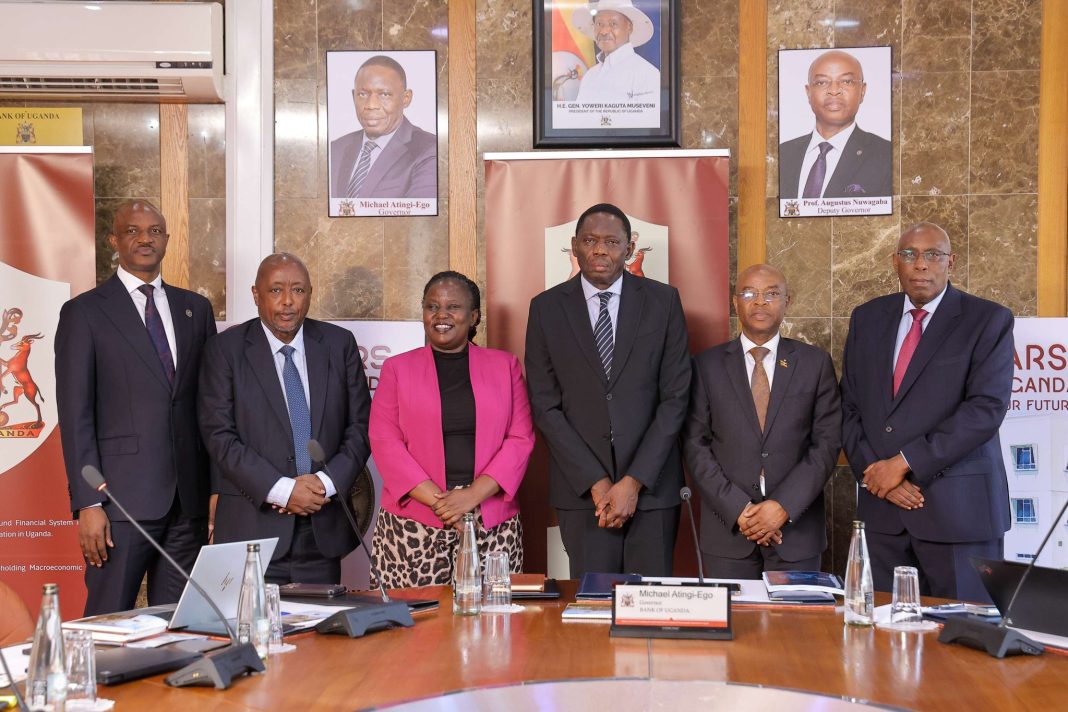
The report, presented by Governor Dr Michael Atingi-Ego, shows that Uganda maintained macroeconomic stability despite geopolitical tensions, volatile energy prices, changing global financial conditions, and rapid technological change.
Atingi-Ego said the country’s economic performance during the year reflected the impact of monetary policy, favourable domestic supply conditions, exchange rate stability and coordination between fiscal and monetary authorities.
“Despite these challenges, Uganda’s economy remained resilient, macroeconomic stability was preserved, and the financial system remained sound,” Atingi-Ego said in his message accompanying the report.

The increase in foreign exchange reserves strengthened the country’s capacity to meet external obligations and withstand shocks, including changes in global commodity prices and financial conditions.
According to the Governor, reserves increased from $4.3 billion in the 2024/2025 financial year to $6.7 billion by June 2026, equivalent to approximately 3.7 months of future imports, excluding oil project imports.
“The Uganda shilling appreciated by an average of 1.8 percent against the US dollar, supported by strong export earnings, remittances and investment inflows,” Atingi-Ego said.
The shilling’s appreciation and the accumulation of reserves point to improved conditions in the foreign exchange market during the reporting period, although the figures do not guarantee that the currency will maintain the same performance in subsequent financial years.
Inflation also remained below the central bank’s medium term target of five per cent. Headline inflation averaged 3.3 per cent, while core inflation averaged 3.4 per cent during the year.
The relatively low inflation environment allowed the Monetary Policy Committee to maintain the Central Bank Rate at 9.75 per cent while increasing the Cash Reserve Requirement for commercial banks from 9.5 per cent to 11 per cent to absorb excess liquidity and guard against emerging inflationary pressures.
The Central Bank Rate is the benchmark that guides interest rates in the economy, while the Cash Reserve Requirement determines the proportion of eligible deposits commercial banks must hold as reserves with the central bank.
Atingi-Ego said the monetary policy decisions sought to support economic activity without compromising price stability.
“Supported by prudent monetary policy, favourable domestic supply conditions, exchange-rate stability and fiscal-monetary coordination, these outcomes allowed the Monetary Policy Committee to maintain the Central Bank Rate at 9.75 percent while increasing the Cash Reserve Requirement from 9.5 percent to 11 percent to absorb excess liquidity and guard against emerging inflationary pressures,” he said.
Economic growth was estimated at 6.4 per cent during the financial year, while private sector credit growth accelerated from 8.8 per cent to 11.4 per cent, indicating an increase in lending to businesses and households.
The central bank continued to support productive investment through initiatives such as the Agricultural Credit Facility and the Small Business Fund, which are intended to improve access to financing for enterprises and productive activities.
“Through initiatives such as the Agricultural Credit Facility and the Small Business Fund, the BoU continued to support productive investment, recovery and job creation,” Atingi-Ego said.
The Governor said financial institutions maintained strong capital and liquidity positions during the year, while the central bank strengthened risk based supervision, consumer protection and stress testing.
The Bank of Uganda also increased its oversight of climate related financial risks as financial institutions faced changing regulatory expectations and emerging risks associated with environmental and economic developments.
The report further highlights the central bank’s efforts to modernise Uganda’s payments infrastructure as more businesses and individuals rely on electronic transactions.
During the year, BoU licensed additional payment service providers, strengthened regulatory oversight and advanced initiatives involving the national payment switch, regional payment integration and replacement of the real time gross settlement system.
The central bank also introduced a standing deposit facility and continued improving liquidity management operations to strengthen the transmission of monetary policy and support orderly financial markets.
“As financial services continue to evolve, the BoU prioritised the modernisation of Uganda’s payments ecosystem,” Atingi-Ego said.
The financial results also indicate that the central bank recorded a net surplus of approximately Shs1.32 trillion during the financial year, according to reporting on the annual report by Daily Monitor.
However, the report also recorded an increase in provisions for potential legal obligations, which rose from Shs33.91 billion in June 2025 to Shs60.20 billion in June 2026.
The increase of Shs26.29 billion represents a rise of approximately 77.5 per cent in provisions for potential legal obligations. Litigation fees and legal damages also rose from Shs2.13 billion to Shs27.08 billion during the period.
These provisions represent potential obligations assessed by the central bank and should be distinguished from litigation expenses recognised during the year. The figures alone do not establish that the increase resulted from any particular court case.
The report also highlights the importance of consumer protection as the use of digital financial services expands. Financial institutions supervised by BoU across Tier I, II and III received 414,815 customer complaints during the financial year.
Mobile money and mobile banking accounted for 154,683 complaints, representing 37.29 per cent of the total. Other complaints involved agent banking, internet banking, automated teller machines, branch services, online payments and loan processing.
According to the report, 99.9 per cent of complaints were resolved within six months, while the central bank continued to facilitate cases in which customers considered the responses provided by financial institutions inadequate.
The disclosures underline the growing responsibility of the regulator to ensure that the expansion of digital financial services is accompanied by effective complaint handling and safeguards for customers.
Looking ahead, Atingi-Ego said Uganda would continue facing risks from geopolitical tensions, commodity price volatility, climate related threats, cybercrime and rapid technological change, even as the country’s medium term economic outlook remained favourable.
“Nevertheless, Uganda’s medium-term outlook remains favourable. The BoU will continue to take evidence-based decisions, strengthen financial-system resilience, modernise payment and financial-market infrastructure, and preserve confidence in the Uganda shilling in support of sustainable and inclusive socio-economic transformation,” he said.
The Governor also acknowledged the contribution of the central bank’s staff, Board of Directors and stakeholders as the institution marks its 60th anniversary.
“These achievements were made possible by the dedication of the BoU’s staff, the guidance of the board of directors and the confidence placed in the institution by the people of Uganda and our stakeholders,” Atingi-Ego said.
He added that the anniversary provided an opportunity to reflect on the institution’s six decades of service while preparing for emerging economic and financial challenges.
The Annual Integrated Report provides an account of the Bank of Uganda’s performance, operations and discharge of its statutory mandate during the financial year ended June 30, 2026, including its efforts to promote price stability and maintain a sound financial system in support of Uganda’s socio economic transformation.