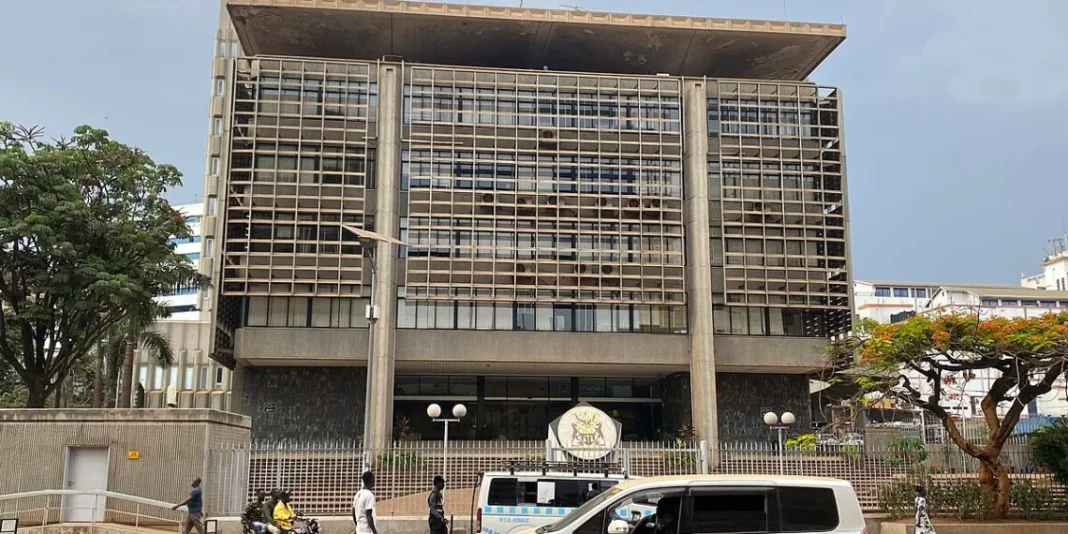
The Bank of Uganda (BoU) has restored its two national payment systems following a four-day suspension to facilitate a planned upgrade aimed at improving the efficiency, reliability and security of the country’s financial transactions.
The Real-Time Gross Settlement (RTGS) and Automated Clearing House (ACH) systems resumed operations at 9:00am on Monday, November 9, 2026, ending an interruption that affected interbank transfers, cheque clearing, electronic funds transfers and other banking transactions processed through the systems.

In a service update issued on Monday, the central bank confirmed that the upgrade had been successfully completed and normal operations restored.
“The Bank of Uganda informs all stakeholders and the public that the planned system upgrade has been successfully completed. Real-Time Gross Settlement (RTGS) and Automated Clearing House (ACH) services were fully restored at 9:00 a.m. on Monday, 9 November 2026,” the central bank said.
The restoration follows an earlier announcement by the central bank that the two systems would be temporarily unavailable from 5:00pm on Thursday, November 5, until 9:00am on Monday, November 9, to allow technical teams to undertake the planned upgrade.

The upgrade was part of Uganda’s efforts to implement the East African Community (EAC) Cross-Border Payment System Masterplan, which seeks to improve the movement of money between partner states by making cross-border payments faster, more efficient, secure and affordable.
According to the Bank of Uganda, the exercise was intended to strengthen the efficiency, reliability, resilience and interoperability of Uganda’s national payments infrastructure in line with evolving financial sector requirements.
The central bank had explained that the upgrade was necessary to improve the country’s payment infrastructure and support the seamless flow of financial transactions within the East African Community.
RTGS, also known as the Uganda National Interbank Settlement System (UNISS), is a critical component of the country’s financial infrastructure. It facilitates the immediate settlement of high-value transactions between financial institutions, including interbank transfers, government securities transactions and money market operations.
ACH, on the other hand, handles the processing and clearing of bulk electronic payments, including salary transfers, direct debits, electronic credit transfers and cheque transactions.
The temporary suspension therefore affected banks, government institutions, businesses and individuals who depend on transactions processed through the two systems.
Before the closure, the Bank of Uganda advised customers and institutions to complete urgent bank-to-bank transactions ahead of the November 5 deadline and confirm cut-off times with their respective financial institutions.
However, the central bank clarified that the interruption would not affect mobile money services, ATM withdrawals, over-the-counter banking services and transfers between accounts held within the same bank.
The scale of transactions handled by the two systems underlines their importance to Uganda’s economy.
According to figures cited from the Bank of Uganda’s payment system statistics, RTGS processed 215,831 transactions worth Shs79.6 trillion in May 2026 alone, while ACH handled approximately 1.45 million transactions valued at Shs6.7 trillion in August 2026.
The successful restoration will enable banks and other financial institutions to resume processing transactions through the two systems, although customers with payments that were delayed during the shutdown may need to follow up with their respective banks for transaction-specific updates.
The central bank thanked financial institutions, businesses and members of the public for their cooperation during the maintenance period.
“The Bank of Uganda appreciates your patience and understanding during the upgrade,” the institution said.