Stanbic Bank
Stanbic Bank
16.7 C
Kampala
Stanbic Bank
Stanbic Bank
Home Blog Page 1001

Denis Onyango to Museveni: Fulfill $1m pledge to Uganda Cranes

President Museveni welcomes Uganda Crane's Denis Onyanga at a past event at State House Entebbe.

The captain of Uganda Crane, Denis Masinde Onyango, has petitioned President Yoweri Kaguta Museveni reminding him to fulfill a $1M pledge he made to his team mates last year.

Last year Mr. Museveni pledged $1M as a token of appreciation to all Uganda cranes players who participated in the 2019 Africa cup of nations.

“In these tough Covid-19 times with everyone trying to fend for themselves, we find the timing right to remind you as the No.1 citizen of the Pearl of Africa about the $1m (One Million Dollars) promise soon after our respectable show during the Africa Cup of Nations in Egypt last year.” Onyango wrote

“As a captain, my teammates have been on my neck humbling requesting me to remind you of the promise.” He said adding that they feel frustrated, unhappy and somewhat under-appreciated that their token of appreciation hangs in balance.

“We truly believe that you will come to our rescue soonest as you have done in the past.”

Uganda Cranes’ journey in the 2019 Africa Cup of Nations came to an end with a 1-0 defeat at the hands of Senegal. Liverpool star Sadio Mane scored the first half winner to send the Lions of Teranga to the quarter finals.

Uganda cranes played four games in the 2019 June to July Africa cup. The team won one game against DRC, a draw with Zimbabwe, and a lost two games to Egypt and Senegal.

Stories Continues after ad
#COVID-19: Coca-Cola System commits $17m across Africa

Coca-Cola in Africa and its bottling partners and Coca-Cola Foundation (TCCF), have committed $17million to support the continent through the various phases of the COVID-19 pandemic

The company has been deploying a range of resources, including capabilities, funds and products to support governments, communities and local economies in their urgent efforts to contain the spread and impact of the Coronavirus since its outbreak on the continent.

The Coca-Cola System committed $13million to support the continent through the various phases of the COVID-19 pandemic. In addition, The Coca-Cola Foundation (TCCF) has granted just under $4 million to international and local NGOs, such as the International Federation of the Red Cross and Red Crescent Societies (IFRC) and Amref Health to procure and distribute personal protective equipment (PPEs) and other critical needs for frontline workers and to help fund ICU-enabled ambulances for example in Mauritius and Madagascar.

In Uganda, the Uganda Red Cross Society distributed food relief packages worth Ushs360 Million to vulnerable households in Mukono District.

“We have worked with Coca-Cola to respond to emergencies in Bududa and Bundibugyo when the floods swept communities and claimed lives late last year. Coca-Cola came in very quickly and provided lifesaving interventions. When Uganda was threatened by the #COVID-19 Pandemic, Coca-Cola came in very fast to offer lifeline support to the Ministry of Health and Uganda Red Cross to offer infection prevention and control materials, but also food to the most vulnerable affected by the lock down in the country. This is a true demonstration of a humanitarian spirit that drives their work and love for communities they serve,” said Robert Kwesiga, Uganda Red Cross Society Secretary General.

The Coca-Cola system also donated to National Solidarity Funds in South Africa, Morocco and Djibouti and additional funds were allocated to boost awareness and mobilization to help stem infections in vulnerable communities across several countries.

In addition to suspending all commercial advertising of its brands and deploying its marketing and trade assets, including social media channels, product labels and point-of-sale materials, to amplify COVID-19 messaging, the Coca-Cola System is providing funding and other forms of support to help bolster the micro, small and medium enterprises in the retail, hospitality and recycling sectors, who have been among the hardest hit businesses across countries. Coca-Cola Company is also working with some NGOs and social enterprises, including Givefood.ng in Nigeria, Gift of the Givers in South Africa and National Disaster Management agencies to provide food parcels for vulnerable families whose livelihood has been disrupted by the lockdown and other restrictions.

Coca-Cola’s bottling partners on the continent, on their part, are making significant contributions to the fight against the pandemic through a variety of interventions, including lending their distribution capability to help deliver medical supplies, food parcels, 3-D printed face masks and other PPE as well as donating cash, beverage products and food items. In response to the critical need for the hand sanitizer, Coca-Cola Beverages Africa in Uganda and Ethiopia, Bralima in DRC, Les Brasseries du Congo in Congo, and Nigerian Bottling Company in Nigeria have deployed their technical expertise and facilities to produce over 30,000 litres of alcoholic sanitizer in line with World Health Organization (WHO) standard which were distributed to governments and vulnerable communities free of charge.

“Our deepest sympathies go out to all those impacted by this virus and their families. We are leveraging on the experience and capabilities the Coca-Cola System has built in over 90 years of serving consumers and making a difference across Africa, in the planning and deployment of our resources to effectively support governments in the efforts to contain the spread, support vulnerable communities and get local economies back up and running,” explains Bruno Pietracci, President of Africa & Middle East for The Coca-Cola Company.

“Our philosophy is ‘People First’. We believe a business is as strong as the community it operates in that’s why we put the safety of our people first at all times – our employees, their families, our customers and the community. These are challenging times for everybody but if we are not together we cannot thrive or survive. This is a guiding principle in all our operations worldwide,” Melkamu Abebe, the General Manager CCBA Uganda said.

In some countries such as in Eswatini, Ethiopia, Uganda and Zimbabwe, Coca-Cola in Africa provided its marketing expertise either directly or through its partnership with Project Last Mile, to support Ministries of Health simplify and amplify health and safety messages. Additionally, in Egypt, Coca-Cola decorated its bottles with messages of gratitude and appreciation to every doctor in the country’s “white army”.

The Coca-Cola system has leveraged its years of experience in water access, sanitation and hygiene through the Replenish Africa Initiative (RAIN) to develop unique emergency handwashing stations (some foot operated, some using jerrycans), which are now set up in high traffic areas, border points and in vulnerable communities.

“The Coca-Cola system has been through many global crises during our 134 year’s history. Making a positive difference during times of crisis is in our DNA. We are in this together with our communities. Going forward, supporting micro and small businesses who are the fabric of our communities and the backbone to Africa’s resilience, will be a key priority for us,” added Pietracci.

Stories Continues after ad
#COVID-19: DPP receives Personal Protective Equipment

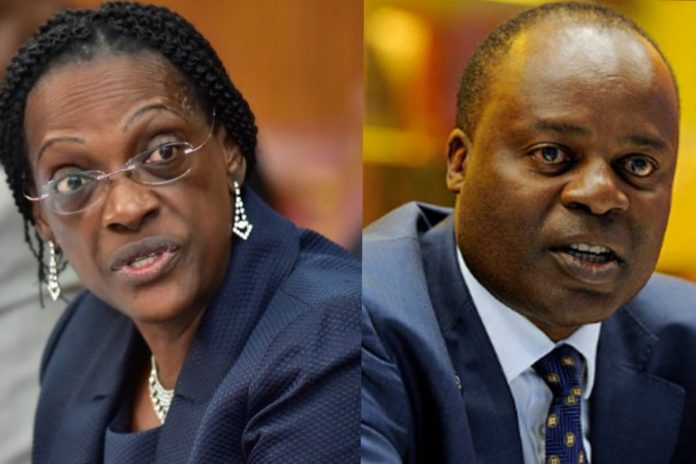
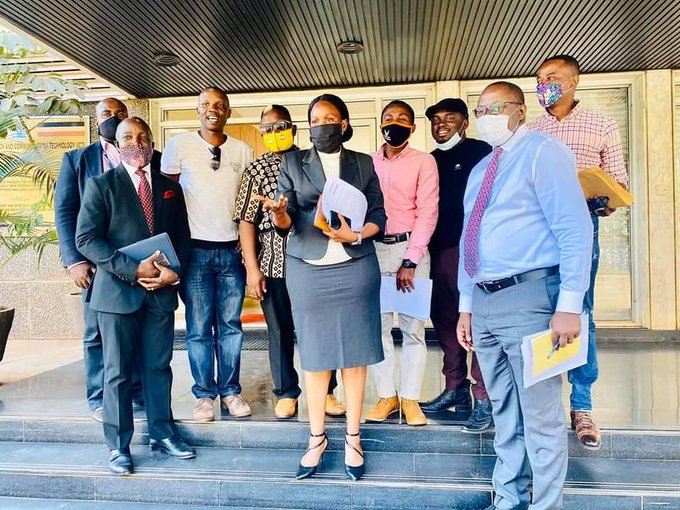
DPP Jane Francis Abodo receiving personal protection equipments

The Office of the Director of Public Prosecutions (ODPP) has received Personal Protective Equipment (PPE) and other equipment, to facilitate the prosecution of Gender Based Violence (GBV) cases, from UN Women.

This happened in a Top Management Meeting that was held in the ODPP, chaired by the Director of Public Prosecutions (DPP), Lady Judge Jane Frances Abodo.

The Deputy Country Representative of UN Women, Ms. Adekemi Ndieli handed over the PPE and other equipment to the DPP. The PPE included 450 ODPP branded face masks, 80 sanitizers, 10 hand washing plastic jerry cans, 50 liquid soap, 5 boxes of hand gloves and 12 hand temperature guns. The GBV equipment included a printer, camera, Information Education and Communication (IEC) materials, ODPP banners, a Department of Gender, Children and Sexual Offences Banner, pampers and sanitary towels.

Ms. Samali Wakooli, Assistant Director of Public Prosecutions and Head, Department of Gender, Children and Sexual Offences in the ODPP said, the ODPP entered into a Memorandum of Understanding with UN Women one year ago, to develop the capacity of Prosecutors in handling GBV cases and to popularize the role of the ODPP in GBV cases.

The Deputy Country Representative of UN Women recognized the initiative taken by the ODPP of prioritizing GBV cases. She noted that the establishment of the Department of Gender, Children and Sexual Offences in the ODPP was a sign of commitment of the ODPP towards ensuring specialized skilled Prosecutors, for effective prosecution of GBV and Violence against Children (VAC) cases.

She emphasized the role of Prosecutors as frontline workers during the #COVID-19 pandemic stressing that it is the Prosecutors who represent survivors and victims of crime in courts.

She affirmed UN Women’s continued commitment to supporting institutional capacity strengthening for effective handling of GBV cases in line with international standards. She said with the provision of PPEs, the Prosecutors could continue with their work in a safe, secure and dignified environment. That the provision of the PPEs was in recognition of the central role that Prosecutors play as frontline workers in combatting Violence Against Women and Girls (VAWG).

In addition, she hoped that the banners and IEC materials would be used to improve awareness on the role of the ODPP in the community and consequently strengthen its collaboration with victims of crime, witnesses and other stakeholders in undertaking its prosecutorial work.

Regarding the sexual and reproductive health emergency items, she said they should go a long way in making victims comfortable and facilitate the process of documenting their evidence.

The DPP thanked UN Women for their good working relationship with the ODPP. She noted that SGBV cases constituted the largest part of the ODPP workload, with women and girls being the main victims of crime. She said the ODPP had prioritized SGBV cases by establishing a fully-fledged Department of Gender, Children and Sexual Offences with Prosecutors specifically trained to handle the cases.

She further said the #COVID-19 pandemic had heightened the number of GBV cases, yet the Office had been very constrained in taking its services to the vulnerable people, including women and girls. That although the Office wanted to serve the people, the Prosecutors needed to be safe.

She lauded UN Women for its timely support by providing PPEs and the other equipment to the Prosecutors. The equipment would go a long way in supporting the Prosecutors in the execution of their mandate, and ensure that the Office offers its services, especially to women and girls, she said.

Stories Continues after ad
Court of Appeal throws out with cost a case brought against sudhir by BoU

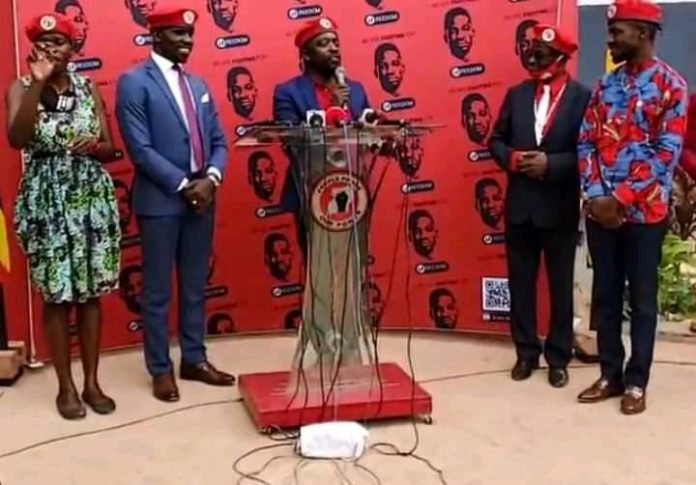
Court of Appeal has thrown out a case brought against city tycoon Sudhir Ruparelia and ordered Bank of Uganda to foot all the cost.

Bank of Uganda/Crane Bank in receivership (BoU) sued him and his Meera Investments Limited.

BoU sued Sudhir and Meera Investments Limited on allegations that they fleeced Crane Bank Limited of Shs397 billion.

BoU appealed against the earlier ruling by Commercial Court, Justice David Wangutusi, who dismissed the case, agreeing with the submissions of Sudhir’s lawyers and ordered that BoU pays costs of the “The person (petitioner) should pay cost and that is non other than Bank of Uganda because Margret Kasule filed on behalf of Bank of Uganda. They knew Crane Bank was in receivership as it wasn’t in existence but they went ahead to sue it” read the judgement.

Mr Joseph Matsiko, one of Mr Ruparelia’s lawyers, argued that on October 20, 2016, Bank of Uganda (BoU) took over the management of Crane Bank pursuant to Sections 87 (3) and 88 (1) a & (b) of the Financial Institutions Act and that on January 20, 2018, BoU placed it under receivership. “The suit was filed on the 30th day of June 2017 when Crane Bank Ltd was in receivership. The issue, therefore, is whether a suit can be filed by a financial institution in receivership,” Mr Matsiko submitted.

He further argued that the Supreme Court has since ruled in a similar case that it would be wrong for any court to confer the right to sue when Parliament did not find it necessary to do so.
Mr Ruparelia, in an affidavit, also contended that under Uganda’s Constitution and the Land Act, Crane Bank in receivership could not own or hold freehold property and was, therefore, not capable of holding the suit property in its names.
But Dr Joseph Byamugisha, who represented Crane Bank in receivership, had argued that when a financial institution is placed under receivership, it does not lose powers to commence or continue with lawsuits.

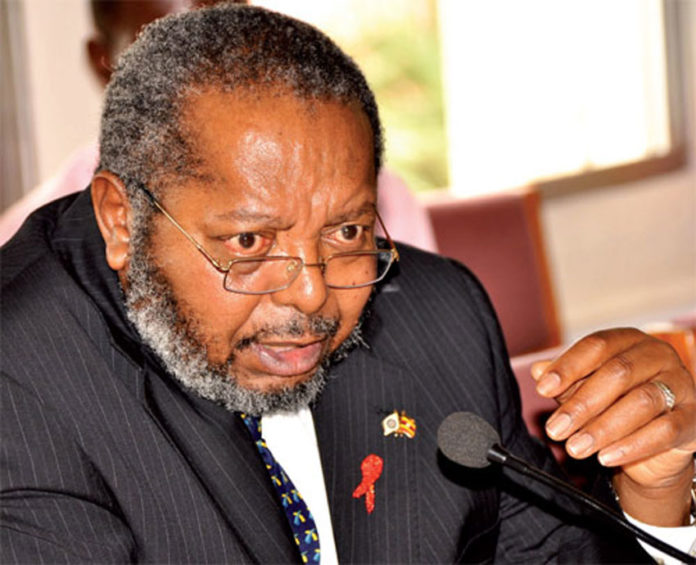
Sudhir was happy with the ruling saying that what the judged ruled on what was not new since parliaments’ committee on Commissions State Authorities and State Enterprises (COSASE) had faulted BoU on giving CBL freely to its rival DFCU Bank and has been making huge profits as a result of the acquisition.

As a recap, on June 30, 2017, BoU filed a suit against Sudhir and his Meera Investments Limited, which the businessman says was in breach of clause 12 of the Confidential Settlement and Release Agreement (CSRA) that was reached by both parties after BoU closed and liquidated CBL for allegedly being undercapitalized.

The clause stipulates that, “Without prejudice to the immediate forging should any legal or administrative proceeding of any kind ensue against SR [Sudhir Ruparelia] as defined in the agreement, the agreement stands voided and BoU shall immediately return to SR the value of the settlement.”

In a counter claim, Sudhir wants BoU to pay him US$8 million (about Shs28.8 billion) for breach contract. Sudhir argues that on January 25, 2017, BoU sold, at an undisclosed sum, assets of Crane Bank to Dfcu bank Limited yet by mid-January 2017, the central bank had approached and urged him to settle the dispute.

The businessman, who runs Ruparelia Group of companies, says that between January 29 and March 20, the parties held a series of meetings meant to amicably resolve the dispute. He adds that under clause 3.1 of the CSRA, they agreed that he pays US$60 million in part cash and property.

In return for the above payments, Sudhir says they agreed that BoU would assign a number of loans totaling to Shs63.6 billion to him, release all securities of those loans, and remove Crane bank from receivership.

On April 4, 2017, Sudhir says that David Mpanga, one of BoU’s lawyers, wrote on behalf of himself and MMAKS, the other BoU lawyers, setting out the implementation timeline of the CSRA, clearly spelling out what each party was required to do in the said agreement.

In the letter, Mpanga said Sudhir was to provide the property list with an aggregate fair market value of US$42 million and that BoU would avail the assigned deed and loan statements to Sudhir with respect to the agreed loan.

That upon receiving the first installments, Mpanga wrote that BoU would release securities of loans worth about US$8million on the account of Sunbury Investments (U) Ltd and Main Freight ICD Limited. That upon receipt of the balance of US$10 million, Mpanga wrote that BoU would release the securities of the remaining portion of the agreed loans.
Sudhir claims he went ahead to implement the agreement by giving up his properties to BoU, which included titles for land found in FRV 130 folio 18 plot M418 Nakawa Industrial Area and LRV 1239 folio 2 plot 7 Parliamentary avenue Kampala.

On April 19, 2017, Sudhir claims, BoU acknowledged receipt of US$1.1 million as payment towards the agreed loans and informed him that his deficit on the first installment of US$8 million was $6.9m, which they demanded he must pay that very day.

On April 20, 2017, Sudhir says he paid BoU $6.9 million. That meant he paid a total of US$8 million on the same day. Despite paying the said money, he said, BoU never released securities of loans representing a total value of approximately $8m on the account of Sunbury Investments, Main Freight and also the central bank did not return his land titles.

That, Sudhir says, was a total breach of the CSRA. In compliance with the agreement, Sudhir says, he had supplied a list of titles, 10 of which were in the names of Mahmoud Bharwani, who had agreed to surrender his titles to settle his indebtedness to Crane bank.

Earlier on April 7, 2017, he said he arranged a meeting between Mpanga and Bharwani after BoU raised a number of issues in regard to Bharwani’s land titles and that it’s Mpanga who wrote the minutes.

“Mr Mpanga’s minutes indicated that the professional valuer conducts the joint valuation to avoid unilateral conclusion by one party. Any defect in title would be established in the joint valuation process,” Sudhir claims.

He said he put an additional eight titles to the property list to give BoU comfort. Nevertheless, Sudhir says, BoU in further breach of the CSRA implementation agreement and the Bharwani meeting, backtracked on the joint valuation.

As if that was not enough, Sudhir says that BoU threatened criminal prosecution if he did not agree with their demands, which were not in accordance with the CSRA.

On June 28, 2017, he says, Mpanga sent him an email with a notice to sue, demanding that by close of business on June 29, he unequivocally undertakes in writing to pay the balance of $52 million and that the payment must be made in cash by July 15.

He said that on June 30, BoU filed a suit against him in court, which was in breach of clause seven of the CSRA.

BoU sold some of CBL’s assets to its rival Dfcu Bank at Shs200 billion in January 2017. Dfcu bank would in first half of 2017 earn Shs114 billion in net profit, with a great percentage of the profits attributed to the acquisition of Crane Bank Limited.

During COSASE probe of BoU between late October 2018 and Late Feb 2019, its officials would disagree on how much CBL was undercapitalized. But Ben Sekabira, the then Director of banking , told MPs on COSASE that CBL at the time of its closure only needed Shs150 billion to remain operating, much as BoU claimed to have injected Shs478 billion in CBL as liquidity support while it was under receivership. During COSASE probe BoU officials failed to account for Shs478 billion.

In the preliminary suits of the main case, Sudhir succeeded in ensuring that conflicted lawyers of MMKAS Advocates, David Mpanga of AF Mpanga-Bowmans and Sebalu & Lule Advocates were barred from representing BoU and any party in cases involving Ruparelia Group, having worked for the company.

Stories Continues after ad

Gen. Tumukunde treason case pushed to August

Gen. Henry-Tumukunde.

The case in which former powerful Security Minister, Lt. Gen Henry Tumukunde, is accused of treason was today adjourned to August 22, 2020.

Lt.Gen Tumukunde, who ran into trouble after declaring intentions to challenge President Museveni for the presidency, appeared before City Hall court Grade One Magistrate Valerian Tuhimbise but had his case adjourned.

Prosecution led by Joseph Kyomuhendo argued that investigations into Lt.Gen. Tumukunde’s case are incomplete, setting out the grounds why there could not be proceedings.
Lt. Gen. Tumukunde was on March 18, 2020 arraigned in Court on charges of Treason and unlawful possession of firearms and ammunitions.

Lt. Gen Tumukunde is alleged to have made those statements while appearing on NBS Television when he allegedly called for a foreign country to help in the fight to change government.

Prosecution further alleges that on 13th March 2020, security operatives conducted a cordon and search operation at Lt. Gen. Tumukudne’s office along Impala Avenue in the reclusive suburb of Kololo and recovered firearms which the General was allegedly holding with a valid licence.

But the charges have done little to deter Gen. Tumukunde as he remains determined to fight for peaceful change in the country.

Stories Continues after ad

The Proposed Scientific Election In 2021 May Cause A Constitutional Crisis

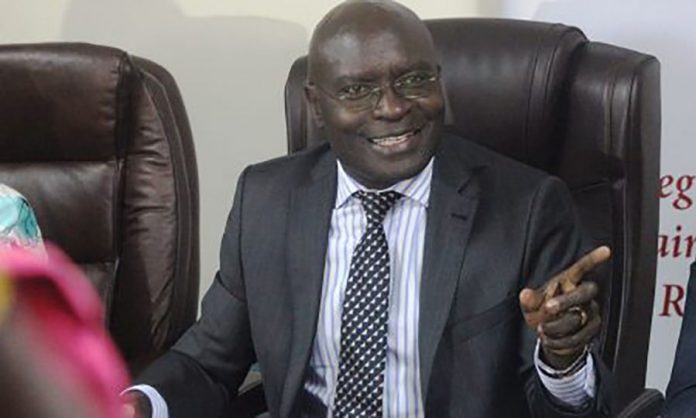
Counsel Fred Muwema

The Electoral Commission released a revised roadmap for the 2020/21 general elections where it stated that “mass rallies will not be allowed but campaigns will be conducted mainly through media.” Many people are wondering how a restriction on one aspect of the campaigns i.e. mass rallies, can reduce the whole election into a “scientific election”? The reality is that it is the rallies which have the pull and push power of the campaigns and the campaigns are the gravitas of the electoral process. You literally can not tell when the electoral process has begun until the campaign rallies have begun. So that is probably why the EC can get away with calling the whole election “scientific”.

Because campaigns and their rallies are the amalgam that sticks the whole electoral process together and it is through them that the electorate participates, it becomes a very sensitive issue for anyone to try and remove or restrict the physicality of the campaign activities as we know them. But that is exactly what the EC has promised to do and expectedly, it has come under fire.

The EC has added petrol to the fire by failing to clarify what it means by a “mass rally.” As a result, many people are accusing the EC of trying to emasculate the next general elections and disfranchise them of their right to vote and elect the next leaders of their choice. Probably the EC would save the day and get out of the spot of bother it finds itself in by defining “mass rallies” in terms of a specific number of people.

A month ago, the Government of Benin organized local elections but it banned campaign events and gatherings of more than 50 people. This was a containment measure to stave the spread of the novel Coronavirus. Consequently, candidates had to focus more on media appearances and campaign posters. Unfortunately voter turnout suffered and the credibility of the elections suffered as well. That is the price we may have to pay for any significant restrictions on political campaign rallies.

My concern is that this “scientific election” if it happens, may actually burden the country with an election pandemic on top of the coronavirus pandemic which has overstayed its welcome. There will be an election pandemic because the process will be diseased by the refusal to allow candidates to individually mobilize support for their candidature. An election where candidates are not allowed to meet their mobilizers across the country who may number in the hundreds to canvass support for them is an identity thief of the real election. It will be an election stolen before its delivered if candidates are not allowed to reach out to voters who may congregate in groups in various towns, trading centres and villages. Will the EC treat these meetings and groups as mass rallies and ask the Police to disband them? Would the Presidential Elections Act 2005 and the Parliamentary Elections Act 2005 which are the principal laws regulating campaign activities continue to be relevant when they still refer to political campaigns as individual public campaigns. It is clear that the framers of the law didn’t have emphasis on scientific campaigns in their mind when they predicated the candidates’ campaigns on their physical activity. Whereas the law makers acknowledged the media as a campaign tool which may be used by the candidate, they never intended to substitute the physical presence of the candidates with radios and televisions. How can the EC possibly substitute something that is so sacred that its withdrawal can virtually empty the whole electoral process.

Under Article 61 of the constitution and S.12 of the Electoral Commission Act cap 140 the mandate of the EC is to preserve the citizens right to vote by ensuring that the entire electoral process is conducted under conditions of freedom and fairness. The EC has powers to regulate the electoral process which includes nomination, campaigns, polling procedures, etc., but it has no power to take away the conditions of freedom and fairness under which the elections must be conducted. There should be no argument about that!

In the Kenyan case of Karanja Kabege Vs Joseph Kiuna Kariambegu Election Petition No. 12 of 2013 (KLR) which was quoted with approval in the Raila Odinga Presidential Petition No 1/2017, the court observed that, “the concept of free and fair elections is expressed not only on the voting day but throughout the electoral process……. Any non- compliance with the law regulating these processes would affect the validity of the election.”

In otherwords, the propriety of the voting process is impacted by the conduct of the campaigns in totality prior to the voting exercise. Otherwise the citizens’ right to vote will lose meaning if the electoral process is fatally tampered with. In the recent case of Kalali Steven Vs EC Misc. Cause No. 35 of 2018. Lady Justice Lydia Mugambe who restored the right of prisoners and Ugandans in the diaspora to vote observed that; “for the right to vote to be meaningful, there must be information regarding who is standing, for what position, their manifestos and other information relevant to the voting.”

In my view, an election cannot meet the conditions of freedom and fairness if the voters are restricted to obtaining all the information relevant to the voting remotely or scientifically. Political campaigns are similar to marketing campaigns where the object of the campaign is to solicit for the endearment and trust of the targeted audience. We may never know how much trust may be lost in the electoral process upon the withdrawal of the physical presence of candidates. It is risky to underestimate the immense power of a physical candidate as opposed to an electronic candidate in determining the choice of that candidate. The consequences of placing too much reliance on an electronic candidate may be disastrous. It is best we do not experiment the governance of our country with something whose consequences we may not fully understand.

Therefore if the EC insists on restricting the candidates’ campaigns to social media, radios and TVs, the electoral process will not only alienate those without access to that media but it may also lose the confidence of a significant part of the electorate. In the end, the election process and result may not meet the substantiality test which qualifies a valid election. Whereas Courts are used to applying the substantiality test to votes which can be counted, they may not find a measure for the substantiality of trust and confidence in an election. This will present a paralysis of analysis of future electoral disputes by the judiciary and it will lead to a failure of electoral justice.

The health scare caused by the Coronavirus pandemic was a good reason for the EC to delay or postpone some of the electoral activities. However it is legally unsound to use the same Coronavirus as a reason to remove the mandatory conditions of freedom and fairness which are necessary for the conduct of the national elections. You cannot have an election when the conditions of freedom and fairness are removed.

An argument may be made that the presence of coronavirus as a national health emergency should bring limitations to bear on citizens constitutional rights which includes the freedom to assemble at political rallies. I believe there are some rights which are immutable and cannot be derogated by the Coronavirus. The right to food, good health and access to justice are some of those immutable rights. However the right to vote takes on greater significance if an election must be held to secure the governance of the country.

My sense is that it is the national elections which maintain and renew our sovereignty and nationhood. Under Article 5 of the constitution, Uganda is a sovereign state and republic by virtue of the fact that the people under Article 1 of the same constitution express their will and consent on who shall govern them and how they shall be governed, through regular, free and fair elections. This is how Uganda acquires what in juridical terms is called “state rights,” to exist as a sovereign republic.

There is no other way the Government of the state of Uganda can acquire the power and authority to discharge its public functions which includes the power to fight Coronavirus without the endorsement of an election. We cannot trifle or trade off with anything else, the integrity of the process by which the Government obtains its existence and legitimacy under the Constitution. We cannot undermine the integrity of the national election by weaponising measures to contain the Coronavirus. We simply can’t fight the Coronavirus without a Government. In such a case, the national election which puts the Government in place must come first.

If we cannot hold the elections with integrity because of the Coronavirus, then the Government should declare a state of emergency under Article 110 of the Constitution and call off the election. The Constitution provides for a mechanism to avoid a governance vacuum in case that happens. So the EC should rethink its blanket ban on all mass rallies at the next elections and come up with robust standard operating procedures to make the electoral processes safe. Mali, Cameroon, Guinea and South Korea are some of the countries which have held elections with Health safety precautions during the Coronavirus pandemic. The EC cannot be planning to organize an unfree and unfair election right from the start even before we cast a single ballot. This will not bode well for the country as it may plunge us into in an unnecessary constitutional crisis.

By Fred Muwema
Managing Partner,
Muwema & Co. Advocates
22nd June, 2020

Stories Continues after ad

Childfund releases over Shs100 million for distribution of reading materials

ChildFund Uganda Country Program has disbursed over Shs100 million to nine local partners to support over 29,000 children in accessing reading and learning materials.

The nine implementing partners spread across 28 districts are working with the RDCS, CAOs, DEOs, and other local authorities to ensure that children receive the learning materials released by the Ministry of Education and Sports. This is in addition to sensitizing communities and families to ensure that children are given time and space to read and revise while at home.

With the continued closure of schools, children from vulnerable families are struggling to cope under the circumstances. For most, education and any form of learning have come to an abrupt stop as they spend their days supporting the family labour in gardens and other household activities.

Noeline, a senior three student from Masodde Community in Kyankwanzi district, says despite the government disbursing reading and learning materials to all sub counties country wide, they were not enough for each family to receive copies.

Photocopying the reading materials for Noeline and her four siblings at the local Printery near their home would cost over Shs40,000 which her family could not afford. Consequently, the family decided to photocopy only her learning materials and for her brother in senior four.

She added that some of her siblings often go to the neighbors with Televisions to study which increases risks of sexual abuse especially for the girl child.

“I am not happy that my siblings cannot get the learning materials like I did but I have to accept the situation since my parents do not have enough money to get materials for all of us” Noeline said

Similarly, 16-year-old Alindah in senior four was the only one to get some of the reading materials photocopied out of all her five siblings.

Given the high cost of photocopying the learning materials, most parents in the Massodde community prioritized securing materials for children in the final years only. Noeline says this has brought about discrimination in homes leading to fights and bickering amongst children.

ChildFund Uganda’s Education and Early Learning specialist Lukiya Kibone says that distribution of reading materials to children will lessen the pressure and burden of demands on parents and caregivers struggling to care for their families amidst the shutdown of major income streams like petty trading.

She appeals to parents/ caregivers to support and protect children during this period, avail space and time for children to read and be aware that the most offenders of children’s rights are people close to them. “Children should not be left at home unsupervised because it puts them at a higher risk of being abused,’’ Lukiya says.

ChildFund continues to monitor the situation and will provide additional support as the situation evolves.

In addition to national partners, ChildFund will continue to work closely with the nine local implementing partners: Acholi Child and Family Program in Gulu, Masindi Child Development Federation in Masindi, Lango Child and Community Development Federation in Lango, Community Efforts for Child Empowerment in Kyankwanzi, Kampala Area Federation of Communities in Kampala, Jinja Area Communities Federation in Jinja, Partners for Children Worldwide in Soroti, Mbale Area Federation of Communities in Mbale and Busia Area Communities Federation in Busia.

Stories Continues after ad

Court to hear 40 criminal appeals in a scientific session

Justice Remmy Kasule.

Court of appeal is set to handle 40 criminal appeals in a scientific session that will be held at Mbarara High Court starting tomorrow.

According to Registrar Ayebale Tumwebaze, three justices of court who include Elizabeth Musoke, Remmy Kasule, Stephen Musota, are set to start Mbarara session via Zoom meeting technology.

The scientific approach will enable the justice to handle cases and economically as well as observing ministry of health guidelines in line with curbing C#OVID-19.

“The justices and counsel will physically be present at High Court in Mbarara but their client will participate via the zoom technology,” he said

Arrangements have already been made for the attorneys to engage their appellant clients on how to participate in scientific court sessions.

“The advocates are required to advise to sensitize their respective appellants on measures to curb #COVID-19 and on the rationale for the resolution that proceedings will be conducted remotely,” Mr. Ayebale said

According to the cause list for the session 26 of the 40 cases are murder appeals, eight aggravated defilement, three aggravated robbery and three rape appeals. Two of the murder appellants are seeking to overturn life sentence earlier imposed on them by High Court.

Stories Continues after ad

WHO welcomes preliminary results about dexamethasone use in treating critically ill COVID-19 patients

Coronavirus

The World Health Organization (WHO) welcomes the initial clinical trial results from the United Kingdom (UK) that show dexamethasone, a corticosteroid, can be lifesaving for patients who are critically ill with COVID-19. For patients on ventilators, the treatment was shown to reduce mortality by about one third, and for patients requiring only oxygen, mortality was cut by about one fifth, according to preliminary findings shared with WHO.

The benefit was only seen in patients seriously ill with COVID-19, and was not observed in patients with milder disease.

“This is the first treatment to be shown to reduce mortality in patients with COVID-19 requiring oxygen or ventilator support,” said Dr Tedros Adhanom Ghebreyesus, WHO Director-General. “This is great news and I congratulate the Government of the UK, the University of Oxford, and the many hospitals and patients in the UK who have contributed to this lifesaving scientific breakthrough.”

Dexamethasone is a steroid that has been used since the 1960s to reduce inflammation in a range of conditions, including inflammatory disorders and certain cancers. It has been listed on the WHO Model List of Essential Medicines since 1977 in multiple formulations, and is currently off-patent and affordably available in most countries.

The researchers shared initial insights about the results of the trial with WHO, and we are looking forward to the full data analysis in the coming days. WHO will coordinate a meta-analysis to increase our overall understanding of this intervention. WHO clinical guidance will be updated to reflect how and when the drug should be used in COVID-19.

Today’s news builds off the WHO Research & Development Blueprint meeting, which took place in Geneva in mid-February to accelerate health technologies for COVID-19, where further research into the use of steroids was highlighted as a priority. The findings reinforce the importance of large randomized control trials that produce actionable evidence. WHO will continue to work together with all partners to further develop lifesaving therapeutics and vaccines to tackle COVID-19 including under the umbrella of the Access to COVID-19 Tools Accelerator.

Stories Continues after ad

#COVID-19: Museveni expected to lift curfew hours

President Yoweri Museveni

President Museveni will today update the country after a three weeks lockdown that was enforced to curb the deadly #COVID19 pandemic. Originating from Wuhan province in China, Uganda has a total of 823 confirmed cases of COVID-19 with 0 deaths and 631 recoveries.

After confirming the first case on March 21, Uganda has been under lockdown. Under President Yoweri Museveni’s directives, he ordered for closure of all schools, churches, mosques, and banned public transport till last month when he eased lockdown under strict guidelines.

With the new guidelines, all people were ordered to wear face masks in all public places; public transport was reinstated and ordered to carry half of the total passengers among others.

In today’s address, Museveni is expected to open schools and Universities for finalists in senior four, six to complete their respective levels of education. The president is also expected to lift curfew hours from 7:00PM to 9:00PM for motorists and workers to get home.

The president is also expected to deliberate on the issue of opening the airport for Ugandans who are stuck abroad and tourists to visit the pearl of African. Recently the Ministry of health confirmed that they have finalized with all programs for all Ugandans willing to return home. They will be placed under mandatory quarantine for 14 days and later be allowed into the community.

Museveni will also address the issue of shopping arcades which have remained closed since the outbreak of the virus, Boda-boda riders who are begging to be allowed to carry at least one passenger and observe covid-19 guidelines.

Stories Continues after ad