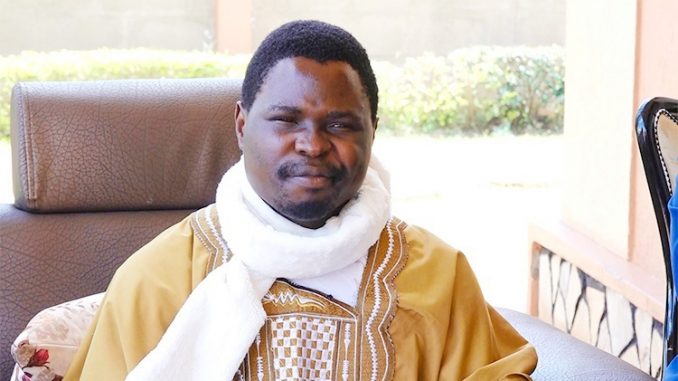
Former New Vision senior journalist and communications specialist Fortunate Ahimbisibwe has announced that he will run for the Rukungiri Municipality parliamentary seat in next year’s general elections.
Announcing his election bid, Mr Ahimbisibwe promised to be a champion against corruption, promote accountability of public funds while also lobbying for social services for the people of Rukungiri Municipality.
Mr Ahimbisibwe said he has support across the different bases and is confident of drawing supporters from the NRM, FDC, People Power, ANT and DP.
“I have friends everywhere-in NRM, FDC, DP, People Power and ANT. I represent all these groups and I will be appealing to people from all sides to vote me, “Mr Ahimbisibwe said.
He added:” For NRM, we might differ on policies and priorities but I believe we agree on principles. I am open minded. I believe an MP’s job extends to all the people in the community regardless of their political persuasion.”
The Rukungiri Municipality seat is currently occupied by Roland Mugume Kaginda, who is also the Deputy Opposition Chief Whip.
Mr Ahimbisibwe said he was inspired to join the race for the seat after appreciating that he can only push for change from a position of influence.
“It is no longer viable to sit on the sidelines and point out things that are going wrong. I have decided to become a participant rather than a spectator. An individual can make a difference if he/she is in a position of influence, in a place where decisions are made, “Mr Ahimbiswe said.
A quick brief on Ahimbisbwe:
Mr Ahimbisibwe is a seasoned journalist, having worked at The New Vision for seven years.
In 2009, he joined the Education Ministry as Communications Specialist under a World Bank funded project until 2015 when he went to the United Kingdom for further studies.
He currently works in the Communications sector in the United Kingdom.
Ex-journalist Fortunate Ahimbisibwe joins Rukungiri Municipality race
Gen. Tuwmine backtracks on curfew deadline
Security Minister, Gen. Elly Tumwine has said that the night-time curfew which was declared by President Yoweri Museveni will remain in force until the head of State communicates otherwise.
Gen. Tumwine had initially announced that the curfew, which runs from 7pm to 6.30 a m would end today June 21 in line with the 21 days that President Museveni announced when he last addressed the country about the measures to control the spread of coronavirus disease on June 1.
However, in a telephone interview, Gen. Tumwine told Eagle Online this morning that the curfew has not been lifted yet and regulations will be enforced until the president communicates otherwise.
Police Spokesperson Fred Enanga said that the curfew was put in place through a Statutory Instrument and that the police will continue implementing the regulations until they receive a contrary order.
However, a cross-section of Ugandans found on the streets of Kampala expressed mixed reactions on the continued implementation of curfew. Some said that it should stay because it has controlled the movement of thugs in the wee hours of the night, while others say it’s a setback to their businesses.
Attachments area
Dombo, Kasamba eat big in new NRM changes
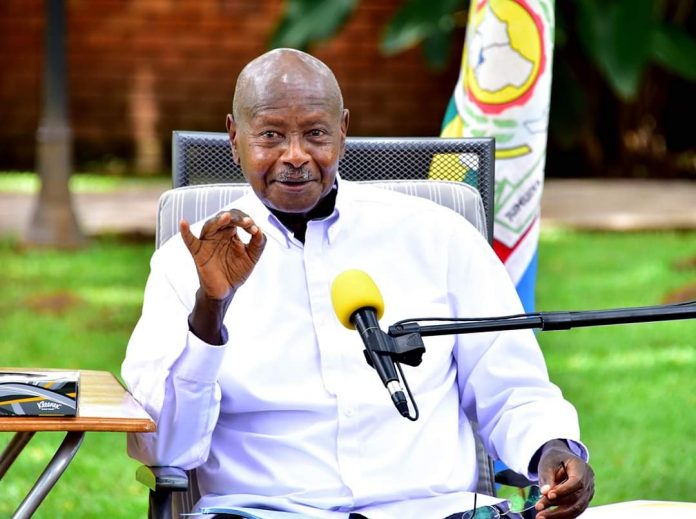
President Museveni has announced changes to the National Resistance Movement party leadership, announcing former Bunyole County MP Emmanuel Dombo as new Director for Information and publicity and former Kakuuto MP Mathias Kasamba as new Director for mobilisation.
Former Kanungu Woman MP Jacqueline Kyatuheire will be the new Deputy National Treasurer, while the Koboko District NRM Chairperson Medina Naham was nominated to be the new Director for Finance and Administration.
Dombo will replace Ms Mary Karooro Okurut, the Minister in-charge of Special Duties in the Office of the Prime Minister while Ms Kyatuheire replaces Kenneth Omona, who was recently appointed the Principal Private Secretary to the President.
The changes by Mr Museveni further confirm a policy he started in 2015, when he strongly argued that party leaders should occupy the positions as full-time jobs and not juggle them with other political offices.
Mr Museveni started that argument as he led the process of purging out officials that were suspected to be allied to Amama Mbabazi, who was then a powerful Secretary General and Prime Minister.
Mr Mbabazi was kicked out of the party and he later challenged President Museveni for the country’s number one job.
Mr Museveni, who is also the Chairman of the National Resistance Movement (NRM/0, made the changes during a sitting of the Central Executive Committee (CEC) at State House on Friday evening.
CEC will sit today to discuss the political road map of the NRM with the new office bearers set to be approved next week.
UPDF company commanders course graduates tipped on successful military career
The Commander Land Forces (CLF), Lt Gen Peter Elwelu has presided over the pass out of 93 Company commanders, four of whom were female Officers.
The graduation of the Officers who had completed six months of intensive training on commanding a company strength force was held at Junior Command and Staff College grounds in Gadaffi barrack, Jinja district.
The CLF congratulated the graduates and told them that the course they had just completed bridges their previous and future career progression.
“After company commanders course, you should be able to foresee your future in the military because the course is a critical intermediary course in military career.” Lt Gen Elwelu said.
He added that how well a person grasps the course and the extent to which he or she puts to practice the fighting skills attained in the course will greatly determine how the superiors will identify him or her for senior level progression.
However, the commander noted that the application of military science must be accompanied by good leadership and moral attributes such as honesty, humility, obedience and hard work.
“Once you apply your military science and add on these leadership attributes, you will attain what you are meant to be. You do not need to seek any favors or soliciting for deployments to reach where you are meant to be,” said Land Forces Commander.
He counselled that no matter where someone is placed without the requisite skills and attributes, that person will stagnate.
The CLF observed that soldiering is a calling from God and that there are no shortcuts to the top.
“Your service in the Military is not by accident but a calling from God; you were meant to be what you are even before you were born, therefore, serve diligently. That is how your seniors made it to where they are, not by shortcuts” he said.
The CLF concluded his remarks with a creation of awareness about COVID-19 virus saying that it’s real and so they as well as their subordinates must follow all the precautionary measures for the good of the nation and themselves.
General Elwelu said that the army is a pillar of a country and should the virus affect it, the whole country will be affected and therefore the officers should take caution.
The Chief instructor Lt Col Anech Mubangizi who represented the Commandant said, the training was aimed at providing officers with Command and leadership skills, developing officers in the art of war and providing officers with great understanding of national issues among others.
UNBS destroys over 230 metric tonnes of substandard goods
The Uganda National Bureau of Standards has destroyed 232 metric tonnes of substandard goods worth Shs2.5 billion.
This is in line with UNBS mandate of enforcing standards in protection of public health and safety, and the environment against dangerous and sub-standard products.
A substandard product is one that does not meet the general and technical specifications required by the standards and as such, is considered to be inferior or of poor quality.
The substandard goods destroyed include foodstuffs, iron sheets, cosmetics, cement, mattresses, toilet paper, polythene bags, electronics and alcohol, among others.
The destroyed products were seized during countrywide operations carried out by the UNBS Market Surveillance and Imports Inspection departments in the course of the financial year 2019/2020.
In a bid to intensify the fight against substandard products, UNBS reviewed its regulations, among them;
The Imports Inspection and Clearance Regulation 2018, which requires that goods covered by compulsory standards must be inspected in their country of origin before they are allowed on the market under the Pre-Export Verification of Conformity to Standards Program(PVoC) .
The UNBS Distinctive Mark Regulation 2018, which requires all locally manufactured goods covered by compulsory standards must be certified and issued with UNBS Distinctive Mark before they are allowed on the market.
Gov’t says no money for private teachers, urges schools to emulate Kampala Parents
The State Minister for Higher Education, Dr Chrysostom Muyingo, has announced that the government has no money to bail out teachers from private schools who have not received salaries since schools were closed to stop the spread of Corona virus.
Dr Muyingo said if the government had such money to offer bail outs, the offer would be extended to several other workers who have been laid off in the hotel and tourism industry.
“I would love it, but is it possible. Our budget had a lot of problems. It has focused on the #Covid-19 fight, locusts. I look at these teachers who should be helped and feel the pain,”Dr Muyingo said.
He added: “But there are other workers who were laid off. If money was available, they would be supported. But you know how small our resource envelope is. It is not manageable.”
Dr Muyingo’s position followed pleas by the National Private Education Institutions Association (NPEIA), which cried out to the government to pay salaries of about 360,000 teachers employed in their institutions for at least a year because they have been closed for the past 4 months.
Private schools have come under criticism for not paying teachers salaries during the lockdown.
However, Kampala Parents School (KPS), owned by businessman Sudhir Ruparelia, has been lauded for honouring the contractual obligations of their teachers and paying them their full emoluments during the #Covid-19 lockdown.
During the lockdown, KPS embraced Online teaching, setting the pace of how education institutions should respond to the disruptions caused by the #Covid -19 pandemic and ensure that learners keep accessing quality education.
Sources in the Education industry say some learning institutions fear parents may transfer their students to KPS and have therefore been opposed to online learning.
CJ Katureebe retires, Owiny-Dollo to be acting
Outgoing Chief Justice Bart Katureebe today left office with Deputy Chief Justice Owiny-Dollo set to take charge in acting capacity.
A press statement from the Judiciary released this evening indicates that a brief handover ceremony will be conducted on Monday.
However, Deputy Chief Justice Alphonse Owiny-Dollo takes over the Chief Justice’s office with immediate effect.
“For me, I am very happy with where we have reached. Nearly everything of mine has clicked. The Electronic Case Management System is on course. The construction of the Appellate Courts is on course, those are my achievements. The Administration of the Judiciary Bill, which was passed by Parliament was assented to by the President,” Mr Katureebe was quoted in the press statement.
He said the terms and conditions of judicial officers have improved and it’s no longer (ex gratia (paid at will) and that judicial officers now have retirement benefits.
“When I joined the Judiciary in 2005, judges were getting Shs5 million. They are now averaging getting Shs 25m per month, “Mr Katureebe was quoted in the press statement.
Revised EC Roadmap maybe unreasonable but it’s legal
Mukalazi Deus Mubiru
Research Associate, Democracy and Rule of Law
Great Lakes Institute for Strategic Studies (GLISS)
deusmukalazi@gmail.com
On Tuesday 16th June 2020, the Electoral Commission (EC) launched a revised road map for the 2021 general elections after losing approximately three months due to the outbreak of Covid19 pandemic in Uganda and the control regulations there after that saw a freeze on all electoral processes.
The revised road map fits whatever was supposed to be done within the period between 22nd June 2020 to 8th February 2021 when all elections will have been held and all elective positions filled. This means that some of the key electoral processes that would be undertaken under ordinary circumstances have either been suspended or ignored like consultations for aspiring presidential candidates as per S.3(2)(d) of the Presidential Elections Act and giving each presidential candidate enough time of at least one day to campaign in each district as per Section 21(1) of the same Presidential Elections Act.
Stakeholders in the elections space especially political parties and those vying for political offices have received the revised road map with different reactions. Whereas the ruling National Resistance Movement (NRM) has positively received this, majority of players in opposition have criticised the road map and termed it illegal and unconstitutional. Some players like Presidential Aspirant, Joseph Kabuleta, have gone ahead to issue a notice of intention to sue should the EC go ahead with the road map. The biggest controversy seems to be on the issue of digital campaigns where candidates will not be expected to hold any public rallies because of the prevailing Control of Covid19 Regulations and will instead be expected to reach out to their voters through other ways including traditional media and social media.
The EC insists it acted within the law and within its powers to issue the road map. The EC Spokesperson clarified that they are yet to develop the guidelines and that the different stakeholders who claim they were left out of the process and never consulted still have a chance to share their views on how to best deliver a free and fair election within the shared road map.
Without a state of emergency in the country, it must be noted that the EC has no excuse not to organise and deliver the elections. The only situation where the thought of extending elections can arise is if the country had been under a state of emergency. A state of emergency can only be declared by the President in consultation with the cabinet as per Article 110(1) of the Constitution. Since the Government chose to handle the pandemic under Sections 11 and 12 of the Public Health Act, it is difficult for the EC to think of extending the elections. And inaction on EC’s part would lead to a constitutional crisis. Calls for extension of elections should not be directed at the EC but rather at Cabinet and the President plus the legislature.
True, the revised road map may be unreasonable and unrealistic but general life under the Covid19 has not been normal. Although the constitution under Article 1(4) gives power to people to express their will and consent on who should govern them through regular, free and fair elections of their representatives, and the EC is enjoined to deliver the same as per Article 61(1)(a), the prevailing circumstances of the covid19 pandemic make it difficult to do so without infringing on certain rights just like other rights have been curtailed during this period.
Whereas the law provides for delivery of a free and fair election, the same law provides for the delivery of the same within a certain time framework. Article 61(2) of the Constitution enjoins the EC to hold Presidential, general parliamentary and local government council elections within the first 30 days of the last ninety days before the expiration of the term of the President. Some provisions like Article 105(1) makes the extension of the tenure of office of the President and its extension would require a referendum as per Article 260(2)(f). Such provisions make it difficult for the EC to extend the time.
Section 50 of the Electoral Commission Act gives the EC special powers to bend the laws under certain circumstances. Clause 1 states, “Where, during the course of an election, it appears to the commission that by reason of any mistake, miscalculation, emergency or unusual or unforeseen circumstances any of the provisions of this Act or any law relating to the election, other than the Constitution, does not accord with the exigencies of the situation, the commission may, by particular or general instructions, extend the time for doing any act, increase the number of election officers or polling stations or otherwise adapt any of those provisions as may be required to achieve the purposes of this Act or that law to such extent as the commission considers necessary to meet the exigencies of the situation. Clause 2 adds, “For the avoidance of doubt, this section applies to the whole electoral process, including all steps taken for the purposes of the election and includes nomination.” With this section of the law, coupled with Article 67(1) of the constitution, which requires that elections are held at times fixed and notified in advance to the public. To the extent that the road nap and elections of the EC are legal, that is not in contention.
There is the argument of the non-consultation of stakeholders. Article 61 of the constitution and Section 13 of the EC Act provides for the independence of the commission and it is not subject to the direction or control of any person or authority. However, under the doctrine of legitimate expectation. A legitimate expectation is said to arise as a result of a promise, representation, practice or policy made, adopted or announced by or on behalf of government or a public authority.” Therefore, it extends to a benefit that an individual has received and can legitimately expect to continue or a benefit that he expects to receive. Procedural legitimate expectation refers to the expectation of an individual that he has a right to a certain procedure, such as the right to a hearing, as a result of the behaviour of the public body. Different stakeholders argue that the EC has always consulted them on matters of election and therefore they should have been consulted on this revised road map.
However, the doctrine of legitimate expectation is subject to certain conditions and considerations one of them being whether it would be unlawful for the authority to frustrate such an expectation. Upon reviewing a claim for the protection of a legitimate expectation against a public authority’s decision, courts will deliberate over three key considerations: the situations and circumstances in which legitimate expectations arise, instances in which it would be unlawful for the public authority to frustrate such an expectation, and the remedies that would be available to the aggrieved party if it is found that the public authority had unlawfully frustrated a legitimate expectation.
In view of the existing covid19 pandemic, the EC, strictly focusing on legal aspects has all the powers to announce and follow the revised road map. As rightly put by Professor Clement Fatovic, in his paper, “Emergencies and rule of law,” as governments have come to rely increasingly on various legal tools to handle emergencies, scholars have devoted more attention to the ways that lawful but extraordinary exercises of power also threaten the rule of law.The trend toward the legalization of extraordinary powers in times of emergency, along with the increasing normalization of emergency powers in ordinary circumstances, reveals challenges to the rule of law that are arguably every bit as worrisome as the lawless exercises of power that have alarmed thinkers for millennia. Rather than approach this from a legal position, those who feel the roadmap is unreasonable and unfair should consider a political solution rather than a legal one because it’s a political problem.
Infinix Mobile Uganda, Airtel Uganda partner to launch new Infinix NOTE 7
Infinix Mobile Uganda has partnered with Airtel Uganda to launch an all upgraded smartphone, the Infinix NOTE 7.
The NOTE 7 comes with free 5GB mobile data.
The launch is part of a new partnership between the two companies that will not only see Ugandans enjoy first class services using upgraded devices but also drive the digital inclusion agenda.
“Smart phones and internet data have become a basic need in Uganda, so when we were looking for a solution to our customers, our highly esteemed partner Airtel agreed to come on board. The free 5GB data provided is a starter for our customers on a journey with endless possibilities while using the best internet connectivity on the best smartphone on the market,” Mr. Alex Liu the Infinix Uganda Brand Manager said during the launch.
Speaking on behalf of Airtel, V.G Somasekhar, Airtel Uganda’s Managing Director said; “Affordability is one of our key aspects at Airtel – we believe that with our partnership with Infinix, we are giving our customers a chance to acquire a very advanced and affordable next-generation smartphone that comes with complimentary 5GB data for a month, all they have to do is dial *175*9*9# to activate the free 5GB data on any of the 5 selected Infinix devices. The offer will be valid for customers of NOTE 7, HOT9 Play, HOT9, S5 Pro and NOTE 7 Lite.”
The Infinix Note 7 runs Android 10 pie with XOS 6.0 on top. The device features a 6.95-inch HD+ (720×1, 640 pixels) IPS display along with a 20.5:9 aspect ratio and 480 nits of brightness. This is backed up with the Octa-core MediaTek Helio G70 processor.
“The Note 7 comes with an advanced processor – the G70 and the best way customers can experience this is while they are browsing the internet using the fast, reliable and affordable Airtel internet. The Infinix Note 7 is surely a smartphone beyond performance. ” Liu said.
The device also has a hole-punch display design and circular-shaped quad (four) back camera setup that includes a 48MP primary sensor along with an autofocus f/1.79 lens, 2MP sensor with an f/2.4 lens, 2MP tertiary sensor with a 25mm macro lens, and a low-light video sensor along with an f/1.8 lens and a 16MP selfie camera.
The Infinix Note 7 has 128GB of onboard storage that is expandable via Micro SD card up to 2TB. Connectivity options include 4G LTE, Wi-Fi 802.11ac, Bluetooth, GPS/A-GPS, MicroUSB, FM radio, and a 3.5mm headphone jack.
The device also includes its newest feature of the side-mounted fingerprint sensor module embedded with an array of sensors that includes an accelerometer, ambient light, magnetometer, and a proximity sensor. All this has been well supported by a 5,000mAh battery with the best-in-class 18W Supercharge 3.0.
With comparison to its predecessor the Note 6, the Note 7 will have the X-pen as an accessory and not part of the phone ensemble.
“We encourage all lovers of a cool, stylish and techy smartphone to get the Note 7 from any Infinix branded shops or Airtel outlets near them and enjoy a smartphone beyond performance that comes with free 5 GB data from Airtel,” Concluded Mr. Liu.
L-R Faith Bugonzi from Airtel Uganda with Remmie Kisakye (middle) Head of Brand and Communication and Derrick Katongole Branch Brand Manager Infinix Uganda.jpg
COVID-19: Movement of trucks resume at Mutukula border
The movement of trucks between Tanzania and Uganda at the Mutukula border has resumed after the two countries reached a consensus on measures to implement while mitigating the COVID-19 pandemic.
According to Mr William Mkenda, Customs Officer in Charge at Mtukula border (Tanzania), truck drivers will now have to undergo mandatory COVID-19 testing in line with East African Community guidelines to tackle trans-border spread of the disease while minimising disruptions to cross border trade.
Mr. Mkenda was briefing a delegation from the EAC Secretariat led by the Deputy Secretary General in charge of Planning and Infrastructure, Eng. Steven Mlote, whose delegation was on an assessment mission to the Mutukula border.
The team is set to review the progress of the joint efforts by Tanzania and Uganda to ease congestion at the border.
Mr. Mkenda informed the Deputy Secretary General that the Covid-19 testing requirements for truck drivers were meant to ensure that health risks associated with the coronavirus were mitigated.
The EAC delegation also met and held discussions with the truck drivers at the border in a bid to assess the challenges encountered when crossing the border. During the discussions, some of the drivers registered their dissatisfaction with their treatment in implementing new measures put in place to combat the spread of the coronavirus.
On his part, Eng. Mlote told the truck drivers that Ministers and Permanent Secretaries responsible for Trade, Health and EAC Affairs have held meetings and issued guidelines on how the truck drivers should be facilitated on their cross border operations as Partner States enforce measures to fight Covid-19.
The DSG emphasised the need to to sensitize people against stigmatization of Covid-19.
“Parameters have been set, places where the testing should take place and modalities of how it should be carried out has been agreed upon by the Partner States’ governments. It is only implementation that is varying from one country to another,” he said.
He disclosed that EAC issued administrative guidelines for uniform implementation of measures to allow free movement of cargo as envisaged under the EAC Common Market Protocol.
“The EAC Secretariat has been at the forefront in ensuring that the region is prepared and ready to deal with epidemics, pandemics, disasters and events of public health interest. The Secretariat, under the EAC Mobile Laboratories Project, mobilised resources and has deployed mobile laboratories for each of the Partner States to facilitate rapid detection of highly pathogenic organisms such as Ebola, Marburg and Coronavirus,” added Eng. Mlote.
To date, mobile laboratories, PPEs (Personal Protection Equipment) and test kits (including COVID-19 kits) have been delivered to the Republic of Rwanda, Republic of Burundi, Republic of Uganda, the United Republic of Tanzania, Republic of Kenya and the Republic of South Sudan.