Stanbic Bank
Stanbic Bank
19.7 C
Kampala
Stanbic Bank
Stanbic Bank
Home Blog Page 1007

Gov’t inks deal with US firm to handle rental tax

The government has signed an agreement with an American company RIPPLENAMI INC to provide a solution to improve rental income tax compliance for Uganda.
According to a press statement by the Finance Ministry, the solution will integrate data from Ministries, Departments and Agencies (MDAs) to enable proper identification of individuals and corporations to determine rental income prior to standard deductions.
Ms Betty Kasimbazi, the Under-Secretary/Accounting Officer at the Ministry of Finance signed on behalf of government while Faruk Awadh, the Director for Operations Africa, signed on behalf of RIPPLENAMI INC.

RIPPLENAMI INC will develop a rental tax compliance system that will integrate data between the various government agencies to enable proper identification of individuals, and companies that own rentable property and possible rental income tax payable.
RIPPLENAMI INC will identify properties and assign them geo-addresses in accordance with internationally accepted standards, link the identified properties to their owners or persons who earn income from those properties.

The system will then cross-match the identified properties and their ownership with the URA TIN database.
Mr Jon Musinguzi Rujoki, the URA Commissioner General, said URA will work closely with the Ministry of Lands, NIRA, URSB, KCCA and utility companies to provide the necessary data which will be incorporated with the RippleNami technology.

Finance Minister Matia Kasaija urged citizens to embrace the paying of taxes, saying that is what responsible citizenship calls for.
“Paying taxes is a noble job and it is biblical. I know many people don’t like to pay taxes but it’s a noble action that all citizens should undertake with open hands,” Mr Kasaija said.

Stories Continues after ad

UWA opens parks for tourists

Buffalo at Queen Elizabeth National Park.

The Uganda Wildlife Authority (UWA) has announced that savannah parks will now be open for tourism but primate parks will remain closed to the public until further notice.

Tourism activities will be undertaken in a manner that follows the guidelines of the Ministry of Health and President.
There will be mandatory temperature screening using non-contact infra-red thermometers at key tourism gates of the different protected areas.

There will also be mandatory hand-washing and sanitising at the entrances of all UWA premises and protected areas.
For the use of vehicles and boats in cars, government guidelines of carrying half the capacity in order to apply social distancing shall be followed. This will also apply to concessionaire delivery vehicles.

However, events such as destination weddings shall not be permitted while saloon car vehicles shall not be permitted to carry out game drive activities in the protected areas.
Visitors to the parks will also be encouraged to carry their own hand sanitizers and face masks

Stories Continues after ad

Museveni fires NIRA ED over incompetence

Judy Obitre Gama

President Museveni has ordered Gen Jeje Odong, the Internal Affairs Minister, not to renew the contract of Ms Judy Obitre-Gama as the Executive Director of the National Information Registration Authority (NIRA) citing “problems at the authority related to the issuance of National IDs”

In an May 18, 2020 letter, Mr Museveni wrote that a new Executive Director preferably with a legal or information technology background should be identified.

“I am therefore directing you to work with the Board of Directors of NIRA and identify a suitable candidate. Consult me before a final decision is made on the matter,” Mr Museveni wrote.
The letter was copied to Dr Joseph Biribonwa, the NIRA Board Chairman.

Ms Obitre-Gama’s job has been long on the line after Gen Odong publicly criticised the agency in February this year over the late issuance of National IDs.

“If I apply for an ID, how long should I take before I receive it? I would like to encourage you to focus your mind on the improvement of the business processes in order to improve the turn around,”Gen Odong said then.

Stories Continues after ad

#COVID-19: PM Rugunda goes into self-isolation

Ruhakana Rugunda, Uganda's Prime Minister.

Prime Minister Ruhakana Rugunda has announced that he will go into self-isolation after some of his contacts tested positive for Covid-19.

Mr Rugunda, however,has not tested positive for the virus.

In a tweet on his Twitter handle,Mr Rugunda announced that:”Friends,I have gone into self-isolation after some of my contacts tested positive for Covid-19.My own test is negative. However,I have taken this decision as a health-recommend measure.”

Premier Rugunda’s decision to go into self-isolation comes after the government announced that all Cabinet Ministers will undergo compulsory testing beginning next week.

Stories Continues after ad

2020 State of the Nation Address in full

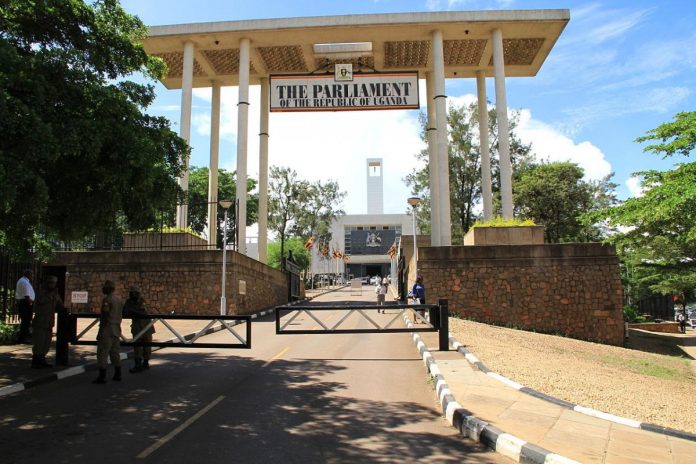
The Speaker Rebecca Kadaga, Vice President Edward Sekandi, Chief Justice, Justice Bart Katureebe and the Deputy Speaker, Jacob Oulanyah in a group photo ahead of the State of the Nation Address 2020.

His Excellency the Vice President;
Rt. Hon. Speaker of Parliament;
His Lordship the Chief Justice;
Rt. Hon. Deputy Speaker of Parliament;
His Lordship the Deputy Chief Justice;
Rt. Hon. Prime Minister;
Rt. Hon. Deputy Prime Ministers;
Hon. Ministers;
Hon. Members of Parliament;
Members of the Diplomatic Corps;
Distinguished Guests;
Ladies and Gentlemen, all of you the citizens of Uganda and our visitors.

Madam Speaker,

In fulfillment of the Constitutional requirement under Article 101 (1) of the Constitution of the Republic of Uganda, I am here to deliver the State of the Nation Address, 2020.
While still fighting, precisely at Kanyaara camp in Ngoma, the combined meeting of the High Command and NRC, adopted the 10 points of NRM political programme. These 10 points were:

POINT N0. 1
Restoration of Democracy

POINT N0. 2
Restoration of Security

POINT N0. 3
Consolidation of national unity and elimination of all forms of sectarianism

POINT N0.4
Defending and consolidating national independence

POINT N0. 5
Building an independent, integrated and self-sustaining national economy

POINT N0.6
Restoration and improvement of social services and rehabilitation of war–ravaged areas

POINT N0. 7
Elimination of corruption and the misuse of power

POINT N0. 8
Redressing errors that have resulted in the dislocation of some sections of the population

POINT N0. 9
Co-operation with other African countries

POINT N0. 10
Following an economic strategy of a mixed economy

As far as the economy is concerned, of these 10 points, the crucial ones are nos: 5, 9 and 10. Point no.5, talks of building an economy that is independent, integrated and self-sustaining. Point no. 9, talks of co-operation among African countries, in other-words, markets integration among other factors. Point no. 10, talks of using the strategy of a mixed economy (Government and private enterprises), in doing all this ─ rather than being morbidly fixated, ideologically, to either private enterprise alone or public enterprises alone. As usual, many of the people did not bother to grasp the importance of these points or, indeed, of the other 7 points. They thought that we were just talking to justify our role in national issues. On account of this, even when we captured power, we continued to face resistance in pushing these points from elements of the political class and the bureaucratic class. We have actually continued to be in the bush even when we are in the Government and have continued to wage guerrilla warfare against the neo-colonial and colonial interests in Uganda. Much more could have been achieved, if it was not for this opposition.

It is the partial implementation of our programme, that is helping us to survive in this crisis of the virus and to even use the virus to take off in terms of the social-economic transformation, we have been talking about since the 1960s.

When this global crisis, therefore, descended on the World, I started hearing screams of pessimism coming from all sorts of sources. Immediately, I authored two documents that I will distribute to all the Honourable Members of Parliament (MPs) that talked about the “Real Economy”, on the one hand, as well as the “Vulnerable Economy”, on the other hand. The Real Economy is the economy that deals with the nine (9) basic human needs of: food, clothing, shelter, medicine, security, physical infrastructure (the railways, the roads, the electricity, the telephones, etc.), health infrastructure (hospitals etc.), the education infrastructure (schools, etc.) as well as the teaching of numeracy, literacy, skilling and intellectuality and the spiritual work (churches, mosques, radios, TVs, etc). This is the real economy. It deals with the basic human needs. It is durable. Even in wars, this economy will survive. It is comprised of: agriculture, industry, ICT and some of the services (the professional services such as engineering, medical, legal, etc). This economy deals with basic human needs, as already pointed out; it is, as already pointed out, also durable and reliable. It is also beneficial to the society. If we were talking of nutrition, human nutrition, we would say that it would be body-building or body-nourishing ─ Adding nutrients to the body. It is also an economy for survival and prosperity. If you want to survive as a people, that is the way to go. If you want to prosper as a country, that is the way to go ─ Real Economy. If you want to benefit, the way to go is the way of the Real Economy.

The other economy is the Vulnerable Economy. This vulnerable economy, also happens to be the economy of leisure and pleasure. Leisure and pleasure, are optional. If you can get them, it is all right. If you cannot, you will, however, survive, nevertheless. These are activities that add leisure and pleasure to a human being; but, if necessary, he/she can survive without them. They are optional and additional. These are sectors like: tourism, entertainment, bars, night-clubs, cruises on ocean-liners, theatre-going, import-business for luxuries (carpets, perfumes, wines, spirits, wigs, etc). Some of these activities, are not only for pleasure, leisure and optional, they are also parasitic. They take nutrients from us and do not add any energies for our growth. These are activities like the imports of luxuries. Luxuries are good. We should, however, produce them ourselves. It is so wrong to buy luxuries from other countries when they buy little from us. Banyankore call this: “obubaagyi” (squandering wealth). Some of the leisure sectors, although vulnerable, they are, at least, beneficial. These are sectors like tourism, entertainment, etc. They bring in money instead of taking out money ─ out of Uganda.

Nevertheless, to have a firm economy, we must go back to the Bible, in the Book of Matthew, Chapter 7 Verses 26-27. It talks of a foolish man that built his house on sand: “But everyone who hears these words of mine and does not put them into practice is like a foolish man who built his house on sand. The rain came down, the floods came and the winds blew and beat on that house; and it fell ─ and great was its fall”.

It is now 78 days since the lockdown we launched on the 18th of March, 2020, in response to the pandemic of the corona-virus. In that lockdown, we stopped all international passenger flights into and out of Uganda, the tourists are no longer coming, foreign investors are not coming, the Ugandans abroad are, may be, sending less money to their relatives because they are also facing problems where they are, etc.

However, Uganda is still standing and coping with the virus, the floods, the landslides, the rising water-levels in the Lakes, the locusts, the floating islands, the security of the country, the crime, feeding millions of our people, etc. Why? It is on account of some of the few of our ideas that we have managed to implement, in spite of the endless opposition that we always face.
We have built a strong Army; we have built a powerful LC system, the fact that it is not well facilitated financially notwithstanding; we have surplus electricity on account of the correct prioritization, with Parliament support, in 2006; we have a good road network of tarmac roads, totaling 5,111kms; on account of our correct agricultural policy, we have alot of agricultural products for food-security and for commerce in the form of: bananas, maize, beans, irish-potatoes, cassava, coffee, tea, cotton, cocoa, milk, beef, fish, poultry, eggs, flowers, etc., etc. Apart from feeding us, these agricultural products end up by earning for us US$2,005million (49% of total merchandise exports) if we take the year 2019. Even in this lockdown, since March, the following agricultural products have earned for us as follows:

(a) Coffee:
March – US$45.87million
April – US$36.928million
May – ……………

(b) Tea:
March – US$5.15million
April – US$6.145million
May – ……………
(c) Fish:
March – US$14.98million
April – US$6.831million
May – ……………..

(e) Maize:
March – US$10.23million
April – US$6.256million
May – …………….

Our agriculture is, therefore, not only feeding us almost 100%, but also earning dollars for us of the magnitude of US$ 2.005billion.

Our correct policy on the private sector, the corruption and obstruction of many of our public servants notwithstanding, has also attracted a total of 5,200 factories. These are producing: cement, steel bars, soap, mattresses, mabaati, sugar, cooking oil, rubber tyres, textiles, beverages, beers, etc., that bring in a total of US$2.09billion. This sector is ready for even a qualitative change by starting manufacturing buses, mini-buses, pick-ups, small cars, bicycles, etc.

The ICT sector is a growing one, employing 1,282,818 persons with 380,896 companies engaged in information technology, telecommunications, broadcasting, postal and courier and audio visual. Therefore, these are the sectors of the economy that will not easily collapse because of the corona-virus. The son of Mr. Warren Buffet, whom they claim to be the 2nd richest man in the World, came to visit me at Kisozi. I asked him how many cattle his father had. He told me that he did not own any cattle, but owned railways, etc!! I had never seen a rich man without cattle and land and I told him so. Recently, I saw some people trying to get rid of shares in the Airline companies as hot potatoes because of the corona-virus pandemic. My farm-based wealth, land on which the farming takes place, are going nowhere. They were here yesterday, today and tomorrow.

In spite of the obstructions by the neo-colonial actors and foreign backers, Uganda is able to stand up today and weather this storm because of the correct actions we took. The vulnerable portions of the economy, have collapsed. However, the real economy is standing up and expanding, especially in agriculture and industry.
If we take industry, in just the last few months of this crisis of the virus, by March, 2020, we had only two factories, known as Saraya East Africa Limited and the Luwero Industries making sanitizers. We now have 107 factories. By March, 2020, there was not even one factory making masks in Uganda and we were told that there was a global shortage, etc. I told some of our factories including Nytil, UIRI, NEC, etc., to make these masks. We now have factories making the masks ─ we received requests from 61 factories but, only 10 have been certified. There was a big shortage of PPEs in the World. I told some of our factories, including Mulwana, to solve this problem. They have risen to the occasion and they are producing the PPEs.

The pharmaceutical plants like the “Quality Chemicals”, the scientists like Dr. Nantulya, have all joined the battle of banishing the unhealthy dependency on the outside for our livelihood and paying alot of money in the process as well as losing alot of jobs. In the area of manufacturing medicines, there are young Ugandans that have been being tossed around and even persecuted by the unpatriotic and colonial agents in the system. These are people like Dr. Nambatya, Mathias Magoola, etc. However, their protracted struggle is, finally, going to succeed. Dr. Nambatya is moving ahead, with Government support, to isolate import substances that will help us to fight many viruses. Magoola and Dr. Kyakulaga, now supported by some African Banks such as Equity Bank of Kenya are creating a World class pharmaceutical group, known as Dei-Pharma, that will make any and all the medicines the country needs and even export. Incredibly, three days ago, a group answering to the description of the so called Financial Intelligence Authority had closed their Bank accounts claiming that they did not know where their money was coming from and what it was doing. Yesterday, I visited one of their huge factories in Matugga, near my camp no. 3, near Buwambo, in that area during our bush war. Why couldn’t Financial Intelligence check what these people were doing on the ground? How could they fail to know that the money was coming from Equity and other Banks? I am going to get to the bottom of these treacheries by all these elements that have been fighting our Revolution. Anyway, the Bible says that whatever you sow, that is what you harvest. Omuntu ekyabiba nikyo agyesha (buri muntu yenna, kyasiga, kye kyakungula). This is in the Book of: Galatians, Chapter 6, verses 7-9. It says: “Don’t be deceived: God is not mocked. Whatever a man sows, he will reap in return. The one who sows please his flesh, from the flesh he will reap destruction; but the one who sows to please the spirit, from the spirit will reap eternal life. Let us not grow weary in well-doing for in due time we will reap a harvest if we do not give up”.

As I was visiting Dei-Pharma factory yesterday, I could hardly recognize our ambush sites: Kawanda, Matugga, Kiggogwa. They are all built-up now, especially, especially with factories, factories. The only mistake is that some of the factories are built in the wetlands. Those already built or being built should be allowed to continue. Demolishing an already built factory is not common-sense. They are very expensive and very useful. However, I direct UPDF to take an aerial map of that area that will show us the factories already in the wetlands or being built, so that no new ones will added. We want more and more factories, but build on dry land, not the wetlands. The CAOs, the Gombolola chiefs and the GISOs in these areas will be held accountable.

The Import Bill of Uganda is normally US$7billion per year broken down as:

Standard International Trade Classification (SITC) Description US$-2019 % share
Animal & Animal Products 40.62 1%
Vegetable Products, Animal, Beverages, Fats & Oil 452.20 7%
Prepared Foodstuff, Beverages & Tobacco 220.06 4%
Mineral Products (excluding Petroleum products) 1,246.02 20%
Petroleum Products 956.65 15%
Chemical & Related Products 559.39 9%
Plastics, Rubber, & Related Products 380.47 6%
Wood & Wood Products 149.27 2%
Textile & Textile Products 243.72 4%
Miscellaneous Manufactured Articles 271.49 4%
Base Metals & their Products 439.12 7%
Machinery Equipment, Vehicles & Accessories 1,223.93 20%
Arms & Ammunitions & Accessories 0.39 0%
Electricity 2.80 0%
TOTAL 6,186.14 100%

When you look through this list, you see that there is no reason why we should import many of these items: medicines, textiles, leather products, industrial sugar for use by coca-cola, industrial starch for use by the Pharmaceutical Industries, paper, packaging materials, glass products, automobiles, bicycles, etc., etc. Many of these can and will be made here.

The corona-virus pandemic, by temporarily blocking the channels of dependency and collapsing the economy of leisure and pleasure, has re-inforced we, the patriots, that have, for long, stood against neo-colonial dependency of the unhealthy kushaka (kusaka in Luganda). Kushaka is the act of a homestead of a lazy family that does not grow their own food and have to buy from other families. It is a disgrace to be in that situation in the villages. This is different from Kuchurika (barter trade), because that one is symbiotic. You give what you produce and get what you do not produce. Uganda’s position, Africa’s position, has been the unhealthy kushaka, even what we can produce ourselves.

The Cabinet has accepted this analysis of emphasizing and fully developing the Real Economy of survival and prosperity on a durable basis, as already pointed out at the beginning. The real economy capacity and potential of Uganda are in: Agriculture; Industry; ICT; and some of the services that have durable demand that is not easily affected by crises.
In agriculture, we have: bananas; maize; cassava; beans; irish-potatoes; sweet potatoes; millet; sugar-cane; cattle for dairy products; cattle for beef and leather; coffee; tea; cocoa; and fish. We are going to produce more and better each of these 14 crops or livestock activities and process industrially each one of them to achieve the full spectrum benefits of each for the local, regional and international markets. I can give a few examples to illustrate this point.

Our scientists, Dr. Florence Muranga, many years ago, discovered that flour from bananas can make better and safer bread than wheat flour that contains a substance known as gluten that is not good for human nutrition. With alot of resistance from the agents of colonialism, I have been funding the banana project, including the patenting of the formula. This year, Shs.9.5billion has been released and next financial year, Shs.12billion will be released to conclude this project. The global demand for wheat is worth US$43.6billion. This is, potentially, the market that is waiting for the banana flour. The wheat flour imported into Uganda alone today, takes US$300million per annum.

You come to cassava. Out of cassava you can get pharmaceutical grade starch to use in making tablets. We have a young pharmaceutical industry (making medicines). Making tablets, for instance, needs high grade starch. This is now being imported from China and India. This cost adds 7% to the cost of medicine per unit, moreover, in foreign currency. We are getting cooking gas from the alcohol from the cassava starch. Animal feeds can be made from the cassava flour. Uganda has been importing animal feeds worth Shs.28billion per year. Yet, these are from cassava, maize, etc ─ crops that we have in plenty here ─ cassava, 4.1million tonnes per annum; and maize, 5million tonnes per annum. I have already mentioned the issue of industrial grade sugar for use by soft drinks makers like coca-cola and pharmaceutical grade sugar for use in making baby medicines that need sweeteners. With Uganda alone, we import industrial grade sugar worth US$40.251million per annum. Wasted foreign exchange; yet, we are suffering with unsold drinking sugar that simply needs more refinement to save the US$40.251million that is spent on that unnecessary import. I have not checked on whether our people have isolated the amount of pharmaceutical grade sugar that is needed to sweeten all the baby medicines that we use in Uganda. However, Uganda imports medicines for humans and livestock including vaccines, worth US$383.035million per year. We intend to make most of these here and also to make most of the inputs (raw-materials) here.

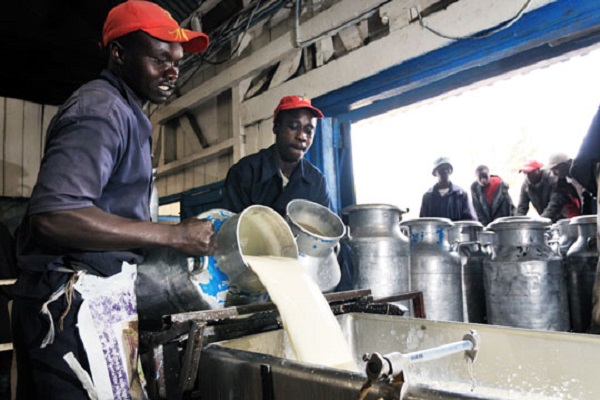
You come to dairy products. Uganda is now producing 2.6billion litres of milk per annum. This rose from 200million litres in 1986 when Uganda was importing powdered milk from Denmark, adding on Lake Victoria water and a funny little Government company that was answering to the description of the “Uganda Dairy Corporation”, would stamp that product as: “Made in Uganda”. The only Ugandan-ness in the product, was the water from Lake Victoria.

Today, we have a huge surplus because the demand in Uganda is 800million litres. Yet, the production has hit 2.6billion litres and is growing. Of course, the “surplus” itself is artificial. It is simply because the Ugandans are still under-consuming when it comes to the milk the human body requires. According to the World Health Organization (WHO), a human being needs 210 litres of milk per annum to get all the calcium, phosphorous, etc., the body needs. With 43million Ugandans, the country needs 9billion litres of milk per annum. Hence, this “surplus” is artificial; but it is the present reality. This is, however, not a problem. The global demand for milk products is worth US$718billion. Uganda can get quite abit of this. Our farmers and processors, however, need to know that to sell internationally, we must have good quality milk and cheaper than the milk of New-Zealand, Ireland, etc. The market, however, is there.

You come to beef, pork, poultry, etc. The global demand for these meats, is US$945.7billion. Uganda can get quite abit of this money with our 14.4 million cattle, 15.6 million goats, 50 million chicken, 4.1 million pigs, 3.9 million sheep, etc. We just need to work on the quality.

Then, there is the fish. The global demand for fish and fish products is US$125.6billions. The Uganda portions of the Lakes: Nalubaale (Victoria), Kyoga, Mwitanzigye (Albert), Rweeru/Masyooro (George), Butuumbi/Rutshuru (Edward), can produce a total of 447,000 tonnes of fish per annum if we eliminate the cancer of bad fishing by parasites in our society. In addition to fishing from the Lakes, I have been promoting fish-farming using the miiga (edges of our papyrus swamps), the myegyeego (the edges of the other swamps), to do fish-farming instead of destroying our precious wetlands with low-profits rice, yams, etc. The example we have shown at Limoto in Pallisa district, where the population is now earning Uganda shillings 70 million (after removing the operation expenses) per annum from 5 fish ponds, only using 1.23 acres, instead of the previous Shs. 7million per annum, using almost 10 acres of the swamp area. The swamp in that zone is now fully restored and the community is earning better. At Kawumu, my 4 fish ponds in one (1) acre, are earning, for my people, Shs. 68 million per year. Fish farming can generate more fish than even the Lakes. The swamps of Busoga, Bukedi, Teso, Lango, Kigyezi, Ankole, Buganda and the Nile valley between West Nile and Acholi, should only be utilized for this highly profitable fish-farming and for the environmental protection. Nothing else should be allowed in or near those swamps, lakes and rivers. The recent losses to those who had encroached on the land for the lakes, the wetlands and the river valleys, should be an eternal lesson to all of us. In the Bible, in the Book of Genesis, Chapter 11, verses 1-9, there is the story of the Tower of Babel. It says: “And the whole earth was of one language, and of one speech. 2 And it came to pass, as they journeyed from the east, that they found a plain in the land of Shinar; and they dwelt there. 3 And they said one to another, Go to, let us make brick, and burn them thoroughly. And they had brick for stone, and slime had they for morter. 4 And they said, Go to, let us build us a city and a tower, whose top may reach unto heaven; and let us make us a name, lest we be scattered abroad upon the face of the whole earth. 5 And the LORD came down to see the city and the tower, which the children of men builded. 6 And the LORD said, Behold, the people is one, and they have all one language; and this they begin to do: and now nothing will be restrained from them, which they have imagined to do. 7 Go to, let us go down, and there confound their language, that they may not understand one another’s speech. 8 So the LORD scattered them abroad from thence upon the face of all the earth: and they left off to build the city. 9 Therefore is the name of it called Babel; because the LORD did there confound the language of all the earth: and from thence did the LORD scatter them abroad upon the face of all the earth.
It is neither common sense nor good economics for anybody to oppose what God arranged. In the Book of Genesis, chapter 1, verses 9-10, God marked the boundaries between dry land and water. It says: “And God said, “Let the water under the sky be gathered to one place, and let dry ground appear.” And it was so. 10 God called the dry ground “land,” and the gathered waters he called “seas.” And God saw that it was good.

Most of what we have said above is the implementation of the point no. 5 of the NRM 10 Points programme: “building an economy that is independent, integrated and self-sustaining”. Have we not sustained ourselves in this crisis or in a bunch of crises: corona-virus, locusts, rising waters of the Lakes, floods, landslides or floating islands? Much of what we said above, is the partial integration between agriculture and industry. Our plan is to intensify, broaden and fully take advantage of that integration to fill all the unnecessary gaps that I pointed out above and also fully benefit from the global economy by joining the export businesses. The economics of Africa are correctly described as under-developed because, indeed, they have alot of potential which is not fully utilized. It is under-utilized, under-developed. We are going to fully develop that potential and become developed countries. We are lucky because we have everything: agriculture that produces so many products; entrepreneurial classes that can process all and every agricultural product using appropriate factories; electricity and other infrastructure elements that assist processing; a large, educated, young population that can run modern economies; a big regional market created by the African Pan-Africanists eversince the time of the Lagos Plan of Action; and huge international markets availed to Africa, Uganda included, on account of the historical factors that favour Africa.

In the other document, I quote two examples, that of Ireland and New-Zealand. Ireland is a very small country, with a land area of 68,883 sq. kms, about one third of Uganda. 80% of that little country is used for the Dairy Industry. They earn US$5.2billion from that activity alone. New-Zealand, from the Dairy sector, earns US$7.8billion. Here, in Uganda, we are not talking of one or two activities. In agriculture alone, I have identified for you 14 products, each with a potential for earning for us billions of dollars and creating very many jobs. The little we have done in the direction of building an independent, integrated and self-sustaining national economy, has seen us through endless regional crises of: South Sudan, Rwanda, Congo, Somalia, etc.; as well as navigating us now through a pandemic of the corona-virus and the other natural calamities I have already pointed out above.

The above, is all based on the utilization of our agriculture potential and integrating it with manufacturing (industry). How about then, minerals, forestry and the human resource (products of the brain through IT, engineering, etc.)? There is even bigger potential there. We are already self-sufficient in cement and we are exporting cement worth US$57million (2019), a decline from US$103million exported in 2013, due to the increased internal usage of cement on account of the heavy infrastructure investments we are undertaking and the growth in the real estate sector. We produce 289,183 metric tonnes of recycled steel (mitayimbwa, etc.) and we earn US$110 million from exporting steel products. We are in the process of developing vertically integrated steel industry from our iron-ore (obutare) at Usukuru in Tororo, Muko in Rubaanda and Butogota in Kanungu. The global steel industry is US$2.5trillion. Although we are making steel products using recycled scrap, strong structures like dams need fresh and alloyed steel that we are still importing. We end up using US$444.619millions for this imported higher quality steel products. This we are going to end by developing our own vertically integrated steel industry as already pointed out.
We built a Gold Refinery at Entebbe. That gold refinery was and is still being fought by the neo-colonial agents. We shall, however, defeat them. The refinery is earning US$1.256billion per annum. When I was trying to control the mining of gold in Uganda, I was opposed even by members of Parliament. They do not want Uganda to have a Gold Refinery. Refineries do not belong to countries like Uganda. They should be in Dubai, South Africa, etc., but not in Uganda, according to these enemies. We say: “No, the Gold Refinery in Uganda will be defended by all the policy instruments”. Now that gold is being refined here, Madam Nakyobe, using my small innovation fund, should start to teach some of the grand-children the skills of jewellery. The rich Ugandan ladies will be able to buy the gold jewellery made here instead of squandering money buying the same from distant sources. We already have a good ceramics’ industry at Kapeeka, making ceramic tiles, saving US$28.5million in imports and also bringing in US$3.05millions earned from exports. These ceramic tiles are from our clay (eibuumba). When the copper mining resumes at Kilembe, that sector will be linked to the making of cables for electricity, transformers for electricity, etc., rather than what was happening in the 1950s and 1960s when the copper would only be processed to 94% purity (blister copper), that could only be exported as a semi-processed raw-material. It could not be used in our cables’ industry. To do that, you need to purify copper to 99.9%, known as cathodes copper. Even uranium, I rejected the plans of the neo-colonial agents of exporting uranium so that others use it to generate electricity when Uganda has only a total potential of 4000mgwts on all the River Nile sites and those of its tributaries. A country like Japan generates a total of 298,350mgwts. Where will Uganda get all the power it needs if hydro-power is not enough? Or has it been biologically proven that Africans do not need electricity? As long as I am in charge of the country, no uranium will ever be exported from Uganda. Let it remain in the ground. When solar-power becomes as cheap as hydro-power, then the politics and economics of energy will change. Until then, sita-kange (I do not give up what is mine).

Having fully exploited our mineral wealth, by linking minerals with industries, with the real economy, that leaves the wealth based on the human brain and human skills in the form of IT knowledge, engineering, etc. With our educated population, literacy rate of 75%, this is now a real opportunity.
Our scientists, in particular, apart from being active in the agro-based industries of starch, processed fruits, dairy products, etc., they have also moved into engineering of designing and fabricating auto-mobiles, the bio-chemistry of vaccines, etc. Besides, the private sector is also active in import-substitution by assembling computers, TV-sets, mobile phones, radio-sets, etc., here.

How will all this be funded? Some of the funding is FDI, mainly from our Chinese and Indian friends. Alot of new factories are coming up funded in this way. The recent examples of these are: Simi factory ─ mobile phones and radios; Saachi factory ─ TVs, flat irons, radios; Goodwill factory ─ ceramics; etc. With the Ugandan entrepreneurs, the Government has put Uganda shillings 1,040.5billions in the (Uganda Development Bank (UDB) to give low interest loans to anybody that wants to go into manufacturing and, may be, commercial agriculture.
We shall continue putting more money for this purpose into UDB. The third source of money for this effort is our wealth funds that need to be re-inforced. These are, especially, the Myooga Funds (funds based on the respective specializations ─ metal works, carpentry, etc).
This is on top of the Youth, the Women and the NAADS funds. A Ugandan family named one of their children: “Balibaseka” (they used to laugh at my efforts, not believing that value will come out of them). Those who thought that not much would come out of NAADS, should do something to themselves, maybe kwetuga (suicide), out of honour, because what they laughed at has now pushed Ugandan’s production of coffee from 4 million, 60kgs bags, to 7 million bags. Only, now Agriculture needs to tell us on what more guidance that is needed to ensure that the coffee gives the big size berries, known as screen 18, etc. We shall sensitize our people and they will do it correctly as we mobilized them for war and they did or recently for corona-virus and they are doing it.

Some of those funds will be modified to deal with the categories of our people that have been affected by the lockdown. Those affected, include: the boda-boda riders, the salon operators, the bars people, the night-clubs people, the artists, etc. These funds can be used, at low interest, for these categories of our people to, possibly, do other activities. A team from Operation Wealth Creation (OWC) has looked at the budget and suggested ways of savings that can save as much as Shs. 5 trillion from the budget that can do all those efforts mentioned above.

Besides, the Minister of Finance, Planning and Economic Development is proposing the following measures, to provide liquidity to private firms that have been affected by the COVI-19 Lockdown:

(i) Allow corporations including small and medium sized enterprises (SMEs) to delay payment of corporation tax or presumptive tax for taxes due between April and June 2020 and for tourism, manufacturing, horticulture and floriculture to defer until September 2020;

(ii) Defer payment of Pay-As-You Earn (PAYE) tax by those sectors which are most affected until September 2020;

(iii) Waiver of interest on tax arrears;

(iv) Support to water and electricity utilities in order to ensure continued supply of these essential services to consumers during the period April to June 2020;

(v) Expedite payment of outstanding VAT refunds;

(vi) Payment of domestic arrears for goods and services supplied to Government by the private sector;

(vii) For those unable to pay their loans, Government through the Bank of Uganda has already put in the gazette the measures to support businesses; including allowing extension of repayment periods, postponement of loan repayment for a limited period, relaxing the conditions for non-performing loans, reduction of reserve funds commercial banks are required to keep with Bank of Uganda and creating a special liquidity facility to rescue businesses that are not able to meet operational costs due to low demand or reduced production due to COVID-19;

(iii) Capitalisation of Uganda Development Corporation (UDC) with Ug Shs. 100 billion to enable Government to invest in strategic areas;

(ix) Boosting funding to Uganda Industrial Research Institute (UIRI) in FY 2020/21 to continue with innovation research and incubation of business start-ups.

(x) Securing funding for the development of Kampala Industrial Business Park at Namanve and for power transmission and substations for Mbale, Kapeeka, Bweyogerere, Kasese, Soroti, Luzira, Jinja and Mbarara industrial parks; and

(xi) Provision of additional UGX 300 billion immediately to boost agricultural production and productivity for seedlings, fertilizers, irrigation, storage facilities and value addition. The target crops are coffee, cotton, tea, palm oil and other oil seeds, cassava, maize, cocoa and dairy, beef, and fish production.

All these efforts will be much easier when our Government scientists are paid well. They will be able to contribute to the economy without being distracted of having to survive when it comes to the basics of life. Our scientists must be paid at a level comparable to international standards, but of course, taking into account our low cost of living. The prices of food here and other products are much cheaper than in other parts of the World. This factor should be taken into account when fixing the salaries of scientists.

The Government will not allow the landlords evicting tenants on account of not paying rent. Discussions have started with both groups and a solution will be found. This lockdown is new for people in the towns. However, we the cattle keepers repeatedly face lockdowns lasting for many months whenever, there are epidemics of foot and mouth (ejwa) or CBPP (Kihaha). Quarantines are normally imposed. However, we survive and thrive later. The people affected should be registered and an appropriate formula of support will be found that does not create dependency. Food distribution for the genuine groups will continue until the problem is over. Nevertheless, many families in Uganda do not need free food; they just need seeds and low interest money for borrowing and markets for their products.
These measures will deal with the deepening and expansion of the Real Economy.

This does not mean that we do not value or appreciate the Vulnerable Economy, the economy of leisure and pleasure. Of course, we value it if it is available. We only note its vulnerability. With real economy consolidated, the vulnerable economy will come back stronger when the pandemic is over. By correctly managing the pandemic, the reputation of Uganda will grow in the World. After the pandemic, people will flock here. The diaspora are now sure of a secure and respectable base, their homeland. Hence, to harvest from the economy of leisure and pleasure, we need to consolidate and expand the real economy. Happily, the leisure and pleasure economy was already integrated with portions of our real economy. The hotels in Kampala, were buying alot of food from our agricultural sector. The drying up of the local hotel capacity, has created a marketing problem for the food industry. That is why some of the farmers are beginning to process the foods, e.g. eggs, into food supplements. Out of egg-yolk, they are extracting mayonnaise, shampoos, body creams, protein supplements and from the egg-white, they are making low density cholesterol and from the egg-shell (ekishankara), they get calcium and potassium.

Out of milk, apart from cheese, butter, yoghurt, etc., they also get cassein which is a protein supplement that is used for body builders, for cancer patients and it can be used by pharmaceutical companies to make the digestable shells of capsules that carry the medicine powder into our stomachs.

Therefore, the portions of the real economy that were integrated with the leisure and pleasure industries, will find ways of surviving the temporary collapse of that vulnerable economy. By the time the vulnerable economy stands up, again, our agriculture and industry will have broadened their opportunities. There is nothing to lose. Only, we are becoming wiser and stronger. We have everything.

Therefore, in conclusion, the pandemic should help those who had not believed the NRM before that there are two categories of the economy: the real economy around the nine human needs of: food, clothing, shelter, medicine, security, infrastructure, health, education and spirituality and the leisure and pleasure economy around: tourism, entertainment, holiday-making, sports, concerts, music, etc. The former is for survival and prosperity and the latter is additional and optional.

In this crisis, Uganda is emphasizing, consolidating and broadening the real economy; ultimately, Uganda will benefit from both.

I will conclude this address by asking the whole country to remember some of our well known citizens that died since the last State of the Nation address. These include:

(i) Late Justice Ntabgoba; the former Principle Judge;

(ii) Late Meddie Kaggwa; Chairman Uganda Human Rights Commission;

(iii) Late Dr. Kanyerezi Masembe; Chairman and Co-founder of Kampala Hospital, former Head of the Department of Internal Medicine at Makerere University School of Medicine;

(iv) Late Prof. Edward Ddumba; former Executive Director of Mulago National Referral Hospital and Medical Director of St. Francis Hospital Nsambya;

(v) Late Maj. Gen. Benon Biraaro; a former Senior UPDF Officer;

(vi) Late Maj. Akorimo Kanuti; who hoisted the Uganda National Flag for the first time on 9th October, 1962;

(vii) Late Luwemba William Apuuli; the Under-Secretary, Ministry of Justice and Constitutional Affairs;

(viii) Late Jimmy Kirunda; a former footballer who captained the National team to the African Cup finals in 1978 and;

(ix) All other Ugandans who have passed away since the last State of the Nation Address.

Let us stand for a minute of silence to remember, them. May their souls in eternal peace.

I thank you and wish you good luck.
ENACTMENT OF LAWS
25 Bills were passed into Law as shown below:
DATE BILL
02/06/20 The Administration of the Judiciary Bill, 2018
28/05/20 The National Payment Systems Bill, 2020
20/05/20 The National Local Content Bill, 2019
24/04/20 The Appropriation Bill, 2020
21/04/20 The Excise Duty (Amendment) Bill, 2020
16/04/20 The Income Tax (Amendment) Bill, 2020
15/04/20 The Value Added Tax (Amendment) Bill 2020
14/04/20 The Stamp Duty (Amendment) Bill, 2020
14/04/20 The Tobacco Control (Amendment) Bill, 2020
18/03/20 The Sugar Bill, 2019 which had been returned to the House by H.E the President in accordance with Article 91(3)(B) of the Constitution and Rule 142 of the Rules of Procedure.
05/03/20 The Electoral Commission [Amendment] Bill, 2019
05/03/20 The Political Parties and Organizations [Amendment] Bill, 2019.
04/03/20 The Local Government [Amendment] Bill, 2019
03/03/20 The Parliamentary Elections [Amendment] Bill, 2019.
27/02/20 The Presidential Elections [Amendment] Bill, 2019
31/01/20 The Public Procurement and Disposal of Public Assets (Amendment) Bill, 2019
29/01/20 The Traffic and Road Safety Act 1998 (Amendment) Bill, 2019
27/11/19 The Institute of Parliamentary Studies Bill, 2019
03/10/19 The Physical Planning (Amendment) Bill, 2018
11/09/19 The Law Revision Bill, 2019
11/09/19 The Supplementary Appropriation Bill, 2019
20/08/19 The Law Revision (Penalties in Criminal Matters) Miscellaneous (Amendment) Bill, 2015
15/08/19 The Kampala Capital City Authority (Amendment) Bill, 2015
25/07/19 The Anti-Money Laundering (Amendment) Bill, 2019
26/06/19 The Landlord and Tenant Bill, 2018

Stories Continues after ad

State of the Nation Address: Museveni unveils economic bailouts

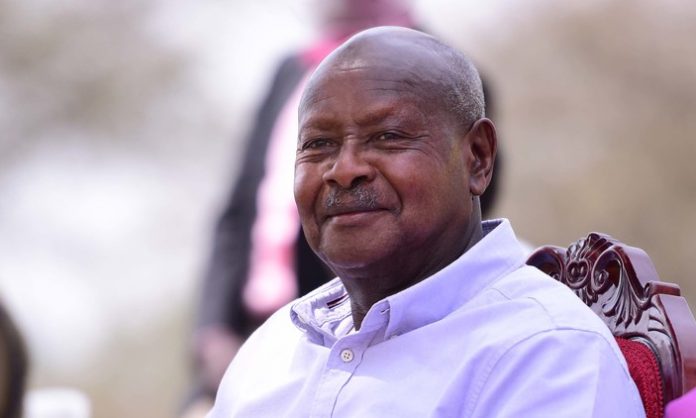
Yoweri Museveni, President of Uganda

President Yoweri Museveni has announced a raft of economic packages that he hopes will help jump-start economic sectors that have been hit hard by the #Covid-19 pandemic.

In a virtual State-of-the Nation address delivered from State House Entebbe to MPs converged at Parliament, President Museveni announced measures ranging from tax waivers, support on payment of utilities, payment of domestic arrears, restructuring of loan repayments and additional funding for the agriculture sector.

To turn around the fortunes of the Agriculture sector, the President said that Shs300 billion will be made available to boost production and productivity for seedlings, fertilisers, irrigation, storage facilities and value addition.

The target crops for this stimulus package will be coffee, cotton, tea, palm oil, cassava, maize, cocoa, dairy, and beef and fish production.
The President announced that corporations including small and medium-sized enterprises (SMEs) will be allowed to delay payment of corporation tax or presumptive tax for taxes between April and June for the sectors of tourism, manufacturing, horticulture and horticulture.

Payment of Pay As You Earn (PAYE) for the above sectors will also be deferred until September 2020 while the government will also expedite the payment of VAT refunds.
“For those unable to pay their loans, Government through the Bank of Uganda has already put in the gazette the measures to support businesses including allowing extension of repayment periods, postponement of loan repayment and relaxing the conditions for non-performing loans, “Mr Museveni announced.

Funding for the development of Kampala Industrial Business Park at Namanve and for power transmission and substations for Mbale, Byeyogerere, Kasese, Soroti, Luzira, Jinja and Mbarara Industrial parks will also be secured, the President declared.

Mr Museveni announced that the Uganda Development Corporation (UDC) will be re-capitalised with Shs100 billion to invest in strategic areas.
Funding to the Uganda Institute of Industrial Research (UIRI) will be boosted to help it continue with innovation research and incubation of business start-ups.

Stories Continues after ad

Kadaga feared humiliation on the floor, clears Oulanyah’s record

Deputy Speaker Oulanyah and Speaker Kadaga

Speaker Rebecca Kadaga yesterday caused drama on the floor of the House after she denied her deputy Jacob Oulanyah chance to speak.
Oulanyah’s who unusually attended the last sitting of the 3rd session of parliament , caused unease after he walked into the plenary unexpectedly.

Eagle online has learnt that the man from Omoro attended the plenary after previous attempts to seek redress from Kadaga appeared to hit a dead end.

Oulanyah’s name had earlier been made a subject of discussion in a sitting chaired by Ms Kadaga.

This was totally against the rules of parliament specifically rule 107 of the Parliamentary rules of procedures which state that for a Speaker or deputy Speaker to be discussed in the House , there must be a substantive motion and the accused must have a right to defend themselves.

But Kadaga using her blue ‘eyed boy’ Maurice Kibalya, the Bugabula South MP, smuggled in a discussion of Mr Oulanyah.
As the presiding officer who is supposed to play by Parliamentary rules , Kadaga allowed her deputy to be attacked in the House in total disregard of existing rules.

Mr Oulanyah’s crime was to return to the Omoro District #Covid-19 Task Force Shs20 million that had been paid to each MP through money that parliament deducted from the National #Covid-19 emergency budget.
The money was meant to support Ministry of Health fight against Coronavirus but Kadaga commandeered Shs10 billion from it and distributed to MPs.

This provoked national outrage and the president described it as immoral.The president directed MPs to return the money.
A section of MPs led by Gerald Karuhanga also petitioned court that ruled that MPs return money to the task force.

Several MPs including Oulanyah’s later returned the money. Kadaga insisted that MPs spend the money as directed by her.
She would later , however , clandestinely return the money to Kamuli District #Covid-19 Task Force through her assistants.

While she had allowed her blue eyed MPs to lambast Oulanyah, the Omoro man did not take it lying down as he insisted that such a record be expunged from the Parliamentary record.

Kadaga dilly dallied hence the Tuesday storming of the House by bow tied Oulanyah.
Kadaga refused to give him opportunity to talk on the floor and signaled Oulanyah for a discussion in closed doors.
She would later resume the sitting and instructed that the record be expunged.
The Omoro man walked out telling the media later that “ things must be done the right way.”
Kadaga is known for always riding the high horse and running public matters with a bit of vendetta. Deputy Speaker Oulanyah contested against her for speaker post in 2016 and that seem to have been the start of her vendetta with him.

Stories Continues after ad

Ministry directive on wages in private schools is illegal

Isaac Ssemakadde

By Isaac Ssemakadde

On 18 May 2020 Mr Alex Kakooza, the ministry of education and sports permanent secretary, issued a directive for all directors and heads of education institutions to pay teachers and other staff their full salaries during the Covid-19 lockdown that started on 18 March 2020 with the closure of all education institutions.
The ministry cited its guidelines for staff employment in private schools and institutions which provide, among others, that school management shall pay fulltime staff during both school term and school holiday. It argued that despite the forced closure of education institutions to combat Covid-19, private institutions are expected to have budgeted for wages for the entire school year.
From a legal perspective, the ministerial directive is illegal, irrational, and fundamentally unfair. Here is why.
Illegality

First and foremost the directive is not an enforceable rule in law. Pursuant to section 57(d) of the Education (Preprimary, Primary and Post Primary) Act 2008, the minister of education and sports may, by statutory instrument, make regulations for the management and control of private schools. Clearly, the Act forbids the minister or her subordinates from using arbitrary letters, directives, guidelines, circulars, speeches, press statements or other documents by whatever name called to regulate the affairs of a private education institutions.
The ministry’s rule-making authority in relation to private schools can only be lawfully invoked by the education minister through a gazetted statutory instrument as defined in Part IV of the Interpretation Act.
It follows that in authoring and circulating the directive at issue, the permanent secretary not only usurped the rule-making powers exclusively vested in his line minister, but also failed to dress it up in the prescribed format. It is therefore blatantly illegal, null and void.
Secondly, even it were viewed as a matter of policy, the permanent secretary’s directive is plainly inconsistent with section 40(2)(a) the Employment Act 2006 and Article 26 of the Constitution. It is, to that extent, illegal, null and void.

Whereas under section 5(1)(n) of the Education Act 2008 the education ministry is responsible for development of management policies for private schools, this power must be exercised in accordance with existing laws such as the Employment Act 2006 and the Constitution. In other words the ministry’s policy- making authority in relation to private schools is neither absolute nor unqualified.
In relation to wages of teachers and other staff in private schools, the ministry’s policies must be consistent with Part V of the Employment Act 2006.
Section 40(2)(a) of the Employment Act 2006 releases an employer from the obligation to provide work and wages where the employment contract has been frustrated.

Frustration is a legal doctrine which describes a situation where contractual terms and obligations, such as the employer’s duty to provide work and the employees’ entitlement to wages, cannot be fulfilled due to an event not contemplated by the parties and to which neither contributed.
The public health measures invoked by government to combat the novel coronavirus pandemic starting on 18 March 2020 totally frustrated all employment contracts in the education sector which was deemed non-essential, except in the limited circumstances where some school owners were able to negotiate for the continuity of service by select staff or otherwise find alternative useful employment for the affected workers.

Schools may remain closed for a substantial period of time and employers may be unable to utilize the services of all teachers and other staff who were gainfully employed before the pandemic. Why should they be forced to continue providing remuneration to employees from whom they expect no work to done during this period of uncertainty?
Against this background the ministry’s policy directive, if we may call it that, unjustifiably ignores the doctrine of frustration of employment contracts and is tantamount to a hostile takeover of assets of private school owners to fulfill a populist agenda of government without prior payment of prompt and adequate compensation, contrary to Article 26 of the Constitution. This must shock our conscience as a nation that is yet to heal from the wounds of President Idi Amin’s populist expropriation of Asian properties in 1972. Are we going to let history repeat itself?

Irrationality
In issuing this directive, the ministry unreasonably combined like and unlike terms, as if it were oblivious of the four different categories of education institutions provided for under section 6 the Education Act 2008, namely public education institutions or government-funded institutions, government grant-aided education institutions, private institutions which shall include profit and nonprofit making entities, and non-formal education centres.
Whereas the wage bill in some of these institutions is fulfilled through government grants and subventions drawn from the Consolidated Fund, private institutions do not enjoy this privilege.
The directive is therefore devoid of logic insofar as it purports to impose a one- size-fits-all approach to education financing which is not only impracticable, but also insulting to private school owners who must painstakingly mobilise operational funds from a limited range of sources and usually on very onerous terms and conditions.

Furthermore, the directive was disingenuously conceptualized and is intended to serve an extraneous purpose outside the mandate and capacity of the ministry of education and sports, namely, the provision of basic social security to workers whose services the government itself has deemed non-essential during this crisis.
While nearly all sectors of the economy have been hard-hit by the government’s brutal lockdown measures, a stimulus package is yet to be offered to school owners in the private sector to help them fulfill the government agenda of appeasing non-essential workers furloughed by the pandemic.
It is preposterous for government to insist that employers must convert their pre-pandemic wage budget allocations into an impromptu social security fund.
Why should our government force private sector employers to be compassionate towards furloughed employees yet in other African countries, for instance Kenya and south Africa, lockdown wages have been funded by the government?
In France, the government provided an economic stimulus of 24 billion euros to the private sector to ensure that employees continue to receive their salaries for at least two months during the lockdown. Belgium opted to cover up to 70% of the employee’s salary, and the United kingdom has so far injected 42 billion pounds into a Covid-19 job retention scheme.

The NRM government has been busy borrowing from the East and from the West, piling up the sovereign debt ostensibly to provide social security and stabilize the economy. Trillions of shillings have been rapidly withdrawn from the national treasury ostensibly to serve the same purpose. It is therefore extremely hurtful that government is trying to abdicate its overarching obligations by intimidating and harassing private sector employers to carry its water. Have we now resorted to governance by shakedown?

Fundamentally unfair
Contrary to established principles of good governance, the impugned directive was not preceded by fair and adequate consultation with the relevant stakeholders, and is therefore devoid of any legitimacy or legal force. It is a half-hearted knee-jerk reaction that should be treated with the contempt it deserves.
In sum, the state’s historical failure to take adequate steps for the progressive realization of the rights to disaster relief and basic social security for all, including unemployed Ugandans, should not be used as an excuse to exploit and harass private sector employers during this crisis.

This article first appeared in The Observer, Wednesday, 3-9, 2020 Isaac Advocate Ssemakadde specialises in public law and human rights, and is the executive director of Legal Brains Trust, a Kampala-based democracy and human rights watchdog.

Stories Continues after ad

Sports Betting in Uganda is Growing, but can eSports Surpass it?

People in Uganda just love sports. They have a particularly soft spot for football and top tier European competitions. In fact, you would rarely see them miss an English Premier League derby match and most of them are loyal supporters of some of EPL’s Top 6 teams.

When sports and football betting exploded in popularity around the world a couple of decades ago, Ugandans accepted that phenomenon wholeheartedly. They took to betting like a duck takes to water and have not looked back since.

Betting operators have been working in Uganda for quite some time and the country already has one of the most developed networks of offline betting providers in Africa.

What is more, all legal bookies are regulated by the National Gaming Board and these days there are more and more companies accepting online bets. This is something which is of particular interest for Ugandans at the moment as they have to spend more time at home due to Covid-19 lockdown measures imposed on them.

Not many Sports to Bet on

Online betting is great and it is fair to say that lockdown measures have made it even more popular with Ugandans. However, the same lockdown measures have also put most sports on hold. This has not been ideal for punters who have just discovered the benefits of placing bets while lying on their couch at home.

After all, there is not much use in having a top notch online betting app if you can only bet on Russian table tennis or low league darts matches.

It took around 3 months for the situation to slowly start improving and the big leagues and competitions to come back again.

However, even when regular sports are coming back they are still coming back one league at a time and this means that the sports betting offer is still quite small. Ugandan bettors who used to be able to choose from thousands of events every day are now limited to around 50 to 100 per day counting reserve leagues too.

eSports Have Filled the Void

This is where eSports have really helped. eSports are cyber gaming competitions in which players and teams compete against each other. They do this while playing games such as Counter Strike: Global Offensive (CS:GO), Dota 2, Overwatch, League of Legends (LOL) and other popular games.

These are played every day and as such are much better propositions for betting enthusiasts than regular sports. This goes double when there are no regular sports and that’s currently the situation Ugandans find themselves in.

What is more, eSports betting is actually quite easy to do and comes with various wagering options. Ugandan punters can bet on the winner of a match, winner of a specific map, Over/Under kills, on handicap markets and many other betting propositions you would see with regular sports.

The fact that eSports are almost always on and are so similar to regular betting makes them perfect for the Ugandan bettor. As an added bonus, most of these matches can be seen live on Twitch, the streaming platform gamers use to stream eSports events.

Punters can sign up for a basic streaming package, which is quite affordable, and can easily watch all of their eSports matches live. This is something which is not always possible with regular sports. TV rights for these are quite expensive, so Ugandan broadcasters try to choose carefully which ones they televise.

Can this Trend Continue in the Future?      

The whole Covid-19 situation and the expansion of eSports betting in Uganda have definitely made eSports more popular than regular sports betting for the time being.

However, it is easy to say that eSports betting is more popular when regular sports are not actually taking place. It will be interesting to see if this is still true when regular sports return to the scene in their full capacity.

Chances are that they will once again reclaim the throne, especially knowing how much Ugandans love them.

However, if someone told you that eSports would be where they are now before the Covid-19 disaster, you probably wouldn’t have believed them. That’s why, we should never discard the notion that betting on cyber sports might become more popular than wagering on regular sports. Especially not when we don’t know how long Covid-19 will paralyze our societies.

Stories Continues after ad

Museveni opens public transport, and shopping malls as curfew stays

President Yoweri K. Museveni

President Yoweri Museveni has relaxed the #Covid-19 lockdown by allowing the return of public transport and opening of shopping mall for business.

Public transport is allowed but will carry half of normal capacity including both driver and conductor for buses and taxis. However, this will operate in the centre districts excluding 40 districts that are on the borderline.

“All passengers, drivers must wear masks, brokers, taxi/bus touts, hawkers are not allowed in public transport parks/ terminals”.
Museveni further directed a ban on boda-bodas, bars, saunas, saloons, gyms. Museveni said schools should remain closed except candidate classes which he gave one month of observance before opening.

“With education, we had thought of opening for finalists and we hoped that there would be enough space to avoid overcrowding and observe social distance. We have decided that we shouldn’t bite too much at this time”
For Arcades, the president said there should be maximum observance of the social distance and adhering to the guidelines. The partial opening up comes after 75 days of lockdown which saw no normal running of normal life. Uganda has registered over 450 cases of Coronavirus with the greatest percentage being of foreign truck drivers with no death. The country has also been praised for its handling of the #Covid-19 patients.

Stories Continues after ad