Stanbic Bank
Stanbic Bank
18.6 C
Kampala
Stanbic Bank
Stanbic Bank
Home Blog Page 1011

EAC launches 50 Million African Women Speak Networking Platform

The East African Community has kicked-off national launches of the 50 Million African Women Speak Networking Platform (50MAWS), a digital platform aimed at empowering millions of women in Africa to start, grow and scale up their businesses.

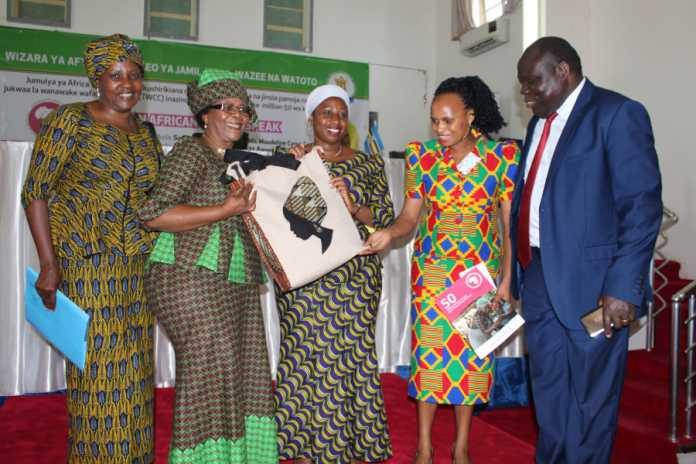
Gracing the national launch for the United Republic of Tanzania at the Karimjee Hall, in Dar es Salaam, Ummy Mwalimu, Minister of Minister of Health, Community Development, Gender, seniors and Children, said the government of Tanzania has received the project, and was happy to embrace the initiative to further enable women to connect, network and transact business.

“Implementing this project is critical in the empowerment of women in the region,” the Minister said, adding that the platform presents an opportunity to heighten the economic empowerment of women in the region.

Mwalimu called upon womenfolk to pursue bigger entrepreneurial dreams, such as value addition in the value-chains and tapping the export markets.

“I call upon the Tanzania Women Chamber of Commerce to work with women and assist them to develop business proposals that can attract access to finance,” she added.

Speaking during the same occasion, the EAC Deputy Secretary General in charge of Productive and Social Sectors, Christophe Bazivamo, said that the 50MAWS Platform has been developed using information and content collected nationally and regionally, and therefore contains information closer to home and within reach in terms of reaching markets within the region.

“I am aware that women in business present here today are already leveraging technology to market their products, designs and artworks. They are using the global social media platforms like Instagram, Facebook and others to promote their products. The good news today is that we are going local with this new platform,” said Bazivamo.

The DSG said that the project was in line with Article 122 of the Treaty for the establishment of the EAC, which provides for the enhancement of the role of Women in Business.

“Our Partner States recognize the importance of women as a vital economic link between agriculture, Industry and trade, and therefore undertake to increase the participation of Women in business at the policy formulation and implementation levels as well as promote special programmes for women in small, medium and large scale enterprises”, he said.

In her welcoming remarks, the EAC Director for Social Sectors, Mary Makoffu, said the platform also aims to build on the popularity of mobile phones so that the burden of learning and accessing information and services is limited, allowing women to manage their businesses and social circumstances.

“Overall, the platform intends to create a dynamic and engaging networking platform among women entrepreneurs, connecting them with one another in ways that will foster peer to peer learning mentoring and the sharing of information and knowledge,” added Ms. Makoffu.

The Tanzania launch also marked the beginning of a solid partnership between the 50 Million African Women Speak Networking Platform and the Tanzania Women Chamber of Commerce (TWCC), with TWCC pledging its support in promoting uptake and use of the platform my their members.

The chairperson of the Chamber, Ms. Jacqueline Maleko, said that the TWCC has a 6,000-strong membership with economic empowerment of women as the main agenda.

“We are now ready to move to all regions of the country and train the women, on the use of the 50MAWS platform, to enable women network and do business with their peers across the continent,” said Ms. Maleko.

The launch of the platform was preceded by training sessions on tax requirements and updates by the Tanzania Revenue Authority; access to finance and various packages designed for women in business by CRDB Bank; and practical guide on registering and using the online 50MAWS platform.

Accessible at www.womenconnect.org, and covering 38 African states under the EAC, the Common Market for East and Southern African  (COMESA) and Economic Community of West African States (ECOWAS) blocs, the innovative platform aims to economically empower women by providing a one-stop shop for their specific business information needs.

The project is being jointly implemented by EAC, COMESA, and ECOWAS with funding from the African Development Bank (AfDB). Continentally unveiled during the Global Gender Summit in November 2019 in Kigali, Rwanda, the platform enables women in Member/Partner States of the three regional economic blocs and other African countries to find information on how to run businesses, where to access financial services, how to create business opportunities online and where to access training resources.

The platform also gives women an opportunity to showcase their products and connect with a market of millions across the continent, in addition to leveraging opportunities for peer-to-peer learning and mentorship as part of a dynamic online community of entrepreneurs.

Stories Continues after ad

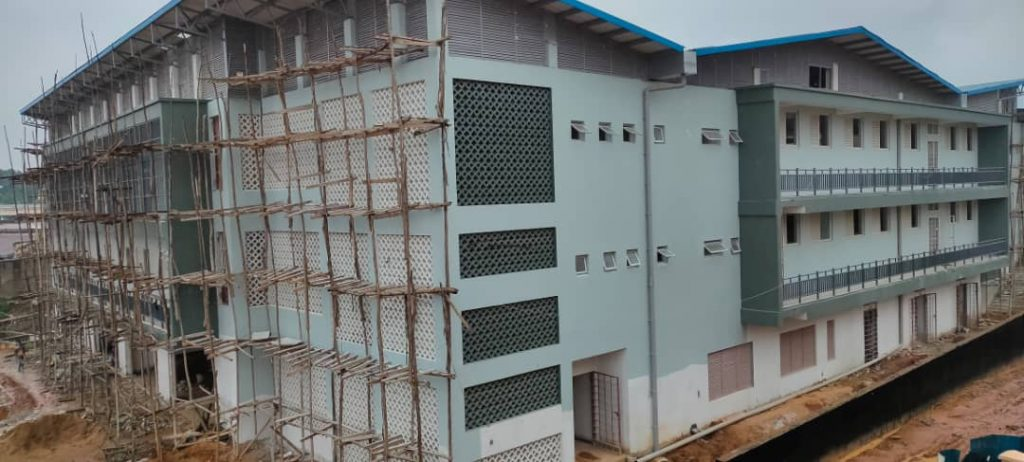
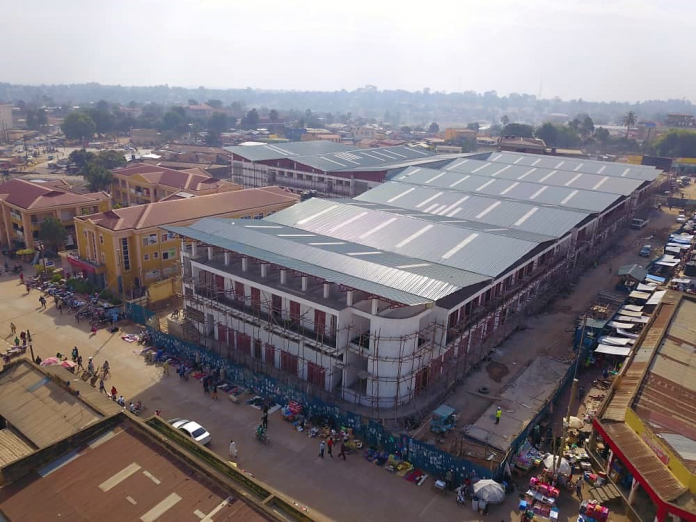
Dott services: Construction works of Arua City Central market at 90%

Arua City Central market

Dott services Limited, a leading services provider in the construction industry in the East African region has revealed that the Construction works of Arua City Central market stands at 90 per cent.

The revelation was made by company’s Project Quantity surveyor Mr. Hudson Mayombwe who said that Dott services are on the final touches installing all required items and paintings.

Construction of Arua City Central Market started in February 2018 and works are expected to be completed by February next year. The shs 34.9b market is one of the biggest projects that the government is undertaking under the Markets and agricultural trade improvement project (MATIP) with loan funding from the African Development Bank.

during construction

It is identified as one of the 21 key markets for construction in 19 urban centers including Kampala under the markets and agricultural trade improvement project, a five year ADB funded project. The market is meant to serve Arua, Yumbe and the neighboring areas.

The facility, sitting on 4 hectares of land, comprises two blocks which include; Block A1 and A2. Block A2 comprises two floors and the basement. The project will also have a water harvesting underground tank which is currently under construction.

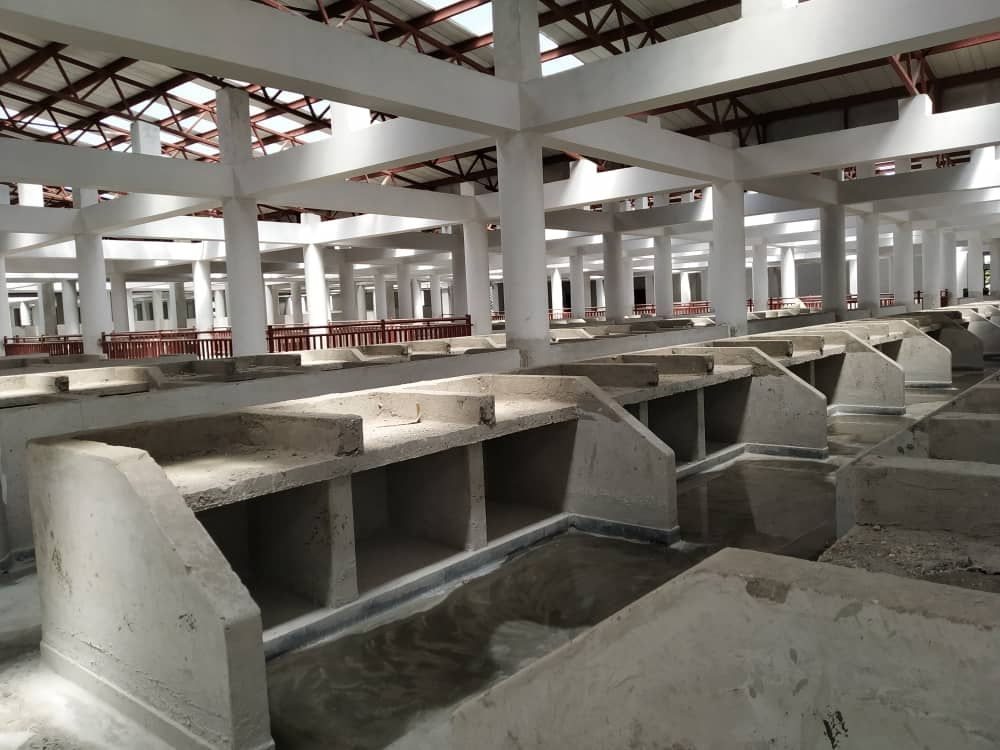
stalls

“The currently dispersed vendors will soon return to the well-established facility with access to clean water, rest rooms and modernized rubbish collection centers established on each floor of the building.” he said

Mayombwe said Dott services is handling the project as it was planned with standard raw materials sourced from Arua and the neighboring areas,  “We are getting some materials such as electricals from Kampala simply because we don’t have enough suppliers from Arua. The beauty about this market is that the basement will be lit by solar power” he added.

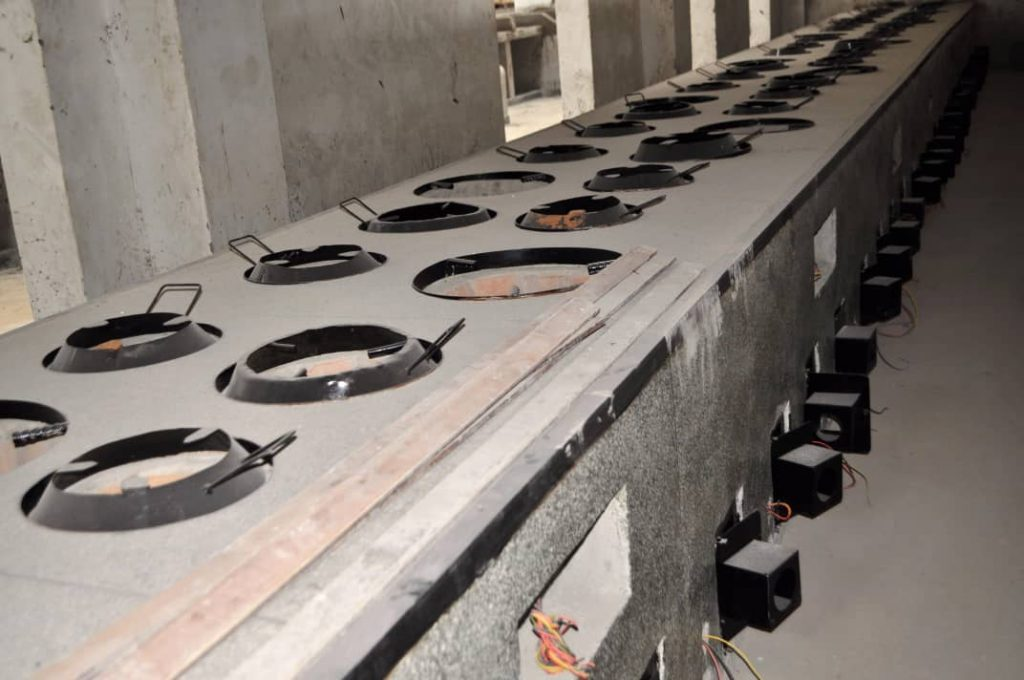
eco stoves

He said the market will house several businesses which include; clothing, Salons, Spa, fresh food, Day care center among others.

garbage collection centres

“The company faced hurdles of accessing the project since one of the roads was closed and the continuous rain which kept on disrupting them.” He added.

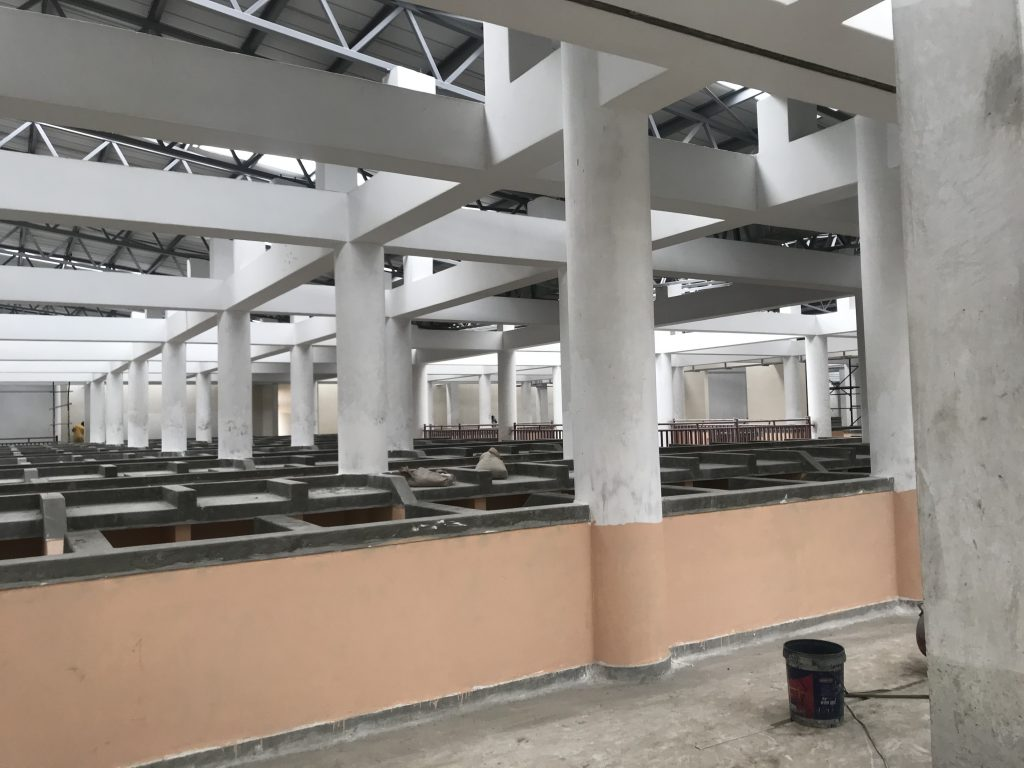
clothing area

DOTT Services Limited focus on the safety of all and this is demonstrated in everything they do, from the start of the day on the job with Morning Action Plan (MAP) and crew stretching, to providing high quality safety education and total management support.

The company has handled various projects which include; Kafu-Masindi Road, Muduma-Mityana Road, Jinja-Kamuli Road, Mbale-Soroti Road, Tororo-Mbale Road, Muku-Tarakea among other projects.

stalls
Stories Continues after ad

Kyambogo asks for more funds to boast research

Kyambogo University Senate Building

A section of staff of Kyambogo University have expressed the desire to have the research more funded by the government to stimulate research in the University. They are saying, the funds are inadequate.

Kyambogo University council approved a budget of shillings 3 billion for the academic year 2019/2020 to promote research, innovation and knowledge generation research. However, some staff say that this money is little compared to the demand of research by the university.

Without mentioning the specific areas, the staffs say that the research is in the fields of technology, education, sciences (including chemistry, mathematics, statistics, nature, and environment, physical, biological), Arts and Humanities (Including sexual Violence), Agriculture and other vocational fields.

Adding that, with the shillings three billion (3b), the above fields have not been researched on and therefore, there is a demand for more funding for up to at least shillings ten billion(10b).

According to staff members this reporter interviewed, they often have overwhelming research proposals which prompts the vetting committee to set tough selection criteria to have few qualified proposals due to inadequate funds budgeted.

The research grant is a one-time award, with financial support of up to shillings forty million (40m) for Science based proposals and up to shillings twenty-five million (25m) for arts and Humanities.

Dr. Robert Ojambo, a senior lecturer at Kyambogo university’s department of history and political science notes that the council has been improving on the research funds every year, however, it is still lacking. He says, teaching is good but only when it is supported by empirical research.

Dr. Ojambo who is also however adds that even the little money that is available for research has not been handled very well by the management.

According to Alexander Paul Isiko, the outgoing academic staff representative to the council argues that research has been less funded and this is affecting research in the university.

He adds that they have been using the little money that has been put in place, to build the internal capacity.

Kyambogo University vice-chancellor Prof. Eli Katunguka during the 16th graduation ceremony requested the government to consider funding the university in research fields citing challenges of inadequate funds to execute research projects.

Dr. Grace Lubaale, a senior lecturer and the academic staff representative to the council notes that it will be his major focus in the next university council to lobby for more research funds.

Lubaale indicates that a lot needs to be done but his major focus will be on research.

The National Council for Higher Education (NCHE) has always called on universities to prioritize research and practical learning other than theories, asking the government to extend a helping hand to fund universities.

In 2020 top universities ranking in Uganda, indicates that Kyambogo university dropped to a fourth position in ranking, following Kampala international university and number 4086 worldwide.

Stories Continues after ad

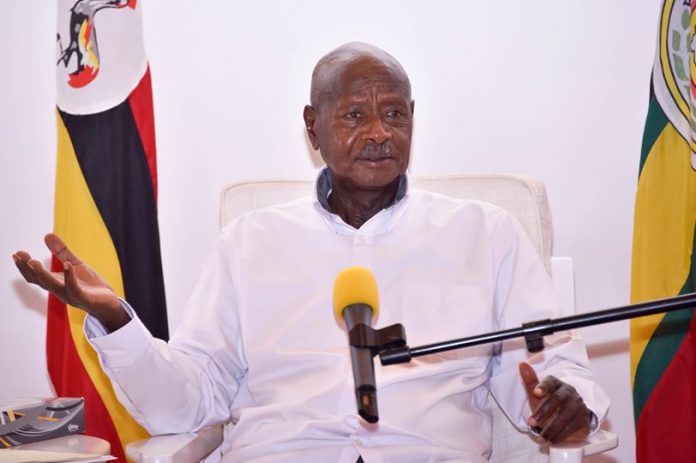
Stop misleading the public on Coronavirus – Museveni tells MP Zaake

President Yoweri Museveni

President Museveni has replied to Mityana Municipality MP, Francis Zaake’s social media comments about the Coronavirus pandemic.

The MP recently said government is using the pandemic to gain political strength by stopping its opponents from meeting electorates.

In his statement, the President said the legislator was wrong in everything he said in his social media post about the pandemic.

“My staff brought his piece to my attention. It is full of so many distortions responding to my comment when I was addressing the NRM delegates. The fundamental point, before we meander into masks, food, etc is: “Yes”. Hon. Zaake’s answer is “No”.The next question is: “Does this pandemic kill?” The NRM’s answer is “Yes”. Honorable Zaake’s answer is “No”.” Museveni said

“According to him, it is a lie invented by the NRM to suppress the Opposition. Whether Jane Aceng made a mistake here or whether Nabakooba did another mistake there, does not remove the fact of the onset of probably the greatest plague 4 (ekyorezo) in the human history of 4 and a half million years.”

“Earlier epidemics did not cover the whole Globe because communication (travel etc) was difficult. My great-grand mother, Nyinanchweende, never told me about the Spanish influenza of 1918 because, apparently, it was only in the towns – Mombasa, etc. Yet, she was very clear about the small pox epidemics of 1893 (omuze gwa Muti – the old name of Mbarara). In the World, a total number of People infected today is 24,359,548. Those that have died are 830,197 in just 10 months!!

“On account of the stringent measures, we took early, nobody died, for 4.5 months, until the 21st of July, 2020, when the first person from Namisindwa district, by the names of Chematara Eunice, died in Mbale, in a Private Clinic. Since that time, a total of 28 persons have died. 20 of them are from Kampala where the mis-education of the likes of Zaake confuses our people. A total of 2,679 have been infected but 1,268 have recovered.

“The numbers have remained small inspite of the mistakes of the Acengs, Anites, etc. The majority, starting with me have followed the guidelines: the churches, the schools, many of the political actors (NEC of NRM, National Conference have just been held following the guidelines), the Special Interest Groups’ (Elderly, disabled, youth) elections were held recently involving millions of People following the guidelines.”

The President also commented about the political gatherings and ordered politicians to stop putting themselves in situations where people gather around them or they will be arrested.

“Regarding the politicians that have been gathering People contrary to the guidelines, my order to the IGP is now out. No. 1, no Public meeting of any type have been allowed since March except the ones following the guidelines. In the past, the 6 politicians (Aceng, Anite, etc.) were pleading that the People were gathering against their will. The order now is: “Do not put yourself in a situation where People gather around you. If you do, we shall arrest you.”

Stories Continues after ad

Community Shield: Liverpool face Arsenal in 2020/21 curtain-raiser

community shield

Less than a month after Arsenal brought a close to the 2019/20 English football season with victory in the FA Cup final, they kick off the 2020/21 campaign in the Community Shield against the Premier League champions Liverpool at Wembley stadium.

The traditional curtain-raiser takes place two weeks before the start of the new Premier League season and gives both clubs the chance to earn an early piece of silverware.

Jurgen Klopp’s Liverpool have warmed up for the contest with a pre-season training camp in Austria that included friendlies against Stuttgart and RB Salzburg.

Arsenal, meanwhile, have played just one pre-season game ahead of this match, beating MK Dons 4-1 on Tuesday.

The Gunners beat Liverpool in the last meeting between the two sides, with blunders from Van Dijk and Alisson Becker ending Liverpool’s hopes of equaling or surpassing Manchester City’s record Premier League points haul in July.

The last time the two sides met in the Community Shield was 2002 where Arsenal emerged victorious with a 1-0 win courtesy of a Gilberto Silva goal.

The match will be played behind closed doors at Wembley with no fans due to be present due to government guidelines regarding coronavirus.

Manchester United have the most community shields, lifting it on 21 occasions. Arsenal and Liverpool stand second in the all-time table with 15 wins each – Saturday will see the two clubs both playing in their 24th Community Shield.

Stories Continues after ad

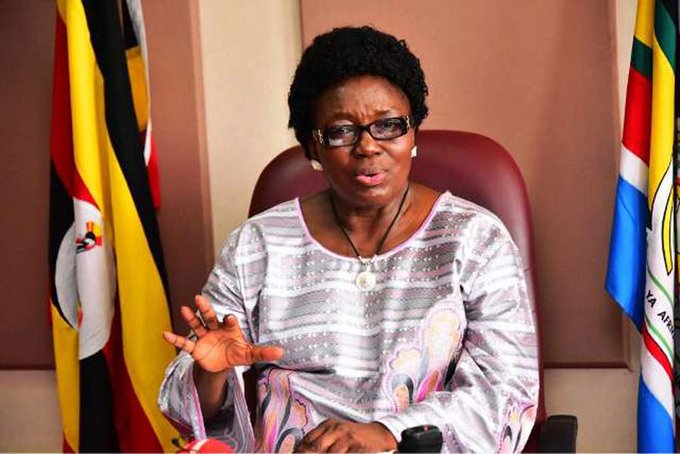
Speaker Kadaga implores finance ministry on AIDS Trust Fund

Minister for East African Community Affairs, Rebecca Kadaga

The AIDS Trust Fund provided for by the HIV and AIDS Prevention and Control Act signed into law in 2014 should draw its funding from the Consolidated Fund.

However, it was noted by Dr Eddie Mukooyo, the Chairperson of the Uganda AIDS Commission that to this day, it has not yet been implemented.

The revelation irked the Speaker of Parliament, Rebecca Kadaga, who expressed her disappointment in the Ministry of Finance, Planning and Economic Development.

Kadaga faulted the ministry for failing to release funds to enact the AIDS Trust Fund (ATF) since the law took effect.

“We passed into law a legislation supporting the Trust Fund because we believe the matter was urgent and would support the Presidential Initiative against HIV/AIDS, it is a pity that we are still talking about this issue now,” she said according to the parliament website.

Kadaga was officiating at the session of the 11th Partnership Forum on Thursday 27 August, 2020 at the Office of the President. It comprised of representatives from political and technical arms of various entities in the country coming together to combat HIV/AIDS.

The theme for the Forum is, “Ending AIDS: leaving no one behind”

Dr Mukooyo added that the Commission was plagued with financial constraints that impeded its work and in turn, reduced its ability to curb the rate of HIV/AIDS prevalence in the country.

“We need money to host the International Conference on AIDS and Sexually Transmitted Infections in Africa (ICASA) for 2021 and to support the AIDS response in Uganda because majority of the financial heavy lifting is done by the partners,” he said.

Speaker Kadaga promised to lobby the government and to have the funding gaps of the Commission handled by the HIV/AIDS and Budget committees of Parliament.

She commended the AIDS Commission for achieving the 90-90-90 targets and evolving to the 95-95-95 target. The numbers stand for 95 per cent people aware of their HIV status of which 95 per cent are under HIV treatment of which 95 per cent are virally suppressed.

Kadaga also applauded the Commission for realising a drop in infections from 93,000 in 2010 to 54,000 people in 2019. However, she told the AIDS Commission that she had observed that people have to travel long distances to access HIV/AIDS treatment and that district and municipality AIDS committees needed to be energised as they were not active.

Stories Continues after ad

Ministry of Health confirms 155 new Covid-19 cases, two deaths

COVID-19 Structure

The Ministry of Health today registered 155 new Covid-19 cases and further confirmed 2 deaths within the country, bringing the total of Covid cases to 2,679 so far.

It has been four months since the Covid-19 outbreak that forced not only the Ugandans but other governments around the world to force their citizens into a temporary lockdown.

The President, H.E Yoweri Kaguta Museveni recently ordered for the easement of a number of economic activities and as well as the extension of curfews, since then the number of covid-19 infections have grown significantly higher as more people come into contact with each other despite Standard operating procedures put in place by the Ministry of Health.

The new confirmed cases consisted of a number of samples from across the nation, specifically: Kampala-71, Kikuube-12, Jinja-8, Wakiso-8, Mbarara-6, Torooro-5, Gulu-4, Kitgum-3, Pader-3, Kisoro-2, Buikwe-2, luwero-2, Bundibugyo-1, Busia-1, Insingiro-1, Kaprochwa-1, Kasese-1, Kiryandongo-1, kyegegwa-1 and Mbale-1.

Among these were also 9 health workers who were tested positive hailing from Kampala, Wakiso and Jinja while the Covid deaths were both males aged 58 and 59 from Kapchorwa and Mbale respectively. One returnee was also tested positive and 14 (13 Kenyans and one Rwandan) were also blocked form entry after their results came back positive form the 4,513 cases that were tested today.

Despite the government’s efforts such as S.O.Ps and facemasks that were distributed; the number of covid contractions continue to grow by the day which might force the Ugandan government into another lockdown should the curve continue to rise.

Since its outbreak last year, the airborne disease continues to claim thousands of lives worldwide without any sign of hope insight as the disease continues to baffle scientists. Although Hydrochloroquine has been fronted as the best alternative to treat covid-19, scientists in Russia have begun trial runs on what they believe could be the actual cure to the infection.

Stories Continues after ad

Museveni declares 29th August a public holiday

MUSEVENI

President Yoweri Museveni has declared Saturday, 29th August 2020, a day of National Prayers and a Public Holiday.

According to Museveni, a certain Ugandan went and told him that God had told him in a vision that he should organise National Prayers, scientifically organised, for God to deliver us from COVID 19.

“Therefore, by the powers given to the President of Uganda by Section 2(2) of the Public Holidays Act, I declare the 29th of August 2020, a day of National Prayers and a Public Holiday. Stay in your houses or Compounds and pray,” he wrote.

“I have invited a few religious leaders to come to Entebbe State House and pray together with Janet and myself when you are all watching on TV or listening on Radios,” he said

He appealed to all Ugandans to join this massive act of supplication. “Mushabe, muryaheebwa, musherure, muryazoora”, he said, adding that I remember it from our priests at Kyamate in the 1950s.

“This is in the Book of Matthew chapter 7 verse 7. In English it says: Ask, and it will be given to you; seek, and you will find; knock, and it will be opened to you.”

Stories Continues after ad

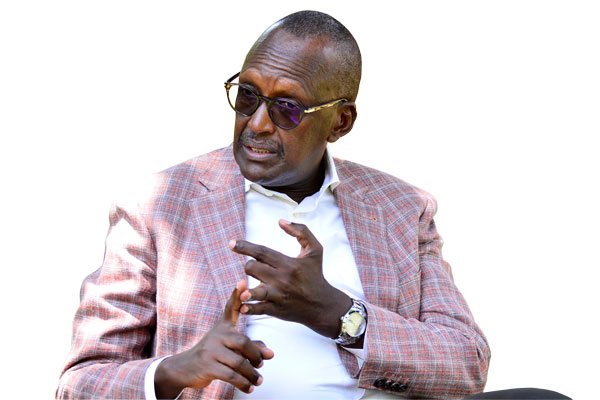
Gen Tumukunde petitions High Court, wants police summons quashed

Gen. Tumukunde.

Former spy master and Security Minister Lt. Gen. Henry Tumukunde has petitioned the High Court Civil Division to quash the police summons directing him to appear before the Criminal Investigations Directorate (CID) in Kibuli.

Last week, the Directorate of Criminal Investigation Grace Akullo, summoned Gen Tumukunde over allegations that the retired spy master has been meeting veterans.

In a letter dated August 18 addressed to Lt. Gen. Henry Tumukunde, the Directorate of Criminal Investigation says they are probing

“The Directorate of Criminal Investigations is investigating allegations to the effect that on a number of occasions at your office and residence both in Kololo and other locations within the country, you held meetings with army veterans discussing issues related to politics. Your actions if true contravenes the section of the 1995 constitution and the UPDF Act.” reads CID Grace Akullo’s letter dated August 18 addressed to Lt. Gen. Henry Tumukunde.

Tumukunde worries that upon being summoned, he sent one of his lawyers, Roberts Kagoro to establish why he was summoned. To his dismay the lawyer was told to attend a meeting involving Uganda peoples Defence forces (UPDF).

Through his lawyers led by Anthony Wameli, the 1986 bush war Gen wonders whether he appears as a witness or suspect. He contends that he is a civilian having retired from the army and wants the court to restrain the respondents from interfering with the presidential aspirants activities.

He also wants the government of Uganda and security agencies to be fined with Shs 70million for interfering his political activities in a democratic state with multiparty political dispensation.

Stories Continues after ad

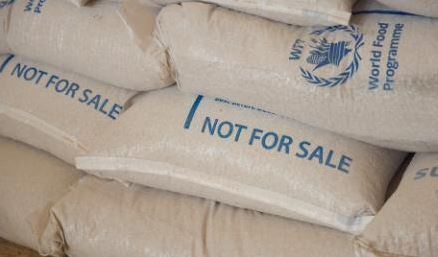
Covid-19: WFP reduces food and cash transfers for refugees in East Africa

wfp

Serious hunger and malnutrition loom for millions of refugees across Eastern Africa who depend on assistance from the United Nations World Food Programme (WFP) to survive, as the socio-economic impact of the COVID-19 pandemic reduces vital funding from donors.

WFP has already been forced to reduce food or cash transfers by between 10 to 30 percent for over 2.7 million refugees in Ethiopia, Uganda, Kenya, South Sudan, and Djibouti. WFP will be forced to cut deeper in the coming months unless urgent additional funding is received in time.

“Refugees are especially vulnerable to the spread of COVID-19 because they are crowded together in camps with weak or inadequate shelter, health services and access to clean water and sanitation,” said WFP Eastern Africa Regional Director Michael Dunford.

Refugees are also affected both by the wider socio-economic impact of the pandemic as well as by the disease itself. The most vulnerable women, children and elderly are increasingly at risk of becoming malnourished, which can in turn impact their immune systems and increase their risk of being infected by disease, a tragic vicious cycle in the midst of a pandemic.

“With COVID yet to peak in East Africa, we cannot turn our backs on people forced to flee and stuck in remote camps,” Dunford added. “Many have already lost the few opportunities to earn money due to the economic downturn caused by COVID-19 restrictions.”

WFP requires US$ 323 million to assist refugees in the region over the next six months – this is 22 percent greater than during the same period a year earlier.

COVID-19 restrictions closed schools in refugee camps, meaning that children missed out on vital school meals in Ethiopia, Kenya, South Sudan, Rwanda and Uganda. In all these countries except in Rwanda, funding shortages meant that WFP was unable to provide take home rations to refugee children to help them study at home and stay nourished.

Extended school closures can lead to increased teenage pregnancies, sexual abuse, early marriage, violence at home, child labour and high school dropouts. They threaten to erode hard-won gains made over the years to improve access to quality schooling for refugees in camps.

Women and girl refugees are also at heightened risk of gender-based violence, sexual exploitation and abuse, in addition to resorting to having sex for payment in order to survive. People with disabilities and unaccompanied or separated children are the most vulnerable.

“Sadly, it is the poorest and most disadvantaged who suffer the most,” said Dunford. “But we simply cannot let this happen. COVID-19 cannot be an excuse for the world to turn its back on refugees at this terrible time.”

The situation is so serious for refugees that WFP is appealing both to traditional donors and new would-be donors, such as International Financial Institutions (IFIs), to step forward and assist refugees – precisely because their vulnerability only increased with COVID-19. Donors such as the World Bank have stepped up to support governments in the region to assist poor people living in informal settlements in urban areas after millions lost their livelihoods due to the economic downturns triggered by COVID-19 restrictions.

If WFP is forced to continue cutting rations for refugees, this could prompt refugee communities to move within host countries or even across borders as they become more desperate to meet their basic needs. Such movements could not come at a worse time  with the coronavirus spreading.

WFP lauds governments in the region for continuing to host refugees and largely keeping borders open.

Stories Continues after ad