Stanbic Bank
Stanbic Bank
16.2 C
Kampala
Stanbic Bank
Stanbic Bank
Home Blog Page 102

Ugandan-owned startup businesses offered 3-year tax holiday

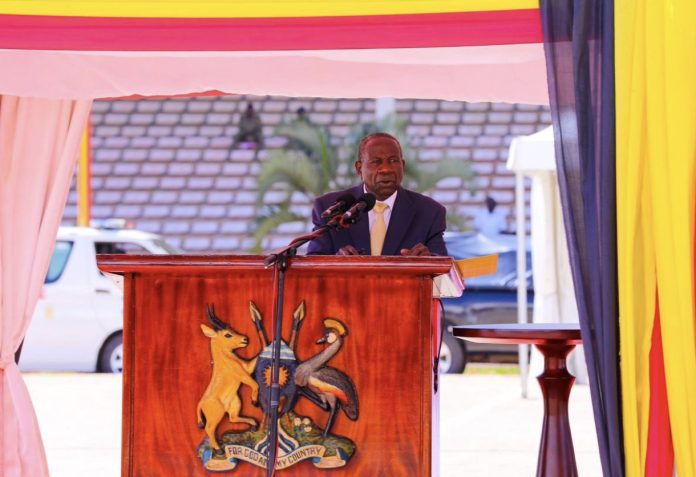
Finance Minister, Matia Kasaija.

The Ugandan government will offer a three-year income tax holiday for new, Ugandan-owned startup businesses as part of its 2025-26 national budget.

The revelation was made by Finance Minister Matia Kasaija on Thursday, 12 with an aim to stimulate entrepreneurship and formal business growth. The policy applies to startups established after July 1, 2025.

Kasaija presented the Shs72.4 trillion ($19.4 billion) budget to Parliament, noting that the new tax measures are expected to generate an additional 538.6 billion shillings ($144 million) in domestic revenue.

“Additional revenue of Shs538.6 billion will be raised from new tax policy measures that were approved by Parliament,” Kasaija said. “In addition to raising revenue, the measures will support the growth of businesses and the economy.”

The income tax holiday is designed to reduce initial barriers for early-stage businesses, encouraging innovation, job creation and the formalization of enterprises in a sector often dominated by informal operations. The incentive specifically targets companies entirely owned by Ugandan citizens.

Beyond the tax holiday, the government also eliminated capital gains tax for individuals transferring assets to companies they own and control. This move is intended to encourage the transition to more structured corporate entities, Kasaija said.

Additionally, stamp duty on mortgages and agreements has been scrapped, which is expected to lower the cost of accessing credit for both individuals and businesses. Taxpayers with outstanding liabilities can also benefit from an extended waiver on penalties and interest if they clear their principal tax by June 30, 2026.

“This waiver is intended to provide relief to businesses and individuals to enable them to settle outstanding tax liabilities and resume normal operations,” Kasaija said.

On the compliance front, penalties under the Electronic Fiscal Receipting and Invoicing System (EFRIS) have been revised. Previously, non-compliance incurred a fixed fine of Shs6 million per invoice. This has been replaced with a penalty equal to twice the tax owed.

“The system promotes transparency and creates an even-playing field,” Kasaija urged, encouraging digital invoicing.

Other tax adjustments include an increase in excise duty on cigarettes from Shs55,000 to Shs65,000 per 1,000 sticks for soft cap brands, with higher rates for products from outside the East African Community. Excise duty on beer made with locally malted barley has been removed, while tax on beer brewed with 75% local raw materials has been increased to ensure tax parity.

Trade-related taxes have also been modified. A 1% import declaration fee will now apply to taxable goods under the East African Community Common External Tariff. A new export levy of $10 per metric ton has been imposed on wheat bran, cotton cake, and maize bran to promote domestic value addition.

In the textile sector, import duties on fabrics will decrease from $3 to $2 per kilogram, and on garments from $3.5 to $2.5 per kilogram or 35%, whichever is higher.

“These changes reflect our continued commitment to building a fairer and more predictable tax system that supports enterprise, encourages compliance, and funds national priorities,” Kasaija said.

To finance the 2025-26 budget, the government plans to raise Shs33.94 trillion from tax revenue, Shs3.28 trillion from non-tax revenue, Shs11.38 trillion from domestic borrowing, and Shs13.41 trillion from external sources.

Stories Continues after ad

X suspends fake account impersonating businessman Sudhir

Tycoon Sudhir Ruparelia.

Social media platform X (formerly Twitter) has suspended a fake account that had been impersonating Ugandan billionaire Sudhir Ruparelia, following weeks of public outcry, digital investigations and calls from legal and cyber security experts.

The fraudulent handle, @RupareliaSudhi, had amassed over 48,000 followers and was actively publishing fabricated political, economic and personal statements falsely attributed to the prominent businessman.

The posts misled followers and stirred confusion particularly in the aftermath of the death of Sudhir’s son, Rajiv Ruparelia.

In an earlier public statement, Sudhir had disassociated himself from the account, warning, “I do not own or operate any account on X. Any communications or posts from that account should be disregarded as fraudulent and misleading.”

The account used Sudhir’s photos and business branding to mimic authenticity, making it difficult for unsuspecting users to distinguish it from a legitimate source. Several posts went viral, including fake business endorsements and emotional tributes prompting alarm from the public and business community.

X has not officially commented on the takedown, but attempts to access the account now return a suspension notice citing violation of platform rules. Screenshots circulated online show the message: “This account doesn’t exist.”

The suspension follows concerns about the rise in impersonation and digital misinformation targeting high-profile Ugandans. Legal and digital rights advocates have pointed to Uganda’s Computer Misuse Act, 2011, which criminalizes online identity fraud and reputational harm.

This is not the first time Sudhir has been a target. In April 2025, a deep fake video circulated on WhatsApp and TikTok falsely depicting him endorsing a get-rich-quick cryptocurrency scam. The video, later debunked, claimed that users could earn millions by investing as little as Shs915,000.

Digital security experts warn that such impersonations are becoming more sophisticated, often aided by AI-generated content and lax verification systems. The Uganda Communications Commission (UCC) has urged public figures to seek verification on digital platforms and to educate their audiences about identifying fake accounts.

Sudhir’s associates confirmed that he relies solely on official statements and regulated PR channels for communication, and has never had a personal presence on X. The businessman has called for strengthened cyber regulations and quicker response mechanisms from tech platforms to address impersonation threats.

While the removal of the fake account marks a win for digital integrity, experts say it underscores a deeper challenge. As one cybersecurity advocate noted, “We are entering an era where trust online must be earned, not assumed.”

Stories Continues after ad

National Budget: PDM drives wealth creation as Uganda’s economic transformation gains pace

President Museveni inspecting one of the beneficiaries of Parish Development Model funds.

Presenting the 2025/26 national budget to Parliament, Finance Minister Matia Kasaiaja has lauded the country’s economic performance, describing it as “among the fastest-growing in the world,” and projected Uganda to become the fastest-growing economy by 2031, according to recent research by the Harvard Growth Lab.

Kasaija said Uganda’s economy is on a strong upward trajectory with the Parish Development Model (PDM) emerging as a key pillar in the country’s wealth creation and poverty alleviation strategy.

“This remarkable growth,” said Kasaija, “has been achieved despite numerous domestic, regional and global shocks. It is a testament to the unique economic ideology championed by His Excellency the President — grounded in patriotism, Pan-Africanism, democracy, and socio-economic transformation.”

Central to this transformation, the minister emphasized, is the Parish Development Model. “By 30th June this year, a total of Shs3.3 trillion will have been transferred to the 10,589 parishes across the country,” Kasaija noted.

He added, “Each parish gets Shs100 million annually. So far, the PDM funds have reached 2.63 million beneficiaries across all districts and parishes.”

He said beneficiaries have invested 45% of the funds in crops like maize, cassava, onions, bananas, and Irish potatoes, 36% in livestock, 12% in poultry, and the rest in other enterprises. “These investments are changing the lives of Ugandans by boosting household incomes, enhancing food security, and creating employment opportunities at the grassroots,” Kasaija declared.

The PDM, he said, has now been fully digitized, ensuring transparency, efficiency, and direct transfers to intended recipients through the National Identification Number (NIN) and the PDM Information System (PDMIS).

Minister Kasaija reported that over the past decade, the government has committed Shs9 trillion towards wealth creation, channelled through various initiatives such as Uganda Development Bank, Emyooga, Youth Livelihood Programme, the Agricultural Credit Facility, and the INVITE and GROW projects. These interventions, he said, are aimed at integrating all Ugandans into the money economy.

“Our budget for the next financial year, and over the medium term, is focused on people and wealth creation,” he said. “The theme remains: Full Monetisation of Uganda’s Economy through Commercial Agriculture, Industrialisation, Expanding and Broadening Services, Digital Transformation and Market Access.”

Uganda’s economy is estimated to grow by 6.3% in 2024/25, with projections to accelerate to 7.0% in 2025/26 — and even hit double-digit growth once oil and gas production begins. Nominal GDP is projected to hit Shs254.2 trillion (USD 66.1 billion) in the next fiscal year, up from Shs226.3 trillion this year.

“Uganda has achieved these milestones because of a deliberate and consistent strategy. Peace, political stability, and investment in infrastructure have laid a firm foundation for sustainable development,” Kasaija said.

He outlined key improvements: life expectancy has risen from 63.3 years in 2010/11 to 68.2 years in 2023/24; access to electricity jumped from 11% to 57%; and poverty fell to 16.1%, down from 24.5% in 2010/11. Income inequality, measured by the Gini coefficient, declined from 41% in 2020 to 38% in 2024.

“Uganda’s economy has moved from one reliant on the traditional 3Cs (coffee, cotton, copper) and 3Ts (tea, tobacco, tourism) to one that exports 31 new products, including pharmaceuticals, processed food, ceramics, and electronics,” said the minister. “The number of factories has grown from 31,757 to 50,000 since 2010/11.”

Kasaija credited the President’s “deliberate strategy to expand the share of manufactured exports” for increasing Uganda’s economic complexity. “Uganda has become more sophisticated in its exports than its income level suggests. This is proof that our industrialisation agenda is working.”

On the external front, Uganda’s exports of goods and services reached $11.8 billion in the 12 months to March 2025, up from $9.56 billion the previous year. Coffee exports, in particular, soared past the $1 billion mark and are expected to double to $2 billion annually.

“It took us more than a century to reach a billion dollars in coffee exports,” Kasaija noted. 

He noted, “But now, in just one year, we are doubling that. I therefore implore Ugandans to grow more coffee and, most importantly, to add value before we export.”

Tourism and foreign direct investment also recorded robust performance. Tourism earnings rose to $1.52 billion, and FDI inflows surged to $3.48 billion. “Uganda remains one of Africa’s top investment destinations,” Kasaija said. “Our shilling was ranked the most stable currency in Africa by the IMF.”

Inflation, the minister assured, remains under control at 3.4% as of May 2025, well below the policy ceiling of 5%. The stability is due to increased food production under PDM, prudent fiscal and monetary coordination, and Uganda’s direct petroleum importation through UNOC.

“Contrary to conventional economics, our borrowing has not crowded out private credit,” Kasaija explained. “Instead, it has enabled the government to inject affordable financing into strategic sectors.”

As Uganda enters a new planning phase under the Fourth National Development Plan (NDP IV), the minister expressed confidence that the Tenfold Growth Strategy aimed at expanding Uganda’s economy to $500 billion by 2040 is now firmly underway.

“We have built a resilient, inclusive, and increasingly sophisticated economy,” Kasaija concluded. “Let us all support these wealth creation efforts so that no Ugandan is left behind.

Stories Continues after ad

Public debt repayments take lion’s share of FY2025/26 Budget

Finance Minister, Matia Kasaija reading the 2025/6 national budget.

Uganda has unveiled a Shs72.4 trillion national budget for the Financial Year 2025/26, with a critical revelation standing out: statutory interest payments on public debt will consume the largest single portion of the budget surpassing allocations to any individual social or productive sector.

Kasaija said interest payments for the upcoming financial year are projected at Shs11.33 trillion, representing 20.6% of total government spending. This figure exceeds the allocations to education (Shs5.04 trillion), health (Shs5.87 trillion), and even development expenditure (Shs6.91 trillion from domestic sources).

The ballooning cost of debt servicing underscores growing fiscal pressure, driven largely by increased domestic borrowing. Of the Shs11.33 trillion allocated to interest payments, over Shs9.47 trillion will go toward domestic debt, while Shs1.85 trillion is earmarked for servicing external debt.

The high cost of debt servicing is crowding out critical public investments. Despite widespread calls to improve healthcare and education infrastructure, these sectors continue to receive significantly less funding than what is being allocated to debt repayments.

Additionally, the government will spend another Shs10.03 trillion on domestic debt refinancing and Shs4.98 trillion on debt amortisation. Altogether, debt-related allocations will exceed Shs26 trillion, approximately 36% of the entire national budget.

Uganda’s growing reliance on domestic borrowing—typically more expensive than concessional external loans—has escalated the cost of maintaining public debt. 

Kasaija acknowledged this concern and noted that going forward, the government intends to prioritise concessional financing and strengthen domestic revenue mobilisation to enhance debt sustainability.

While the government maintains that borrowing is supporting growth-enhancing investments, the burden of servicing this debt is becoming increasingly unsustainable. Public debt as a percentage of GDP is expected to remain high, with the fiscal deficit for FY2025/26 estimated at 7.6% of GDP.

Despite efforts to increase tax collection—such as digital enforcement through EFRIS and enhanced rental income tracking—the significant allocation toward interest payments could undermine service delivery, reduce social protection coverage, and hinder progress toward national development goals.

Uganda’s FY2025/26 budget presents a sobering picture: the country’s largest fiscal commitment is managing debt rather than expanding essential public services. While investment in education, health, and infrastructure remains a declared government priority, the budget arithmetic paints a picture of a country increasingly constrained by its borrowing obligations.

Sector Highlights

Health Sector: Shs5.87 trillion: The health sector has been allocated Shs5.87 trillion, reflecting an increase from previous years. The funds will support the operationalisation of Health Centre IVs, expansion of primary healthcare, scaling up of e-health systems, and strengthening of nutrition and reproductive health programs.

The government will also continue deploying Community Health Extension Workers and constructing specialised centres for cancer and cardiovascular disease treatment. Enhancements to the national ambulance and emergency referral system are also planned.

Education Sector: Shs5.04 trillion

The education sector will receive Shs5.04 trillion to support Universal Primary and Secondary Education, teacher recruitment, and infrastructure development. Key initiatives include:

Construction of 116 new seed secondary schools and expansion of 61 existing ones

Rehabilitation of 120 traditional secondary schools and 31 institutions for learners with special needs

Operationalisation of Bunyoro and Busoga universities

Procurement of instructional materials to improve the textbook-to-student ratio from 1:15 to 1:3

Implementation of digital school inspections to ensure quality standards

Transport and Infrastructure: Shs6.92 trillion

A total of Shs6.92 trillion has been allocated for integrated transport infrastructure, including roads, bridges, air, water, and rail systems. Key priorities include operationalising Kabalega International Airport, further capitalising Uganda Airlines, and rehabilitating aerodromes.

Investments will also improve connectivity to key growth centres, such as the Dei BioPharma facility in Matugga, the coffee processing plant in Ntungamo, and a fertiliser factory in Mpigi.

Agro-Industrialisation and Wealth Creation: Shs2.43 trillion

To accelerate economic transformation, Shs2.43 trillion has been set aside for wealth creation initiatives, including:

Shs1.059 trillion for the Parish Development Model (PDM)

Shs1 trillion for recapitalising the Uganda Development Bank (UDB)

Funding for Emyooga, INVITE, GROW, and skilling hubs targeting youth and women entrepreneurs Social Protection:  Shs811 billion

Under the Social Assistance Grants for the Elderly (SAGE), Shs811 billion has been allocated to support nearly half a million senior citizens. Additional funding will benefit youth and women through enterprise grants and group-based empowerment initiatives.

The FY2025/26 budget signals the government’s commitment to consolidating service delivery gains and accelerating economic transformation through strategic investments in people-centric sectors. However, the overwhelming share of resources committed to debt servicing reveals a difficult truth: Uganda’s fiscal future may be increasingly shaped not just by what it aims to achieve, but by what it owes.

Stories Continues after ad

Judicial appointments and promotions: A game of thrones

Chairperson Judicial Service Commission, Justice Douglas Singiza.

The Parliament watch website of April 2025, published a concern by law makers about what they described as discriminatory promotion practices within Uganda’s judiciary where they claimed that competent and long – serving judges are being overlooked in favour of newer, politically connected appointees. I hazard to say that this concern is not uncommon in many countries, though it may vary in degree. Even in the United States, the federal judiciary has been reshaped by President Trump’s appointment of a majority republican appointees who are expected to moot for his party’s agenda.

Judicial appointments and promotions have always had some political colour to them. They are a caricature of the popular Netflix series – “the game of thrones” – a metaphor now used more broadly to refer to any kind of political maneuvering or scheming needed to gain power or influence – often wielded from the shadows. The appointing authority of judges in Uganda is the President who happens to be the grundnorm of politics itself. Another assembly of politicians, the Parliament, approves their appointment. So, Judges are by default, political appointees even if their recruitment by the Judicial Service Commission (JSC) is steeped in technical finesse.

Despite the apparent political bondage, most democracies routinely subject exercise of judicial power to the constitution and in the case of Uganda, to the additional values, norms and aspirations of the people. (See Article 126 of the Constitution). So, if there are judges who exercise judicial power in the interest of the appointing authority, rather than the people, then we should ultimately blame this on weak enforcement of the law. To that extent Parliament should take some stick for any discriminatory appointments and promotions in the judiciary because it has the opportunity to stop the appointments in the first place. The distinguished legislator, Hon. Abdu Katuntu, Bugweri County MP is reported to have questioned the accelerated appointment of Hon. Justice Douglas Singiza, the newly appointed chairman of the JSC against the back drop of more senior Judges who were not considered for the position. We know that the said questioning did not stop the wheels of the political discourse from turning.

The problem with fronting political considerations in judicial appointments and promotions is that it erodes public trust and confidence in the legal system faster than it builds it. With a population smitten by the information age, this jaundiced perception about judicial promotions is now readily disseminated and is easily believed by many. We must therefore be intentional as a country, in ensuring that justice in the eyes of right-thinking members of the public, is not only done but is also seen to be done in all judicial appointments and promotions.

It is generally accepted that career stagnation in any place of work can be fatalist. It does not only reduce job satisfaction and motivation, increase stress and burn out but it also removes hope – the only fire of all human endeavor. That’s why I believe that job stagnation in the judiciary is more dangerous than it is in other places because it negatively impacts the delivery of justice, whose failure can cause anarchy. A just and favourable condition of work must ensure equal opportunity for everyone to be promoted in his or her employment to an appropriate higher level subject to no considerations, other than those of seniority and competence. This legal requirement is enunciated in Article 7 International Covenant on Economic, Social and Cultural rights which Uganda ratified on the 21st January, 1987. I would go further to argue that the right to career growth for any judicial officer, is embedded in the constitutional right to practice their profession under satisfactory, safe and healthy conditions provided under Article 40 of the Constitution. This right should therefore be given or denied on the basis of the core technical skills involved in dispensing justice under the principles of independence, propriety, integrity, impartiality, equality, competence and diligence, as codified in the Judicial Service Commission Regulations 2025.

It is sometimes tempting to dismiss seniority as overrated in this dot.com era. That we should instead focus more on a competency – based staffing model for the judiciary is common speak. I hold no grudge against newer, politically connected appointees if they are competent and can dispense justice which can be seen. My point however is that the legal profession is anchored on knowledge of the law, not politics. Moreover, legal knowledge is not an App which you can just download and then gain instant mastery. It is acquired through patient and dedicated study and practice. But even then, the law keeps on evolving, so it must reside in a mental faculty which is learnt, but keeps learning and unlearning. To those who subscribe to the practice of sidelining competent, long-serving judicial officers in judicial promotions, I say to them that experience is still the greatest teacher!

Fred Muwema

Managing Partner

Muwema & Co. Advocates

12th June 2025

Stories Continues after ad

Sudan launches mass oral Cholera vaccination drive amidst war

A 10-day reactive oral cholera vaccination campaign, launched on 10 June in 5 localities in Sudan’s Khartoum State, aims to protect more than 2.6 million people aged 1 year and above from cholera infection, interrupt transmission and help contain the cholera outbreak.

Since May 2025 there has been a rapid increase in cholera cases in Khartoum State, with over 16 000 cumulative cases and 239 deaths reported across the State’s 7 localities.

A conflict hotspot since April 2023, Khartoum State is facing an infrastructure breakdown and severe access constraints. The cholera outbreak has been fueled by poor water, sanitation and hygiene, caused by a shortage of safe water following attacks on major power plants and water sources, and compounded by displacement and the breakdown of the health system.

“I have seen first-hand the devastation caused by the cholera outbreak in Khartoum, where the health system has been devastated by conflict and is struggling to cope with the tremendous demand on health facilities,” said World Health Organization (WHO) Representative in Sudan Dr Shible Sahbani. “The vaccines will help stop cholera in its tracks as we strengthen other response interventions.”

The vaccination campaign will be conducted in 5 of Khartoum’s worst affected localities, Jebel Awalia, Sharg Elneel, Omdurman, Karrari and Umbada, via mobile and fixed vaccination sites. WHO supported the Federal and State Ministries of Health in microplanning the campaign, and together with other partners will continue to provide technical advice, oversight and logistical support throughout the campaign.

“We thank WHO and UNICEF for their strong support for the launch of the cholera vaccination campaign in Khartoum which will help tip the balance in our fight against this scourge which is affecting the most vulnerable among our population,” said Sudan’s Federal Minister of Health H.E. Dr Heitham Awadalla.

The current cholera outbreak started in July 2024 and has spread to 92 localities across 13 of Sudan’s 18 states, infecting 74 000 people and leading to 1826 deaths. The 2-year war, which has led to a breakdown in the health system, including surveillance, mass displacement and lack of access to water, sanitation and hygiene, has contributed to the spread of the outbreak.

Cross-border population movements heighten the risk of cholera spreading to neighbouring countries, making cross-border collaboration in response efforts essential.

Cholera, an acute diarrhoeal infection caused by eating or drinking food or water contaminated with the bacterium Vibrio cholerae, is a global threat to public health and a major indicator of inequity and lack of social development.

Together with other response measures, including case management, water, sanitation and hygiene, surveillance and risk communication and community engagement, the administration of oral cholera vaccines has been proven to interrupt transmission and contain outbreaks.

Despite access and security challenges posed by the war in Sudan, WHO is committed to staying and delivering to protect Sudan’s most vulnerable people.

Stories Continues after ad

Health Ministry launches SAYANA PRESS in private sector to expand family planning options

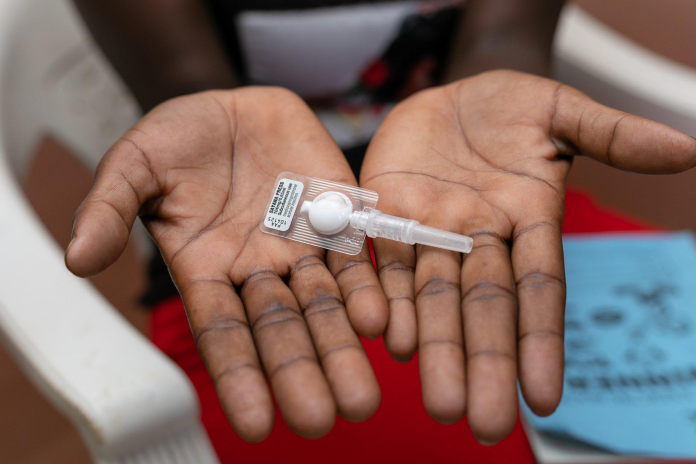
The Ministry of Health in partnership with Phillips Pharmaceuticals (Uganda) Ltd, PATH Advocacy and PSI Uganda has launched the SAYANA PRESS single-unit injectable contraceptive for private sector use to improve access to self-care and family planning services.

The introduction of SAYANA PRESS marks a pivotal moment in Uganda’s reproductive health landscape. The product, designed for long-term contraception, allows individuals—under the guidance of healthcare professionals—to choose and self-administer their preferred contraceptive method.

“We are working to diversify family planning options, and introducing SAYANA PRESS into the private sector presents a unique opportunity to empower Ugandans to self-administer their contraceptive method. With 45% of pregnancies being unintended, we want to ensure that effective options like this are accessible when needed,” said Dr. Richard Mugahi, Commissioner for Reproductive, Maternal and Child Health.

The launch is anchored in Uganda’s National Guidelines on Self-Care Interventions for Health, which underscores the importance of expanding accessible and affordable self-care solutions. These guidelines, available on the Ministry of Health’s website, emphasize that self-care tools can empower individuals to take charge of their reproductive health, make informed choices, and reduce barriers to service delivery.

Dr. Charles Olaro, Director General of Health Services, echoed the need for inclusive community engagement.

“As part of our ongoing efforts, we need to explore effective ways to engage and involve husbands in this initiative,” he stated.

This rollout is the result of a robust public-private partnership. Phillips Pharmaceuticals is spearheading the product’s distribution, while PATH Advocacy focuses on building the capacity of healthcare providers. PSI Uganda is leading the charge in market development and promoting women’s empowerment through accessible reproductive health solutions.

SAYANA PRESS will now be available in private clinics and pharmacies across Uganda, offering a discreet, convenient, and effective option for those seeking to manage their reproductive health independently.

Stories Continues after ad

Gov’t suspends automated traffic fines system pending review

The Ministry of Works and Transport has announced the temporary suspension of the Automated Express Penalty System (EPS Auto), the traffic enforcement technology introduced to streamline the issuance of fines for road traffic violations.

In a brief statement issued Wednesday evening, the Ministry said the suspension will take effect at midnight tonight, following what it described as “a comprehensive review” of the system’s implementation so far.

“Effective midnight tonight, the implementation of the Automated Express Penalty System [EPS Auto] will be temporarily suspended following a comprehensive review,” the statement reads.

The ministry said a detailed communication on the way forward will be made by Works and Transport Minister Gen. Katumba Wamala on Thursday, sparking public speculation on whether the suspension signals deeper concerns about the system’s effectiveness, legal grounding, or public reception.

While EPS Auto was rolled out as part of the government’s digitalization push to improve traffic law enforcement, it has faced criticism from motorists and civil society groups over issues ranging from erroneous penalties and limited public awareness, to concerns over due process.

Since its rollout, thousands of motorists have received automated penalty tickets, triggered through traffic cameras and roadside monitoring systems that capture license plates of offending vehicles.

Although government had argued the system would enhance road safety and reduce human error or bribery associated with manual enforcement, many drivers have complained of being penalized without sufficient explanation or evidence.

The Ministry, however, emphasized that the suspension does not mean a pause on enforcement altogether.

“We urge all road users to continue driving responsibly and observing traffic rules,” the statement added.

Minister Wamala is expected to clarify whether the review will lead to a full-scale overhaul, technical fixes, or a phased return of EPS Auto once identified gaps are addressed.

The Uganda Police Force, which works closely with the Ministry to enforce traffic regulations, has not yet commented on how the temporary suspension will affect current enforcement operations or pending fines.

The EPS Auto system is part of a wider national strategy to curb road accidents, reduce corruption, and promote efficient public sector service delivery.

As of press time, no timeline has been announced for the possible resumption of the automated system.

Stories Continues after ad

Tycoon Sudhir warns public over fraudulent X (formerly Twitter) account impersonating him

Tycoon Sudhir

Renowned businessman Sudhir Ruparelia has issued a public warning about a fraudulent social media account impersonating him on X (formerly Twitter). The account in question, operating under the handle @RupareliaSudhi has been flagged by Sudhir as completely fake and unauthorized.

In a statement released on Wednesday Sudhir clarified that he does not own or operate any account on X, and emphasized that any content shared under the impersonating handle is misleading and should be ignored.

“It has come to my attention that a fake account impersonating me has been created on X (formerly Twitter) under the handle @RupareliaSudhi,” Sudhir stated.

He noted, “I would like to categorically state that I do not own or operate any account on X. Any communications or posts from that account should be disregarded as fraudulent and misleading.”

The billionaire chairman of the Ruparelia Group further appealed to members of the public to take caution and act swiftly to prevent potential scams or misinformation spread through the impersonating account.

“I urge the public to treat this account with caution and report it to the platform for immediate action,” he said.

The emergence of the fake account raises concerns about the increasing trend of online impersonation targeting high-profile individuals in Uganda. Such incidents not only pose risks of reputational damage but may also be exploited to defraud unsuspecting members of the public through false investment offers, donation schemes or misleading political or business commentary.

Dr. Ruparelia joins a growing list of Ugandan public figures and business leaders who have become victims of digital impersonation in recent years, a challenge that social media platforms continue to grapple with, despite growing calls for stricter identity verification protocols.

However much Uganda is strengthening its cyber laws and digital safety campaigns, the public is advised to verify sources of information, avoid engaging with suspicious accounts and report impersonators to relevant authorities or platforms.

The real Ruparelia Group continues to communicate through its official channels, including its verified website and corporate social media handles.

Stories Continues after ad

TotalEnergies, SLB donate Shs770m to boost oil & gas training at Ugandan universities

TotalEnergies EP Uganda and SLB have provided specialized education software and computer hardware valued at over Shs770 million to Makerere, Kyambogo and Nkumba Universities. The donation aims to enhance the universities’ capacity to train students in skills relevant to Uganda’s oil and gas sector.

The initiative aligns with Sustainable Development Goal 4 on quality education and with the companies’ commitments to national content development and support for Ugandan educational institutions.

“We have consistently supported education institutions in Uganda like UPIK, Makerere, and Kyambogo Universities to develop capacities for training Ugandans in oil and gas disciplines,” said Philippe Groueix, General Manager of TotalEnergies EP Uganda.

Philippe added, “This handover is aimed at augmenting that support, consistent with our commitments to national content development, youth inclusion, and education. More than 1,500 Ugandans have received internationally certified technical skills, which enhances their employability.”

TotalEnergies EP Uganda contributed computer hardware to each university, including eight tower servers, 16 monitors, and peripherals, with a total value exceeding $200,000 $770,000,000). SLB provided four specialized training software licenses — Petrel, Techlog, Eclipse, and Petromod — installed on each station. SLB will also conduct training for university users in July 2025 and will renew the licenses annually.

Valerian Pfrimmer, Managing Director for East and South Africa at SLB, stated the company’s commitment to national content development in Uganda.

“By providing our industry-leading software platforms, we are bridging the gap between classroom theory and field application,” Pfrimmer said.

Pfrimmer added, “These platforms cover exploration and production and are essential to real-world operations. They enhance petroleum geoscience and engineering education and serve as strategic enablers for national development.”

The equipment was presented to Prof. Juma Kasozi, representing the Vice Chancellor of Makerere University; Dr. John Okuonzi, representing the Vice Chancellor of Kyambogo University; and Prof. Jude T. Lubega, Vice Chancellor of Nkumba University. All expressed gratitude for the support. The ceremony was attended by Betty Namubiru, Manager of National Content at the Petroleum Authority of Uganda, representing the Executive Director, along with representatives from Joint Venture Partners CNOOC and Uganda National Oil Company, and EACOP Ltd.

This action complements other ongoing initiatives by TotalEnergies EP Uganda in specialized education and capacity building programs, including the Tilenga Academy, the Tilenga Train the Trainer program, the Makerere University Emergency Medicine Simulation Training Centre (established in 2023), internship and graduate trainee opportunities, and support for the refurbishment of the Makerere Ivory Tower auditorium.

Stories Continues after ad