Stanbic Bank
Stanbic Bank
25.9 C
Kampala
Stanbic Bank
Stanbic Bank
Home Blog Page 1021

COVID-19: Funeral service providers hit hard

Funeral service officer attending to a casket.

Funeral service providers are facing it hard as most of the services have suffered setback due to President Yoweri Museveni directives on restrictions of crowds at burial.

Funeral service providers offer various services like arranging church services, provision of tents,chairs,mobile toilets and public system, transportation of remains in hearses, video coverage and still photography, coffin drapes, body bags and funeral equipment, grave construction and finishing, spiritual and professional counseling, catering services, organization of memorial services among others.

According to Regina Mukiibi Magongo, Managing Director and co-founder of Uganda Funeral Services, they have faced it hard. This because most of the services they offer are no longer being offered due to a few numbers of people attending the burial ceremony.

She says that they only remained with few services they are offering since other services they offer are to do with crowds of people and now that burials are attended by few members, all those services were cut off.

“In catering where we have been feeding over 3,000 mourners, now you can find 10 or 20 people, we have been providing chairs like a hundred sitter tent, mobile toilets and all that, now that numbers reduced that is now a loss on our side. “Says ED Mukiibi.

She says they are among those services regarded essential but they have faced it hard when it comes to transport their workers since a big number is not having cars, so transporting them has become a challenge and a big source of expenditure to them.

“We no longer rush for clients because of Coronavirus, now we only work on people who die from hospitals and they have a clear description of their death.” She adds.

Mike Ssekanja , Managing Director Rhino Funeral Services, says they had to minimize the number of workers because the President Museveni directed that workers should not be congested at work place.

Ssekanja says the business is down because most of the patients were discharged and sent back to villages before the ban on public transport.

“The business is down because people no longer do full services; they only do the transportation and caskets. Since they put a ban on these gatherings we rush things and they are always attended by very few people”. Ssekanja says

He explains and says that in a week they can only receive like one or two clients yet they used to be with over 20 a week.

An employee at Kampala Funeral Directors who preferred anonymity says the business is totally down and they almost spend the days siting. He did not reveal more about how the business is totally down saying the right person to give the information was not around.

President Yoweri Museveni has on Wednesday announced that public gatherings, including church mass and services have been suspended with immediate effect as the government tackles the outbreak of Coronavirus globally.

Addressing the nation, Mr. Museveni said that cabinet under his chairmanship had suspended all public gatherings, sporting events, open-air religious meetings and “all events that are of a huge public nature”.

President issued a directive on burials and says it could not be postponed, but it should be for a few people ─ the concerned homestead.

Therefore, funeral services providers say that this and more directives have really left the funeral services business between hard rocks.


Stories Continues after ad

#COVID-19: Museveni warns landlords against evicting tenants as jogging is banned

President Yoweri Museveni


President Yoweri Museveni has warned against President Yoweri Museveni landlords against hiking or evicting tenants during the #COVID-19 lockdown saying it is not allowed.

“To the Landlords trying to evict people because of rent, this is not allowed. We are all in a #COVID-19 crisis. The world is not ending today; you can always demand your money later when all this is over”

In his address, Museveni said he was impressed by the conduct of Ugandans during this period of #COVID-19 lockdown and stressed that if it continues, like this, Uganda was to defeat Coronavirus. He however, warned the public against jogging and turning houses into bars warning that the law will catch up with them.

“I saw a video of so many people on the Northern bypass walking and running around that, they are exercising. This should stop. If you want to exercise, you can do that indoors. I will show you how it is done tomorrow. I will do a video for you”.

He further apologised for the harassment of the medical personnel by security personnel especially LDUs.

“That LDU’s stopped medical doctors and harassed them before the stickers came. I am very sorry about that. I also have problems with my security people who like beating people. This must stop, I don’t want to see a security person beating people”.

The president also revealed that out of 214 samples tested, it is only one sample that tested positive meaning that Uganda registered one people #COVID-19 positive and bringing the total number to 53.

Stories Continues after ad

Why the experience of Lt. Gen.Tumukunde is missed during the Coronavirus/COVID-19 crisis  

Gen. Tumukunde addressing one of the youth groups in Kampala. He is a dedicated mobilizers.


During the Ebola attack in Uganda, Gen. Tumukunde was then the commander of the 4th division.  This lethal disease was first reported on October 8th, 2000 in Gulu district where the 4th division is situated. Characterized by fever and hemorrhagic manifestations, Ebola unleashed the first terror on the health workers and the general public of Rwoti-Obillo a village located fourteen kilometers north of Gulu town but later spread to other parts of the country.  The country was in shock as this was a strange but killer disease that had attacked us and other African states at that time.

As a mechanism to counter the disease, a number of coordination committees, which included an inter-Ministerial Task Force, District Task Force and the National Task Force, were formed. These Committees mainly performed follow up and supervisory role of the activities that were launched to contain the disease. But behind the curtains were real foot soldiers that performed hands on roles of containing the disease. These were mainly comprised of doctors/ health workers and 4th division UPDF soldiers commanded by the then Brigadier but later Lt Gen Henry Tumukunde.  The hands-on teams with the super guidance of their leaders did a distinguished job and confined the disease with in a period of one year.

A paper presented to the International Congress on Infectious Disease indicates that the percentage death toll of the detected cases in Gulu district was the lowest standing at 51.7 per cent compared to Mbarara and Masindi at 80 per cent and 63 per cent respectively. The report further indicates that Gulu registered 393 Ebola cases and 203 deaths, Mbarara registered 5 cases and 4 deaths while Masindi registered 27 cases and 17 deaths. The total Ebola epidemic detected cases were 425 and 224 deaths making the total percentage death toll stand at 52.7 per cent. This clearly shows that the Ebola epidemic was highly managed and contained in Gulu district courtesy of the command and leadership of Henry Tumukunde as compared to other areas that were hit by this deadly disease.

Considering the terrible security situation in Gulu district at that time when the LRA rebellion was at its peak, the disease had the capacity to penetrate and kill a big number of people in the district but the thorough and methodical efforts and dedication of the security and health team headed by Tumukunde was able to tame and contain the strange disease that had attacked most parts of northern Uganda.  I want to appreciate the efforts of these teams and in a special way applaud their commander because in most cases success entirely depends on the leadership offered.  But also, I want to also continue to mourn and celebrate all those doctors/health workers that lost their lives while at the frontlines of fighting Ebola both in Uganda and the rest of the world.  May their beautiful souls continue to rest in eternal peace.

As the world grapples with COVID-19 pandemic commonly known as Coronavirus, it has reminded me of the commanders that battled and defeated Ebola that was equally strange and lethal like the contemporary Coronavirus.  One of them is Lt Gen Henry Tumukunde who is currently incarcerated in Luzira Upper prison over charges of treason and illegal possession of firearms but after announcing that he will stand for the presidency in the 2021 general elections. I also want to thank off course the late Dr. Mathew Lukwiya, a dedicated Ugandan Physician who put everything behind to fight Ebola but ended up perishing.  Based on the account of how Ebola was handled and defeated in Gulu district under the command and control of Gen Tumukunde, I believe he holds wealthy expertise and experience in handling such kind of cases which fall in the same category like the present-day Coronavirus that has attacked the world and Uganda in particular.  It is this Tumukunde’s experience that the country would tap into during this period when the country is engaged in the fight against COVID-19/Coronavirus.


Oshea Paddy

osheap@gmail.com

The writer is a Ugandan Concerned Citizen and Researcher.


Stories Continues after ad

Sudhir Ruparelia: East Africa’s richest tycoon advises on how business will thrive after #COVID-19

Mr. Sudhir Ruparelia

We are entering into recession period globally and the exception is likely to be India and China with ~2% GDP growth in 2020 which is way below ~5 – 8% in the past several years.

For the benefit of all, I am sharing my perspective on such scenario on few aspects as below:

What will change during the slow down:
1. Spend on luxury will come down drastically
2. Long-term / Capital expenditure such as construction, technology will be almost cut to nil
3. Lifestyle expenditure such as salary, rent, infrastructure, entertainment will be minimised
4. Working capital will be under tremendous pressure. Businesses will go out of business especially those who are riding on borrowed working capital
5. New innovative business models will evolve

What will NOT change during the slow down:

1. People consumption on essentials will continue
2. Rise in Investment on ideas / technology solutions that will improve efficiency
3. Short-term trading businesses with healthy cash flow practices will thrive
4. Rise in investment on spiritual / self-learning practices
5. Value for money products / services will shine

What you should do as an individual:

1. Hold back any luxury / high risk investments where visibility of returns is difficult to predict
2. Minimise expenditure on the routine stuff – keep a watch on your lifestyle spend – ask the question, is it really necessary!
3. Develop yourself on improving competency and developing skills to become more sharper and efficient
4. Share the financial situation with your family members and educate them on the family financial position and the plans to improve
5. Invest – yes invest on the right things. History repeats. Take risks based on thorough research. This is not the time to follow tips.

What you should do as an Entrepreneur:

1. Take care of your employees – communicate more than ever. Be reasonable and transparent with them
2. Use the slow down to improve your processes / people
3. Invest in technology / systems that will accelerate your reach in adding value to your customers
4. Be frugal in working capital decisions and operating expenditure
5. Capital expenditure to be on hold unless there is clear visibility on the associated returns

Let us get smarter by helping ourselves and economy to bounce back stronger.
The planning for the coming foreseeable .

Dr. Sudhir Ruparelia, is Chairman Ruparelia Group

Stories Continues after ad

#Covid-19: Uganda, four more people test positive as the number hits 52

President Museveni
The number of Coronavirus patients in Uganda has increased from 48 to 52 as President Yoweri Museveni announces more four patients to have tested positive  for #Covid-19.
In post on his social media platforms, Museveni says out 300 samples tested today, said four people had tested positive.
Countrymen, Countrywomen and the Bazzukulu, Greetings!
I have received your comments and I will answer them on Tuesday.
In the meantime, today the 5th of April, 2020, 300 samples were tested and 4 were positive. All the 4 were in the quarantine.” President Museveni posted
further adding “This, therefore, brings the total of the people who are positive to 52.
All the patients are doing well under medical care. I will inform you more on Tuesday.”
Stories Continues after ad

Ruparelia Foundation donates 2 double cabins to #Covid-19 team

Chairman Ruparelia Group, Sudhir Ruparelia.

Ruparelia Foundation under the leadership of Sudhir Ruparelia, Jyostsna Ruparelia and Rajiv Ruparelia have donated two double cabin picks from Tata Uganda to the #Covid-19 team.


According to Sudhir Ruparelia, the donation is in line with the presidential call for the rich and those in position to help the taskforce.

The foundation last week gave 5000 care packages to the less privileged across the country.

According to Mr. Rajiv Ruparelia, Managing Director of the Ruparelia Group said the gesture of giving the 5000 care package is part of their core principles of reaching out to the needy in such circumstances like it is under the outbreak of the Coronavirus.

Stories Continues after ad
Meera Investments writes to Kasaija over Tax Amendment bills-2020

Finance Minister, Matia Kasaija


Says the proposals are not business friendly

Likely to kick many players out of the real estate development

More to lose jobs if the bill is passed in the current form


the expenses incurred for the rental income shall be limited to 50% of the rental income.” We find this particularly unfair especially since other businesses can claim all their expenses incurred in the production of income. This will limit investment in the real estate business especially if we have rental income of 1billion, and expenses of 700 million.

Meera Investments through their lawyers have Kampala Associated Advocates have written to Finance Minister, Matia Kasajia objecting some of the proposed amendments in the Tax Amendment bills-2020 which is before a committee of parliament.

Meera Investments which is the top tax payer for rental category in their letter to the minister say the bills will have adverse effect on many businesses given that the entire world will be resurrecting from the effects of Coronavirus.

Government has introduced the Tax Amendment Bills 2020 and now before parliament with a hope of filling that taxation gaps in the budget. However, the bill is facing resistance from real estate developers and owners given the proposals contained in the bill.

“During the current lock down, we were made aware of the tabling of the 2020 Tax Amendment Bills. We have had consultations with our tax lawyers, Kampala Associated Advocates, and we write to inform you that some of the bills will have an adverse effect on many of our businesses and we seek your indulgence to prevent an adversity. Below are the amendments that we humbly propose you further scrutinize and change based on areas of specialty” reads part of the letter from KAA.

The proposed amendment is that an “owner of more than one commercial building shall account for the tax on each building separately and shall not claim input of incomplete buildings.

However, Meera Investments says many of them in the real estate industry run their businesses through companies and therefore, one company will have may be five to fifty buildings. Under the proposed amendment, it would mean that for each of the fifty buildings one must account for the tax separately. This creates the following complications:

“It would mean that if I have ten acres on plot 41 Kampala Road and on them I have ten buildings, I have to account for each building separately. This means that I must now demarcate between buildings one to ten and each must have its own tax identification number (TIN). The reason that each must have its own TIN is because I must account for the tax separately. The effect of this is that at the end of the day, I shall have one company with ten to fifty TIN numbers. Worse still, this also means that I shall have one company with ten to fifty different invoices for the same project. This makes accounting difficult and will create confusion among the real estate companies. The company would also have to obtain various tax clearance certificates for each of the buildings. This would be outrageous because one company would have over 50 tax clearance certificates”.

Meera Investment further contested the amendment to section 22(2)(n), which states that “the expenses incurred for the rental income shall be limited to 50% of the rental income.

“We find this particularly unfair especially since other businesses can claim all their expenses incurred in the production of income. This will limit investment in the real estate business especially if we have rental income of 1billion, and expenses of 700million. It means that we can only claim 500 million as expenses yet in actual sense, our expenses are over that. What then happens to the amounts that are over and above the 50% of our rental income? Currently, properties in Uganda have an average of 47% occupancy levels.”


Below is the letter in full 


02 April 2020


The Minister of Finance,
Planning and Economic Development,
2-12 Apollo Kaggwa Road,
Kampala, Uganda

Attn: Hon. Matia Kasaija

TAX AMENDMENT BILLS 2020

With reference to the subject matter above, we would like to address you on our views with respect to the amendments proposed in the respective acts below;

We, Meera Investments are the largest real estate company in Uganda, employing thousands of people. We have built a reputation for delivering innovative solutions in the construction of commercial and residential structures throughout the country. In relation to tax, we are the top tax payer for rental tax.

We cannot go forward without thanking you and your team for guiding this economy through the worst pandemic of our generation. We offer our continued support and availability in the fight against Covid 19.

With the current global situation regarding Corona Virus, we do believe that this is not the right time to introduce the proposed amendments. Together with our lawyers, we propose some tax incentives we believe shall boost the reckoning and heal businesses and the local people from the devastating effects of the virus.

During the current lock down, we were made aware of the tabling of the 2020 Tax Amendment Bills. We have had consultations with our tax lawyers, Kampala Associated Advocates, and we write to inform you that some of the bills will have an adverse effect on many of our businesses and we seek your indulgence to prevent an adversity. Below are the amendments that we humbly propose you further scrutinize and change based on areas of specialty.


This proposal is only for the Real Estate Industry in Uganda.

 Value Added Tax Amendment Bill

The VAT Amendment Bill 2020 has proposed some changes to the current section 28. The proposed amendment is that an “owner of more than one commercial building shall account for the tax on each building separately and shall not claim input of incomplete buildings on the tax collected from complete buildings”. We have the following challenges with this provision:

  1. Many of us in the real estate industry run our businesses through companies. Therefore, one company will have may be five to fifty buildings. Under the proposed amendment, it would mean that for each of the fifty buildings I must account for the tax separately. This creates the following complications:


  1. It would mean that if I have ten acres on plot 41 Kampala Road and on them I have ten buildings, I have to account for each building separately. This means that I must now demarcate between buildings one to ten and each must have its own tax identification number(TIN). The reason that each must have its own TIN is because I must account for the tax separately. The effect of this is that at the end of the day, I shall have one company with ten to fifty TIN numbers. Worse still, this also means that I shall have one company with ten to fifty different invoices for the same project. This makes accounting difficult and will create confusion among the real estate companies. The company would also have to obtain various tax clearance certificates for each of the buildings. This would be outrageous because one company would have over 50 tax clearance certificates.


  1. There is also the problem of how to allocate expenses. For instance, if I hire Kampala Associated Advocates and they bill me 1 Million Shillings for work they have done for my real estate company which owns all buildings, who would we allocate this expense to? Would this go to building one, two or ten? This, in our view, has the potential of placing so many expenses on one building and leaving the rest out. This also exposes the Companies to rejection of expenses which will make it impossible to claim any credits justifiably.


  1. The proposed amendment against claiming tax credits for an incomplete building is also disastrous for many of our companies. For instance, we all know that in construction, about 18% of the costs are expenses due to VAT. If I start the construction of a building and am not able to complete it, it would mean that for the time I can’t complete the building, my input is unfairly withheld (not forgetting when you refund it shall not come with interest). This in effect means that for a business man, if a building is worth 1billion at in-complete stage, the real estate company cannot claim any input until the project is completed. This in effect means about 180 million of the investors’ money is tied up and cannot be used until the project is completed. If the property is sold in the incomplete state, the company would incur a loss since the input is not carried by the property but the company. Practically, when we construct a property and don’t claim the VAT, it becomes a cost to the business. The net effect means that the cost of the property would have to increase by 18%. This cost would then be transferred to the tenants of the property. This in turn would increase the cost of renting by 18%. It also means that the cost of investment in Uganda would go up by 18% since this money is not claimable until the property is complete. Therefore, for individuals that want to invest in real estate, they will be discouraged because the cost has increased. For the youth that are employed in real estate, they will lose jobs because of the 18% increase in the cost of investment. Yet if the company was allowed to claim money on the incomplete building, it would probably be used to complete some sections of the property that would generate the investor money which would then be taxed by the URA a rental income. This, in our view would be a win-win for both parties.

Income Tax Amendment Bill

The Amendment to section 5 (3)(a) of the bill proposes that “rental income is accounted for separately for each of the buildings”. This will have the same challenges as we mentioned in the VAT part discussed above. Accounting for the income separately means that in each case we have to have a TIN for each building. This also creates complications in allocating expenses such as legal fees from the various service providers. More so, it makes business cumbersome as we must have different invoices for each of the buildings. It also makes it cumbersome when filing returns. If all buildings are managed under one company, the Company can file one single return for each buildings rental income. However, if every building must file a return, the Company will be faced with a challenge of fling returns in different periods since the buildings will have been built in different periods.

The Amendment to section 22(2)(n), states that “the expenses incurred for the rental income shall be limited to 50% of the rental income.” We find this particularly unfair especially since other businesses can claim all their expenses incurred in the production of income. This will limit investment in the real estate business especially if we have rental income of 1billion, and expenses of 700million. It means that we can only claim 500 million as expenses yet in actual sense, our expenses are over that. What then happens to the amounts that are over and above the 50% of our rental income?

Currently, properties in Uganda have an average of 47% occupancy levels. For us as a real estate business, if we put up a property and can only fill 47% of said property under the proposal made in the amendment, it would mean that we would only claim 50% of the rental income. This means we can only claim 50% from the property with a 47% occupancy level. Yet, when we are making renovations, we do so for the entire property. We do not do renovations for only 47% of the property. This means that the amendment is not taking cognizance of the fact that we incur expenses for an entire property and not part of it. Buildings have a useful life of up to 30 years, this would also mean that in the 30 years, we might never recover all our money. As a result, the cost of the investment is too high. Therefore, we do propose that the amendment provides for 100% deduction on expenses.

The amendment to section 118(3) provides that “a resident person who purchases land that is not a business asset shall withhold 0.5% of the purchase price”. First of all, if this is not a business asset why would anyone have to pay any tax? Under section 21(k), there is a clear exemption from tax on the capital gain that is not included in business income. A one-off sale is not business income and therefore would be exempt under section 21(k). More so, if it is acknowledged that this is a not a business asset, then why tax it in the first place. And how would a resident person determine that this land is not a business asset? This kills the informal sector who speculate on buying a plot of land and sell it after five years. The tax imposed on such a person will only curtail people’s interest in acquiring property.


Our team, together with our lawyers, Kampala Associated Advocates, is available to have a teleconference to discuss these challenges at a time convenient to you.

Yours faithfully,


_______________________

Chairman,

Meera Investments.


Stories Continues after ad
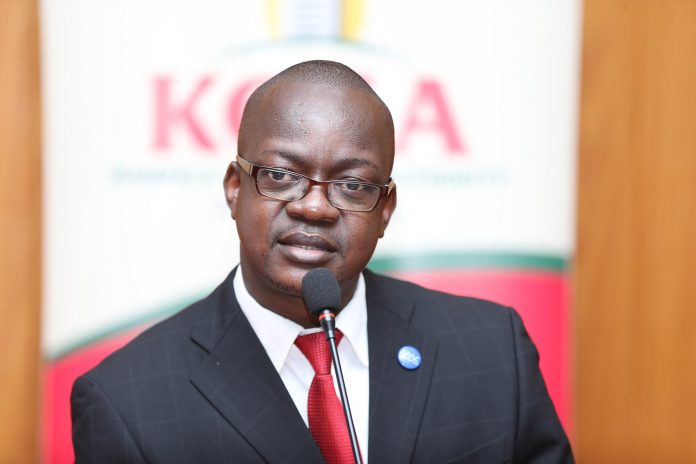
Brig. Ronnie Balya recalled from South Sudan set to return to ISO as DG

Brig. Ronnie Balya. Photo credit/URN.


Uganda’s Ambassador to South Sudan and former Director General of Internal Security Organisation Brig. Ronnie Balya has been recalled from his duty station to Kampala for redeployment.

According to reliable sources in security, Brig. Balya is already in Kampala carrying out some assignments.

Balya served initially as a District Internal Security Officer (DISO) in Northern Uganda and Western Uganda. In 1997, Balya was moved to ISO headquarters where he served in various capacities like Director of Inspectorate, Director Analysis and Director Technical intelligence. In August 2006, Balya was appointed Deputy Director General of ISO.


In July 27, 2010, Balya was appointed Director General (DG) of ISO, replacing Amos Mukumbi who was given another engagement in government as Presidential Advisor. In December 2010, he was promoted to the rank of colonel and February 2014, he was promoted to the rank of brigadier.


 In January 2017, Balya was relieved off his duty as DG-ISO and sent to South Sudan as Uganda’s Ambassador. He was replaced by retired Col. Kaka Bagyenda who sources say is on his way out. Whereas it isn’t readily established why Brig. Balya is returning to replace a man, who replaced him, sources at ISO told Eagle Online that one of the reasons could be the issue of none payment of allowances for operatives for the last six months.

However, other sources said whereas it is true, Brig. Balya has been recalled, it wasn’t established where he going to be placed as it is rumoured that he is heading to Naguru at Police headquarters where he is going to replace Deputy Inspector General of Police Maj. Gen. Muzeeyi Sabiiti.

Before he removed from ISO, there had been a rumour to the effect that Brig. Balya was to replace Gen Kale Kayihura as IGP of police.


Stories Continues after ad

#COVID-19: Uganda patients reach 45 after one person tested positive

Coronavirus victims


#COVID-19: Uganda has registered its 45th patient of Coronavirus after one more person tested positive today.

According to the statement from the Ministry of Health, out of 302 samples tested today, 301 tested negative while 1 person tested positive.

“On April 2,2020, one sample tested positive for COVID-19 out of the total 302 samples that were tested at Uganda Virus Research Institute (UVRS). This brings the total number of COVID-19 confirmed cases in the country to 45. The case is a 22 year old Ugandan female, resident of Nkokonjeru, Wakiso district and wife to a previously confirmed case who arrived from Dubai, UAE on March 20. She did not have any signs and symptoms consistent with COVID-19” reads the statement from Ministry of Health.

Uganda has a total of 1,026 individuals are under follow-up in institutional quarantine while a total of 962 conatcts to the confirmed cases are under follow-up.

Stories Continues after ad

Appointment of Rujoki as CG URA raises questions on powers of the President

Mr. Deus Mukalazi


By Deus Mukalazi


This week the President posted on his twitter handle firing Dorsi Akol as the Commissioner General (CG) of the Uganda Revenue Authority (URA) and replaced her with Johnson Musinguzi Rujoki. Akol confirmed her dismissal also on the CG URA’s twitter handle. The decision has  sparked yet another debate over the President’s power to effect appointments of high-ranking officials during this time when the country is fervently battling the corona virus pandemic.

It’s been argued that the 1995 constitution gives much powers to the President yet according to him a lot of it is concentrated in the legislature – he said so while opening the 20th Judges conference in January 2018.

Over the last 25 years period, various incidents have been happening regarding this contested presidential powers. The notable one regarding appointments being the appointment of Benjamin Odoki as an Acting Chief Justice after he clocked 70 years of age against the advice and reservations of the Judicial Service Commission and the provisions of the Constitution. The Constitutional Court nullified the president’s decision on grounds that it contravened Articles 133, 142, 144, 147 of the Constitution on the position of substantive Chief Justice and his or her appointment and qualifications.

The issue of presidential powers and its limits seems to have again resurrected by his recent disappointing of Akol and appointing of Musinguzi. Section 9 of the URA Act empowers the Minister of Finance to appoint a CG of the URA on recommendation of the Board of URA. This has aroused a number of issues given the manner in which this was done. First, there are those who argue that the President is by implication the Minister of Finance and so he has the powers to make the appointment. Others think this is a grey area considering the laws of delegation as I will show later. Secondly, the Minister appoints the CG on recommendation of the Board of URA. Third, for the appointment to be made there ought to have been a vacancy. In essence the former CG Akol should have either been relieved of her duties, resigned or contract expired for the appointment to be legally made.

Article 99 of the constitution vests all executive powers in the Presidency. Article 99(4) gives the President powers to exercise these executive powers directly or through officers subordinate to the President. Further, Article 113(3) says a Cabinet Minister shall have responsibility for such functions of Government as the President may, from time to time, assign to him or her.  Section 9 of the Uganda Revenue Authority Act gives powers to the Minister of Finance to appoint the CG of URA on recommendation of the Board. Further S.31 of the Interpretation Act is to the effect that were a power is conferred on a minister by any Act, it can either be exercised by the President or the Minister. Therefore, in this case the president seem to have exercised his powers as the chief executive and more so as the minister of Finance.

Reading the provisions of the law above together, some people have argued, the President, even after appointing a subsisting Minister of Finance retains the powers to exercise the powers he delegated. This, in my view, seems to go against the established principles of delegation, and could not have been the intention of the law makers. It’s a cardinal principle of delegation that once a person has delegated his power, he ceases to have the same powers to be exercised concurrently. Once the President opts to exercise the option of delegating his powers to a Minister, he can not purport to retain them. It can’t be the intention of the law makers that a law would create a situation where the Minister Kasaija now can sack the newly appointed CG.

Also, the Interpretation Act does not indicate at what point the President is supposed to exercise the powers conferred upon the minister, is it when the minister is incapacitated or active? The appointment of the CG is regulated by the URA Act and not the Constitution as S.9 of the URA Act provides. It cannot be inferred that the intention of parliament was to give the powers of appointment of CG to the President as a Finance Minister even when the appointed minister is available. The argument that he exercised his powers under 99(4) is saddled with problems and is a grey area that should be put to a litigation test.

However, assuming the President was indeed justified in assuming powers of the Minister, there are limitations. Section 9 of the URA Act requires the Minister to appoint the CG on recommendation by the Board. There seems to be no evidence of involvement of the Board in this appointment. In the case of Gerald Karuhanga v Attorney General, while nullifying the appointment of Benjamin Odoki as Acting Chief Justice, the court emphasised that where the law provides for another body to advise on the appointment by the President, the President cannot bypass this process. Should it be true that the Board wasn’t involved in this appointment, then the appointment is null and void.

Related to the above, the Act further guides that the CG can only be relieved of his or her duties by the Minister after consulting with the Board. This can be for misbehaviour, inability to perform functions of his or her office or any other sufficient cause. Doris Akol, had just served 5 months of her 5-year term which was renewed by Minister Kasaija in 2018. Her contract should have been terminated by the minister upon recommendation by the Board and the process of getting a new CG undertaken by the Board and thereafter recommends to the minister. The appointment of a CG is not the same with ministers.

The laws put in pace to guide and regulate such appointments are not merely procedural. The law makers in putting in place such guidelines are reinforcing the doctrine of checks and balances which is essential for good governance. It’s important that the President follows the law in exercise of his duties as provided for under Article 99 (2) and (3) of the constitution. His powers are not absolute.

Stories Continues after ad