Stanbic Bank
Stanbic Bank
22.9 C
Kampala
Stanbic Bank
Stanbic Bank
Home Blog Page 1021

Uganda joins Extractive Industries Transparency Initiative

OIL PIPELINE

Uganda has joined Extractive Industries Transparency Initiative (EITI), a global standard group promoting the openness and accountable management of oil, gas and mineral resources.

Uganda’s application to join the EITI, was approved by the organization’s board of directors, making it the 54th Member State and the 26th in Africa.

Uganda’s commitment to join the EITI was first made in the 2008 National Oil and Gas Policy and was reiterated in the updated 2012 Oil and Gas Revenue Management Policy. Participation in the EITI is also identified in the 2019-2024 Domestic Resource Mobilisation Strategy. In January 2019, the Ugandan Government approved the decision to present a candidature application, which was submitted in July 2020.

EITI Board Chair, Helen Clark, welcomed Uganda to the EITI community; “EITI implementation can help lay the foundation for transparent and accountable management of the country’s natural resource wealth. We welcome Uganda as an implementing country and look forward to the EITI promoting inclusive public debate.”

He said transparency is key to ensuring that potential revenues from oil and gas production are not mismanaged or lost to corruption. EITI implementation will require Uganda to publicly disclose information such as contracts, beneficial owners, revenues and payments, including payments related to the environment. These disclosures can in turn promote public oversight and debate.

Participation in the EITI is identified in the Government of Uganda’s 2012 Oil and Gas Revenue Management Policy as an action that will help create lasting value from oil and gas revenues. Proven reserves of over six billion barrels of crude oil have been identified in Uganda, of which 1.4 billion is currently deemed to be recoverable. Total and China National Offshore Oil Corporation (CNOOC) are active in the region and share an interest in license areas in the Lake Albert development project. If managed responsibly, expected oil revenues can contribute to national development plans such as infrastructure and social services.

Uganda’s Minister of Finance, Planning and Economic Development, Matia Kasaija, said the decision to join the EITI was informed by the appreciation of the value of transparency as we progress our plans to develop Uganda’s natural resource wealth. We believe that this initiative has the potential to strengthen tax collection, improve the investment climate, build trust among sector stakeholders and help create lasting value from our mineral and petroleum resources.

As a part of the EITI sign-up process, Uganda formed a multi-stakeholder group (MSG) in March 2019, composed of government, industry and civil society representatives.

Civil society advocacy has been an important part of Uganda’s journey to join the EITI. “Civil society has advocated the operationalisation of the policy objectives of joining EITI since the promulgation of Uganda’s National Oil and Gas Policy in 2008 and the Petroleum Revenue Management Policy in 2012,” said Onesmus Mugyenyi, Deputy Executive Director of Advocates Coalition for Development and Environment (ACODE) and a civil society member of Uganda’s Multi-Stakeholder Group.

“It is therefore our pleasure to see that the government has followed through with this policy commitment. EITI implementation provides an opportunity for deepening transparency and accountability in the management of Uganda’s oil, gas and mineral resources. I pledge our total support and commitment in ensuring that the EITI works for Uganda.”

In the wake of the Covid-19 pandemic, increased competition for investment underscores the need for transparency.  While Uganda’s oil industry is still nascent, Total, a founding member of the EITI internationally and a partner in the Lake Albert Development Project, sees only benefit for Uganda in committing to the EITI. Writing in support of EITI implementation, Total E&P Uganda, an active participant in Uganda’s Multi-Stakeholder Group, underscored the importance of contract transparency in contributing to a transparent and accountable sector.

“We look forward to working with government, industry and civil society partners to support EITI implementation through participation in Uganda’s Multi-Stakeholder Group,” said Total E&P Uganda’s General Manager Pierre Jessua.

Uganda’s initial disclosures in terms of the 2019 EITI Standard will need to be made within 18 months of being admitted as an EITI implementing country.


Stories Continues after ad

Gov’t to rebuild demolished St Peter’s Church Ndeeba

museveni visits site

President Yoweri Museveni has faulted the Judges who presided over the matter and their decision which led to demolition of St Peter’s Church, Ndeeba. Museveni said when he visited the scene where the Church was demolished.

The Church was demolished last week following a four-year standoff in Courts of law with a business man Dodovico Mwanje who allegedly acquired the piece of land from relatives of the deceased who reportedly handed over the land for establishment of the Church.

Museveni said the Judges should have limits and understand public interest. Demolishing a church is a curse. Also, ignore reports of those claiming the government demolished the church.

“I am saddened by this incident and I give the church assurances that those complicit will be punished. Even if the church was in the wrong, ordering demolition was extreme. Dialogue would have resolved this matter.” He said

He pledged to invite the Namirembe Diocese Bishop, the Rt. Rev. Wilberforce Kityo Luwalira, and engage with all parties involved in this conflict to find a lasting solution.

“The bottom line is that the Church will retain this land and we shall build a new church. I have now joined this war. I also noticed large groups of people gathering in Ndeeba as I inspected the site. This is wrong. Avoid crowding in light of the Covid-19 pandemic that we are grappling with.” He said

Stories Continues after ad

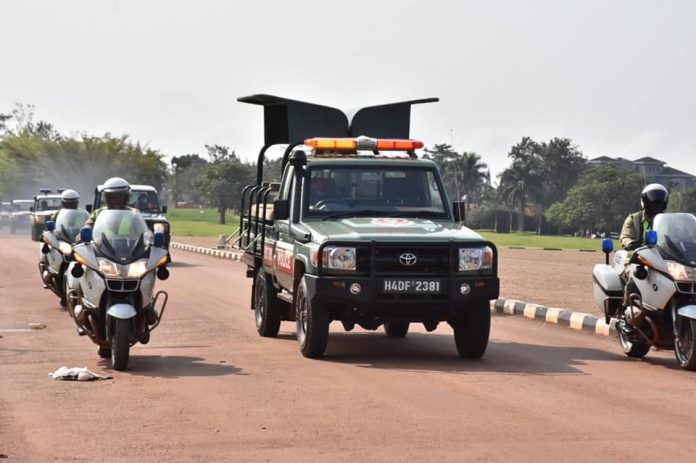
Military police drivers and riders passed out

updf

Uganda Peoples’ Defence Forces (UPDF) Military Police in partnership with Uganda Police Force have passed out 21 defensive drivers and 14 outside riders at Kololo ceremonial grounds.

The Director Human Resources Development (DHRD) of Uganda Police Force, AIGP Brigadier Godfrey Goloba, officiated at the pass out ceremony. He congratulated the trainees upon completion of the course and urged them to prepare their minds for the tasks ahead.

“This training was meant to prepare you for the challenges that may encounter while executing your duties such as driving amidst reckless road users, navigating through traffic jam and maneuvering on narrow roads. With this training and the demonstration exhibited, I guarantee that our visitors or Very Important Persons (VIPs) that you will drive or escort will be safe and enjoy their time while with you,” he said.

He however cautioned that that the drivers and riders would only be useful as long as they are disciplined, take good care of themselves and live a responsible and healthy lives.

AIGP Goloba reiterated the commitment of Uganda Police Force in supporting its sister Force, the UPDF, in specialized training whenever called upon.  He said the roles of the two sister Forces are complementary.

“The Military ensures greater security whereas Police ensures law and order. There cannot be law and order where there is no security,” he said.

The Commandant Military Police, Col Keith Katungi, underscored the significance of the training received from Uganda Police Force saying that it will help improve the capabilities within UPDF’s Military Police and that the training was a critical force multiplier. He stressed the importance of coordinated efforts from various government agencies in ensuring a better living environment for Ugandans.

PTE Layet Lydia, the only female rider, was recognized as the most courageous rider while PTE Anyiku Emmanuel emerged the overall best driver and Lance Corporal Osinde Bernard emerged in the second position.

The function was attended by Officers and militants from UPDF’s Military Police and Uganda Police Force.

Stories Continues after ad

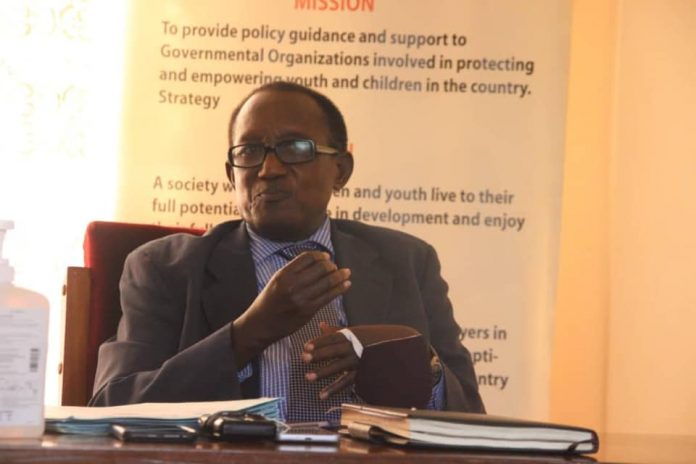
Criminal Division kicks off second phase of Juvenile session

Justice Wilson Kwesiga

The Criminal Division has kicked off the second phase of a month-long juvenile session at Naguru Remand Home. The session was opened by the Head of Division, Justice Wilson Kwesiga.

Justice Kwesiga applauded his team for the great work done during the previous session where 20 cases were successfully handled and called for the same commitment in the new session.

He clarified that these sessions are not only taken to remand homes to avoid the threat of COVID 19 on children but because the law grants children in conflict with the law the right to be heard and tried from anywhere.

He emphasised that the main intention of these sessions is not to sentence the children but make them better human beings.

“In case a child is found guilty, we advise accordingly, engage them, and caution them not to repeat the same. We reconcile the parents too. For example, if a child defiles a child of a neighbor, you must create harmony between them for proper naturing. We don’t need to sentence them to prison,” he said.

The Judge added that the Court considers prevailing circumstances at the time of the commission of the offence.

“Some of these children are orphans, while others are exposed to the infiltrated society. Therefore we make sure that we counsel them and integrate them back to their homes for proper upbringing.”

The Criminal Division Deputy Registrar, Keitesi Mary Kisakye, said all the 34 cause-listed matters are ready for hearing.

Stories Continues after ad

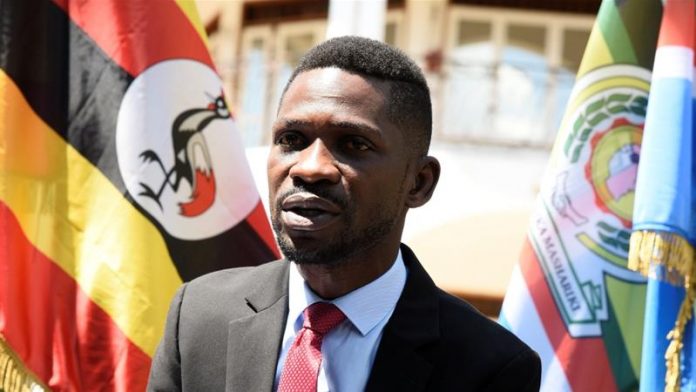
Bobi Wine drags gov’t to court for suffocating his freedom of speech and association

Bobi Wine

Presidential hopeful and Kyadondo East MP Robert Kyagulanyia Sentamu aka Bobi Wine has dragged the Government of Uganda to Court over continuous suffocation of his freedom of speech and association.

Over the weekend, Police and other security organs blocked Bobi Wine and his group from appearing on Mbale BCU FM Radio to sensitise people about his political party, National Unity Platform (NUP) and the 2021 general elections. The MP had paid Shs 1.2million to appear on the two hour show.

Bobi Wine through his lawyer Anthony Wameli wants the Attorney General William Byaruhanga, the Inspector General of Police Martin Okoth Ochola, Mbale District RDC Ogajo Barasa Suleiman, the district police commander (DPC) Fred Ahimbisibwe, the regional police commander (RPC) Wesley Nganizi, , the DISO Lt George Mwonda as well as the OC station, Mbale Central Police Station Kato Arafat to explain why they blocked him from appearing on BCU FM Radio.

“The acts of the respondents, their agents or persons acting under them are not acceptable or demonstrably unjustifiable in the free and democratic society and therefore an infringement on my right to freedom of speech and association and freedom of press and other Media contrary to article 21 (2) and 43(2) (a) and (c) of the 1995 constitution),” reads in part of the suit.

Recently, the chairman of the electoral commission, Justice Simon Byabakama declared that the 2021 general elections will be carried out through media and regulated rallies. He said the move is peddled at curbing the spread of Covid-19 pandemic.

He wants the Court to direct the respondent to personally and individually pay punitive damages for their high handedness and fragrant bleach of the law.

“We are going for the government as well as individual officers who are involved in actions of impunity against our people.  Like we have consistently said, we shall use all avenues, domestic and international, to push for the rights of Ugandans.” Bobi Wine said

He wants the court to issue an injunction restraining the respondents from blocking him from appearing on any radio station in Mbale and other parts of the country.

Stories Continues after ad

We are bordering on too much of a good thing with COVID-19 communication

Rukh-Shana

By Rukh-Shana Namuyimba

The role of effective, consistent, localized and recurring communication in the fight against the coronavirus cannot be underestimated. Governments, health organizations, brands and even individuals have for the past 8 months used every avenue at their disposal to help communities prepare for and adjust to a world that no longer plays by our rules.

It is worth noting that communication focused on behavioural change, socioeconomic changes and psychosocial adjustments is key to how humanity will recover from this crisis. But, like a famous adage goes, the science of doing “Everything in moderation” is as important to what lessons will stick with us and what will be washed away when the storm settles.

In communicating with internal and external audiences, how do companies ensure that their messages are relevant, practical and have a shelf life that will go past the week’s hashtag?

The diary of an over booked employee: For employees whose jobs involve team and project coordination, a calendar that’s fully booked for the next 2 months is expected. But for those who are tasked with the creation, development, testing and selling of products, spending 70% of work hours in meetings is detrimental and frustrating. Do online meetings offer flexibility? Yes. Do they take up less time or ensure more productivity? Not necessarily. Now may be a good time for companies to examine the ways in which we’ve turned internal communication into a never-ending and oftentimes, dragging activity and come up with systems that are sensitive to staff productivity and engagement.

It’s time for links, codes and meeting IDs to take a bow:  If we gave our customers a dollar for every online discussion that’s been marketed to them, they’d have a sizeable piggy bank. With each new engagement, audiences are subjected to eyestrain, data costs and information overload. “The new normal”, “Unprecedented times”, have become fodder for jokes from customers who have heard them one too many times.

A critical part of a holistic communication journey is analysis taking stock of efforts and making any adjustments if necessary; an action that doesn’t have to come at the end of this pandemic fight. Fewer but impactful activities will have deeper and lasting impact as opposed to frequent interactions which mix large panels with surface discussions.

The burnt-out Communications Specialist: As management teams task their Brand and Communications teams to continuously churn out internal, stakeholder and customer communication, they should consider the limits of their team’s creativity and productivity. Whether it be a one liner piece of copy, a press release report or campaign communication, the routine birth of content is a heavy task. Having a clear, phased plan allows your company to focus on dissemination of critical and effectual dialogues and allows your team to create memorable campaigns and content.

As each of us feels the effects of the pandemic, we can agree that the inevitable has already happened and life has indeed changed. But we cannot continue to act from an automated zone. On the one hand audiences are bombarded with online plus audio-visual content and limited time to process it or even apply it. On the other we have overstretched communications teams ticking boxes when what we really need to be doing is going back to the basics of effective communication which is about being deliberate, necessary and impactful.

Stories Continues after ad

Covid-19: Three companies closed after employees test positive

ruth aceng

Three companies have been ordered to temporarily close after some of their employees tested positive for Covid-19.

The Minister of Health Jane Ruth Aceng confirmed the development while addressing the media on the current COVID-19 pandemic in the country and response activities.

The businesses are: Eagle Holdings (4 cases confirmed): linked to the 5th death (46-year-old /Female; Indian), Megha Industries (4 cases confirmed) and Toyota Uganda (3 cases confirmed).

Meanwhile, two arcades in downtown Kampala – Namaganda Plaza and Galilaya arcade also registered positive cases of COVID-19 rising the fear of more infections in downtown Kampala.

The rise in COVID-19 cases has been attributed to non-compliance to health guidelines by members of the public.

Since the first COVID-19 case was reported in Kampala on 23rd March, 2020, a cumulative total of 160 confirmed cases have so far been registered.

It is important to note that of all the eleven deaths so far reported nationally, eight (8) are from the Kampala region alone.

“We would like to appeal to you to adhere to the measures instituted by H.E Kaguta Museveni and SOPs issued by the Ministry of Health to prevent the spread of COVID-19 in Uganda. COVID-19 is real, it is dangerous and it kills like we are now experiencing.” Jane Ruth Aceng urged Ugandans.

Stories Continues after ad

Standard Chartered Bank extends USD50m loan to Jabil to help tackle Covid-19

Standard Chartered logo

Standard Chartered announced that Jabil Inc, a U.S based global manufacturing services company, has become the latest client to tap Standard Chartered’s USD1 billion financing commitment to help companies tackling COVID-19.

Jabil has seen a significant increase in demand for ventilator and personal protective equipment production amid a global shortage. The USD50 million loan will support increased production in manufacturing facilities across Europe and North America, Malaysia, Singapore and China, using Jabil’s extensive existing supply chains.

Simon Cooper, CEO of Corporate, Commercial & Institutional Banking at Standard Chartered, said: “We have been fortunate to support a wide range of companies with this program, with financing ranging from USD500,000 to this much larger facility. Jabil’s mix of technical skills, production scale and extensive global supply chain means that the ventilators they’re producing will reach the front line across the globe quickly.”

Mark Mondello, CEO of Jabil Inc, said: “We are grateful that Standard Chartered shares our commitment to responding to this global pandemic with speed and scale, and these funds will go a long way toward enhancing our production efforts.”

This drawdown by Jabil follows recent disbursals from the programme in markets including Uganda, Kenya, Sri Lanka, Vietnam, Singapore and China, with more transactions in the pipeline.

Standard Chartered made this USD1 billion commitment to provide financing on a non-profit basis to companies making products and services that help the front line fight the virus and its impacts. The programme requires specific use of proceeds, in this case for the purposes of unlocking the ability to maximise impact and speed of delivery.

Products and services being financed under the programme include diagnostic equipment and ventilators, masks and other personal protective equipment, antiviral medicines and conversions into emergency facilities.

Stories Continues after ad

UNBS rolls out simplified standards guidelines for SMEs

UNBS logo

Uganda National Bureau of Standards (UNBS) has intensified standards awareness campaigns amongst Micro, Small and Medium Enterprises (MSMEs) to improve the quality of their products.

With support from DFID through the Commonwealth Standards Network (CSN) project and the lead implementer British Standards Institution (BSI), UNBS simplified and translated key hygiene and labelling standards; US 28 EAS 39:2002: Code of practice for hygiene in the food and drink manufacturing industry and US EAS 38:2014: Labelling of pre-packaged foods – General requirements.

These have been handed over to Uganda Small Scale Industries Association (USSIA) for distribution to MSMEs in various regions of the country in a bid to create awareness on Standards.

During the handover ceremony, the UNBS Deputy Executive Director in charge of standards, Ms. Patricia Bageine Ejalu said that the simplification of standards is going to help MSMEs understand standards better because they are of great importance in ensuring that products and services in Uganda are safe.

Ms.Baigene   further revealed the need to build export capacity for Uganda through certification of all MSMEs’ products, to ensure that what they produce for export is of good quality.

M/s. Veronica Namwanje, the Executive Secretary at the Uganda Small Scale Industries Association (USSIA) emphasized that standardisation and certification is the way to go, however, an assessment done by USSIA revealed that MSMEs need to understand standards.

She thus thanked UNBS and the CSN for the partnership to have the standards simplified and encouraged all MSMEs to enroll for the certification process.

Of the 14,000 brochures of simplified standards guidelines printed by UNBS, 7000 are in the English language and 7,000 in the Luganda language.

The development is aimed at improving market access for MSMEs’ products both locally and internationally.

Stories Continues after ad

New details emerge on Obitre-Gama’s firing

Judy Obitre Gama

President Museveni was forced to fire Judy Obitre-Gama as the Executive Director of the National Identification and Registration Authority (NIRA) after she failed to account for billions of shillings while also failing to deliver the National ID project, new details show.

Museveni in June this year opted not to renew the contract of Ms Obitre-Gama and directed the Internal Affairs Minister Gen Jejje Odong to find a better replacement for the job.

It has now emerged that the President declined renewing Obitre-Gama’s contract after getting an intelligence report detailing how the NIRA ED had personally benefited from a Shs 8.4bn scandal where Shs 2.1 billion was paid out to individual personal accounts of some officials while another Shs 1.3 b was deposited to an account belonging to an accountant.

That money was never accounted for and that was the final nail in Obitre-Gama’s coffin.

The intelligence dossier also gave details of corruption, nepotism, poor performance and incompetence, allegations of massive irregularities in the issuance and replacement of identity cards, exacerbating Obitre-Gama’s precarious position.

“I have been informed that the contract of the current executive director is due to expire. Given the problems faced by NIRA especially relating to the issuance of national identity cards, there is need to identify a new executive director, preferably with legal or information technology background,” Mr Museveni wrote to Gen Odong.

Gama, 50, is an academic who previously served as a lecturer at Makerere University law school and several boards, including that of Uganda Registration Services Bureau, and Bank of Uganda.

She worked as head of legal and surveillance at Uganda Securities Exchange and as a lawyer for the National Environment Management Authority (NEMA)

Stories Continues after ad