Stanbic Bank
Stanbic Bank
17.3 C
Kampala
Stanbic Bank
Stanbic Bank
Home Blog Page 1023

#Covid-19: Museveni bans transport, announces 14 days of lockdown

President Museveni

President Yoweri Museveni has banned movements of both public and private vehicles and boda-bodas transporting people as means of curbing Coronavirus  code named #covide-19 for 14 days.

In his Monday evening address, Museveni only priority sections to work and these include, the medical personnel, pharmaceuticals, agricultural inputs, security, supermarkets, established markets and media.

“Measure number one is to prohibit all people to people movement by everybody including those using their private vehicles, bodabodas, tuk-tuks, etc.  Why?  Two reasons: (i) some private car owners have turned their cars into taxis, transporting the two people we had permitted, assuming that they would be members of one’s family, when in fact they were passengers being charged the exorbitant fare of shillings 50,000/- from Kampala to Jinja” The president said.

Ading “Hence, the problem we were trying to cure of allowing the mixing of people from different sources was not being addressed. Instead, it was taking new forms.  The people with private cars were now the new public transporters without licences and facilitating the dangerous mixing in the process.  Secondly, even more importantly, even if the private car owners had been disciplined and only moved around with only the 2 members of their families, still that movement would be dangerous because we do not know who has the virus now and who does not, given the penetration of the imported cases into the society, short-lived though it may have been.  The ban on privately owned passenger vehicles will take effect from 2200 hours (Ten O’clock ─ Shaaha inna  ez’ekiro), today, the 30th of March, 2020. I would have given the public time to adjust but on more scientific study, it was found that this would be a wrong policy. Why? A longer time would give people time to try and go to the villages. In so doing, they may transfer the sickness. We, would, then, not be curing anything. This freezing of movement will last 14 days from the 1st of April, 2020.  This time it is not Fool’s Day; it is wise-person’s Day.”

Below is the Speech in full

More guidelines on COVID19, preventive measures and the need for a shut down

Countrymen and countrywomen

I am here, to again address you on the issue of the corona-virus. I first, addressed you on this issue on the 18th of March, 2020. Before I addressed you, together with the experts, we had discussed, in depth, the science of this virus. In that study, we had discovered the following characteristics of this virus.

1.   It spreads through inhalation if somebody with the virus coughs (okukororra) or sneezes (okwetsyamura) near you ─ within four metres from you. It will, then, infect you through the inhalation of the rwooya (vapour) of the sick person that would have coughed or sneezed.

2.   The second mode of spreading is when the infected person pollutes surfaces such as tables, door handles, etc. If you touch the polluted surface and, then, touch yourself in the soft parts of the body: eyes, nose or mouth, you also get infected. The virus cannot go through the normal, intact skin of a human being. It only goes through the soft parts mentioned above.

3.   Although the healthy people afflicted may survive, it can kill alot of people that already have other medical conditions such as Aids, blood-pressure, pregnancy, diabetes, sickle-cells, cancer, the elderly, etc. In China, its kill rate was 4.05%.  In Italy its now 11.03% and Spain, its kill rate is now 8.4%.  It even kills the young people in some circumstances, like the young doctor, Li Wenliang, of Wuhan in China, who first identified this problem. He was only 33 years old.

Given its spread methods ─ sneezing and coughing by an inconsiderate and careless person in a cluster of people bunched together as well as an individual’s own carelessness of touching the soft parts of your   body (the eyes, the nose and the mouth) without washing your hands or sanitizing them first, after careful study, we decided that this virus will spread fastest if it gets into large concentrations of people, some of whom may be behaving inconsiderately or carelessly as stated above. We, therefore, adopted the strategy of dispersing any concentration that may provide fuel to this virus.

In my address of the 18th of March, 2020, I put out 13 actions that dealt with this problem, in part, as well as other associated matters.  The 13 measures were:

(1)   Close all the Educational Institutions which accounted for 15 million young Ugandans;

(2)   Suspend communal prayers in Mosques, Churches or in Stadia and other open air venues;

(3)   Stop all public political rallies, cultural gatherings or conferences;

(4)   Banned Ugandans from moving to or through category one (I) countries that had had a large number of corona cases by that time;

(5)   We allowed returning Ugandans provided they underwent mandatory quarantine, at their cost, for 14 days at a venue identified by the Ministry of Health;

(6)   We allowed the non-agricultural gathering points to continue but with SOPs(Standard Operating Procedures) put out by the Ministry of Health; and these gathering points were: factories, hotels, large plantations, markets, taxi-parks, etc.;

(7)   We discouraged the hexagonal, extravagant Ugandan-style weddings; if in a hurry, we encouraged the couples to go for the scientific weddings by the actual stakeholders, accompanied by a few people;

(8)   Burials could not be postponed, but it should be for a few people ─ the concerned homestead;

(9)   With the 33 million farmers, according to the 2014 census, there was no problem because they are dispersed in their farms, plantations, etc.; the only issues to deal with here were the monthly or weekly cattle auction markets (ebikomera); and obutare (food markets); these were suspended;

(10) At that time, we thought that we could continue with the public transport systems of buses, mini-buses, taxis, boda-bodas, etc., provided they were given SOPs;

(11) The discos, dances, bars, sports, music shows, cinemas and concerts were all suspended;

(12) Number 12 was hygiene and enlightened (not kikafiri behavior ) behaviours of not coughing or sneezing in public, no spitting, washing with soap and water or using sanitizers, regularly disinfecting surfaces such as tables, door handles, etc. and not touching your eyes, nose or mouth with contaminated and unwashed hands; and

(13) Ended with nutrition to strengthen the body defence system.

We quickly, however, learnt that some of the actors were not obeying these measures and that, for instance, the returnees from abroad, from the high risk countries, were escaping from the quarantine even when it was mandatory. The ones in self-quarantine were also escaping, e.g. the Chinese that were arrested on the Congo boarder, in Zombo or the returnee from Kisumu that is the father of the Iganga baby that turned up positive that went into hiding. These gaps could cause us serious problems.

These gaps were undermining the strategy of denying the virus the fuel that it could ignite and sustain its expansion by ensuring that there is no match-box and there is no dry grass ─ no virus and no concentrated masses. Therefore, on the 25th of March, 2020, on the 41st Anniversary of the battle of Rugaando, I announced two new measures:

1.   Stopped all passengers coming into Uganda by air, land or water; this affected in-coming planes, buses, taxis or boats;

2.   Also prohibited from entry were the pedestrians ─ people walking on foot from the neighbouring countries.

In all these measures, we were careful to clearly state that cargo planes and cargo vehicles, within Uganda and between Uganda and the outside, should continue with only the crews for the air-crafts and 3 persons per cargo vehicle.

Then, on the 21st of March, 2020, we announced additional measures as follows:

(i)                    All public passenger transport vehicles are stopped and those were: taxis, coasters, buses, passenger trains, tuk-tuks (tri-cycles) and bodabodas;

(ii)                 Secondly, in order to scale down the numbers of the populations in the markets, we announced that only food sellers should remain in the markets; the non-food sellers should suspend their activities.

However, private vehicles could continue but with only 3 people maximum per vehicle. However, ambulances, army vehicles, garbage collection vehicles, etc., would continue.

Since that time, we have been monitoring the situation. It was good we took all these measures. However, there are still windows through which the virus can continue to spread.  As of today, the 30th of March, 2020, 31 Ugandans and 2 Chinese have been confirmed as being positive with the virus.

Almost all of them are imported cases by Ugandans returning from mainly Dubai (UAE), Europe, the USA and Afghanistan.  Only 3 are the ones that received it from the importers. These are: the wife and daughter of the Masaka man and the baby from Iganga whose father had returned from Kisumu in Kenya.  Out of the 33, the number of  eight (8) were intercepted at Entebbe, in the quarantine or, even, at the airport, like the case number one, who was detected by the temperature monitor and another 7 that were first identified by the temperature monitoring system. This means that 14 out of the 33 had already entered the ekibuga (city, town), the lujja (compound) and some had even entered omuunju ─ munyuumba (inside the house) since we did not detect them at the Eireembo (the main entrance) or they escaped from the Eishaazi ─ the holding ground ─ by escaping from the quarantine.  How many other Ugandans did they interact closely with to infect them? That is what we need to discover and soonest.  It is good that those who start feeling the symptoms report themselves, like the case from Hoima did.  However, this disease has two characteristics that make the work of fighting it tedious and quite challenging and need maximum vigilance.

One characteristic is that some of the infected people may not feel sick and may not even know that they are infected. Yet, they will continue spreading the disease, of course, through the carelessness of the general population of, for instance, polluting surfaces and touching oneself in the soft parts of one’s body: the eyes, the nose and the mouth; and sitting very close to one another even if the infected person is not coughing. After further careful analysis, we have come to the conclusion that to be on the safe side, it is better we err on the side of caution than to wait for a possible situation like of some countries where a 1,000 people are dying per day from this disease.

The second characteristic of this virus is that those that are infected, even when they survive, they take long in the hospital. In China, one case took 2 months. This has caused the filling up of all the hospital places even in the countries with advanced medical systems, until a situation where the medical authorities have to decide on who should be allowed to die and who should not.

Therefore, with these cases that had entered in the house, we should not wait for that situation. Incidentally, we now have under quarantine, a total of 839 persons.  Even those that are alleged to have escaped from the quarantine, have all come back. How many people had they interacted with and how careless are they with the sitting close to one another and with the carelessly touching their soft parts? We, therefore, think that there is less risk in taking the risk of the bitter medicine of maximum restrictions for a limited time than gambling by assuming that pollution was limited when we are not absolutely sure. Since we started this campaign of sensitization, if everybody listened by not coughing and sneezing near other people, by not sitting too close to one another when the infected person has got no symptoms and by not carelessly touching oneself in the soft parts, the cases that entered into the house would not have spread the disease. The question, however, is:  “Did all our people listen?”

That is why it is better not to take any risk by being complacent and assuming that everybody took heed when many may have not taken heed. That is why we have decided to take additional measures as follows:

1.   Measure number one is to prohibit all people to people movement by everybody including those using their private vehicles, bodabodas, tuk-tuks, etc.  Why?  Two reasons: (i) some private car owners have turned their cars into taxis, transporting the two people we had permitted, assuming that they would be members of one’s family, when in fact they were passengers being charged the exorbitant fare of shillings 50,000/- from Kampala to Jinja.  Hence, the problem we were trying to cure of allowing the mixing of people from different sources was not being addressed. Instead, it was taking new forms.  The people with private cars were now the new public transporters without licences and facilitating the dangerous mixing in the process.  Secondly, even more importantly, even if the private car owners had been disciplined and only moved around with only the 2 members of their families, still that movement would be dangerous because we do not know who has the virus now and who does not, given the penetration of the imported cases into the society, short-lived though it may have been.  The ban on privately owned passenger vehicles will take effect from 2200 hours (Ten O’clock ─ Shaaha inna  ez’ekiro), today, the 30th of March, 2020. I would have given the public time to adjust but on more scientific study, it was found that this would be a wrong policy. Why? A longer time would give people time to try and go to the villages. In so doing, they may transfer the sickness. We, would, then, not be curing anything. This freezing of movement will last 14 days from the 1st of April, 2020.  This time it is not Fool’s Day; it is wise-person’s Day.

2.   The second category of concentrations are the shopping malls, arcades, hardware shops, which gather alot of people to sell and buy non-food items.  These are suspended for 14 days starting with the 1st of April, 2020.

3.   All the non-food shops (stores) should also close.  Only food stores, stores selling agricultural products, veterinary products, detergents and pharmaceuticals should remain open. The Ministry of Health should work out SOPs for those stores. Many people should not be allowed to congregate there and form lines to buy.  Home deliveries should, instead, be encouraged.

4.   The Super-markets should remain open but with clear SOPs that should restrict numbers that enter and leave the site at a given time and the handling of trolleys within the super-markets.   Alot of people can be infected by handling the unsterilized trolleys within the super-markets.

5.   The established Food Markets in Kampala and the other towns should continue to be open.  However, two precautions must be observed.  One, the distance of four metres to the front, to the left, to the right and to the rear ─ between seller and buyer and also seller and seller must be observed in all the markets. Secondly, the sellers must not go home during the 14 days. They must arrange to stay nearby for that duration. That movement between workplace to home and back, is part of the problem.  How are the people you left at home and how do you move to work if there is no public transport? It is that mixing that we want to freeze ─ between home, enroute and workplace.  Be in only one place for 14 days and we see what is happening.

6.   Saloons, Lodges and garages should also be shut for 14 days from the 1st of April, 2020.

7.   Like the farms, we would like the factories to keep producing because that is the life-blood of the country. However, the danger is in the workers going home and coming back.  It is that daily movement that must be frozen. Let the factory owners arrange for the crucial employees to camp around the factory area for the 14 days.  If they cannot do that, let them suspend production for 14 days.

8.   Construction sites should continue if they can be able to encamptheir workers for 14 days.  Otherwise, they should suspend construction for the 14 days.

9.   The essential services are: the medical, agriculture and veterinary, telecommunication, door-to-door delivery, financial institutions, all media, Private Security companies, cleaning services, garbage collection, fire-brigade, fuel stations, water departments and some KCCA staff should continue to operate.

URA should also not close business on account of not paying taxes in these 14 days. These employers should, however, see whether they can encamp some staff near the workplace for the 14 days, which is the preferred way, or else get a special exemption from the RDC with the concurrence of the District Medical Officer.

10. Cargo transport by train, plane, lorry, pick-up, tuku-tukus, bodaboda and bicycle, within Uganda and between Uganda and the outside, must continue but only with minimum numbers, technically needed as follows:  Cargo ─ Air-craft ─ only the crew; Lorry ─ not more than 3 persons i.e. driver, tonne-boy plus one, etc., as will be directed by the Ministry of Transport, working with the National Task Force on the Corona virus.

11. Gatherings of more than 5 persons are hereby prohibited.

12. Except for cargo planes, lorries, pick-ups and trains, starting with the 31st of March, 2020, at 1900 hours (Saa Moja ya Usiku), there will be a curfew throughout the whole of Uganda.

All other movements should stop. Let people stay in-doors in their homes except for the cargo-transporters. The exemption of cargo transporters does not apply to the bodabodas, tukutukus or bicycles in the curfew hours.  Those should only operate during daylight hours.

13. In order to deal with some unavoidable health issues like mothers in child birth or very sick people, permission can be sought from the RDC to use private transport to take such a person to hospital.  Additionally, government vehicles that do not belong to UPDF, Police, Prisons or UWA, will be pooled and deployed at the District Health Offices, including the divisions of Kampala, with their drivers, staying in tented compounds, ready to help in those health emergencies. Those vehicles will be under the command of the District Medical Officer.

14. On account of this pandemic, some sectors of the economy are suffering, such as the tourism industry, the entertainment industry, the transport industry, etc. However, as I said earlier, new opportunities are emerging in this misfortune.  You have seen how the demand for sanitizers, face masks, bicycles, etc., has stimulated new industrial opportunities.  Working with the IMF and the World Bank, we shall set up a fund in UDB to accelerate industrialization through import-substitution and export promotion. You have seen how dangerous it is for Africa to excessively depend on imports from outside. This is the time to wake-up.

15. We are going to discuss with Banks, electricity companies and water companies in connection with the loans and bills, many people have with these units.  It is not correct to disconnect water or electricity on account of non-payment during this time of shutdown or to seize properties on account of the non-payment of loans.

16. Government workers should also stay at home for the 14 days, except for the Army, the Police, the Health workers, the Electricity, Water and Telephone workers.  Even there, however, SOPs should be worked out for the soldiers, etc., that do not stay in the barracks.  This problem of not staying near the workplace is something I have never supported. At one time, I wanted to shift and stay in Lubiri when it was still a barracks.  The Army leaders, that time, pacified me by turning both Nakasero and Entebbe into barracks, including taking over Nsamizi Hill.  People who do not stay in barracks, should either stay away for the duration of the shut down or camp in the barracks.  The families of the soldiers and policemen should also be controlled moving in and out of the barracks should be suspended and so should the visitors.  Otherwise, we can have a major outbreak in the barracks. The vehicles of the Army, Police, ambulances utilities’ vehicles, Prisons, UWA, etc., will continue to move on orders of the competent authorities.

The Government anti-Corona-virus actions of stopping public transport and other measures have put the drivers and other people out of work.  Besides, many of them live hand to mouth ─ the daily bread. Without those activities, especially in the towns, such people may not be able to buy food.  The Government, after properly identifying these people will distribute food to them in the form of akahuunga (maize flour), beans, powder milk, sugar, salt, etc. In the meantime, I direct the Police to arrest the opportunistic and irresponsible politicians who try to distribute food for cheap popularity.  Those are very dangerous to the health of the people.  When you try to distribute food or money in such a situation, people gather around you.  Many people can be infected in that process.  You will, therefore, have caused the sickness or death of those people.  Anybody involved in that effort will be arrested and charged with attempted murder. Today, Mr. Elumelu sent me US$150,000.  I will use it to buy, may be, three (3) four-wheel drive vehicles to use, by the Ministry of Health to use in this effort.  Those trying to take patients to hospitals, must also stop because they spread the virus in the process. If they have money, let them contribute it to the Task Force to use in a disciplined and safe way. In Mbale, the Chinese donated to me two four-wheel drive Jeeps.  I have donated these to the Task Force of the anti-corona virus.

However, the crucial point is the stopping of the epidemic.  I do not want us to lose millions of our vulnerable people to this wholly avoidable epidemic just on account of indiscipline. What is the indiscipline?

Coughing or sneezing where there are other people; not washing or sanitizing your hands regularly; touching yourself in the soft parts of the body with unwashed hands, the soft parts being the eyes, the nose and the mouth; and congregating in numbers when science is telling us to avoid this wholly avoidable danger, disperse and do not congregate.

The idea, a Sheikh sent to me the verse from Isaiah, Chapter 26: Verse 20. It says: “Go home my people and lock your doors! Hide yourselves for a little while until the lord’s anger has passed”.


30th March, 2020                     –            Nakasero

Date:
Monday, March 30, 2020
Stories Continues after ad

Inside story of how Museveni defeated Mugume bid for BoU Deputy Governor

Adam Mugume


A last-ditch attempt to have Dr Adam Mugume,the BoU Director of Research, take over as the Deputy Governor was nipped in the bud at the last minute by President Museveni.

On Friday,the BoU board convened a hastily arranged meeting following the hospitalisation of Governor Emmanuel Tumusiime-Mutebile.

High on the agenda was discussion on how the central bank would continue to smoothly operate in the absence of both the Governor and Deputy Governor.

The Deputy Governor’s position has been vacant since Louis Kasekende disgracefully retired in February following a scandal-ridden tenure.

At the Friday meeting,James Kahooza,a board member controversially took over the Chairman’s role.

The BoU Act states that the Governor & Deputy Governor are the Chairman & Vice-Chairman of the BoU Board, respectively.

It was, therefore, irregular for Kahooza to chair the meeting.

During the meeting, Kahooza nominated the name of Dr Mugume for the position of Acting Deputy Governor.

It was approved.

Mugume’s appointment sent jitters at the central bank and the larger banking industry as he is part of the inner circle of Kasekende.

A top bank CEO told this website on Friday that the Uganda Bankers Association(UBA),a body that brings together all the commercial banks in the country,was not amused with Mugume’s appointment.

UBA was planning to confidentially petition President Museveni raising red flags over Mugume’s appointment.

Sources familiar with the jockeying for positions at the central bank say that by naming Mugume Acting Deputy Governor on Friday,the BoU Board hoped it would “tie the President’s hands”, and leave him with no option but to retain him.

President Museveni is said to have been furious with Mugume’s appointment, which was done without his knowledge.

To definitely deal with the matter, President Museveni on Sunday announced that he had appointed Dr Michael Atingo-Ego as Deputy Governor.

“Unfortunately for the Kasekende cartel,the Friday appointment seems to have been too little,too late,”a top banker, speaking anonymously,said of the latest developments.

Dr Atingo has previously worked at BoU but left the bank in protest of Kasekende’s work methods.

After leaving BoU,he joined the International Monetary Fund(IMF).

Dr Atingo was also a victim of the toxic battle for control at the Central Bank and him being a Catholic, sharing a religion with Kasekende,did not help his case as he had be edged out in order for Kasekende to assume the position of Deputy Governor.

Stories Continues after ad

Dr. Michael Ating-Ego replaces Kasekende as Deputy Governor as Rujoki takes over URA

Deputy Governor, Dr Michael Atingo-Ego

President Museveni has appointed Mr John Musinguzi Rujoki the new Commissioner General of Uganda Revenue Authority, with immediate effect.

He replaces Doris Akol who has served one term. John Musinguzi is a Senior Presidential Adviser, Investment and ICT. Previously served URA’s Special Revenue Protection Services as Head, Finance and Audit. Holds a BSc, Maths (MUK) and MSc, Computing and Information Systems (University of Greenwich).

He has also forwarded the details of Dr Michael Atingo-Ego to Parliament for vetting for the position of Deputy Governor, Bank of Uganda.

Last week, Mr James Kahooza, a board member at Bank of Uganda appointed Adam Mugume in acting  capacity to replace Dr. Louis Kasekende whose contract ended in January. The news when Governor Emmanuel Mutebile had taken a sick leave.

Mr John Musinguzi Rujoki

Dr Michael Atingo-Ego is a former director of Research at Bank of Uganda before he joined the International Monetary Fund (IMF). He is a close relative of Capt. Mike Mukula, the Vice Chairman of the ruling National Resistance Movement party in charge of Eastern Uganda.

“He is a man of high integrity and he was in IMF in charge of Africa region but above all, he is seasoned” Capt. Mukula told Eagle Online.

Ms Akol in a message to Uganda Revenue Authority thanked the president for giving her the privilege to serve. She thanked the staff for the loyal support.

“His Excellency has just appointed Mr. John Musinguzi as the new Commissioner Genereal with immediate effect.Lets welcome Mr. Musinguzi to the URA family and render him utmost support. It has been an absolute honour and privilege to be your team leader for five and five months . thank you for loving me, for supporting me and for being loyal to me” Ms Akol wrote.

Stories Continues after ad

#Covid-19: Uganda registers 7 new cases

People wearing preventative gears China.

The Ministry of Health has announced that seven more new cases of Coronavirus coded named #Covid-19 have tested positive bringing the total number to 30.

In an official statement, the Ministry of Health has, on Saturday, March 28, confirmed 7 new cases of COVID-19 in Uganda. This brings the total to 30 confirmed cases in the country with no deaths registered,

“Out of 225 samples run today, 218 samples have tested negative for COVID-19,” reads the  statement

Stories Continues after ad

#Covid-19: Ruparelia Foundation excites the needy as it gives free care packages

Ruparelia Foundation in conjunction with Cedric Babu aspiring MP for Kampala Central has  on a tour of Kampala’s central parishes  Kamwokya, Mengo, Kagugube, Bukesa, Nakivubo, Shauriyako, IndustrialArea,Kisenyi and Old Kampala given out care package from Ruparelia Foundation to the needy groups during the Coronavirus outbreak.

The purpose of the tour is not only to show love and support these trying times of Coronavirus, but to also sanitize the local community on what precautions and measures they can do to protect not only themselves and their families, but also the communities in which they live. The foundation is giving out 5,500 care packages to the needy.


Fighting CoronaTogether, Babu says “We are going through a difficult period right now. This is the time for us to show collective responsibility. We have to unite and pull together as communities and follow the guidelines as set by Ministry of Health if we are to get though the crisis.”

Jyotsna Ruparelia co-founder of Ruparelia Foundation says coronavirus does not discriminate against social class, religion or ethnicity. It simply kills. This is the time when we all must know – right from kindergarten going school children to us right up to adults and grandparents.

This is not the time to be ignorant about the virus. We cannot afford to be ignorant.

Joystna Ruparelia and Cedric Babu will be joined by LC one chairmen/ladies of each division and Doctors will also address the communities on coronavirus.

There is also the need to thank His Excellency, President Yoweri Museveni for taking swift and decisive measures to contain the virus, the minister of health, Jane Aceng, Dr.’s, nurses, public health experts and the various security organs for their tireless efforts in trying to keep Uganda safe.

As Ruparelia Foundation basing on our catchphrase “Enriching Lives Together”, for the past seven years the Foundation has worked together with several people championing positive change in different communities across the country to achieve our goal of having improved livelihoods in society.

The foundation works to improve a solution directly with strategic partners from the business, government and non-profit sector. Our focus areas include health care, education, sports, wildlife and environment conservation, disaster relief, startup and general welfare.

Stories Continues after ad

Kasekende Probe: guard reveals more information to IGG

On the spot: Former Deputy Governor Dr. Louis Kasekende.

A former bodyguard to ex-Deputy Governor Bank of Uganda, Dr. Louis Kasekende is said to have revealed detailed information about his boss at the Inspectorate of Government.

The said bodyguard whom we shall not disclosed is said to be a knowledgeable person on how the deputy governor transacted in deals.

According to the sources at the IGG headquarters, the bodyguard, driver and other vital personnel that are part of the wider team the Inspectorate of Government together with State House Anti-Corruption Unit are investigating about the wealth and alleged acquisition of properties while he served as Deputy Governor. Kasekende was yesterday replaced by Dr.Adam Mugume as Deputy Governor in acting capacity.

Sources say many more close confidants of Kasekende are to be summoned.

Earlier this year, a whistleblower  dragged Dr. Kasekende to the Inspectorate of Government over what the whistleblower called non-declaration of assert to the IG and falsification of wealth under pseudo names.

In a document received by the Inspectorate titled confidential notes, corruption against former Deputy Governor Louis Kasekende, the whistleblower says in accordance with the Leadership Code Act 2002, all public servants and leaders are required to declare their wealth to the IGG, but Kasekende didn’t declare his wealth. “He has acquired a lot of money and property in Luzira, Bugolobi, Buloba along Mityana road, and Naguru and evidence is attached to this effect” reads the report. It further continues “Kasekende’s leaked are beyond, he has account in one of the banks in Zambia and this account I will avail the evidence with time.

The whistleblower further alleged that the former number two at the central bank has properties in United Kingdom and Zambia.

Kasekende and other directors at BoU are under investigations by both IGG and State House Anti-Corruption Unit for failure to account part of the Shs478 billion advanced to them during the Crane Bank in receivership. He is also accused of transferring several plots of prime land into his name in order to avoid the inquiry on how he accumulated such wealth which he hadn’t declared to IGG.

The Bank of Uganda officials during their exit meeting with COSASE failed to account for Shs478 billion they say they spent as liquidity support and other intervention costs on CBL receivership between October 20, 2016 and January 25, 2017.

Muwanga in the report says out of Shs478 billion injected into CBL, a sum of Shs157.9 billion had been recovered from Dfcu Bank and CBL Non-Performing assets leaving an outstanding balance of Shs320.8 billion at the time of writing the report. CBL at the time it was sold to Dfcu Bank at Shs200 billion only needed about Shs157 billion to remain afloat.

This website has however, learnt that there are several attempts by those close to Kasekende to influence the outcome of the investigations by involving the Speaker of Parliament, Rebecca Kadaga through of the influential figure in Busoga so as to reach out the Deputy IGG  George Bamugemereire.

Stories Continues after ad

Breaking : Adam Mugume replaces Kasekende at BoU in acting capacity

Adam Mugume

Adam Mugume has been named acting Deputy Governor replacing Dr. Louis Kasekende whose contract ended in January.

Dr. Mugume is is the Executive Director Research and Policy. He was named after a board meeting this afternoon and this comes after the news that Governor Emmanuel Mutebile had taken a sick leave.

He is an economist with  PhD from Oxford University. He taught at Makerere University School of Economics for a long time.


Stories Continues after ad

COVID-19: Police shoot two for defying Museveni’s directive

Alex Oryem, one of the two Boda-boda men who were shot yesterday for defying the #Covid-19 directive. Photo credit, Daily Monitor.

KAMPALA- Two men were on Friday injured in a shoot out to stop them from riding on the same motorcycle which President Museveni had ordered to stop in an attempt to stop the spreading of COVID-19.

The Kampala Metropolitan Spokesperson Patrick Onyango said the two “tried to attack the police officers” after stopping them.

Alex Olyem and Kasim Ssebude who are construction workers were moving from Seeta to Namugongo.

They are now admitted at Mukono general hospital.

President Museveni issued a directive suspending public transport including Boda Boda, taxis and buses in an attempt to stop the spreading of the virus that is wreaking havoc in the world.

Uganda currently has 18 cases of COVID-19 and President Museveni has ordered the closure of all the border points.

Stories Continues after ad

Law school don hits at Nawangwe’s administration over shrinking freedoms

Prof. Jean Barya


The Head of Department Public and Comparative Law, school of law Makerere University Prof. John Jean Barya says that the situation in Makerere University is unprecedented.

Prof. Barya says that Makerere University has never had a situation where university administration seeks to directly antagonize both staff and students. “What we have been having is that students and staff having been having disputes with government in terms of responsibilities of government in public institutions”.

Adding “But now it is management that is seeking to antagonize both staff and students by removing their rights”

He said  that the management has either never heard of rights or if they have heard about it, they don’t fully appreciate them and therefore, it is the responsibility of both staff and students to make sure that this ground which is being lost has reclaimed.

Barya argues both students and staff to work together to roll back the anti-democratic and anti-human rights stunts of management.

He recommends that efforts should be made to strengthen both the consciousness and organization of both political organizations and civic society. “If this is not done, these rights will remain only on papers. Rights are only realized if actively promoted and defended”

“There is a need to directly challenge the existing regimes so that they are forced in the long run to act in the interest of the people.” Barya adds.

Prof. Barya said this when he was delivering his key note speech on a public lecture at Makerere University organized by the school of Law’s Network of Public Interest Lawyers, the East Africa Network of University based Law Clinics and The Pan African Lawyers Union of Tanzania under the them: The shrinking space on the Right to Freedom of Expression and Assembly.

He furthermore says that the challenge can be undertaken by different actors and only political parties and limited civil societies and that the role should be extended to religious institutions, student organizations, cultural organization and trade unions.


Stories Continues after ad
#Covid-19: Boda boda riders defy ban on public transport

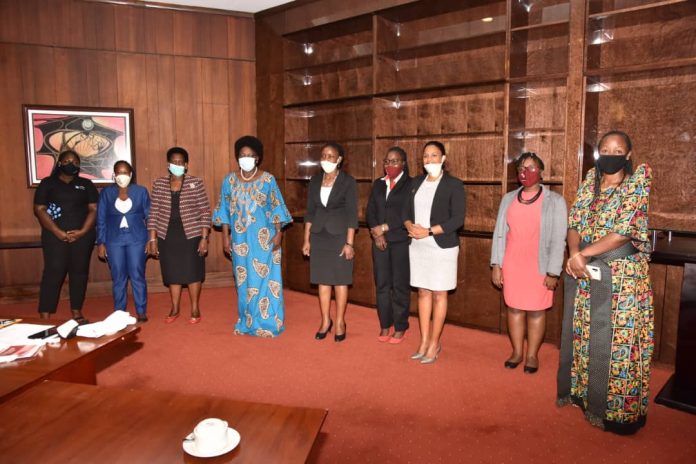
Aboda boda man riding a passenger

Several boda boda riders have defied the ban on public transport, a day after President Yoweri Museveni banned all public means.

President  Museveni on Wednesday evening issued an order suspending the use of public transport in order to short-circuit the spread of the highly contagious COVID-19 disease.

The vehicles suspended include all taxis, all coasters, minibuses, buses, passenger trains tuku tuku and boda bodas.

However, by Thursday morning, several boda boda riders were seen carrying more than two people along the by-pass, while many others around Kamwokya and the town centre.

Isaac Arinaitwe, a boda boda rider who was carrying two people, says he worked in the night and was only returning home at 7:00 am.

He says the presidential directive was good in stopping the disease, but many of them have to work to meet their dues.

“My children are at home, I usually make money daily, but stopping boda boda’s at this time, you will affect us. At least they should let us carry say only a person and observe hygiene” Arinaitwe said.

Adding “I ordered for a safe boda for a trip from kamwokya to Kololo, and a safe boda fully clad on safe boda uniform came and was willing to transport this directive”

The rider, alone told me that he is still working and they have not got any directive from the company to stop working.

“Even taxify is still on, I have so far carried four people since morning, but the company has not told us to stop, and the app is still on” he said.

Meanwhile taxi drivers have all observed the ban despite protesting it.

From Kawanda to Bwaise and Kamwokya areas there were no taxis operational. At the Northern bypass, there were also no taxis, but most private cars and trucks.


Stories Continues after ad