Stanbic Bank
Stanbic Bank
18.5 C
Kampala
Stanbic Bank
Stanbic Bank
Home Blog Page 1026

Parliament queries the delayed payment of South Sudan traders

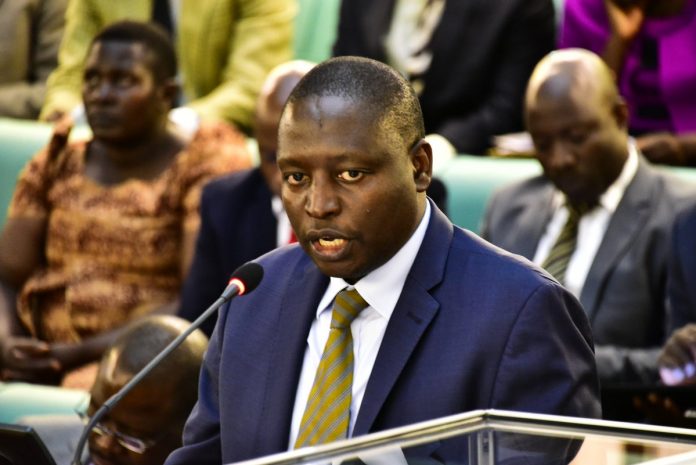
Minister David Bahati

Parliament has directed the Minister of Finance, Planning and Economic Development, Matia Kasaija, to explain the delay in compensating the majority of Ugandan traders who supplied the Government of South Sudan during the civil unrest in the country between 2013 and 2015.

Legislators from across the political divide expressed their displeasure over the continued delay by the government in paying out the Shs76 billion that was approved by the House in Financial Year 2019/2020.

“We need the minister to understand that this issue is serious, so consequently we shall not process any more work from the Ministry of Finance until the Minister has come and explained why he has not paid these traders,” said Speaker Rebecca Kadaga.

The Speaker issued the directive to the Finance Minister during the plenary sitting on Thursday, June 25, 2020, after the State Minister for Finance in charge of Planning, Planning, David Bahati, was unsuccessful in presenting a plausible statement on the compensation.

Speaking to the matter, Bahati said Parliament had appropriated Shs76 billion to pay Ugandan companies verified by South Sudan, adding that however, the current hindrance was a petition in court by the traders.

“Last week we got communication from the Attorney General that the said companies have gone to court. I do not think it will be possible now to clear those resources in the last one day remaining. We are now in court, which is one of the challenges facing the payment,” Bahati said.

The Speaker said the item had been on the Order paper since April 2020, adding that the court case “could be a strategy to avoid paying”.

Kasilo County MP, Elijah Okupa, said the traders had rushed to court following disappointment that the government had failed to pay them even after Parliament had appropriated the funds.

“Government could end up losing more money if these businessmen win the court case, because this could mean double payment on the part of the government,” said Okupa.

Henry Kibalya alluded to internal misunderstandings within the finance ministry, for delaying the payment of the verified traders.

“Madam Speaker, we have information that within the Ministry of Finance, there is a battle between the ministers. They have refused to pay simply because they have information that some people are beneficiaries who do not want others to benefit,” Kibalya said.

He said the finance minister (Kasaija) ought to give the House reasons as to why the payments for Ugandan businesses-persons who operated in South Sudan and were verified, have stalled.

While meeting a Select Committee of MPs who visited Juba as part of their investigations into the payment of the Ugandan traders on Tuesday, 30 April 2019, the Speaker of the Transitional National Legislative Assembly of South Sudan, Rt Hon. Anthony Makana, said South Sudan was committed to paying Ugandan traders who supplied goods.

South Sudan’s Deputy Minister for Finance and Planning, Goc Makauc Mayol, told the same committee on 6 May 2019, that the Government of South Sudan had established a committee to verify the Ugandan traders claiming compensation for supplying goods to South Sudan before and after the 2013 civil war.

During a plenary sitting on May 29, 2019, chaired by the Deputy Speaker of Parliament, Jacob Oulanyah, Bahati said that only companies that dealt with the South Sudan government would be paid, and that private traders who did not directly supply the South Sudan government would not receive any compensation.

Stories Continues after ad

Uganda’s second licensing round: Joining Africa’s next oil & gas frontier

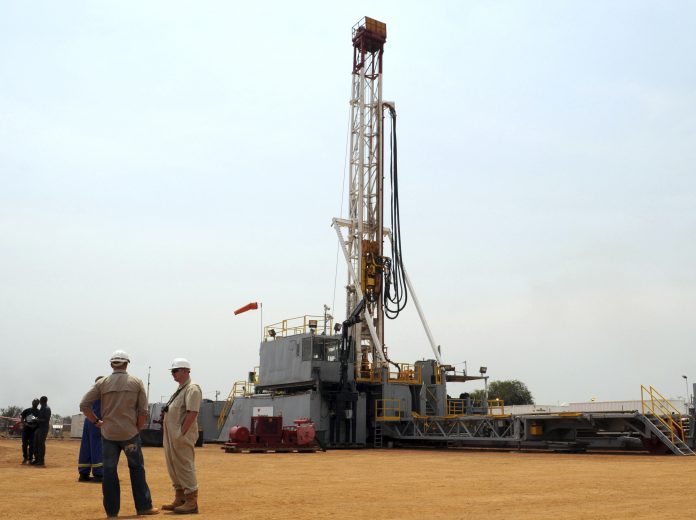
Workers are seen at an oil exploration site in Bulisa district approximately 244km (152 miles) North-West of Kampala January 20, 2012. Uganda said on January 27, 2012 the proposed sale of stakes by UK-based explorer Tullow Oil in its fields in the east African country to France's Total and China's CNOOC had been delayed by disagreements over protective clauses. Picture taken January 20, 2012. REUTERS/Stringer (UGANDA - Tags: POLITICS BUSINESS COMMODITIES EMPLOYMENT) - RTR2X2Y2

The agreement puts an end to a long-standing capital gains tax dispute with Ugandan authorities

Among the few ongoing licensing rounds on the continent this year is Uganda’s Second Licensing Round, announced by the Ministry of Energy and Mineral Resources last year. The deadline for submitting the application for qualification on the five blocks on offer in the Albertine Graben is September 30th, 2020.

The acreages on offer have become even more attractive since Tullow Oil announced the sale of its entire stake in the Lake Albert Development Project earlier this year to Total. The agreement puts an end to a long-standing capital gains tax dispute with Ugandan authorities, and opens up the way for the upstream development of up to 200,000 bopd by Total and CNOOC, along with an oil refinery and an oil export pipeline to through Tanzania.

As Total and CNOOC develop billions of barrels of proven oil reserves near Lake Albert, the government is committed to attracting more investment into the development of its hydrocarbons potential through the Second Licensing Round.

The Uganda National Oil Company is now also inviting interested entities to establish joint-venture partnership and participate in the licensing round in order to apply and secure an exploration license. All exploration and production companies with a proven track record of operating petroleum exploration licenses are eligible for such a joint-venture with UNOC. The joint-venture proposal guidelines are accessible after sending a company profile and power of attorney to jvexploration@unoc.co.ug. The joint venture proposals will need to be submitted no later than 5pm local time on July 24th, 2020.

“Partnerships between National Oil Companies and International Oil Companies is a great opportunity for successful transfers of skills and technology. The call for such joint-venture partnerships in Uganda is a clear example of forward-thinking from the Uganda National Oil Company and the government. Uganda has a talented and trained youth who is eager to participate in the development of the country’s hydrocarbons sector, and partnerships are the way forward to achieve that,” declared Nj Ayuk, Executive Chairman at the African Energy Chamber.

The African Energy Chamber encourages all eligible exploration and production companies in Africa and abroad to participate in the round and form joint-ventures with the Uganda National Oil Company. This is a proven way to both develop local content by bringing in key expertise and capital into Uganda but also to efficiently enter a proven hydrocarbons province by directly partnering with the national oil company.

Stories Continues after ad

#COVID-19: Vision Group to lay off more senior staff

Robert Kabushenga

Vision Group Chief Executive Officer Robert Kabushenga has announced that the media conglomerate is set to lay off more senior staff, as the Coronavirus pandemic continues to wreak havoc in the jobs industry.

In an email to all staff, Mr Kabushenga the Vision Group Board of Directors met on June 25, 2020 and decided to render some jobs and positions redundant.
In his email to all staff, Mr Kabushenga says the company has been experiencing significant challenges due to the #Covid-19 pandemic.

“As a result, a number of jobs and roles have been rendered redundant. For that reason, the Board at its meeting on June 25th decided to terminate the services of those whose jobs and roles have been affected in this manner, “reads the email.

It adds that: “The concerned staff will be informed on Monday by their respective Heads of Department. The decision was a difficult one to make but the current market circumstances are even more difficult and complex compounded by the business uncertainty.”

This is the second time that Vision Group is laying off staff on grounds that the business is not doing well due to the effects of the Covid-19 pandemic.
After the first lay-offs, MPs questioned why such a profit-making government entity was laying off staff.

Stories Continues after ad

Without women at the top, gender equality remains a façade

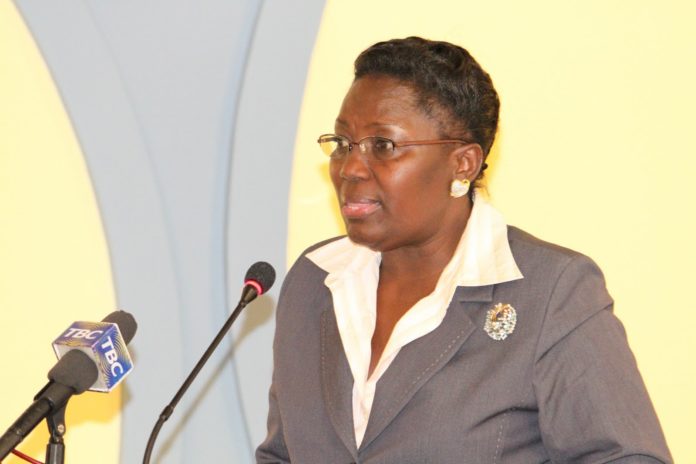
Speaker of Parliament, Rebecca Kadaga.

BY: Georgia Tumwesigye and Patricia Munabi Babiiha

With only one woman occupying a position among the top 7 offices in the land, gender equality remains a myth as Ugandan women are shunted to periphery while men continue occupying offices that move and shake things in the country. Two studies by the Forum for Women in Democracy (FOWODE) titled, “Reality Check:

Women in Leadership Positions in Uganda,” that interrogates the position of women in the public sector and, “Women Shattering the Glass Ceiling: Experiences from the 2016 Elections in Uganda,” have been quite eye opening reading on the status of women in the country.
According to Uganda’s Order of Precedence as set out in the Constitution and the protocol guidebook published by the Ministry of Public Service, Uganda’s top Seven offices are President, Vice President, Speaker of Parliament, Chief Justice, Deputy Speaker of Parliament , Deputy Chief Justice and the Prime Minister.

All those offices, with the exception of the Speaker, are occupied by men.
To further contextualise the magnitude of this marginalisation, it is important to note that positions like that of Prime Minister, President and Chief Justice, have never been occupied by a woman.
That speaks volumes about the perceptions surrounding women and the roadblocks they face when they attempt to challenge the status quo by going for the top offices in the land rather than settling for the crumbs thrown at them.
When Ms Miria Kalule Obote declared that she would be running for the presidency in the 2006 General Elections, becoming the first woman to run for the presidency, she was in effect upsetting the applecart, triggering an avalanche of snide remarks.

Other women who have given a shot at the presidency have been dismissed as sideshows, as Maureen Kyalya, who contested in the 2016 General elections can attest.
And where women have been given a chance to occupy top positions, they have undoubtedly impressed in the fight to ensure gender equity and equality.
As Speaker of Parliament, Ms Rebecca Kadaga has been at the forefront of ensuring legislation and policies that are crucial in the fight for the space of Ugandan women.

Some of the critical pro-women legislation that has been passed under the leadership of Speaker Kadaga include the Prohibition of Female Genital Mutilation Act; a piece of law that criminalises the barbaric act of cutting female genitalia.
Ms Kadaga also led Parliament in ensuring that the Public Finance Management Act has a clause stipulating that all Ministries, Departments and Agencies (MDAs) must have a Certificate of Gender Equity and compliance (CGE) before their budgets are passed.
The Certificate of Gender equity and compliance is an important piece of legislation because it requires MDAs to meet a 50% score of gender and equity budgeting before their budgets are passed by Parliament. The rating for CGE is conducted by the Equal Opportunities Commission (EOC).

Ms Kadaga has been pulling all stops to have the Marriage and Divorce Bill passed but the legislation has faced staunch opposition from the Executive, meaning that Parliament still faces an uphill task to have the Bill passed.
Women MPs, backed by Ms Kadaga, have also been very vocal about the need to change succession laws in Uganda to amend legislations that impede the protection of the rights of women and the girl child’s right to inherit the property of a deceased relative.
The Succession Amendment Bill (2018) and the Sexual Offences Bill (2015) are two important legislations that were drafted to eliminate these and other negative laws but attempts to amend them have faced stiff opposition from the Executive.

Ms Kadaga has also been a key supporter of the Uganda Women Parliamentary Association (UWOPA), a parliament caucus comprising of all women MPs but open to male members as associates or honorary members.
Formed during the National Resistance Council (NRC) in 1989, UWOPA has been very critical in fighting for legislation and policies that advance the cause of women empowerment.
As Deputy Chief Justice, Her Lordship Laeticia Kikonyogo (RIP), who doubled as the Head of the Constitutional Court, also excelled well in her other judicial duties. She is the only woman to have ever served as Deputy Chief Justice.
As Vice-President, Specioza Wandira Kazibwe was very passionate about matters affecting women, choosing to take on the bull by its horns and openly speak about issues that affect women using very unequivocal language.

In her controversial way, Ms Wandira Kazibwe spoke out against polygamy, especially in the Islamic religion where it is more entrenched, cheekily arguing that muslim men who marry four women cannot satisfy them and therefore force them to cheat.
During her tenure as Vice-President, Ms Wandira Kazibwe was also very vocal on the issue of domestic violence, urging women to train in martial arts in order to defend themselves from their violent husbands
Among the women that have occupied top positions, it is perhaps Speaker Rebecca Kadaga who has run into stronger headwinds in taking up an office previously ‘ring-fenced’ for men.
Ms Kadaga has not shied away from challenging men to maintain her position, further giving women down the leadership ladder hope that there is always light at the end of the tunnel.

To win the race for Speaker in the 2011 elections, Ms Kadaga defeated opposition kingpin Nathan Nandala Mafabi (FDC Budadiri West) and in 2016, she had to put up a strong fight to secure the nomination from the National Resistance Movement (NRM), winning a spirited challenge from Deputy Speaker Jacob Oulanyah.
The crisis of lack of women at the top ladder of the leadership of the three arms of government is best captured by a newly released report by the Forum for Women in Democracy in Uganda (FOWODE), a non-partisan women organisation.
The report titled: Reality Check: Women in Leadership Positions in Uganda, which is a second edition of one that was first published four years ago, notes that with only one woman out of the 7 heads of the three arms of government, Uganda remains stuck with “male-centered leadership”.

“Just as it was four years ago, only 1 out of the three heads of arms of government is a woman. At the level of the deputies of heads of Executive, Judiciary, and Legislature, women representation remains non-existent. This image of male-centered political leadership is ingrained and normalized in leadership cultures of other public and private institutions, as this report will demonstrate later, “reads the report.

The report puts particular emphasis on how critical it is for Speaker Rebecca Kadaga to be the lone woman in a male dominated leadership of the three arms of government.
It notes that: “It is notable that although women remain marginal at this level of leadership, the choice of a female Speaker as the head of one of the three arms of government is an important step towards having women in critical leadership positions.”
“Having served as a Deputy Speaker of Parliament and now in her second 5-year term as the speaker of the House, Ms Rebecca Kadaga remains the most senior ranking woman in the country. Her presence is a pointer to women’s ability to lead in top leadership, despite many forms of resistance they encounter along their managerial paths,” says the report.

The report also hailed the Speaker also lauded the Speaker for leading reforms in the Parliamentary rules of procedure to promote gender balance in the leadership of committees of Parliament.
As the report notes, the“institutionalized masculine norm in the three arms of government” is best illustrated by images captured at important state functions like Budget Day and the State of the Nation Address.
The image of President Museveni alongside Chief Justice Bart Katureebe, Speaker Rebecca Kadaga, Deputy Speaker Jacob Oulanyah, Prime Minister Ruhakana Rugunda and Deputy Chief Justice Owiny-Odollo sends a powerful message; without women at the top, the fight for gender equity has just started.
For the MDAs,it is one step forward, two backward
Though progress has been made in attempts to have women occupy leadership positions in Ministries, Departments and Agencies (MDAs), there is still a lot of work to do if the gap between men and women in leadership is to be narrowed further.

A new report titled: Reality Check: Women in Leadership positions in Uganda, shines a spotlight on how women are faring in Uganda’s leadership positions in MDAs, contrasting the current situation with 2014, when a similar study was last conducted.
The report was conducted by the Forum for Women in Democracy (FOWODE), a non-partisan organisation fighting for women empowerment in Uganda.
In majority of the MDAs, women remain relegated to junior-level positions, and, as the report points out, the “absence of women at these [top] managerial levels negatively impacts women’s participation in critical decision-making fora of ministries.”

Though, as the report reveals, it is not all dark and gloom for the fight for gender equity and equality, it is not lost on anyone that despite the laudable baby steps that have been taken to ensure that women are on the same footing with men in terms of leadership in MDAs, the war yet to be won.
Sadly, the report found out that on average, female staff representation in the 18 ministries that were studied in 2014 stood had reduced by 2% from 39% in 2014 to 37% in 2018.

Despite slight improvements in the composition of women in some individual ministries, there were no deliberate and systematic attempts to recruit female staff to bridge the gender gaps in human resources, explains the report.

The writers, Georgia Tumwesigye is the Programme Officer, Women and Leadership Programme [WLP] Forum for Women in Democracy (FOWODE) while Patricia Munabi Babiiha is the Executive Director, FOWODE.

Stories Continues after ad

Makerere suspends admission of Dental Surgery students over failure to meet minimum requirements

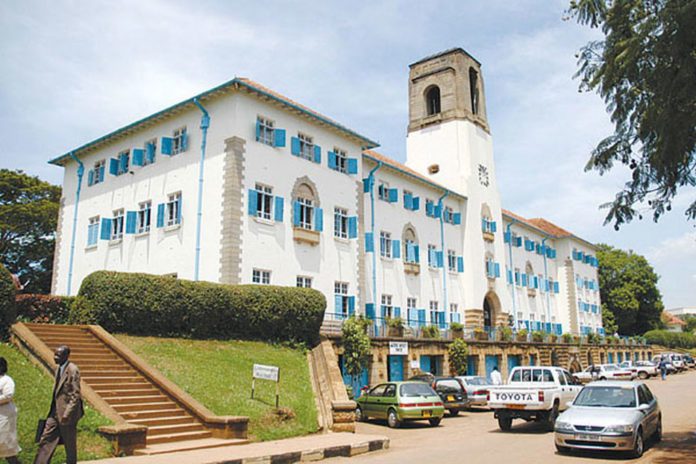
Makerere University Administration Building.

Makerere University has deferred admission of Bachelor of Dental Surgery (BDS) students following guidance from the Joint East African Medical and Dental Council.
In February, Makerere University was ordered to stop the admission of dental students over dentistry’s failure to meet minimum requirements for training of students. This followed the third joint inspection of medical and dental schools and teaching hospitals in Uganda.


The inspection which was rolled out in seven universities offering medical and dental courses executed by a team composed of the chairpersons, registrars and the chairpersons of the education committee of the EAC partner states medical and dental councils. The officials saw a number of gaps which need to be bridged for production of well qualified medical officers and dental surgeons.


“Makerere University shall not admit any new dental students for the academic year 2020/2021 until a re-inspection by the joint EAC partner states’ medical board and councils is carried out at the university’s cost and approval given.”


According to a statement released by the University’s academic registrar, Alfred Masikye Namoah, the University is making good progress to address the issues and meet the requirements by the Council for the next inspection expected in July 2020.
“In the meantime we recall the advert for the Bachelor of Dental Surgery and advise all applicants for Private Sponsorship for 2020/2021 Academic Year to adjust/amend their applications with other choices available.” Reads in part of the statement
Masikye said candidates admitted to the Bachelor of Dental Surgery programme on government sponsorship for 2020/2021 Academic year will be shifted to other choices that they applied for on their application forms and where they meet the cut-off points for Makerere University.

Stories Continues after ad
Pierre Nkurunziza laid to rest in Burundi

The casket containing the body of Camir Nkuruziza.

Former President of Burundi, Pierre Nkurunziza has been buried in the capital, Gitega.

Nkurunziza who died on 8 June 2020 was expected to hand over power to the newly elected president of Burundi, Evariste Ndayishimiye who won May 20 elections as the country entered the post-Nkurunziza era.

Upon his death, the government said he died of cardiac arrest. Nkurunziza who ruled for nearly 15 years was scheduled to be crowned the ‘Supreme leader of patriotism’.

The government has urged the public to be on the roadsides and give him respect as his hearse travels from Karusi hospital where he died, to Gitega stadium, for the last honours.

Nkurunziza’s term as president began on 26 August 2005 and he soon adopted a number of popular policies. He presided over the reconstruction of the Burundian state on the basis of the inter-ethnic compromise enshrined in the Arusha Accords which mandated the partition of state positions between Tutsi, Hutu, and the minority Twa ethnic groups.

Nkurunziza’s second term saw rising discontent with his leadership. Outdoor jogging was banned in June 2014 out of fear that group exercise might be used as cover for political meetings. Dissent came to a head with the public announcement on 25 April 2015 that Nkurunziza would stand for a third term in the presidential elections scheduled for June that year.

This appeared to be contrary to the term limits established in the Arusha Accords and sparked widespread protests in Bujumbura and elsewhere which led to violent confrontations. However, the Constitutional Court ruled on 5 May that the projected third term was legal. The protests then escalated and dozens were killed.

A military uprising was attempted on 13 May 2015 by soldiers loyal to Godefroid Niyombare but collapsed after extensive fighting in Bujumbura. Assassinations of opposition politicians and critics took place and it was reported that detained protesters were tortured or raped at so-called “black sites” by regime loyalists. Despite the instability and a continuing opposition boycott, the elections took place in July and Nkurunziza was re-elected for a third term.

Nkurunziza’s third term saw the country’s increasing isolation in light of international condemnation of the repression which accompanied the 2015 unrest. The East African Community and African Union attempted to mediate the conflict unsuccessfully and Nkurunziza’s regime became increasingly isolated. Fearing an outbreak of genocidal violence, the African Union attempted to dispatch a peacekeeping force to Burundi in 2016 but this was blocked by Nkurunziza.

Nkurunziza withdrew Burundi from the International Criminal Court in 2017 and advocated constitutional reforms which would allow longer presidential terms which were approved in a disputed referendum in May 2018. However, in June 2018 he announced that he would not be standing for a fourth term and that he would consequently step down in 2020.

He endorsed Évariste Ndayishimiye. The elections took place in May 2020 and resulted in a large majority in favour of Nkurunziza’s candidate. However, the elections occurred against the backdrop of criticism of Nkurunziza’s response to the COVID-19 pandemic in Burundi during which representatives of the World Health Organization (WHO) were expelled. Election monitors from the East African Community were also kept out.

Stories Continues after ad
MTN-Uganda appoints Ibrahim Senyonga as the Business Unit General Manager

Ibrahim Senyonga

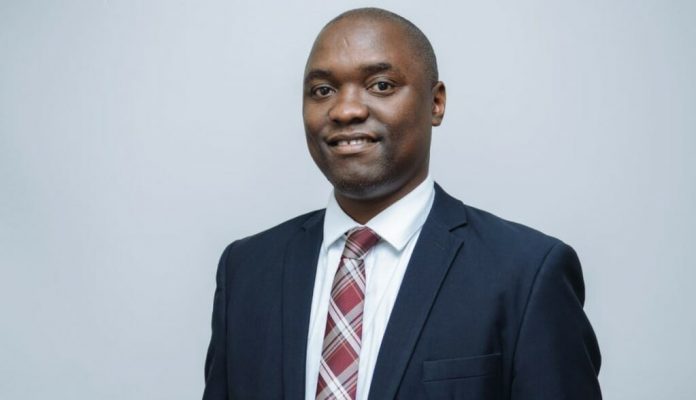
The telecom service provider, MTN Uganda has appointed Mr. Ibrahim Senyonga as General Manager for the company’s Enterprise Business Unit (EBU.

According to a statement released by MTN, Senyonga is one of the new members on the MTN Uganda leadership team joining as the General Manager for the company’s Enterprise Business Unit (EBU), a department that focuses on driving Business to Business sales for MTN.

“He brings to MTN over 16 years’ experience from the banking sector where he served several roles ranging from Regional manager at DFCU bank, Head of Retail banking and Acting Executive Director at KCB among others. Throughout his career, Mr. Senyonga has won more than 13 outstanding performance awards”. Reads in part of the statement

As he transitions from the banking to the telecom sector, Mr. Senyonga observes that telecommunication remains an important sector that is relevant to the growth of all sectors being at the center of the paradigm shift in how businesses operate as communication and digital services continue to be more embedded in the needs of society.

As the leader of a team that serves MTN’s vision to become the preferred connectivity solution partner for businesses within the Telecom footprint, Mr. Senyonga is responsible for developing compelling value propositions for Enterprise Business as well as creating and implementing strategies to drive corporate sales revenue and customer satisfaction with the support of a highly motivated winning team.

Mr. Senyonga comes with deep experience in Strategic Governance, Strategic Planning and Leadership, Business Development and Relationship management, Sales Channels development and expansion, Risk & Operational Control management.

His academic credentials include; an MBA in Finance from University of Leicester (UK) and a Bachelor’s degree in Business Administration from Makerere University, along with various certificates inclusive of one in Economics from OXFORD University (UK) and Aquis Accredited Asset and Liabilities Management from INSEAD (France).

Stories Continues after ad
Speaker Kadaga fires her top aide

Speaker of Parliament, Rebecca Kadaga has reportedly fired her Principal Personal Assistant David Kamaali

The Kamuli Woman MP has this time fired her long serving political aide who was working at parliament as Principal Personal Assistant.

The causality is David Kamaali whose crime Eagle Online has learnt is that he was allegedly to have held a meeting last weekend with met a gentleman from Western Uganda and others trying to fight her in Kamuli.

The said meeting was actually a hoax. Sources say the said individual has never traveled to eastern Uganda in a long time. However, Kamaali was given marching orders on Tuesday.

“The Principal Private Secretary to the Speaker, Peter Busiku was called by the boss and told to type a sacking letter which Clerk to Parliament, Jane Kibirige, quickly appended her signature”.

But the Kamaali man had already run to Kamuli before picking the letter. He is reportedly trying to use Dr Apollo Kazungu, a reknown power broker in the district , to prevail on Kadaga.

Our informers said some MPs like Maurice Kibalya are begging the Speaker to make her rescind the decision to fire Kamaali saying it has implications in Kamuli politics.

Kamaali joins a list of many public servants whose careers have been cut short at parliament
Others include her recently recruited Press Secretary Sam Obbo who has been placed on forced leave.
Her former PPS Cosian Opata has endured Katebe in parliament for years now as Kadaga has failed to sack him yet doesn’t want him to be deployed.
Edwin Nsadu, the son of former minister late Basoga Nsadhu was chased embarrassingly and a one Ms Sophie.

Sophie was replaced by Daniel Kizito who was also fired within less than a year

Stories Continues after ad

Africa: In the fight against  #COVID-19, an unsung  continent

Mr. Solomon Zewdu

Two months ago, when the peak of the pandemic passed in China and moved to the United States and Western Europe, epidemiologists tried to predict where COVID-19 would hit next—and hit hardest. Many thought Africa would become the next high-risk area, but when COVID-19 eventually arrived on the continent, most of the dire predictions were way off.

Today, the continent is the least impacted region in the world according to the World Health Organization (WHO), with less than 5% of reported cases and less than 1% of all deaths, despite being 17% of the global population. (By contrast, the U.S. is 4% of the global population but has suffered 25% of COVID-19 deaths.)

Of course, the pandemic isn’t over and things are evolving, but the predictions missing the mark so widely has left modelers and public health experts scratching their heads. Why has Africa witnessed a much milder pandemic than elsewhere?
People have proposed many theories. Some point to Africa’s relative youth: While nearly 95% of COVID-19 deaths in Europe were people over 60, Africa’s median age is only 19, and 60% of the continent is under 25. Others suggest Africa’s low case counts are a mirage, and that we aren’t seeing the true data because of limited testing capacity and mortality tracking. There is a lot, the argument goes, that we still don’t know.

Here’s my sense of the issue: What we don’t know about Africa and COVID-19 is far less important than what we do know. Because the things we do know are amazing and important and have surely contributed to Africa’s overall success in weathering this disease.

We know, for instance, that in January, even as many Western nations hesitated, Ethiopia began intensive screening at Addis Ababa airport. We also know that Africa CDC created its COVID-19 task force on February 5, before the continent had a single case. We know that Rwanda became the first African nation to lock down on March 21st and that many other African countries soon followed: South Africa implemented its comprehensive lockdown when it had only 400 cases and two fatalities. (With a similar-sized population, Italy had more than 9,000 cases and 400 deaths when it acted.)

In short, when the threat of COVID-19 arose, almost all 55 nations on the African continent acted swiftly to stop its spread. They did so in the face of great economic risk—more than 80% of Africa’s population work in the informal sector, often living on daily earnings—and with far more limited resources than the United States and Europe. And because those regions had to focus on their own crises, Africa responded, for the most part, alone.

African heads of state deserve much credit, but this swift and effective response was only possible because of the support and sacrifice of the people. Tens of thousands of health workers fanned out across the continent, taking temperatures and screening for the disease. In research labs and businesses of every size, people got to work. Scientists in Senegal developed a $1 COVID-19 testing kit and used 3D printing to make ventilators. In Nigeria, tailors sewed masks and personal protective equipment (PPE).

And of course, millions of everyday African citizens did their part, too. Many stayed indoors, halting the normal rhythms of their lives at great personal cost. Some struggled to get prescriptions refilled or receive routine health care. Others lost jobs and income. But so far, the continent has by and large averted disaster.
There are three lessons, I think, the world can take away from this remarkable story.
The first is obvious, and it’s that screening, tracing, and social distancing measures work, especially when implemented quickly. It’s widely agreed that South Africa’s strict lockdown bought critical time to prepare health systems and flattened the COVID-19 curve.

The second lesson involves Africa’s recent history. The continent’s experience in fighting other outbreaks has helped it fight this one. For example, Sierra Leone and Liberia used what they learned during the 2014 Ebola epidemic about building contact tracing networks and quickly implemented them to track COVID-19. In other places across the continent, people readily adopted non-pharmaceutical interventions despite PPE shortages, which people in Western countries were slow to do.
Third, and finally, Africa in the age of COVID-19 has shown the world a powerful and counterintuitive fact: Nations don’t necessarily have to be wealthy to stay healthy. Of course, a strong economy helps build a strong health system. But smart policies, early action, committed health workers, and engaged communities matter just as much.

This doesn’t mean it’s time for complacency now. Numbers are rising and it could be some time before a safe and effective vaccine is developed and widely distributed. The story of this pandemic is far from over, and Africa’s leaders and citizens must continue to chart a course that protect lives as it rebuilds economies. Still, the continent’s performance so far is an early bright spot. Africa deserves the world’s recognition and is a reason to be hopeful as we move forward.

Dr Solomon Zewdu
Deputy Director for Global Development in Ethiopia & Africa
Bill & Melinda Gates Foundation

Stories Continues after ad

I am not on the run from Parliament inquiry! Businessman Allibhai blasts MPs for defaming him

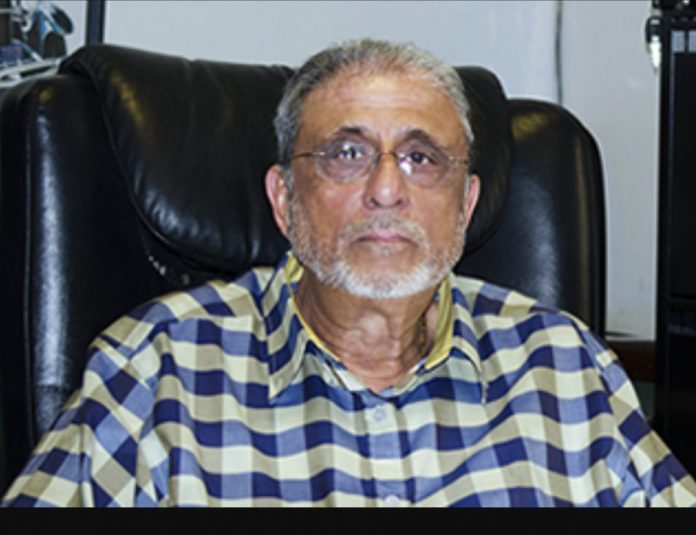
Mr. Mohammed Allibhai accuses the MPs of engaging in defamatory rhetoric against him (PHOTO/File).

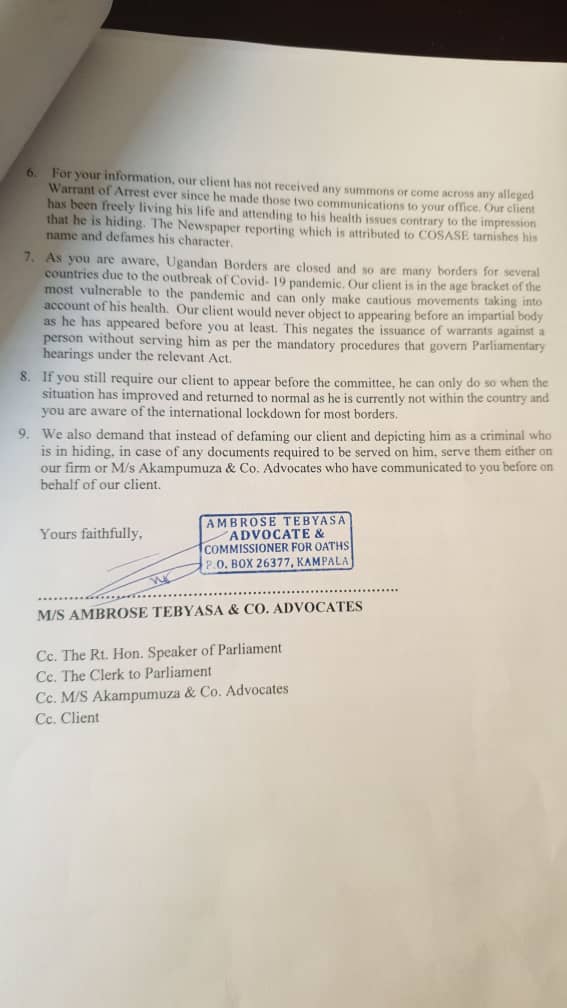
KAMPALA – Businessman Mohammed Allibhai has blasted the Parliamentary Committee on Commissions, Statutory Authorities and State Enterprises on notice over defamatory remarks depicting him as a criminal.

Mr. Allibhai, a Ugandan businessman, through his lawyers of Ambrose Tebyasa & Company Advocates, wants Cosase to discontinue the investigations arguing that they openly contravene the law.
Mr Allibhai, in a June 19 letter asserts that stories published in local media on June 16 over allegations of failing to appear before the committee was aimed at tarnishing his name, instigated by opponents.

The letter adds that the lawyers have on behalf of their client taken note of deliberate and sustained campaign that is “riddled with publishing false, malicious and defamatory articles” against Mr Allibhai.
In a letter to Cosase chairman Mr Kasozi the lawyers say that on 18th March 2020, they wrote to the Honourable Speaker of parliament and a copy of the letter on Cosase vide our reference No, AT/MAL/09/2020 reacting to a Newspaper report that parliament was investigating their client in respect of some properties that had been subject of court proceedings.

They add that another letter to Cosase dated 13 March 2020 raised serious issues as to the legitimacy of the investigations in view of the fact that the matters under investigation were a subject of court proceedings and within the exclusive mandate of the courts of law of the country.

“It was further highlighted that the intended investigations had the effect of being contemptuous and subjudice to various court processes and ultra vires of the powers of Cosase and parliament generally,” the lawyers wrote.
“Our client has obtained credible evidence that he has variously been depicted as a criminal by the committee within and outside Uganda even before any investigations have been made which casts doubt on the impartiality, credibility and transparency of the committee,” reads the letter written to Cosase dated June 19.

“The allegations that our client is hiding are not only unfortunate but extremely unfounded, a legally represented person who continually communicates to you can’t be hiding. As you are aware, Ugandan borders are closed and so are many borders for other countries due to Covid 19 pandemic. Our client is in the age bracket of the most vulnerable to the pandemic and can only make conscious movements taking into account of his health,” adds the letter in part copy of which PML has seen.

The lawyers add that their client would never object to appearing before an impartial body as he has appeared before it at least and that this negates the issuance of a warrant of arrest against him before serving a person, and without serving him as per the mandatory procedures that govern the parliamentary hearings under the relevant Act.

They have advised that if Cosase still require their client to appear before the committee, he can only do so when the situation has improved and returned to normal as he is currently not within the country due to the international lockdown for most borders.

“We are also demanding that instead of defaming our client and depicting him as a criminal who is in hiding, in case of any documents required to be served on him, serve them either on our firm or on M/S Akampumuza & Co advocates who have communicated to you before,” the letter adds in part.
Mr Allibhai last appeared before the MPs on September 11, 2019, in his capacity as Chairman of the Association of Expropriated Properties Owners Limited where he indicated that he was managing more properties on behalf and on instructions of the original proprietors who are in Canada and Europe.

He told MPs that after returning to Uganda in 1991, he was three years later given powers of attorney by owners to help in the repossession process because they were scattered in Canada and the United Kingdom.
He denies any foul play in the process.

Stories Continues after ad