Stanbic Bank
Stanbic Bank
19.9 C
Kampala
Stanbic Bank
Stanbic Bank
Home Blog Page 1028

Covid-19: Kyambogo University indefinitely postpones G=guild elections

KYAMBOGO: The university main administrative block.

Kyambogo guild elections have yet suffered another setback as the university authorities’ indefinitely postpones voting for the third time.

Students were going to polls today to choose their leaders however, in a statement issued by Mildred Tibananuka’ the Kyambogo University Dean of Students, the elections will not be held until the quarantine days end.

This has been done following the address to the nation by President Yoweri  Museveni announcing closure of all educational institutions by Friday March 20, 2020 for thirty days.

The guild elections which had been scheduled for today Thursday March 19, 2020 have been postponed indefinitely.

Then the Vice Chancellor again extended elections to 19th march 2020 due to the fact that there were some candidates who had not adhered to the electoral commission rules of submitting the photos which had no symbols of party or pressure groups.

He had requested all the aspiring candidates to submit their photographs without political party or pressure group symbols by 10am Monday 16th march 2020.

Vice Chancellor had said the failure to do this was leaving the University with no choice but to print the ballot papers without their photographs.

Stories Continues after ad

Coronavirus: Museveni orders for closure of schools and churches for one month 

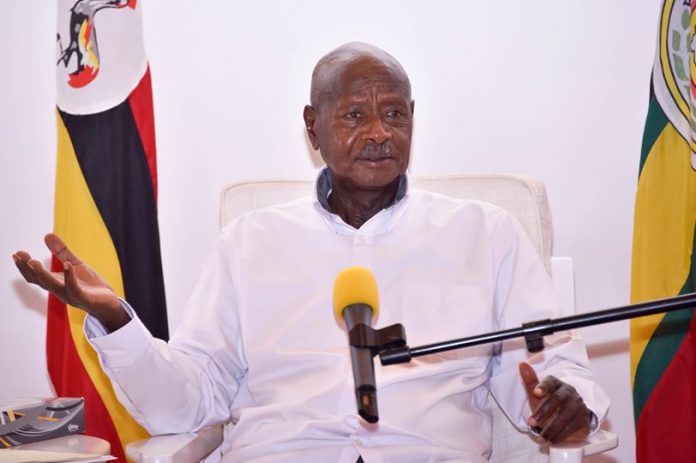
President Yoweri K. Museveni


President Yoweri Museveni has ordered for closure of all schools, churches for a period of one month effective from Friday March 20, 2020.

Museveni made directives during a televised state of the nation address at State House Entebbe. The directive followed the outbreak of Coronavirus which exploded in China’s Wuhan City in Hubei Province.  The virus is averred to have claimed over 5000 lives with over 200,000 people infected globally out of whom 67,000 have recovered.

Museveni said Uganda has over 15 million young people in schools and higher institutions. “Since we have a big number of people dealing with other diseases, we have to ensure this enemy doesn’t find a pile of dry grass and ignite”.

“The dry grass is the large gatherings that include students, these 15 million Ugandans are in schools. It is wise that we temporarily close schools primary, secondary and tertiary starting with Friday mid-day so that we deny the virus” he said.

With immediate effect, the president also suspended all church prayers and urged pastor to opt for a televised preaching in a bid to stop the virus from spreading.

“Hotels, Markets and other businesses will remain open but with standard operating procedures of regular washing of hands and temperature detector machines” he said

 “Up to today, Uganda has not had any cases of Corona virus.  There are countries that have suffered greatly like Italy, Malaysia, and San Morino among others. With immediate effect we ban the movement of Ugandans who have gone to or through.”  He said adding that Ugandans should not plan to travel to or through countries affected by the virus.

Ugandans seeking to return to the country will not be stopped including those coming from high risk countries. But they will have to pay the cost of their quarantine in government designated facilities for a specified time.

The president also directed that burials should be conducted by relatives around since it can be postponed for one month.

As recommended by WHO, Museveni urged Ugandans to avoid close contact with people suffering from acute respiratory infections, Frequent hand-washing, especially after direct contact with ill people or their environment and staying away from unprotected contact with farm or wild animals.

 “People with symptoms of acute respiratory infect practice cough etiquette of maintaining distance, cover coughs and sneezes with disposable tissues or clothing, and wash hands.” He said

He said that he had decided to close institutions of education before a single occurrence of Coronavirus Uganda because had not observed what happens in the affected countries. The faster we run the better”

“The next concentration we shall deal with will be the religious concentration in church gatherings, mosques and they will be closed temporarily for one month for further management of this virus”

He said Ugandans coming in from outside from Belgium, Germany, Spain, Norway, Australia, Malaysia, Pakistan, Italy will not be barred but they will be quarantined at their own cost.

Museveni also said funerals are a danger point and therefore encouraged burials to be conducted by immediate family members  “We can’t ban burial but we request the burial is done by the immediate family members and other rituals done later. If the person is suspected to have died of Coronavirus, the state will take over the burial”

Museveni also warned that Ugandan style of wedding brings together a pentagon or hexagon of crowds that can be a source of great danger. Weddings and therefore, the wedding should be suspended for 32 days. Museveni also said monthly markets will be suspended for 32 days even though buying of crops and other items can continue at homestead level, without gathering in groups.

He further suspended the use of public transport unless it private transport. “The next front line is public transport. The danger is clear here. The advice here is to avoid travel unless it is absolutely necessary. If you don’t have your own car, don’t travel”


Below is the address in full

Address on the Corona virus (COVID 19),guidelines on preventive measures

Countrymen and Countrywomen,

Greetings to you all.

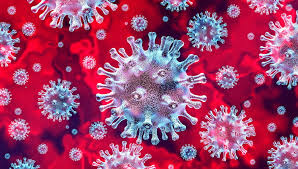
Today, I have come to address you on the issue of the Corona virus, abbreviated as Covid19.  They call it corona because, under the micro-scope, it looks like a crown (ekiruunga, engure).  This is a new virus but it belongs to the family of the common-cold (Senyinga, Rubyamira) group of viruses. It makes some people very sick because, being a new virus, all of us do not have immunity against it because we had never been exposed to it.

Fortunately, after listening carefully to our scientists and after watching commentators in the countries where it is already active, it seems to have two characteristics that will help us to survive it and defeat it.  Characteristic number one, is that it does not kill many of the people it infects.  Out of the approximately 150,000 people that have been infected world-wide, only about 5,000 have died, which works out at 3%.  With Ebola in Uganda, the percentage of the people dying was 67%.  Secondly, this virus enters the body only through the soft parts of the body: the nose, the eyes and the mouth.

It cannot go through an intact skin like some of the diseases used to: yaws, leprosy, etc.

This, therefore, means that even when you get near a person with the virus in his/her body, he/she can only infect you if he/she sneezes (Okwetsyamura) or coughs (Okukororra) near you so that the tiny and invisible bimira (mucous from the nose) or spittle (machwaante) enter your nostrils or those infected materials from the body land on a surface (a table, a chair, a door handle, a hand kerchief, etc.) where the virus can stay alive for 3 hours and you, then, touch it and, then, touch your soft parts of the body (the eyes, the mouth and the nose). It is this characteristic that makes it very infective.

The Cabinet, under my Chairmanship, on Monday, the 16th of March, 2020, sat and decided as follows:

Although the kill ratio of the virus is not very high compared to, for instance, Ebola, this is if the victims are in perfect health. With the healthy young people, for instance, some information says that an infected person may not even know that he/she has any problem.

She/he may defeat the virus without even knowing that it ever attacked him or her.  The real danger to society, however, is for old people, 70 years and above and people with other diseases they have been surviving with.  Such diseases are like: TB, HIV, diabetes, hypertension, etc. It is these that will be very sick or even die. Since we have a very large number of people living with HIV (1.4 million), having diabetes (800,00), hypertension (4.8m), TB (100,000 per year), we must do everything possible to ensure that this enemy does not come here, does  not find plenty of dry grass piled up and ready for flaming.  What is the dry grass that can help to start and sustain fire of a corona-virus epidemic? It is the big masses of people, gathered together and in close proximity.

What are these masses of people that are gathered in groups that can easily aid the spread of the virus? They are the following:

1.   The students. The NRM has promoted education.  As a consequence, today, there are 10.7million children in the Primary Schools; 2m children in the Pre-Primary Schools; 2 million students in the Secondary Schools; 314,548 students in the Universities and Tertiary Institutions.  This is a total of almost 15 million young Ugandans, distributed in 36,285 Primary Schools (Government and Private), 7,308 Pre-Primary Schools (Government and Private); 5,553 Secondary Schools (Government and Private) and 49 Universities and 1,543 Tertiary Institutions (Technical Schools, Teacher Training Colleges, Vocational Schools), etc., etc.  This is a total of 50,688 points with concentrations of 1,000 or more persons each.  When I visited Masaka SS in Masaka Town, it had 4,000 pupils without counting the other non-student people staying in that compound. It is wise that we temporarily remove these concentration points by closing all the Primary and Secondary schools as well as all the Universities and Tertiary Institutions for one month, starting with Friday, the 20th of March, 2020, starting at mid-day.  All these institutions, without exception, should close so that we deny this virus those concentrations.  The 42 million Ugandans are divided into about 8million homesteads. Once the Educational Institutions population goes home, they will disperse into these 8million homesteads that have much less concentrations.  If the 15million were to disperse equally into the 8million homesteads, each homestead would take one and a half students. Since we cannot have a half a student, let us correct to the nearest whole number and we end up with 2 students per each homestead.  It is a smart way of avoiding these concentrations in the face of this danger. I have decided to close the Educational Institutions even before the occurrence of a single corona incident because I have observed the situation in other countries.  Once the epidemic breaks out, there is so much stampede that the first suspect to be affected is transport.  You have seen how Airports were clogged with people.  That crowding is perfect ground for new infections.  Let us, therefore, move early to avoid the stampede.

2.   Once we deal with the concentrations in the Educational Institutions, the next concentrations that we must deal with are the religious gatherings: prayers in Churches, in Mosques, open air prayers and services on Fridays, Saturdays and Sundays. In the interests of our people’s health, these should be suspended for a month with immediate effect.  Why with immediate effect?  The answer is, a question of logic:  “What if a person that is not yet infected today with the virus is infected tomorrow, Thursday the 19th of March, 2020, was to be infected in the last Service that had been called “to pray for the last time?” How would God forgive us and how would we forgive ourselves?”  When it comes to health, it is better to be a coward and be on the side of caution.  If there is no danger after one month, that will be good. If there was danger, we would have avoided it. The Prayers will continue but in homes. The Religious leaders can use the TVs, Radios stations to continue preaching. His Holiness, Pope Francis, as usual set a good example of enlightenment on this by abandoning his customary preaching in St. Peters’ Square and is instead, using the TV.

3.   Then the next category of mass meetings are the political or cultural ─ Public rallies, conferences, elections, etc.  All these are hereby forbidden for 32 days with immediate effect.

4.   Up to today, the 18th of March, 2020, Uganda, by the mercy of God, has been spared by not having even one case confirmed of the corona-virus. There has been many false alarms that our laboratories have proved false. However, there are countries in the world that have had many cases. We describe these countries as category one countries in terms of the epidemic.  These countries are: Italy, France, South Korea, China, USA, United Kingdom, Netherlands, Switzerland, Sweden, Belgium, Germany, Spain, Norway Austria, Malaysia, Pakistan and San Marino. We, with immediate effect, ban all out-bound movement by Ugandans to or through these countries, again, for 32 days.  Foreigners going to those countries are free to do so provided they do not intend to come back within the prohibited time.  We extend our sympathies to those countries and commend them for fighting on the behalf of the human race.

5.   We cannot stop Ugandans coming back from abroad, even from the category one countries that I read above.  However, such Ugandans will be put in a mandatory quarantine in a designated place but they will pay the cost for their institutional quarantine ─ food, etc.  If they want to avoid that inconvenience or cost, they can sit out the storm in the country of their temporary abode.

6.   The next points of mass concentrations are the non-agricultural work places: factories, hotels, large plantations, markets, taxi-parks, etc.  These should continue functioning but with SOPs (Standard Operating Procedures) put out by the Ministry of Health. These will include: compulsory hand-washing by all persons who enter or exit those work places, anybody with symptoms of sickness should not be allowed access for any reason, by the employers installing temperature monitors. The Ministry will publish the detailed SOPs as part of the Statutory Instrument to be signed by the Minister of Health with immediate effect.

7.   Then, the issue of Uganda-style weddings that bring together a pentagon of groups: the clan members of the bridegroom (Kishweera); the clan members of the bride (Kishwerwa, Omugore); the maternal clans of the two couples (Obukojja – Obwihwa); the school alumni of that couple; and the neighbours and friends. These tend to be big gatherings of people coming from the 6 points of the compass. This multi-directional source of the Mbagga attenders, can be as source of great danger. It is, therefore, decided that the wedding of this type should be postponed for 32 days from today. If, however, the couples intending to marry are really in a hurry, they could go for a purely scientific wedding, only involving the core stakeholders who are: the bride-groom, the bride, the best-man, the assistant to the bride (matron), the Priest (or the CAO), etc., as long as the number is less than 10 people.  The scientific marriage could, then, later, at an appropriate time, be followed by the Uganda-style one. Maama Janet and myself, used the scientific one in 1973 and we have not regretted.  The “Corona-virus” that time was the Amin regime. Much, much later, with adult children and grand-children, Janet and myself, were able to celebrate the 40th anniversary of our marriage the Uganda-style with the whole Rwakitura compound full of people, with our grand-children as the brides-maids. The impatient intending couples could look at this model.

8.   The other occasion that gathers alot of people is a funeral.  Again, relatives, friends, associates, neighbours, etc., turn up in big numbers.  Again, with this virus, this is a danger point.  Many people could be infected there.  We cannot ban or post pone burials for 32 days. It would not be rational.  We, therefore, recommend that the burial is done by the relatives who are nearby.  They should be the ones to Kuziika (to bury).  Then the mourning (the kukungubaga – ekyosi) could be later when the rituals could be done. This may combine both science and culture.  Most importantly, it would be safe for the participants. If the deceased is, however, suspected of dying from the corona-virus, the State will take over and bury the person in the scientific way without the involvement of the family as we did for the Ebola victims. We should not replicate the lack of enlightenment that was exhibited in West Africa where the ritual of washing dead bodies was maintained even when people were dying from Ebola.  The consequence was that the “bathers of the dead bodies” ended up dying themselves in service of a non-scientific cultural practice. By confronting this disease with enlightened, scientifically based actions, we shall defeat it as we did with Ebola three times, with Marburg and with AIDS.

9.   The other big category of Ugandans are the farmers ─ the crop people, the cattle keepers and the fishermen. These account for 10million families according to the 2014 Census, with a population of 33 million people.  These, however, may not be a problem by themselves because they live in scattered homesteads and do not allow much concentration of persons.  If they are not pulled by the Churches and Mosques or by politicians for political rallies, they will go about their most useful activities in their dispersed form that is not a danger to themselves or to others.  However, they should all observe the hygienic practices recommended in this and subsequent communications. The Technical Committee on Health should, however, study more the issue of the fishermen. Although they fish separately, they live in concentrated landing sites. The Technical Committee will evolve the appropriate SOPs.  With the other category of farmers (cattle keepers and cultivators), the other danger area are the monthly markets. These should also be suspended for the 32 days. Buying of crops and livestock (cattle, goats, chicken, etc.), can go on but from the homesteads. They do not have to congregate.

10. The next frontline with this virus is public transport ─ the boda-bodas, the taxis, the buses, the mini-buses and the trains.  Everybody can see, the clear danger here, is of many people sitting next to one another in the confined space of the vehicle from Lira to Kampala etc.  Therefore, the advice here is: “Do not travel unless it is absolutely necessary, if you are using public transport”. Additionally, the companies that operate these means of transport should be given mandatory SOPs by the Ministry of Health: hand-washing, not allowing sick people on board, temperature monitors etc.  With these pre-cautions, public transport will continue.  However, in the event of an outbreak in a given locality, public transport in that area will be forbidden and the area will be isolated.

11. The next frontline of fighting the virus is to stop the merry-making ─ the discos, the dances, bars, sports, music shows, cinemas and concerts.  These are very dangerous gathering points with the virus around. Drunkards sit close to one another.  They speak with saliva coming out of their mouth. They are a danger to themselves.  All these are suspended for a month.

12. With these measures taken to deny the virus mass concentrations of Ugandans, the next area to look at is Hygiene.  The virus, according to the facts known so far, spreads by okwetsyamura (sneezing) and kukorora (coughing) whereby, through your micro-mucous (ebimira) or your spittle (otuchwante), you pollute the air around you and the virus can now enter the nose of the nearby people through breathing.  That is why it is important that anybody with a cough or cold should not go into public. You should self-isolate yourself or be isolated by force, if you are not responsible enough to govern yourself for the general good.  Even at home, always cough or sneeze into a handkerchief which you should frequently wash, dry and iron with a hot flat-iron or use a disposable tissue which you should then, either flush in the toilet or incinerate in a Sigiri. Do not spray the public or your family with your mucous or spittle through primitively sneezing or coughing without precautions or blocking your output in the manner suggested.  Once the individuals control coughing and sneezing, then the next danger point is touching surfaces with infected hands: tables, door-handles, telephone hand-sets etc. Here, the answer is to cough and sneeze into the tissue which you destroy so that your hands are not contaminated.  In any case, you regularly wash these hands. Therefore, your hands do not pollute the surfaces.  With money in markets and Banks, the Ministry of Health will publish SOPs governing that aspect, including disinfecting the coins, using mobile money, using online purchases etc.  Once you avoid open coughing and sneezing and you wash your hands regularly, then you will not contaminate the surfaces ─ the tables, the door handles etc.  That will protect the public. The virus, even if you have it, will remain with you until you get healed. It is good that for some time now, we have stopped the practice of shaking hands and hugging. There is also the side of everybody protecting oneself.  As you heard, the virus only enters the body through the soft parts of the body: the mouth, the nose and the eyes.  Even if the surfaces are contaminated with the virus and you touch those surfaces, yes the virus will be on your hand.  However, it will not enter your body unless you touch yourself in the soft parts of your body before washing.  These soft parts are: the eyes, the mouth and the nose. If you wash with soap, before you touch those soft parts, the virus will die.

13. Then, there is the issue of nutrition so as to eat foods that strengthen our body soldiers (the immune system) to fight the enemy.  Apart from ensuring a balanced diet which the District Medical Officers, through fortnightly addresses to all of you, should inform you about, in the particular fight against this virus, there is the need to take in good quantities of Vitamin C, through eating oranges and lemon and also eating ripe bananas to get folic acid and Vitamins B6. The folic acid and the Vitamins B6 help the nervous system of the body.  Ascorbic acid from the oranges helps your body to produce blood cells and build immunity.  Therefore, apart from de-congesting population concentrations so as to deny the virus big bodies of our citizens to easily infect and spread, the other important measure is the one who is having a cold not to spray the innocent with okwetsyamura (sneezing) or coughing into the open air.  Block your sneezing with the tissue, if you are the rich type that can afford tissues or into handkerchiefs that you frequently wash, dry and iron. Wash your hands with soap so that you remove the virus on your hands so that you do not contaminate the surfaces.  Then, on the defensive side, make it a habit never to casually touch your mouth, your nose or your eyes with unwashed hands, in case you touched contaminated surfaces. Eversince 1959, at Mbarara High School, when I attended my confirmation course (Kitebwaho emikono), the Reverend Yustus Ruhiindi advised us to use our left hand to receive the bread for the Holy Communion because the right hand would have been contaminated with the greeting of people.  It is now 61 years since. In all that time, my right hand is for greeting, opening doors, handling pens etc.  The left hand is reserved for myself ─ blowing my nose, etc.  This was long before these diseases ─Ebola, Corona-virus, etc.  It was a wise advice.  The Ugandans could look at it.  I never allow my right hand to touch my left hand before washing.  That is why I never clap hands.  I normally bang the tables with the same right hand that I donated to the public long ago. I never want my right hand to contaminate my left hand which is strictly for myself.

Otherwise, Uganda is prepared. We have isolation centres. We have long had the testing capacity within the country eversince the first Ebola days.  We have some factories providing hand sanitizers and we are going to have more.  Some factories will start producing face masks of the different types.  There is even some talk of treatment using the old choloroquine.

However, prevention is better than cure. On the side of the economy, there is no doubt that some sectors like tourism, hotels, sports, entertainment, etc., will be hit by the phenomenon of this disease.  However, others like the manufacturing sector will get a boost.  The countries of the World, by their selfish actions, are, again, waking up Africa that that it is ─ suicidal to depend on others.  I have warned our people to stop talking like the selfish foreigners by trying to stop the little we have, being exported to other African countries.  We can keep abit for ourselves but we shall share with the others whatever we have.  The blocking of imports should, therefore, get the long-sleeping Ugandans to wake up and use the huge amount of money they long earned by turning our market into a dumping point for foreign goods to build our own manufacturing capacity.  Through the BUBU, we shall help those groups.  Everything you have been importing, except for petroleum products for now, now make here. The US$7bn you have been using to import, keep it here.  Turn misfortune into an opportunity.

On Saturday 21st March, the 41st Anniversary of the defeat of Idi Amin’s forces at Rugando by the TPDF Force of 80 KJ and Task Force BN and Fronasa Forces, I have invited the top leaders of the Faiths for National Prayers at Entebbe State House. The few of us will pray for the whole country together. All of you pray in your homes, God will hear us.

In order to synchronize the dates with the closure of the schools on Friday, the actions of suspending the other activities that are starting immediately will run for 32 days not 30 days.


Date:
Wednesday, March 18, 2020
Stories Continues after ad

Coronavirus: Byarugaba postpones NSSF Kampala hash 7hills run

NSSF MD Richard Byarugaba


The Managing Director of National social security fund (NSSF), Richard Byarugaba has announced the postponement of the fifth edition of NSSF Kampala hash 7hills run, a charity event aimed at raising funds for improving learning conditions in public primary schools under Kampala Capital City Authority (KCCA) and in other parts of the country.

The run was scheduled to take place on March 29, 2020.

“It will now take place on a date to be announced in the near future. All corporate and individual registration remains valid and are free to participate at no additional cost.” He announced adding that the safety of our participants, partners, supplier’s and staff is top priority.

“The run is characterised by mass gathering. The decision to postpone is a precaution in a view of the corona virus epidemic that has spread to the neighbouring partners and individuals who have contributed generously towards the success of this noble cause to improve learning conditions in public schools. You are the front runners.” He said

In 2016, NSSF embarked on a journey to refurbish the city’s dilapidated school infrastructure. The journey has however, seen a number of schools benefiting from the initiative. The benefited schools include; St. Ponsiano Kyamula P/S, Nakivubo Settlement P/S and Makerere University P /S.

The route traverses the original hills of Kampala namely, Nsambya Nakasero, Kibuli, Old Kampala, Namirembe, Rubaga, and Lubiri and will cover a distance of 21 kilometres. There is also the 10 kilometres route for participants that prefer a shorter route.

Speaking at the launch earlier this month, Byarugaba said the fund aims at raising Shs 700 million to benefit five schools which include three new schools and completion of works at two other schools. “We need over 5000 individual runners who will pay Shs 25,000 each and participation from over 50 corporate companies if we are to realise our ambitious target this year” he said


Stories Continues after ad

West Ankole Diocese suspends all pastoral visits and confirmation services due to COVID-19 pandemic

Bishop Johnson Twinomujuni, the Bishop of West Ankole Diocese

The office of the Bishop West Ankole Diocese has suspended the pastoral visits and confirmation services in efforts to prevent the spread of COVID-19 (Coronavirus)

According to the Letter signed by the Diocesan Secretary Rev. Didas Natweta, addressed to all clergy and Laity of West Ankole Diocese, the suspension of pastoral visits and confirmation services takes immediate effect from March 16, 2020.

Rev. Natweta says’ the suspension is in accordance with the Ministry of Health and Church of Uganda guidelines

“Archdeacons, vicars, curates, lay leaders, and the entire laity are hereby informed that the suspension starts with the immediate effect and they should enforce this measure. “Rev. Natweta’s letter reads in part.

Natweta says, the weekly Sunday services and other smaller church functions will continue as always, but the leaders are instructed to strictly observe the ministry’s guidelines.

He urged all the stakeholders to ensure use of sanitizer and other given safety measures till other instructions are issued.

he further instructed that suspension will be lifted when the environment is safe for them to continue doing the work of God.

Rwanda registered the first case of COVID-19 on Saturday, becoming the second East African country to record a patient.

Rwanda announced Saturday it had closed all places of worship and schools following the confirmation of a positive coronavirus (COVID-19) case in the country.

A statement issued by the country’s ministry of health said even other mass gatherings should be postponed for two weeks as the situation is being monitored.


Stories Continues after ad

Kyambogo University extends Guild Elections again

Prof. Katunguka

Kyambogo University elections have been extended again from March 17 to March 19 this week due to the delay of Guild aspirants to submit their photos that bear no political party and pressure group symbols and logos

The University Vice Chancellor Prof. Eli Katunguka in a letter he wrote addressing Kyambogo University students saying, following the communication from Dean of students dated March 11, 2020, in which she communicated the university management position on the “use of political party or pressure group symbols on the ballot papers for guild presidents and guild representative council elections 2020”. “it has come to my attention that some aspiring candidates have refused to abide by the management directives”.

Adding “I wish to reaffirm the university management position by slating that no candidate will be allowed to use political party or pressure group symbols on the ballot papers for guild presidential and guild representative council elections 2020.” says Katunguka

Katunguka says this has been the University policy since its inception and the same is clearly reflected under Regulation 22 of the Election Regulation and guidelines of 2020/2021 issued by the office of the chairperson of Kyambogo electoral Commission 2020/2021.

He urges all aspiring candidates and members of electoral commission to abide by the above policy.

“Please note that the election of student leaders is aimed at electing students whose aim is to address the interests  of students at an institutional level on non-partisan grounds.” Adds Katunguka.

He says that it has also come to his attention that some aspiring candidates and members of the electoral commission are using language which is rude, disrespectful and in total defiance of an established policy of the University.

He further explains that such defiance has paralyzed and delayed the electoral process making it difficult for the ballot papers to be printed on time. This in effect has made it difficult for elections to be held on March 17, 2020 as previously scheduled.

Katunguka says that in that regard he once again evoke the powers entrusted in him by the universities and other tertiary institutions Act 2001 as amended clause 31(1)(a) to extend the guild presidential and guild representative council elections 2020 to Thursday March 19 and Hall secretaries on Friday March 20, 2020,  and therefore, voting will be from 7:30 am to 5:00 pm.


Stories Continues after ad

Kyambogo barns symbols of political parties and pressure groups on ballot papers

Professor Eli Katunguka the University Vice Chancellor has made it clear that only photographs of aspiring candidates that will bear no symbols shall be used on ballot papers.

“I wish to reaffirm the university management position by stating that no candidate will be allowed to use political party or pressure group symbols on the ballot papers for guild presidential and guild representative council elections 2020” Katunguka says.

Katunguka says this has been the university policy since its inception and the same is clearly reflected under Regulation 22 of the Election Regulation and guidelines of 2020/2021 issued by the office of the chairperson of Kyambogo Electoral Commission 2020/2021.

He requested all the aspiring candidates to submit their photographs without political party or pressure group symbols by 10 am Monday 16th march 16,  2020.

Vice Chancellor says that failure to do this will leave the university with no choice but to print the ballot papers without their photographs.

Axam Ssembatya, the chairman electoral commission says that following the banning of symbols, all candidates should abide by the law and act accordingly.

He says that he is going through hard times since he continue to get intimidation messages from some university administrators which the electorate has to know about for transparency since he represent you in this position.

Trust Nduwayo Mugisha, one of the presidential candidate says there are some students, who will just come to vote symbols, and logos and when they fail to get them on ballot papers, they will get confused and end up voting a person they never planned to vote for.

Jameson Bagonza a Kyambogo university student says that banning symbols will make students get hard time in finding out their candidates since some of the students are always not around when candidates are campaigning, and they will only come to vote and minus symbols, such a student will even fail know who is who easily.

Tumusiime Vicent Kyambogo University second year student says that banning symbols in University elections will weaken leadership and this might lead to under performance and that it infringe on the students’ rights.

He says that political parties have a special way how they bring light in university politics because it attracts the outside political figures which makes politics in university fan.

This is not the first time universities banning political parties, in 2016, Bishop Stuart University (BSU) banned political party activities at the institution.

The University vice chancellor, Prof Mauda Kamatenesi, speaking at the swearing-in of the new students Guild council, warned that party politics were against the values of the institution.

“I stand to remind you again of the mission, vision and values of this University that include being non-partisan. You are all requested not to bring political party politics in this University as any such groups are violating what we stand for,” said Prof Kamatenesi.


Stories Continues after ad

Tumukunde charged with treason, remanded until March 23

Gen. Tumukunde supported by police officer on arrival at court.

Former Security Minister Henry Tumukunde has been charged with treason by City Hall Court and remanded to Luzira Maximum Prison until March 23.

Gen. Tumukunde at City hall court was brought to court by a combined team of security personnel that had kept him beyond the 48 hours as mandated by the constitution. he appeared before grade one Magistrate Valerian Tumuhimbise.

“I have been produced at City Hall Magistrate’s Court this afternoon. Remain strong and stay focused” reads a message posted on his social media platforms.


Gen. Tumukunde was arrested last week on Thursday from his Kololo offices. He was eventually taken into custody by a combined team of security agencies as they searched his offices, residence and up-country home. Earlier Uganda Police Spokesperson, Fred Enanga had indicated that he would be charged with treason.

He becomes a third politicians to be charged with treason after former Forum for Democratic Change (FDC) party president Dr. Kizza Besigye and Kyadondo East Legislator Robert Kyagulanyi aka Bobi.

Watch Video

Tumukunde earlier this month wrote the Electoral Commission seeking for permission to consult electorates as it mandated by the law because he seeks to contest a president in 2021 general elections. However, before he would be cleared by police, he was arrested, his office and homes searched for evidence pinning him to the treason charge.

Meanwhile the other 11 people that were found with him at his office led by Tororo County legislator, Annet Nyakecho also appeared before Nakawa court Chief Magistrate Ruth Nabasa and read for them two accounts of obstruction.Prosecution had alleged that while at Plot 12, Impala Avenue in Kololo Kampala and accused them of obstructing detectives. They were charged and released on bail.


Stories Continues after ad

Gen. Tumukunde at City hall court as security deny Bobi Wine access to see him

Gen. Tumukude at City Hall Court this afternoon

Former Security Minister Lt.Gen. Henry Tumukunde is s said to be at city hall court.

Sources in security circles say the former spymaster was moved from Kololo hospital to city hall where he is supposed to appear. His lawyers had earlier protested the continued detention of their client beyond the mandatory requirement of 48 hours.

“I have been produced at City Hall Magistrate’s Court this afternoon. Remain strong and stay focused” reads a message posted on his social media platforms.

Gen. Tumukunde was arrested last week on Thursday from his Kololo offices. He was eventually taken into custody by a combined team of security agencies as they searched his offices, residence and up-country home. Earlier Uganda Police Spokesperson, Fred Enanga had indicated that he would be charged with treason but sources within the investigating team say the treason charge is likely to hold and as so, a host of other charges are likely to be slapped on him.

Legal Team

Meanwhile Kyadondo East legislator, Robert Kyagulanyi aka Bobi Wine was denied entry at Kololo hospital to see Gen. Tumukunde. Mr. Kyagulanyi had paid a visit to him.

“Earlier, went to Kololo Hospital to see Lt. Gen. Henry Tumukunde who has been admitted there for days after his arrest. Police increased deployment & blocked us despite protests from his family. Minutes later, they whisked him away! We struggle to end injustice by all and to all”

Stories Continues after ad

How to maintain good mental health during COVID-19

Coronavirus victims

In January 2020 the World Health Organization (WHO) declared the outbreak of a new coronavirus disease to be a Public Health Emergency of International Concern. WHO stated there is a high risk of the 2019 coronavirus disease (COVID-19) spreading to other countries around the world. In March 2020, WHO made the assessment that COVID-19 can be characterized as a pandemic.

WHO and public health authorities around the world are working hard to contain the COVID-19 outbreak. However, this time of crisis is generating stress in the population. These mental health considerations were developed by the WHO’s Department of Mental Health and Substance Use as messages targeting different groups to support for mental and psychosocial well-being during COVID-19 outbreak.

COVID-19 has and is likely to affect people from many countries, in many geographical locations. Do not attach it to any ethnicity or nationality. Be empathetic to all those who are affected, in and from any country. People who are affected by Covid-19 have not done anything wrong, and they deserve our support, compassion and kindness.

Do not refer to people with the disease as “COVID-19 cases”, “victims” “COVID-19 families” or the “diseased”. They are “people who have COVID-19”, “people who are being treated for COVID19”, “people who are recovering from COVID-19” and after recovering from COVID-19 their life will go on with their jobs, families and loved ones. It is important to separate a person from having an identity defined by COVID-19, to reduce stigma.

Minimize watching, reading or listening to news that causes you to feel anxious or distressed; seek information only from trusted sources and mainly to take practical steps to prepare your plans and protect yourself and loved ones. Seek information updates at specific times during the day, once or twice. The sudden and near-constant stream of news reports about an outbreak can cause anyone to feel worried. Get the facts; not the rumors and misinformation. Gather information at regular intervals, from WHO website and local health authorities’ platforms, in order to help you distinguish facts from rumors. Facts can help to minimize fears.

Protect yourself and be supportive to others. Assisting others in their time of need can benefit the person receiving support as well as the helper. For example, check-in by phone on neighbors or people in your community who may need some extra assistance. Working together as one community can help to create solidarity in addressing Covid-19 together.

Find opportunities to amplify positive and hopeful stories and positive images of local people who have experienced COVID-19. For example, stories of people who have recovered or who have supported a loved one and are willing to share their experience.

Honor caretakers and healthcare workers supporting people affected with COVID-19 in your community. Acknowledge the role they play to save lives and keep your loved ones safe.

For health workers, feeling under pressure is a likely experience for you and many of your health worker colleagues. It is quite normal to be feeling this way in the current situation. Stress and the feelings associated with it are by no means a reflection that you cannot do your job or that you are weak. Managing your mental health and psychosocial wellbeing during this time is as important as managing your physical health.

Take care of yourself at this time. Try and use helpful coping strategies such as ensuring sufficient rest and respite during work or between shifts, eat sufficient and healthy food, engage in physical activity, and stay in contact with family and friends. Avoid using unhelpful coping strategies such as tobacco, alcohol or other drugs. In the long term, these can worsen your mental and physical wellbeing. This is a unique and unprecedent scenario for many workers, particularly if they have not been involved in similar responses. Even so, using strategies that have worked for you in the past to manage times of stress can benefit you now. You are most likely to know how to de-stress and you should not be hesitant in keeping yourself psychologically well. This is not a sprint; it’s a marathon.

Some healthcare workers may unfortunately experience avoidance by their family or community due to stigma or fear. This can make an already challenging situation far more difficult. If possible, staying connected with your loved ones including through digital methods is one way to maintain contact. Turn to your colleagues, your manager or other trusted persons for social support- your colleagues may be having similar experiences to you.

Use understandable ways to share messages with people with intellectual, cognitive and psychosocial disabilities. Forms of communication that do not rely solely on written information should be utilized if you are a team leader or manager in a health facility.

Know how to provide support to, for people who are affected with COVID-19 and know how to link them with available resources. This is especially important for those who require mental health and psychosocial support. The stigma associated with mental health problems may cause reluctance to seek support for both COVID-19 and mental health conditions. The mhGAP Humanitarian Intervention Guide includes clinical guidance for addressing priority mental health conditions and is designed for use by general health workers.

Keeping all staff protected from chronic stress and poor mental health during this response means that they will have a better capacity to fulfil their roles. Be sure to keep in mind that the current situation will not go away overnight and you should focus on longer term occupational capacity rather than repeated short-term crisis responses.

Ensure good quality communication and accurate information updates are provided to all staff. Rotate workers from higher-stress to lower-stress functions. Partner inexperienced workers with their more experienced colleagues. The buddy system helps to provide support, monitor stress and reinforce safety procedures. Ensure that outreach personnel enter the community in pairs. Initiate, encourage and monitor work breaks. Implement flexible schedules for workers who are directly impacted or have a family member impacted by a stressful event. Ensure you build in time for colleagues to provide social support to each other.

If you are a team leader or manager in a health facility, facilitate access to, and ensure staff is aware of where they can access mental health and psychosocial support services. Managers and team leaders are also facing similar stressors as their staff, and potentially additional pressure in the level of responsibility of their role. It is important that the above provisions and strategies are in place for both workers and managers, and those managers can be a role-model of self-care strategies to mitigate stress.

Orient responders, including nurses, ambulance drivers, volunteers, case identifiers, teachers and community leaders and workers in quarantine sites, on how to provide basic emotional and practical support to affected people using psychological first aid.

Ensure availability of essential, generic psychotropic medications at all levels of health care. People living with long-term mental health conditions or epileptic seizures will need uninterrupted access to their medication, and sudden discontinuation should be avoided.

Help children find positive ways to express feelings such as fear and sadness. Every child has their own way to express emotions. Sometimes engaging in a creative activity, such as playing, and drawing can facilitate this process. Children feel relieved if they can express and communicate their feelings in a safe and supportive environment.

Keep children close to their parents and family, if considered safe for the child, and avoid separating children and their caregivers as much as possible. If a child needs to be separated from their primary caregiver, ensure that appropriate alternative care is provided and that a social worker, or equivalent, will regularly follow up on the child. Further, ensure that during periods of separation, regular contact with parents and caregivers is maintained, such as twice-daily scheduled phone or video calls or other age-appropriate communication.

Maintain familiar routines in daily life as much as possible, or create new routines, especially if children must stay at home. Provide engaging age appropriate activities for children, including activities for their learning. As much as possible, encourage children to continue to play and socialize with others, even if only within the family when advised to restrict social contract.

During times of stress and crisis, it is common for children to seek more attachment and be more demanding on parents. Discuss COVID-19 with your children using honest and age appropriate way. If your children have concerns, addressing those together may ease their anxiety. Children will observe adults’ behaviors and emotions for cues on how to manage their own emotions during difficult times.

Older adults, especially in isolation and those with cognitive decline/dementia, may become more anxious, angry, stressed, agitated, and withdrawn during the outbreak/while in quarantine. Provide practical and emotional support through informal networks (families) and health professionals.

Share simple facts about what is going on and give clear information about how to reduce risk of infection in words older people with/without cognitive impairment can understand. Repeat the information whenever necessary. Instructions need to be communicated in a clear, concise, respectful and patient way. It may also be helpful for information to be displayed in writing or pictures. Engage their family and other support networks in providing information and helping them practice prevention measures.

If you have an underlying health condition, make sure to have access to any medications that you are currently using. Activate your social contacts to provide you with assistance, if needed.

Be prepared and know in advance where and how to get practical help if needed, like calling a Taxi, having food delivered and requesting medical care. Make sure you have up to 2 weeks of all your regular medicines that you may require.

Learn simple daily physical exercises to perform at home, in quarantine or isolation to maintain mobility and reduce boredom.

Keep regular routines and schedules as much as possible or help create new ones in a new environment, including regular exercising, cleaning, daily chores, singing, painting or other activities. Help others, through peer support, neighbor checking, and childcare for medical personnel restricted in hospitals fighting against COVID-19 when safe to do so. In accordance with previous ones. Keep regular contact with loved ones.

Stay connected and maintain your social networks. Even when isolated, try as much as possible to keep your personal daily routines or create new routines. If health authorities have recommended limiting your physical social contact to contain the outbreak, you can stay connected via e-mail, social media, video conference and telephone.

During times of stress, pay attention to your own needs and feelings. Engage in healthy activities that you enjoy and find relaxing. Exercise regularly, keep regular sleep routines and eat healthy food. Keep things in perspective. Public health agencies and experts in all countries are working on the outbreak to ensure the availability of the best care to those affected.

A near-constant stream of news reports about an outbreak can cause anyone to feel anxious or distressed. Seek information updates and practical guidance at specific times during the day from health professionals and WHO website and avoid listening to or following rumors that make you feel uncomfortable.

Stories Continues after ad

Judiciary enrolls over 90 new advocates

Advocates

Judiciary has enrolled 93 new advocates of the High Court. The enrollment ceremony was presided over by the Public Relations Officer of the Judiciary who doubles as Assistant Inspector of Courts, Jamson Karemani.

 Karemani congratulated the new advocates on the milestone. “We as courts take pride in you as advocates. Handling a matter where there is an advocate makes our work easy.” He said

He urged the new officers of court to embrace new Judiciary initiatives such as Plea Bargaining, Electronic Court Case Management Information System, and mediation. He cautioned them not to hold brief unless they are ready to precede as per the practice directions.

“Honesty is the first chapter in the book of wisdom. Being honest may not get you a lot of friends but it will always get you the right ones.” He said

The President Uganda Law Society, Simon Peter Kinobe, urged them to among other things be humble, always give back to the community and protect their brand. He urged them to aim at uplifting the profession.

Stories Continues after ad