Stanbic Bank
Stanbic Bank
15.8 C
Kampala
Stanbic Bank
Stanbic Bank
Home Blog Page 103

Kabira Country Club offers 7-night luxury stay for the price of 6 in weekly bonanza

Kabira Country Club has unveiled an exciting Weekly Bonanza deal that invites guests to escape the ordinary and indulge in luxury. With this limited-time offer, anyone who books a 6-night stay unlocks a 7th night absolutely free.

Priced from Shs497,700 per night, the package is tailored to offer both value and comfort. Guests will enjoy bed and breakfast, as well as full access to the club’s impressive facilities — including a state-of-the-art health club, swimming pool, steam and sauna, and courts for tennis, squash, and basketball.

“This is more than just accommodation; it’s an experience that combines relaxation, fitness and indulgence. The Weekly Bonanza gives guests the perfect opportunity to recharge while enjoying all the premium amenities Kabira has to offer.

To take advantage of the promotion, guests can place bookings and inquiries through +256 312 227 222 or +256 752 711 080. The offer is subject to terms and conditions.

The Weekly Bonanza is the ideal option for families, business travelers, and leisure seekers looking for a refreshing retreat in one of Kampala’s most elegant hospitality destinations.

Stories Continues after ad

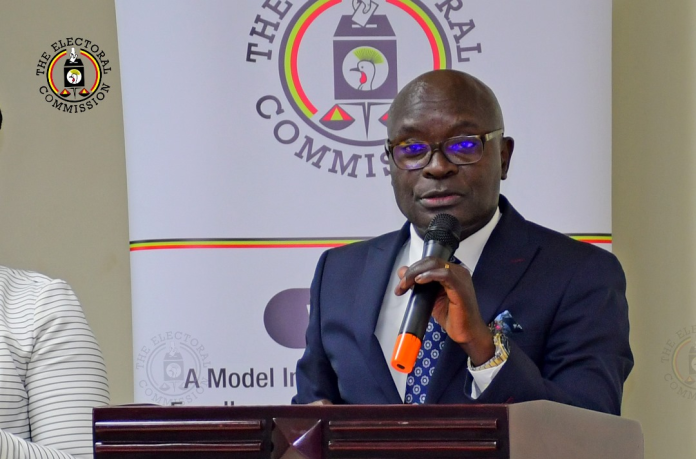
EC launches SIGs election phase, urges inclusivity and transparency

EC Chairman, Justice Simon Byabakama.

The Chairperson of the Electoral Commission (EC), Justice Byabakama Mugenyi Simon has opened a national stakeholders’ workshop to kickstart the elections of Special Interest Groups (SIGs) Committees.

In his keynote address, Justice Byabakama highlighted the constitutional foundation of the SIGs elections, underscoring the importance of affirmative action enshrined in Article 32 of the 1995 Constitution.

“It is this provision that forms the basis for conducting elections for leaders for Special Interest Groups,” he noted, referring to the representation of youth, older persons, persons with disabilities (PWDs), and workers, among others,” he said.

With the nomination of candidates concluded on June 10th, the Commission has now entered what the Chairperson described as “a critical stage” in the implementation of the electoral roadmap.

“The elections of SIGs Committees from Village to National Level… started with the nomination of candidates, which commenced on Monday, 2nd June, 2025 and concluded yesterday,” he stated.

The elections are aimed at constituting SIGs Committees across all administrative levels from parishes to districts and forming the electoral colleges that will later elect representatives to both Local Government Councils and Parliament.

Justice Byabakama emphasized that these committees serve not only an electoral purpose but also play an advisory and advocacy role.

“The SIGs Committees are also responsible for co-ordinating and monitoring the implementation of policies and programmes… and liaise with the Government on the needs, challenges, and other issues affecting Youth, PWDs, and Older Persons,” he said.

Byabakama praised the progress made so far on the electoral roadmap. Among key milestones achieved since July 2024 are the demarcation of electoral areas, re-organisation of polling stations, identification of PWDs on the Voters Register and recruitment of over 13,000 temporary election officials.

“Stakeholder engagement, including voter education, has been continuous to achieve mass awareness and hence an informed and supportive stakeholder base,” he added.

Byabakama called on stakeholders to uphold peace, transparency, and inclusiveness throughout the election process.

“A credible, peaceful, free and fair electoral process is the responsibility of not only the Commission, but all stakeholders involved. Upholding the values of transparency, tolerance, respect for diverse political views, and respect of human rights will strengthen the integrity of our electoral processes and foster public confidence,” he said.

He appealed for enthusiastic participation and civic responsibility. “We call upon you… to mobilize people within your circles of influence to fully participate in these processes,” Justice Byabakama urged. “As the Commission, we commit to delivering these elections with transparency, professionalism, and impartiality.”

The SIGs elections represent the first phase of the 2025/2026 General Elections, and their success, the EC says, will lay the foundation for the credibility and inclusiveness of the broader national electoral process.

Stories Continues after ad

Health Ministry refutes claims of #COVID-19 resurgence in Uganda

The Ministry of Health has dismissed recent media reports suggesting a resurgence of #COVID-19 in Uganda, clarifying that the claims are based on old video clips and misinformation being re-circulated online.

In a press release, the Ministry assured the public that there is no new outbreak of #COVID-19 in the country.

“The national situation remains stable and fully under control, since the end of the major #COVID-19 outbreak three years ago,” read part of the statement.

The ministry further noted that these false reports were being circulated by “unscrupulous individuals to mislead the members of the public.”

Dr. Charles Olaro, Director General of Health Services, emphasized the Ministry’s commitment to transparency and vigilance.

“The Ministry continues to monitor information about new strains of #COVID-19 being reported in various parts of the world and working in collaboration with relevant stakeholders to ensure the continued safety of the population,” he stated.

Dr. Olaro also highlighted Uganda’s strong surveillance and response infrastructure: “Uganda continues to benefit from a strong surveillance and response system, which has been built over time and remains fully active and capable of detecting and addressing public health threats.”

The Ministry urged the public to continue observing good hygiene practices and to remain cautious.

“Wash your hands with water and soap or sanitize using an alcohol-based sanitizer and remain alert to credible updates from official sources,” he advised.

In a note of caution, the Ministry advised individuals who experience flu-like symptoms to seek medical attention promptly.

“If anyone exhibits flu-like symptoms consistent with #COVID-19, please visit the nearest health facility for appropriate treatment and management.”

The Ministry reaffirmed its commitment to safeguarding public health and urged citizens to disregard any unofficial or alarmist information circulating on social media.

Stories Continues after ad

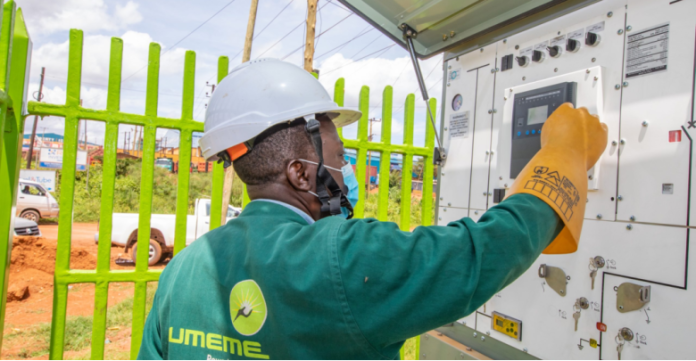
Umeme takes Shs1.1t buyout dispute with gov’t to London arbitration

A former UMEME employee in action during operation before the company's exist.

Former Uganda’s electricity distributor, Umeme Ltd has initiated international arbitration proceedings in London against the Government of Uganda, seeking $292 million (approximately Shs1.1 trillion) in compensation related to the termination of its 20-year power distribution concession.

The core of the dispute centers on the government’s calculation of the final buyout value, which Umeme claims deviates from terms agreed upon in the concession. According to the contract, any unresolved disagreements must be resolved through binding international arbitration in London.

Umeme’s Managing Director, Selestino Babungi, said the company resorted to arbitration after attempts at good-faith negotiations failed to yield a mutual agreement by the deadline of May 20, 2025.

“We are ready, and that is why we officially notified the government,” Babungi stated.

He added, “They will be served with all relevant documents as stipulated in the agreement to allow the arbitration process to proceed.”

The power distributor said the legal action is intended to protect the interests of both local and international shareholders. Umeme’s ownership structure includes 40% local shareholders and 60% foreign investors. Notably, the National Social Security Fund (NSSF), which owns a 25% stake, stands to benefit significantly from any award.

Allan Rwakakooko, Umeme’s Head of Legal Services, noted that the duration of arbitration will depend on several factors, including the volume of documentation involved and the timeline for selecting arbitrators.

“We can’t provide an exact timeline yet. The timetable will be determined during the initial arbitration meeting,” he said.

The total claim has risen to $292 million following a partial government payment of $118 million (Shs427 billion) made in March. Babungi clarified that no interest has been factored into the latest figure.

“As of March 31, we had not concluded reconciliation of the final buyout amount, which explains the revised estimate,” he said.

Meanwhile, the Uganda Securities Exchange (USE) has extended the suspension of Umeme shares from trading until June 12. The move aims to protect investors amid uncertainty and prevent market volatility.

USE Chief Executive Officer, Paul Bwiso, said the suspension was necessary following the surprise government payment and ongoing developments.

“We wanted to ensure proper disclosure and information symmetry. Umeme has consistently maintained high standards in financial reporting,” Bwiso noted.

He added, “We’ll reopen trading once all relevant updates are communicated. Investors can then make informed decisions.”

The arbitration proceedings have also delayed Umeme’s financial reporting and its annual general meeting, as the asset valuation process which ties directly to financial statements, remains incomplete due to the unresolved dispute.

Stories Continues after ad

LoP calls for urgent review of Electronic Penalty System amid rising public concerns

Leader of the Opposition in Parliament, Joel Ssenyonyi.

The Leader of the Opposition in Parliament, Joel Ssenyonyi, has petitioned the Minister of Works and Transport to urgently review and recalibrate the recently intensified Electronic Penalty System (EPS), citing widespread public dissatisfaction and procedural shortcomings.

In a letter dated June 10, 2025, addressed to the Minister of Works and Transport, Ssenyonyi outlined several grievances raised by Ugandan motorists over what he described as the “punitive and exploitative” nature of the current system.

“While the intention behind the EPS may have been rooted in promoting road safety and order, its current execution has raised widespread alarm,” he wrote. “Motorists have complained about excessive issuance of traffic fines without clear and accessible justification.”

Among the specific issues raised in his letter are the lack of awareness and training among motorists, confusing and inconsistent speed limits and security risks arising from low-speed enforcement, particularly in high-risk areas such as the Kampala Northern Bypass.

“Certain areas are enforcing low-speed limits without clear signage or logical justification, creating confusion and inadvertent violations,” Ssenyonyi noted. 

He added, “The slow speeds required by the EPS in high-risk areas like the bypass expose motorists to ambushes, including attacks by criminals wielding stones.”

The opposition leader also highlighted excessive penalties that restrict movement with some drivers unable to renew licenses or travel due to pending fines and technical shortcomings leading to erroneous tickets. Additionally, he warned of conflicts between traffic light instructions and police commands, which expose drivers to penalties even when following lawful orders.

“Road safety is a shared goal,” he said, “but it ought to be pursued in a manner that is fair, just, and respectful of the rights and safety of Ugandans.”

Ministry Defends EPS Rollout as Life-Saving Initiative

The Ministry of Works and Transport, in collaboration with the Intelligent Transport Monitoring System Uganda (ITMS note that the initiative is designed to combat Uganda’s high rate of road fatalities, with speeding identified as a major cause.

According to the 2024 Uganda Police Annual Crime Report, 44.5% of all road crashes were attributed to speeding. In 2024 alone, Uganda recorded 25,107 road crashes, resulting in 5,144 deaths.

Winston Katushabe, Commissioner of Transport Regulation and Safety, clarified the standardized speed limits being enforced under the EPS framework: 30 kph (18 mph): Residential areas, schools, hospitals, and markets, 50 kph (31 mph): Urban centers and town highways, 80 kph (50 mph): Expressways with controlled traffic and 100 kph (62 mph): Maximum on designated expressways.

“The 30 kph limit is not universal,” Katushabe said, “but applies to zones with high human traffic, to protect vulnerable road users like children and pedestrians.”

The EPS utilizes Automated Number Plate Recognition (ANPR) cameras to detect speeding and issue penalties in real-time. Offenders exceeding the speed limit by 1 to 30 kph are fined Shs200,000, while those exceeding by 31 kph or more are fined Shs600,000.

ITMS officials also noted via social media that the system is now active on major roads and intersections, with cameras calibrated to interpret signage accurately.

“Drivers must be alert and aware of road signage at all times,” an ITMS statement read. “The cameras are smart if you’re over the limit near a hospital, school, or residential area, the system will catch it.”

The Ministry urged motorists to comply with posted limits and traffic rules.

“Speeding is among the five major risk factors contributing to road crashes,” read a public advisory. “Respect the rules of the road. Avoid penalties. Save lives.”

While Ssenyonyi acknowledged the importance of road safety, he stressed the need for transparency, fairness, and greater public sensitization. He called for consultations with stakeholders and procedural reforms to ensure the system supports, rather than penalizes, responsible road use.

“I request your office to review the implementation of the EPS, conduct broad consultations, and institute corrective measures where necessary,” he wrote. “Please consider this letter a formal appeal for urgent review.”

The Minister of Works and Transport is yet to issue an official response to the letter.

Stories Continues after ad

Diaspora Ugandans urge Central Bank to develop local remittance App

Dr Michael Atingi-Ego, Deputy Governor BoU. Photo-Eagle Online.

Ugandans living abroad have renewed calls for Bank of Uganda to develop a secure, low-cost digital platform for remitting money back home, arguing that existing systems are costly and diminish the value of their hard-earned income.

The appeal comes amid growing frustration over high transaction charges imposed by foreign digital remittance platforms — fees that often exceed 10 percent of the amount sent. With Uganda receiving more than $1.4 billion in remittances in 2023 — the country’s largest source of foreign exchange — the diaspora believes urgent reforms are needed.

Speaking at a media briefing in Kampala ahead of the International Day for Family Remittances (IDFR), Mr. Chris Ssentongo Kironde, a Ugandan-American who has lived in the United States for 28 years, described the current remittance landscape as unsustainable and unfair.

“Bank of Uganda should create a locally owned remittance app,” Mr. Kironde said. “It would be cheaper, inspire trust, and eliminate unnecessary fees. Right now, if the dollar rate is 3,700, the recipient gets around 3,600 — that’s a loss of up to $100 or $200 per transaction. Before long, people will return to the old system of sending money in envelopes.”

According to the 2024 National Population and Housing Census, over two million Ugandans live in the diaspora, spread across the United States, Europe, Asia, South Sudan, and neighboring East African countries. With global remittance flows increasing by 4.6% — from $865 billion in 2023 to $905 billion in 2024, according to the World Bank — the economic importance of diaspora contributions cannot be overstated.

Remittances to Uganda account for approximately 3 percent of GDP, supporting essential needs such as food, education, healthcare, and housing. However, diaspora leaders say that high transaction fees are discouraging people from sending money home — or pushing them toward informal, less secure channels.

“Remittances improve lives. But the high transaction costs are undermining their impact,” said Ms. Sarah Carl, Head of Programmes and Policy Development at the International Organization for Migration (IOM). “Globally, the average remittance cost is 7 percent. In Uganda, it can go as high as 15 percent — meaning families lose a significant share of what they’re supposed to receive.”

Government officials have taken note of the growing concern.

Mr. Patrick Okello, Commissioner for Refugee Management in the Office of the Prime Minister, warned that the high costs could drive diaspora Ugandans to invest their money elsewhere, resulting in missed opportunities for national development.

“If you’re losing 15 percent of every dollar you send, you may decide to invest abroad instead. That’s a real risk for a country like Uganda, which relies on remittances to fund family welfare and economic growth,” he said.

In response, the Bank of Uganda says it is exploring ways to reduce remittance costs through increased market participation and competition.

“We are taking concrete steps to enhance the development impact of every dollar sent,” said Ms. Constance Kababi, Deputy Director of Statistics at the central bank, representing Governor Michael Atingi-Ego.

He added, “More market players will mean more competitive pricing, and that will ultimately reduce costs for users.”

Mr. Kironde believes that streamlining and localizing Uganda’s remittance infrastructure will not only reduce the burden on diaspora workers but also encourage more Ugandans to seek employment abroad, potentially boosting remittance volumes and long-term investment in the country.

“India has done it. Uganda can too. If we get our people jobs abroad and support them with secure, affordable remittance systems, development will follow.”

The International Day for Family Remittances will be commemorated on June 16 under the theme: “Rem

Stories Continues after ad

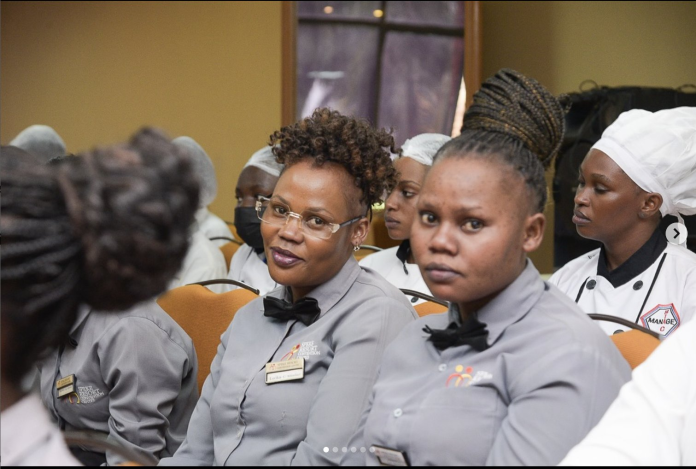
Speke Resort staff trained on company policies to improve workplace standards

In a bid to foster a more informed and accountable workforce, staff members at Speke Resort and Commonwealth Resort Munyonyo have undergone an intensive training session focused on company policies and workplace standards.

The orientation, designed to equip employees with a clear understanding of the resort’s guidelines and expectations, is part of a broader strategy to reinforce professional integrity, compliance and ethical conduct across all departments.

“This initiative reflects our dedication to nurturing a well-informed and compliant team. When our staff are equipped with the right knowledge, we all succeed together,” read a statement from the resort’s management.

Held over a full day, the session featured interactive presentations, real-life case studies and open Q&A discussions. Staff were taken through key policies ranging from workplace conduct and accountability to health, safety, and customer service standards.

By the end of the training, employees walked away with not only a deeper grasp of operational protocols but also a renewed sense of purpose in fostering a healthy workplace culture.

“Understanding our policies is key to maintaining integrity, accountability, and excellence in everything we do,” the statement added.

Speke Resort and Commonwealth Resort Munyonyo, known as Uganda’s premier luxury destination, offers world-class accommodations ranging from Presidential Suites and Executive Rooms to Superior Rooms—all set against the scenic backdrop of Lake Victoria and lush tropical gardens.

Stories Continues after ad

Meet Ambrose Kibuuka giving Gen. Jim Muhwezi sleepless nights in Rujumbura

Ambrose Kibuuka.

Rukungiri businessman and prominent National Resistance Movement (NRM) supporter, Ambrose Kibuuka Tumwesigye has officially declared his intention to contest for the Rujumbura County parliamentary seat in the 2026 general elections.

He picked up his expression of interest forms from the NRM Electoral Commission offices in Kampala this week, signaling a serious bid to unseat the incumbent, Major General (Rtd) Jim Muhwezi Katugugu.

Kibuuka’s entry into the race is expected to shake up the political landscape in Rujumbura, where Gen. Muhwezi has long held sway.

A seasoned entrepreneur, Kibuuka is the Executive Director of multiple companies, including Site Man Construction Company, Sena Graphic Company, and Tiger Security Agency. His business credentials are matched by his political influence, having previously served as Chairperson of the MK Movement in the Kigezi Subregion.

Speaking shortly after collecting his forms, Kibuuka pledged to offer development-oriented leadership aimed at improving service delivery and empowering youth.

“I have picked these forms with a heart full of hope and commitment to serve my people,” he said. “Rujumbura deserves better services, improved infrastructure, and meaningful youth empowerment. With my experience and networks, I am confident I can deliver.”

Kibuuka also urged citizens, especially the youth, to actively participate in the democratic process and support candidates with a proven commitment to development.

“Our people need leaders who are action-oriented and genuinely speak for their communities,” he added. “I encourage everyone to stay peaceful, united, and focused as we approach the elections.”

His candidacy is already generating excitement and could significantly reshape the dynamics of the 2026 parliamentary race in Rujumbura County.

Stories Continues after ad

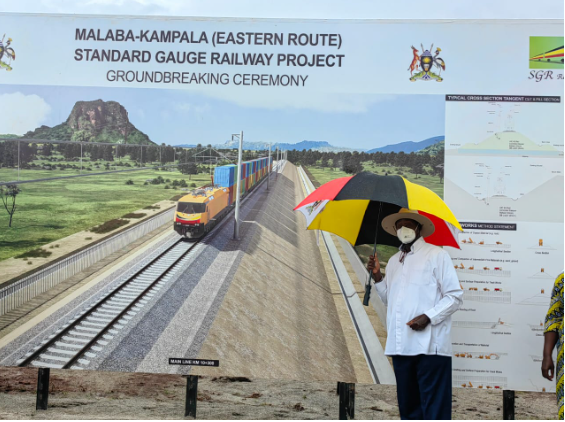
Gov’t releases Shs270b for Standard Gauge Railway

The government has released $75 million (about 270 billion shillings) to start construction of the Standard Gauge Railway (SGR) project. The Ministry of Finance continues negotiations with financing partners for the ambitious infrastructure project.

Engineer Perez Wamburu, the SGR project coordinator, stated the funds demonstrate the government’s commitment and aim to build confidence among stakeholders.

In March, Uganda signed a Limited Notice to Proceed (LNTP) with Turkish firm Yapi Merkezi, enabling early works to begin. The agreement was signed in Kampala by Bageya Waiswa, Permanent Secretary of the Ministry of Works and Transport; Mert Oz, Yapi Merkezi’s Uganda Representative; and Eng Perez Wamburu, SGR Uganda chief.

On Wednesday, June 4, Wamburu led the SGR project coordination team to introduce the contractor, Yapi Merkezi JV, and consultant, SSF JV, to stakeholders in Tororo District. Wamburu urged local officials at the council chambers to embrace the project, highlighting its potential to be a “game changer” for Uganda’s economy. He also introduced teams from Yapi Merkezi and the SSF Joint Venture consultants.

The project team then escorted the contractor on a tour of the railway corridor, starting from Kilometer Zero along the Malaba River and heading toward Kampala.

Wamburu noted that the contractor established a coordination office after a project kick-off meeting on April 14. The contractor is expected to begin mobilizing equipment and personnel, conducting engineering designs, defining the railway route, identifying local material sources, constructing labour camps, establishing concrete batching units, building a concrete sleeper factory, performing route surveys and training local communities.

President Yoweri Museveni launched the Malaba-Kampala project in November last year, emphasizing its role in significantly lowering the cost of doing business. Works are anticipated to be completed within 48 months from the launch date.

Mert Oz, representing contractor Yapi Merkezi, expressed optimism about the project, calling it a “serious game changer” for business and job creation. He pledged to apply their extensive technological expertise to deliver quality work, citing similar successes in neighboring Tanzania. Oz added that Tororo would benefit significantly from infrastructural development, including a large marshalling yard in Malaba for cargo classification, major mechanical works and a railway station.

He assured stakeholders that designs for the electrified railway system would meet international standards and promised employment opportunities for locals, asking the district to assist in identifying qualified candidates.

Wamburu also informed stakeholders that compensation for 59 project-affected persons (PAPs) has been delayed due to the absence of a clearance assessment report from the Ministry of Lands.

“It makes us happy,” said Gabriel Atama, the chief administrative officer, reiterating the district’s commitment to support the project without hindrance. “The project is something that makes us very happy, and it will be part of our work to make sure that the community is mobilized for social and economic development.”

Rebecca Akumu, the district vice chairperson, appealed to the project coordinator to ensure timely compensation for the remaining 59 PAPs. Deputy Resident District Commissioner Albert Amula urged all parties to embrace the project as a “serious game changer” and called for expedited compensation.

Kenneth Orono Nyapidi, the Tororo municipality mayor, expressed readiness to provide necessary support to the contractor.

Stories Continues after ad

Museveni directs annual gov’t funding for martyrs day 

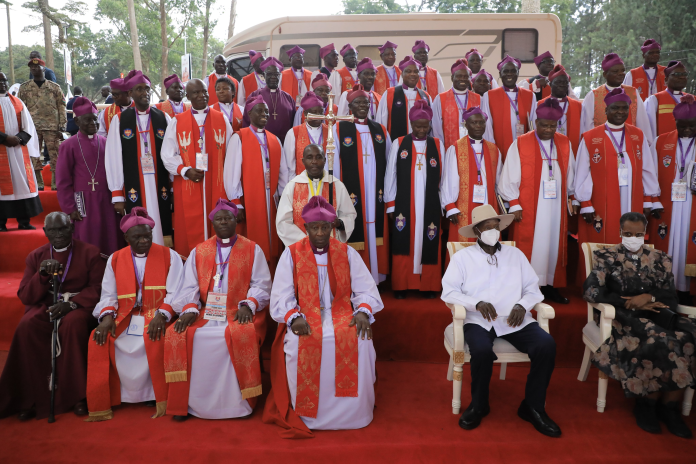
President Museveni and First Lady Janet Museveni are joined by Archbishop and Bishops of Church of Uganda during the Martyrs' day yesterday at the Anglican Shrine.

President Yoweri Kaguta Museveni has directed that government funding for Martyrs Day celebrations be included in the national budget annually, acknowledging the spiritual significance and massive participation of Ugandans across all religious denominations.

“This year, the government gave the Catholics Shs2 billion, the Protestants Shs2 billion and the Muslims Shs200 million for this occasion,” he said.

“I have directed the government to make this contribution part of the government budget annually, since many Ugandans participate.”

President Museveni, who was accompanied by the First Lady and Minister of Sports and Education, Maama Janet Kataaha Museveni, made the remarks while addressing thousands of Christians at the Namugongo Anglican site during Uganda Martyrs Day celebrations.

The celebrations were led by the Northern Uganda Cluster, under the theme: “Imitating God’s Goodness by Doing Good (Galatians 6:9–10)”.

The President emphasized the government’s continued investment in religious infrastructure.

“As you all know, the government spent billions modernizing this infrastructure you see today at both the Catholic and Protestant sites. When the Muslims are ready, we shall also support them because I am told some Muslim followers were also killed by Mwanga. May God bless all of you,” he said.

President Museveni gave a historical reflection on the arrival of new religions in Uganda, tracing Islam’s introduction in 1841 by Ahmad bin Ibrahim, Anglicanism in 1877, and Catholicism in 1879.

These religions, he noted, offered new understandings of the divine, complementing Uganda’s indigenous faith traditions.

“It was wrong for Mwanga to try and kill this new perspective about the supernatural realm,” said the President.

“It is good that young boys and some girls, I am told, were ready to give up their lives for freedom of worship,” he said.

The President also saluted this spirit of sacrifice.

“This is what all and sundry should know about Africans of this area: they can sacrifice for the legitimate causes they believe in,” he noted.

President Museveni reiterated the importance of religious freedom and the secular character of the Ugandan state.

“We believe in the freedom of worship and not coercing people to believe in this or that, as long as they do not break the law. We also believe in separating denominational issues from government matters, which are for all citizens and even non-citizens in Uganda,” he added.

He invoked scripture to support this principle.

“Jesus helped us in Mark 12:17: ‘Give unto God what is God’s and unto Caesar what is Caesar’s,” he said.

The President also reminded Ugandans of the National Resistance Movement’s (NRM) historical missions: creating prosperity, ensuring continental security, and leveraging African unity for mutual growth.

“If all adults become wealth-creators, who will buy their products and services? Tribal and sectarian markets are not enough. The national market of Uganda is better, hence our first ideological principle: Patriotism- love Uganda, because you need it for your prosperity,” he said.

“But even Uganda’s market is not big enough. Have you heard of East Africa? Have you heard of Africa? They can buy your surplus. That’s why we embrace Pan-Africanism- love Africa.”

He added Social-Economic Transformation and Democracy as core guiding principles.

President Museveni urged believers to never mix politics with denominational loyalty.

“Politics is about our welfare on Earth. Denominations and religion are about spirituality on Earth and life after, which religious leaders can explain better,” he said.

Drawing on his past experience as President of the Scripture Union (1965–1966), he quoted from Luke 10:30-35, the Parable of the Good Samaritan, to highlight religious tolerance and service.

“The Samaritan helped the injured man while his fellow Jews, who were religious leaders, passed him by. Jesus praised the Samaritan. We shall know them by their fruits,” he said.

He quoted the Church of Uganda Prayer Book, page 207.

“Let your light so shine before men that they see your good deeds and praise your Father in heaven.”

Lessons from the Bush:

Recalling his days in the liberation struggle, President Museveni shared how religious diversity was harmonized through shared knowledge and practical survival.

“In the bush, I lived with Catholics, Anglicans, Muslims, and traditional believers. We united them around science, a bullet kills. Prayers help, but a reed won’t stop a bullet,” he said.

On his part, the Most Rev. Dr. Stephen Kaziimba Mugalu, Archbishop of the Church of Uganda, led the main service with a powerful message of resilience, hope, and spiritual recommitment.

“The appeal today is simple: it’s a verdict to stand for Jesus. Those who died here would not regret their sacrifice if they see what Namugongo has become. What was meant for evil, God has turned into a blessing,” he said.

He congratulated the Northern Uganda Cluster for a successful lead and thanked the international pilgrims for their devotion.

“We are celebrating 140 years of God’s faithfulness, mercy, love, and providence. This is not just an event, it’s a powerful reminder of sacrifice, faith, and the Lord’s love,” he noted.

The Archbishop urged Ugandans to take action in addressing social issues, particularly substance abuse and mental health.

“Alcohol, marijuana, tobacco and other substances are destroying lives. As a Church, we commit to advocating against these vices in schools, communities, and even in Butabika Hospital,” he declared.

He further appealed to the government of Uganda to consider a National Health Insurance Scheme.

“Some may argue it’s financially impossible but where there is a will, there is a way.”

Archbishop Kaziimba also highlighted the Church’s humanitarian role, such as recent aid deliveries to Nakivale Refugee Camp.

“Let us continue these good deeds. Our work is not only spiritual but practical,” he noted.

He applauded the government’s support to the faith sector, especially the sh10.7 billion funding for Phase I construction of the Anglican shrine.

“We thank Your Excellency for supporting faith-based tourism. The shrine has attracted thousands and generated income. The Church remains committed to holistic transformation,” he noted.

Archbishop Kaziimba ended his speech with a strong message of civic duty ahead of the 2026 elections.

“I call upon all Ugandans to support peace, resist the politics of violence, and go out to vote. Let’s be good stewards of this nation,” he added.

The preacher of the day, Rt. Rev. Henry Luke Orombi, former Archbishop of the Church of Uganda, delivered his sermon from Galatians 6:5, Galatians 6:9–10, and 3 John 11, encouraging believers not to be overcome with evil, but overcome evil with good. 

“The foundation of the Church in Uganda is based on the sacrifices and the blood of the martyrs,” he affirmed.

The Rt. Rev. Godfrey Loum, Bishop of Northern Uganda and Chairperson of the Northern Uganda Cluster, expressed gratitude for being chosen to lead this year’s national celebration.

“We are grateful for the trust placed in us. The Northern Cluster which includes the dioceses of Lango, Kitgum, Nebbi, West Lango, Madi and West Nile has worked together in unity,” he noted.

He emphasized the region’s commitment to growing Uganda’s religious tourism and faith-based programs.

“Our hope is to contribute to the growth of faith in the Anglican Church and to position Namugongo as a global faith destination,” he said.

He also thanked the President for his ongoing support towards Church activities and infrastructure.

Meanwhile, Uganda Martyrs Day is a national religious holiday observed every year on June 3rd. It honors the 45 young Christian converts – 22 Catholics and 23

Anglicans who were killed between 1885 and 1887 in the historical kingdom of Buganda (now part of modern-day Uganda).

As the calendar turns to June, a sacred rhythm takes hold across Uganda and neighboring countries. In the quiet early mornings and under the scorching afternoon sun, thousands of men, women, and children make their way on foot many for hundreds of kilometers to Namugongo. 

On the other hand, the church of Uganda also commemorates 140 years of the Uganda Martyrs, this year.

Stories Continues after ad