Stanbic Bank
Stanbic Bank
20.6 C
Kampala
Stanbic Bank
Stanbic Bank
Home Blog Page 1031

Pallaso on the run after escaping with police handcuffs

Pallaso

Police in Kampala are hunting for musician Pius Mayanja aka Pallaso on charges of escaping from lawful custody and obstruction.

According to Kampala Metropolitan Police Deputy Spokesperson Luke Owoyesigyire, Pallaso fled in handcuffs after police raided his home in Makindye for hosting a group of unruly people.

Owoyesigyire said that at around 12:46 am, Police in Makindye received a disturbance call from residents of Luwafu zone that a group of unruly people had gathered at the home of one Pallaso.

The team responded to the scene and found the allegations to be true, a group of over 30 people at Luwafu in the home of Mayanja Pius aka Pallaso had gathered, playing loud music drinking and not following the safety guidelines issued by the ministry of health on curfew and public gatherings.

The team commander reached out to the singer and the team to reduce the volume of their music and reminded them of the guidelines that prohibit gatherings similar to theirs.

While addressing them the group became violent, something that prompted Police to arrest Pallaso and Henry Kasozi.

However during the arrest of Kasozi, Pallaso escaped with Police Handcuffs on him and Police is currently looking for him on charges of escaping from Lawful custody and obstruction.

Police have preferred to investigate allegations of Obstruction, inciting Violence and doing a negligent act likely to spread an infection of a disease.

The suspect, one Kasozi Henry, is detained at Katwe Police Station pending prosecution.

Stories Continues after ad

Covid-19: CCBA installs handwashing station at Mbarara hospital

Mbarara District Health Officer, Peter Sebutinde demonstrating how to wash hands, while Mbarara Referral Hospital Director, Celestine Barigye and Mbarara Plant Manager, Joackim Baluku look on.

Coca-Cola Beverages Africa (CCBA) has installed a 5,000 litre Community Handwashing Station at Mbarara Referral Hospital in western Uganda. The move is aimed at curbing the spread COVID-19.

CCBA, through Century and Rwenzori Bottling Companies in Uganda, has so far established five 5,000litre Community Handwashing Stations for the general public use in Namanve, Kyambogo and Mbarara.

General Manager Melkamu Abebe, in a message delivered by Mbarara Plant Manager Joackim Baluku, said the Company was committed to contributing to efforts to limit the spread of COVID-19 in communities.

“Across the Coca-Cola system we always look for meaningful ways to contribute to our people, including the communities we serve. We are guided by our company purpose: refresh the world and make a difference in the community. We do what we do because we are people-centered. We provided safety measures inside our Plants to protect our employees and their families, and now with the Community Handwashing Tanks we are extending that protection to the general public,” Abebe said.

Mbarara Referral Hospital Director Celestine Barigye said the hospital had established two (2) handwashing stations but was overwhelmed by the numbers of people flocking the hospital. Hospital officials had raised concerns about long queues of people gathering at the stations to wash their hands, as an additional COVID-19 risk.

“When the Pandemic began, following the President’s advice we set-up the two handwashing facilities but they were not enough. With this new addition we can ensure more people wash hands faster and increase the safety of all. We also needed an extra reservoir tank and we have now received it. The tank from Coca-Cola has a large capacity so water availability is guaranteed,” he said.

Mbarara Referral Hospital currently has eight COVID-19 patients and has so far discharged 21 who have recovered successfully. The Hospital has a bed capacity to handle 30 patients at a go.

The CCBA handover yesterday also included 305 20-litre Handwashing Jerrycans for distribution at various busy points in Mbarara, handed to the COVID-19 District Task Force. This is part of the 5,000 Handwashing Jerrycans pledged for the national effort against COVID-19.

Since the outbreak of the COVID-19 pandemic, CCBA has provided several interventions including; food relief worth Shs 390million from The Coca-Cola Foundation, distributed through the Uganda Red Cross Society to vulnerable families affected by the lockdown; Shs 85million to the Ministry of Health to buy medical equipment and sundries; public awareness worth UGX460million and three pick-up trucks for the Ministry of Health COVID-19 Task Force. So far the total contribution during this period is Shs 1.3billion.

Mbarara Plant Manager Joackim Baluku said the company would continue its support to the Mbarara community as it had done before COVID-19.

“We are part of this community and we are here to stay. In the past we have done work with the District including replenishing River Rwizi, which is important for us because we value water greatly but also need to ensure the community has good access to safe water as well. This contribution builds on that because we are still providing safe access to water but for a public health cause,” he said.

The World Health Organization (WHO) and the Ministry of Health have stressed that washing hands frequently with soap and water for at least twenty seconds every time is a key protective measure against acquiring or spreading COVID-19.

Speaking during the handover, Peter Sebutinde, the Mbarara District Health Officer implored Ugandans to follow WHO and Government guidelines against COVID-19. He also thanked Coca-Cola for the interventions in the public interest.

“Thank you for being a responsible corporate company. We applaud you for this initiative and will take this message further than this,” he said.

Through Rwenzori Bottling Company, CCBA has also manufactured and distributed Hand Sanitizers free of charge to select segments of society across the country, including those involved in fast-moving consumer goods wholesale and retail trading. The hand sanitizer has also been distributed to employees and their families.

Stories Continues after ad

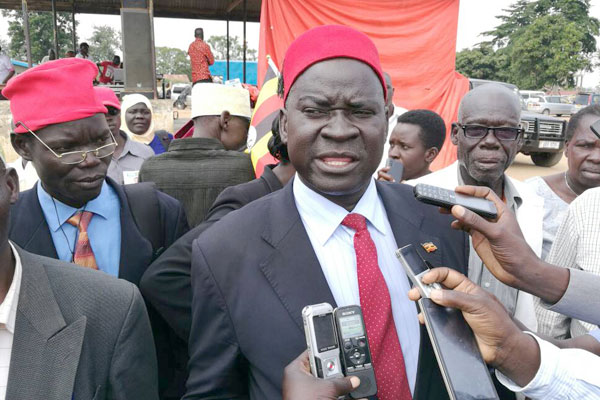
MP Kassiano Wadri unveiled at Gen Muntu’s Party ANT

KASSIANO-WADRI

Arua Municipality MP Kassiano Ezati Wadri has joined the Alliance for National Transformation (ANT), a Political Party initiated and launched by the former Chief of Defense Forces (CDF) Gen Mugisha Muntu.

The Party was launched 13 months after Muntu embarked on leaving the Forum for Democratic Change (FDC) Party following intraparty misunderstandings.

Wadri was unveiled by the Acting National Coordinator of ANT, Alice Alaso at the Party headquarters in Kampala.

“I am overjoyed once again to make this home come to ANT. We traversed this country all the way from Arua, to north, to east and west testing waters to establish this Party. We were like in a wilderness. Am happy for going through this turbulence,” Wadri said

He remarked that he should have joined with Paula Mwiru and Gerald Karuhanga but he couldn’t because he was imposed for over a month.

“Don’t underestimate yourself, move out and do something. Many people are warming to take up various leadership positions but am happy that Muntu will go through the nomination as others will fail. People are crossing over to this party because of its mission and core values of liberating, transforming this country,” he said.

He recounted that he met Gen Muntu in 1980 while at the university and later joined the National resistance army under which toppled the late Apollo Milton Obote’s government and is sure that the Party under Muntu’s leadership will win the presidential seat come 2021 general elections.

He was part of the faction which didn’t believe in internal democracy in the forum for democratic change (FDC), a party they subscribed to. Due to that, he ran on an independent ticket in the Arua bye election and won the seat.

 The MP was part of the group which traversed the country carrying out consultative meetings after the 2018 delegates conference which culminated into the election of Patrick Amuriat as the chairperson of FDC. The election of Amuriat saw the dropping of Muntu’s closest friends from various leadership positions.

He served in the 7th, 8th, 9th and 10th Parliaments of Uganda as among others the opposition chief whip.

Stories Continues after ad

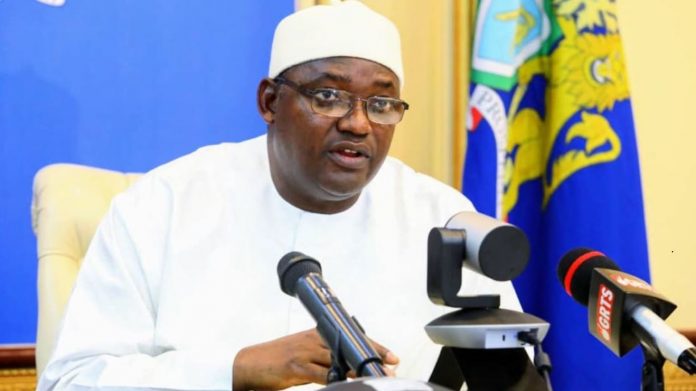
Gambia’s President Barrow enters self-isolation after deputy tests positive for COVID-19

Gambia president

Gambia’s President Adama Barrow has gone into self-isolation after his Vice President Isatou Touray tested positive for COVID-19.

The presidency confirmed the development on Wednesday, urging citizens to adhere to the set health guidelines in efforts to curb further spread of the disease.

“The Office of the President informs the public that Her Excellency, the Vice President, Dr. Isatou Touray has been tested positive of COVID-19.   Consequently, President Adama Barrow will immediately be on self-isolation for 2 weeks,” said the presidency.

“The public is reminded that the Coronavirus is real and exists in The Gambia.  The public is advised to properly use face masks, maintain regular hand washing and social distancing in the fight against the virus.  Stay home and stay safe.”

The Gambia has reported 326 COVID-19 infections and eight deaths, according to data from the U.S.-based Johns Hopkins University.

Stories Continues after ad

CDC announces additional US$75 million trade finance deal as part of COVID-19 response

CDC Group, the UK’s development finance institution and impact investor, has announced an additional US$75 million commitment to its existing trade finance facility with Absa Bank. The investment will provide systemic liquidity across CDC’s African markets and enable local banks to sustain the availability of trade finance, supporting supply chains during the COVID-19 crisis.

The pandemic has put significant pressure on African banks as international banks continue to “de-risk”, withdraw from the continent and reduce their correspondent banking relationships in developing economies. In the context of broad outflows of capital from Africa, counter-cyclical commitments from development finance institutions are critical to mitigating these pressures and maintaining trade flows.

CDC’s partnership with Absa includes an innovative mechanism to boost trade finance funding to some of Africa’s most vulnerable countries. Trade finance transactions in sectors that are critical to serving people’s basic needs during the crisis food and agriculture and health, will also benefit from preferential terms. The commitment will help maintain consumer access to a wide range of goods and services and allow businesses to continue operating by enabling them to import vital equipment and goods.

The announcement strengthens CDC’s relationship with Absa and builds on two existing trade finance facility announced in October 2019. Admir Imami, Director, Head of Trade & Supply Chain Finance, CDC: “CDC remains committed to closing Africa’s trade finance gap of US$110 billion to US$120 billion. By scaling up our trade finance agreements in Africa, we can protect vital supply chains that make a tangible impact on everyday lives. Our commitment will also provide a lifeline to many businesses dependent on imports. By investing in them today, we can ensure they are well positioned to weather the crisis and contribute to the continent’s economic recovery.”

George Wilson, Head of Institutional Trade, Absa: “Absa has made a commitment to supporting entrepreneurs and business owners on the continent. With traditional global supply chains being disrupted, this transaction allows us to re-imagine the continent as a trade destination and capacitate businesses to allow them to create jobs and drive economic activity.”

Africa’s trade finance deficit is estimated by the International Chamber of Commerce to represent about 25 per cent of the demand for trade finance in Africa. CDC and Absa are playing a key role in bridging this gap by supporting local financial institutions to expand financing to businesses and sustain supply chains across the continent. Since 2015, CDC has guaranteed US $3.3 billion, resulting in US $12.5 billion of trade across its markets of Africa and South Asia.

Stories Continues after ad

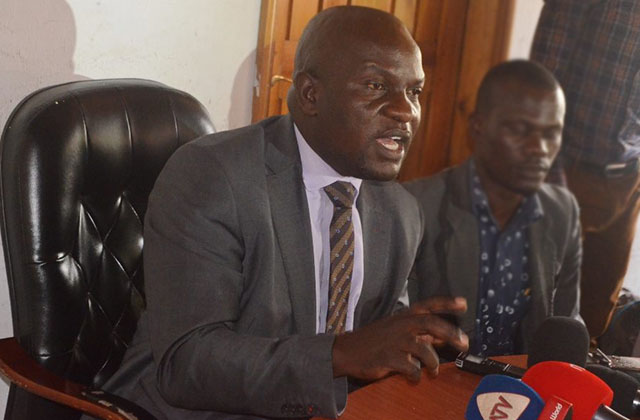
MP Paul Mwiru tables bill to address regional imbalances in the country

ANT's Paul Mwiru

A bill to address regional imbalances in the recruitment, appointment and promotion of persons in public offices has been tabled before Parliament.

The Constitution (Amendment) (No.2) Bill, 2020 moved by Jinja Municipality MP Paul Mwiru also seeks to establish Elections Petition Tribunals.  The bill was referred to the Legal and Parliamentary Affairs Committee by Speaker Rebecca Kadaga.

The Amendment Bill presented by Mwiru, seeks to insert a new article (32A) in chapter four of the Constitution. Chapter 4 of the Constitution is premised on protection and promotion of fundamental and other human rights and freedoms.

The proposed new article 32(A) in its first clause proposes that, “The State shall put in place affirmative action to promote equitable distribution of employment opportunities for any office established by the Constitution, by an Act of Parliament or within the public service based on the regions in Uganda”.

The article also proposes that “The Equal Opportunities Commission shall submit annual reports to Parliament on the progress made by the State for the purpose of giving effect to clause (1)”.

The Election Petition Tribunals, according to the Bill, will determine election petitions arising out of parliamentary elections, whether a seat of a Member of Parliament has become vacant, and whether a person has been validly elected Speaker or Deputy Speaker or having been so elected, vacated that office.

“The decision of the Election Petition Tribunal shall be final and not subject to any appeal,” reads the Bill in part.bAn Election Petition Tribunal shall serve for a term not exceeding two years and will be appointed by the Chief Justice, in consultation with the Deputy Chief Justice and the Principal Judge, by notice in the Gazette.

While tabling the Bill before Parliament for its first reading, Mwiru said that it had been presented without a certificate of financial implication.

“I beg to lay on table, the letter from the Secretary to the Treasury to the Clerk to Parliament, refusing to grant the certificate of financial implication in respect of the Bill,” Mwiru said.

He referred the House to a ruling by Deputy Speaker on 03 and 10 December 2019 where he said a letter by the Finance Minister declining to issue a certificate of financial implication was not in line with section 76 of the Public Finance Management Act that requires the minister to issue it.

“This Bill is moved under Section 76 (4) where if the Minister of Finance refuses to issue a certificate of financial implication within 60 days from the date of the request, it is presumed that the Bill has no financial implication,” Mwiru added.

Kadaga said she was satisfied that the Finance Minister had not issued a certificate of financial implication for the Bill and that the House would proceed to consider it according to the law.

“The Secretary to the treasury cannot assume the powers of the Minister to write to the Clerk to say they are not issuing the certificate. Even so, it should be done on the grounds stated in the Public Finance Management Act,” said Kadaga.

Stories Continues after ad

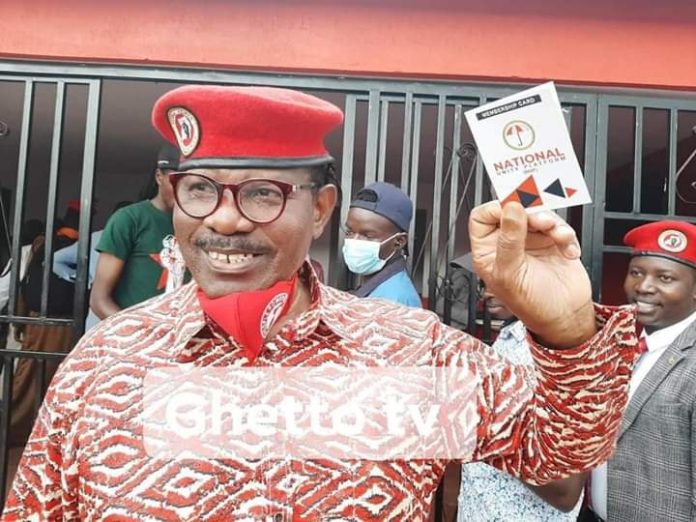
Former Mayor Nasser Ntege Sebaggala acquires NUP Party membership card

Nasser Ntege Sebaggala (photo via Ghetto TV)

The former Mayor of Kampala City, Nasser Ntege Sebaggala has joined the National Unity Platform (NUP), a political party belonging to Kyadondo East MP Robert Kyagulanyi aka Bobi Wine and his accomplices.

On Tuesday, Kyagulanyi who doubles as the Principal of People Power a political pressure group launched NUP Party membership cards costing Shs 1000 each. According to Kyagulanyi, the money will facilitate party activities.


Mr. Sebaggala registered and picked his membership card earlier today. “Am now a true member of the NUP Party and happy to be part of the group initiating to change leadership in the country.” He said

Earlier this month, he picked Nomination Forms vying for Kampala City Mayorship position under the People Power.

Who is Nasser Ntege Sebaggala?

Following the expulsion of Asians by Idi Amin in 1972, Nasser Sebaggala acquired a supermarket called UGANTICO on Nkrumah road the lower entrance to current CHAM towers, an electronics and clothes store on Kampala Road, the main thoroughfare in Kampala.

His business interests grew over time. In 1998, he began his political career by running for the position of Mayor of Kampala. Ostensibly a member of the Democratic Party, Sebaggala won the first direct elections for mayor of Kampala in 1998, beating two government-sponsored candidates.

However, he was arrested in the United States two months later, in June 1998, on eight counts of fraud and lying to U.S. customs officials. In February 1999, he received a 15-month sentence but was paroled in December 1999. He returned to Kampala in February 2000 to a warm welcome and considered a bid in the 2001 presidential elections.

In mid-December 2005, he broke with the Democratic Party (DP), after he came third in the party presidential primaries, which was won by Ssebaana Kizito, and registered himself as an independent. A week later, he reversed himself, withdrawing his candidacy and announcing his support for Kizito.

When he lost the Democratic Party nominations to Norbert Mao in 2010, he quit the DP and formed his own party, Liberal Democratic Party that he registered in 2010.

Stories Continues after ad

COVID-19 and the Destruction of a Religious Movement in South Korea: International Scholars Raise Concern in a Webinar

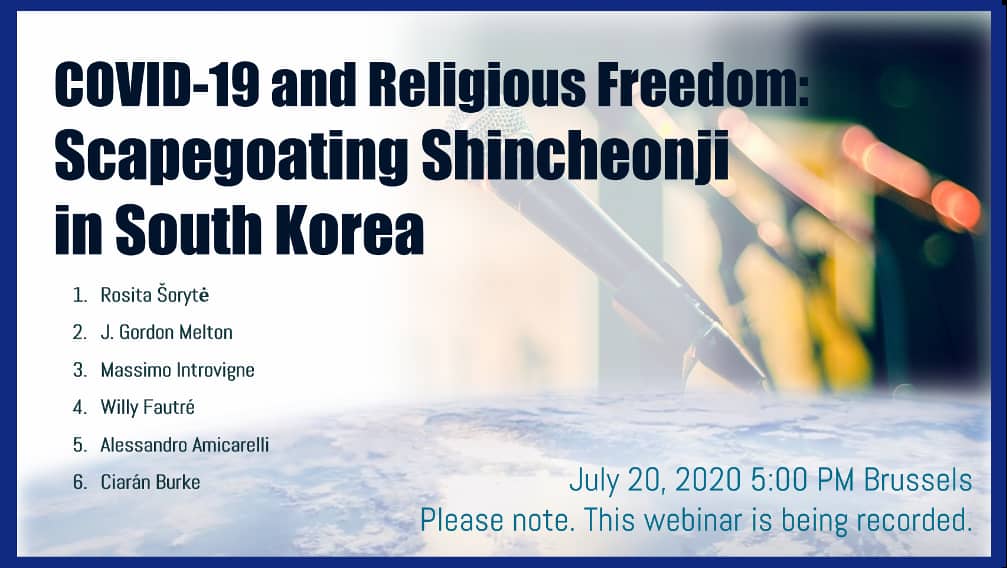
On July 20, a webinar on a new religious movement in South Korea, its political, religious, and social dimensions, and its discrimination during the COVID-19 crisis was organized by CESNUR, the Center for Studies on New Religions, and Human Rights Without Frontiers. International scholars in the fields of religion, international law, and human rights discussed the theme, “COVID-19 and Religious Freedom: Scapegoating Shincheonji in South Korea.”

The webinar addressed the history of what participants defined as an attack by politically powerful conservative and fundamentalist Protestant churches in South Korea, supported by some politicians, against a fast-growing Christian new religious movement known as “Shincheonji (New Heaven and New Earth) Church of Jesus,” founded in 1984 by Chairman Lee Man Hee.
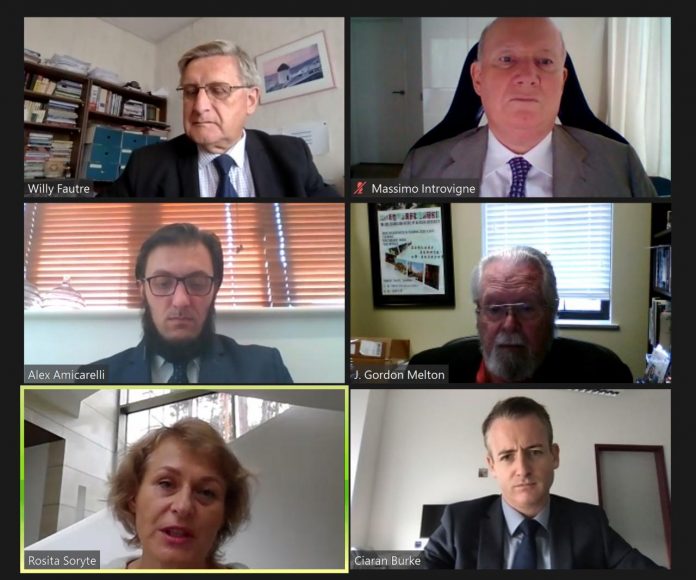
Rosita Šorytė, a former Lithuanian diplomat and author of a study of the international peace organization HWPL, also chaired by Chairman Lee, and J. Gordon Melton, distinguished professor of American Religious History at Baylor University in Waco, Texas, introduced the webinar by observing that, in times of crisis, minorities that have powerful enemies are easily scapegoated. “Cult,” Melton observed, is a dubious label often used by majorities to discriminate against minorities they do not like.

Massimo Introvigne is an Italian sociologist of religion who studied Shincheonji before and after the COVID-19 pandemic and published the first accounts of the religious group in English. He summarized the history of Shincheonji, and said that it has become a target of “persecution by fundamentalist Protestants” because of its spectacular growth. “Conservative and fundamentalist protestants see Shincheonji as an unwelcome competitor and want to destroy it”.
Alessandro Amicarelli, a London-based attorney and chairman of the European Federation for Freedom of Belief, pointed out that some South Korean politicians scapegoated Shincheonji as “the” cause of the COVID-19 crisis in South Korea, yet their real aim is to shut down the church to please conservative Christian voters. He examined in detail the case of Patient 31, the female member of Shincheonji in Daegu who, before being diagnosed with COVID-19, set in motion a chain of events leading to thousands of Shincheonji members being infected, and the accusations that Shincheonji did not cooperate with the health authorities. He observed that, before Patient 31, Chinese tourists had already spread the virus in Daegu, and that accusations of criminal misbehavior against Shincheonji leaders, some of them were arrested, are not sustained by the facts. In a difficult situation, they cooperated with the authorities as promptly and completely as reasonably possible.

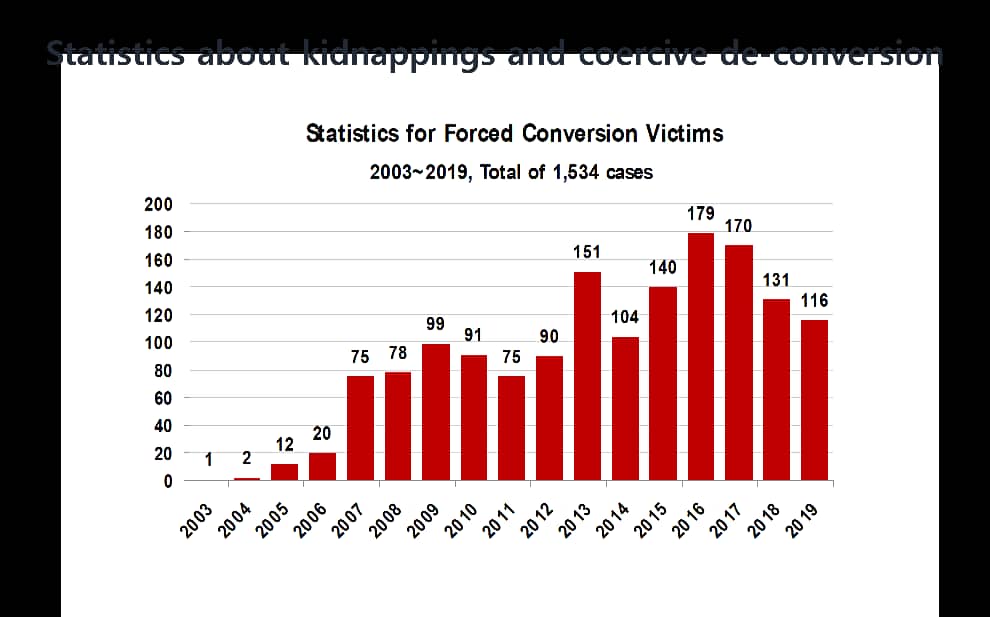
Willy Fautré, director of Human Rights Without Frontiers (HRWF), said that the recent attack on Shincheonji can be viewed as an attempt by fundamentalist Protestant groups in South Korea to weaken and destroy a competitor in the religious market. He added that human rights violations against Shincheonji through coercive conversion programs (deprogramming), i.e. by kidnapping and confining its members to “de-convert” them, have been going on for more than a decade, and show that Shincheonji’s fundamentalist opponents have always been ready to resort to violence.

Ciarán Burke, professor of International Law at Friedrich Schiller University in Jena, Germany, said that how Shincheonji was treated, in comparison with other churches that also had cases of COVID-19, is evidence of religious discrimination forbidden by the International Covenant on Civil and Political Rights, that South Korea ratified in 1990. Because of its experience with MERS, Burke observed, South Korea has a law authorizing the government to take extraordinary measures during a pandemic. However, the case of Shincheonji shows that how its provisions are applied may create a contrast with human rights guaranteed by international law, as evidenced by the fact that the government asked the church to disclose the names of members who had no direct or indirect contacts with Patient 31 and even of members abroad.

Korean prosecutors initiated an investigation of Shincheonji leaders, including founder Lee Man Hee, for their alleged role in the spread of the COVID-19. Three national Shincheonji officials were arrested on July 8, after local leaders had been arrested in Daegu, for supplying “inaccurate lists of members and properties.” “The authorities ignored requests to change the word ‘cult’ in their official reports when referring to Shincheonji church. The fact that local governments encouraged residents to report Shincheonji congregation and facilities instilled in the population the idea that church members were to be treated as criminals,” said a Shincheonji official who offered a response to the scholars at the end of the webinar.

Stories Continues after ad

Radio Presenter Deedan Muyira joins Sanyu FM

Deedan

Sanyu FM has unveiled its latest signing Deedan Muyira who has crossed from Radio City.

Deedan will be making her first official appearance at the station this morning and will be joining other new signings already unveiled this week.

Renown for her powerful voice, Deedan is a Ugandan radio host, popular MC and actress known for playing the role of Tracy Kintu in Nana Kagga’s Beneath The Lies.

She will be joining Yvonne Koreta and Patrick Salvado in the new SANYU BREAKFAST CLUB to be launched next week.

Deedan Muyira born Diana Muyira who started from Nairobi Kenya, has now grown in stature and is now recognized as the official Blankets and Wines emcee.

For about two months, Sanyu FM has been on a hunting spree for the best presenters who will give its listeners fresh and renewed information.

The station management says the reformation of the station will see an addition of more exciting presenters with more exciting personalities and rebranding some of the shows to give fresh experience.

The management is also looking at leading the line-up and waking up listeners to informative discussion, quality news and compelling analysis and getting listeners up-to-speed with the biggest stories of the day and setting up the week with intelligent conversation and features.

Stories Continues after ad

Uganda, Germany negotiate on the framework for dev’t cooperation for the next two years

Signing ceremony of the summary records of the negotiations (photo credit: German Embassy Kampala)

Uganda and Germany today successfully concluded government negotiations on the framework for development cooperation for the next two years. Germany committed a total of EUR 58.4 million in grants. Another EUR 15.0 million in grants is envisaged for the public finance management reform programme following the approval of the German Parliament. In addition, Germany is a main contributor to multilateral emergency funds aiming to mitigate the effects of the Coronavirus pandemic.

Germany extended and up scaled the bilateral cooperation with Uganda concentrating on the two focus areas Renewable Energy and Agriculture and Rural Development as well as the area Good Governance and Human Rights. German cooperation aims at fostering Uganda’s sustainable development by e.g. creating job perspectives for the youth, promoting private sector development, enhancing access to electricity or by promoting civil society as well as fiscal management. German cooperation has also included measures to mitigate the Coronavirus pandemic, also through multilateral actors.

In the field of agriculture, Germany contributes in particular EUR 20.0 million to enhance access to affordable credits for small and medium enterprises (SMEs). This is essential for agricultural enterprises in their efforts to develop their businesses, increase productivity and to create incomes as well as employment opportunities in rural areas, especially for the youth. In addition, Germany is upscaling its support to local administrations with the aim of enhancing their service delivery function and to farmers with the goal of fostering their market integration. Furthermore programme activities to securing land rights as well as sustainable fisheries management were extended.

Germany allocated the amount of EUR 19.8 Million for support to refugee hosting communities including EUR 16.8 million to improve the provision of water and sanitation services in refugee hosting communities.

Germany will continue the promotion of renewable energy. There will be increased support to SMEs regarding access to renewable and efficient energy technologies as well as deepened promotion of mini-grids to bring electricity to marginalized villages far off from the national grid. The cooperation with vocational training institutes will be enhanced to increase the number of skilled electricians and solar technicians.

Germany intends to increase the support to Uganda’s public financial management reform programme (REAP) by EUR 15.0 million. This measure is still subject to approval of the German Parliament. The allocation is destined for strengthening domestic resource mobilization as well as creating a sound financial system based on efficiency, transparency and accountability, thereby improving Uganda’s capacities to foster sustainable development. An additional EUR 9.0 million will be provided to support the areas of anti-corruption, accountability and transparency in public finance management as well as strengthening human rights and civil society.

Germany’s bilateral programmes are implemented by GIZ and KfW. All initiatives support Uganda in implementing its National Development Plan III, the United Nations’ Agenda 2030 and the Agenda 2063 of the African Union.

The negotiations – as a result of the Corona pandemic held via videoconference between Kampala and Bonn – paved the way for the Ugandan-German development cooperation in the period from 2021 to 2022. The talks were concluded by the signing of joint summary records on 29 July 2020 by Mr. Patrick Ocailap, Deputy Secretary to the Treasury, MoFPED, for the Ugandan side and by the head of East Africa Division of the Federal Ministry of Development Cooperation, Mr. Niels Breyer, as head of the German Delegation.

Stories Continues after ad